
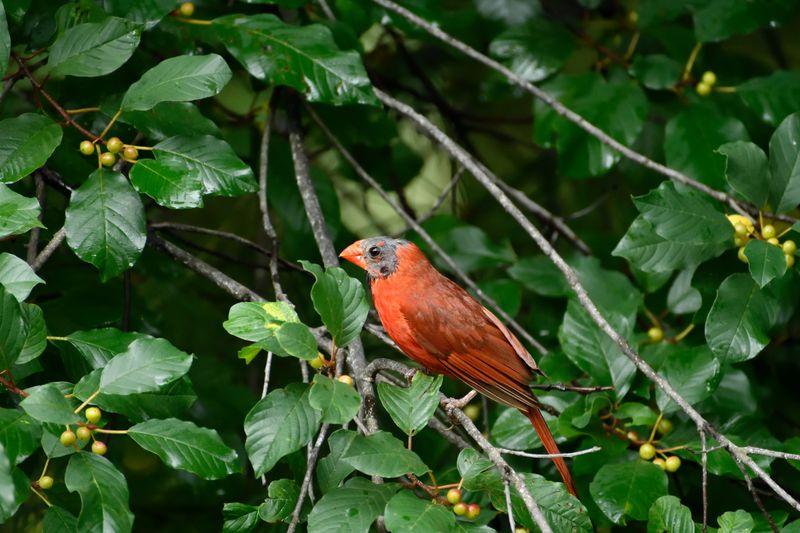
Spotting a familiar backyard cardinal with a patchy, bare head can stop you cold, especially when the bird looked perfectly normal just weeks before. For Central Texas homeowners who watch cardinals year-round, that alarming change usually has a reassuring seasonal explanation.
Understanding what drives the bald look, and knowing when to take it more seriously, helps you look out for the birds you love without overreacting.
That bald-headed cardinal often appears during late-summer molt
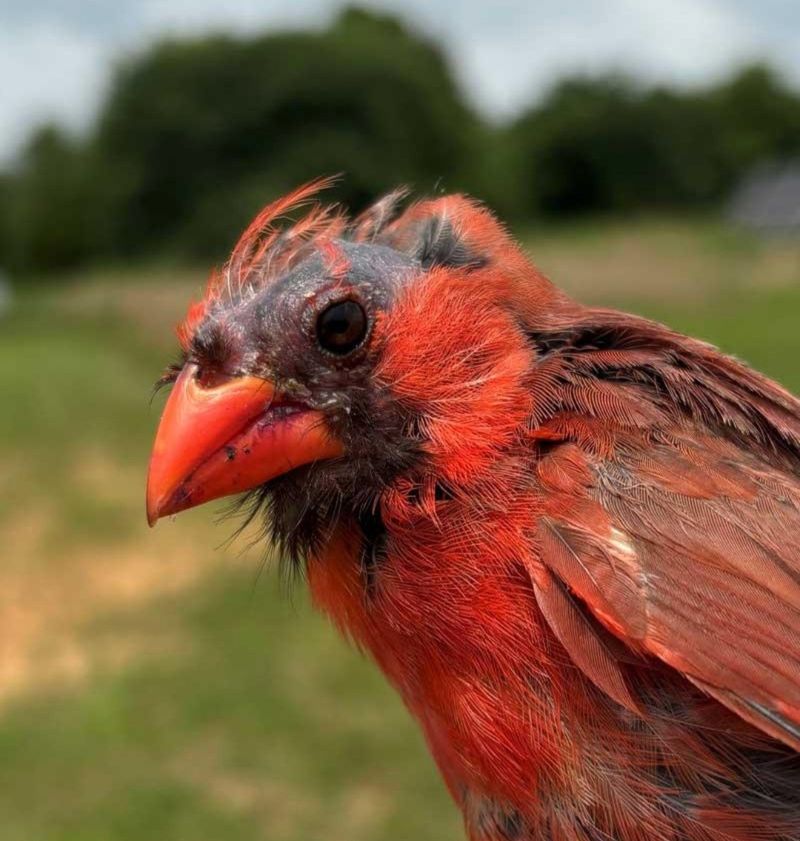
Catching a glimpse of a cardinal with a strange, patchy skull can feel alarming, especially when the bird has been a daily fixture at your feeder all spring. Fortunately, Texas Parks and Wildlife reports that calls about bald-headed cardinals increase in August and early September, and the department specifically points to molt as the most common explanation.
The appearance is startling, but it fits a recognizable seasonal pattern.
Northern Cardinals are year-round residents through much of eastern Texas, including the Central Texas region, which means backyard observers get to watch the full annual cycle, bald patches and all. Texas Parks and Wildlife’s Northern Cardinal fact sheet confirms the species’ status as a permanent resident across the state, so the bird losing head feathers in your yard in late summer is likely the same individual you have been feeding for months.
That said, appearance alone cannot prove the cause. A bald head in the right season most often reflects normal molt, but other factors, including parasites, environmental stress, and illness, can also lead to unusual feather loss.
Keeping that distinction in mind from the start makes you a better observer and helps you catch genuine warning signs if they appear later.
Cornell Lab of Ornithology’s Project FeederWatch describes the bald-cardinal phenomenon as common enough in Northern Cardinals to fall within the normal range, which should ease the immediate worry while keeping your attention appropriately open.
Molt can remove a cardinal’s crown feathers all at once
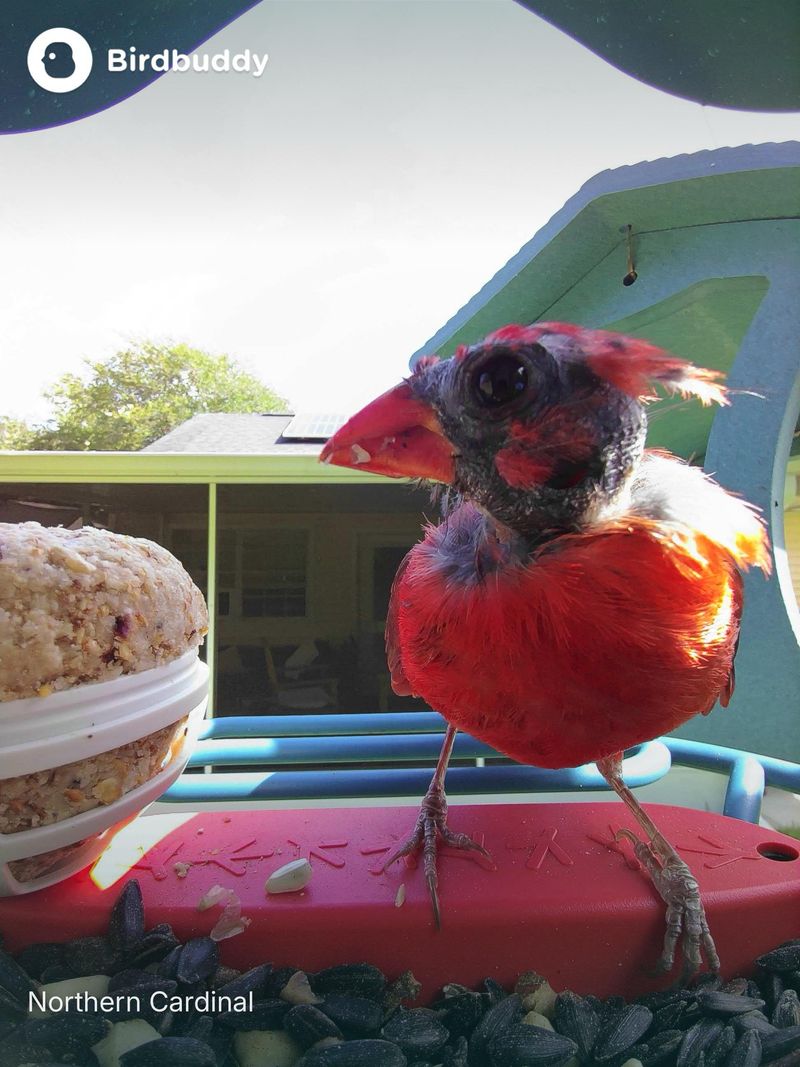
Every year, birds replace their worn or damaged feathers through a process called molt. Cornell Lab of Ornithology explains that birds time major molts around seasonal and energetic demands, commonly scheduling them after the breeding season ends and before other demanding activities begin.
For Northern Cardinals in Central Texas, that window often falls in late summer.
What makes the cardinal’s molt so visually dramatic is the way crown feathers can drop out in a synchronized wave rather than one at a time. When several feathers in the same region fall together, the bird’s naturally dark skin underneath becomes visible all at once, producing the bald or patchy look that worries so many backyard watchers.
Cornell’s FeederWatch resource on bald birds confirms that some cardinals lose nearly all their head feathers at once during this process.
New feathers begin growing back relatively quickly once the old ones fall, though the exact timeline varies from bird to bird and depends on where the individual is in its molt cycle. University of Florida IFAS Extension’s profile of the Northern Cardinal notes that late-summer birds may look scruffy, uneven, or patchy as replacement feathers push through.
Calling the condition temporary is accurate; promising a fixed recovery date is not.
The Cornell Wildlife Health Lab’s guide to molting adds helpful context: molt replaces feathers that have degraded through sun exposure, abrasion, and daily use, so the process is as routine for a cardinal as a seasonal wardrobe change. The alarming appearance is, in most late-summer cases, a sign that the bird’s body is doing exactly what it should.
What does a normal bald cardinal look and act like?
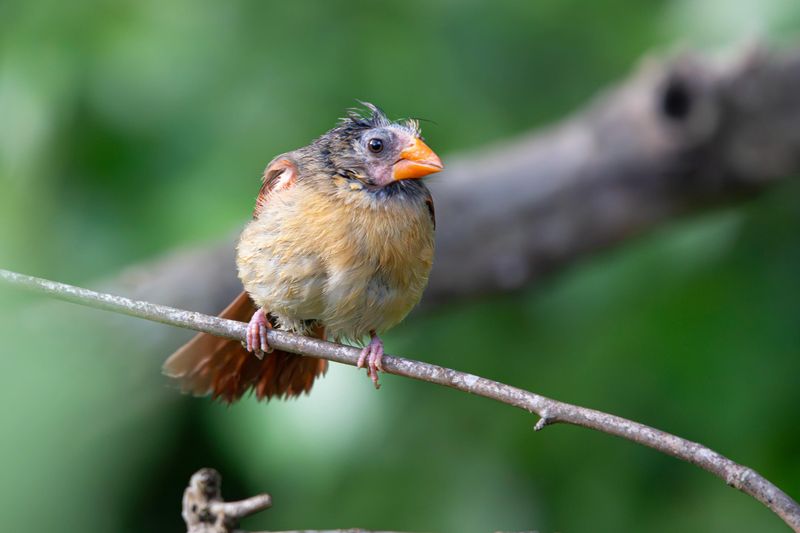
Behavior is one of the most reliable clues you have when trying to read a bald cardinal from a safe distance. A bird going through normal molt typically keeps eating, flying, and moving around the yard with its usual energy.
Cornell Lab’s FeederWatch guidance emphasizes that the bald appearance alone is not enough to diagnose illness, and a cardinal that looks startling but acts normally is usually doing fine.
Skin color matters too. On a cardinal undergoing normal molt, the exposed skin on the crown tends to be dark, matching what you would expect beneath the feathers.
Project FeederWatch’s sick-cardinal resource notes that abnormal skin color, visible lesions, crusting, or other changes to the skin surface are the details worth watching for, not the bare patch itself.
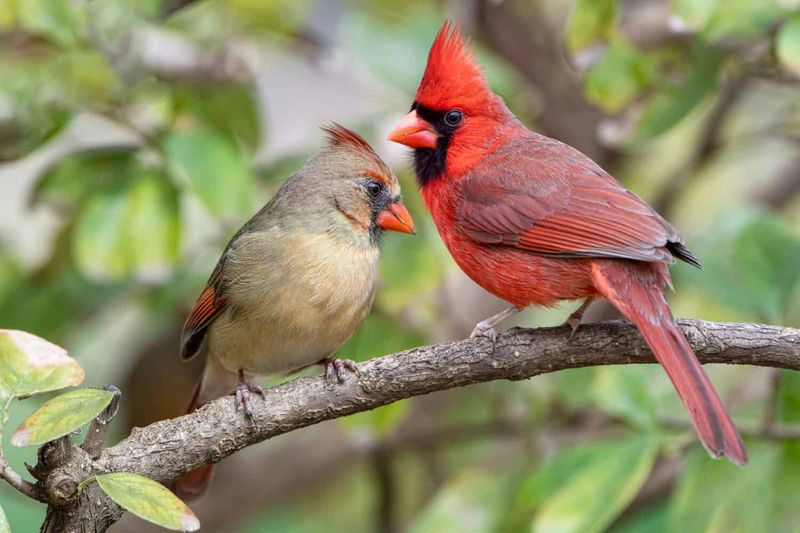
One common assumption to set aside: this is not something that only happens to the bright red males. Indiana DNR’s cardinal profile confirms that females and juveniles also undergo molt cycles, and unusual head-feather loss can show up in birds of either sex and any age.
A brownish female with a ragged crown in September deserves the same calm, observational approach as a red male in the same condition.
Putting together the full picture means watching the bird over a few visits rather than drawing a conclusion from one glance. An active, alert, feeding cardinal with dark bare skin and no other signs of trouble fits the seasonal molt pattern well.
Keep watching, keep your distance, and let the bird’s own behavior guide your next step.
Some signs point beyond an ordinary molt
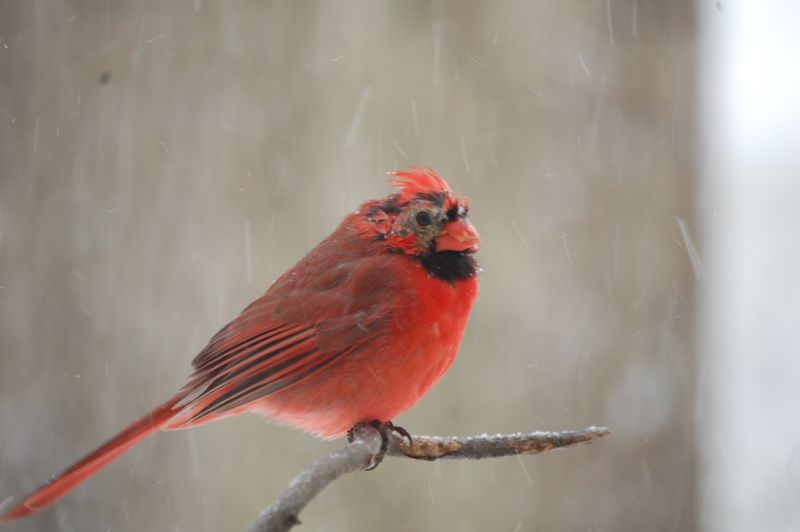
Seasonal molt explains most bald-headed cardinals seen in late summer and early fall, but it does not explain all of them. Feather mites, lice, environmental stress, nutritional problems, injury, and illness can also cause feather loss, and those conditions look different enough from a normal molt that careful observation can help you tell them apart.
A photograph alone cannot settle the question, so pay attention to a cluster of details rather than a single feature.
Project FeederWatch’s guidance on sick cardinals highlights skin appearance as a key diagnostic clue. Exposed skin on a normally molting bird is typically dark.
If you notice skin that looks red, inflamed, or an unexpected color, or if you see visible lesions, crusting, or scaly patches, those details push the situation beyond what a routine molt produces.
Feather loss that extends well past the crown, or that appears in unusual patterns across the body, is another signal worth noting. Cornell Wildlife Health Lab’s molting resource points out that abnormal feather loss can stem from causes unrelated to the regular molt cycle, and the pattern and distribution of bare areas can help distinguish them.
Parasites, for example, often produce patchy or irregular loss rather than the relatively symmetrical crown clearing of a molt.
Behavior changes are equally important. A cardinal that sits hunched, stays on the ground, cannot fly well, holds its feathers fluffed for long periods, or stops eating is showing signs that go well beyond a cosmetic change.
University of Florida IFAS Extension’s Northern Cardinal profile and Cornell’s FeederWatch bald-bird resource both suggest that behavioral changes, not just appearance, are what move a situation from routine observation to genuine concern. If several of these signals appear together, the bird needs professional attention rather than a wait-and-see approach.
The safest response is to watch, not treat
Watching a struggling-looking bird can trigger a strong urge to help, but for a free-flying cardinal, the most protective thing you can do is observe from a distance and let the bird’s own behavior tell you whether intervention is actually needed. Project FeederWatch’s guidance on unusual wild birds is clear: do not attempt to catch, handle, medicate, oil, or otherwise treat a free-flying bird.
Wild-bird care belongs with professionals.
Catching a cardinal causes significant stress to the bird, and handling it exposes both the animal and you to unnecessary risk. CDC guidance on wild songbirds notes that contact with wild birds and their environments can expose people and pets to pathogens.
That risk applies even to birds that appear healthy, so keeping your distance protects everyone involved.
Adding vitamins, supplements, or any treatment to seed or water is also something to skip. No reliable wildlife guidance reviewed supports homeowner supplementation for a bald wild cardinal, and altering a bird’s food supply without expert direction is more likely to cause harm than good.
CDC’s guidance for bird hobbyists reinforces the principle that close contact with wild birds carries real health considerations for people.
A cardinal that is eating, flying, and moving normally through your yard does not need human intervention, even if its head looks alarming. Reserve action for the bird that cannot fly, stays grounded, or shows the behavioral warning signs covered in the previous section.
When those signs appear, the right call is to contact a licensed wildlife rehabilitator or a veterinarian experienced with wild birds, not to attempt home treatment.
A bald bird does not make a dirty feeder—but hygiene still matters
Seeing a bald cardinal at your feeder does not mean the feeder caused the baldness. Normal molt is not evidence of a feeder-borne outbreak, and jumping straight to that conclusion can lead to unnecessary alarm.
The two issues, feather loss and feeder sanitation, are worth keeping separate in your thinking, even though maintaining a clean feeding station is always the right practice.
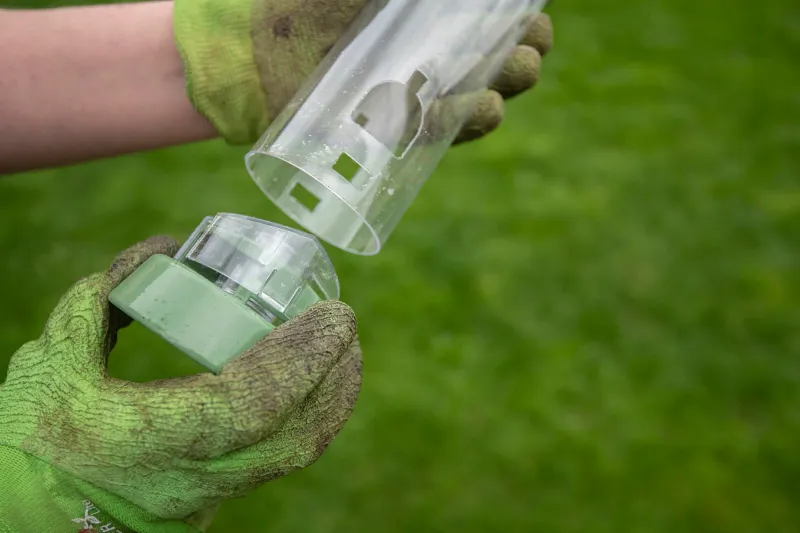
Project FeederWatch’s feeding-birds guidance recommends cleaning seed or suet feeders about every one to two weeks under normal conditions and more often during wet weather or periods of heavy bird traffic. Spilled seed and waste beneath the feeder should be removed regularly, and feeders should be allowed to dry fully before being refilled to reduce the conditions that favor mold and bacterial growth.
Birdbaths need the same attention. Stagnant water is a fast route to contamination, so rinsing and scrubbing baths every few days keeps the water safe for birds and less attractive to mosquitoes.
CDC guidance on wild songbirds and Salmonella advises homeowners to clean feeders and birdbaths at least monthly, avoid cleaning them in food-preparation areas like the kitchen sink, wash hands thoroughly afterward, and keep pets away from spilled seed and bird-feeding zones.
Dirty feeders can spread pathogens among birds and can pose real risks to people and pets, as a published study on human salmonellosis linked to wild songbirds documents. That risk exists whether or not a bald bird is present.
CDC guidance supports temporarily removing feeders and baths when you find sick or dead birds nearby, giving the area a thorough cleaning before returning them. For a bald cardinal that is otherwise active and healthy, routine cleaning is the appropriate response, not an emergency shutdown.
The fall takeaway: give the cardinal time, then act on real warning signs
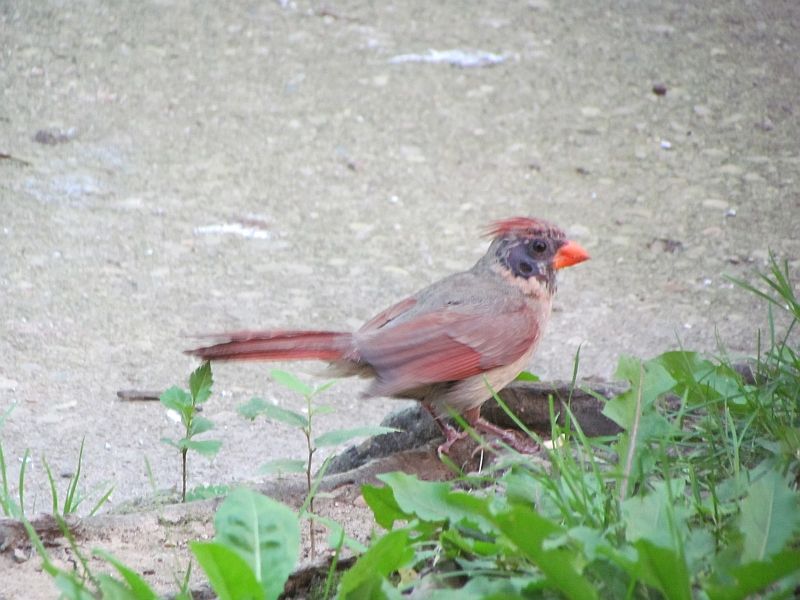
A patchy or bald crown on an otherwise active Central Texas cardinal in late summer or early fall most often reflects temporary molt. Texas Parks and Wildlife and Cornell Lab of Ornithology both identify this as a recognized seasonal pattern in Northern Cardinals, and new feathers typically regrow as the molt cycle completes.
The condition is temporary, though the exact timeline varies by individual bird.
Your practical checklist is straightforward: watch from a distance, note whether the bird is eating and flying normally, check that the exposed skin looks dark rather than lesioned or inflamed, and keep your feeders and birdbaths clean on a regular schedule. If the bird shifts from looking unusual to acting unusual, or if you notice the warning signs covered earlier, contact a licensed wildlife rehabilitator or a veterinarian experienced with wild birds.
Project FeederWatch’s sick-cardinal guidance is a useful reference when you need help deciding whether what you are seeing crosses that line.
Cardinals have been managing this molt long before backyard feeders existed. A little patience and a clean feeding station are usually all the help they need from you.