
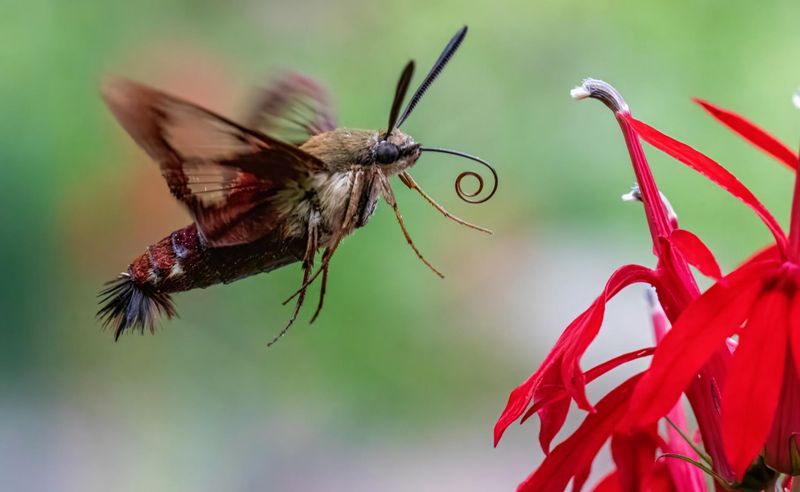
Spotting what looks like a tiny hummingbird hovering over your flowers at dusk is one of those moments that stops you mid-step in the yard. That creature is most likely a hummingbird moth, a sphinx moth that mimics a hummingbird so well it fools even experienced gardeners.
Understanding what that visit actually means for your North Carolina yard can help you make smarter, low-effort choices that support local wildlife without any guesswork.
The visit is evidence of a usable garden resource
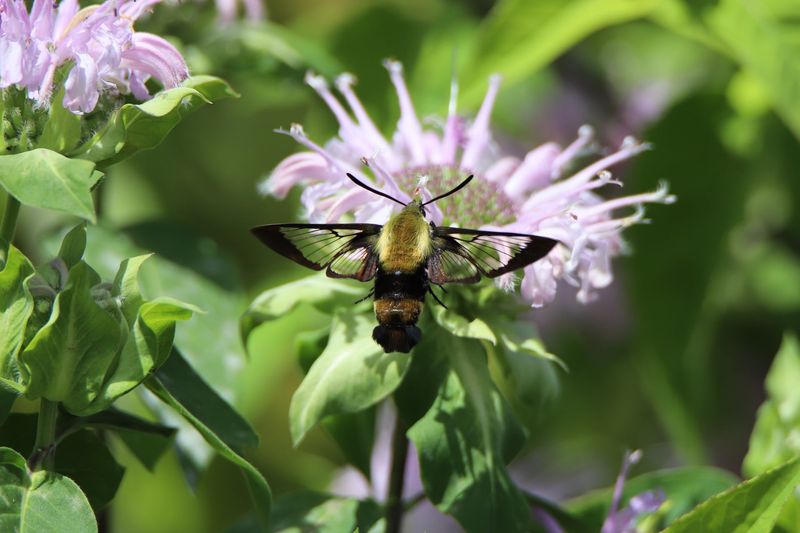
Watching a hummingbird moth work its way across your flower bed at dusk feels like a reward for all the planting and watering you have put in. At its core, that is exactly what it is: your yard offered something the moth could use, most likely accessible nectar in a setting open enough for it to navigate.
That is a real and encouraging observation, worth noting and worth building on.
What the visit does not tell you is just as useful to understand. One moth stopping by cannot confirm that your property is ecologically balanced, that it has never been treated with pesticides, or that the moth hatched somewhere on your land.
NC State Extension identifies two Hemaris species in North Carolina, the hummingbird clearwing and the snowberry clearwing, and their adults are known to travel in search of flowers rather than staying close to where they developed.
A moth that finds your garden useful may have flown in from a neighbor’s yard, a nearby woodland edge, or a weedy lot down the street. The adult is a strong flier, and nectar sources spread across a neighborhood can all contribute to its foraging route.
So the sighting tells you your garden made the list, not that it is the whole story.
That distinction matters for homeowners who want to make sensible decisions. University of Minnesota Extension notes that these moths visit a wide range of flowering plants, which means the bar for attracting a foraging adult is lower than many gardeners assume.
Your flowers passed that bar. The rest of this article will help you read what that means more precisely and show you practical ways to make the yard even more useful to moths without turning one encouraging sighting into a claim you cannot back up.
First, make sure the visitor is a hummingbird moth
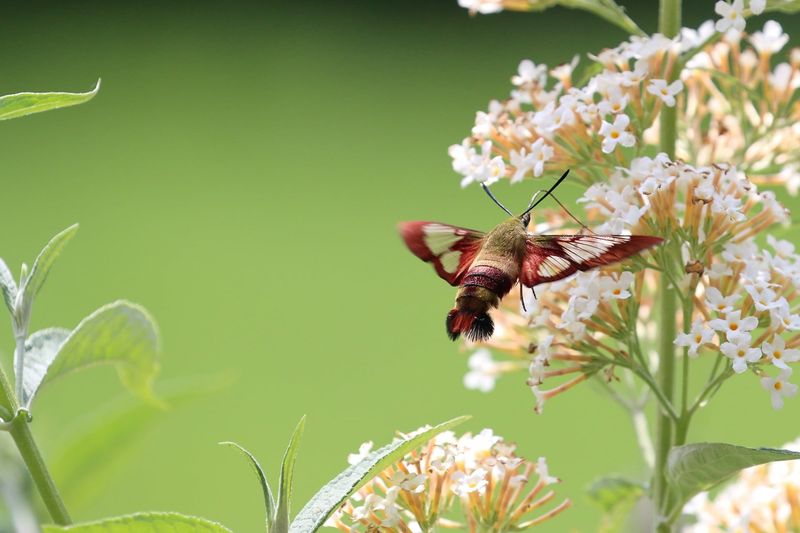
Before drawing conclusions about your garden, it helps to confirm what you actually saw. The name “hummingbird moth” covers more than one species, and other sphinx moths can produce the same hovering, hummingbird-like impression at flowers.
A quick photograph taken during or right after the visit is the most reliable way to sort out which insect visited.
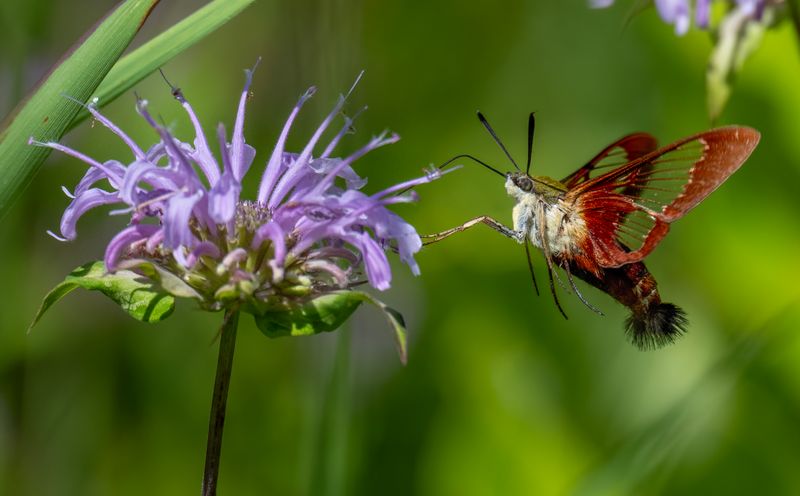
NC State Extension describes two Hemaris species that North Carolina gardeners are most likely to encounter. The hummingbird clearwing, Hemaris thysbe, has pale or yellowish legs and carries rusty-colored scales on its wings, giving it a warm, burnished look in flight.
The snowberry clearwing, Hemaris diffinis, is built more like a bumblebee: black legs, a banded abdomen in yellow and black, and mostly clear wings that flash in sunlight. Both species hover at flowers and feed without landing the way a butterfly would.
The Butterflies and Moths of North America profile for the snowberry clearwing notes its strong bumblebee mimicry, which can cause confident misidentification in the field. If the visitor looked striped and fuzzy with mostly clear wings, the snowberry clearwing is a reasonable candidate.
If it had a more olive-green and burgundy body with rusty wing patches, the hummingbird clearwing fits better.
Other sphinx moths in the family Sphingidae can also hover at flowers and are active around dawn or dusk, so not every hummingbird-like moth in North Carolina belongs to the Hemaris group. The BAMONA checklist for Wake County shows how many sphinx moth species are documented in just one North Carolina county.
A clear photo, even from a phone, gives you something concrete to compare against reference images and keeps your garden interpretation grounded in what you can actually verify.
Dusk changes the clue, not the basic interpretation
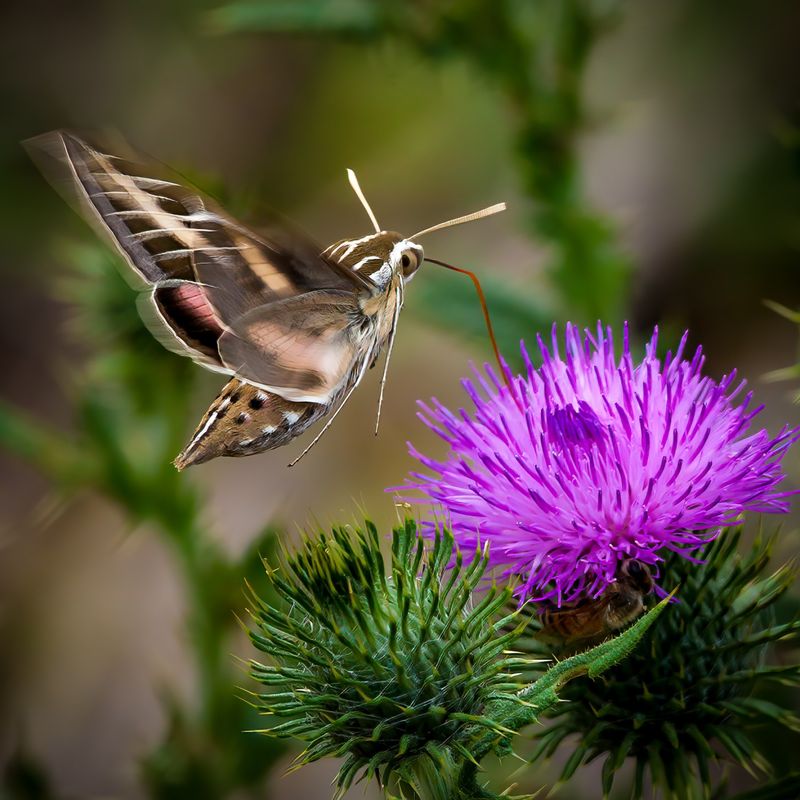
Seeing the moth at dusk adds an interesting detail, but it does not change the fundamental reading: your yard offered a resource the moth could use. Timing is context, not a species identifier or a cause.
University of Minnesota Extension notes that hummingbird moths are active during the day, so a Hemaris sighting at dusk is possible but not the only window when these insects forage. The hummingbird clearwing and snowberry clearwing are both documented daytime fliers that may extend activity into early evening when temperatures are comfortable and flowers are still accessible.
A dusk visit from one of them is not unusual, but it also does not mean the moth is strictly nocturnal.
Other sphinx moths in the same family behave differently. Some are crepuscular, meaning they are most active around dawn and dusk, and others forage well into the night.
Research on nocturnal floral visitors and hawkmoth activity shows that twilight and nighttime hawkmoth foraging is well documented across the family, but activity patterns vary by species and conditions. If you could not photograph the visitor clearly, the timing alone cannot tell you which sphinx moth you saw.
Dusk timing also should not push you toward assuming the moth was drawn specifically by night-blooming flowers. NC State Extension confirms that adult Hemaris moths visit just about anything in bloom, including daytime flowers that stay open into the evening.
The moth may have simply been extending a day of foraging rather than switching to a different category of flower. Use the dusk detail as one piece of the picture, not as a shortcut to conclusions about species or plant preference.
What your flowers and garden layout are already providing
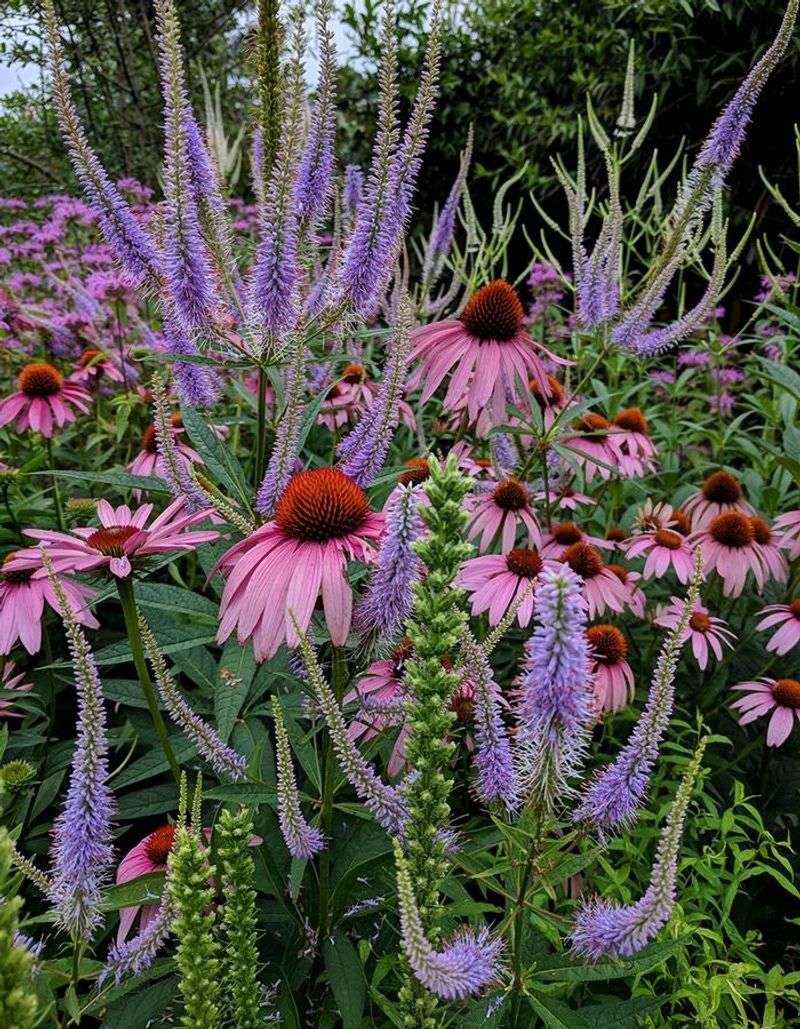
Adult Hemaris moths are remarkably flexible foragers. NC State Extension notes that these adults visit just about anything in bloom, so the moth that visited your garden was not necessarily looking for one specific plant.
What the sighting does suggest is that you have blooms that are accessible, open enough for a hovering insect to reach the nectar, and available during the season when the moth was active.
Flower shape matters more than most gardeners realize. Tubular or open-faced flowers that hold nectar in a position a hovering moth can reach tend to attract more visits than blooms with very short or tightly enclosed nectaries.
If your garden already has bee balm, phlox, coneflowers, or similar open-structured plants, those could be part of what drew the moth. The layout also plays a role: a relatively open bed with flight clearance around the plants is easier for a hovering insect to work than a dense tangle.
Diversity and succession of bloom across the growing season are more reliable than any single plant choice. NC State’s native plants guidance recommends matching species to your specific site conditions, including light, moisture, drainage, and soil type, rather than assuming a plant that thrives in the Piedmont will perform the same way in the Mountains or Coastal Plain.
A bee balm that struggles in heavy Piedmont clay will not contribute much to any pollinator’s foraging options.
NC State’s landscaping for wildlife resource specifically recommends diverse plantings with staggered bloom times so that something is always flowering through the season. Filling that timeline with plants suited to your ecoregion gives visiting moths more reasons to return and more chances to find nectar when their populations are peaking.
The visit you saw was a sign that at least one piece of that puzzle is already in place.
A flower visit does not prove the moth lives there
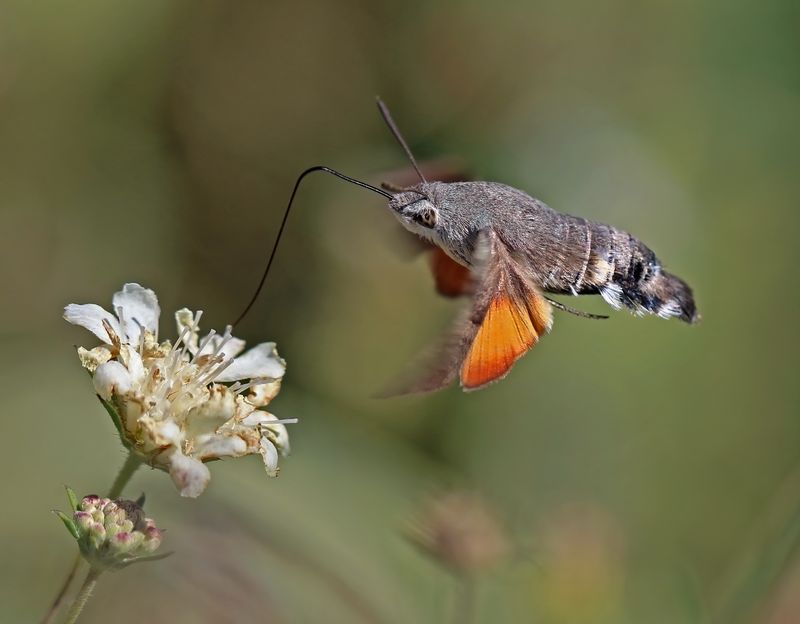
There is a meaningful difference between a yard that feeds a moth and a yard that supports its entire life. An adult hummingbird moth stopping at your flowers is evidence that it found a usable nectar source, full stop.
It is not evidence that the moth hatched on your property, that its caterpillars are feeding somewhere in your beds, or that your yard is set up to carry the species through a complete season.
NC State Extension explains that Hemaris caterpillars depend on specific host plants, including dogbane, snowberry, honeysuckle, and dwarf bush honeysuckle for the two North Carolina species covered. The caterpillars also need places to pupate, typically in cocoons tucked into leaf litter or soil.
An adult can fly in from a neighbor’s yard, a nearby hedgerow, or a weedy area along a fence line, find your flowers useful, and then move on. The adult’s presence alone cannot confirm that the caterpillar stage has everything it needs on your property.
The BAMONA profile for the snowberry clearwing reinforces that these moths range across a broad area as adults. A well-kept flower garden without a single host plant can still attract foraging adults from surrounding habitat, which is why the sighting is encouraging without being conclusive about local reproduction.
None of this means a tidy flower-filled bed has failed. Providing nectar is genuinely useful to a moth that needs fuel.
The distinction simply matters for readers who want to know what their yard is actually doing versus what it could do with a few additional features. Host plants and some undisturbed ground are the pieces that move a yard from a convenient rest stop to a place where the moth’s full life cycle has a real chance.
Turn one encouraging sighting into better habitat
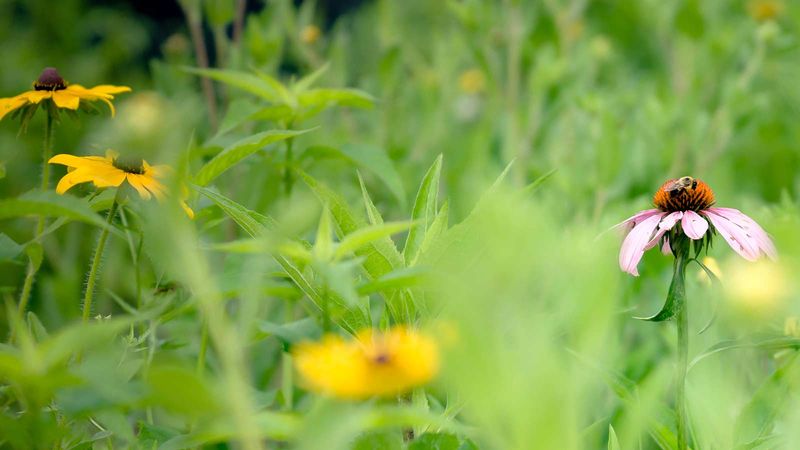
One visit is a starting point, and there are practical ways to make your yard more useful to moths without turning it into a full restoration project. The goal is to add a few well-chosen features, not to overhaul everything at once.
Plant diversity across the growing season is the single most consistent recommendation from NC State for supporting wildlife in home gardens. NC State’s landscaping for wildlife guide recommends mixing native grasses, forbs, shrubs, and flowering plants with staggered bloom times so that nectar is available from early spring through late fall.
For Piedmont gardeners, that might mean adding native phlox for spring, bee balm or mountain mint for summer, and ironweed or goldenrod for fall. Mountain gardeners will find different species better suited to cooler, moister conditions, and Coastal Plain yards may benefit from heat-tolerant natives like blanket flower or native salvia.
Including host plants is the step that moves a yard closer to supporting the moth’s full life cycle. NC State’s native plants handbook emphasizes choosing plants matched to your specific site conditions, not just to a general “native” label.
A honeysuckle or dogbane planted where it suits the soil and light will contribute far more than a poorly adapted specimen that barely survives.
Leaf litter and less-disturbed soil beneath suitable plants give caterpillars and pupating moths somewhere to complete their development. NC State confirms that Hemaris caterpillars pupate in leaf litter or soil, so a modest area of undisturbed ground under a host shrub can make a real practical difference.
You do not need to abandon tidiness across the whole yard; a few square feet of relaxed ground cover in a back corner or under a shrub line is enough to offer that resource.
A 100-percent-native yard is neither required nor automatically easy to maintain. Native plants can need watering while they establish, and poorly chosen natives in the wrong site conditions will underperform just like any other plant.
These steps can improve your yard’s potential to support moths; they do not transform one sighting into proof that the habitat is complete.
Use sensible pesticide and lighting practices
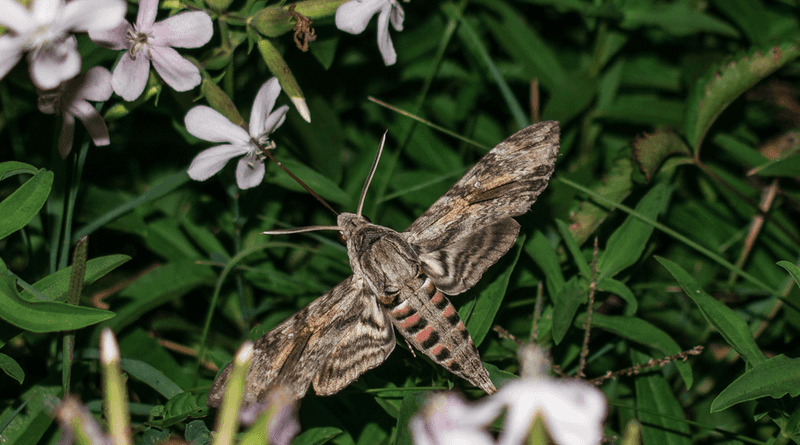
Two common homeowner habits can affect moths and other pollinators in ways that are easy to overlook: routine insecticide use and unnecessary outdoor lighting. Neither requires a dramatic change to address, and adjusting both can improve your yard’s value to moths without costing much effort.
Broad-spectrum insecticides applied on a routine schedule are a real concern for caterpillars and pollinators. These products are designed to kill insects on contact or through residue, and they do not distinguish between pest species and beneficial ones.
NC State’s wildlife landscaping resource recommends avoiding routine pesticide use in areas managed for wildlife, and NC State’s Hemaris moth page notes that no control measures are recommended for these caterpillars since they are not a residential pest problem. Skipping the preventive spray cycle in beds where you want to support pollinators is a straightforward protective step that costs nothing.
Outdoor lighting is a separate but relevant issue. Research published in Nature Communications found that artificial nighttime lighting can alter hawkmoth visual behavior and interfere with nocturnal pollinator activity.
A related study in Nature identified artificial light at night as a threat to pollination by disrupting the behavior of moths and other nighttime flower visitors. The practical response for homeowners is modest: turn off porch and landscape lights that serve no real purpose after dark, use timers so fixtures are not running all night, and aim any essential lighting downward or away from flowering beds.
Specific bulb color recommendations are less reliable than simply reducing the total amount of light pointed at or near your garden habitat.
On the subject of caterpillars generally: Hemaris caterpillars are not a stinging threat and are not considered a pest by NC State. That said, Poison Control advises not handling unidentified spiny, hairy, or brightly colored caterpillars with bare hands, because some North Carolina caterpillars do have defensive structures that can cause skin irritation.
That is a general safety rule, not a warning specific to Hemaris, which are harmless to people.
Read the next visit as a pattern, not a verdict
One moth at dusk is a satisfying sign. Repeated visits, especially across different weeks or different flower types, start to tell a richer story about what your yard is consistently offering.
Watching for that pattern is more informative than drawing firm conclusions from a single sighting.
Pay attention to which plants the moth returns to and whether you see it at different times of day or in different seasons. NC State notes that the hummingbird clearwing produces at least two generations annually in North Carolina, so a yard with consistent bloom and suitable host plants may see adults in both spring and late summer.
If you add a host plant or a patch of undisturbed ground and later notice caterpillars or more frequent adult visits, that is meaningful evidence of progress. If visits stay rare, the yard may still be a useful stop on a broader foraging route, which is still worth something.
NC State’s wildlife landscaping guidance frames the goal well: build diversity, match plants to your site, and allow small areas of the yard to stay a little less managed. Those are achievable steps for any North Carolina homeowner, and none of them requires a perfect yard to be worthwhile.
The moth that visited your garden last evening was not grading your property. It was using what you had built well enough to be useful, and that is a fine place to start.