
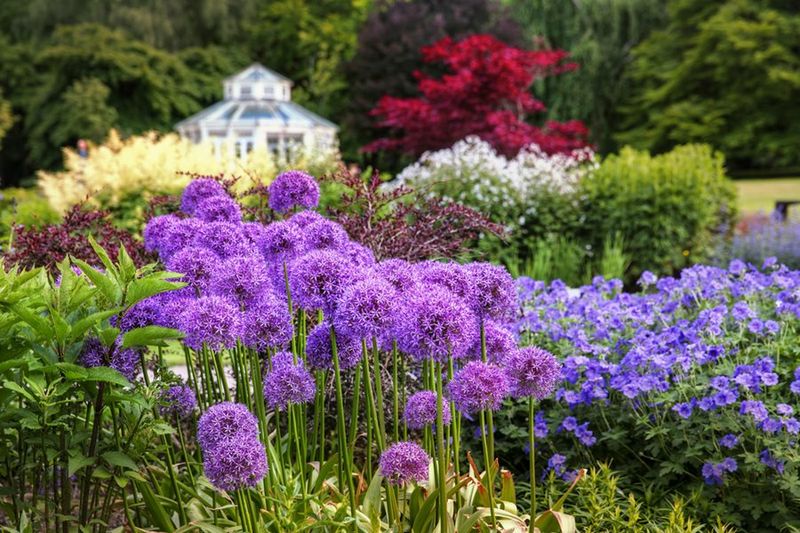
Ornamental alliums are one of those plants that look effortless in a neighbor’s yard but frustrating in your own. The difference usually comes down to a few decisions made before the bulb ever goes in the ground.
North Carolina gardeners who get reliable results year after year are not using a secret formula, but they are paying attention to plant selection, site conditions, and a handful of care habits that match their specific corner of the state.
Not every allium is built to return bigger
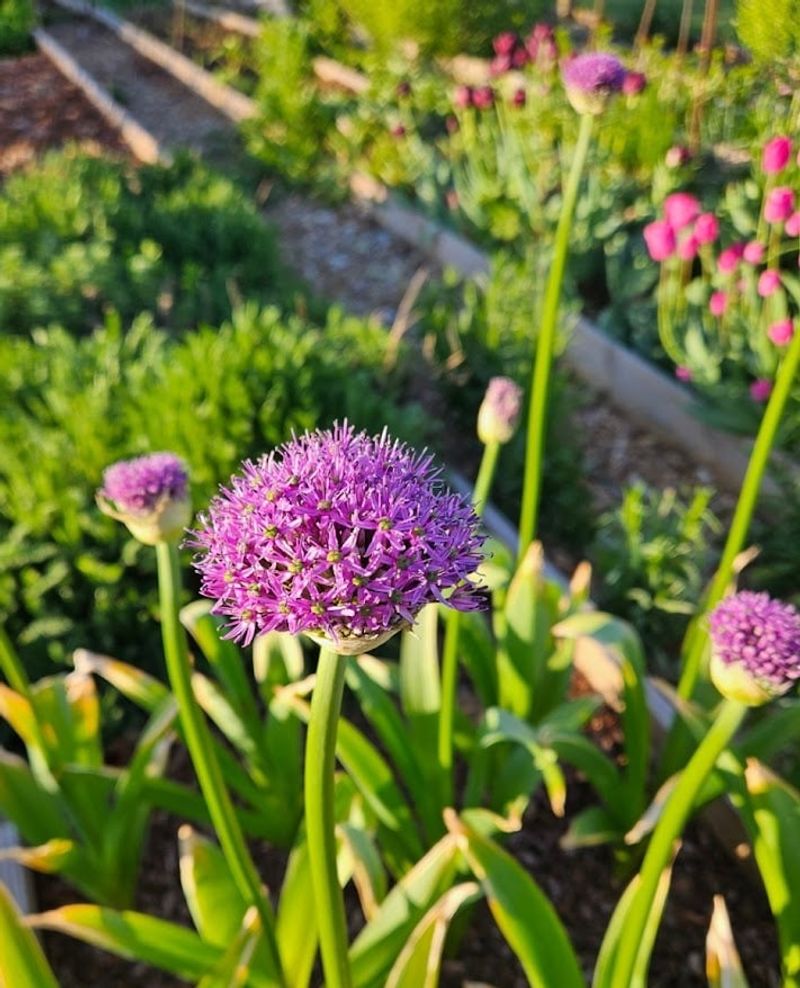
Treating “allium” as one plant is the single fastest way to end up with a disappointing bed. NC State Extension’s allium overview describes a genus of roughly 700 species and cultivars, spanning spring-blooming bulbous types, summer-blooming herbaceous perennials, edible onions and garlic, and native species such as nodding onion.
Each group behaves differently, multiplies differently, and responds to care differently.
Spring-blooming bulbous alliums, such as the tall purple globe types commonly sold in fall bulb catalogs, flower in late spring and then shed their foliage entirely. Summer-blooming clump-forming types, such as Allium ‘Millenium’, recognized by the Perennial Plant Association as a standout garden perennial, hold their foliage longer and are generally propagated by division rather than seeds or offsets.
Applying the same care instructions to both groups causes problems.
North Carolina’s geography adds another layer. NC State Extension winter-preparation guidance places western NC generally in zones 6b-7a, the Piedmont around 7b, and the Coastal Plain near 8a in a typical winter.
Elevation, slope, and local microclimate shift those numbers further. A cultivar that sails through a Piedmont winter may struggle at higher mountain elevations or behave differently in the warmer, sandier coastal soils.
Before applying any care advice, identify the specific allium you are growing. Check whether it is a bulb-forming type or a clump-forming perennial, confirm its hardiness zone rating, and match it to your region.
The plant tag or a reliable nursery source is a better starting point than generic allium advice that ignores these distinctions.
Plant the right bulb at the right fall depth
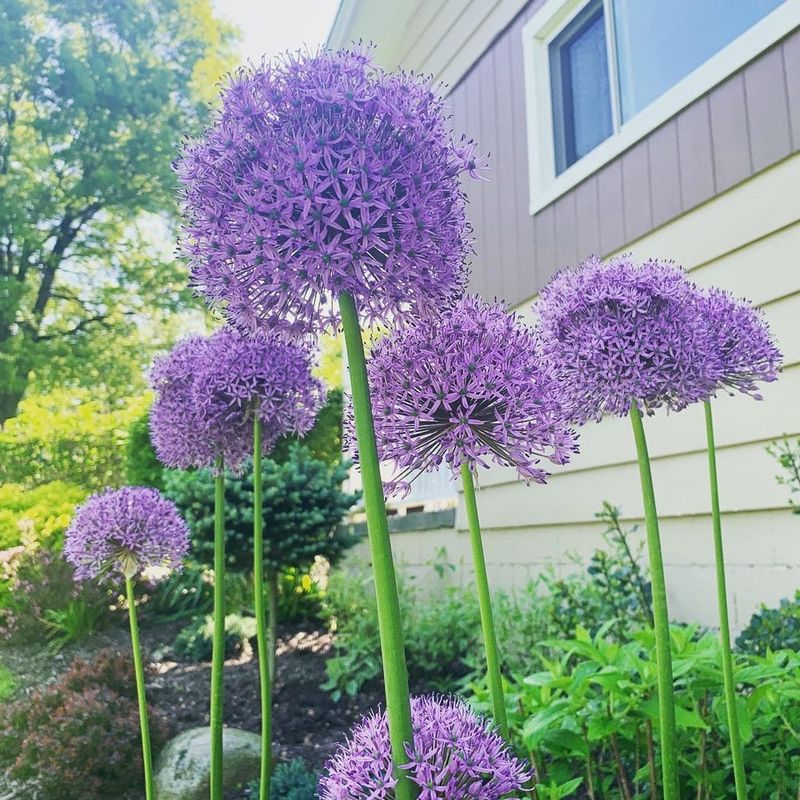
Fall planting sets up everything that follows. Bulb-forming ornamental alliums need time to establish roots before the ground freezes, and getting them in the ground at the correct depth gives them the best shot at surviving winter and flowering the following spring.
Royal Horticultural Society guidance on growing alliums recommends planting in early to mid-autumn and suggests a depth of approximately four times the bulb diameter for border alliums. NC State’s general bulb guidance, as referenced in the Extension Gardener Handbook on herbaceous ornamentals, gives 2.5 to 3 times the bulb diameter as a standard rule.
Those two figures are not in conflict; they reflect different allium types and sizes. When the cultivar’s package instructions differ from either number, follow the package.
Iowa State Extension’s ornamental onion guide points to October as a typical planting window in its region, which translates roughly to October through early November for much of the NC Piedmont and mountains, and potentially into November for the warmer Coastal Plain. The goal is to get bulbs in before the soil temperature drops below about 40 degrees Fahrenheit.
Plant bulbs point-up in a hole wide enough to set each one without forcing it. Firm the soil gently over each bulb, water in lightly, and let the ground do the rest.
Proper depth supports establishment, but it cannot compensate for a bulb that was poorly stored, damaged before purchase, or planted in a site with drainage problems. Start with firm, unblemished bulbs from a reputable source, and the rest of the work becomes much easier.
Sun and drainage are major persistence factors
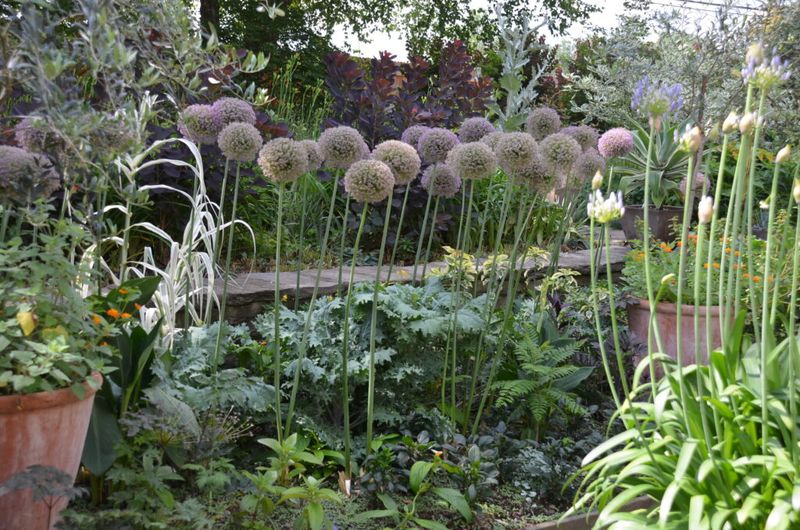
Sun and drainage are major factors in whether an allium planting persists from year to year. Most ornamental alliums want full sun, meaning at least six hours of direct light daily.
Reduced light tends to produce weaker stems and floppier flower heads, and in dense shade, some cultivars will simply stop flowering over time.
The Missouri Botanical Garden, the Royal Horticultural Society, Iowa State Extension, and NC State all flag well-drained soil as essential. Missouri Botanical Garden’s allium profile specifically notes that wet or waterlogged soil increases the risk of bulb rot and fungal disease, which can kill bulbs outright or weaken them to the point where they no longer flower reliably.
A bulb sitting in standing water after a heavy rain is at risk regardless of how well everything else was done.
Piedmont gardeners often deal with heavy clay soils that hold water longer than alliums prefer. Amending a planting bed with coarse sand or fine pine bark, or building a raised bed, can dramatically improve drainage without major construction.
Iowa State Extension’s ornamental onion guidance reinforces the same drainage priority, noting that good soil preparation matters more than fertilizer for long-term performance.
Mountain gardeners face different challenges: slopes may drain well but cold pockets and late frosts can stress bulbs. Coastal Plain soils often drain quickly, which actually suits many alliums, but sandy conditions may need organic matter to hold enough moisture during dry spells without staying soggy.
NC State’s allium database entry notes that cultivar choice, hardiness, and site conditions all interact. Drainage and sun are the starting point, not the whole answer.
The green leaves fuel next year’s growth
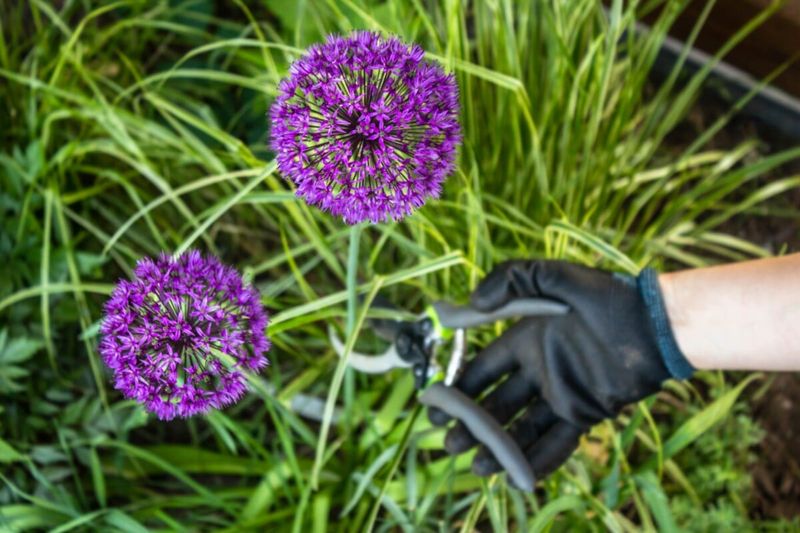
After the flowers finish, the leaves look tired fast. That is the moment many gardeners reach for scissors, and it is exactly the wrong time to cut.
The green foliage is still working, pulling energy down into the bulb through photosynthesis and building the reserves that will fuel next year’s growth.
The NC State Extension Gardener Handbook is direct on this point: removing, bending, or braiding fading foliage can markedly reduce future bulb size. That guidance applies to spring-blooming bulbous alliums specifically.
The foliage should remain until it has yellowed completely, fallen over on its own, and releases easily from the bulb when given a gentle tug. Pulling it before that point interrupts the energy transfer.
The RHS allium growing guide acknowledges that some allium leaves begin to decline right around flowering time, which can look untidy. The practical solution is placement: tuck alliums behind or among later-emerging perennials, ornamental grasses, or spreading ground covers that will hide the fading leaves without shading the bulbs excessively.
Catmint, salvia, and daylilies are commonly used for this purpose in NC gardens.
Iowa State Extension echoes the same principle: do not cut or mow the foliage prematurely. Retaining the green leaves until natural senescence supports the bulb’s development, but it does not guarantee that next year’s flowers will be larger.
Drainage, light, cultivar health, and winter conditions all contribute to that outcome. Foliage retention is one piece of the picture, not a standalone fix.
Use deadheading and fertilizer with restraint
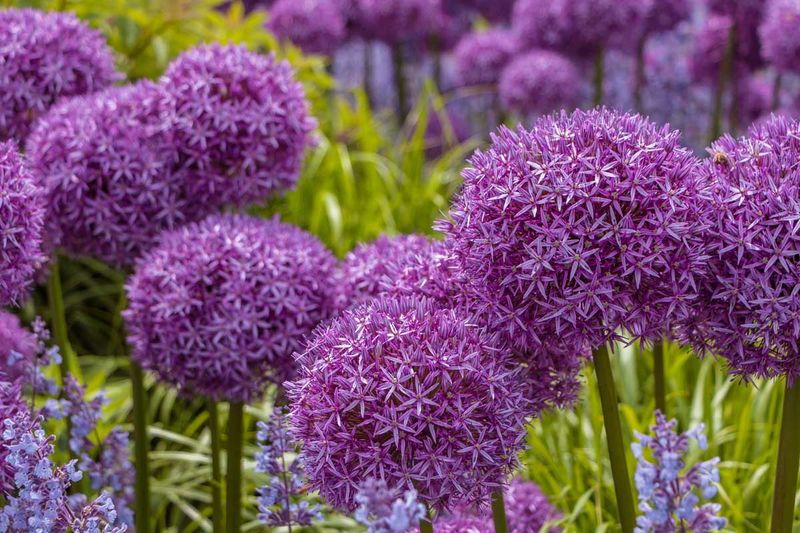
Two practices get overstated in allium advice more than almost any others: deadheading and fertilizing. Both have their place, but neither is a reliable path to bigger blooms on its own, and applying either without a reason can create more problems than it solves.
Deadheading, meaning removing the spent flower head before seeds mature, can be useful for reducing unwanted reseeding in alliums that spread aggressively. The NC State Extension Gardener Handbook recommends removing faded flowers on spring bulbs to reduce seed development and preserve the bulb’s food storage.
That is a reasonable practice for vigorous self-seeders. On the other hand, Iowa State Extension notes that some alliums produce attractive dried seed heads that look good well into fall and do not require deadheading at all.
The decision should be based on the specific plant’s behavior in your garden, not on a general rule that deadheading always produces larger or more numerous flowers.
Fertilizer is a similar story. Iowa State Extension states that ornamental onions generally do not need routine fertilizer.
NC State cautions against heavy nitrogen applications, which can push leafy growth at the expense of flowering and weaken stems. Bone meal is sometimes promoted as a bulb booster, but NC State specifically notes that bone meal phosphorus moves slowly through soil and should not be treated as a proven formula for bigger allium blooms.
If your soil is genuinely deficient, a soil test will show it, and a targeted amendment will address the actual problem.
The most productive mindset here is observation. If an allium is flowering well and the clump is healthy, it likely does not need feeding.
If flowering has declined and the soil test shows a deficiency, a light, targeted application makes sense. Respond to what the plant and the soil are actually showing you rather than following a fixed seasonal schedule.
Divide a crowded clump or replant its offsets
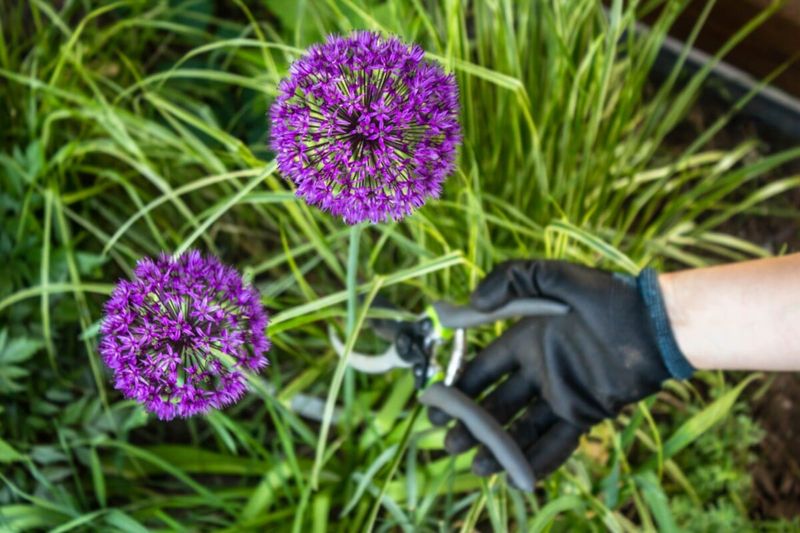
A healthy allium planting does not stay the same size forever. Bulb-forming species gradually produce offsets, small bulbs that form alongside the parent bulb.
Clump-forming perennial types, such as Allium ‘Millenium’, expand outward over several seasons. Eventually, the center of a crowded clump may flower less vigorously, which is a reliable signal that the plant would benefit from being divided or thinned.
Iowa State Extension’s ornamental onion guide notes that seed-grown alliums can take approximately three years to reach blooming size, which makes offsets and division a much faster way to expand a planting than starting from seed. Separating offsets from bulb-forming types and replanting them at the recommended depth gives each one room to develop into a full-sized, flowering plant within a season or two.
For clump-forming perennials, timing the division correctly matters. Early spring, just as new growth emerges, and early fall, while the soil is still warm enough to encourage root establishment before winter, are both commonly recommended windows depending on the plant and local climate.
NC State’s allium database notes that propagation methods vary by species, so confirming the right approach for your specific cultivar is worth the extra step.
Missouri Botanical Garden’s allium profile reinforces that division can refresh a planting and restore flowering vigor when crowding has become a problem. Division does not guarantee that every replanted section will flower larger or more prolifically, but it gives each plant more room, more resources, and a better chance of performing well in its new spot.
Think of it as resetting the planting rather than transforming it.
Build a better chance of persistence, not a yearly guarantee
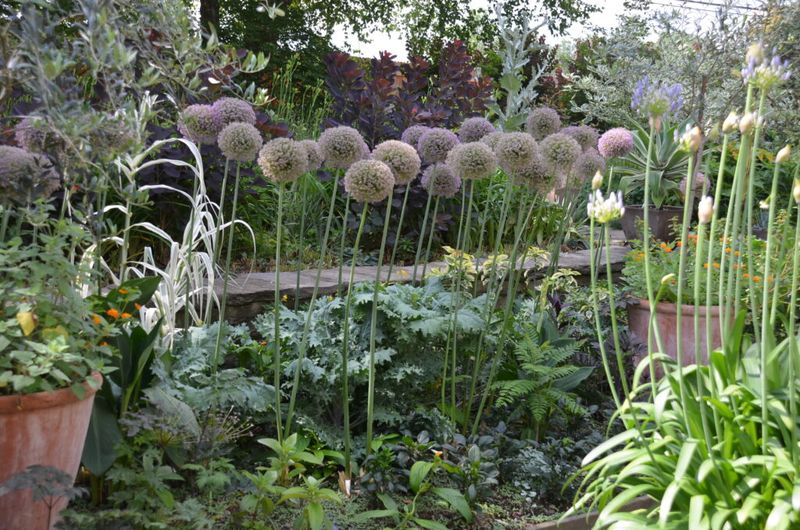
Pulling all of these practices together produces a realistic NC routine: choose a perennial allium species or cultivar matched to your hardiness zone and regional conditions, plant bulb-forming types in fall at the depth the cultivar requires, give them a sunny and well-drained site, and let the foliage finish on its own schedule. Feed only when a soil test shows a genuine need, and divide or separate offsets when crowding signals that the plant is ready for it.
Mature, well-sited bulbs and clumps may flower reliably and gradually expand through offsets, which is the closest thing to the “comes back bigger” outcome that most gardeners are hoping for. NC State’s allium overview and regional hardiness guidance both make clear that performance depends on cultivar, site, drainage, winter conditions, and local microclimate.
No combination of practices guarantees that every allium will return, bloom every spring, or grow larger each year.
One more thing worth keeping in mind: deer and rabbits tend to avoid alliums because of their strong odor, which makes them a useful choice for yards with browsing pressure. That resistance does not mean alliums are safe for household pets.
ASPCA guidance on pet-safe yards and their toxic plant listings identify onions, garlic, chives, and other Allium species as capable of damaging red blood cells in dogs and cats. Bulbs are especially concentrated and should be kept well out of reach of pets during planting and storage.
Good allium results in North Carolina are less about secrets and more about matching the right plant to the right place, then getting out of its way.