
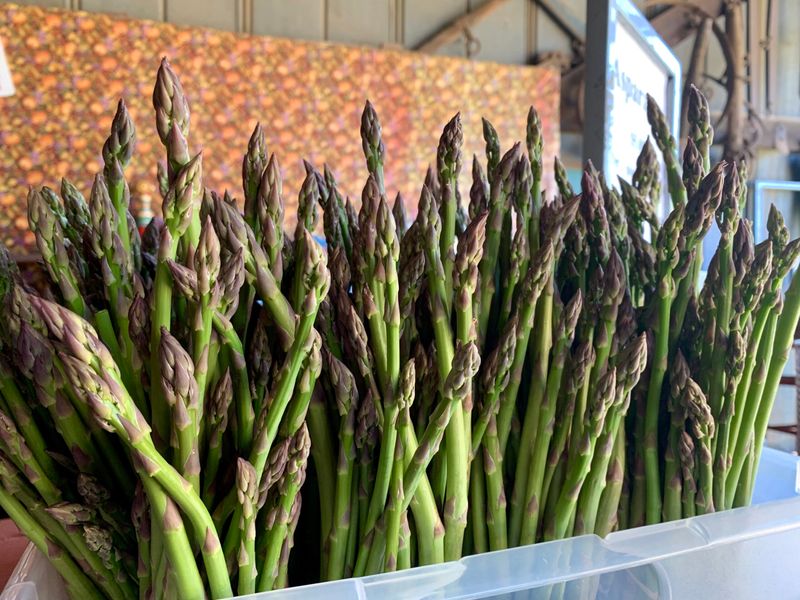
Asparagus is one of the few vegetables you plant once and harvest for many springs to come. North Carolina gardeners from the Coastal Plain to the mountains have found that a well-prepared bed can produce fresh spears for 15 years or more, though the results depend on choices made long before the first crown goes in the ground.
The real method is not a single trick but a package of decisions about site, soil, crowns, and patience that stacks the odds in your favor.
A Long-Lived Asparagus Bed Starts With the Site, Not the Crowns
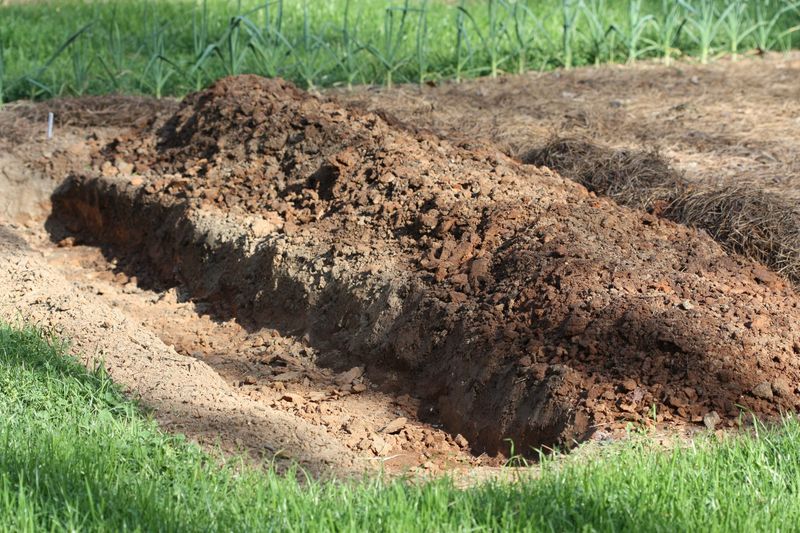
Asparagus is not forgiving about where you put it. Because a healthy planting can occupy the same ground for 15 years or more, the site you choose matters more than any other single decision you make.
NC State Extension’s home-garden asparagus guidance describes asparagus as a perennial capable of producing for 15 years or more under proper management, but that potential depends heavily on starting conditions rather than on any secret growing method.
Full sun is non-negotiable. Asparagus fern needs direct sunlight through the summer months to photosynthesize and rebuild the crown reserves that power the following spring’s spears.
Even partial shade from a nearby tree, fence, or structure can reduce fern vigor over time and shorten the productive life of the bed.
Soil drainage is equally critical. Asparagus roots sit in the ground year-round and cannot tolerate waterlogged or compacted conditions.
Poorly drained soil promotes crown rot and creates an environment where disease pressure builds season after season. If your chosen spot holds water after rain or has heavy clay that stays soggy for days, consider building a raised bed to improve drainage before planting anything.
Weed pressure is the third site factor worth addressing before crowns arrive. Asparagus competes poorly with established weeds, especially perennial grasses and broadleaf weeds with deep roots.
A site that has been in lawn, pasture, or weedy cover for years will need thorough preparation to clear persistent weed roots before planting, because hand-weeding around established crowns is difficult and herbicide options are limited.
Keep in mind that permanent asparagus rows take up substantial space. Row spacing of roughly four to five feet or more is commonly recommended, which can make asparagus a poor fit for a small kitchen garden.
Pick a location where the bed can stay undisturbed, receive full sun all day, drain freely, and be kept reasonably weed-free for the long term. Getting that foundation right is what makes everything else work.
Soil Preparation Determines How Well the Bed Recovers Each Year
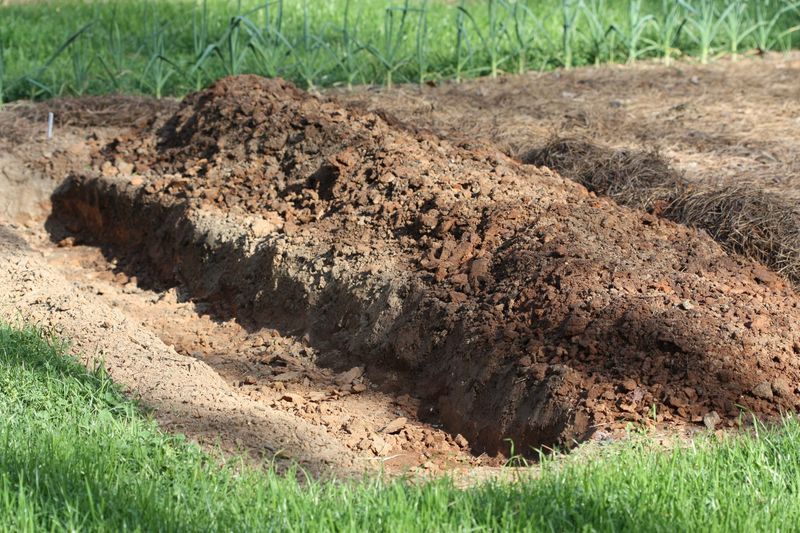
Before a single crown touches the ground, the soil has to be ready. Asparagus is a long-term investment, and the work you do before planting has a bigger influence on year-to-year productivity than anything you add after the crowns are established.
Start with a soil test rather than guessing at what the bed needs. NC State’s asparagus production resource identifies a target pH range of roughly 6.0 to 7.0 for home gardens, with 6.7 to 7.0 noted as optimal, and cautions that soils below pH 6.0 are poorly suited for asparagus.
Use the actual test results from your site to determine how much lime, if any, is needed, rather than applying a fixed amount by default. Your county’s Cooperative Extension office can help you submit a soil sample and read the results.
Phosphorus and potassium are two nutrients that are relatively difficult to incorporate after the crowns are in the ground. Tilling or deep digging disturbs the root system once the bed is established, so the preplant window is the time to work these nutrients into the root zone at the depth the test recommends.
Apply them before planting, not as an afterthought once spears are already emerging.
Organic matter improves both drainage and water retention and adds long-term fertility to the bed. Working in compost or aged manure before planting loosens heavy clay soils and helps sandy soils hold moisture more evenly.
This is especially useful in North Carolina’s Coastal Plain, where sandy soils can dry out quickly during the summer fern-growing period.
Prepare the bed to a depth of at least 12 inches, removing rocks, roots, and debris as you go. A thorough job at this stage saves a great deal of effort later and gives crowns the loose, fertile, well-aerated environment they need to establish quickly and recover strongly after each spring harvest.
Choose Healthy Crowns and Regional Planting Timing
Starting with healthy planting material cuts months off the establishment timeline. One- to two-year-old crowns are the standard choice for home gardeners because they reach harvest sooner than plants started from seed.
Look for firm, disease-free crowns with well-developed root systems, and avoid any material that looks shriveled, moldy, or soft at the base.
Variety selection matters more than many gardeners expect. NC State’s home-garden asparagus guide lists Jersey Giant, Jersey Knight, and Jersey Gem among varieties that perform well in North Carolina.
All three are all-male hybrids, which generally produce more spears per plant and do not set berries or scatter volunteer seedlings through the bed.
That said, comparative research on male and female asparagus plants has found that the yield advantage of all-male hybrids varies among cultivars and is not universal across every test, so the word “generally” applies rather than “always.”
Planting time in North Carolina depends on where you garden. The broad home-garden window runs from mid-January through mid-March while crowns are still dormant, but workable soil conditions differ significantly across the state.
In eastern North Carolina’s Coastal Plain, soils warm and dry out earlier in the year, allowing planting toward the earlier end of that window. In the Piedmont, mid-February through March is more typical.
Gardeners in the mountains often need to wait until April or even later, when soils are workable and hard freezes are less likely. Do not force crowns into cold, waterlogged ground just to hit an early calendar date.
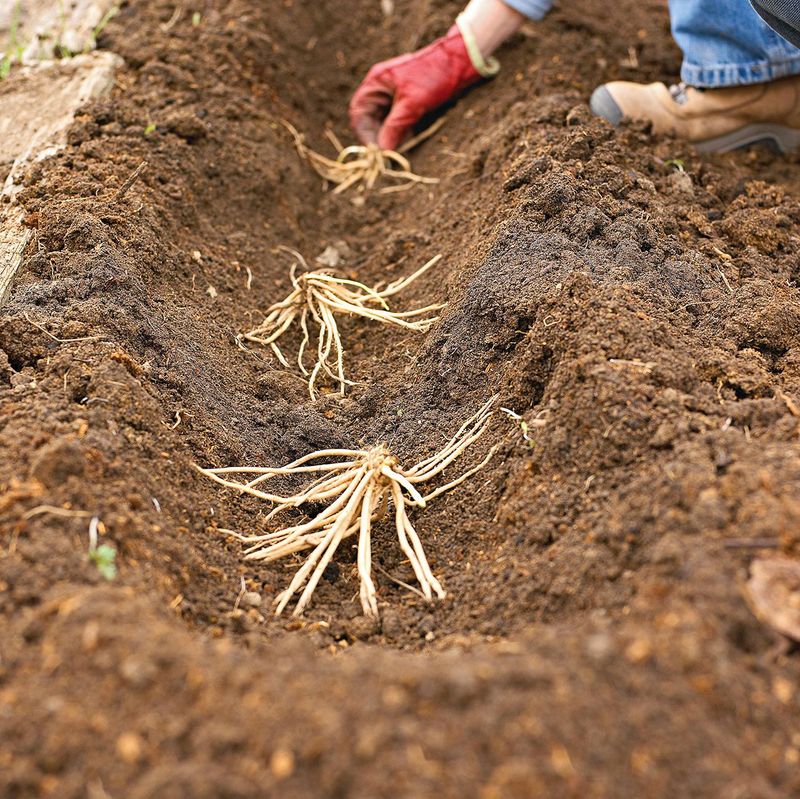
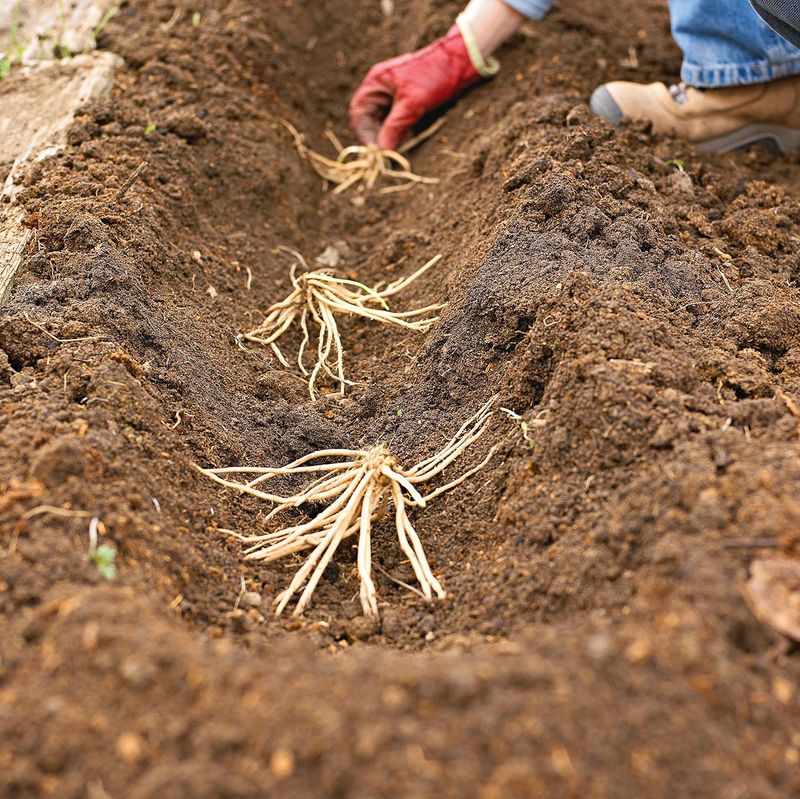
Plant crowns in a trench roughly 6 to 8 inches deep. Set them at the bottom, spread the roots out naturally, and cover with about 2 inches of soil to start.
As shoots emerge and grow, gradually fill in the trench with additional soil until it is level with the surrounding bed. Spacing recommendations vary depending on the production context: a compact home bed might use crowns 12 to 18 inches apart in rows spaced at least 4 to 5 feet from each other.
Tighter spacing produces more spears per square foot initially but can crowd the fern canopy over time and create conditions that favor disease.
Protect the First Four Seasons With Patient Harvesting
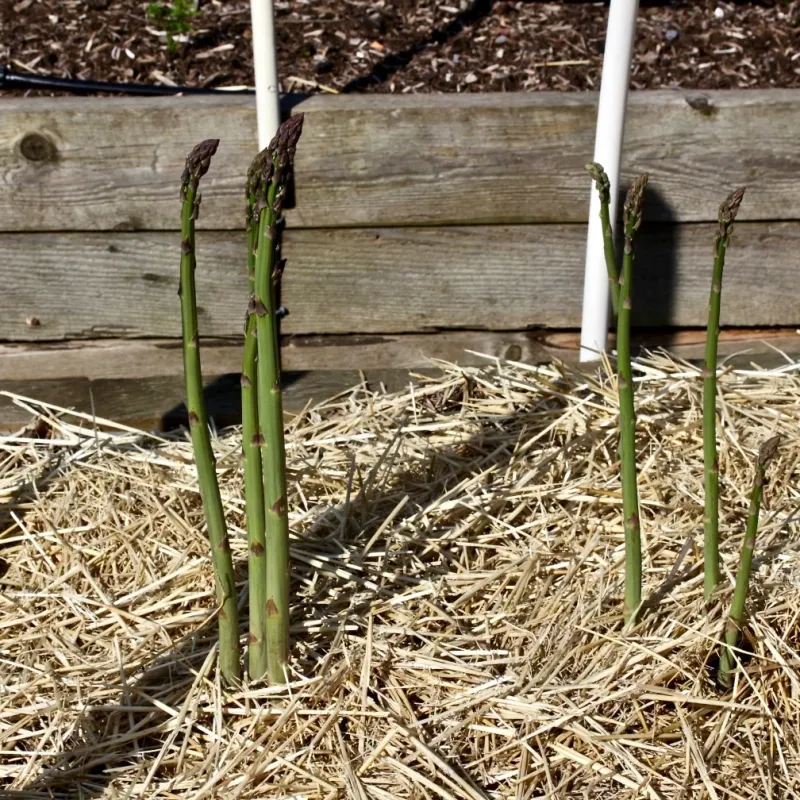
The most common mistake new asparagus growers make is harvesting too soon. Pulling spears before the crowns are ready feels rewarding in the short term, but it drains the energy reserves the plant needs to build a strong root system.
Weak crowns produce fewer spears, recover more slowly, and are more vulnerable to disease and drought. The restraint you show in the first few seasons is what makes the bed productive for 15 years or more.
The trench-and-fill method supports strong establishment from the start. Place crowns about 6 to 8 inches deep in the prepared trench, cover them with roughly 2 inches of soil, and let the first shoots emerge naturally.
As those shoots grow, continue adding soil a few inches at a time until the trench is filled to grade. This gradual filling encourages the crowns to develop a deeper, more resilient root structure.
Follow a clear harvest progression rather than harvesting based on impatience. NC State’s home-garden asparagus guide is specific about this timeline: take no harvest at all during the first growing season after planting crowns.
In the second year, allow only a short harvest period, perhaps one to two weeks, to avoid stressing crowns that are still building their reserves. In the third year, limit or condition harvesting based on how vigorously the plants grew during the previous summer’s fern phase.
By about the fourth year, a well-established bed with strong crown development can support a regular harvest window of six to eight weeks.
Thin spears are the clearest signal that you are asking too much of the bed. If spears emerge pencil-thin or heads begin to open and fern out before you can cut them, stop harvesting for the season and let the fern take over.
Every week of healthy fern growth after harvest adds to the energy stored in the crown for next spring’s production. Protecting that recovery window in the early years is what separates a bed that thrives for a decade or more from one that disappoints by year five.
Harvest the Spears, Then Let the Fern Rebuild the Crowns
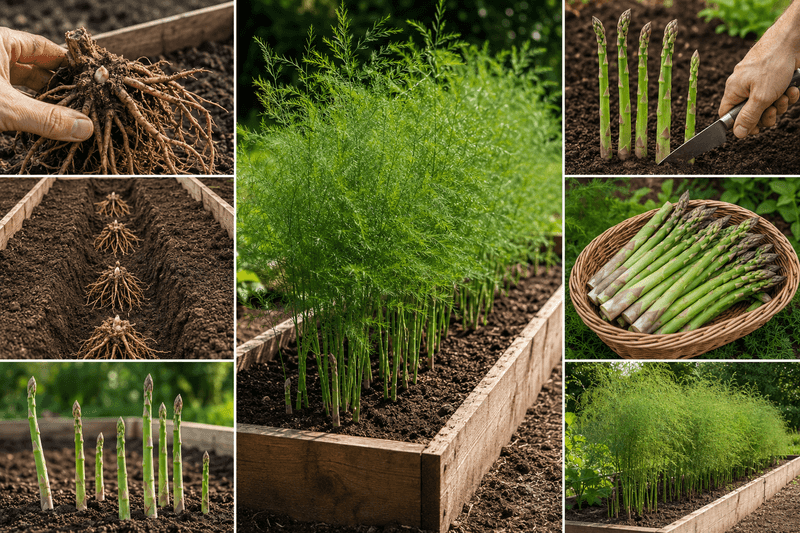
A mature asparagus bed in good health produces a generous flush of spears each spring, but the harvest window has a clear beginning and a clear end. Knowing when to stop picking is as important as knowing when to start.
Cut or snap spears when they reach approximately 6 to 8 inches tall, taking them at or just below ground level. NC State’s Extension Gardener Handbook recommends harvesting spears at this stage before the tips begin to open.
Work carefully to avoid damaging nearby spears that are just emerging, since each damaged spear is lost production. Check the bed daily during peak harvest, because spears can grow several inches in a single warm day.
Three signals tell you when to end the harvest for the season. Production slows noticeably, spear diameter falls to roughly pencil size, or spear tips begin to open and fern out before you can cut them.
Any of these signs means the crown is running low on stored energy and needs the fern phase to begin. Continuing to harvest past these signals weakens the crown and reduces next year’s production.
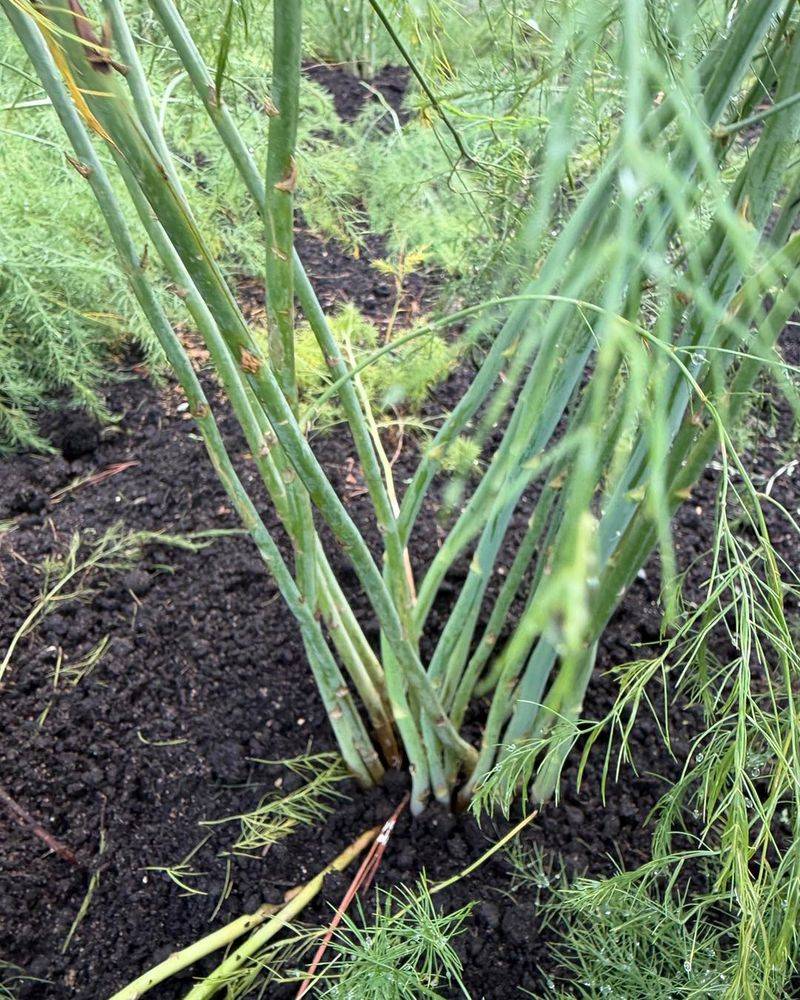
Once you stop cutting, leave all green growth in place. University of Minnesota Extension’s asparagus harvesting guidance explains that the fern phase is when the plant photosynthesizes and rebuilds the carbohydrate reserves stored in the crown.
Removing green fern too early cuts off that recovery process and leaves the crown less prepared for next spring. Let the fern grow freely through summer and into fall.
Cut it back only after it has turned brown or yellow, which signals that the plant has finished moving energy downward into the roots for winter storage.
This cycle, harvest then fern recovery, is the rhythm that sustains a productive bed year after year. NC State’s home-garden guide reinforces that protecting fern growth after harvest is central to long-term bed performance, not an optional afterthought.
Ongoing Bed Care Preserves Future Production
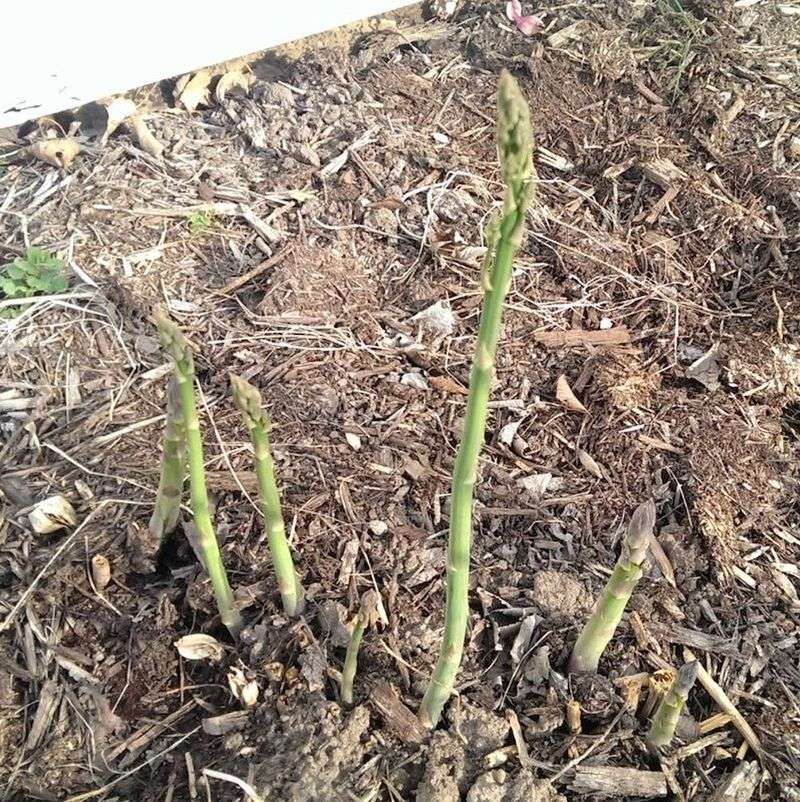
Asparagus is not a plant-and-walk-away crop. The spring harvest gets most of the attention, but what happens the rest of the year determines whether the bed stays productive for another decade or starts declining by year seven or eight.
Weed control is the single biggest ongoing task. Weeds compete directly with asparagus fern for sunlight, water, and nutrients, and a weedy bed produces less energy for the crown to store each summer.
NC State’s asparagus production resource emphasizes keeping beds weed-free, particularly during the establishment years when crowns are most vulnerable. Mulching between rows with straw or wood chips after harvest can reduce weed pressure and help retain soil moisture through North Carolina’s hot, dry summer stretches.
Moisture management matters throughout the growing season, not just during spring harvest. Asparagus fern under drought stress builds smaller crown reserves, which shows up as weaker spear production the following spring.
Aim to keep the soil consistently moist but not waterlogged during the fern phase, especially during dry spells in July and August.
Fertilizer should be guided by soil tests rather than a fixed annual schedule. Apply nutrients based on what the test shows the bed needs, not by a one-size-fits-all rate.
Fertility added after harvest supports fern growth and crown development without pushing excessive soft growth that is more attractive to pests.
Scout the bed regularly for pest and disease activity. NC State’s asparagus pest resource covers common problems including asparagus beetles, which feed on fern and can reduce photosynthesis if populations go unchecked.
No single cultural practice eliminates all pest or disease risk, so monitor the bed and use only treatments labeled for use on asparagus when intervention is needed.
Disease prevention starts before planting but continues with good habits afterward. Postharvest care guidance from University of Minnesota Extension reinforces that adequate moisture, nutrition, and healthy fern all work together to keep crowns vigorous.
If Fusarium crown and root rot is a concern, use disease-free planting material, maintain good drainage, and avoid establishing a new bed in soil where asparagus was previously grown, since the fungus can persist in the soil for years.
Size the Bed for the Harvest Your Household Actually Wants
Planning the bed size around a realistic picture of your household’s appetite saves a lot of effort and disappointment later. Asparagus takes up permanent space and requires years of establishment before it produces reliably, so matching the bed to what your family will actually use makes more sense than planting by optimism.
NC State’s home-garden asparagus guide offers approximate planning figures: around 10 crowns per person for fresh use and at least 25 crowns per person if you want enough for surplus or preservation. These are guidelines for planning purposes, not yield guarantees.
Crown vigor, variety performance, weather in a given season, disease pressure, and how consistently you manage the bed will all shift the actual harvest above or below those estimates.
The harvest window itself is limited. A mature, well-managed bed typically produces during a spring window of roughly six to eight weeks, depending on plant vigor and local conditions.
NC State’s asparagus resource describes asparagus as a seasonal crop rather than a continuous producer, so the bed will not supply the table year-round regardless of its size.
Space requirements can make asparagus a difficult fit for smaller gardens. With rows spaced at least four to five feet apart, even a modest planting for two people at 20 crowns requires a dedicated, permanent strip of garden real estate that cannot be rotated or repurposed.
Compare that footprint honestly with the amount of asparagus your household eats each spring before committing the space.
For a family of four hoping for regular fresh use, a starting target of 40 crowns planted in well-prepared soil is a reasonable planning point, with the understanding that actual harvests will vary by year and that the bed may take three to four seasons to reach full production.
The Payoff Comes From Protecting the Bed’s Future
Everything that makes an asparagus bed last comes back to a sequence of decisions, not a single trick. Reserve a sunny, permanently available spot with deep, well-drained soil.
Test the soil and correct pH and fertility before the crowns go in. Plant healthy, disease-free one- to two-year-old crowns at the right time for your part of North Carolina, whether that is late winter in the east or spring in the mountains when the ground is workable.
Weed consistently, especially in the early years. Let the fern grow freely after each harvest season and cut it back only after it has turned brown.
Stop harvesting when the bed signals that it needs to recover, thin spears or early ferning are clear signs. Follow this approach and NC State Extension’s guidance supports the conclusion that a properly established bed can provide spring asparagus for 15 years or more.
Household supply and long-term performance are still conditional on bed size, crown count, variety, weather, and how carefully the bed is managed each year. Postharvest fern care and season-to-season consistency matter as much as the initial planting.
An asparagus bed rewards the gardener who treats every summer’s fern as next spring’s harvest already growing.