
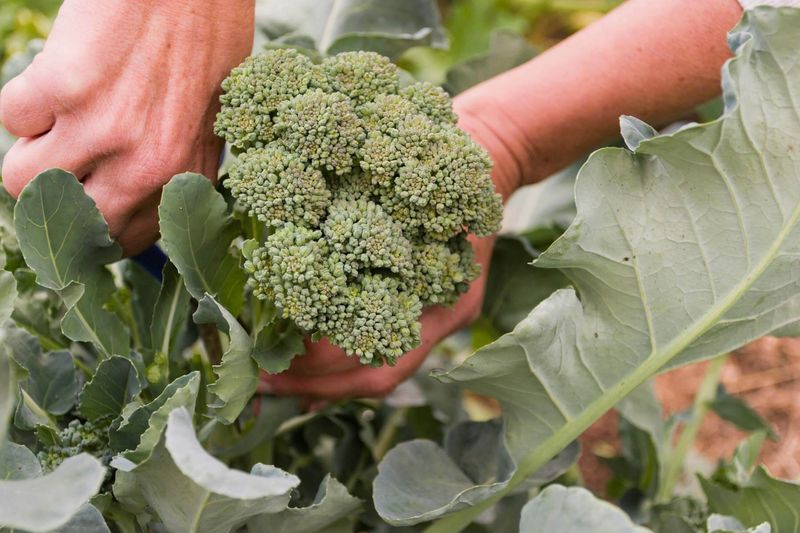
Growing broccoli in the fall sounds simple until you end up with a yard full of leafy plants and no heads to show for it. North Carolina gardeners who succeed at fall broccoli are not using a secret fertilizer or a magic trick.
They are working from a regional calendar, choosing the right cultivar, and managing water and fertility as a system. Getting those details right is the difference between cutting dense green heads in October and pulling up bare stalks after the cold sets in.
Fall broccoli timing changes across North Carolina
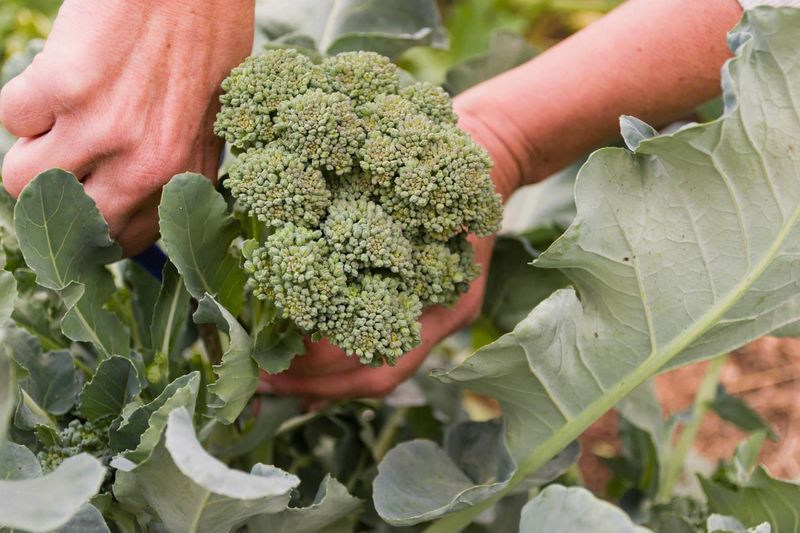
North Carolina stretches across three distinct growing regions, and fall broccoli timing is not the same in each one. NC State Extension’s broccoli production guidance places the fall planting window for eastern North Carolina at approximately August 1 through September 15.
That window gives a 60- to 80-day crop enough warm growing time to form a full head before cold slows development to a crawl.
Piedmont gardeners work with a similar framework, generally targeting plantings around August 1 for crops in that same 60- to 80-day range. Coastal-plain dates may run roughly 7 to 14 days later than the Piedmont because the coast holds warmth longer into fall.
Those shifts matter because broccoli needs active growth, not just survival, to produce a harvestable head.
Western North Carolina is a different story entirely. General vegetable-gardening tables sometimes place mountain planting dates 10 to 20 days earlier than Piedmont dates, but that generic guidance was never meant to apply to fall broccoli specifically.
NC State’s vegetable gardening handbook provides those regional offset figures for vegetables broadly, but NC State’s broccoli-specific guidance generally does not recommend fall planting in western North Carolina at all. Mountain gardeners should contact their local Cooperative Extension office rather than borrowing an eastern or generic western schedule and hoping it works.
The core lesson is that a statewide planting date does not exist for fall broccoli. Local frost risk, average temperatures through September and October, and the specific cultivar’s days to maturity all interact to determine whether a planting has a realistic chance of heading up.
Treating the state as one zone is the first mistake that leads to leafy failures.
Count backward from cold instead of guessing

The most reliable way to set a fall broccoli planting date is to start at the end of the season and work backward. Pull out the seed packet or transplant tag and find the days-to-maturity figure.
Read the fine print carefully, because some packets measure from transplant, others from direct seeding, and a few use different reference points entirely. Using the wrong basis can shift your schedule by three weeks or more.
Once you have that number, count backward from your expected local first-frost or freeze risk. Illinois Extension’s broccoli guide recommends adding roughly 10 days to that count as a buffer when scheduling fall transplants, because cooling fall temperatures slow plant development compared to the spring conditions under which most maturity estimates were generated.
That cushion applies specifically to transplant scheduling. Gardeners starting from seed must add the actual time needed to grow seedlings to transplant size on top of the 10-day buffer, typically four to six weeks depending on conditions.
Frost, freeze, and hard freeze are not the same event, and treating them as interchangeable can mislead your planning. Weather agencies generally distinguish roughly 36 degrees Fahrenheit as a frost threshold, 32 degrees as a freeze, and 28 degrees as a hard freeze.
National Weather Service frost and freeze information explains these thresholds, and the NWS Raleigh frost-freeze maps provide location-specific climate averages for North Carolina that are far more useful than a single statewide date.
Broccoli tolerates frost and can survive brief temperatures well below freezing after it has acclimated. The goal of this backward-count method is not to treat the first frost as a biological deadline.
The real aim is to reach harvest before prolonged cold slows growth so much that a head never reaches full size, regardless of how healthy the plant looks.
Strong transplants and suitable cultivars protect the schedule
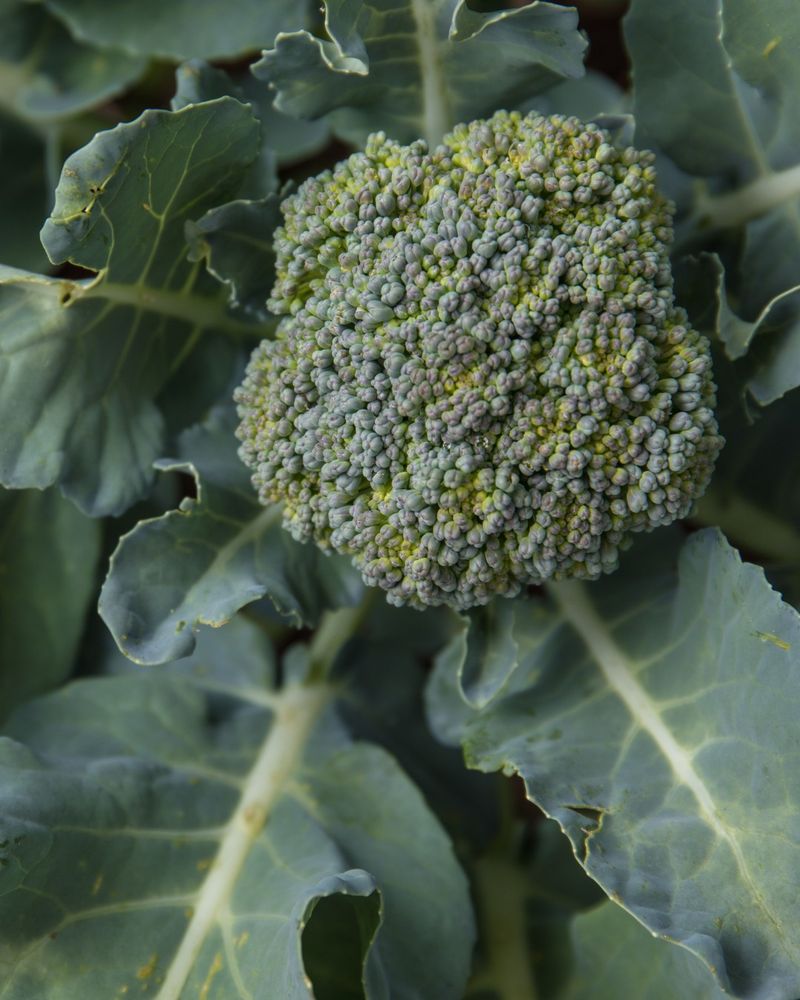
Even a perfectly calculated planting date falls apart if the transplants going into the ground are weak, root-bound, or weeks past their ideal age. Young, vigorous transplants with healthy root systems establish quickly and move into active growth before fall temperatures start dropping.
Overly old or stressed transplants often stall after planting, and that delay eats directly into the narrow fall window.
Stress at transplanting is one of the recognized contributors to buttoning, the condition where a plant forms a tiny, premature head instead of a full-sized crown. Utah State University Extension’s production-problems guide identifies poor watering, low fertility, chilling, heat, insects, and overly old transplants as interacting causes of buttoning.
No single fix prevents it; the transplant itself has to arrive in good condition.
Cultivar selection deserves the same level of attention. Days to maturity, holding ability, heat tolerance, and disease performance all vary across varieties, and those differences matter in North Carolina’s relatively narrow fall windows.
A cultivar bred for longer seasons or poor heat tolerance can struggle to form a firm head when late-August temperatures are still in the mid-80s. NC State’s cultivar selection guide for North Carolina presents performance data from eastern North Carolina field trials that highlight how differently varieties behave under regional conditions.
That evidence is useful, but it reflects specific eastern trial conditions rather than a universal home-garden ranking. A cultivar that performed well in those trials may still behave differently in a Piedmont backyard with different soil, irrigation, and microclimate.
Matching the cultivar to the available growing window, and arriving at planting day with genuinely healthy transplants, gives the timing plan a real foundation to build on.
Even moisture keeps heads developing evenly
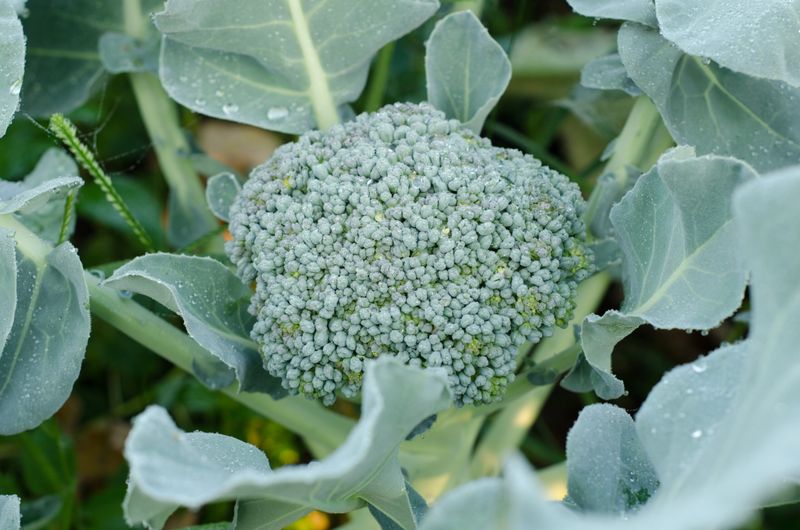
Broccoli heads are immature flower clusters, and they form best under steady, moderate conditions. NC State’s broccoli production guide notes that optimal head development occurs at roughly 54 to 68 degrees Fahrenheit.
Above that range, heat stress can deform heads or cause leaves to grow up into the crown. Below about 41 degrees, growth slows significantly, which is why late plantings often stall before producing anything worth cutting.
Water consistency matters just as much as temperature. Utah State Extension’s production-problems resource links high temperatures combined with inadequate or uneven soil moisture to loose, uneven, or leafy head formation.
The drought-then-flood irrigation pattern is particularly damaging during early head development, when the plant is allocating resources rapidly and any check in moisture supply can redirect growth in the wrong direction.
Illinois Extension’s broccoli guide reinforces that adequate moisture is especially critical as heads develop, not just during establishment. Consistent soil moisture from transplanting through harvest is not optional maintenance; it is part of the head-quality equation.
Mulching is one of the simplest tools for maintaining that consistency. NC State’s home vegetable gardening quick reference recommends loose, weed-free materials such as shredded leaves, seed-free grass clippings, straw, or pine bark.
A two- to three-inch layer slows evaporation, moderates soil temperature swings between warm September afternoons and cooler nights, and reduces the weed competition that can draw moisture away from developing plants. Mulch will not fix a late planting or a poor cultivar choice, but it removes one significant variable from an already narrow growing window.
Side-dress nitrogen in measured stages
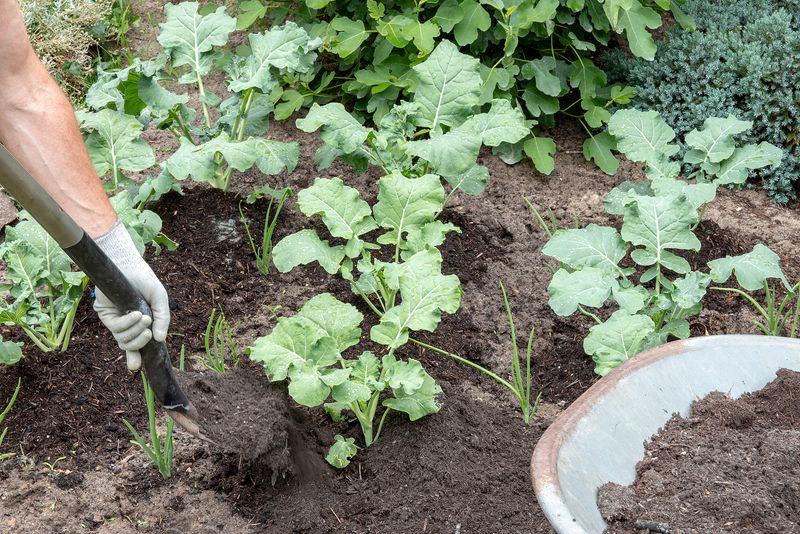
Broccoli is a heavy nitrogen feeder, and a plant running short on nitrogen during active growth will show it through slow development, pale leaves, delayed maturity, and reduced head quality. NC State’s broccoli production guide describes nitrogen as a critical nutrient for yield and quality, recommending split applications rather than a single large dose.
For home gardeners, that translates to feeding in stages across the crop cycle rather than front-loading all the fertility at planting or waiting until heads appear.
NC State’s vegetable gardening handbook suggests that most fall vegetables benefit from nitrogen applications approximately three and six weeks after planting. As a general reference point for individual plants, the handbook mentions a level tablespoon of a high-nitrogen fertilizer placed away from the stem, but that figure is not a broccoli-specific prescription.
The correct amount depends on the fertilizer’s analysis, what a soil test reveals about existing nutrient levels, and the product label’s directions. Copying a commercial production rate into a backyard bed is not appropriate; NC State’s commercial acreage figures are benchmarks for large-scale systems, not instructions for a home garden row.
Excess nitrogen is not a neutral mistake. The same NC State production guide warns that too much nitrogen can produce rapid, poor-quality growth and contribute to tip burn under high temperatures.
Other extension production guidance links excessive nitrogen to hollow stems and recommends more moderate or carefully timed applications. Adding a heavy nitrogen side-dressing the moment heads start to form is exactly the kind of late, blind application that can shift the plant toward leafy, loose growth instead of firm, dense crowns.
Fertility supports the schedule, but it cannot replace correct timing, healthy transplants, or even moisture. A soil test taken before planting gives you the clearest picture of what the bed actually needs, which is always a better starting point than guessing.
Fall pest scouting prevents damaged heads
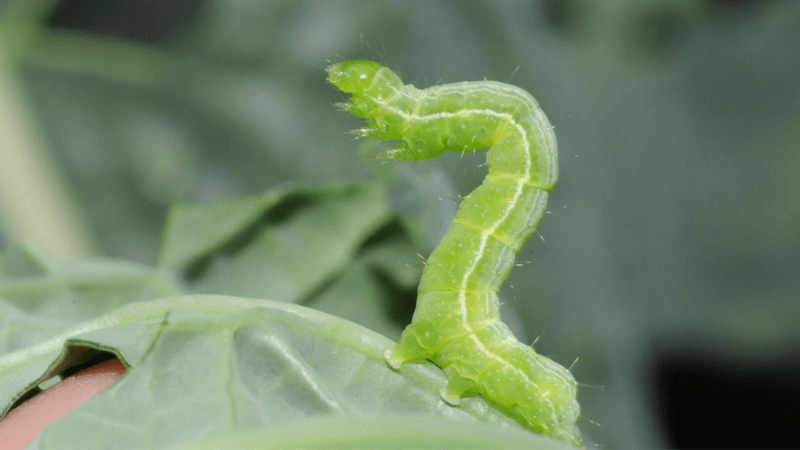
Cooling weather does not clear the pest slate on fall broccoli. Several of the most damaging crucifer insects remain active well into autumn, and a developing head that gets hit by caterpillar feeding in the final weeks before harvest can be ruined faster than frost ever would.
NC State Extension’s crucifers pest guide identifies cabbage loopers, diamondback moth larvae, imported cabbageworms, cutworms, aphids, flea beetles, and cabbage webworm as significant threats. Cabbage webworm is specifically associated with fall damage and can tunnel directly into forming heads.
Regular scouting is the first and most important step. Walking the bed every few days and turning leaves over to check for eggs, young caterpillars, or feeding damage gives you the information needed to respond at the right time.
NC State’s IPM handbook chapter recommends monitoring actual pest levels and choosing cultural, mechanical, biological, or chemical responses based on what you find, rather than applying treatments preemptively against every possible insect.
Hand-picking caterpillars works well at low population levels and costs nothing. Insect-exclusion row cover, when installed before pests arrive, physically blocks adult moths and butterflies from laying eggs on the plants.
Bacillus thuringiensis products, commonly sold as Bt, are a well-supported biological option for caterpillar pests when applied to young larvae. NC State Extension guidance on garden pest management supports these approaches as part of an integrated response.
Any pesticide product must carry a label listing broccoli as an approved crop. Always check the preharvest interval before applying anything close to harvest, because some products require days or weeks between the last application and cutting.
Protecting a nearly ready head from insect damage is worth the effort; skipping scouting in the final weeks is one of the more preventable ways to lose a fall crop.
Row cover buys harvest time, but it cannot defeat winter
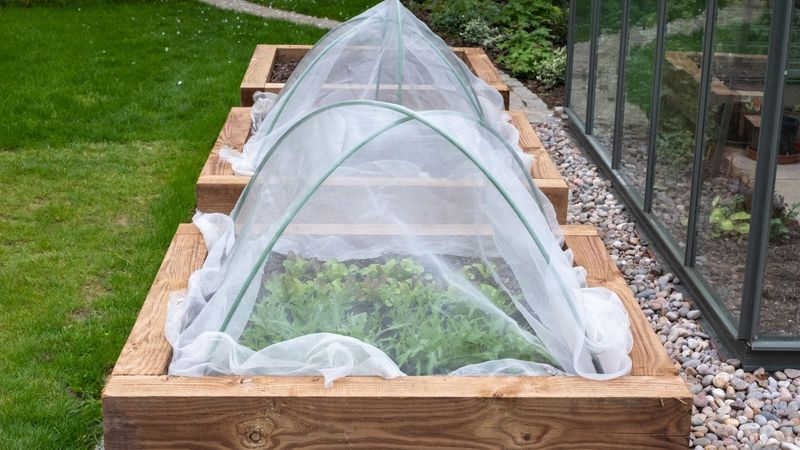
Floating row cover is most useful as a finishing tool for a crop that is already close to harvest, not as a rescue device for a badly late planting. When properly installed over wire or plastic hoops so the fabric is not pressing directly on the foliage, row cover can provide approximately 4 to 5 degrees Fahrenheit of frost protection.
NC State’s season extenders appendix documents this protection range for floating row covers and low tunnels, and also notes that covers can exclude some insect pests when the edges are sealed before insects arrive.
Several installation details determine whether the cover actually delivers that protection. Hoops or another rigid support keep fabric off the foliage, because direct contact transfers cold to the plant surface and eliminates the insulating air layer the cover is meant to create.
Edges should be secured with soil, rocks, or sandbags to prevent wind from lifting the cover and letting cold air flood in. Check under the cover periodically for insects that were already on the plants or in the soil before installation, because a sealed cover can trap pests as effectively as it excludes them.
NC State’s broccoli production guide confirms that well-acclimated broccoli can tolerate frost and brief severe cold, which means a light frost event is not automatically a crisis. Row cover extends that tolerance window modestly.
What it cannot do is protect a planting through a prolonged hard freeze or a week of temperatures in the low 20s. Wind, poor sealing, foliage contact, and extended cold all reduce the cover’s effectiveness below that 4- to 5-degree estimate.
Ventilation on warm fall days matters too. Temperatures under sealed row cover can climb quickly when afternoon sun hits the fabric, and a head developing under excessive heat can suffer the same quality problems as one stressed by cold.
Lift or vent the cover on days when temperatures rise well above optimal, and reseal it before nightfall.
Loose heads usually point to accumulated stress
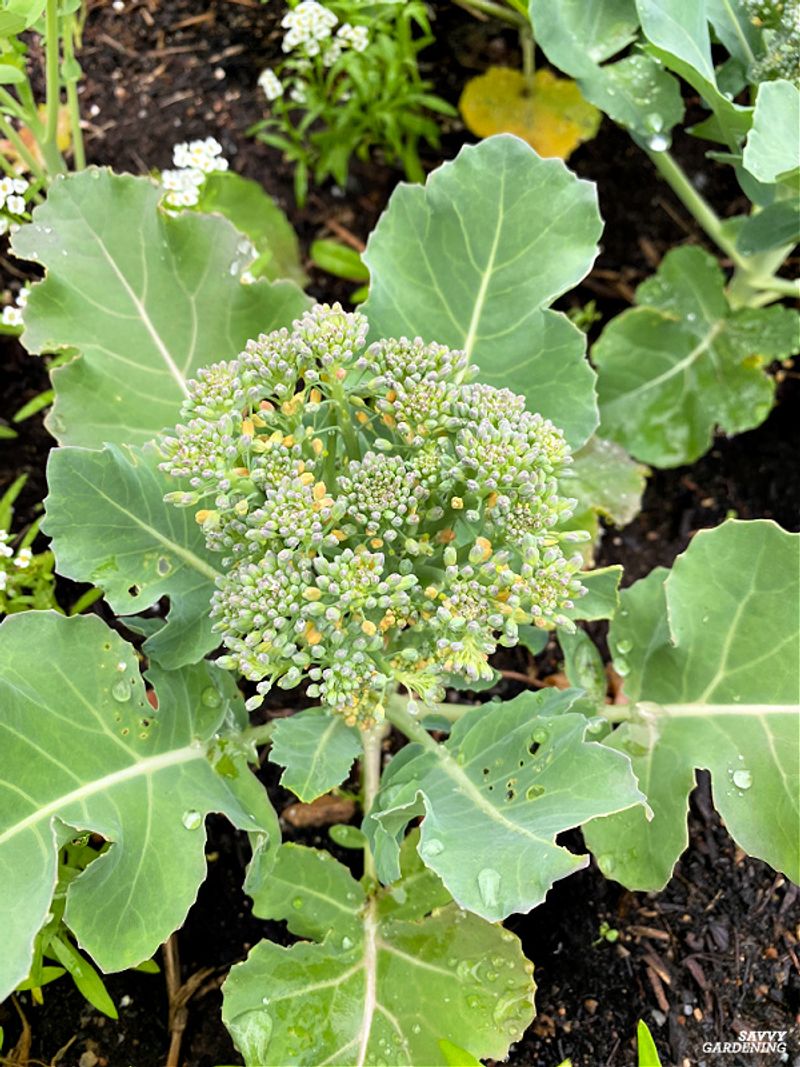
A loose, open, or prematurely small broccoli head is rarely the result of one thing going wrong. Buttoning, where the plant forms a tiny head well before it has reached full size, can follow from poor watering, low fertility, chilling during transplant establishment, heat stress during head initiation, insect feeding pressure, or starting with transplants that were already too old and root-bound.
Utah State Extension’s production-problems guide describes buttoning as a response to accumulated stress rather than a single cause, which is why adding fertilizer after the fact rarely corrects it.
Loose or leafy heads can look similar to buttoning but often have a different cause. Heat during early head formation, uneven moisture, or nutrient imbalance can all push the plant toward disordered bud development, with leaves growing up into the crown or buds forming at uneven rates.
Those symptoms point back to conditions during the weeks before the head appeared, not to whatever happened the day you noticed the problem.
Open yellow flowers are a separate issue worth distinguishing. Yellowing or fully open buds mean the head has moved past harvest readiness into over-maturity.
That progression happens faster in warm weather and can occur without any frost event at all. NC State’s cultivar selection resource specifically notes holding ability as a key trait, because some varieties stay in the harvestable window longer than others under field conditions.
NC State’s broccoli production guide ties head quality to the full system: timing, transplant condition, moisture, fertility balance, and pest management together. When something goes wrong with a fall planting, the most useful response is to trace back through each of those factors and identify where the system broke down, then adjust the next planting rather than chasing a quick fix on a head that has already stalled.
Harvest when the buds are firm and still closed
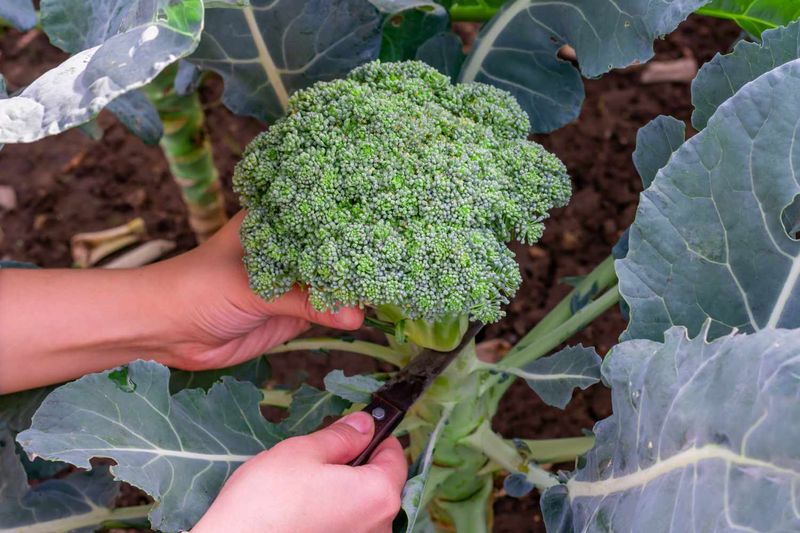
Readiness matters more than a specific head size. Illinois Extension’s broccoli guide gives 4 to 6 inches as a common central-head diameter range, but stresses that firmness and bud condition are the real indicators.
When the head is compact, the buds are enlarged but still tightly closed, and the crown feels solid under gentle pressure, that is the window to cut. Waiting for a larger head on a warm afternoon can mean walking out the next morning to find yellow flowers already opening.
Utah State Extension makes clear that open yellow flowers signal over-maturity rather than frost injury. Heat, cultivar holding ability, and the speed of development in warm fall weather all affect how long a head stays in the harvestable window.
Cut promptly, and the side shoots that develop after the central head is removed will often produce smaller but usable florets over the following weeks.
The system that gets broccoli to that cutting moment is not complicated, but every part of it has to work together. Choose a cultivar matched to the regional window and check its days-to-maturity basis before scheduling.
Count backward from local frost-risk dates with the appropriate transplant buffer, or add seedling-production time if starting from seed. Establish vigorous, relatively young transplants and keep soil consistently moist from planting through harvest.
Side-dress nitrogen only when soil conditions and a test indicate a need, and adjust amounts to the fertilizer analysis and label. Scout for caterpillar pests and cabbage webworm through the final weeks, and deploy row cover over hoops to protect an almost-ready crop from a sharp frost event.
That repeatable sequence is what separates the gardeners cutting firm fall heads from those left with leafy stalks. The calendar and the cultivar set the ceiling; consistent management is what gets you there.