
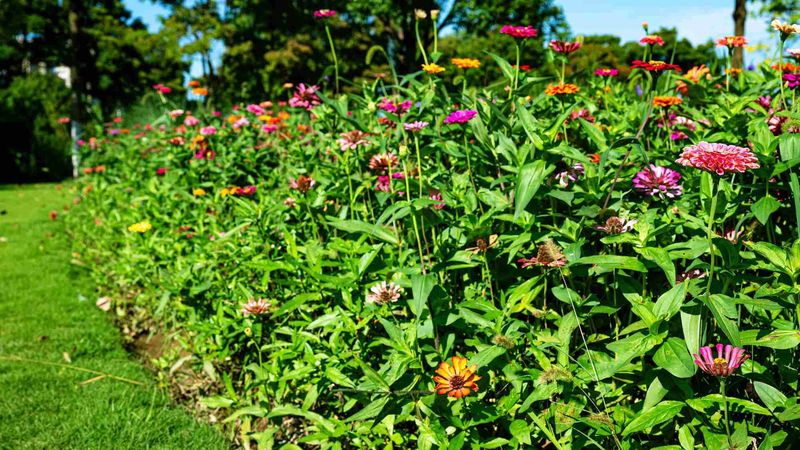
Zinnias are one of the most rewarding flowers you can grow in a North Carolina yard, but keeping them colorful from July all the way into October takes more than just putting transplants in the ground. The gardeners who seem to have beds that never quit are usually working a combination of smart site prep, well-timed cuts, and fresh sowings staggered across the season.
No single trick is responsible, and no method can promise flowers through every heat wave or past the first frost. What follows is a practical breakdown of the practices that actually extend the bloom window, region by region, across the state.
Extend the bed’s bloom by planting and managing in waves
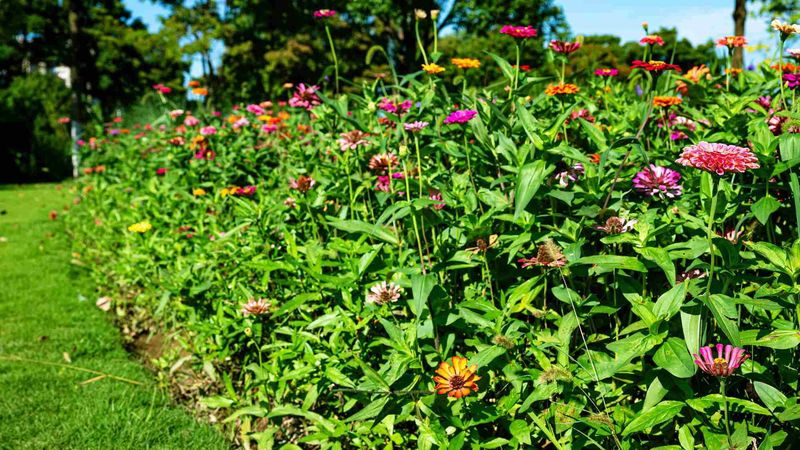
A long zinnia season in North Carolina is not the result of one insider secret. NC State’s zinnia guidance describes these flowers as warm-season annuals capable of blooming from early summer to frost, but reaching that full window takes several coordinated practices working together, not a single shortcut.
The foundation starts with the right site: full sun, well-drained soil, and enough space between plants for air to move freely. Get those basics right, and every other step you take becomes more effective.
Skip them, and even the most attentive deadheading schedule will not save a crowded, shaded bed from struggling through August.
Branching, harvesting, and cultivar selection layer on top of that foundation. Pinching young plants of the right type encourages more flowering stems.
Cutting or removing spent blooms keeps energy moving toward new buds rather than seed production. Choosing varieties suited to heat and humidity means your plants hold up when conditions get brutal.
The piece that ties it all together is replacement planting. NC State notes that common zinnia types can slow during peak summer heat, and individual plants inevitably age, decline, or succumb to disease.
Sowing new seeds or starting fresh transplants at intervals means the bed as a whole keeps producing color even when earlier plants are past their prime.
Thinking of the bed as a revolving system, rather than a fixed planting that should perform indefinitely, is the shift that makes the biggest difference. The sections ahead walk through each practice in the order you would apply it, from site preparation through the fall finish.
Start with sun, drainage, spacing, and local frost timing

Zinnias are unforgiving about two things: shade and wet feet. NC State recommends giving zinnias full sun, which means at least six hours of direct light each day.
Plants that receive less tend to stretch toward the light, produce fewer flowers, and become more vulnerable to disease. Choose the sunniest spot in your yard and do not compromise on this, even if it means moving the bed from a more convenient location.
Soil drainage matters just as much. Roots sitting in waterlogged ground invite rot and foliar problems before summer even peaks.
Work compost into heavy clay soils to improve structure, or consider a raised bed if your yard holds water after rain. University of Florida guidance on zinnia culture reinforces that well-drained soil is a non-negotiable starting point for healthy plants.
Spacing is the detail many gardeners underestimate. Crowded plants trap moisture against foliage, which creates the humid microclimate that powdery mildew and leaf-spot diseases love.
NC State specifically identifies good air circulation and proper spacing as tools for reducing foliar problems in zinnia beds. Follow the spacing recommendation on your seed packet or plant tag, which typically falls around 8 to 12 inches for many varieties, though larger cultivars need more room.
Planting date is where North Carolina’s geography makes things complicated. Zinnias are tender annuals that frost will kill, so timing your first sowing to local conditions matters.
NC State’s herbaceous ornamentals guidance advises waiting at least two weeks after the last spring frost before transplanting tender annuals. The problem is that “last frost” means something very different depending on where you live in the state.
Mountain counties in the western part of the state can see frost well into May, while the coastal plain is often frost-free by late March. The NC State Climate Office freeze explorer lets you look up county-level frost probability, which is far more reliable than any statewide planting date you might find in a general gardening guide.
Use it before you sow your first seeds or set out transplants.
Pinch young plants when the cultivar will benefit
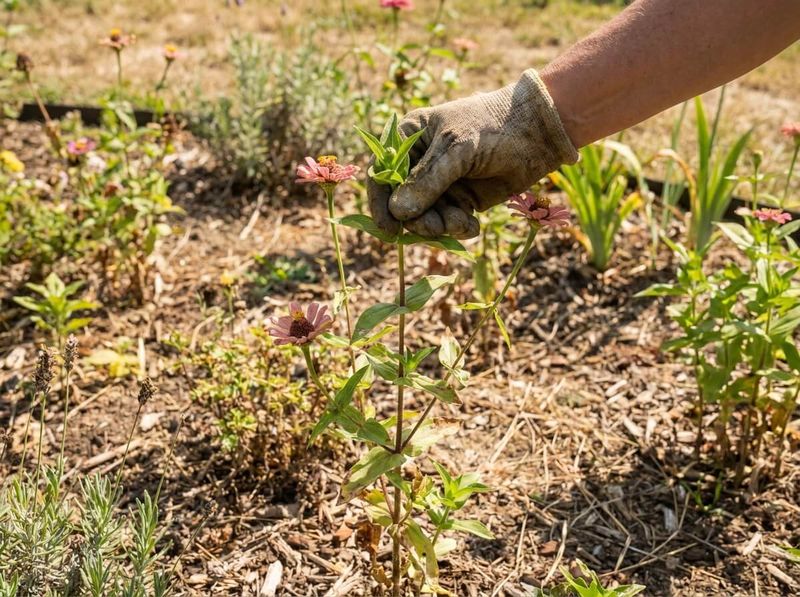
Pinching is one of those techniques that sounds more complicated than it is. When a young zinnia plant has developed several sets of leaves and is standing somewhere between 8 and 12 inches tall, removing the top portion of the stem encourages the plant to push energy into its side shoots rather than continuing straight up.
Those side shoots become additional flowering stems, which can mean more blooms over the course of the season.
NC State’s Beaufort County Extension describes a straightforward home-garden approach: remove the top inch of new growth just above a leaf node, once the plant has developed at least several sets of leaves. That is a gentle version suited to most gardeners who want more branching without risking a long delay before the first flowers open.
For dedicated cut-flower beds, the approach can be a bit more aggressive. Utah State’s cut-flower production guidance recommends removing the top 3 to 4 inches of the plant to force stronger side branching and produce longer, more useful stems for harvesting.
The result is a plant with more branches, each capable of carrying a flower, rather than one central stem with a single bloom.
The important caveat is that pinching works best on tall or cut-flower type zinnias. University of Florida guidance notes that tall varieties may be pinched when young, implying that compact, naturally bushy cultivars already branch well on their own and may not need the intervention.
If you are growing a low-growing bedding type that is already sending out side shoots, pinching may do little and could simply delay your first flowers.
Timing matters, too. Pinching a plant that is already close to setting buds will push back the first bloom flush.
The goal is to catch plants while they are still in active vegetative growth, before buds have formed. Pinch too late or cut back too severely, and you are trading your earliest flowers for branches that take extra weeks to catch up.
A good rule of thumb: if you can see flower buds forming, it is already past the best window for pinching.
Use well-timed cuts to encourage regrowth
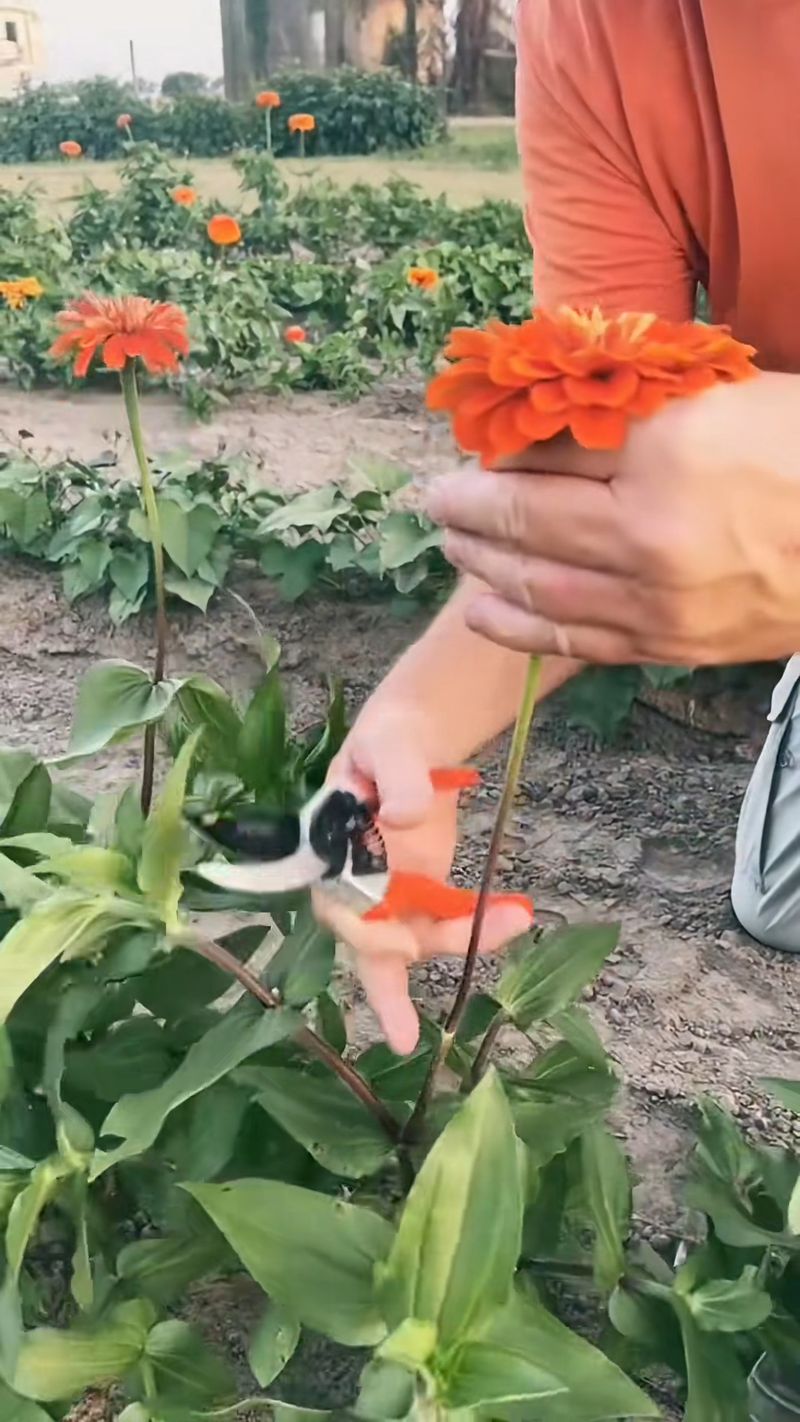
Cutting flowers from a zinnia bed is not just harvesting, it is maintenance. The way you make that cut determines what happens next at the base of the plant.
Utah State’s cut-flower guidance recommends cutting stems 2 to 4 nodes below the bloom rather than snipping right beneath the flower head. On suitable long-stemmed cut-flower types, that deeper cut leaves active leaf nodes on the remaining stem, and those nodes can push out new lateral shoots that eventually carry fresh blooms.
That regrowth is not guaranteed with every cut on every plant. The response depends on the cultivar, the plant’s overall health, soil moisture, and how much of the season remains.
Treating deep stem cuts as a reliable maintenance habit on appropriate types, rather than a mechanical formula that always produces the same result, keeps expectations realistic while still giving you a meaningful edge.
Removing only a faded flower head, which most gardeners call deadheading, serves a different purpose. NC State recommends deadheading to encourage continued flowering, and University of Florida guidance echoes that recommendation.
The logic is straightforward: a plant that is allowed to set and ripen seed redirects energy away from producing new flowers. Snapping or cutting off spent blooms before seed matures keeps the plant focused on flowering.
However, deadheading is not equally necessary for every zinnia. NC State’s Zinnia elegans entry notes that some types produce new flowers above old blooms and therefore do not require routine deadheading to keep performing.
Certain Profusion types fall into this category, continuing to push new buds even when older flowers are not removed. Knowing which type you are growing helps you decide whether to deadhead routinely or focus your effort on deeper stem cuts for harvesting.
University of Minnesota guidance also supports removing old blooms to encourage continued flowering, reinforcing that this is a broadly recommended practice for most zinnia types. The takeaway is to match your cutting strategy to your cultivar: deep stem harvests for long-stemmed cut-flower types, routine deadheading for seed-setting varieties, and a lighter touch for self-cleaning types that bloom above their spent flowers.
Sow replacement plants before the first wave fades
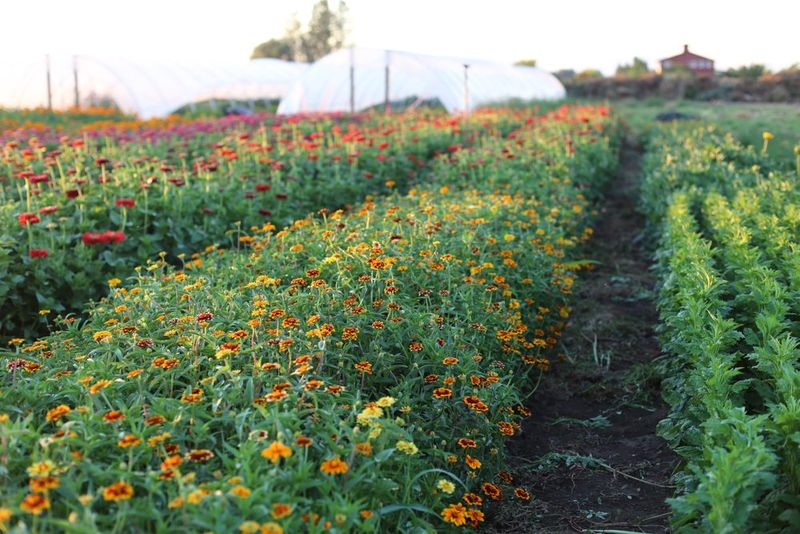
Succession sowing is the practice that does more than any other single step to keep a zinnia bed looking full from summer into fall. The idea is simple: instead of planting everything at once and watching the whole bed decline together, you stagger new sowings at intervals so younger, fresher plants are always coming up behind the older ones.
NC State’s cutting-garden guidance recommends staggering zinnia plantings about every two weeks until midsummer to extend flowering into fall. That two-week interval is a useful starting framework, not a rigid rule every North Carolina gardener must follow.
Your specific schedule will depend on your region, your available space, and how much of your bed you can reasonably replant at one time.
The commercial example from NC State’s small-farm resources illustrates the principle well: one North Carolina cut-flower operation used five or six successive plantings from mid-April through mid-August to maintain a continuous harvest window. That kind of intensive schedule makes sense for a farm selling flowers, but a home gardener with a single bed might accomplish plenty with just two or three well-timed waves.
What succession sowing actually does is create replacement plants, not extend the life of individual plants already in the ground. A zinnia that has been blooming since June, survived a heat wave in July, and picked up powdery mildew by August is not going to recover and perform like a plant that went into the ground in late July.
New sowings fill that gap. They bring fresh, vigorous plants into the bed right as earlier plantings are losing steam.
For home gardeners in the Piedmont and coastal plain, a final sowing in mid-to-late July often gives plants enough time to establish and bloom before fall frost arrives. Mountain gardeners face a shorter window and should time their last sowing accordingly, checking local frost probability rather than guessing.
Direct-seeding into warm soil is fast, and zinnias can go from seed to first bloom in six to eight weeks under good conditions, making a late summer sowing more productive than many gardeners expect.
Match cultivar traits and moisture habits to humid summers
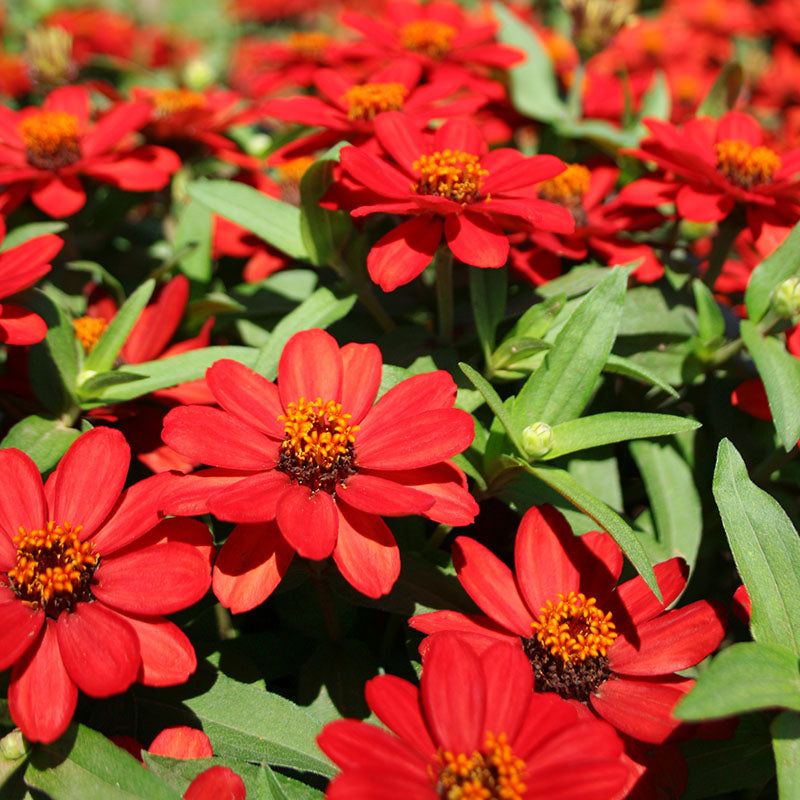
Cultivar choice is one of the most underused tools in a North Carolina zinnia grower’s kit. Not every zinnia handles the combination of summer heat, high humidity, and occasional drought the same way, and picking a type that was bred for those conditions reduces the number of problems you have to manage mid-season.
NC State identifies the Profusion series as tolerant of heat and humidity, making it a reasonable choice for gardeners in the Piedmont and coastal plain who want a lower-maintenance option through the hottest part of the year. Zinnia marylandica types, including Zahara and Profusion, are described by NC State as heat- and drought-tolerant, with powdery-mildew resistance noted in the species entry.
Those documented traits make them worth considering for beds that have struggled with fungal problems in past seasons.
Performance still varies by site, season, and growing conditions, so treat cultivar descriptions as a starting point rather than a guarantee. Read the tag or seed packet carefully, note which specific traits are claimed, and verify them against a reliable source before expecting a particular result.
A variety described as mildew-resistant in one region may still show disease pressure in a North Carolina garden during an especially wet, crowded summer.
Watering habits have a direct effect on disease risk and plant health. NC State’s guidance on leaf-spotting bacteria on ornamentals reinforces that wet foliage and dense planting conditions favor the spread of foliar diseases.
Water at the soil line when practical, and time any irrigation so that foliage dries before nightfall. Drip lines and soaker hoses are more useful in a zinnia bed than overhead sprinklers, especially during humid stretches.
Consistent moisture during establishment matters more than heavy watering once plants are growing well. University of Minnesota guidance notes that zinnias tolerate some dry conditions once established, but prolonged drought can reduce growth and flowering.
The goal is steady, moderate moisture, not constant irrigation. On nutrition, Utah State classifies zinnias as moderate feeders and recommends basing phosphorus and potassium decisions on a soil test.
Extra fertilizer is not a shortcut to more blooms, and pushing too much nitrogen can encourage lush foliage at the expense of flowers.
Set a realistic fall finish for your region
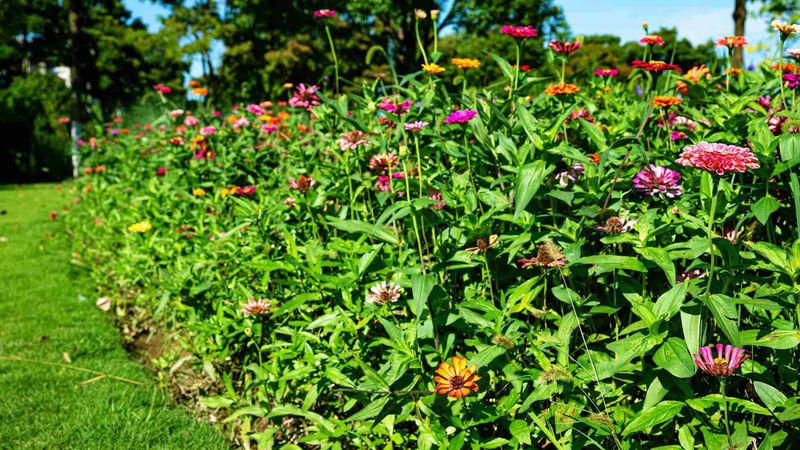
Zinnias can carry a bed deep into autumn in many parts of North Carolina, but the actual finish date depends on factors that vary considerably from one part of the state to another. NC State notes that common zinnia types can slow during peak summer heat, and that seasonal slowdown is often the first signal that the bed is working through its most difficult stretch rather than failing.
Flowering typically picks back up once temperatures ease in late August and September, which is one reason the fall flush can be surprisingly good after a tough July and August.
The end of that fall flush is determined by frost. The NC State Climate Office freeze explorer shows that a mountain county near Boone may see its first fall frost in early October, while a coastal county near Wilmington might not see one until November.
Planning your last succession sowing around your local frost probability, rather than a generic statewide date, is the most reliable way to squeeze every possible week of bloom out of the season.
Heat waves, extended drought, disease pressure, and cultivar choice all shape how long any individual planting lasts before it needs replacing. NC State’s staggered-planting approach acknowledges this reality by building replacement into the system from the start.
Plant well, pinch suitable young plants before buds form, cut or deadhead according to your cultivar, and sow a fresh wave before the current one peaks. A bed managed that way will not bloom without interruption, but it will stay in color far longer than one left to run its course on its own schedule.
The best fall zinnia beds are not accidents; they are the result of decisions made back in May and June.