
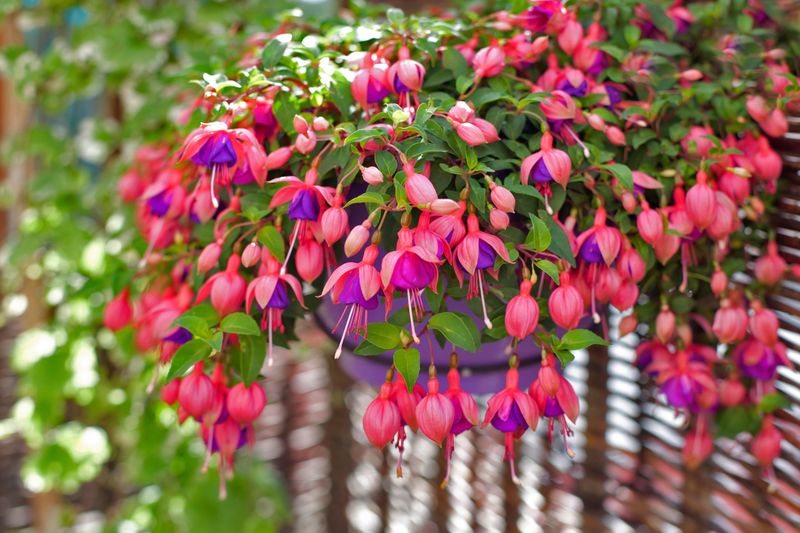
Fuchsia is one of the most eye-catching plants you can hang on a porch or tuck into a shady corner, but in North Carolina it has a reputation for fading fast once the heat sets in. That reputation is earned, but it is not the whole story.
With the right site, a reliable moisture routine, and a few straightforward habits, common hybrid fuchsia can hold on and keep producing flowers well past what most people expect. Understanding why fuchsia struggles here is the first step toward keeping it going longer.
Start with the fuchsia North Carolina gardeners actually grow
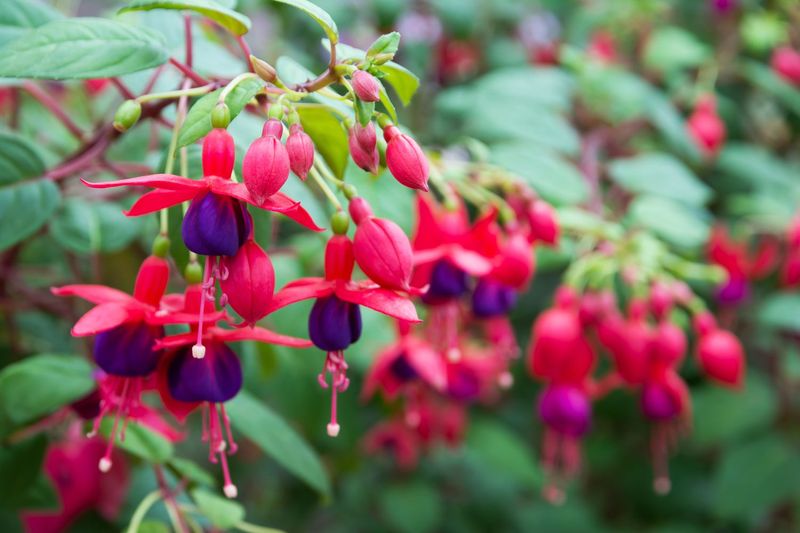
Not every plant sold under the name fuchsia behaves the same way, and that distinction matters before any care advice makes sense. The common hanging-basket and bedding plant most North Carolina gardeners bring home is Fuchsia x hybrida, a complex hybrid developed primarily from South American and Mexican species.
A related but different plant, firecracker fuchsia, Fuchsia triphylla, is sometimes sold alongside it and has its own distinct growth habits and heat tolerance. Advice meant for one does not automatically transfer to the other, so confirming which plant you have is a reasonable first step.
NC State Extension classifies common hybrid fuchsia as an annual in North Carolina because it will not survive a cold winter outdoors without protection. That framing shapes realistic expectations from the start.
Rapid fading during summer is not usually a sign that the gardener missed a secret bloom-boosting trick; it is more often a predictable response to heat, drying conditions, and an exposure that does not match the plant’s preferences.
NC State’s profile of Fuchsia x hybrida states plainly that flowering slows greatly during summer heat, and that warm nights can add additional plant stress. North Carolina also spans three distinct climate regions: the Coastal Plain, the Piedmont, and the mountains each bring different heat levels, humidity, frost timing, and wind patterns.
A care routine that works reliably in Asheville may need adjustment in Raleigh, and Wilmington presents its own challenges. Setting those regional expectations early means the recommendations ahead are solving the right problem rather than promising something the plant cannot deliver.
Give fuchsia bright light without the afternoon furnace
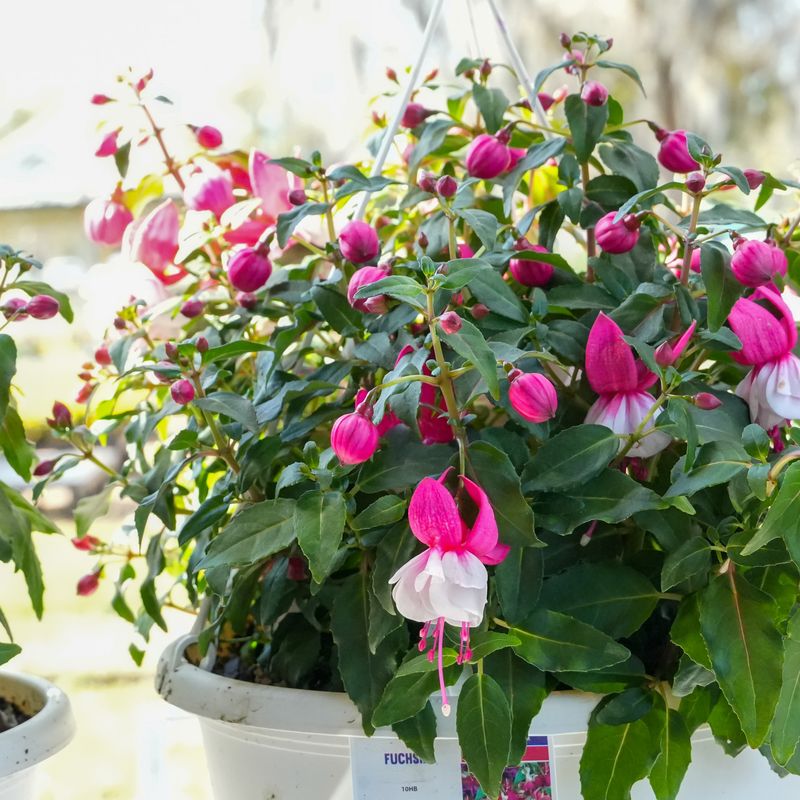
Choosing the right spot is the single most consequential decision a gardener can make for fuchsia in North Carolina, and it needs to happen before the plant goes in the ground or onto the hook. Fuchsia requires real, substantial light to grow and flower, but the intense afternoon sun of a Southern summer can shorten its display faster than almost any other factor.
The goal is bright filtered light or partial shade, not darkness.
A north- or east-facing exposure is a practical starting point for most NC locations. Morning light is gentler and gives the plant energy for the day without the scorching intensity that builds from midday onward.
A position under a deciduous tree canopy, on a covered porch that receives indirect brightness, or beside a structure that blocks western sun can all work well. UNH Cooperative Extension notes that fuchsia requires considerable light but needs protection from hot sun, which aligns directly with what NC gardeners face during summer.
Reflected heat is worth taking seriously as a separate hazard. Pavement, light-colored walls, and stone surfaces can radiate significant warmth back onto a plant even when the sun itself is not hitting it directly.
NC State’s Extension Gardener Handbook on woody ornamentals discusses how heat radiated by buildings, pavement, rocks, and walls raises the effective temperature around a plant beyond what air temperature alone would suggest. Positioning fuchsia away from those surfaces, or at least ensuring good air circulation around them, reduces that ambient heat load.
South- and west-facing beds and exposed deck railings in full afternoon sun are the most common placement mistakes. Moving a struggling plant even a few feet into better shade can produce a noticeable difference within a week or two.
Site selection addresses the underlying heat stress before watering or feeding can do any useful work.
Keep the root zone evenly moist, never waterlogged
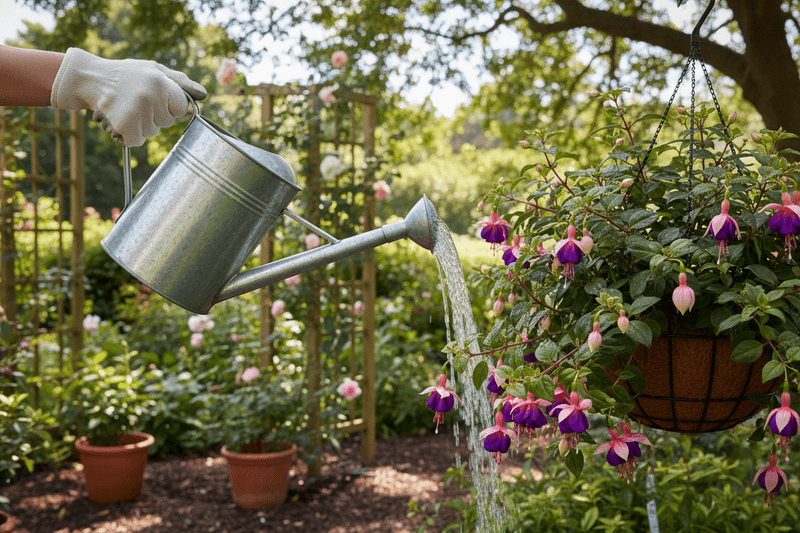
Moisture management is where most fuchsia care either succeeds or quietly falls apart. NC State is direct on this point: common hybrid fuchsia does not tolerate drought.
At the same time, a root zone that stays saturated for extended periods creates a different set of problems, including poor oxygen availability around the roots. The practical target is a growing medium that stays evenly moist throughout, drains freely after watering, and never sits in standing water.
Calendar-based watering schedules are a poor fit for fuchsia because so many variables shift the plant’s actual water needs from day to day. Container size, air temperature, wind, humidity, plant density, and whether the pot is in direct or filtered light all change how quickly the mix dries.
A better habit is to check the root zone directly: push a finger an inch or two into the mix, or lift a hanging basket to gauge its weight. When the mix is beginning to dry and feels noticeably lighter or less cool to the touch, water thoroughly until it drains from the bottom.
Oregon State University Extension’s hanging basket guidance notes that hot weather can require watering once or even twice daily depending on container size, weather conditions, and plant density. That frequency is not unusual for a small fuchsia basket on a North Carolina porch during a July heat wave.
The important thing is that each watering should be thorough enough to wet the entire root zone, not just the surface.
Drainage is not optional. A container without working drainage holes will eventually waterlog the mix even if watering frequency seems reasonable.
NC State’s container garden guidance reinforces that containers must drain well to support healthy root systems. Consistently moist does not mean consistently wet, and that distinction is worth revisiting any time a fuchsia looks limp despite regular watering.
Make baskets and containers less exposed
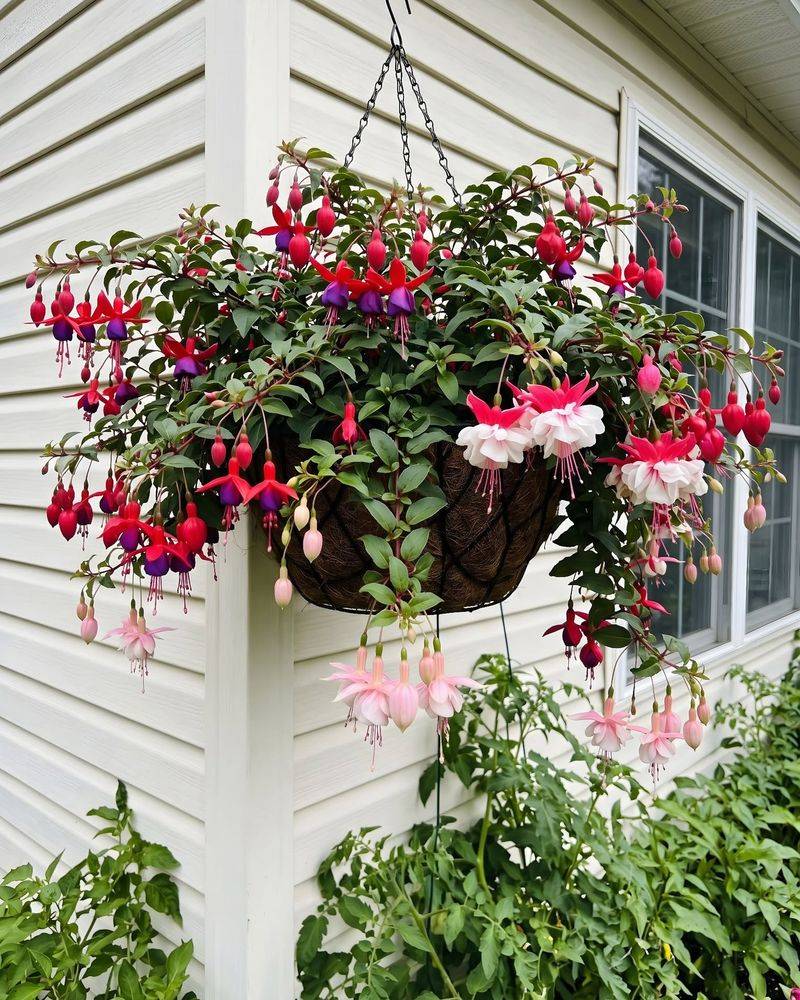
Hanging baskets live in a more demanding environment than most gardeners initially expect. Their elevated position exposes them to moving air from multiple directions, their limited soil volume holds less water than a garden bed, and they often hang in spots that receive more wind and reflected heat than a sheltered container on the ground.
Treating a fuchsia basket like a low-effort decoration is the fastest route to a brown, spent plant by mid-June.
Oregon State Extension’s basket guidance is clear that garden soil drains poorly inside containers and can inhibit root growth; a quality commercial potting mix is the right starting material. Potting mixes designed for containers hold moisture more evenly, drain after watering, and stay loose enough for roots to spread.
Filling a basket with soil dug from the yard creates compaction problems that no amount of watering will fix.
Wind protection is a specific recommendation for fuchsia in containers and baskets, as noted by NC State’s fuchsia profile. Wind increases moisture loss and can dry a small basket rapidly, making it harder to maintain the even moisture the plant needs.
A covered porch, a position near a wall that breaks prevailing wind, or a spot under a roof overhang can reduce that exposure without sacrificing the light fuchsia needs.
Smaller baskets and densely planted containers need more frequent moisture checks than larger ones simply because they have less buffer. NC State’s container garden resource points out that containers dry more rapidly than in-ground beds, especially during hot or windy weather.
Building a daily check into the routine, rather than assuming a set watering interval will hold, is the realistic approach for anyone growing fuchsia in a basket through a North Carolina summer.
Feed for steady growth and clear away finished flowers
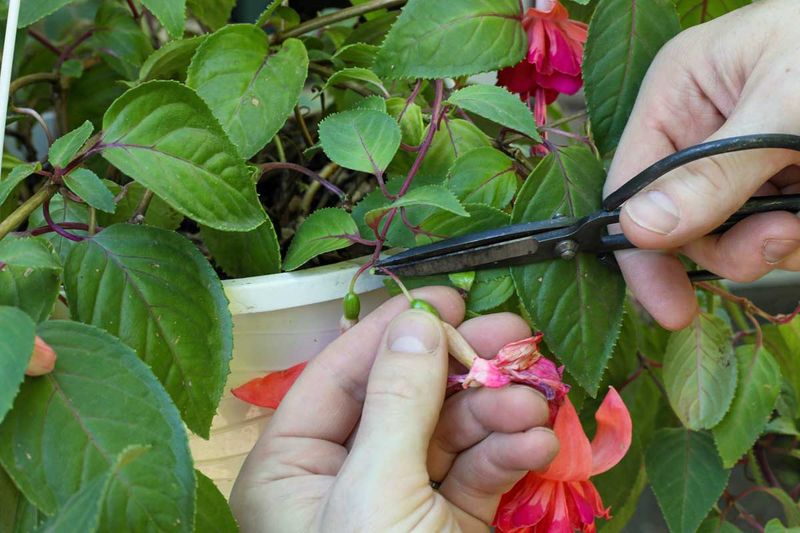
Once site selection and moisture management are working, two routine maintenance habits help sustain the visible display: feeding during active growth and removing spent flowers. Neither one can compensate for a bad location or a dry root zone, but both contribute to a plant that looks better and keeps producing new growth.
Fertilizer supports the energy fuchsia spends on continuous flower production, especially in containers where nutrients leach out with each watering. UNH Cooperative Extension advises fertilizing retained fuchsia plants approximately every four weeks during active growth.
A balanced or flowering-plant product used according to its label is the practical choice. The idea that a high-phosphorus bloom booster is the key to fuchsia performance is not supported by the available Extension guidance, and excess fertilizer can push unwanted vegetative growth or damage roots.
Feed modestly and consistently rather than heavily and sporadically.
Oregon State Extension recommends deadheading hanging baskets at least weekly to keep plants blooming and looking their best. Removing spent flowers before they develop into berries redirects the plant’s resources toward new buds rather than seed production.
The RHS notes that fuchsia flowers may fall on their own or develop into berries if left in place, so clearing them regularly keeps the plant looking cleaner even when flowering is active.
The honest qualifier here is that feeding and deadheading support an already-healthy plant; they do not override heat, drought, poor light, or root stress. A fuchsia sitting in afternoon sun with dry roots will not respond to fertilizer or flower removal in any meaningful way.
These steps belong at the end of the care sequence, not the beginning.
Use fading as a cue to inspect the plant, not just the flowers
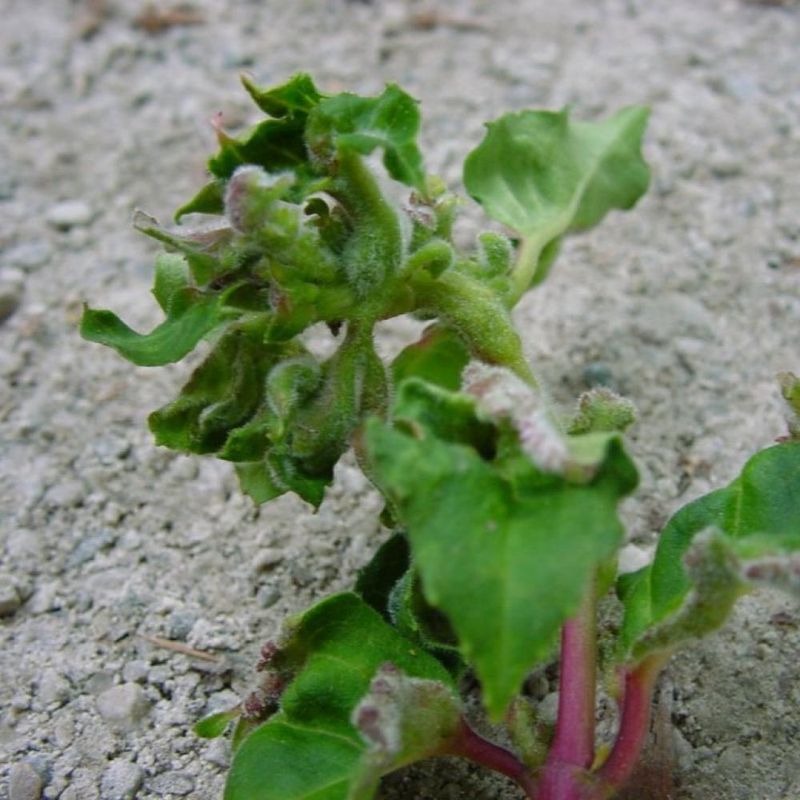
When a fuchsia starts to look tired, fewer flowers, yellowing leaves, or a generally limp appearance, the instinct to reach for a remedy is understandable. A more useful first move is a quick inspection pass that connects the symptoms to the care system already in place.
Most fading traces back to something in the environment rather than to a missing product or treatment.
Work through the obvious factors first. Has the weather been unusually hot or windy in the past week?
Is the basket or container drying out faster than expected? Has the drainage been checked recently to confirm water is actually moving through the mix rather than pooling?
Has the light exposure shifted, perhaps as a nearby tree leafed out more fully or a seasonal change moved the sun’s angle? NC State’s Extension Gardener Handbook notes that microclimates can shift conditions substantially, so a spot that worked in May may behave differently by August.
A brief pest check is worth adding to this inspection, particularly when the plant looks stressed. NC State identifies spider mites, whiteflies, and aphids as occasional fuchsia pests.
Checking the undersides of leaves and the newest growth can reveal small insects, sticky residue, or fine webbing that signals an infestation. Pests are more likely to take hold on a plant already weakened by heat or drought, so correcting the environmental stressor first is still the priority.
Distinguishing a heat-related flowering slowdown from a broader plant decline matters for deciding what to do next. A plant that has paused flowering but still has healthy green foliage and new bud sites is resting, not dying.
One with widespread leaf drop, brown stems, or root problems needs a more direct intervention, starting with a reassessment of moisture and drainage.
Plan for the summer pause and the next season
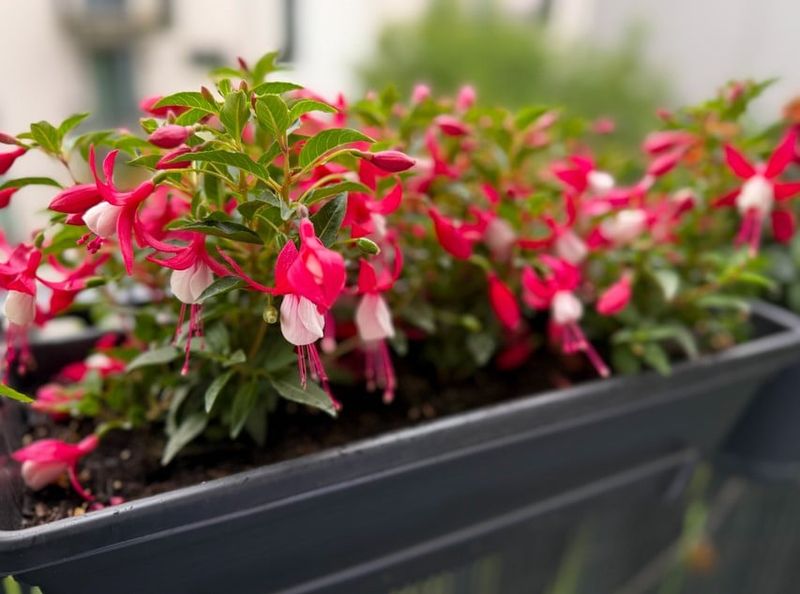
Even a fuchsia that has been sited, watered, and fed correctly can slow its flowering during the hottest stretch of a North Carolina summer. That is not a failure of care; it is a predictable response from a plant that evolved in cooler conditions.
NC State is explicit that flowering slows greatly during summer heat, and warm nights can compound the stress by limiting the plant’s ability to recover overnight. Expecting some reduction in bloom during peak heat is more realistic than expecting uninterrupted color from spring through fall in every part of the state.
When summer arrives in full force, the practical choice is to keep the plant alive and in reasonable shape until temperatures moderate, then let it recover and reflower in the cooler weeks of late summer or early fall. Maintaining moisture, shade, and shelter during the hot period costs less effort than replacing the plant, and a fuchsia that has been well-managed through summer can reward the patience with a strong late-season flush.
At the end of the season, the gardener faces a clear decision: treat the plant as an annual and compost it after frost, or bring it indoors and carry it through winter. NC State notes that common hybrid fuchsia will not survive cold winters outdoors, so indoor protection is required for any overwintering attempt.
UNH Cooperative Extension recommends bringing fuchsia indoors before frost and keeping it in a cool location, with approximately 50 degrees F at night and 60 to 65 degrees F during the day as preferred conditions.
Whole plants can be cut back and overwintered in a cool basement or bright room, or stem cuttings can be rooted to produce fresh plants for the following season. The RHS growing guide for fuchsias covers propagation from cuttings as a standard method for carrying desirable varieties forward.
Keep in mind that hardy-fuchsia winter advice from RHS applies to specific hardy types suited to a British climate, not to common hybrid fuchsia in North Carolina, so use that guidance selectively.
The reliable North Carolina routine is stress reduction
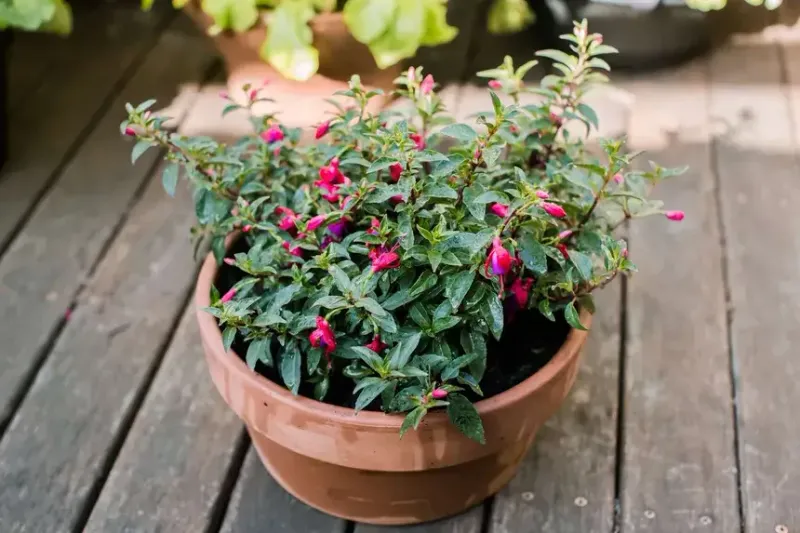
Pulled together, the care approach for common hybrid fuchsia in North Carolina follows a clear sequence. Choose a spot with filtered light or partial shade, protected from afternoon sun and drying wind.
Check the root zone regularly and water thoroughly when the mix is beginning to dry, making sure drainage is working. Give baskets and smaller containers extra attention because they lose moisture faster and have less buffer against heat.
Use a quality potting mix from the start, not garden soil.
Feed with a balanced or flowering-plant fertilizer during active growth, following the product label rather than guessing at ratios. Remove spent flowers weekly to keep the plant looking cleaner and to redirect energy toward new buds.
When symptoms appear, inspect the environment first: heat, wind, moisture, drainage, and light before reaching for any remedy. NC State’s fuchsia profile and Oregon State Extension’s basket guidance together support every step in that sequence.
These moves give common hybrid fuchsia a better chance to keep flowering in a North Carolina yard. They do not turn a cool-temperature plant into a heat-tolerant summer annual, and no single technique guarantees uninterrupted bloom through every hot stretch the state can deliver.
What they do is reduce the stresses most likely to cut the display short, and that is the honest promise worth keeping.