
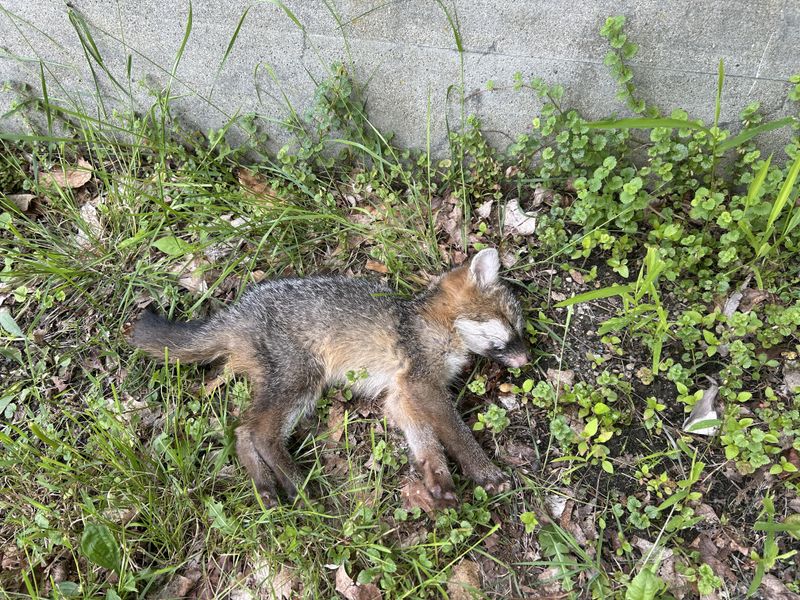
Spotting a small, fluffy fox kit curled up in your North Carolina garden can stop you in your tracks. Every instinct might push you to scoop it up, but that protective impulse is usually the wrong move.
The safest response for the kit, your family, and your pets is to slow down, step back, and understand what you are actually looking at before doing anything at all.
Step back and secure the yard

The very first thing to do when you spot a fox kit in the yard is stop moving toward it. Put distance between yourself and the animal right away, and bring children and pets inside or well away from the area before anything else.
NC Wildlife’s fox conflict guidance specifically warns people not to approach foxes or fox dens and says not to touch or feed foxes or kits under any circumstances.
That hands-off rule covers more than just picking the kit up. Do not offer it food, water, cow’s milk, or any home remedy.
Do not attempt to warm it with a heating pad, cover it with a towel, or medicate it for what might look like mange or an injury. Even actions that feel gentle can cause serious harm to a wild animal, and they expose you and your family to the risk of a defensive bite.
Keeping children and pets at a distance matters for another reason beyond the kit’s well-being. Dogs and cats can disturb a nearby den and trigger protective behavior from a parent fox that may be out of sight.
NC State Extension’s wildlife guidance advises putting children and pets inside during wildlife encounters, and the same logic applies here. A quiet, undisturbed yard gives a fox parent the best chance to return without conflict.
Give the kit a generous buffer, at least the width of your yard if possible. The goal at this stage is not rescue.
Your goal is to create enough calm space that the situation can unfold without unnecessary interference while you gather more information about what the kit actually needs.
A lone or daytime kit is not automatically abandoned

One of the most common mistakes gardeners make is assuming that a kit found alone, curled up, or active during daylight hours has been abandoned. That assumption drives well-meaning people to intervene when the animal is actually fine.
NC Wildlife’s injured and orphaned wildlife guidance is clear: young wildlife is often left alone, and wild parents rarely abandon their young.
Fox parents spend significant time away from their kits while hunting for food. During those hours, a kit may wander a short distance from the den, explore a sunny patch of grass, or simply curl up and sleep in plain view.
None of those behaviors, on their own, mean something has gone wrong. A kit that is sleeping, staying still, or crouching low is often responding to the stress of being watched, not signaling that it is sick or orphaned.
Daytime appearances are also common and normal. NC Wildlife’s red fox profile notes that while red foxes are primarily nocturnal, daytime sightings happen regularly and are not automatically a sign of disease.
Kits, in particular, begin exploring outside the den in late spring and early summer, which is exactly when most North Carolina gardeners encounter them.
North Carolina is home to both the red fox and the gray fox, the state’s only native fox species. Either one may show up in a residential yard, and the same guidance applies to both.
A kit’s species, location, or time of day does not tell you whether it needs help. What matters is its physical condition and behavior, which the following sections will help you read accurately.
Observe without changing the kit’s behavior

Watching from a distance is an active and useful step, not just a passive waiting game. The key is to position yourself far enough away that the kit does not react to your presence.
If it freezes, flattens itself to the ground, or tries to move away, you are too close. Back up until the animal returns to whatever it was doing before you arrived.
A healthy kit that is alert, moving around, and showing normal curiosity is generally best left alone while a parent remains out of sight. Humane World for Animals’ wildlife conflict resolution guide describes an active, playful kit as one that does not need intervention, even when no adult fox is visible nearby.
One question that comes up often is how long to wait before deciding a kit is truly orphaned. There is no single number that applies to every situation.
NC Wildlife’s general guidance says to leave apparently healthy young wildlife alone for at least 24 hours before taking action, but that window applies only when the kit looks healthy and shows no red flags. A kit that is weak, crying repeatedly, or visibly injured should not simply be left and timed.
No fixed observation period can prove abandonment on its own. A parent may be hunting nearby, resting out of view, or waiting for human activity in the yard to quiet down before returning.
Monitoring from a distance, staying patient, and consulting a wildlife professional if uncertainty remains is a safer approach than watching a clock and making a unilateral decision at the end of it.
Protect people and pets while the kit remains outside
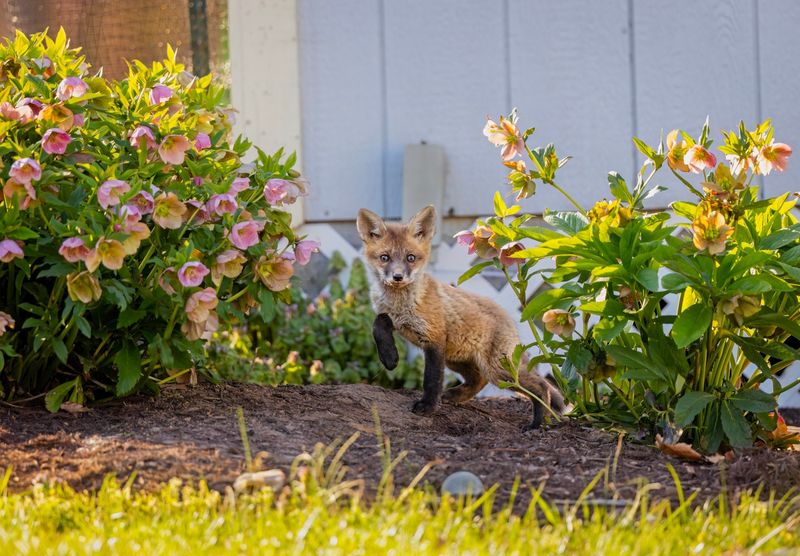
While the kit is still in the yard, the most protective thing you can do for everyone involved is manage your own space rather than the animal’s. Keep dogs and cats inside or on a leash well away from the area.
NC Wildlife’s fox conflict guidance warns that pets can disturb a den and provoke defensive behavior, and even a small, seemingly calm fox can bite when it feels cornered or threatened.
Children are naturally curious and may want a closer look, especially at something as appealing as a baby fox. Keep them inside or redirect their attention, and explain in simple terms that the animal needs quiet to stay safe.
Crowding the kit for photographs or a better view, even briefly, adds stress to an animal that is already in an unfamiliar situation. NC State Extension’s wildlife chapter recommends keeping children away from wildlife encounters as a standard precaution.
A lone kit in an open yard is a different situation from a fox den established under a deck, porch, or crawl space. If you suspect a den under a structure, do not attempt to seal or block the entrance while animals may still be inside.
NC Wildlife’s spring encounter guidance recommends nonlethal deterrence methods such as bright lighting, talk radio, loud noise, or a motion-activated sprinkler to encourage foxes to move on naturally, but these tools should only be used when you are confident the den is unoccupied.
Giving the kit space and keeping your household calm costs nothing and avoids the most common sources of accidental harm during these encounters.
Know the signs that require professional help
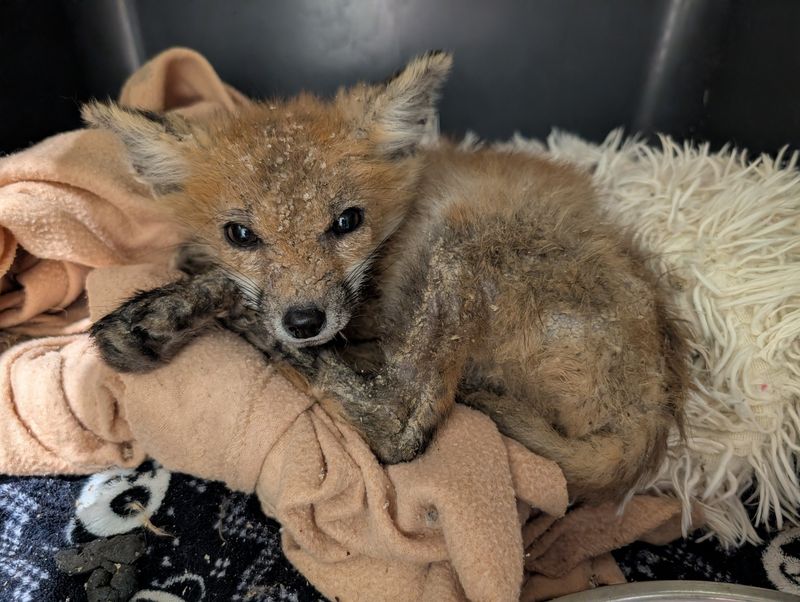
Most fox kits do not need human intervention, but some genuinely do, and knowing the difference can save an animal’s life. The clearest signals that a kit needs professional attention include obvious physical injury such as a wound, bleeding, or a broken limb.
Extreme thinness, a cold body temperature, or severe weakness that prevents the kit from holding its head up are also serious concerns that go beyond ordinary watchful waiting.
A kit covered in flies or fly eggs, trapped in a fence or structure, or crying loudly and repeatedly for several hours without stopping should be treated as a situation requiring prompt professional contact. Finding a kit next to a dead adult fox is another strong indicator that something has gone wrong.
NC Wildlife’s orphaned and injured wildlife page lists obvious injury, extreme thinness, and a dead adult nearby as clear reasons to seek guidance rather than wait.
Before you move or touch the kit, contact a licensed wildlife rehabilitator or the NC Wildlife Helpline. The Helpline number is 866-318-2401, available Monday through Friday, 8 a.m. to 5 p.m.
The agency also provides a rehabilitator locator on its website so you can find a trained professional near you. Humane World for Animals’ conflict resolution guide also identifies weakness, injury, prolonged crying, and evidence that both parents are dead as triggers for reaching out to a professional rather than attempting home care.
A wildlife professional can assess the kit’s condition, give you specific instructions based on what they hear, and tell you whether the situation calls for immediate action or continued observation. That guidance is far more reliable than any fixed timer or a homeowner’s best guess from across the yard.
Do not feed, medicate, or raise the kit yourself
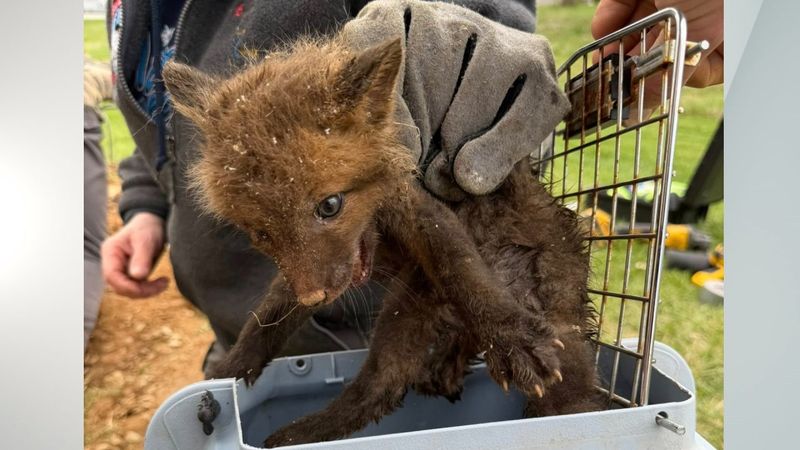
Feeding a fox kit feels like the compassionate choice, but it can cause real harm. Cow’s milk, in particular, is dangerous for fox kits and can lead to aspiration or serious digestive problems.
NC State Extension’s wildlife guidance states plainly that you should not provide food or water to wildlife that appears to need help, because well-intentioned feeding often makes the animal’s condition worse rather than better.
The same rule applies to medication and mange treatments. If a kit has patchy fur or appears to be losing hair, the instinct to treat it at home is understandable but unsafe.
NC Wildlife’s spring encounter press release specifically cautions against medicating foxes with hair loss at home and notes that seasonal shedding can look very similar to illness. Only a trained professional can tell the difference and provide appropriate treatment.
Attempting to raise a fox kit yourself is not a workable solution in North Carolina. NC Wildlife’s orphaned wildlife guidance explains that possessing most wildlife without a permit is restricted by state law.
Beyond the legal issue, a kit raised by a homeowner without proper training is likely to become habituated to people, lose its natural fear of humans and pets, and fail to develop the survival skills it needs to live in the wild.
If a wildlife professional confirms that the kit must be moved or transported, follow their instructions exactly rather than improvising. Licensed wildlife rehabilitators in North Carolina are trained to minimize human contact, prevent imprinting, and give animals the best possible chance at a successful release.
That expertise cannot be replicated at home, no matter how careful or well-meaning the effort.
Daylight alone does not mean rabies

Seeing a fox kit in the yard during daylight hours is not, by itself, a reason to suspect rabies. NC Wildlife’s red fox page notes that daytime sightings of red foxes are common and are not necessarily a sign of disease.
Kits are especially likely to be seen outside the den during late spring and early summer as they begin exploring their surroundings. Normal daytime activity, curiosity, and even brief stillness are not warning signs on their own.
The behaviors that should prompt extra caution are different from ordinary daytime movement. Unprovoked aggression toward people or pets, stumbling or loss of coordination, and foaming at the mouth are the kinds of abnormal signs that warrant immediate concern.
NC Wildlife’s fox conflict PDF identifies foxes as a rabies-vector species in North Carolina, which means the risk is real but should be assessed based on the animal’s actual behavior, not simply its presence in daylight.
If a person is bitten or scratched by a fox, wash the wound with soap and water for at least 15 minutes right away. Then contact a healthcare provider or your local public health department promptly.
CDC rabies prevention guidance recommends this wound-washing step as a critical first response before any medical evaluation takes place.
If a dog or cat has a direct encounter with a fox, or is bitten or scratched, contact your veterinarian and local animal control or public health authorities as soon as possible. They can advise on next steps based on your pet’s vaccination history and the nature of the encounter.
Prompt action matters more than panic, and a calm, factual report to the right professionals is the most useful response.
Reduce attractants after the kit moves on
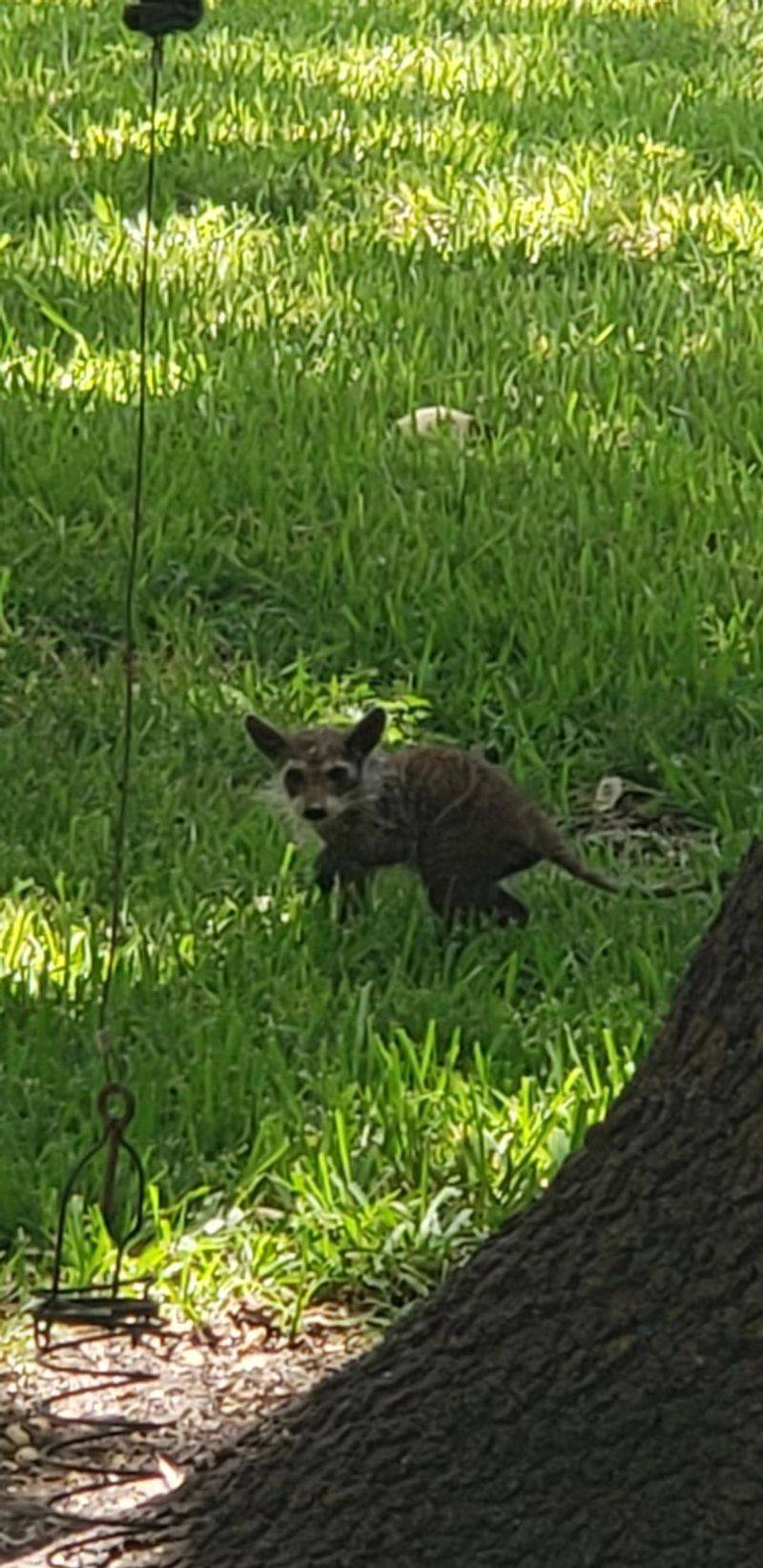
Once the kit has moved on, or once a wildlife professional has handled the situation, the practical next step is making your yard less appealing for repeat visits. Foxes are drawn to residential areas largely because of food sources that homeowners leave out without thinking about it.
Outdoor pet food bowls are one of the biggest attractants, and removing them from outside, especially at night, is one of the easiest changes you can make. NC Wildlife’s red fox profile lists outdoor pet food, unsecured garbage, fallen fruit, and birdseed on the ground as common draws that bring foxes and other wildlife into yards and encourage them to return.
Securing garbage cans with locking lids, picking up fallen fruit regularly, and moving birdfeeders to elevated positions where seed cannot accumulate on the ground are all straightforward steps. These habits reduce the chances that a fox will find your yard worth returning to, which protects both the animal from habituation to people and your household from repeated encounters.
If foxes have established a den under a deck, porch, or crawl space, nonlethal deterrence can encourage them to relocate on their own schedule. NC Wildlife’s spring encounter guidance recommends bright lighting, talk radio left running near the entrance, loud noise, or a motion-activated sprinkler as tools to make a denning site less comfortable.
Do not seal or block the entrance until you are certain no animals remain inside, including kits that may not yet be visible.
Relocation is not a practical or legal workaround. NC Wildlife’s fox conflict guidance states that relocating foxes is illegal in North Carolina because of disease-spread concerns and the poor survival prospects of relocated animals.
Nonlethal prevention and professional consultation are the appropriate paths forward.
Use restraint as the rescue plan
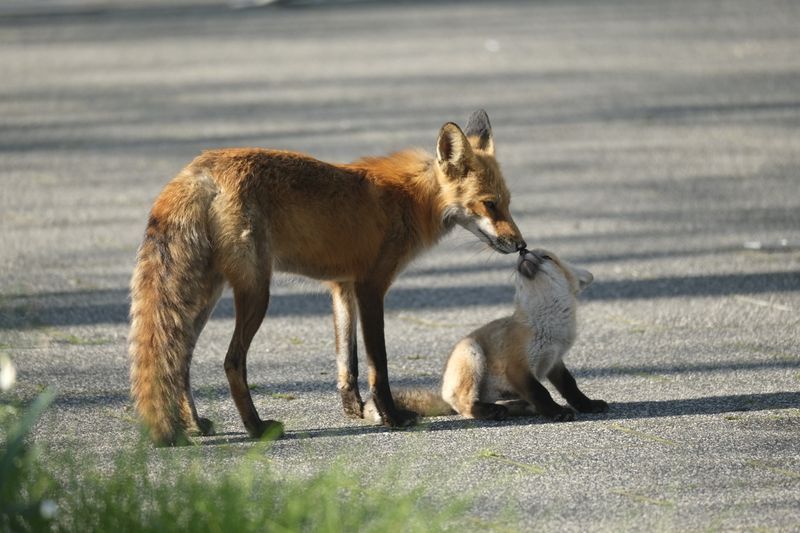
The response plan for a fox kit in the yard is simpler than it might feel in the moment. Step back, secure children and pets, and watch from a distance without approaching, touching, feeding, or attempting any home treatment.
NC Wildlife’s guidance on orphaned and injured wildlife supports this approach: young wildlife is often left alone, wild parents rarely abandon their young, and an apparently healthy kit should be given space rather than immediate intervention.
Call the NC Wildlife Helpline at 866-318-2401 (Monday through Friday, 8 a.m. to 5 p.m.) or reach a licensed rehabilitator through the agency’s locator if the kit shows clear red flags such as injury, severe weakness, prolonged crying, insect coverage, or a dead adult nearby. The condition of the animal, not the time of day or the instinct to help, is what determines whether action is actually needed.
Restraint, in this case, is the rescue plan. A gardener who stays calm, keeps the yard quiet, and calls a professional when it counts gives a fox kit a far better outcome than one who acts on impulse alone.