
Scorpions are a real concern for Texas homeowners, and the idea that a single native plant could make your yard less inviting sounds almost too good to be true. That instinct is worth trusting.
No published research confirms that any native Texas plant makes scorpions avoid a residential yard or settle less often near a house. The practical steps that actually reduce scorpion encounters are less glamorous than a garden fix, but they work.
What the headline gets wrong
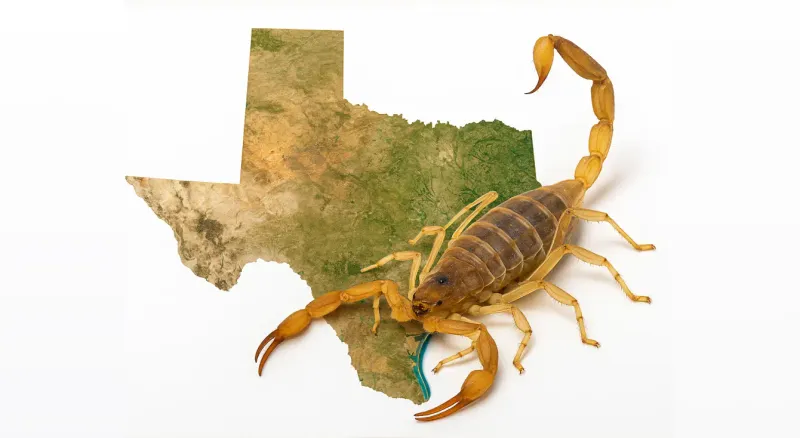
Headlines promising that one native plant will drive scorpions from your yard are satisfying to read, but the research does not back them up. No study found in the published literature shows that any native Texas plant, whether through scent, chemistry, or habitat, causes scorpions to avoid residential yards or settle less often near a house.
That gap matters because acting on a false premise wastes time and leaves real risks unaddressed.
The closest evidence comes from a small 2019 laboratory experiment in which researchers tested rosemary oil on mineral-oil-treated sand in a controlled arena. That study found that 16 striped bark scorpions spent more time on untreated sand than on sand treated with rosemary oil.
The researchers tested an oil extract, not a living plant, and explicitly called for more work before drawing practical conclusions. That is a research lead, not a landscaping recommendation.
Native plants carry real value in Texas yards: drought tolerance, lower water demand, and support for local wildlife. Texas A&M’s native and adapted plant guidance highlights those horticultural and ecological reasons clearly.
Texas Parks and Wildlife recommends native plants because they fit local conditions and support wildlife, not because they repel pests. Choosing a plant for its beauty, its ability to survive triple-digit summers, or its value to pollinators is a solid reason.
Choosing it as a scorpion barrier is not something the evidence supports.
The sections below explain what the fragrant-plant studies actually measured, why scent responses in a lab do not translate directly to a Texas backyard, and what habitat and exclusion steps give homeowners the most reliable protection.
Rosemary oil produced a limited laboratory response
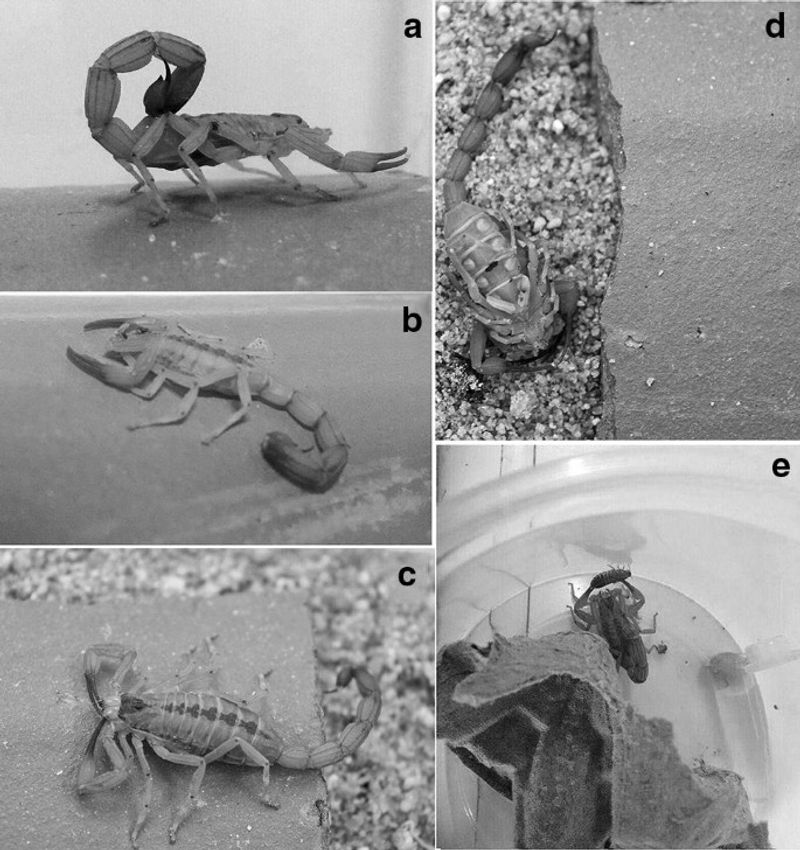
The 2019 study published in the Journal of Arachnology is the primary piece of evidence behind the fragrant-plant-scorpion story, and its details matter. Researchers placed 16 adult striped bark scorpions, collected in Oklahoma, into a controlled arena divided into two zones: one filled with mineral-oil-treated sand and one filled with sand treated with rosemary oil.
The scorpions spent more time on the untreated side.
The published study is explicit about what was and was not tested. The researchers used rosemary oil, not a living rosemary plant.
They tested 16 scorpions in a small indoor arena, not a Texas yard, a garden bed, or any outdoor environment. Weather, soil type, plant density, scent duration over days and weeks, and whether scorpions changed where they sheltered over time were all outside the scope of the experiment.
The authors called for additional research to identify the active chemical compounds and to understand the mechanism behind the avoidance response.
Rosemary itself is also not a native Texas plant. It originated in the Mediterranean region.
Texas A&M provides growing guidance for rosemary as a garden herb suited to Texas conditions, but the university does not classify it as a Texas native or recommend it for scorpion control. Treating a Mediterranean herb tested as an oil extract in an Oklahoma-scorpion lab study as a native Texas pest-deterrent involves several logical steps that the research does not support.
What the study does offer is a genuine starting point for future chemical research. Identifying which compounds in rosemary oil trigger avoidance, whether those compounds remain active outdoors, and whether they affect Texas-dwelling scorpion populations the same way are all questions worth pursuing.
Until that work is done, the oil-on-sand result is a hypothesis, not a yard treatment.
Scorpion scent responses are species-specific
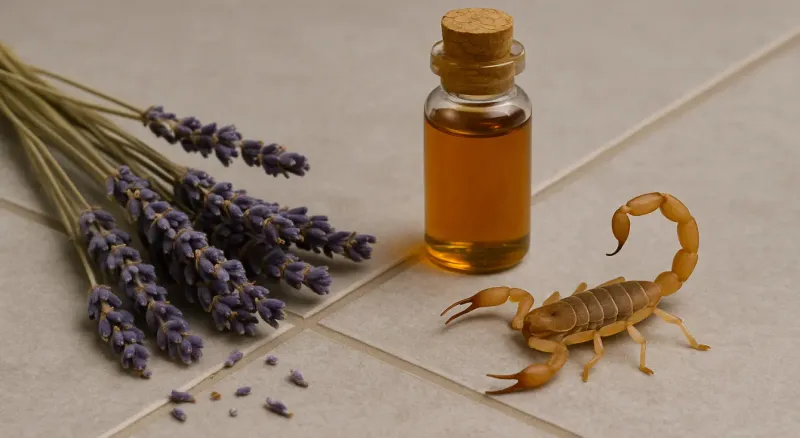
A more recent study on European scorpions makes a point that Texas homeowners should keep in mind: scent avoidance in one scorpion species does not predict the same response in another. That 2024 research, published in the Journal of Comparative Physiology A, tested shelter selection in two European scorpion species, Euscorpius italicus and Mesobuthus eupeus.
Rosemary oil repelled the first species but did not repel the second. The authors connected this difference to each species’ ecology and natural habitat, suggesting that scent sensitivity is shaped by evolutionary context rather than being a universal scorpion trait.
A separate line of research looked at concentrated chemical compounds, citronellal and citronellol, derived from Cymbopogon plants, which include citronella grass. That study, published in PNAS, found avoidance responses in the Asian scorpion Mesobuthus martensii.
The experiment used concentrated isolated chemicals applied in controlled laboratory arenas, not citronella grass planted in a residential landscape. The scorpion tested is not found in Texas.
Neither the plant chemistry nor the scorpion species involved applies directly to a Texas homeowner’s yard.
Taken together, these studies point in the same direction: scent responses exist in scorpions, they vary considerably by species, and the conditions under which they appear in a lab are far removed from an outdoor garden. An avoidance response measured in a small arena with concentrated oil does not tell you that a potted plant or a garden border will change where scorpions shelter, forage, or overwinter around your house.
For Texas yards, the relevant species is primarily the striped bark scorpion, Centruroides vittatus. No published field study has tested whether fragrant plants change where that species settles in a residential setting.
The gap between lab result and yard outcome is real, and bridging it would require outdoor, long-term, Texas-specific testing that has not yet been done.
Vegetation and debris can shape scorpion microhabitat
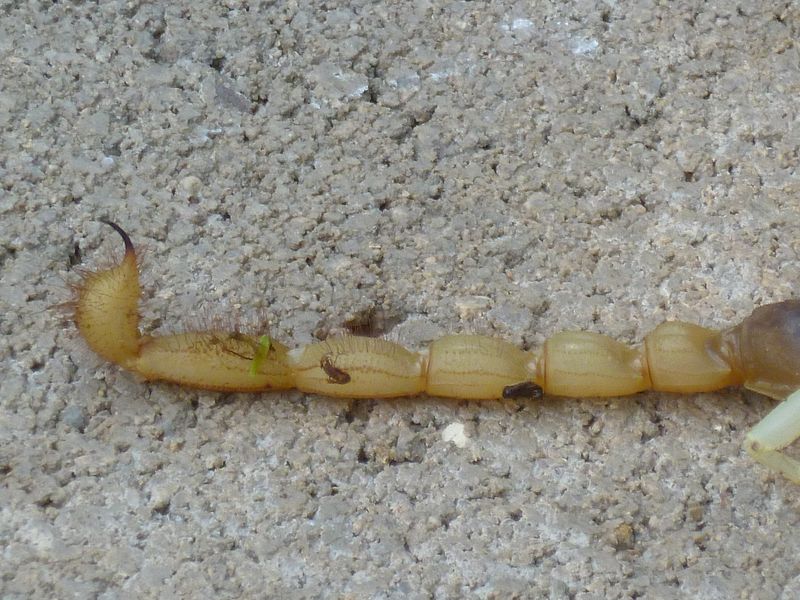
Scorpion behavior around a home is shaped more by physical conditions than by plant scent. CDC guidance on outdoor workers notes that scorpions are generally nocturnal and may hide under rocks, wood, debris, and other objects on the ground, while some species burrow into soil.
Those hiding preferences mean the physical features of your yard, stacked materials, ground-level clutter, and dense low plantings, matter more than what the plants smell like.
Field research in South Texas adds useful detail. A microhabitat study of striped bark scorpions in the region found that the species used blackbrush foraging areas and appeared to use prickly pear and strawberry cactus as possible refuges.
Vegetation in that setting provided both shelter and prey opportunities rather than acting as a deterrent. That finding does not mean every garden plant or landscaped bed draws scorpions, but it does confirm that the relationship between plants and scorpion activity is about physical habitat structure, not scent.
What this means practically is that the type of plant matters less than what accumulates around it. A native shrub growing cleanly in open soil poses less concern than any plant, native or not, surrounded by mulch piled against the foundation, stacked pots, or old boards left nearby.
Scorpions look for dark, cool, sheltered spots during the day, and residential yards often provide those conditions unintentionally through ordinary yard and garden habits.
The practical takeaway is not to remove all vegetation but to look critically at what is happening at ground level near the house. Dense ground cover against exterior walls, rock borders without regular inspection, and leaf litter that accumulates under shrubs all create the kind of microhabitat that makes a yard more hospitable to scorpions regardless of which plants are growing there.
Reduce shelter and seal routes into the house
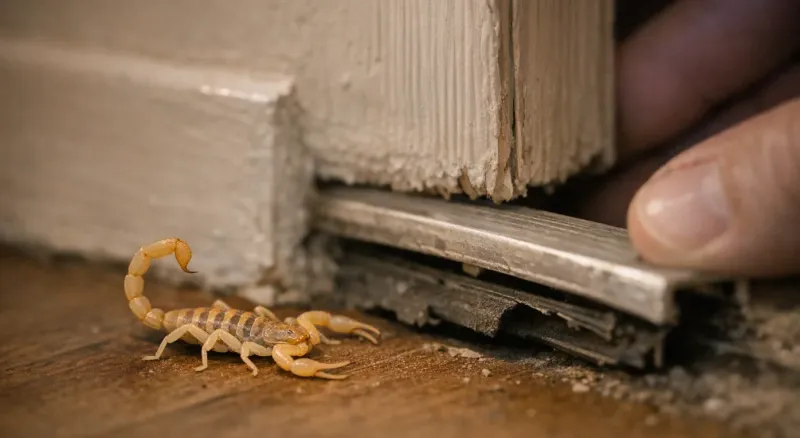
Removing what scorpions need to survive near your house is more reliable than any plant-based strategy. Texas A&M AgriLife Extension’s scorpion guidance identifies habitat reduction and exclusion as primary control measures.
Start by moving firewood, lumber, rocks, and building materials away from exterior walls. Those piles are some of the most reliable daytime hiding spots scorpions use, and keeping them away from the house reduces the likelihood that scorpions will travel indoors.
Seal cracks in the foundation, gaps around doors and windows, and any openings where utility lines enter the house. Weatherstripping and door sweeps on exterior doors close common access points.
Check around garage doors as well, since gaps there are often overlooked. Reducing access points does not guarantee that no scorpion enters, but it makes entry less likely and reduces the effort needed to manage the population around the house over time.
When moving rocks, pots, mulch, wood, or any ground-level material, wear gloves, long sleeves, and pants. CDC recommendations for outdoor workers also call for shaking out shoes and clothing before putting them on, particularly if they have been left on the ground or in a garage.
A scorpion sheltering in a shoe or garden glove is not an unusual situation in Texas.
Pesticides are sometimes used as part of a broader control plan, but they are not a substitute for habitat reduction. EPA guidance consistently places nonchemical prevention methods first and requires that any pesticide be applied strictly according to its EPA-approved label, including application limits, reentry intervals, and directions for protecting children and pets.
Perimeter sprays should not be applied to surfaces or plants not listed on the product label. If you are uncertain whether a product is appropriate for your situation, a licensed pest-management professional can assess the yard and recommend a labeled treatment if one is warranted.
Inspect likely hiding spots regularly, especially during warm months when scorpion activity peaks. Consistent monitoring helps you catch activity early rather than discovering a problem after scorpions have already moved inside.
Choose Texas mountain laurel for garden benefits
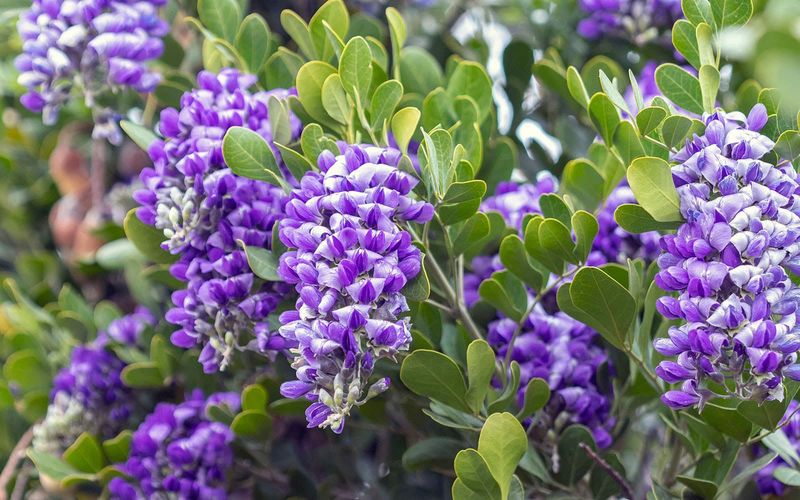
Texas mountain laurel, Sophora secundiflora, earns its place in Texas yards on genuine horticultural grounds. Texas A&M’s native and adapted plant materials include it among resource-efficient landscape options suited to the state’s climate.
The plant tolerates alkaline limestone soils, handles drought once established, and produces clusters of purple flowers with a scent often described as grape-like in early spring. Those qualities make it a low-maintenance choice for homeowners working with Texas heat and water restrictions.
Earth-Kind plant selection guidance from Texas A&M supports choosing plants adapted to local conditions as a way to reduce inputs and improve long-term landscape performance. Texas mountain laurel fits that framework well.
As an evergreen shrub, it also provides year-round structure in a landscape without demanding supplemental irrigation through summer.
None of that makes it a scorpion deterrent. No study has tested whether Texas mountain laurel’s fragrance affects scorpion behavior, and the horticultural sources that recommend it do not make pest-control claims.
Texas Parks and Wildlife’s wildscapes guidance promotes native plants for ecological fit and wildlife support, which are entirely separate questions from pest repellence.
Treating a plant’s fragrance as a pest barrier and treating it as a drought-adapted native are two different conversations. Texas mountain laurel belongs in the second one.
Plant it because it thrives in Texas soils, supports native pollinators, and holds its color through long summers, not because of a scorpion claim that no published research supports. Other aromatic plants, including rosemary, which is Mediterranean rather than Texas-native, also lack field evidence as scorpion deterrents and should not be substituted as proven alternatives.
Use habitat control as the decision rule
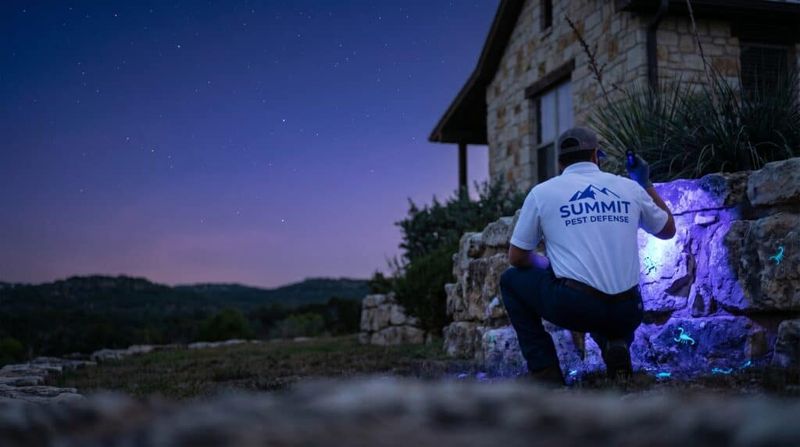
Fragrant and native plants are worth growing in Texas yards for the reasons horticulture and ecology actually support: local adaptation, reduced water use, and habitat value for native wildlife. Scorpion deterrence is not one of those reasons.
The rosemary-oil finding remains a small laboratory result using Oklahoma-collected scorpions and oil-infused sand, and the researchers who conducted it called for further work before practical applications could be considered.
Reducing scorpion encounters near the house comes down to removing shelter, sealing access, and inspecting regularly. Move debris and stacked materials away from exterior walls, close gaps in the foundation and around doors, and check shoes and gloves before use.
Those steps address what scorpions actually need: dark, sheltered daytime hiding spots and a path inside. Texas A&M AgriLife Extension identifies these habitat and exclusion measures as the foundation of scorpion management in residential settings.
If a sting occurs, CDC guidance recommends contacting a qualified health-care provider or poison-control center, applying ice to the area without immersing it in ice water, staying calm, and avoiding sedatives. Bark-scorpion stings can cause severe symptoms, particularly in children and older adults, so medical contact should not be delayed.
A well-managed yard reduces the chances of that call, but knowing what to do if it happens is just as important as any prevention step.