
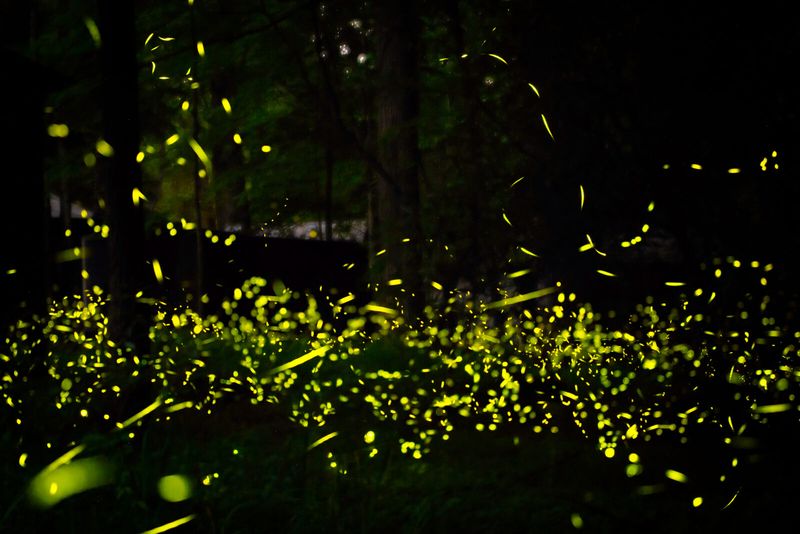
Stepping outside on a warm Texas evening and counting twice as many fireflies as last year feels like a reward for something you did right. Before you credit your compost pile or your new native plants, though, the full picture is more layered and more interesting than a simple cause-and-effect story. A firefly surge is a genuine ecological clue about your yard and the surrounding landscape, but reading that clue accurately takes more than one night of watching. Understanding what the lights are really saying can help you protect the conditions that brought them in the first place.
A firefly surge is encouraging—but it is not a yard-health score
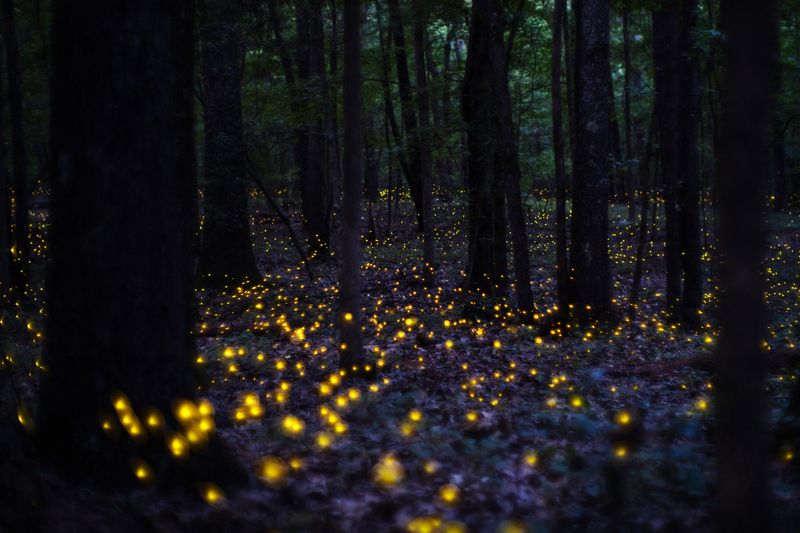
Counting more fireflies than usual is genuinely encouraging, and the display does tell you something real about your yard. What it tells you, though, is narrower than many gardeners assume: conditions were favorable for at least one local firefly species this season. That is a useful ecological clue, not a report card on the entire property.
Firefly abundance is shaped by a web of interacting factors, including soil moisture, land cover, weather patterns, development pressure, artificial light, pesticides, and the health of nearby habitat. Research using citizen science data and machine learning models confirms that no single variable drives firefly abundance on its own – the insects respond to combinations of conditions that shift from season to season and yard to yard. A surge in one corner of your property could reflect a wet spring, a neighboring lot left unmowed, or the emergence timing of a particular species, rather than a change you made to your garden beds.
Distinguishing a signal from a diagnostic test matters for practical reasons. If you treat the display as proof that your soil, plants, and garden practices are all working perfectly, you might stop paying attention to the specific conditions that actually supported the beetles. A better response is to ask which habitat features or seasonal changes may have lined up this year, then focus on preserving those conditions rather than declaring victory.
A comprehensive review of firefly conservation research notes that the insects are sensitive to habitat degradation, artificial light, and pesticide exposure, which means favorable conditions can shift in either direction relatively quickly. Treating the surge as an invitation to observe more carefully – rather than as a final score – puts you in the best position to keep those lights coming back.
Texas weather and geography can change the show before your practices do
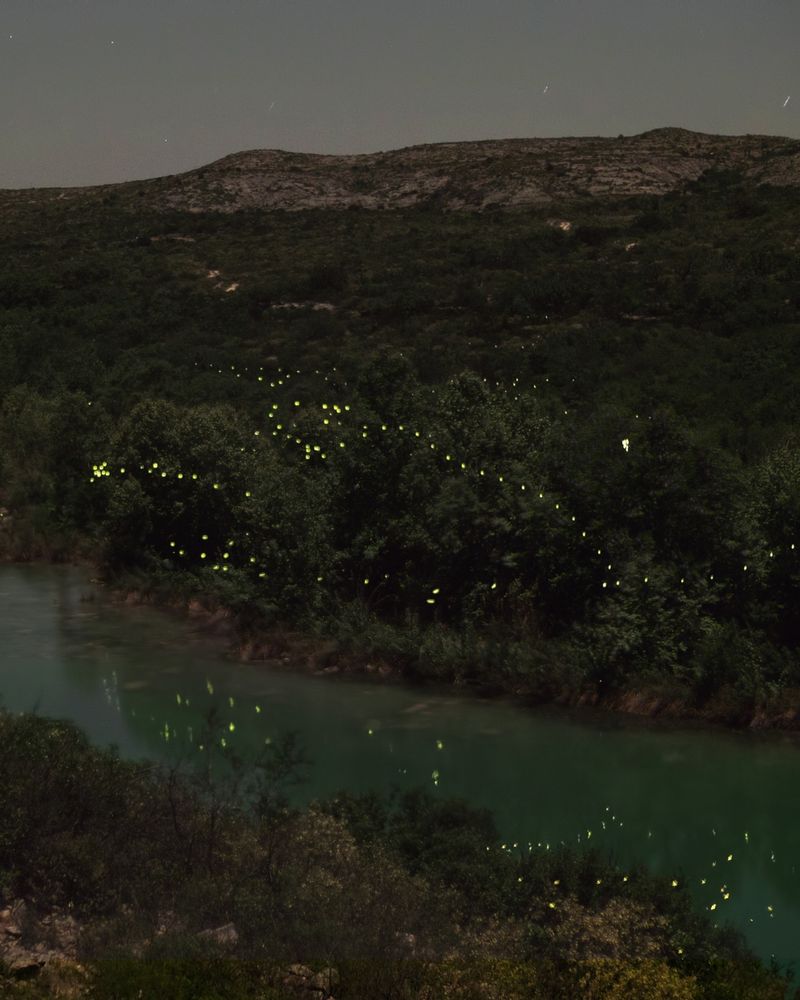
Texas is not one firefly environment. The Gulf Coast, Pineywoods of East Texas, Blackland Prairie, Hill Country, South Texas Plains, and the drier western reaches each support different species with different habitat needs, emergence timing, and tolerances for heat and drought. A surge you see in a Beaumont backyard near a bayou may have almost nothing in common with a display someone notices in a San Antonio yard backing up to a dry creek bed.
Weather and precipitation play an outsized role in timing and abundance, often before the adult beetles ever appear. Research on thermally moderated firefly activity found that precipitation extremes can delay adult emergence, meaning a wet or dry period weeks before the display may be partly responsible for what you see on any given night. Separately, studies linking adult firefly abundance to larval-stage weather in the prior year suggest that a bumper display in June may actually reflect soil conditions and temperatures from the previous summer, not this spring’s garden work.
Nearby land use matters just as much as what happens inside your fence. A drainage ditch, seasonal wet spot, creek corridor, or undeveloped lot within a few hundred feet can supply adults that move into your yard to display, even if your own soil never hosted a larva. Neighboring properties that reduced mowing or avoided pesticide applications may contribute to the surge you are seeing.
Texas firefly field guides document multiple species across the state with distinct habitats and behaviors, so identifying which species is driving your display – and where its larvae actually developed – is rarely straightforward from flash patterns alone. Regional conditions and seasonal timing are the first lens to apply before drawing conclusions about your own gardening practices.
Look for ground-level habitat in soil, leaf litter, and sheltered places
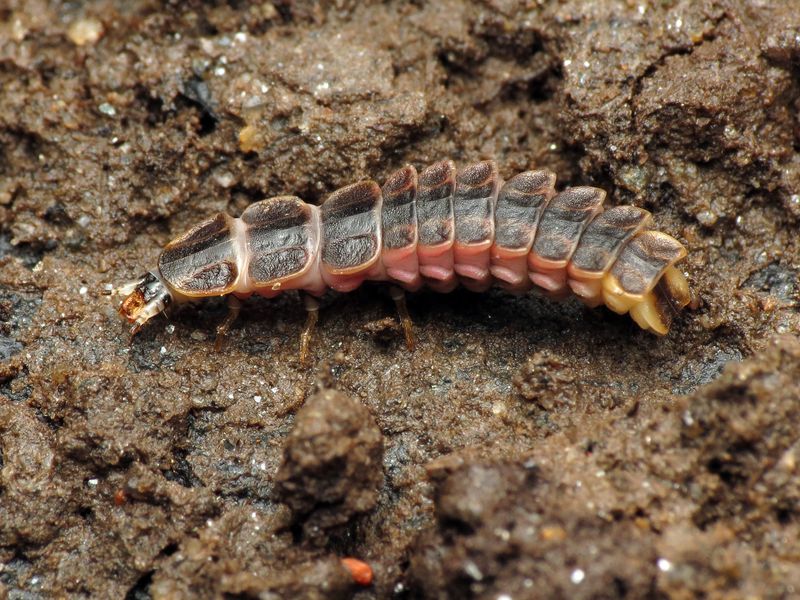
The nighttime light show is only the adult stage of a beetle that spends most of its life underground or hidden in leaf litter. Firefly larvae develop in soil, damp ground, decomposing debris, and other sheltered microhabitats, and they commonly prey on soft-bodied organisms such as snails, slugs, and earthworms. The conditions that support those prey animals – loose, moderately moist soil with organic matter and ground cover – tend to support larvae as well, though suitable habitat varies considerably by species and site.
Firefly conservation research highlights that larval habitat requirements differ across species, so no single ground condition works as a universal recipe. What most species share is a preference for relatively undisturbed ground where moisture is retained, prey is available, and soil compaction is low. Heavily trafficked lawn areas, compacted clay, or ground that dries out completely between rains tend to offer less suitable larval habitat than edges, shaded beds, or areas with natural debris accumulation.
Leaf litter and loose natural debris serve a dual function: they help retain soil moisture and provide physical shelter for larvae moving through the upper soil layers. Firefly habitat guidance recommends leaving some leaf litter, exposed soil, and fallen wood in at least one part of the yard rather than raking every surface clean. The goal is a mixture of conditions, not a blanket layer of thick mulch everywhere, since overly compacted or deep mulch may actually reduce access to the soil where larvae need to move and develop.
Damp ground is not the same as standing water. Firefly conservation resources consistently distinguish between the moist, shaded soil that larvae benefit from and open containers or pooled water that breed mosquitoes without adding any larval habitat value. A shaded bed with organic matter and natural drainage is the target, not a saturated or flooded area.
Reduce unnecessary light without treating darkness as the only answer
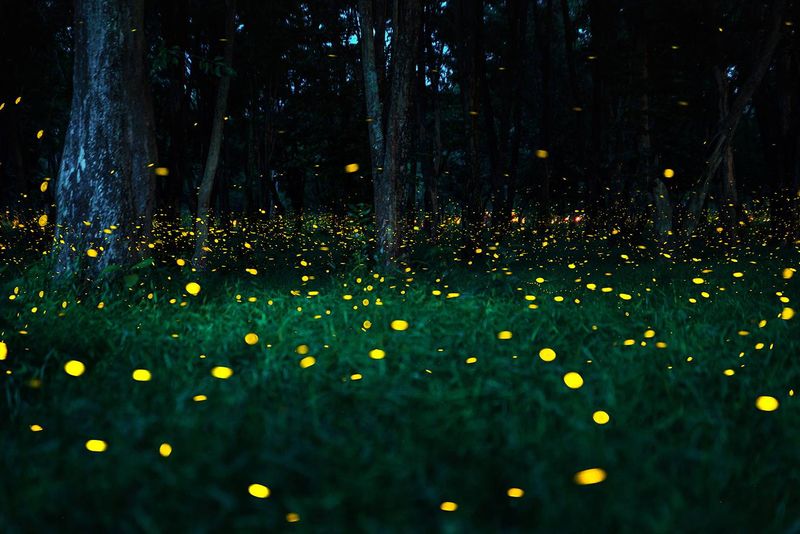
Many firefly species rely on bioluminescent flash patterns to locate mates, and artificial light can interfere with that communication in some species. When background brightness competes with a male’s signal or makes a female’s response harder to detect, successful mating becomes less likely. That connection between light pollution and firefly behavior is real, though the strength of the effect varies with species, light intensity, spectrum, timing, and the amount of surrounding habitat available.
Research on firefly threats and conservation strategies identifies artificial light at night as one of the more consistent pressures on firefly populations, particularly in suburban and urban settings where multiple light sources overlap. Decorative string lights, floodlights aimed into vegetation, and security lights that stay on through the entire night are the most likely sources of interference during the flashing and breeding season, which in Texas typically runs through the warmest months.
Practical steps are straightforward. Switch off decorative and landscape lighting that is not serving a safety purpose during peak flashing hours, usually from shortly after sunset through the first few hours of the night. Where lighting is genuinely necessary, timers and motion sensors reduce the hours of illumination, and fixtures aimed downward with shields that prevent light from spilling into trees and shrubs cause less disruption than broad-spread floodlights.
Reducing light is a sensible and low-cost supportive measure, but framing it as the single explanation for a firefly surge or decline oversimplifies the situation. Ground habitat, moisture, pesticide use, weather, and surrounding land cover all contribute alongside light conditions. Turning off one porch light is worth doing, and it is one piece of a larger habitat picture rather than a standalone fix.
Protect a low-disturbance habitat zone without abandoning the whole yard
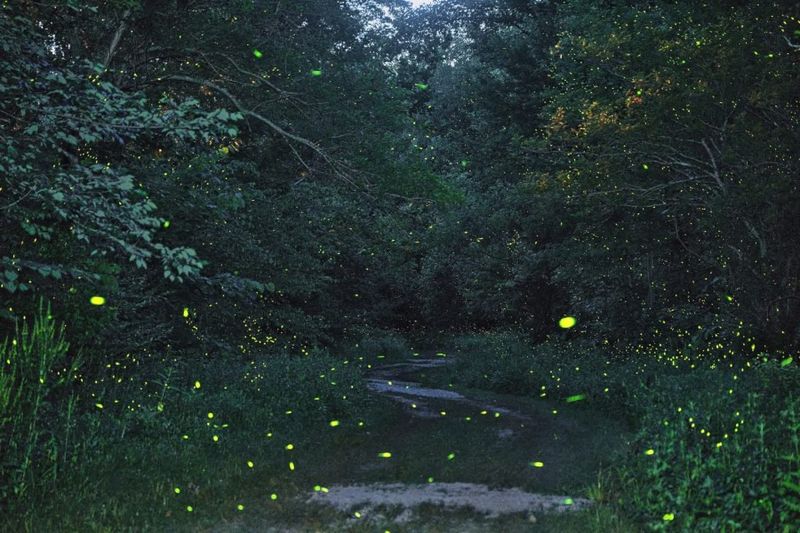
Most Texas yards do not need to become nature preserves to support firefly habitat. A more realistic and effective approach is to carve out at least one low-disturbance area while keeping the rest of the yard functional for the household. That zone can be a shaded bed along a fence, a corner near a drainage swale, or a strip of native ground cover under trees where leaf litter accumulates naturally.
Within that zone, the goal is to maintain the conditions that support larvae and their prey: some leaf litter left in place, a mix of exposed soil and loose debris, fallen wood if space allows, and native vegetation that retains moisture and provides physical structure. Firefly habitat-building guidance recommends resisting the urge to rake every surface clean or blow out every corner of the yard during the months when larvae or adults may be active.
Mowing frequency and timing matter at the edges of that zone. Damp margins, seasonal wet spots, creek edges, and dense low growth are the places where larval habitat and adult activity are most likely to concentrate. Firefly conservation resources suggest mowing less often in those areas and avoiding aggressive clearing during periods when fireflies are present, though the right schedule depends on the specific site and the species that may be using it.
A universal no-mow rule is not the answer. Tall grass left unmanaged throughout the yard creates its own problems in a Texas summer, including increased tick and rodent habitat and potential conflicts with municipal code. Texas firefly species use a range of habitats from woodland edges to open fields, so the best approach is a mixed yard that reserves one genuinely undisturbed area while managing the rest according to site needs and local requirements.
Match Texas plants and watering to the site, climate, and restrictions

No single plant list will attract fireflies across all of Texas. A Gulf Coast yard with clay soil and high summer humidity supports entirely different native species than a Hill Country caliche slope or a West Texas landscape that receives less than fifteen inches of rain per year. Recommending the same plants statewide would set up many gardeners for failure and would not reliably improve firefly habitat anywhere.
The more accurate framing is that native plants support fireflies indirectly by providing habitat structure, shade, moisture retention, and a functioning food web. Diverse native vegetation encourages the snails, slugs, earthworms, and other soft-bodied invertebrates that firefly larvae eat. Texas Parks and Wildlife wildscaping guidance consistently recommends choosing plants matched to local soils, rainfall patterns, and ecoregion rather than selecting species based on a generalized Texas-native label.
Moisture management deserves the same site-specific thinking. Preserving naturally damp areas such as low spots, shaded beds, and ground near a downspout or drainage channel costs nothing and benefits larvae without requiring extra irrigation. Texas water conservation resources emphasize that keeping the whole yard saturated wastes water and can stress plants adapted to periodic dry spells.
During drought or water restrictions, deep and infrequent watering directed at plant root zones does more to sustain soil life than frequent shallow sprinkles that evaporate quickly. Texas A&M AgriLife Extension’s landscape survival guide for water restrictions provides region-specific advice for maintaining landscapes without exceeding limits. Avoid leaving open containers, saucers, or clogged gutters filled with water – those create mosquito breeding sites without adding any benefit to firefly habitat.
Limit chemical disturbance and skip routine mosquito misting
Summer in Texas brings mosquitoes, fire ants, and a long list of other insects that prompt many homeowners to reach for chemical controls. Before treating the entire yard on a routine schedule, it helps to understand how those products can affect fireflies and the habitat they depend on.
Insecticides work by targeting the nervous systems of insects broadly, and fireflies are beetles – meaning they are susceptible to the same products used against pest species. Firefly conservation research identifies pesticide exposure as one of the pressures contributing to population declines, though the degree of harm depends on the product, application rate, timing, and which species are present. Herbicides work differently – they do not directly target insects, but removing vegetation or ground cover can reduce shelter, moisture retention, and prey availability in ways that make larval habitat less suitable. Avoid assuming that every product application causes measurable harm, but routine broad-spectrum treatment of areas where fireflies are active or likely to be developing carries real risk.
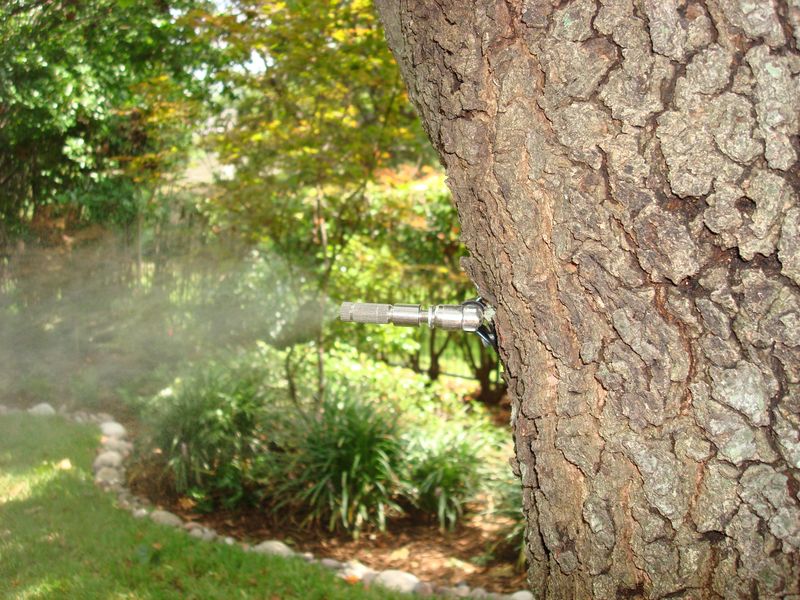
Mosquito-misting systems deserve specific attention. The EPA notes that outdoor misting systems are designed to kill mosquitoes and other insects, not only the target pest. Those systems typically use pyrethrins or synthetic pyrethroids, which are broad-spectrum insecticides that can reach non-target beetles, including fireflies, when applied across vegetation and soil. The CDC does not recommend residential mosquito-misting systems for homeowners as a primary control method.
Source reduction is the more effective and less disruptive starting point: eliminate standing water in containers, gutters, and low spots to remove mosquito breeding sites before considering any chemical treatment. When targeted control is genuinely necessary, follow label directions, apply only to the intended area, and time applications to avoid peak firefly activity hours in the evening.
Track repeated activity before deciding what the fireflies reveal
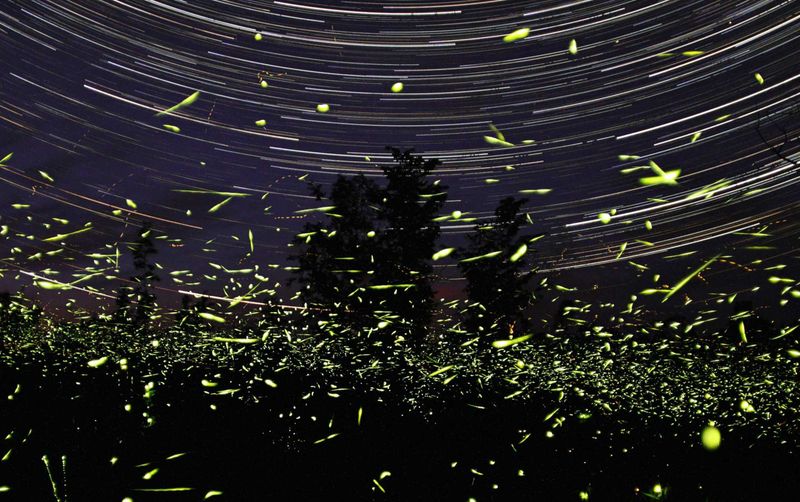
One spectacular night of firefly activity is memorable, but it is not enough information to draw firm conclusions about your yard. A hot, calm evening following a stretch of rain can produce a display that looks dramatically different from a typical night, even when nothing about the garden has changed. Building a picture that means something requires comparing the same location at roughly the same time across multiple nights and multiple seasons.
A simple observation log makes that possible. Each time you watch, record the date, the recent rainfall in the days before, air temperature, wind, any changes to lighting or mowing since your last observation, and where the flashes are concentrating – near trees, along a drainage edge, in tall grass, at garden borders, or in open lawn. Firefly Atlas abundance protocols and guidelines emphasize consistent observation methods precisely because short-term variation is so large – without a repeatable approach, it is easy to confuse a weather-driven spike with a genuine habitat trend.
Repeated activity across several seasons, observed under comparable conditions, carries far more weight than any single night. If fireflies return to the same corner of your yard year after year, and that corner has the leaf litter, shade, and undisturbed ground described in earlier sections, that is a stronger signal that the habitat there is genuinely functional. Citizen science research on firefly abundance patterns reinforces that multi-year, multi-site data is what separates meaningful trends from seasonal noise.
Even consistent multi-year activity does not prove successful reproduction in your yard specifically – adults can travel from nearby habitat, and larvae may be developing in soil you never see. What the record does give you is a practical guide to which conditions seem worth protecting. Preserve what is working, limit disturbance during active periods, and keep watching – the fireflies will keep telling you more than any single evening can.