
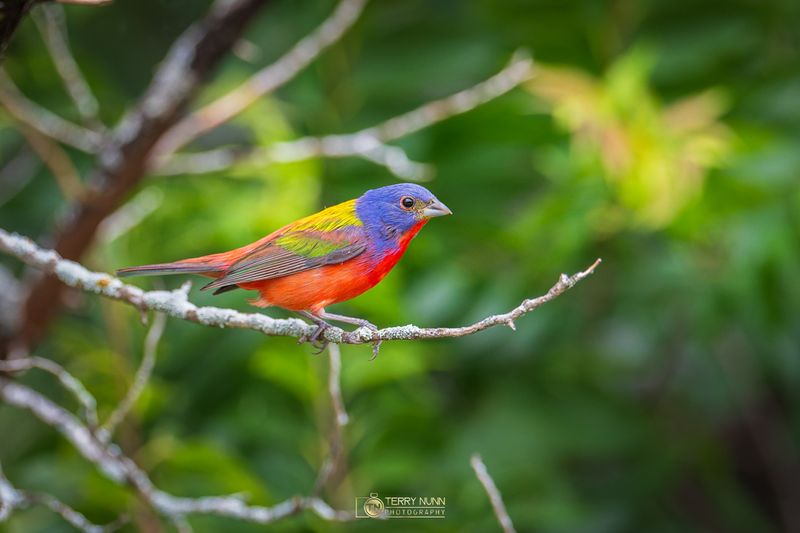
Catching a flash of blue, green, and red in your Texas garden can stop you mid-step and make you wonder whether something special just happened. The painted bunting is one of the most vividly colored birds in North America, and Texans who spot one for the first time often feel like they witnessed something rare and meaningful. Understanding what that moment actually represents, and separating genuine wonder from wishful thinking, makes the encounter even more rewarding.
Why a first sighting feels extraordinary
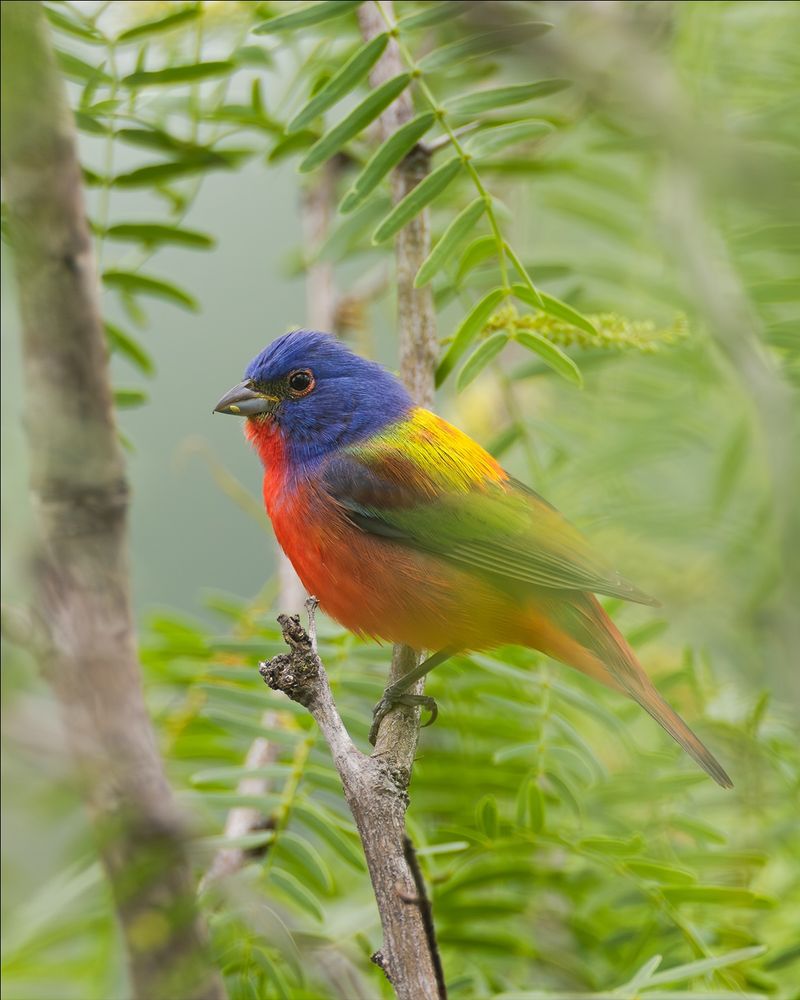
Standing in a Texas backyard and suddenly spotting a bird that looks painted in primary colors is the kind of moment that stops people mid-sentence. According to Texas Parks and Wildlife Department, painted buntings are common summer residents across much of the state, yet they are “rarely seen” because they spend most of their time tucked inside dense brush. They tend to make brief, visible perches, often around sunrise, before retreating back into cover.
That combination, a bird that is genuinely present but almost never shows itself, creates the conditions for a sighting that feels almost impossible. When one finally steps into the open, the contrast between its ordinariness as a Texas resident and the drama of its colors is striking enough to feel extraordinary. The emotional response is entirely understandable and does not need an omen to explain it.
The bird’s visual power has been recognized for a very long time. Audubon’s field guide notes that the French name “nonpareil” means “having no equal,” a label attached specifically to the adult male’s blue head, green back, and red breast. Words like incomparable, jewel-like, or almost magical are perfectly reasonable responses to that plumage.
What those words do not establish is a supernatural explanation for the sighting. The intensity of a personal reaction reflects the bird’s genuine beauty and secretive habits. A Texas gardener can feel deeply moved by the encounter and still recognize that the bird arrived because habitat conditions allowed it, not because the universe arranged a message.
No documented Texas omen explains the encounter
Many people who search for the meaning of a first painted bunting sighting land on lifestyle articles describing the bird as a symbol of joy, transformation, or a message from someone who has passed. Those interpretations are understandable, and personal meaning is a legitimate part of any memorable wildlife encounter. The problem is that none of the authoritative Texas wildlife or ornithological sources reviewed for this article, including Texas Parks and Wildlife Department, Cornell Lab of Ornithology, and Audubon, document a statewide Texas tradition connecting a first sighting to luck, life change, guidance, or a message from the deceased.
One recent lifestyle piece presents such interpretations as if they reflect what Texans widely believe, but it does not cite surveys, oral-history research, or any named Texas custom. Repeating a claim across multiple websites does not make it a documented tradition. The symbolism writing circulating online reflects personal and spiritual interpretation, which is worth respecting, but it is a different category of knowledge than verified folklore or wildlife science.
None of this means the sighting was ordinary in a dismissive sense. A bird that stays hidden in brush most of the time, appears briefly in morning light, and carries colors that look almost artificial is a genuinely remarkable thing to see. That is a fully sufficient explanation for why the moment feels significant.
Holding personal meaning and factual accuracy at the same time is actually the more honest way to honor the experience. Texans who attach private significance to the sighting are not wrong to do so. They are simply engaging in interpretation, not repeating a documented statewide belief.
What may make a Texas garden usable habitat
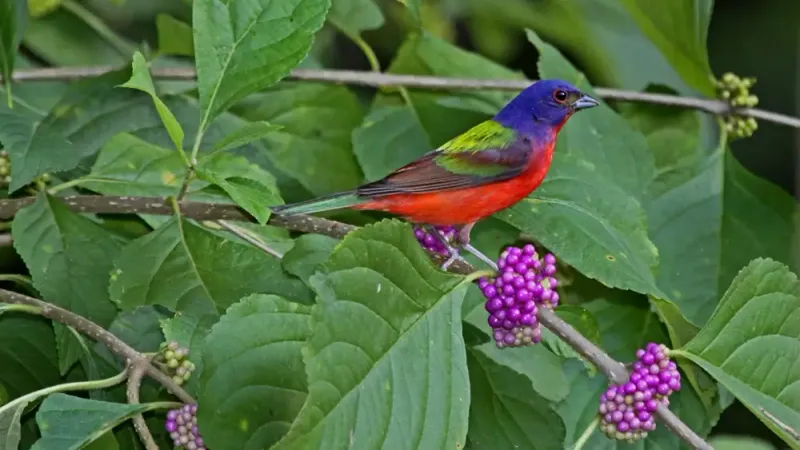
Painted buntings are not random visitors. They favor semi-open habitat with dense low growth, including brush, woodland edges, streamsides, hedgerows, overgrown fields, and gardens that provide protective cover close to the ground. A Texas yard with shrubs, native grasses, and thickets connected to larger patches of vegetation may genuinely qualify as usable habitat during migration or the summer breeding season.
Cornell Lab’s life-history account describes how painted buntings forage largely on the ground for seeds and also eat insects during the breeding season, including grasshoppers, beetles, caterpillars, spiders, and other arthropods. A yard that supports native seed-producing grasses and sustains insect life, without heavy pesticide use, may naturally offer what the bird is already looking for.
Texas is ecologically varied enough that a sighting in coastal scrub near Corpus Christi, in the live-oak brush of the Hill Country, along a Rio Grande Valley hedgerow, or in an urban San Antonio garden reflects different local habitat and migration circumstances. No single seasonal pattern applies uniformly across the state. What the sources do agree on is that the bird needs dense cover and connected vegetation, not a manicured lawn.
A single visit cannot confirm that the bird has chosen the yard permanently. Painted buntings are migratory and territorial, and broader habitat conditions across the landscape shape where individuals travel. The honest interpretation of one appearance is that the yard may overlap with habitat the bird found useful on that particular day. That is a meaningful ecological detail, even if it is a quieter one than an omen.
Identify the bird before interpreting the moment
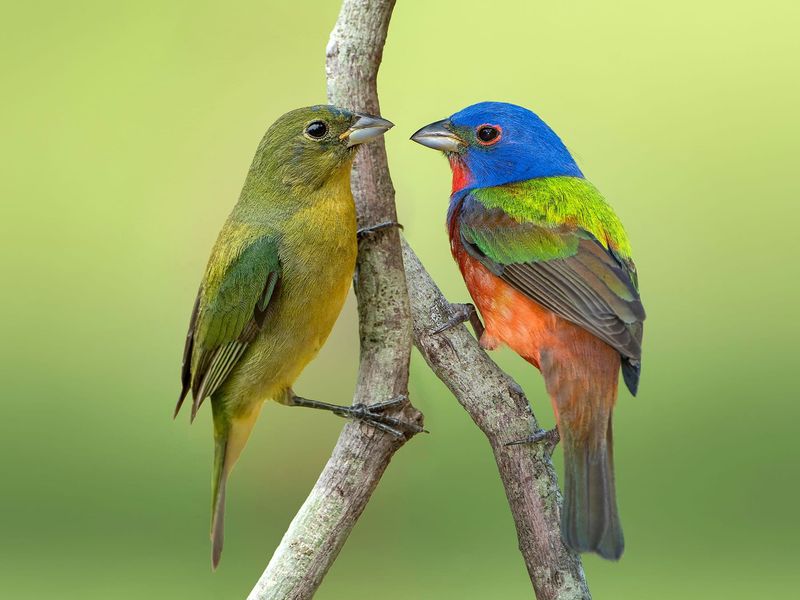
Before attaching any meaning to a garden sighting, confirming the identification is worth a moment of careful attention. The adult male painted bunting is genuinely unmistakable: a blue head, bright green back, red breast and rump, and dark wings that make the whole bird look like it was assembled from a child’s paint set. Cornell’s identification guide describes the plumage in detail and includes photos that make comparison straightforward.
Females and young birds look completely different. They are mainly greenish, with a faint eye ring and a warmer tone on the underparts, and they blend into vegetation far more effectively than the adult male. A first sighting in a Texas garden may very well involve one of these less colorful birds rather than the famous jewel-toned male.
Young males add another layer of complexity. They do not acquire full adult coloration right away, and birds in transitional plumage can show patches of color that make identification tricky. A partly green, partly blue-red young male is still a painted bunting and still represents the same seasonal wildlife event as a fully colored adult.
Knowing what all the plumage types look like matters for two reasons. First, it prevents misidentification and the misplaced symbolism that could follow. Second, it opens up the possibility that a garden has been hosting painted buntings in their less visible forms without the observer realizing it. A green bird moving quietly through the shrubs may be just as significant a presence as the one that stops you in your tracks.
Support habitat instead of chasing a guaranteed attraction
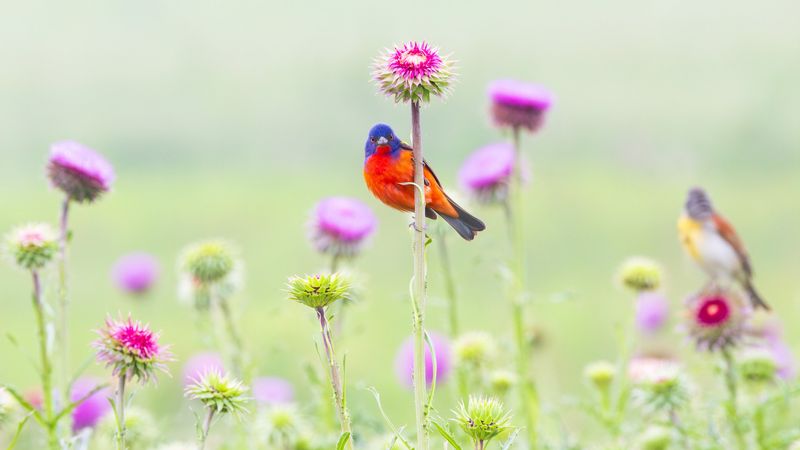
The most useful thing a Texas gardener can do after a first painted bunting sighting is look at the yard as habitat rather than as a stage set for future performances. Dense native shrubs, ornamental grasses, and layered vegetation that connects to neighboring green spaces give the bird protective cover and natural foraging opportunities. That approach is more defensible than promising that a particular seed or feeder will bring the bird back.
Texas Parks and Wildlife notes that painted buntings rarely come to backyard feeders because they prefer to stay close to cover rather than moving into open spaces. That is an important limitation to understand before investing heavily in feeder setups. Audubon’s field guide acknowledges that some painted buntings do visit feeders, particularly in other regions, so results in Texas yards will vary depending on the density of nearby cover and the individual bird’s habits.
If a feeder is already in place or a homeowner wants to try one, millet and other small seeds are the most appropriate choices for this species. More important than what goes in the feeder is keeping it clean. Cornell’s feeder-care guidance recommends cleaning seed feeders about every two weeks under normal conditions, more often during wet weather or heavy use, and removing spoiled seed and accumulated hulls each time.
Landscaping choices matter more than feeder choices for this species. Native plants suited to the local Texas region, whether that means drought-tolerant Hill Country natives, coastal prairie grasses, or riparian shrubs along a creek corridor, support the insect life and seed sources the bird already uses. The goal is to make the yard a place the bird finds useful on its own terms, not to engineer a guaranteed encounter. Cornell’s life-history data supports habitat connectivity as a key factor, which means what happens in neighboring yards and green corridors matters as much as any single garden decision.
Protect the bird by giving it space
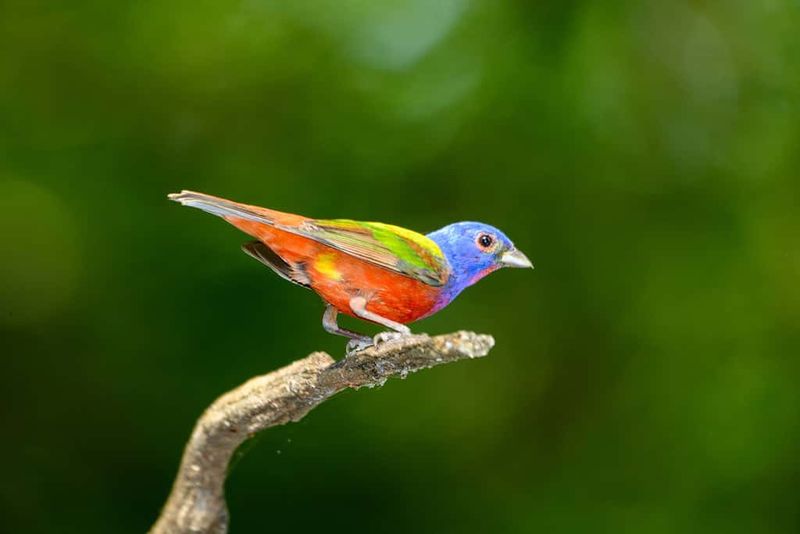
Watching a painted bunting from a comfortable distance is the best thing a Texas homeowner can do once one appears. TPWD’s birding-ethics guidance warns that recorded calls and other attraction methods can stress birds or expose them to danger. Playing a recording to lure the bird closer, chasing it through the yard for a better photograph, or trying to corner it near a feeder all create unnecessary pressure on a wild animal that already finds open spaces stressful.
Outdoor cats are one of the most significant threats to Texas songbirds. TPWD’s threat-reduction resources list predation by outdoor cats alongside window collisions and habitat loss as major causes of bird mortality. Keeping cats indoors or within a controlled outdoor enclosure removes one of the most preventable risks a yard can pose to any visiting bird.
Window collisions are also worth addressing. Placing feeders either very close to windows (within three feet, so a startled bird cannot build dangerous speed) or far from them (more than thirty feet away), and using window treatments that birds can see, reduces collision risk significantly.
Pesticide use deserves a direct caution. Texas Partners in Flight action guidance warns that pesticides can harm birds directly and through contaminated prey. Because painted buntings eat insects during the breeding season, a yard that uses broad pesticide applications is actively reducing one of the bird’s food sources.
If a nest turns up in the yard, the right response is to observe it from a distance and leave it alone. The U.S. Fish and Wildlife Service notes that most bird nests are protected under the Migratory Bird Treaty Act and that nests containing eggs or young cannot be destroyed. Before removing or altering any nest, check applicable federal and state rules rather than assuming a particular nest is or is not covered.
Never handle eggs, chicks, or the nest structure itself during an active nesting period.
Let the sighting mean what the evidence supports
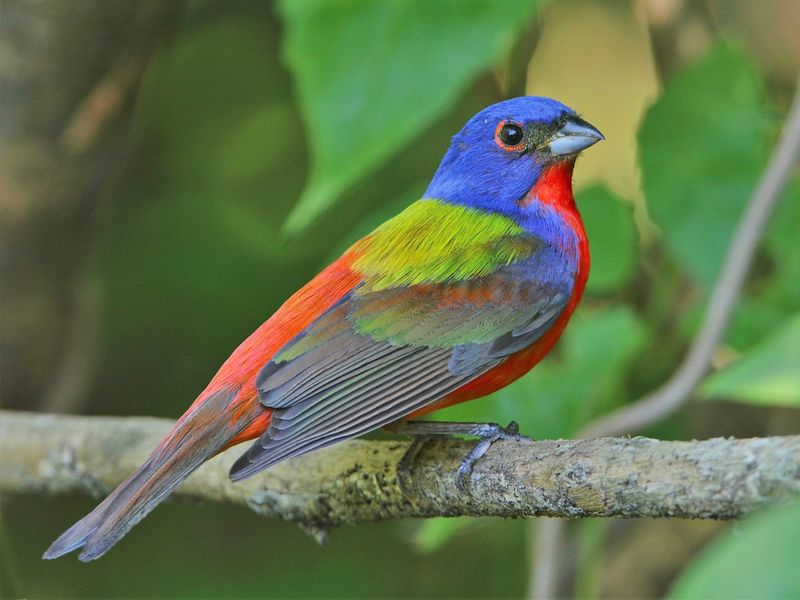
A first painted bunting sighting in a Texas garden is a memorable encounter with a colorful, secretive, migratory bird that spends most of its life out of sight. It may also suggest that the yard overlaps with habitat the bird found genuinely useful. Both of those things are worth appreciating on their own terms, without needing to add a prediction about luck, change, or a message from beyond.
The authoritative sources reviewed here, including Texas Parks and Wildlife and Audubon’s field guide, describe a bird that is common across much of Texas but almost never seen. That gap between presence and visibility is the real story behind the sighting’s emotional power. Personal wonder is a completely reasonable response to something genuinely beautiful and genuinely elusive.
The most honest stewardship takeaway is also the simplest one: observe quietly, identify carefully, maintain safe and connected habitat, and then step back. TPWD’s birding-ethics framework puts the bird’s welfare ahead of the observer’s desire for a closer look, and that priority is the right one. Whether the painted bunting returns is entirely up to the bird, which is exactly as it should be.