
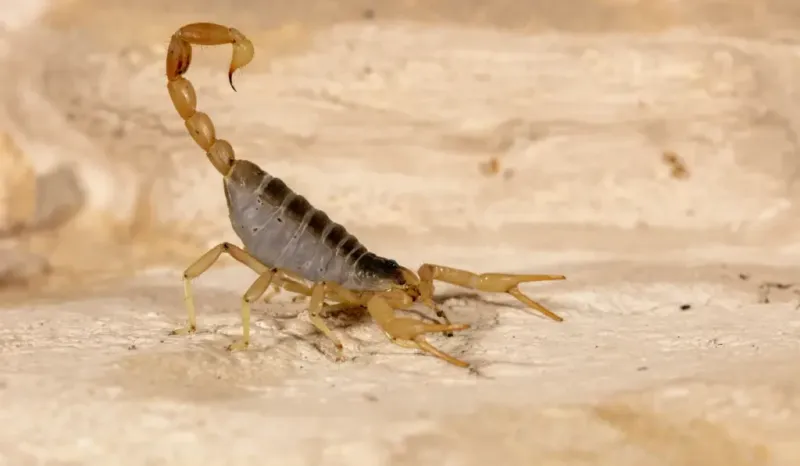
You reach under a flat rock to pull a weed, and something sharp stings your finger. Scorpions live in Central Texas yards, especially around rocks, logs, and woodpiles where many of us work in the fall.
Most stings cause pain at the spot and nothing worse, but a few signs mean you need help fast. Here is a calm, step-by-step plan so you know exactly what to do.
Know which scorpion is common in Texas
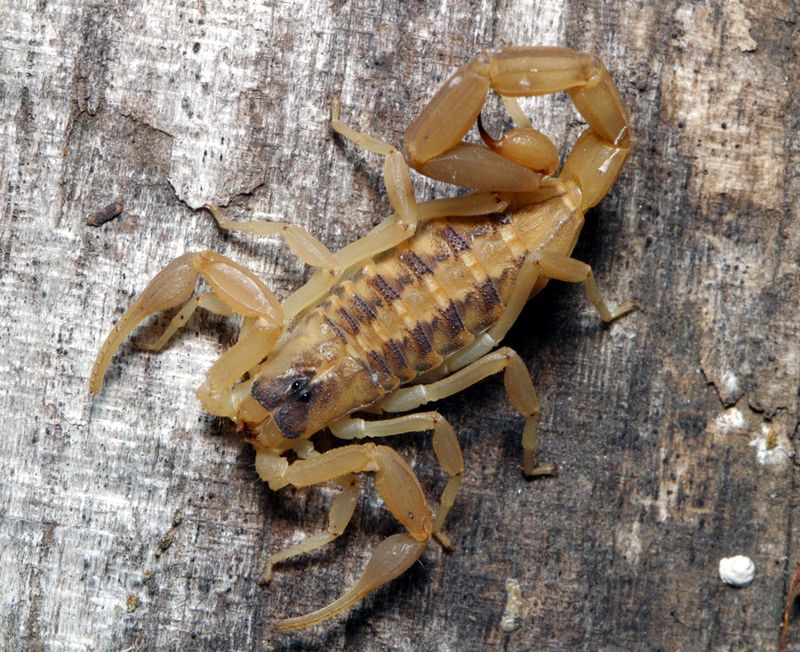
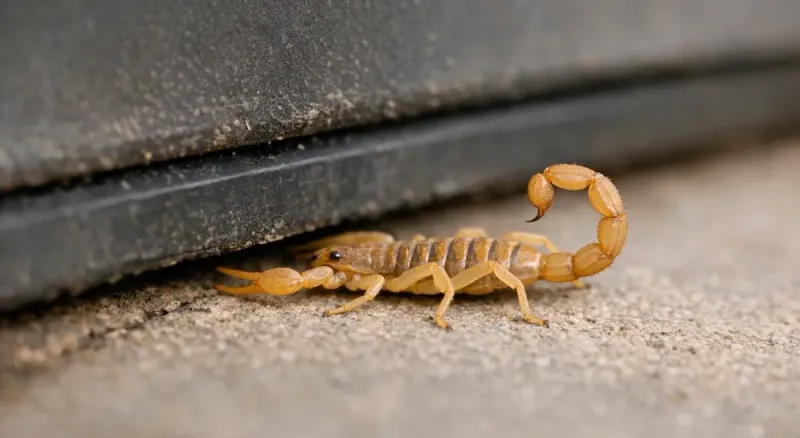
The scorpion most Texas gardeners meet is the striped bark scorpion, Centruroides vittatus. Texas A&M AgriLife describes it as widespread across the state.
It is small and tan or yellowish, usually with two dark stripes down its back and a dark triangle near the front of its head.
It likes hiding spots. Look for it under rocks, logs, boards, dead vegetation, and other yard debris, which is why woodpiles and garden edging are common places for surprise stings.
Fall does not make a sting more dangerous, but many of us are still moving stones and stacking wood then, so we run into them more.
Texas A&M says stings from this species are painful, and that deaths blamed on it are not well supported. The word bark scorpion can cause confusion, though.
The Arizona bark scorpion is a different species, and it is the U.S. scorpion most linked to serious reactions, as Poison Control explains. The two look alike to most people.
That is the reason not to judge safety by a quick look. A scorpion in dim light under a board is hard to identify, and bodies react differently to venom.
Treat any sting the same way, follow the steps below, and let poison control experts guide the next move instead of trusting your guess about the species.
Move away, wash the site, and use a cool compress
Start by stepping away from the spot where the scorpion was. Do not try to grab it or swat at it.
Another sting is the last thing you need.
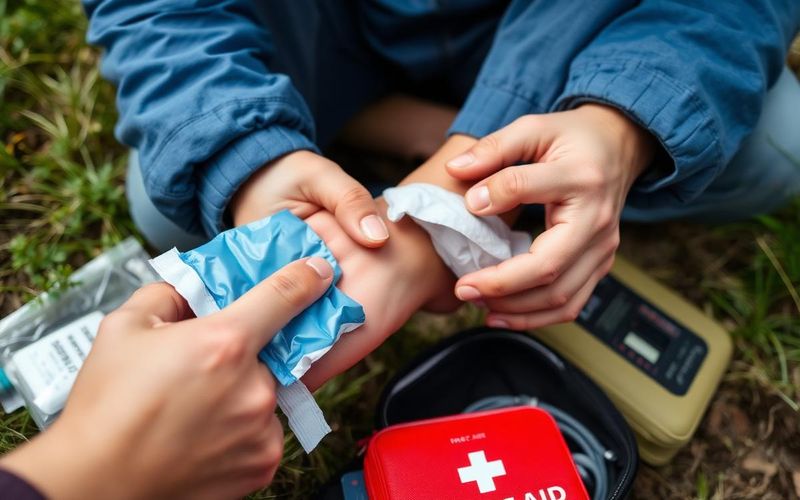
Next, wash the sting site gently with soap and water. Then hold a cool compress on it, such as a clean cloth soaked in cool water or a wrapped ice pack.
Keep a cloth between ice and skin so you do not irritate it. Scorpions do not leave a stinger behind, so there is nothing to scrape out like with a bee sting.
Then call the Texas Poison Center Network at 1-800-222-1222. The Texas Poison Center Network recommends washing the site and using a cool compress, and its specialists can give advice that fits your age, health, and symptoms.
The call is free and open around the clock.
Here is some reassurance. According to Poison Control, even a known bark scorpion sting that causes only local symptoms can often be managed at home at first, with poison center guidance.
Calm, steady steps work better than rushing. Prompt action is sensible, but no proven first-minutes deadline decides how things turn out.
Keep the phone nearby afterward and stay put while you wait for advice. If anything on the serious warning list appears, skip the hotline and call 911.
Recognize local symptoms and symptoms beyond the limb
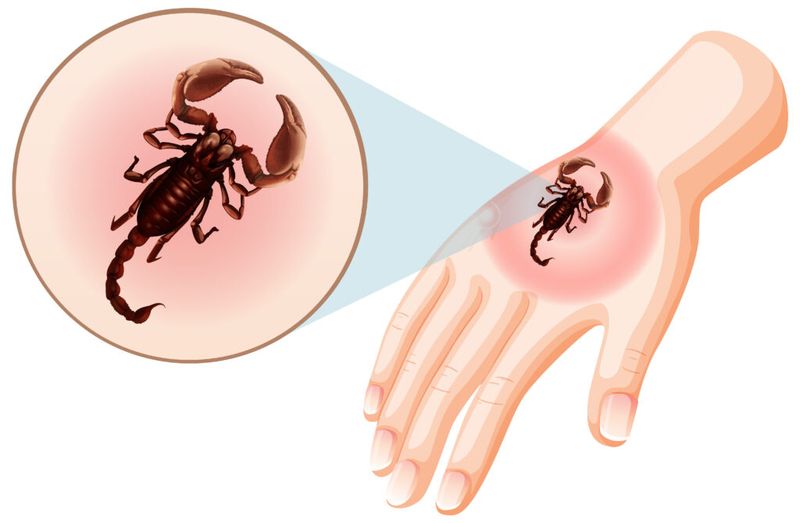
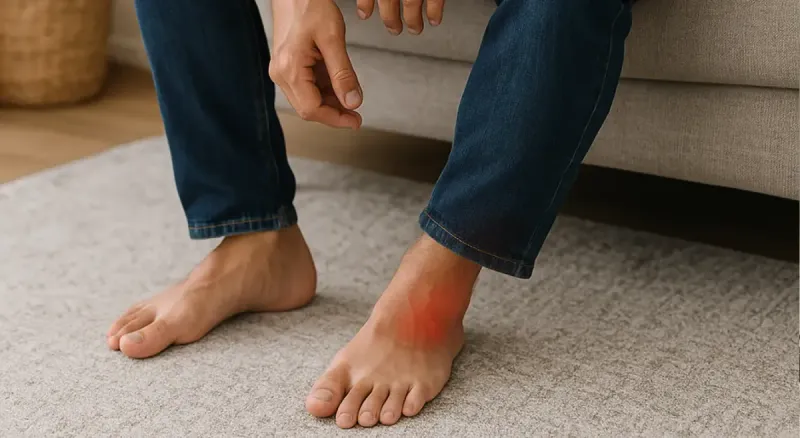
Most stings announce themselves with sharp pain or burning right at the spot. Tingling or numbness is also common.
You may see redness or mild swelling, but a visible puncture mark may not show up at all, so do not rule out a sting just because the skin looks normal.
Sometimes the pain or tingling travels along the same arm or leg. The American Academy of Pediatrics draws a useful line between that kind of limb-only discomfort and symptoms that show up in other parts of the body.
Think of it this way. A hurting, tingling hand is local.
Trouble with your eyes, speech, breathing, swallowing, or muscle control is something else, and it points to the body as a whole reacting. Those symptoms call for greater concern.
That line does not make worrying symptoms harmless. Spreading discomfort is still a reason to phone poison control and describe exactly what you feel.
Poison Control notes that most U.S. stings are not very dangerous, yet bark scorpion stings can sometimes cause more serious effects.
A simple habit helps. Note the time of the sting, then check in with yourself, or the person stung, every so often.
Write down anything new so you can report it clearly to the poison specialist or a doctor.
Know when to call 911 or seek medical care
Some signs mean stop everything and call 911. These include trouble breathing, trouble swallowing, drooling, fainting, a seizure, severe weakness, or a severe allergic reaction such as widespread hives or swelling.
Other body-wide signs need emergency assessment too. Watch for muscle twitching or rigidity, dizziness, confusion, abnormal eye movements, and slurred speech.
The American Heart Association and American Red Cross first aid guidelines say body-wide symptoms warrant emergency services. Do not wait to see whether they get worse.
The pediatric guidance is a little softer in wording. The American Academy of Pediatrics tells families to reach poison control when body symptoms appear.
If you cannot get through quickly, or you feel unsure, choose emergency help.
There is a middle category as well. If the pain is severe and over-the-counter pain relievers are not controlling it, seek medical care.
Check the label or ask poison control which medicine fits you, since doses depend on age and health.
Not every sting means a trip to the emergency room. Poison Control says most stings in the U.S. are not very dangerous.
The goal is matching your response to the symptoms: home care and a poison center call for local pain, medical care for stubborn severe pain, and 911 for the warning signs above.
Give children and uncertain stings prompt expert guidance
Kids are smaller, and they cannot always tell you what they feel. That is why caregivers get a clearer rule.
The American Academy of Pediatrics advises contacting Poison Control for a child under 2 or for a known bark scorpion sting.
Make that call at once, at 1-800-222-1222. Then wash the spot, use a cool compress, and keep the child calm and nearby.
Toddlers may cry, rub the area, or refuse to use the hand or foot, so go by what you see as well as what they say.
Certain signs are urgent in a child. Breathing or swallowing problems, muscle jerking, and abnormal eye movements need emergency help right away.
Call 911 if you see any of them.
Poison center staff can tailor next steps to a child’s age, weight, and symptoms. The Texas Poison Center Network offers that guidance around the clock.
The same call is smart when you are unsure about a sting, such as an adult who felt something and never saw what it was. Do not try to decide a child’s risk from the scorpion’s looks.
As Poison Control notes, identification is difficult, so let the experts weigh the whole picture.
Do not delay care to catch or identify the scorpion

Chasing the scorpion is a bad trade. Do not approach it, catch it, or handle it.
CDC guidance suggests capturing or photographing it only when that is safe. A photo from a distance may help if someone else can take it without risk, and it should never hold up first aid.
Treatment depends on symptoms, not on the animal in a jar. The American Academy of Pediatrics says catching or saving the scorpion is not helpful.
Skip the risky home remedies too. Do not cut the wound, try to suck out venom, or apply a tourniquet.
Poison Control says never to use a tourniquet, and CDC advises against sedatives. Electricity has no place here either.
There is also no stinger to remove, so save the tweezers for splinters.
Here is the short version. Move away, wash with soap and water, apply a cool compress, and call the Texas Poison Center Network at 1-800-222-1222.
Dial 911 for serious warning signs. Prompt steps are good practice, though no minute count decides the outcome.
Next time, pull on thick gloves before you lift a rock or board. A scorpion is easier to avoid than to treat.