
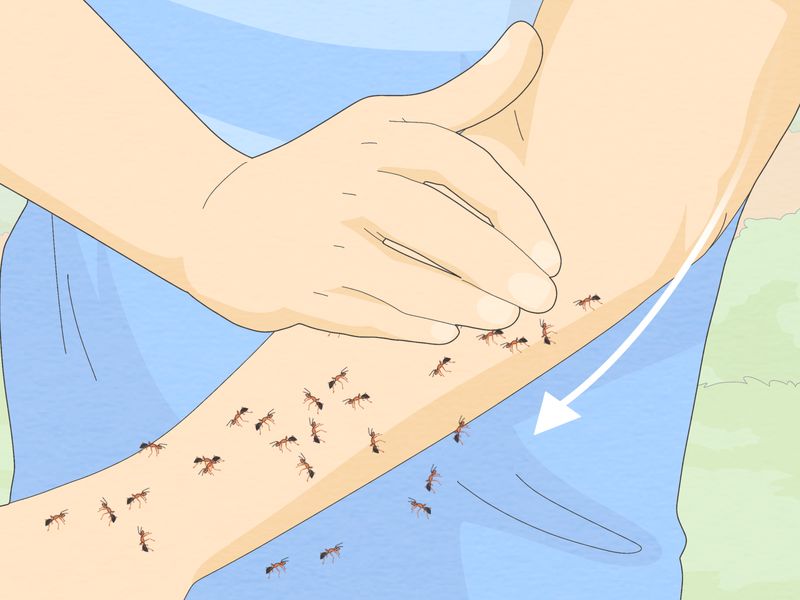
You are pulling weeds or moving mulch when your ankles suddenly feel like they are on fire. Fire ants in a Florida yard can swarm up a leg in seconds, and every second on the mound means more stings.
Knowing what to do right away helps you stop the stinging and spot real danger early. Here is a calm, step-by-step plan you can follow the next time it happens.
Get away from the mound and remove ants still on your skin
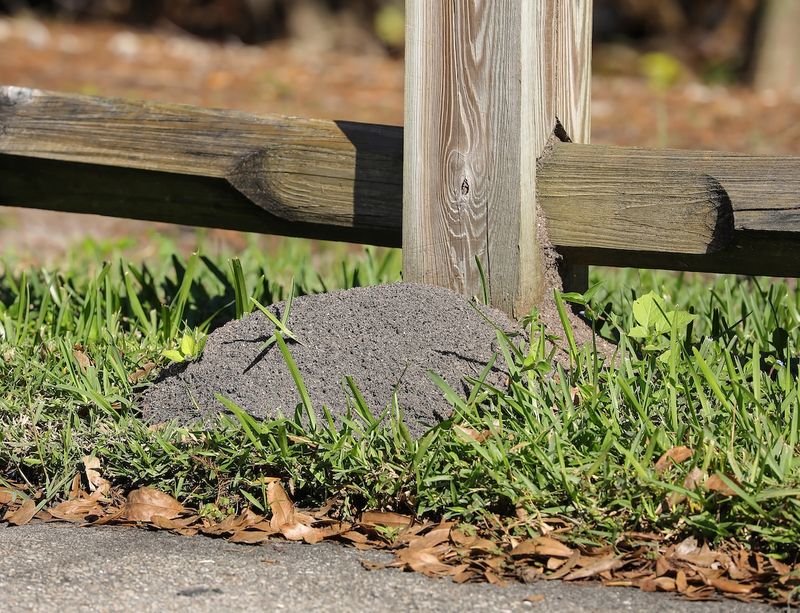
Step away from the mound first, and do it fast. Move several feet onto a hard surface like a driveway or patio, where you are not standing on more ants.
Staying put to figure out what happened is how people collect dozens of extra stings.
Next, brush the ants off your skin with quick swipes of your hand or a cloth. Fire ants grab on with their jaws and then sting with the tip of their abdomen, and they can sting more than once.
Poison Control guidance points to getting the ants off promptly, which can limit additional stings.
Check places you cannot see well, such as behind the knees, inside socks, and up pant legs. Take off shoes and socks, and shake out clothing if ants are hiding in it.
If a child is with you, strip off the clothing and check everywhere, including the waistband and hair.
Do not spend time hunting for a stinger. Unlike a honey bee, a fire ant does not leave a bee-style stinger stuck in the skin that you need to scrape out.
Skip the scraping, because it only irritates the skin. Your job in these first moments is simply to get the ants off and keep new ones from climbing on.
Wash the area, then use a wrapped cold pack
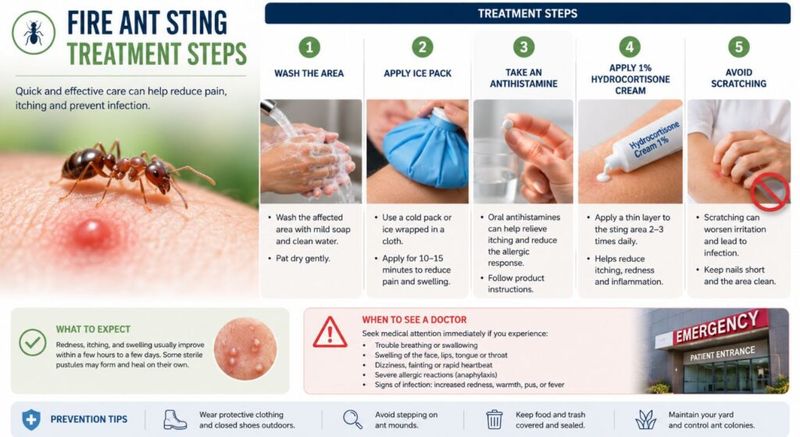
Once the ants are gone, head to a sink or hose and wash the stung skin with soap and water. This cleans away dirt from the garden and is a sensible step for any small skin injury.
Pat the area dry with a clean towel instead of rubbing it.
For pain or swelling, a cold pack can take the edge off. MedlinePlus advice on fire ants suggests wrapping the cold pack in a cloth and holding it on the area for about 10 minutes, then taking it off.
You can repeat that on-and-off pattern as needed for comfort.
Never press ice straight against bare skin. Direct ice can irritate the skin, and a thin towel or shirt makes a good barrier.
A bag of frozen peas wrapped in a dish towel works fine if you do not own a cold pack.
Think of washing and cooling as comfort care. They do not neutralize the venom, and they will not stop the itchy bumps that often show up later.
Do not reach for harsh chemicals, either, since they can make irritated skin worse.
Trouble breathing or facial swelling calls for emergency care
Most fire ant stings cause a local reaction: burning, redness, a small bump, and itching around the sting sites. A few people react much more strongly, and that is a true emergency.
Knowing the difference matters more than any home care step.
Call 911 if you see trouble breathing, wheezing, swelling of the face, lips, tongue, or throat, fainting, or dizziness. Fast-spreading symptoms in more than one part of the body, such as hives all over plus vomiting or a racing heart, also count.
Mayo Clinic first-aid advice lists these as signs of a serious allergic reaction needing emergency care.
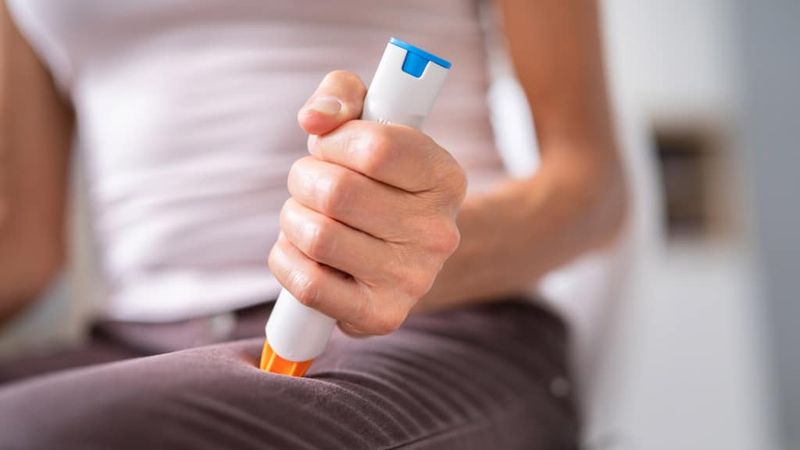
If the person has a prescribed epinephrine autoinjector and anaphylaxis seems likely, use it right away as directed, then make sure emergency services are on the way. Do not wait to see if the symptoms pass, and do not stop to try a home remedy first.
Have the person lie down if they feel faint, and stay with them.
A local bump, redness, itch, or a later pustule is not by itself a sign of a body-wide allergic reaction, as noted in the MedlinePlus fire ant entry. Watch for new symptoms in the first minutes and hours, because they are what change the plan.
When you are unsure, treat it as an emergency and call.
When should you call Florida Poison Control?
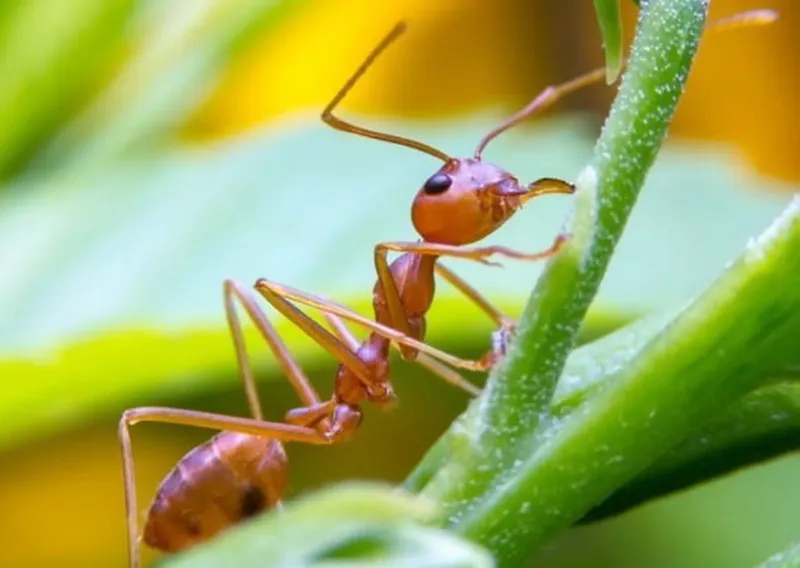
Some situations are not 911 emergencies but still deserve expert advice. Florida Poison Control can give guidance tailored to the person who was stung, and the call is a good move when you are not sure what you are seeing.
Call the national Poison Help number, 1-800-222-1222, if there were numerous stings, if the person is a young or small child, or if you cannot tell whether symptoms are worrying. Florida’s Poison Control Centers advise emergency department care for a large number of stings.
There is no single magic number of stings for adults. A small child with a handful of stings may need more attention than a healthy adult with the same count, so age, size, symptoms, and past reactions all matter.
That is why a quick call helps more than guessing.
Keep this separate from the emergency plan. If breathing trouble, facial or throat swelling, or fainting shows up, skip the hotline and call 911 first.
Poison Control is for questions and case-specific advice, not a replacement for emergency help.
A white pustule can be part of the expected reaction
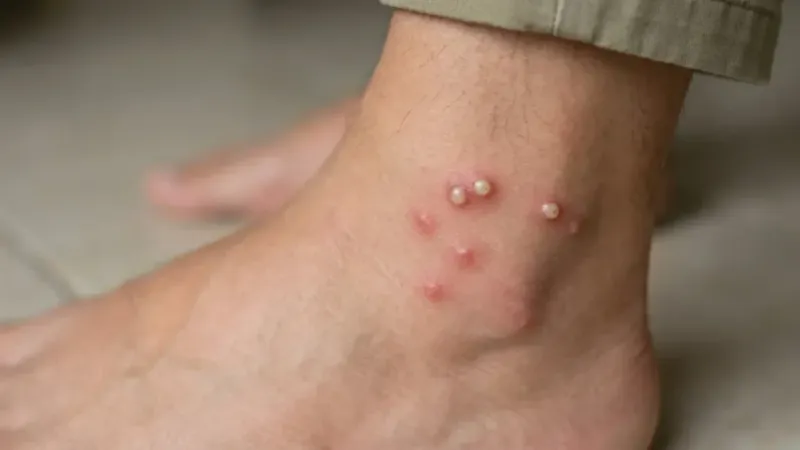
A day or so after the stings, many people notice small white bumps where the ants hit. These pustules can look alarming, and they itch.
UF/IFAS Gardening Solutions notes that the effects of fire ant stings can last up to 10 days.
A white pustule does not automatically mean infection. It can be a normal part of how skin responds to fire ant venom, and Poison Control describes typical pustules as usually sterile.
Still, do not pop or pick at them. Broken skin can let germs in, and that is how a harmless bump turns into a real problem.
Keep the area clean, avoid scratching, and let the pustules heal on their own. Trimming fingernails short helps if you or a child tend to scratch in your sleep.
Get medical advice if redness spreads or keeps getting worse, swelling grows, the area becomes more painful, or you start to feel unwell with fever or chills. Any other change that worries you is reason enough to call a doctor.
You know what is normal for your skin, so trust your instincts.
Quick action can stop more stings, not guarantee a mild reaction
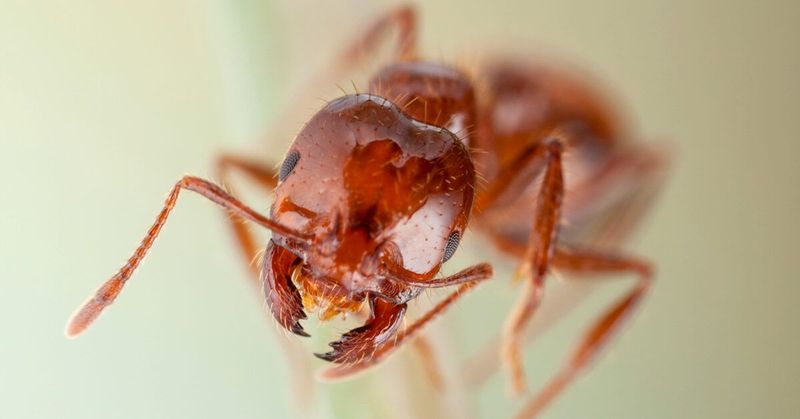
The plan is short: leave the mound, brush off the ants, wash the skin, cool it with a wrapped pack, and escalate when symptoms call for it. Speed does its best work at the start, because Poison Control notes that getting ants off promptly limits further stings.
What speed cannot promise is a mild reaction. Nothing in the guidance, including MedlinePlus, shows that early washing or cooling prevents later pustules or other local effects.
Treat the first minutes as damage control, not a cure. Next time, check the mulch pile before you reach in.