
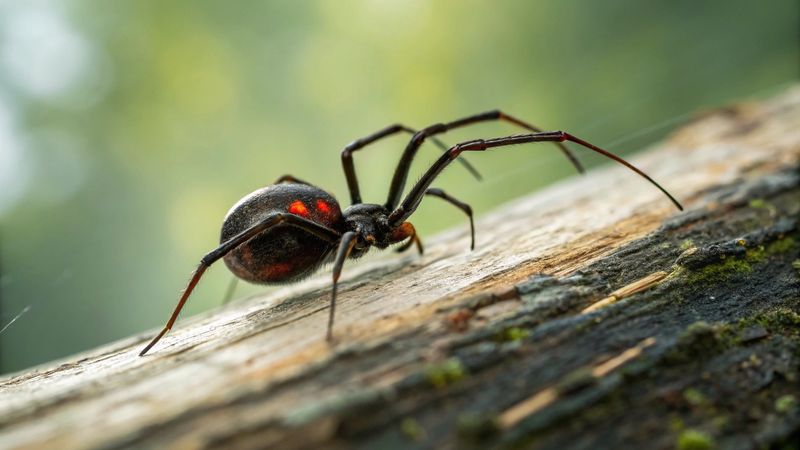
Black widows are a real part of life for Central Texas gardeners, and finding one near the woodpile or under a pot lid is not as rare as you might hope. What trips people up is not the spider itself but those first confusing minutes after a suspected bite, when the wound looks minor and panic starts to set in.
Knowing a clear, calm sequence of steps before that moment happens can make a serious difference in how quickly you get the right help.
Get away from the spider and start supportive first aid
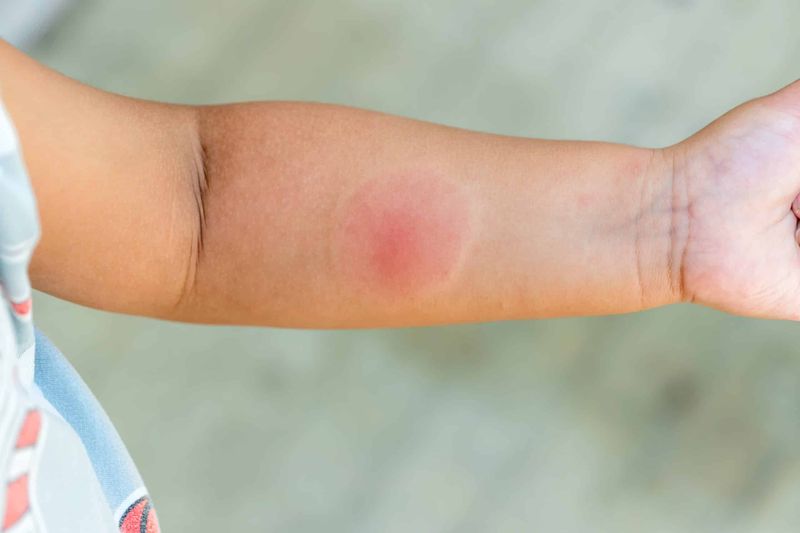
Your first move after a suspected bite in the garden is simple: put distance between yourself and wherever the spider might be. Whether you were moving firewood, lifting a pot, or reaching into a shed, back away from that spot without reaching in again or trying to catch the spider.
Chasing it risks a second bite and wastes time you should spend on yourself.
Once you are clear of the area, wash the bite site thoroughly with soap and water. CDC guidance for outdoor workers recommends cleaning the wound as a standard first step after a suspected venomous spider bite.
Washing addresses surface contamination and bacteria, but be clear with yourself about what it cannot do: soap and water do not pull venom out of tissue or stop it from spreading through the body.
After washing, apply a cold compress to the area. A cloth soaked in cold water works fine; if you use ice, wrap it in a towel so it does not sit directly against skin.
The cold can reduce local discomfort and help with any swelling, but again, it is a comfort measure, not a venom-removal tool.
Keep the affected limb as still as you can, and elevate it if that is practical given where the bite is. MedlinePlus clinical guidance lists rest and elevation among the supportive steps for a spider bite.
Texas DSHS also recommends keeping the bite area still while you arrange for medical attention. These measures work together to reduce swelling and discomfort while you move on to the next and more important step: getting professional guidance.
Call Poison Help before the small wound fools you

Pick up the phone and call Poison Help at 1-800-222-1222 as soon as your first-aid steps are done. Poison Control’s black widow resource makes clear that this number connects callers anywhere in the United States to their local poison center.
In Texas, that means you reach the Texas Poison Center Network, staffed by specialists trained in exactly this kind of situation.
Here is the part that catches people off guard: a suspected black widow bite may feel like almost nothing at first. The initial sensation can be a brief pinprick, a mild sting, or nothing noticeable at all.
MedlinePlus notes that symptoms can develop over roughly 15 minutes to several hours after the bite occurs. That quiet window is exactly when people make the mistake of deciding everything is fine and putting the phone down.
Calling Poison Help during that window, before significant symptoms arrive, gives specialists the chance to advise you on what to watch for, how quickly to seek evaluation, and whether your specific situation warrants an emergency-room visit right now or careful monitoring with a low threshold to escalate. That guidance is specific to you: your age, your health history, your symptoms, and how things are progressing.
Poison-center advice is not permission to manage a suspected envenomation entirely on your own. Think of it as the bridge between the first-aid steps you just completed and an informed decision about what medical care, if any, you need next.
Do not wait to see whether things get worse before you call. The call itself is part of the response plan.
Recognize symptoms that extend beyond the bite site
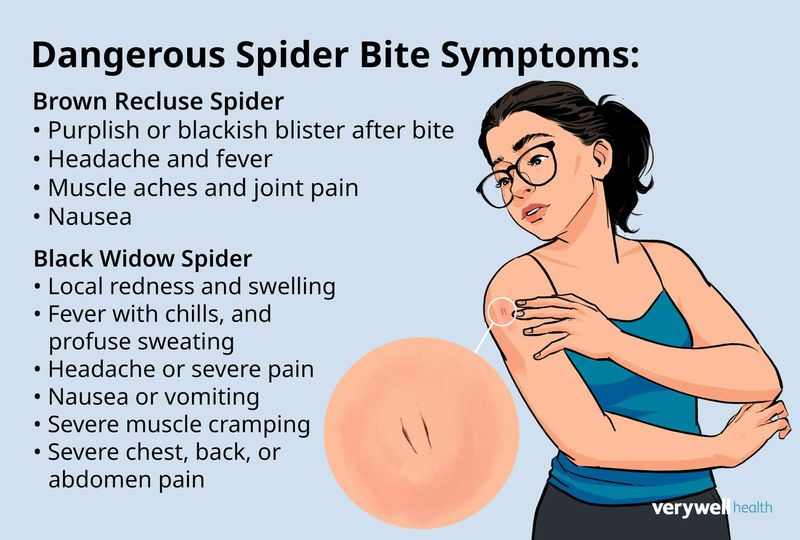
One of the most disorienting things about a suspected black widow bite is that the wound itself may look unremarkable while the rest of the body begins to feel seriously wrong. Black widow venom acts on the nervous system, so the symptoms that matter most are not always centered on the bite.
Poison Control’s overview of black widow spiders describes the possible pattern: spreading muscle pain, severe abdominal or chest pain, cramping, profuse sweating, nausea or vomiting, headache, tremors, and generalized weakness. In serious cases, breathing difficulties or changes in blood pressure may develop.
Texas DSHS similarly notes that severe pain and muscle cramping can follow what initially looks like a minor wound.
Not every person who experiences a suspected black widow bite will develop the full range of these symptoms. Some people have mild or localized reactions.
Others, particularly those with certain health conditions or who received a larger amount of venom, may develop more significant systemic effects. The point is not to expect the worst, but to stay alert to changes in how you feel, especially in the muscles of your back, abdomen, and chest.
Black widow envenomation is described as primarily a neurotoxic syndrome, meaning the venom’s main effects involve the nervous system and muscles rather than destroying local tissue. CDC Yellow Book guidance on envenomations distinguishes this pattern from brown recluse bites, which are more associated with local tissue injury.
A wound that grows or discolors should not automatically be assumed to be a black widow bite. Whatever the cause, escalating or spreading symptoms are a signal to get professional help quickly.
Call 911 for breathing, consciousness, or strength changes
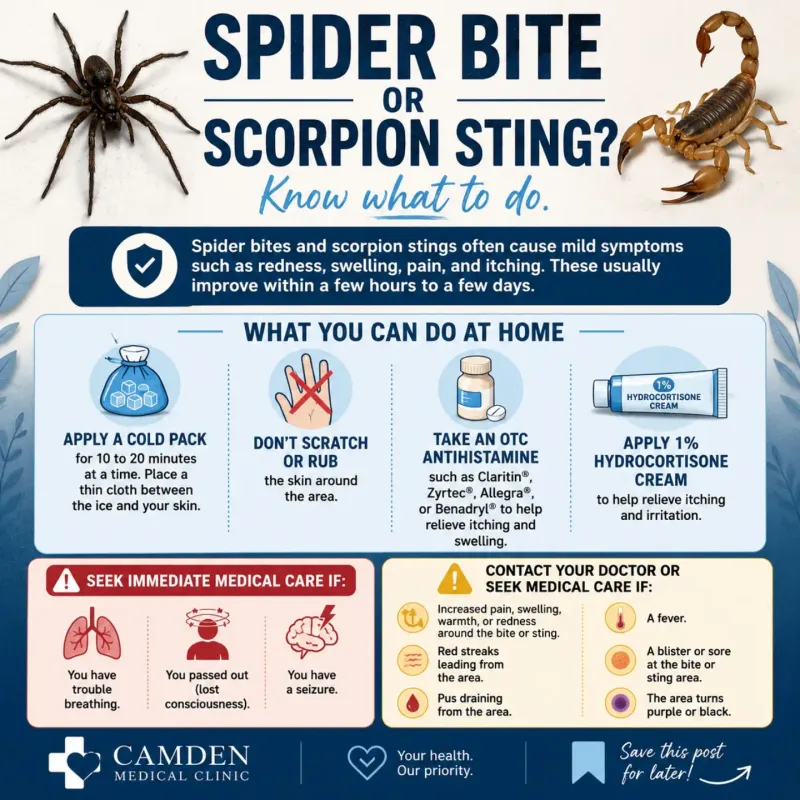
Some symptoms after a suspected spider bite cross a line that requires emergency services, not a poison-center call. If you or someone nearby is having trouble breathing or swallowing, has fainted or lost consciousness, is experiencing a seizure, or shows signs of a severe allergic reaction such as throat tightening, severe hives, or sudden swelling of the face, call 911 immediately.
Rapidly worsening symptoms and severe or spreading weakness also belong on that emergency list. MedlinePlus and Poison Control both identify severe systemic effects as potential consequences of significant envenomation.
Fatal bites are rare, but that does not mean the situation is safe to manage from home when these warning signs appear. Severe illness that requires hospital-level care is a real possibility.
Children, older adults, and pregnant people deserve particular attention after a suspected bite. CDC Yellow Book notes that pregnancy-related complications, including contractions, have been reported as possible effects of significant envenomation.
This does not mean every person in these groups will have a severe outcome, but the threshold for seeking urgent professional evaluation should be lower, and the response time faster.
Anyone with severe or spreading symptoms, regardless of age or health status, should be evaluated urgently by medical professionals. The poison-center call remains valuable even while 911 is being dialed, because specialists can stay on the line and help coordinate what information to give emergency responders when they arrive.
Avoid home remedies that can add injury
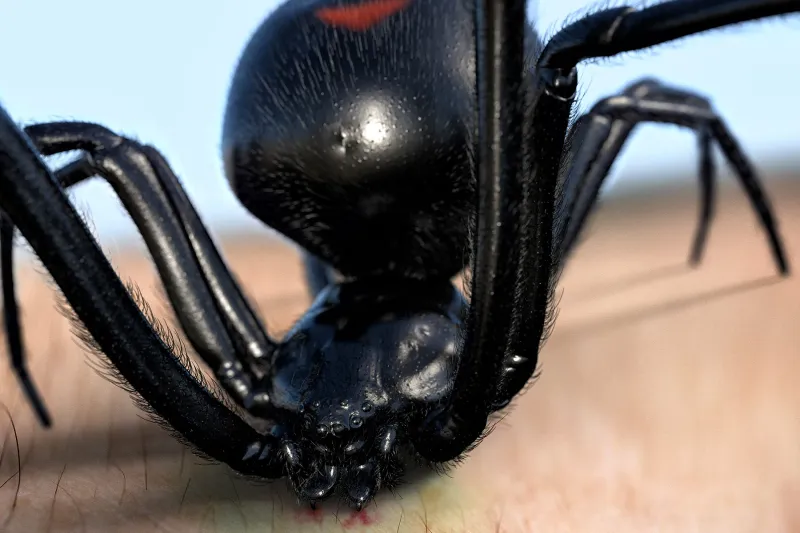
Fear triggers bad decisions, and a suspected venomous spider bite brings out some of the worst ones. Cutting the wound open, trying to suck out venom, burning the bite site, tying a tourniquet around the limb, or using a commercial venom extractor device are all approaches that current guidance rejects.
CDC guidance for outdoor workers is explicit: do not cut or suck the bite. These actions do not remove meaningful amounts of venom and can cause additional tissue damage, introduce infection, or delay the care that actually helps.
Another common impulse is to take an antihistamine like diphenhydramine and wait to see what happens. Poison Control’s overview of insect and spider bites makes the key distinction: antihistamines may have a role when allergic symptoms such as itching or hives are present, but they are not a substitute for professional assessment of a suspected black widow envenomation.
Black widow venom’s primary effects are neurotoxic, targeting the nervous system and muscles. An antihistamine does not address spreading muscle pain, cramping, or systemic symptoms.
Taking one and waiting is not a treatment plan.
Tetanus protection also comes up after puncture wounds, and a common misconception is that applying antibiotic ointment to the bite will cover it. CDC tetanus clinical guidance is direct: topical or systemic antibiotics are not recommended to prevent tetanus.
Tetanus protection comes from vaccination history and, when indicated, from medical intervention. Ask a healthcare professional about your tetanus status based on your vaccination record and the nature of the wound.
MedlinePlus reinforces that the correct path after these first-aid steps is professional guidance, not improvised remedies. When in doubt, call Poison Help at 1-800-222-1222.
Do not diagnose the spider or bite from appearance
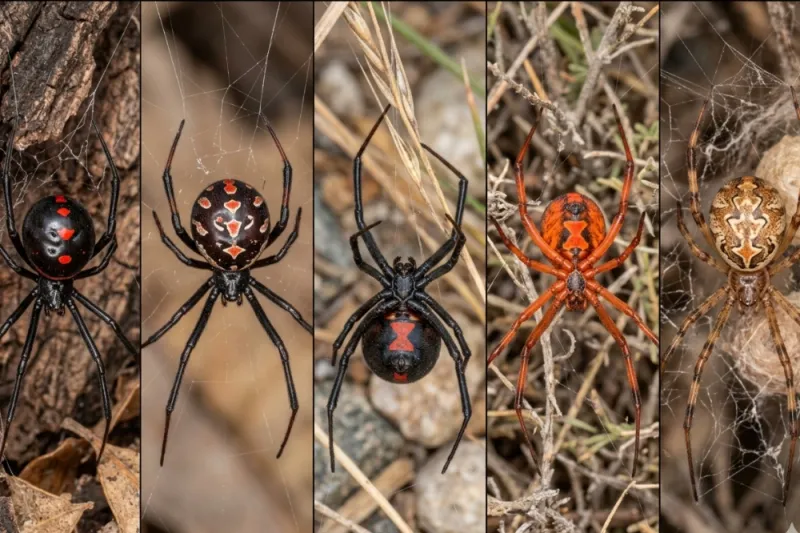
Spending time trying to confirm whether the spider was definitely a black widow can delay care and lead to false confidence in either direction. Texas has multiple species in the Latrodectus genus, and Texas A&M Entomology study materials note that abdominal markings can vary across species and life stages.
Males and juveniles often look nothing like the glossy black adult female with the classic red hourglass. Relying on a quick visual check, a photograph, or the presence of any dark spider nearby is not a reliable way to confirm or rule out the species.
The bite mark itself is equally unreliable. A suspected black widow bite may show two puncture marks, one mark, or no obvious wound at all.
Poison Control notes that the initial sensation is sometimes nothing more than a pinprick, and some people do not feel it at all. Many alleged spider bites turn out not to be confirmed spider bites when investigated carefully.
Research on misdiagnosed spider bites shows that bacterial skin infections, allergic reactions, and other arthropod stings are frequently mislabeled as spider bites. Treat the symptoms and get professional input rather than trying to make a diagnosis from a wound.
If a spider is visible and you can photograph it safely without approaching or handling it, that image may help a clinician or poison-center specialist. CDC guidance advises never to risk another bite attempting to capture the spider.
A photo from a safe distance is useful; reaching back into the woodpile is not.
One distinction worth knowing: black widow envenomation tends to produce muscle pain, cramping, and systemic effects rather than an expanding, discolored wound. A wound that grows or develops tissue destruction is more characteristic of brown recluse bites and other conditions.
Poison Control’s broader bite overview reinforces that neither syndrome should be diagnosed from appearance alone. Either way, professional guidance determines the next step.
Professional care treats symptoms and weighs antivenom carefully
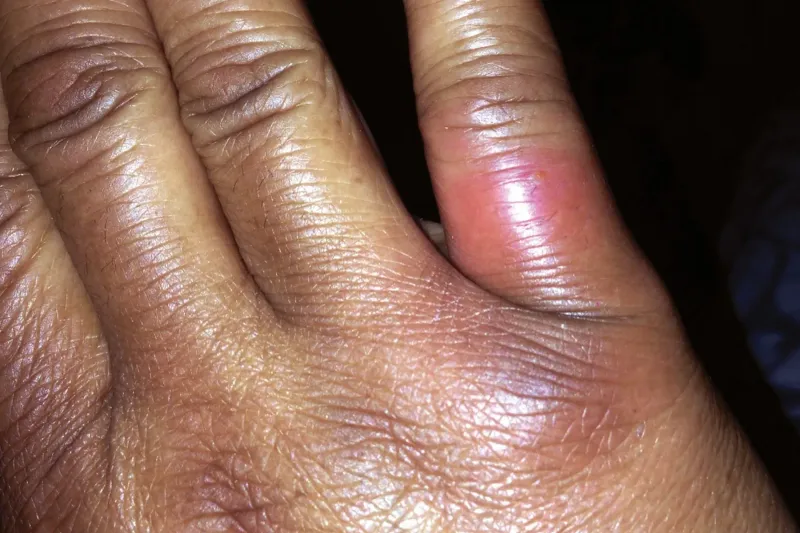
After calling Poison Help and following their guidance, some patients will be directed to seek medical evaluation in person. What happens at that evaluation depends on the symptoms present, how they are progressing, and the patient’s overall health.
Clinicians typically assess pain intensity, muscle spasms, blood pressure and heart rate changes, breathing, and other signs of systemic involvement. Treatment is generally directed at managing those symptoms as they appear, not at a fixed protocol applied to every bite.
For significant pain and muscle cramping, clinicians may use analgesics and muscle relaxants. A published clinical series on black widow envenomation reported that calcium gluconate was historically administered for pain relief but was later found ineffective in a large retrospective review.
A subsequent clinical study and a published review of envenomation management describe opioid analgesics and benzodiazepines as more effective options for managing the pain and spasm of significant envenomation. These are clinician-directed decisions, not self-treatment options.
Antivenom for black widow bites exists and is FDA-indicated for symptomatic Latrodectus mactans bites. However, it is not a routine treatment given to everyone who presents with a suspected bite.
Its use involves a careful clinical weighing of symptom severity, the patient’s condition, available alternatives, and the risk of serious hypersensitivity reactions. Availability also varies by facility.
Whether antivenom is appropriate is a decision made by the treating clinician, not something to request or expect automatically.
Ask the healthcare team about your tetanus status. CDC tetanus clinical guidance bases booster recommendations on vaccination history and whether the wound is clean and minor or dirty and more significant.
That conversation belongs in the clinical setting, not in the garden.
Reduce the risk during the next garden cleanup

Black widows are not a rare or exotic presence in Central Texas gardens. Texas DSHS notes that these spiders occur throughout the state and favor dark, undisturbed sites: woodpiles, sheds, storage boxes, irrigation boxes, meter boxes, under eaves, and similar sheltered spots.
Their bites are almost always defensive, happening when a spider is accidentally trapped, pressed against skin, or disturbed by a hand reaching into a space it cannot see.
The most straightforward way to reduce your exposure is to wear gloves every time you move wood, mulch, pots, garden debris, or anything that has been sitting undisturbed for a while. CDC guidance for outdoor workers recommends heavy gloves when handling materials that could harbor spiders.
Shake out gloves, boots, shoes, and any clothing stored in sheds or garages before putting them on. A spider resting inside a garden glove you grab quickly is in exactly the position to bite defensively.
Extension IPM guidance on black widows recommends reducing clutter and sheltered nesting sites around the yard as a long-term deterrent. Stacking wood off the ground, keeping storage areas organized, and clearing debris from around sheds and utility boxes removes some of the undisturbed habitat these spiders prefer.
Poison Control also advises using a stick or tool to move debris rather than bare hands when working in areas where spiders are likely.
None of these steps guarantee a spider-free garden. Black widows are part of the Central Texas ecosystem, and a determined cleanup will not eliminate every one of them.
What gloves, caution, and reduced clutter can do is lower the odds that the next garden session ends with a trip to the phone.
Remember the response sequence
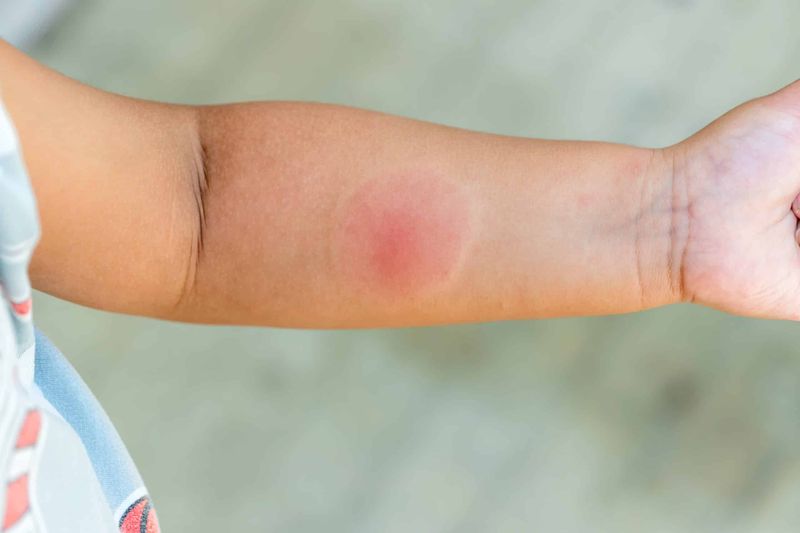
When a bite is suspected, the sequence matters more than speed on any single step. Move away from the spider’s hiding spot, wash the area with soap and water, apply a wrapped cold compress, and keep the affected limb still and elevated if practical.
Then call Poison Help at 1-800-222-1222 without waiting to see whether symptoms develop.
Poison Control and Texas DSHS both emphasize that a wound that looks small or minor does not rule out a serious reaction, because symptoms can emerge or intensify well after the bite occurs. Call 911 immediately for trouble breathing or swallowing, fainting, seizures, severe weakness, or rapidly worsening symptoms.
CDC guidance reinforces that professional advice, not a home remedy or an attempt to identify the spider, should determine every step after first aid. A calm, practiced sequence is the best tool any Central Texas gardener can carry into the woodpile.