
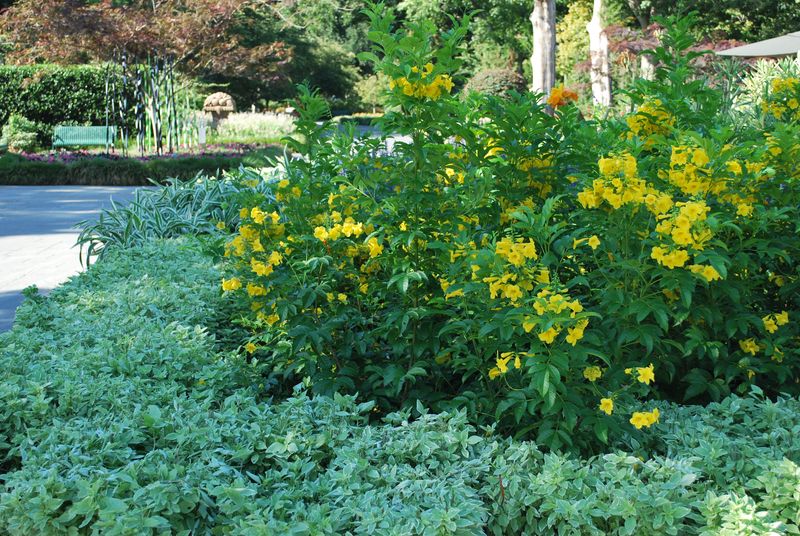
Esperanza is one of those Texas plants that earns its place by showing off right when summer is at its most punishing. The bright yellow trumpets keep coming through heat that wilts almost everything else, and with a little attention now, a healthy plant can carry that color well into fall.
Getting there takes a clear-eyed goal and a few straightforward habits, not complicated tricks or expensive products.
Set a realistic goal for your esperanza
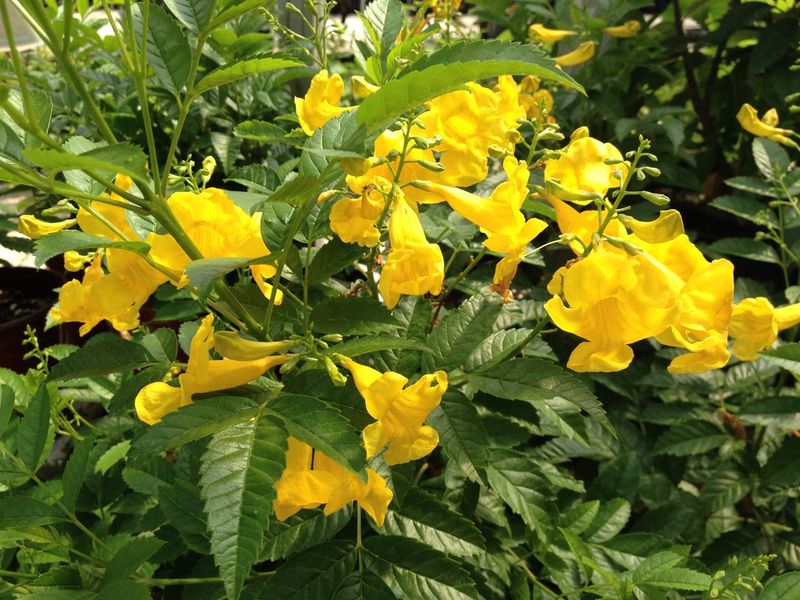
The plant most Texans call esperanza is Tecoma stans, a native shrub also known as yellow bells. North Carolina Extension’s plant profile for Tecoma stans describes it as a large, fast-growing shrub that flowers from summer into fall and performs best in full sun.
Texas Parks and Wildlife includes it among showy summer-blooming natives with strong nectar value for pollinators and hummingbirds, as noted in the Texas Parks and Wildlife wildlife management publication.
Before you assume every yellow-flowered shrub at the nursery is the same plant, check the tag. Orange-flowered selections sold as Orange Jubilee or orange bells belong to a related but distinct group – North Carolina Extension classifies Orange Jubilee as Tecoma fulvaguarume subsp. – and those plants can differ from Tecoma stans in mature size, cold tolerance, and growth habit.
Lumping them together leads to mismatched expectations, so confirm which one you have before following any pruning or hardiness advice.
Even within Tecoma stans, flowering results are not uniform. Cultivar, plant age, sunlight, root health, water stress, local climate, and freeze history all shape what you see.
In the warmest parts of Texas, the shrub may stay evergreen and flower for a long season; in colder regions, it may die back to the ground after a hard freeze and return as a perennial. UF/IFAS notes that reliable hardiness for yellow elder extends only through USDA Zones 10B-11, which covers a narrow slice of Texas near the Gulf Coast.
The honest goal here is not to force a spectacular fall display but to help a healthy, established plant continue its natural flowering cycle. Sound care can support that outcome – it cannot guarantee it on every plant in every yard.
Give it the light that supports flowering
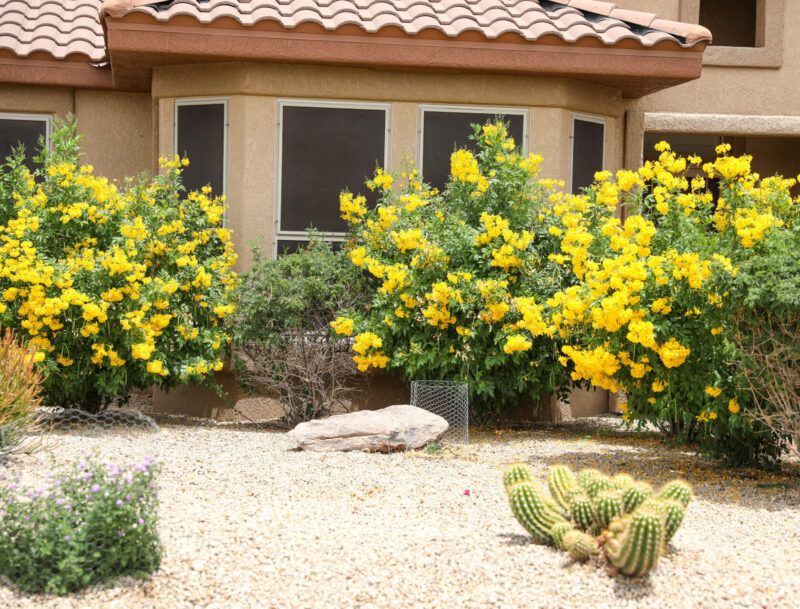
Esperanza blooms best when it gets plenty of direct sun. North Carolina Extension identifies full sun as the condition for best flowering, and Texas A&M categorizes esperanza as a sun plant in its native and adapted plants guidance.
Full sun generally means at least six hours of unobstructed direct light per day, and more is usually better for a plant with this much heat tolerance.
That said, a plant sitting in a full-sun spot can still underperform if something else is going wrong. Reflected heat from a nearby wall or concrete surface can push soil temperatures and foliar stress beyond what the plant handles well.
Compacted soil slows water movement and limits root expansion. Poor drainage keeps roots sitting in moisture longer than they should, while a restricted root zone – common in containers or cramped planting beds – limits the plant’s ability to support heavy flowering regardless of how much sun it receives.
University of Arizona Extension’s guidance on drought and extreme heat explains that plants under combined heat and drought stress may show symptoms that look like disease or pest damage but actually reflect environmental strain. Moving a struggling plant to a harsher, sunnier spot will not fix root problems, drainage issues, or compaction.
Before repositioning or exposing the plant to more intense reflected heat, check the soil, look at the drainage, and assess whether roots have room to function.
If your esperanza is already in a good sun position and still flowering less than expected, work through soil and water factors before assuming the plant needs more light.
Water according to the root zone, not the thermometer
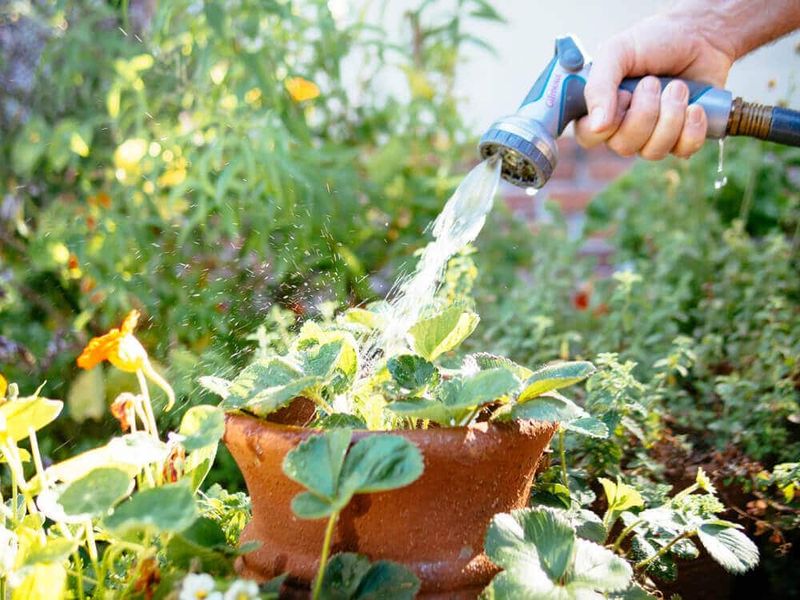
Triple-digit temperatures make it tempting to water every day just to feel like you are doing something, but established esperanza does not work that way. Once its roots are settled into the ground, it handles dry conditions reasonably well.
The trigger for watering should be what is happening in the root zone, not what the thermometer says at 3 p.m.
The practical check is simple: push a finger or a narrow trowel several inches into the soil near the plant’s drip line. If the soil feels dry at that depth and the plant is showing early stress signs – slight wilting in the morning hours, dull leaf color, or reduced new growth – water deeply and slowly.
UGA Extension’s guidance on landscape watering thresholds recommends checking soil moisture before irrigating rather than following a fixed daily schedule, and it warns that overwatering is as damaging as underwatering for many established plants.
When you do water, apply it at the base of the plant rather than overhead. A hose run slowly at the soil surface, a drip line, or a soaker hose all direct moisture to the root zone without repeatedly wetting the foliage.
UGA Cooperative Extension’s ornamental plant care publication recommends slow, deep application to reduce runoff and encourage roots to develop deeper in the soil profile. Early morning is the best time to water because the soil absorbs moisture before afternoon heat peaks and because wet foliage has time to dry before nightfall.
Good drainage matters as much as timing. UGA Extension’s landscape best management practices note that overwatering and poor drainage together can contribute to root rot, which undercuts flowering even when sunlight and fertilizer look fine.
If water pools near the plant after rain or irrigation, fix the drainage before adjusting your watering schedule.
Young plants and containers need a different approach. A recently planted esperanza has not yet spread its roots through the surrounding soil, so it dries out faster and needs more frequent monitoring.
North Carolina Extension’s profile for orange Tecoma notes that newly established plants require regular water while roots settle in, and University of Arizona Extension’s container gardening guidance confirms that pots dry faster than in-ground beds and require more frequent checks during hot weather. Check a container daily during a heat wave; check a new in-ground planting every two to three days until you know how quickly the soil dries.
Deadheading may help prolong the flowering cycle
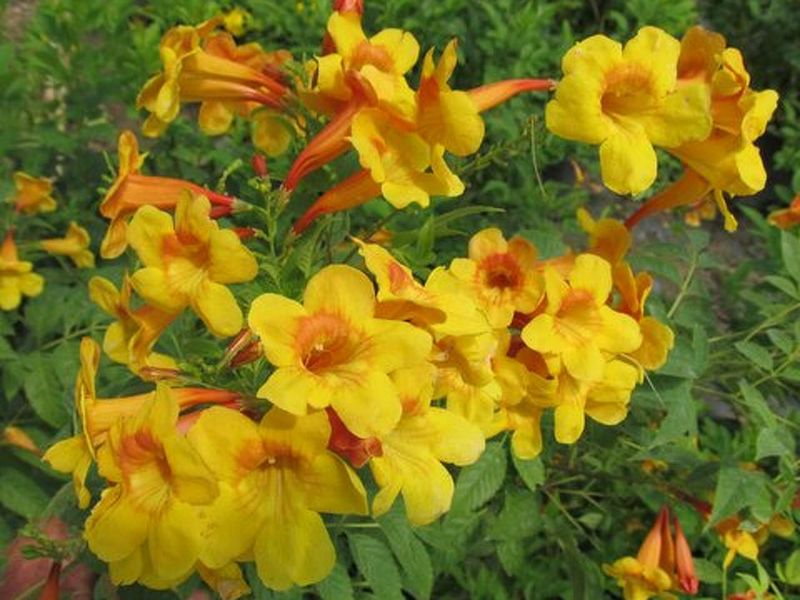
Spent flower clusters on an esperanza do not fall cleanly on their own. As the flowers fade, they develop into long, narrow seed capsules that draw the plant’s energy toward seed production rather than new growth.
Removing those clusters before or as the pods develop gives the plant a cleaner energy budget and may encourage branching at the cut point.
North Carolina Extension specifically notes that deadheading may prolong blooms on Tecoma stans, and a peer-reviewed review of Tecoma stans ecology and horticultural use links removal of spent flowers and developing pods to branching and recurrent blooming in the plant. The operative word in both sources is “may” – this is a supportive measure, not a guaranteed bloom switch.
The technique is straightforward. Use clean, sharp pruning snips and cut the spent cluster back to the nearest healthy leaf joint or side shoot.
Avoid tearing or leaving a long stub. Penn State Extension’s guidance on deadheading notes that only some plants respond with prolonged flowering and that any later flush can be smaller than the first.
Keep those expectations realistic: a second wave of color is possible and worth encouraging, but an equally large display on every plant is not something you can count on.
Keep deadheading separate from any plan to reshape or rejuvenate the shrub. Removing a spent flower cluster two to four inches back is a light, targeted cut.
Major shaping belongs in a different season and a different section of this guide. Right now, the goal is simply to tidy spent growth and keep the plant moving forward rather than shifting into seed mode.
Use mulch to moderate heat and conserve moisture
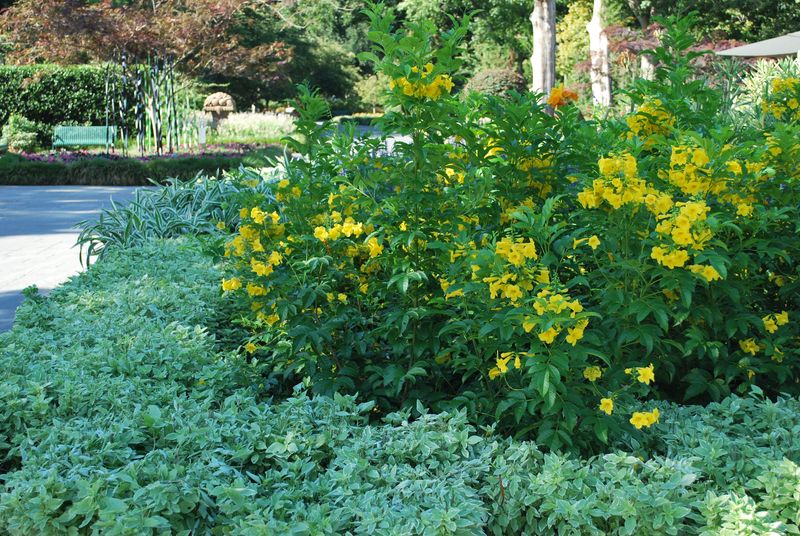
Bare soil around your esperanza during a Texas summer bakes fast, loses moisture quickly, and creates a harsh root environment even when the plant itself looks fine above ground. A layer of mulch over the surrounding soil changes that equation in two useful ways: it slows evaporation and keeps soil temperatures more stable during the hottest part of the day.
Aim for approximately 2 to 3 inches of mulch spread over the root zone. Penn State Extension’s ornamental planting guidance recommends that depth as a practical range for moisture retention and temperature moderation.
Shredded bark, wood chips, or pine straw all work. Placement matters as much as depth: keep the mulch pulled back a few inches from the plant’s stems and trunk.
Penn State Extension’s mulch application guidance warns that mulch piled against woody stems traps moisture against the bark, which can encourage decay and create entry points for pests.
Mulch is a complement to good watering practice, not a replacement for it. A nicely mulched bed still needs you to check the root zone moisture before irrigating, because mulch slows evaporation but does not eliminate drying entirely during extended heat.
If drainage is already poor, adding mulch without fixing the underlying problem can make waterlogged conditions worse by reducing surface evaporation. Correct drainage first, then mulch over a healthy root zone to maintain the benefit you have already created.
Avoid hard pruning and unnecessary bloom boosters
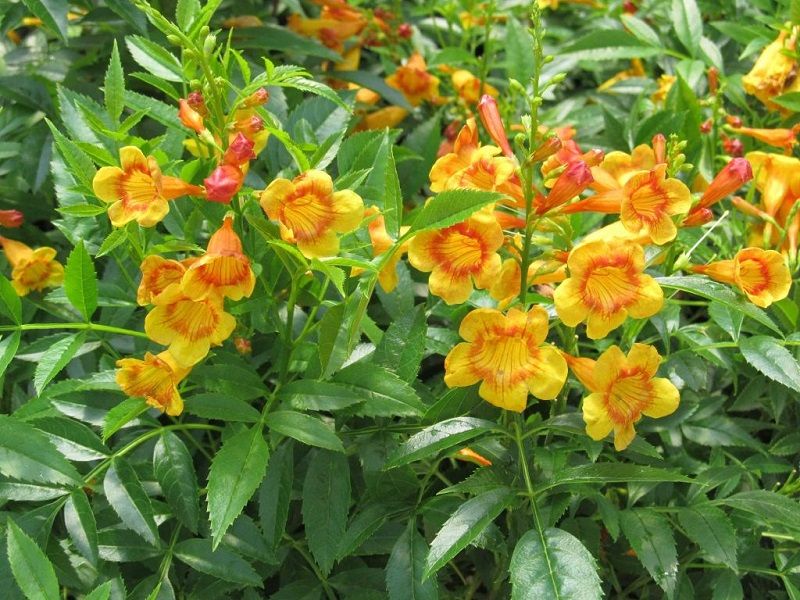
Late summer is the wrong time to grab the loppers and reshape your esperanza from the ground up. The plant is carrying a full canopy of foliage and active flower growth, and that leaf cover is doing real work – shading the stems, moderating soil temperature, and supporting photosynthesis.
Remove too much of it in extreme heat and you expose the plant to additional stress right when it has the least capacity to recover.
Oklahoma State University Extension advises against heavy pruning during extreme heat, and University of Arizona Cooperative Extension’s pruning guidance for desert shrubs supports selective removal over routine shearing. What is appropriate right now is limited: remove branches that are clearly dead, visibly diseased, physically damaged, or growing in a direction that causes a specific problem.
Everything else stays until cooler weather arrives.
On the fertilizer side, skip the bloom boosters. The care steps that actually support esperanza flowering – full sun, appropriate irrigation, good drainage, deadheading, and mulch – do not require a high-phosphorus supplement to work.
UGA Extension’s drought and landscape guidance recommends reducing or avoiding fertilizer on stressed plants because pushing new canopy growth through chemical feeding is counterproductive when roots are already working hard to meet the plant’s existing needs. Heavy fertilizer during drought conditions can also concentrate salts in the soil, adding another layer of stress.
Texas A&M AgriLife Earth-Kind seasonal care guidance supports the same restraint: focus on fundamentals during heat rather than reaching for products that promise to force results. Save major reshaping for late winter or early spring, after freeze risk has passed and before the plant breaks into new growth.
Troubleshoot stress before changing the routine
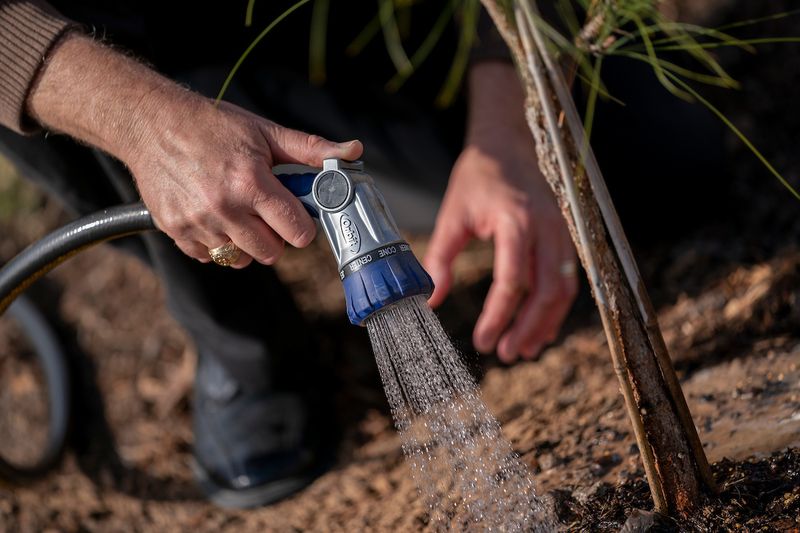
A few yellow leaves or some ragged edges on an esperanza do not automatically mean the plant has a serious problem. Before changing the watering schedule, adding fertilizer, or reaching for a spray, run through a short diagnostic checklist to figure out what is actually happening.
Start with soil moisture and drainage. Push your finger several inches into the root zone and feel what is there.
Soggy soil that never dries out points to a drainage problem, not a need for more water. Bone-dry soil several inches down during a heat stretch means the plant is not getting enough.
University of Arizona Extension’s extreme heat plant response guidance explains that heat and drought stress together can produce symptoms – leaf scorch, wilting, poor flowering – that mimic pest or disease damage. Correct the environmental condition first and see whether the plant recovers before assuming a pest or pathogen is responsible.
Next, look at the roots. A plant in a container that has been sitting in the same pot for several seasons may be root-bound, meaning the roots have circled the pot and can no longer absorb water or nutrients efficiently.
University of Arizona Extension’s container gardening guidance notes that restricted roots are a common reason container plants underperform even when watering looks correct. An in-ground plant installed recently may not yet have roots established far enough into the surrounding soil to handle heat the way a multi-year shrub would.
On pest and disease questions, North Carolina Extension describes Tecoma stans as having few serious pest or disease problems, which is accurate as a general statement. Serious infestations are uncommon, but scale insects, chewing insects, and – in some Southwestern regions – the Tecoma leaf tier can occur.
University of Arizona Extension’s April 2019 garden newsletter documents leaf-tier activity on Tecoma in that region. If you see webbing, rolled leaves, or sticky residue, look closer before assuming the cause.
Treat only what you can confirm, and start with the least disruptive option.
A new planting that is struggling through its first Texas summer needs more patience than an established shrub. UF/IFAS notes that yellow elder requires regular moisture while establishing, and a young plant under heat stress will not flower heavily regardless of how well everything else is managed.
Give it consistent water, protect the root zone with mulch, and accept that the first-season goal is survival and establishment rather than peak bloom.
Use these steps to improve the odds of fall flowers
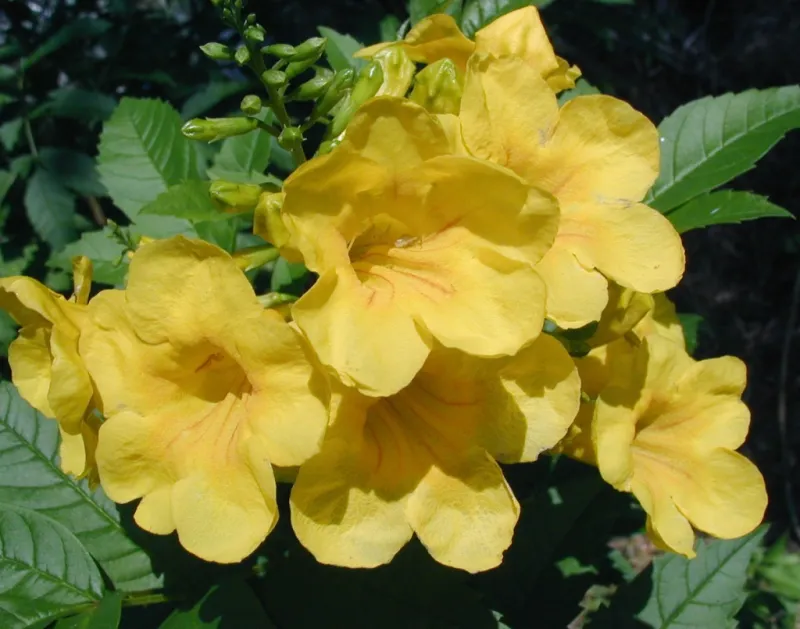
Confirm which plant you have – Tecoma stans for the standard yellow-flowered shrub or a related Tecoma selection if yours blooms orange. Then work through the fundamentals in order.
Keep the plant in full sun. Check soil moisture several inches down before watering, and when the root zone is drying and the plant shows stress, water slowly and deeply at the base.
Remove spent flower clusters back to a healthy leaf joint. Maintain 2 to 3 inches of mulch over the surrounding soil with a clear gap around the stems.
North Carolina Extension and Texas A&M AgriLife both support sun, appropriate irrigation, and basic maintenance as the foundation for continued performance.
Skip the hard reshaping and the bloom boosters. Limit late-summer cuts to dead or damaged wood, and hold off on fertilizer unless a soil test shows a specific deficiency.
Checking soil moisture before irrigating and avoiding heavy pruning during extreme heat are the two habits most likely to prevent setbacks during this part of the season.
These steps can help a healthy, established esperanza continue flowering into fall. They cannot override drought injury, damaged roots, a challenging cultivar, or a hard freeze.
An esperanza that keeps producing even a modest flush of yellow trumpets through October is doing exactly what this plant was built to do in a Texas yard.