

That leggy, bare-stemmed plumbago in your yard is not a lost cause, but the fix requires a little more thought than just hacking it back hard. The plant most Texans call Texas plumbago is actually Cape plumbago, Plumbago auriculata, a South African shrub that blooms on new growth and can push fresh shoots right through the warm season.
A well-timed, selective cut on a healthy, hydrated plant may improve its shape and give it a better shot at fuller growth into fall, though no single cut can promise a spectacular finish in every yard.
Identify Cape Plumbago Before You Prune
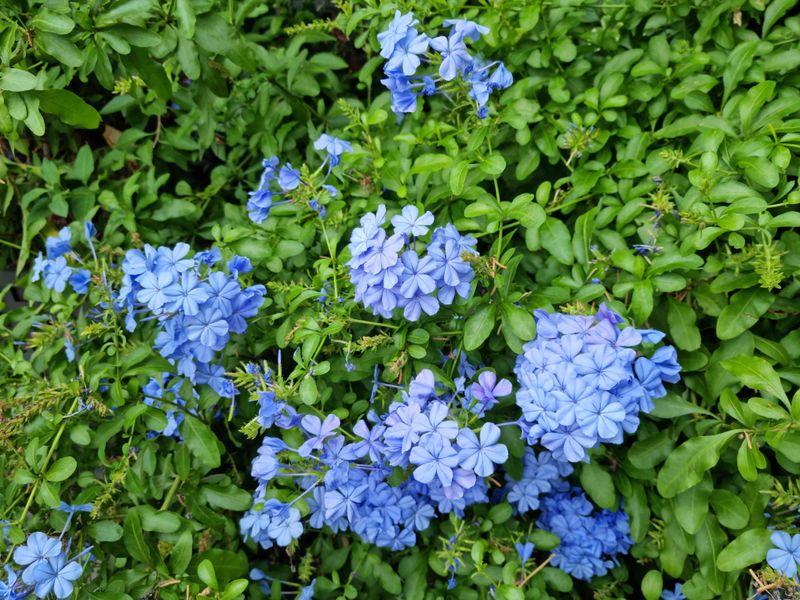
Before reaching for the pruners, confirm what you are actually growing. NC State Extension’s profile on Plumbago auriculata describes Cape plumbago as a shrub-like perennial with long, arching to scrambling stems, oval leaves, and clusters of sky-blue tubular flowers.
Originally from South Africa, it grows large and sprawling in warm Texas landscapes, often reaching four to six feet tall and equally wide when left unpruned.
The stems are not woody like a tree, but they do harden and become bare at the base over time, which is exactly the leggy look that frustrates so many Texas gardeners. Plants in South Texas and along the Gulf Coast often stay evergreen through mild winters, while those farther north may die back to the ground and return in spring.
The plant most commonly confused with Cape plumbago is hardy plumbago, Ceratostigma plumbaginoides. According to Texas SmartScape’s hardy plumbago entry, that species is a much shorter, low-spreading deciduous perennial that typically tops out around twelve inches.
Its old stems are commonly cut back hard in early spring as part of routine maintenance.
That spring cutback timing and hard-cut approach for Ceratostigma should not be transferred to Cape plumbago. Applying the wrong species advice to a large, actively growing Plumbago auriculata during a Texas summer is how gardeners end up removing most of the flowering growth and stressing a plant that was already struggling.
Knowing exactly which plant is in your bed is the first step, not an optional detail.
Diagnose the Cause of Sparse Growth
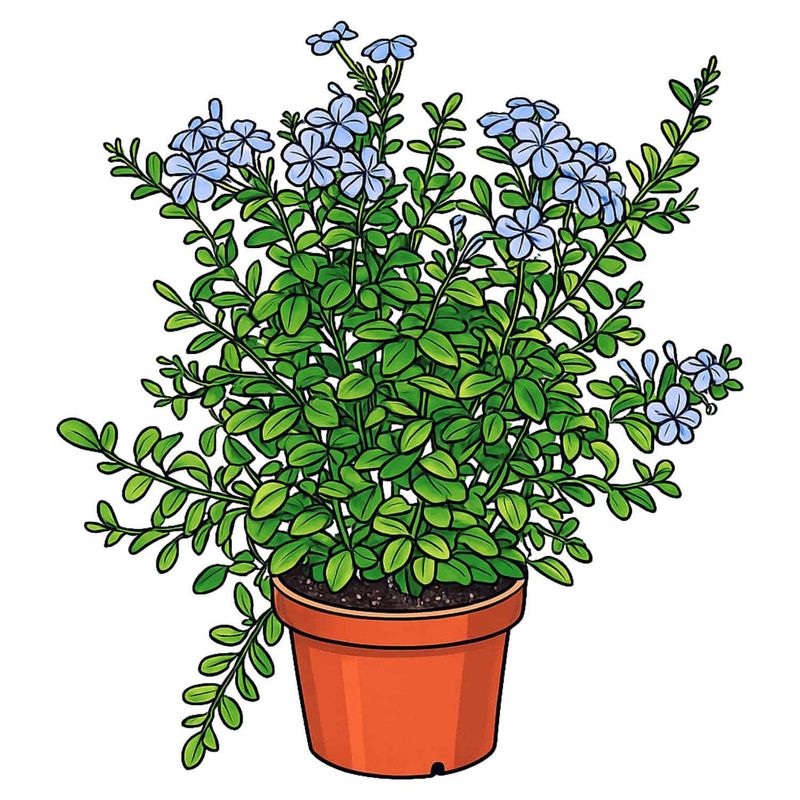
Sparse, weak growth on Cape plumbago is not always a pruning problem. Before making any cuts, walk around the plant and look honestly at where it is growing and how it has been cared for.
The site conditions often explain legginess far better than any calendar date or missed pruning session.
Shade is one of the most common culprits. Texas Tech’s plant resource sheet on Plumbago auriculata notes that the plant performs best in full sun.
A Cape plumbago planted under a large tree or beside a fence that blocks afternoon sun will stretch toward light and produce fewer blooms regardless of how it is pruned. If the site is too shaded, pruning alone will not fix the problem.
Poor drainage is another issue worth checking. Soggy roots can cause root rot, and a plant with a compromised root zone will not push strong new growth after pruning.
Look for standing water after rain, soil that stays wet for days, or a planting bed that slopes toward the base of the plant. UF/IFAS Gardening Solutions lists root rot and crown rot among the conditions that can affect Cape plumbago when drainage is inadequate.
Yellow leaves on an otherwise living plant may point to a soil chemistry issue rather than drought or overwatering. High-pH soils, which are common in many Texas regions, can lock up iron and other minerals and cause interveinal yellowing.
That kind of chlorosis calls for a soil test and possible amendment, not a harder cut. The UF/IFAS fact sheet on Plumbago auriculata also mentions scale and mite as occasional pest problems, so check stems and leaf undersides for unusual spotting, webbing, or sticky residue before deciding that reshaping is the only thing standing between your plant and a fuller fall.
Pruning can improve the shape of a basically healthy plant. It cannot rescue one that is losing the fight against a bad root zone, deep shade, or an untreated pest outbreak.
Fix the underlying problem first, then prune.
Choose a Hydrated, Healthy Pruning Window
Timing a summer cut on Cape plumbago is less about the calendar and more about the plant’s condition right now. A plant that is actively wilting, sitting in bone-dry soil, or showing widespread brown leaf edges from heat stress is not a good candidate for pruning today.
NC State Extension’s general pruning guide cautions against heavy pruning during hot, dry weather, and that warning applies here: cutting stressed stems during peak Texas summer heat can compound the problem rather than solve it.
The practical check is simple. Push a finger or a screwdriver into the soil a few inches from the base of the plant.
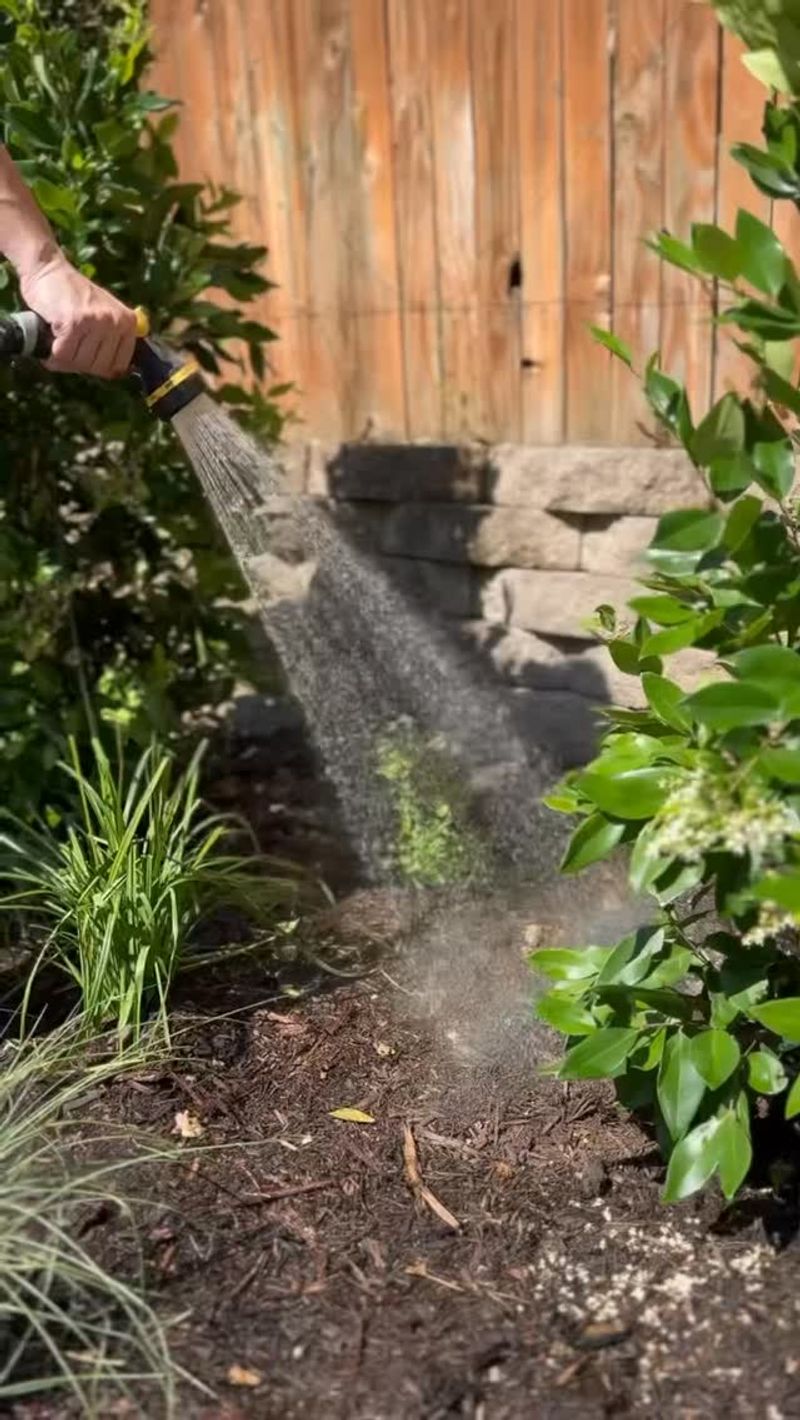
If the soil feels dry several inches down, water deeply first and give the plant a day or two to absorb that moisture before making any cuts. If the soil is already moist but not waterlogged, and the plant looks otherwise alert with green, turgid leaves, that is a reasonable window to proceed.
Deep watering means letting water soak in slowly until it reaches the root zone, not just wetting the surface. Texas SmartScape’s shrub care guidance recommends probing the soil and watering when the upper several inches are dry rather than following a fixed watering schedule.
After watering, allow excess water to drain completely. Roots sitting in standing water are just as stressed as roots in dry soil, and pruning an overwatered plant can open wounds that struggle to heal.
Early morning is the most practical time to prune during a Texas summer. Temperatures are lower, the plant has had overnight recovery time, and cut surfaces have the cooler part of the day to begin sealing before afternoon heat arrives.
Avoid pruning in the middle of a heat wave if you can wait even a few days for a slightly cooler window. The plant’s readiness matters more than any specific date on the calendar.
Make a Selective Cut of About One-Third
Gear up before you start. UC ANR’s plant safety guidance for Plumbago auriculata confirms that the plant can cause contact dermatitis and eye irritation, and that ingestion may cause stomach upset.
Wear gloves rated for plant handling, and consider safety glasses if you are working inside a dense plant where stems can snap back. Keep cut material away from children and pets, and wash your hands before touching your face after handling the prunings.
Start by removing the clearly dead or damaged stems. Cut these at their base, as close to the ground or to a healthy side branch as you can get without tearing the surrounding tissue.
Dead stems do not recover, and leaving them in place only clutters the center of the plant and invites disease. A clean cut with sharp bypass pruners, not anvil pruners, leaves a smaller wound and heals faster.
Next, identify a few of the oldest, barest stems, the ones with little to no foliage along their length and no obvious lateral branches worth keeping. Remove two or three of these at ground level to open the center of the plant and improve air circulation.
NC State Extension’s pruning guidance supports selective removal of the oldest wood as a way to rejuvenate shrub-like plants without removing the entire structure at once.
Now address the longest healthy shoots. Shorten them by roughly one-third of their length, cutting just above a leaf node or lateral branch that faces outward rather than toward the center of the plant.
Oklahoma State Extension’s pruning fact sheet explains that cutting above an outward-facing bud encourages the new shoot to grow away from the plant’s center, which improves the plant’s natural arching shape rather than creating a congested tangle in the middle.
Resist the urge to shear the entire plant into a flat rounded ball. Cape plumbago has a naturally arching, open form, and mechanical shearing removes flowering tips uniformly rather than targeting the stems that actually need attention.
Texas SmartScape’s shrub maintenance page notes that selective cuts suit the natural growth habit of many landscape shrubs better than a flat shear. Clean up all cuttings from the ground, and wipe pruner blades with a disinfectant between plants if any of the material you removed showed signs of fungal spotting or unusual discoloration.
Balance New Branching Against Flower Loss
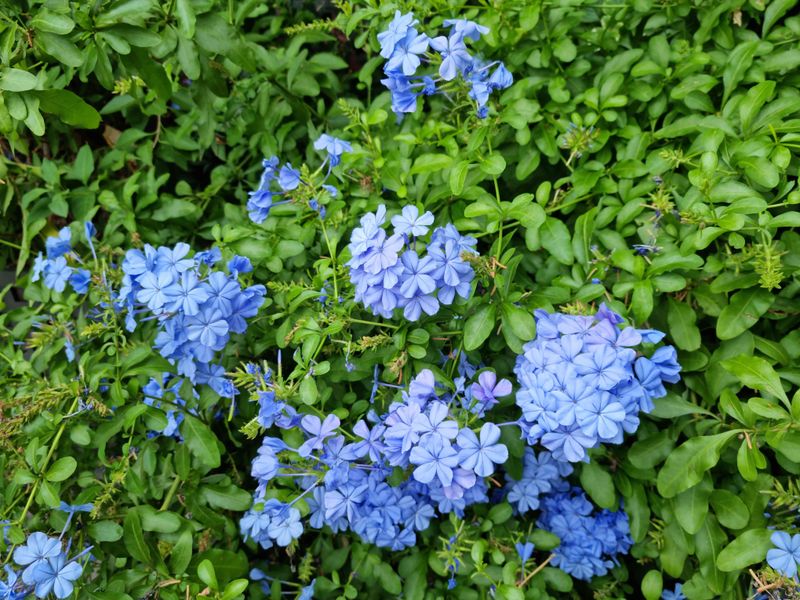
Every cut on a flowering shrub involves a tradeoff, and Cape plumbago is no exception. The case for pruning rests on how the plant blooms: NC State Extension confirms that Plumbago auriculata flowers on new growth, with its main blooming period running through summer and fall in suitable warm climates.
Shortening selected shoots encourages the plant to push fresh lateral branches, and those new shoots are the ones most likely to carry flowers later in the season.
That logic is real, but the other side of the tradeoff is equally real. Any shoot you cut is a shoot that was already growing toward a flower cluster.
A UF/IFAS county horticulture post on blue plumbago specifically cautions that over-pruning during the growing season can reduce flower production. Cutting too many actively flowering tips at once means a gap in bloom while the plant rebuilds, and that gap can stretch several weeks depending on temperatures, moisture, and how much of the plant was cut.
The moderate selective approach described in the previous section is designed to sit in the middle of that tradeoff. By removing only the longest, barest shoots and taking only about one-third of their length, you preserve some of the existing flowering potential on the stems you leave untouched while giving the plant material to branch from on the stems you shortened.
UF/IFAS notes that excess growth on Cape plumbago may be removed at any time, which supports a cleanup approach, but the same guidance ecosystem warns against going too far during active growth.
A Texas gardening source, PlantAnswers.com, reports profuse flowering after cutting the plant back, which is encouraging. Still, results will vary by plant health, site conditions, and how much warm weather remains.
Moderate selective pruning is the lower-risk choice: it improves structure, stimulates some new branching, and holds onto at least part of the plant’s existing flowering potential, without guaranteeing any particular result.
Support Recovery With Light, Water, and Drainage
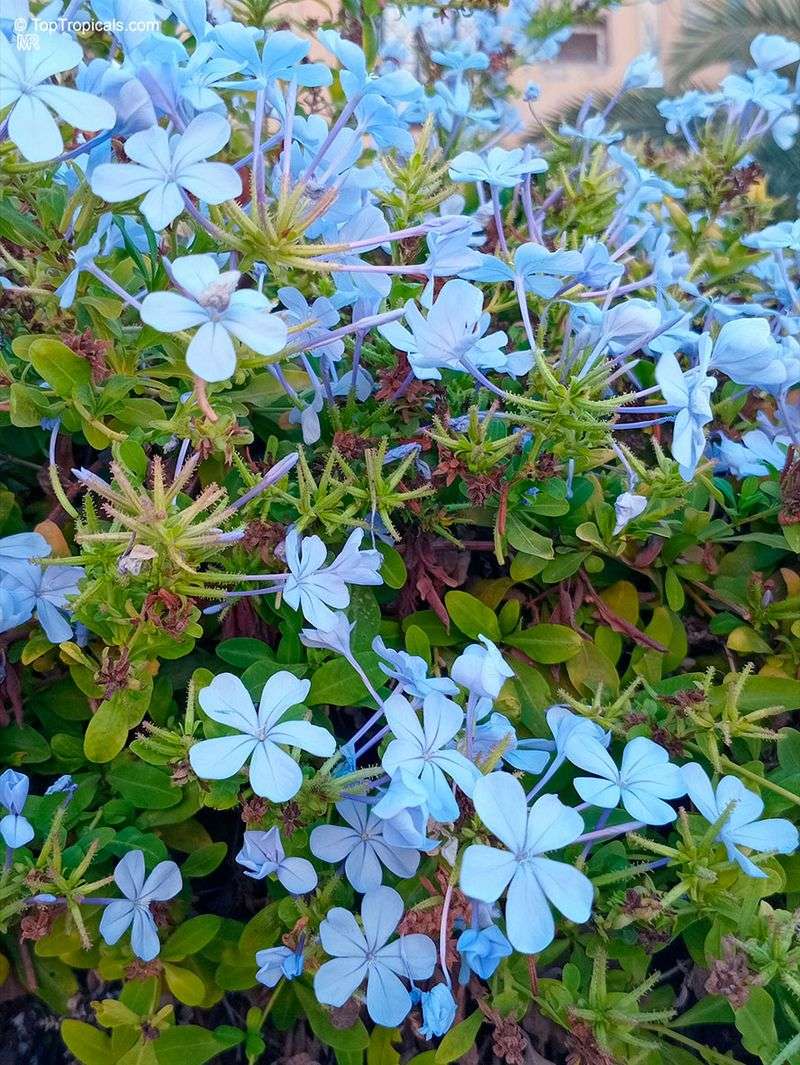
Pruning opens up the plant, but what happens in the weeks after the cut will do as much to determine recovery as the cut itself. The single biggest factor in how well Cape plumbago responds is sunlight.
UF/IFAS’s Plumbago auriculata fact sheet lists full sun as the preferred exposure, and the practical reality is that plants in shadier spots will push fewer new shoots and produce fewer flowers even after a well-executed pruning job. If the plant is getting less than six hours of direct sun, pruning is only a partial answer.
Water management after pruning requires the same soil-check approach used before the cut. Texas Tech’s landscape information sheet on Plumbago auriculata notes that the plant is moderately drought tolerant once established, but a plant that has just been pruned is in a recovery phase and will benefit from consistent moisture while it pushes new growth.
Check the soil every few days rather than watering on a fixed schedule.
Deep, infrequent watering is more useful than light daily sprinkles. When the soil feels dry several inches below the surface, water slowly and thoroughly until the root zone is moist, then stop.
The University of North Florida Botanical Garden’s plant profile emphasizes well-drained soil as essential for Cape plumbago. Roots that sit in standing water after irrigation are more vulnerable to rot than roots that dry out slightly between waterings.
A two-to-three-inch layer of organic mulch around the base of the plant, kept a few inches away from the stems themselves, can help moderate soil temperature and slow moisture loss between waterings. Texas SmartScape’s shrub care page supports mulching as a standard practice for maintaining soil moisture in Texas landscapes.
Avoid piling fertilizer on immediately after pruning in extreme heat; let the plant stabilize first and focus on light and water as the primary recovery tools.
Set Expectations Across Texas Climates
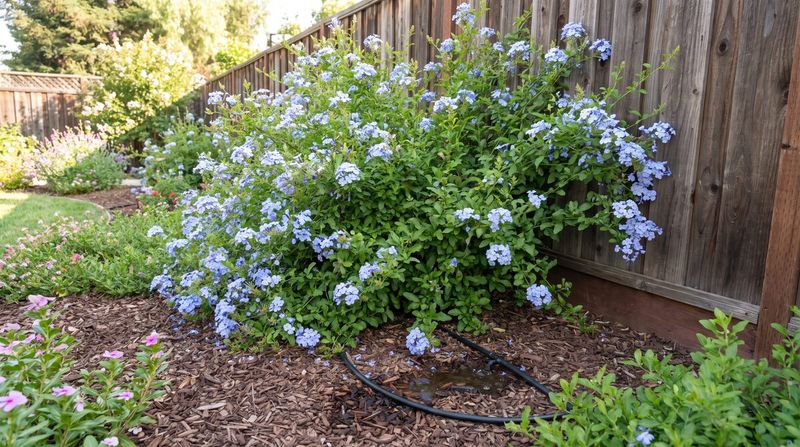
Texas covers a lot of ground, and Cape plumbago does not behave the same way in every part of the state. In South Texas and along the Gulf Coast, where winters stay mild, the plant often remains evergreen year-round and can push new growth and flowers across most of the calendar.
For gardeners in those regions, a mid-summer pruning still has meaningful growing season ahead of it, and the chance of seeing improved density before temperatures drop is reasonably good.
Move into Central Texas or the Hill Country, and the picture changes. Texas Tech’s resource sheet on Plumbago auriculata notes that the plant may experience winter dieback in colder parts of the state, and in those areas it is often grown more as a seasonal performer than as a permanent evergreen shrub.
If your plant already lost stems to last winter’s freeze, the structure you are pruning now may be younger and less established than it looks.
In the Panhandle and other northern areas of Texas, Cape plumbago may be treated essentially as an annual or a tender perennial that gets replaced or cut back hard after cold damage each year. Oklahoma State Extension’s Oklahoma Proven profile for plumbago reflects this seasonal-annual treatment in cooler climates.
A hard cut in those regions after winter dieback is a different situation from a hard summer cut on a fully evergreen, actively growing plant in Houston or Corpus Christi.
The timing of your pruning relative to the end of the warm season also matters. NC State Extension’s general pruning guidance points out that late-season cuts can stimulate tender new growth that has little time to harden before cold arrives.
In warmer Texas regions this is less of a concern, but gardeners in transitional zones should think twice about cutting aggressively in late summer if an early cold snap is possible. Fuller growth and later flowers remain achievable outcomes for a healthy plant with enough warm weather ahead, but they are possibilities rather than guarantees, and the size of that possibility depends heavily on where in Texas your garden sits.
UNF Botanical Garden’s Plumbago auriculata profile confirms the species thrives in warm, frost-light climates, underscoring why regional context shapes every pruning decision.
Use a Safe, Realistic Rescue Plan
The rescue plan for a leggy Cape plumbago comes down to a short checklist done in the right order. Confirm the species is Plumbago auriculata, not a hardy plumbago that follows different rules.
Check the site for shade, drainage problems, or signs of pest or nutrient stress, and address those issues before or alongside any pruning. UF/IFAS’s Plumbago auriculata fact sheet supports assessing site conditions as part of any management decision for this plant.
Water the plant deeply if the soil is dry, wait a day or two, then put on gloves and eye protection before making a single cut. UC ANR’s safety guidance for Plumbago auriculata is clear that skin and eye contact with the plant can cause irritation, so protective gear is not optional.
Remove dead stems at the base, take out a few of the oldest bare stems to open the center, and shorten the longest healthy shoots by about one-third, cutting just above an outward-facing node. Bag or discard the cuttings where children and pets cannot reach them.
The goal of this process is better structure and a reasonable chance at fresh branching, not an instant transformation or a guaranteed bloom count. NC State Extension’s profile for Cape plumbago confirms the plant flowers on new growth, which means new shoots produced after a careful cut carry real potential for later-season color.
A plant that is cared for honestly, pruned with restraint, and given good sun and drainage will do far more with that potential than one cut hard and then left to manage on its own.