
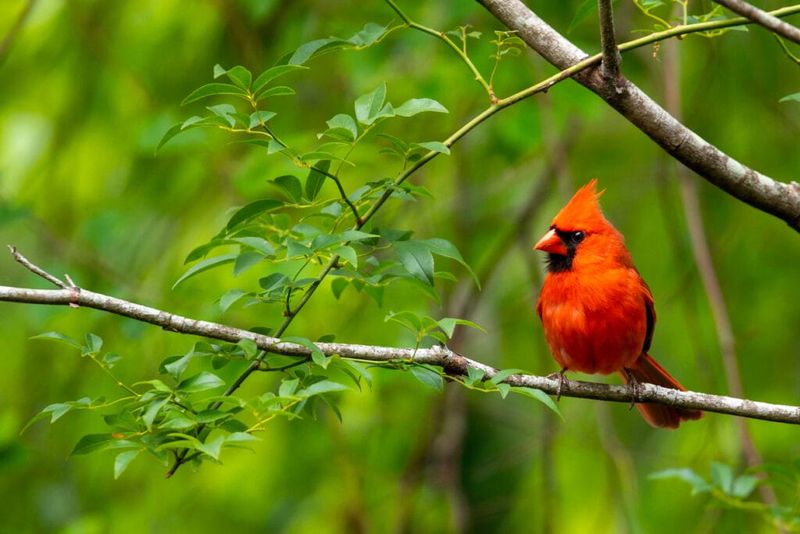
A cardinal at the feeder is nice, but a cardinal that stays after the seed is gone means your yard is doing real work. In Florida, the best plants give these birds food, cover, and safe nesting spots through heat, storms, and sandy soil.
If you plant the right mix of berries, seeds, shrubs, and small trees, your yard can feel like a year-round cardinal stop instead of a quick snack bar.
1. Beautyberry
Few plants announce bird food as clearly as beautyberry. Those bright purple berry clusters look almost unreal, and cardinals notice them when feeder seed runs low or disappears for the day.
American beautyberry, a Florida native, fits the low-effort yard better than many fussy ornamentals. It handles heat, grows well in partial sun, and can cope with sandy soil once established.
In a home landscape, it works beautifully along a fence, at the back of a mixed bed, or near a woodland edge where cardinals already feel safe moving through cover.
The real advantage is timing. Beautyberry fruit often holds into fall, giving cardinals a natural snack during a season when many yards are getting cleaned up too aggressively.
Birds may not strip every berry in one visit, but the shrub becomes part of a dependable food route.
Give it room to look loose and natural rather than forcing it into a tight hedge. Prune in late winter if needed, then let the arching stems leaf out and flower again.
For Florida gardeners who want a native plant with color, wildlife value, and very little drama, beautyberry earns its place close to the top of the list.
2. Firebush
A hot corner of the yard can feel empty by August, but firebush turns that tough spot into a lively bird and pollinator station. Its red-orange flowers draw hummingbirds and butterflies, while its small fruits can help keep cardinals checking back after the feeder is quiet.
For Florida yards, native firebush is especially useful because it is built for heat. It can grow fast in warm weather, takes full sun to part shade, and fits well in informal screens or wildlife beds.
In colder parts of North Florida, it may die back after a freeze, then return from the roots when warm weather comes back.
Cardinals do not only need food. They also need leafy places to pause before flying into open areas.
Firebush offers that middle-layer cover, especially when planted near taller shrubs, palms, or small trees. That layered planting gives cardinals a safer path through the yard instead of forcing them to cross bare lawn.
Look for native firebush when possible, since some nursery plants are sold under similar names. Water it during establishment, then avoid overfeeding it with fertilizer.
A slightly wild, flower-filled firebush often does more for birds than a pampered shrub pushed into soft growth.
3. Simpson’s Stopper
Want something tidy enough for the front yard but useful enough for wildlife? Simpson’s stopper is one of those Florida native shrubs that quietly solves both problems.
Its glossy leaves look polished, its small white flowers are pretty without being showy, and its red to orange fruits add a natural food source for birds. Cardinals are ground and shrub users, so a dense evergreen plant like this gives them more than a snack.
It gives them a place to duck into when a hawk passes overhead or when neighborhood cats roam too close.
Simpson’s stopper is also practical for homeowners who do not want a messy jungle. It can be used as a hedge, privacy screen, or specimen shrub, and it accepts pruning better than many looser wildlife plants.
In sandy Florida soil, water it regularly while it is young, then let it settle into a moderate-care routine.
Place it where you can see bird activity from a porch or window. A row along a side yard can create a travel lane, while a single shrub near a birdbath can make cardinals feel safer coming in for water.
The plant’s biggest strength is balance: it looks intentional to people and welcoming to birds.
4. Wild Coffee
Under trees, many Florida gardeners give up and leave bare mulch. Wild coffee is a better answer, especially if cardinals already visit the shady side of your yard.
This Florida native shrub thrives in part shade to shade, where its shiny leaves keep beds looking full even when flowering plants struggle. It produces red berries that birds may use, and its branchy form gives cardinals cover near the ground.
That matters because cardinals often feed low, hop through leaf litter, and retreat quickly into shrubs when startled.
Wild coffee is not the same as the coffee plant used for your morning cup, so do not treat it as edible for people. Its value is landscape structure and wildlife support.
In the right spot, it creates a calm, green layer beneath oaks, palms, or taller native shrubs.
For best results, plant it where afternoon sun will not scorch it. Add leaf litter or pine straw instead of constantly raking the bed clean, because cardinals often search those natural layers for insects and fallen fruit.
In a Florida yard with too much shade for beautyberry or firebush, wild coffee brings the bird-friendly planting plan into the cooler corners.
5. Southern Wax Myrtle
Every cardinal yard needs a little privacy. Southern wax myrtle can supply it quickly, and that makes it especially helpful in newer Florida neighborhoods where fences, lawns, and open views leave birds exposed.
This native evergreen shrub or small tree grows into a useful screen, windbreak, or soft property-line planting. Its waxy berries are best known for attracting many birds, and cardinals may use the cover even when they are not feeding on the fruit.
Shelter is a big part of what keeps birds around after feeders empty, because a yard with only open grass feels risky.
Southern wax myrtle also tolerates a range of Florida conditions, including sandy soils and moist areas, once established. That flexibility helps in yards that shift from dry spells to heavy rain.
It is not a tiny plant, though, so give it space instead of squeezing it under windows or beside narrow walkways.
Use wax myrtle as the backbone of a wildlife border. Then plant smaller berry shrubs, grasses, and flowers in front of it.
Cardinals like layered habitat, and wax myrtle provides the taller, denser wall that makes the rest of the planting feel safer and more connected.
6. Elderberry
Low spots in a Florida yard do not have to be wasted space. Elderberry can turn a damp edge, swale, or pond-side area into a bird-feeding patch with flowers, fruit, and a relaxed cottage-garden look.
Native elderberry produces broad clusters of small white flowers followed by dark berries that many birds relish. Cardinals are not the only visitors you may see, but that is part of the benefit.
A plant that supports several bird species helps make the whole yard more active, and cardinals often join those feeding routes.
This shrub can grow large and a bit rangy, so place it where its loose shape feels welcome. It is a good fit near the back of a property, along a drainage area, or beside a naturalized fence line.
In very dry sand, it will need more attention, especially while young, so match it to spots that stay a little more moist.
One practical note: birds should get first claim to the fruit unless you know exactly how to handle elderberry safely for human use. For a cardinal-focused yard, the main goal is simple.
Let the plant flower, fruit, and form a generous thicket where birds can feed without feeling exposed.
7. Seagrape
Coastal yards ask a lot from plants: salt, wind, sand, and blazing sun. Seagrape answers with thick round leaves, sturdy growth, and fruit that can help bring birds into exposed Florida landscapes.
In South and coastal Central Florida, seagrape is a strong choice for screening, dune-friendly plantings where appropriate, and informal wildlife edges. The grape-like fruits attract birds and other wildlife, while the broad leaves create shade and shelter.
Cardinals often prefer areas where they can slip from branch to branch rather than sit in the open, so a mature seagrape can become part of their daily cover map.
Size is the detail to respect. Seagrape can become a large shrub or small tree, and it is not the right plant for a tiny foundation bed.
Use it where it can spread naturally, or keep it pruned as a hedge if local rules and the site allow. In coastal zones, always follow local dune and shoreline planting guidance.
For inland gardeners, other shrubs on this list may be easier fits. But near the coast, seagrape offers something many softer plants cannot: toughness with wildlife value.
It gives cardinals a safer stop in yards where wind and salt make gardening feel like a test.
8. Muhly Grass
Not every cardinal plant needs berries. Muhly grass earns its spot by adding seeds, movement, and low cover near the ground, especially in sunny Florida beds that need a softer look.
Pink muhly grass is famous for its airy fall plumes, but birds care more about the habitat it creates. The clumps give insects places to live, and insects are a key part of a cardinal’s diet, especially when adults are feeding young.
Seed heads can also add seasonal interest and potential forage for seed-eating birds.
For homeowners, muhly grass is useful because it handles sun, heat, and lean soil better than many lush ornamental plants. It looks best planted in groups, where the pink haze becomes a real feature instead of a lonely tuft.
Along a driveway, in a mailbox bed, or in front of evergreen shrubs, it adds a Florida-friendly texture that does not demand constant watering once established.
Resist the urge to cut it back too early. Leaving seed heads and dry blades through part of winter gives wildlife more cover and food value.
Trim before fresh growth pushes in spring, then let the clumps rebuild. Paired with berry shrubs, muhly grass helps fill the lower layer cardinals use every day.
9. Dahoon Holly
Red berries on glossy green leaves feel made for cardinals, and dahoon holly brings that classic look in a form suited to many Florida landscapes. It is especially handy where the soil is not bone-dry all the time.
Dahoon holly is a native small tree or large shrub that can produce bright berries on female plants if a compatible male is nearby. Birds use hollies heavily in many Southern landscapes, and cardinals can benefit from both the fruit and the dense branching.
The evergreen structure also gives the yard winter color when some other plants look quiet.
This is a smart pick for rain garden edges, moist borders, and low areas that drain but do not stay desert-dry. It can also work as a small specimen tree where space allows.
Because hollies can vary by sex and fruiting, buy from a reputable nursery and ask how to improve berry production.
Do not plant it where constant pruning will be required to keep it tiny. Dahoon holly wants to become a real landscape feature.
Give it room, mulch the root zone, and water during establishment. Over time, it can become one of those plants that looks good from the street while quietly feeding the bird life behind the scenes.
10. Black-Eyed Susan
A feeder gives cardinals an easy meal, but a wildflower patch gives them a reason to explore. Black-eyed Susan adds cheerful color first, then seed heads and insect activity later, which is exactly the kind of two-step payoff a wildlife yard needs.
In Florida, black-eyed Susan can work well in sunny beds with decent drainage. The golden flowers brighten borders, mailbox plantings, and open patches that might otherwise be plain mulch.
While the blooms feed pollinators, the plant also supports insects that birds depend on, especially during nesting season when young cardinals need protein-rich food.
The trick is to let the plant finish its job. If every faded flower is clipped right away, you remove much of the seed value.
Leave some brown seed heads standing, especially toward late summer and fall, and the bed becomes more useful to birds. It may look a little wilder than a freshly clipped annual bed, but that texture is part of a functioning habitat garden.
Use black-eyed Susan in drifts rather than single plants for the best visual impact. Pair it with muhly grass, firebush, or low native shrubs so cardinals have cover close to the feeding area.
Color brings people to the window, but the seeds and insects help keep the birds returning.