
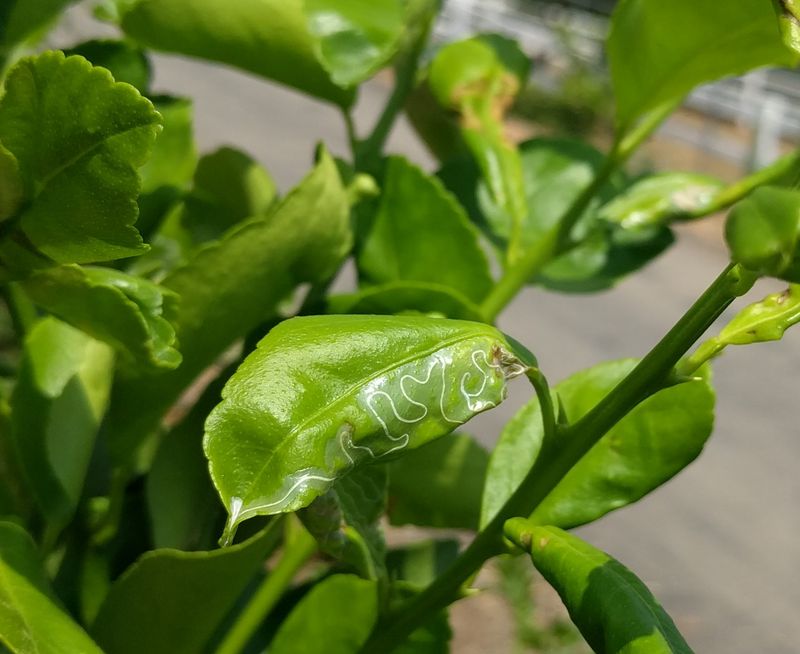
Curled new leaves on a backyard citrus tree can send a gardener straight to the spray aisle, but that reaction often does more harm than good. The curl itself is just a symptom, and the actual cause could be anything from a tiny moth larva tunneling inside the leaf to a cluster of sap-feeding aphids hiding on the underside.
California growers have an extra reason to slow down and look carefully, because one small insect on new growth can signal a disease threat serious enough to report to the state. A quick visual inspection of the newest flush is all it takes to tell these problems apart and choose a response that actually fits.
Start with the newest flush, not the curl alone
Reaching for the hose or a spray bottle the moment you spot a curled citrus leaf is a natural impulse, but the curl itself does not tell you what caused it. Before drawing any conclusions, walk to the tree and find the newest, most tender growth, the pale green flush that has just pushed out from the shoot tips.
That is where the most common culprits concentrate, and that is where a useful inspection actually begins.
Flip those tender leaves over and look at the undersides with a hand lens if you have one. A hand lens or even a phone camera set to macro mode reveals details that are invisible from arm’s length.
You are looking for three very different things: winding pale trails inside the leaf tissue, clusters of small soft-bodied insects along the midrib or shoot tip, or tiny waxy threads attached to even tinier nymphs. Each sign points in a different direction, and none of them is the same as a curled edge by itself.
UC IPM’s guide to identifying invertebrate damage on citrus leaves lists aphids, citrus leafminer, thrips, mites, and other insects among the invertebrate causes of leaf distortion, and that list does not include the abiotic possibilities like water stress, nutrient imbalance, wind, or herbicide drift. Citrus leafminer, aphids, and Asian citrus psyllid all tend to show up on new growth, but their timing in California varies by location.
Coastal areas with cooler summers can see leafminer activity persist later into fall and early winter, while inland heat often suppresses it sooner. The inspection process is the same regardless of where you garden in California: start at the newest flush, look closely at both leaf surfaces, and match what you find to a specific sign rather than assuming the worst from the curl alone.
Winding trails point to citrus leafminer
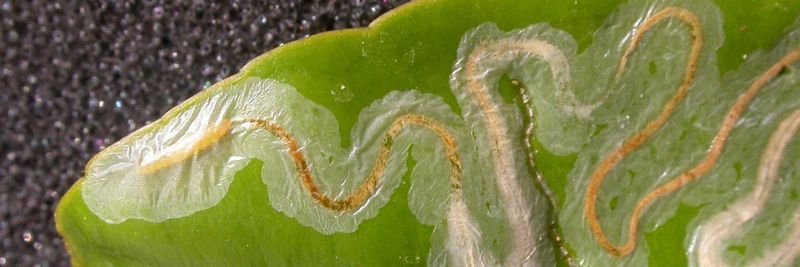
Pale, winding tunnels that travel through the interior of a tender leaf are the real giveaway for citrus leafminer, not the curled edge that catches your eye first. The tiny moth larva responsible for this damage hatches from an egg laid on the surface of a very young leaf and then burrows between the upper and lower leaf layers.
As it feeds and grows, it leaves behind a serpentine trail that looks translucent or silvery white against the green leaf, sometimes with a thin darker line of frass running down the center of the tunnel. The leaf may curl or twist as a result of the feeding, but the curl is a consequence, not the identifying feature.
Seeing a curled edge without also finding those internal mines means you are still looking for the cause.
The larva spends its entire feeding stage protected inside the leaf, which matters a great deal when you are thinking about how to respond. UC IPM’s citrus leafminer pest management guidelines explain that mature, established trees generally sustain leafminer damage without meaningful effects on growth or fruit yield.
Even heavily infested young trees are unlikely to die from leafminer alone, though they can experience some reduction in growth. That said, young trees, coastal lemons that produce repeated flushes through much of the year, and any tree putting out a lot of new growth during the mid-summer through fall window deserve closer attention because fresh flush is exactly what the egg-laying moths are looking for.
Leafminer activity in California tends to track with new growth flushes. Avoid unnecessary pruning during active periods, because cutting stimulates another round of tender growth that attracts more egg-laying.
Excess nitrogen fertilizer has the same effect, pushing out soft new leaves at exactly the wrong time. The mined leaves that remain on the tree still contain healthy tissue and can continue contributing to photosynthesis, so removing every affected leaf is not the right call.
Natural parasitoid wasps attack leafminer pupae and help keep populations in check over time, which is one more reason to avoid broad-spectrum sprays that would eliminate those allies along with the pest.
Clusters beneath the curl point to aphids
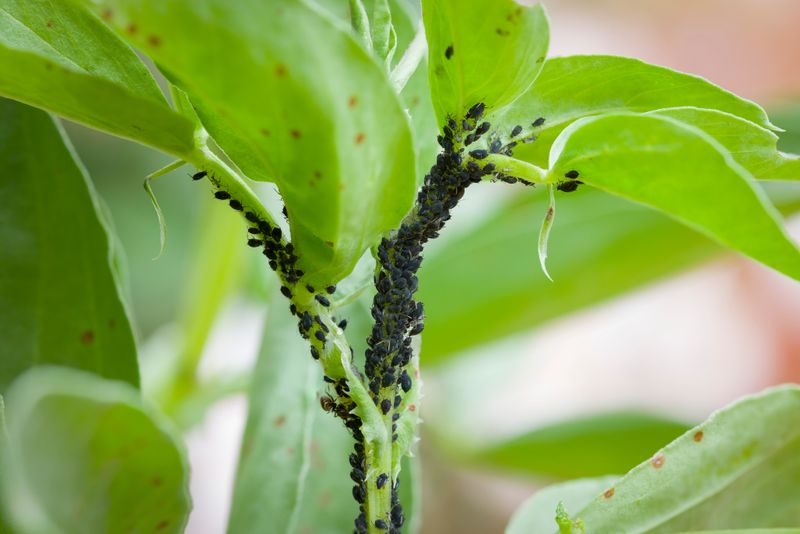
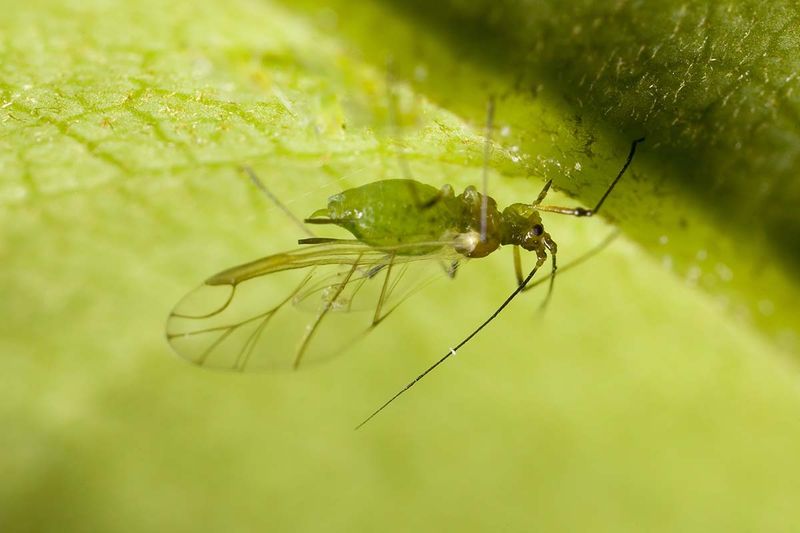
Turning the curled leaf over is the single most useful move for an aphid diagnosis. Aphids feed by piercing plant tissue and drawing out sap, and they almost always work in groups on the outside of the plant rather than tunneling inside.
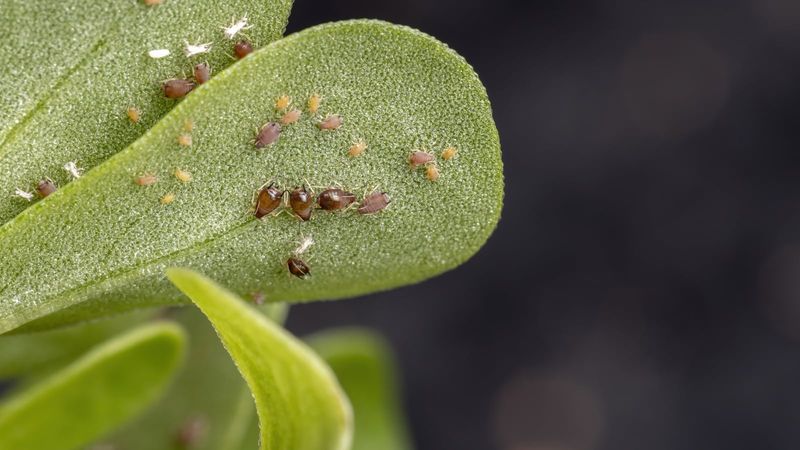
A visible colony of small, soft-bodied insects clustered along the underside of a tender leaf, at a shoot tip, or along the midrib is the primary sign you are looking at an aphid problem. The insects themselves range from pale green to yellow, brown, or even dark depending on the species, but the clustering habit is consistent.
Honeydew, the sticky sugary liquid aphids excrete, can make foliage feel tacky and may eventually support a coating of black sooty mold. Ants moving purposefully up and down the trunk or branches are often a secondary signal, since some ant species actively tend aphid colonies and protect them from predators in exchange for honeydew.
Shed white skins left behind as aphids molt are another supporting clue. These signs are worth noting, but UC IPM’s aphid management guidance makes clear that honeydew, sooty mold, and ant activity can also accompany whiteflies, soft scales, mealybugs, and other sap-feeding pests, so none of these signs alone confirms aphids.
The visible colony is what confirms it.
The biological difference between aphids and citrus leafminer explains why the two pests look so different under inspection. Aphids are external feeders sitting on the plant surface, while leafminer larvae are concealed inside the leaf.
A single tree can host both at the same time, particularly during active flush periods, so finding one does not mean the other is absent. UC IPM’s citrus invertebrate damage guide also notes that the brown citrus aphid can vector citrus tristeza virus, a reminder that not every aphid infestation is purely cosmetic, even on otherwise healthy-looking trees.
White wax changes the urgency of the diagnosis
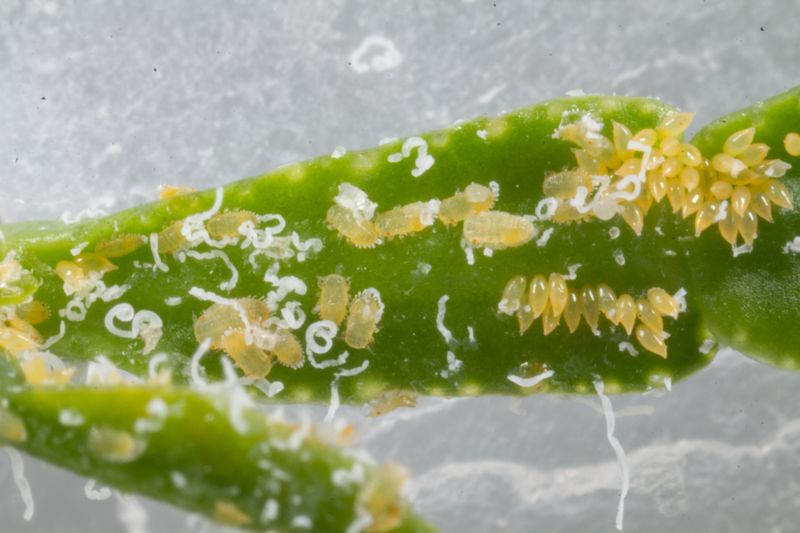
Finding soft-bodied insects on new citrus growth does not automatically mean aphids. California gardeners need to know one critical exception: Asian citrus psyllid.
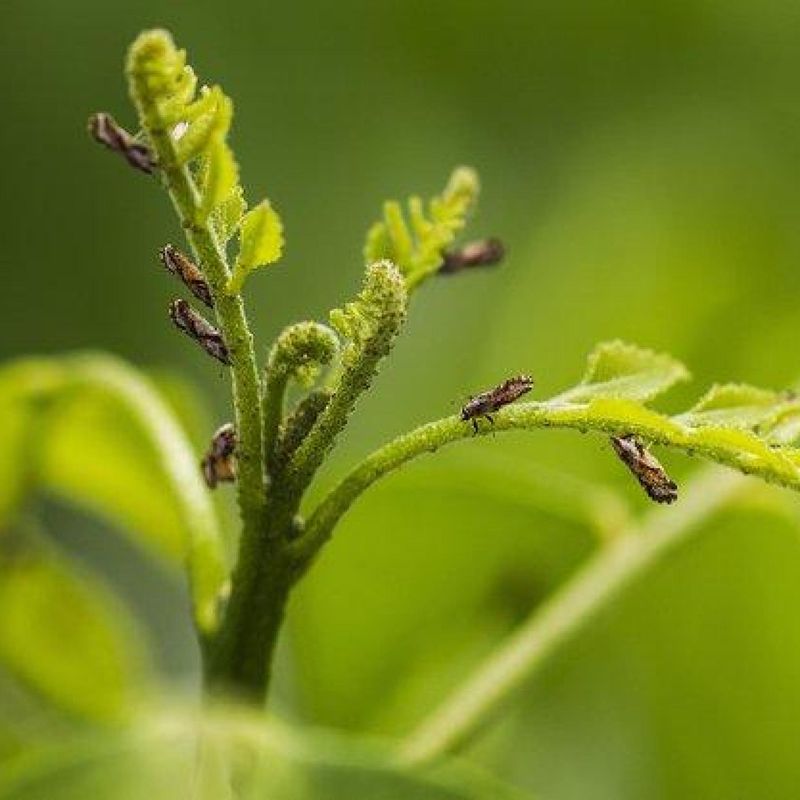
The nymphs of this pest produce distinctive white waxy tubules that radiate outward from their bodies, giving infested shoot tips a slightly fuzzy or cottony appearance unlike anything an aphid colony produces. The nymphs themselves are small and yellow-orange.
Adults are tiny, mottled brown insects with a characteristic feeding posture, tilting their bodies at roughly a 45-degree angle with their heads pointed down toward the plant surface. That angled stance is one of the clearest field identification clues.
The reason this pest demands immediate attention goes well beyond leaf curl. UC IPM’s Asian citrus psyllid and huanglongbing resource explains that the psyllid can transmit huanglongbing, also called citrus greening disease, which has no cure and eventually kills infected trees.
A tree may not show the broader yellowing, lopsided fruit, or bitter juice symptoms of huanglongbing right away, so the absence of those signs does not mean the tree is safe. The psyllid’s presence on new flush is the warning that matters, regardless of whether the tree looks otherwise healthy.
If you see white waxy tubules on tiny nymphs, or a small mottled adult feeding at that distinctive angle, do not treat it as an ordinary aphid sighting and move on. Photograph the insects with your phone camera, note the location on the tree, and avoid moving any citrus plants, cuttings, budwood, or grafting material out of the area.
Then report the suspected find to the California Department of Food and Agriculture at 1-800-491-1899. The CDFA Asian citrus psyllid pest profile provides identification images that can help you confirm what you are seeing before you call.
Applying a blanket pesticide treatment before the insect is properly identified is not recommended, both because contact materials require direct coverage to work and because broad-spectrum products can harm beneficial insects that help manage other citrus pests.
When the two-pest shortcut fails, widen the inspection
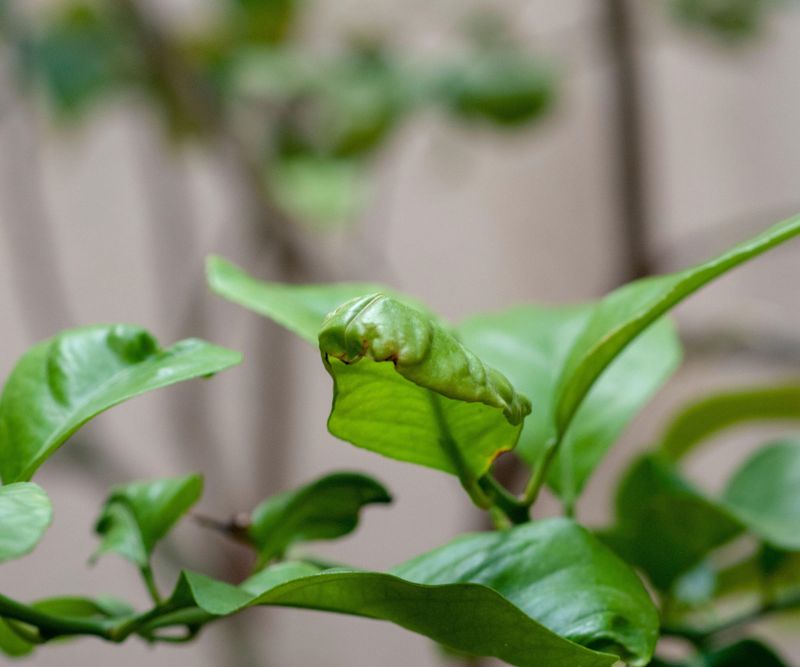
Sometimes you flip the leaf, look carefully at the shoot tips, check for waxy threads, and still find none of the signs that point to leafminer, aphids, or psyllid. That is the moment to widen the inspection rather than default to a spray.
Several other causes produce curled or distorted new citrus leaves, and identifying them requires looking for different visual clues.
Thrips are worth checking when young leaves show silvery or bronze scarring, streaking, or a roughened texture along with distortion. These tiny, fast-moving insects rasp the surface of tender tissue rather than tunneling inside or clustering in visible colonies, so the damage pattern looks different from either leafminer mines or aphid feeding.
UC IPM’s citrus invertebrate damage identification resource describes thrips-related scarring as a distinct sign separate from leafminer or aphid injury. Mites are a different category: citrus red mite and other mite species more commonly cause stippling, bleaching, bronzing, fine webbing on leaf surfaces, or leaf drop rather than the winding internal mines that define leafminer damage.
Environmental and cultural causes deserve equal consideration. UC Master Gardeners of San Luis Obispo County guidance on yellow citrus leaves notes that water stress can cause leaves to curl upward, become leathery or yellow, and eventually drop, especially during hot, dry California summers.
Checking soil moisture before assuming an insect infestation can save a lot of unnecessary effort. Diseases, nutrient deficiencies, wind damage, frost injury, and herbicide drift from nearby properties can all produce leaf distortion that mimics pest damage.
UC IPM’s citrus leaf and twig disease guide covers several of these non-insect possibilities for California growers. When the insect signs simply are not there, the answer may be in the irrigation schedule, the soil, or the weather rather than in a spray bottle.
Treat the pest you actually found
Once the inspection points clearly to a specific cause, the response should match it. For citrus leafminer on established, mature backyard trees, the most appropriate response is usually patience.
UC IPM’s citrus leafminer pest management guidelines state that mature trees generally tolerate leafminer damage without significant effects on growth or yield. The mined leaves that remain on the tree still contain functional tissue, and removing every curled or tunneled leaf is counterproductive because pruning stimulates a new flush of exactly the tender growth the egg-laying moths prefer.
Hold off on heavy pruning and pull back on nitrogen fertilizer during active leafminer periods for the same reason.
Broad-spectrum insecticides are a poor fit for leafminer on any citrus tree. The larva feeds inside the leaf where contact sprays cannot reach it, while those same sprays can eliminate parasitoid wasps and other natural enemies that help regulate leafminer populations over time.
UC IPM’s home and landscape citrus leafminer page reinforces this point for backyard growers. Young trees, coastal lemons producing multiple flushes per year, and trees in areas with sustained leafminer pressure may need closer monitoring, but the management approach remains conservative.
For confirmed aphid infestations, start with a strong stream of water directed at the shoot tips and leaf undersides. Light to moderate colonies often collapse on their own or fall to natural enemies such as lady beetles, lacewings, syrphid fly larvae, and parasitoid wasps.
Controlling ants that are protecting aphid colonies from those predators can make a real difference before any spray is considered. If the infestation is heavy enough to warrant treatment, insecticidal soaps or horticultural oils can work, but only through direct contact with the insects.
UC IPM’s aphid guidance specifies that these products should not be applied to drought-stressed plants or when temperatures exceed about 90 degrees Fahrenheit, and phytotoxicity is possible, so testing a small area first and reading the label carefully are both essential steps. Aphids tucked inside tightly curled leaves may be shielded from contact sprays entirely; pruning out the most severely distorted, heavily infested shoot tips can sometimes be more effective than repeated spraying.
A careful visual read beats a reflex spray
The field sequence that works every time starts at the newest flush. Look inside the tender leaves for pale, winding serpentine mines with a possible darker frass line, the signature of a larva feeding between the leaf layers.
Then look beneath the curl and along shoot tips for visible clusters of small soft-bodied insects, the primary confirmation for aphids, supported by honeydew, shed skins, ants, or sooty mold as secondary clues. Check for white waxy tubules on tiny yellow-orange nymphs or a small mottled adult feeding at a downward angle, the warning signs that call for a photograph and a call to CDFA rather than a spray.
If none of those signs match, consider thrips scarring, mite stippling, or the soil moisture level before drawing any conclusion.
The goal of this inspection is not to find and eliminate every imperfect leaf. UC IPM, aphid, and Asian citrus psyllid resources all point toward the same underlying principle: protect the tree, preserve the beneficial organisms working alongside it, and act with real urgency only when a California disease-vector warning appears.
A citrus tree with a few curled leaves and a healthy population of parasitoid wasps is in better shape than a tree that has been sprayed clean of everything living on it.
The curl is just the beginning of the conversation, not the end of it.