
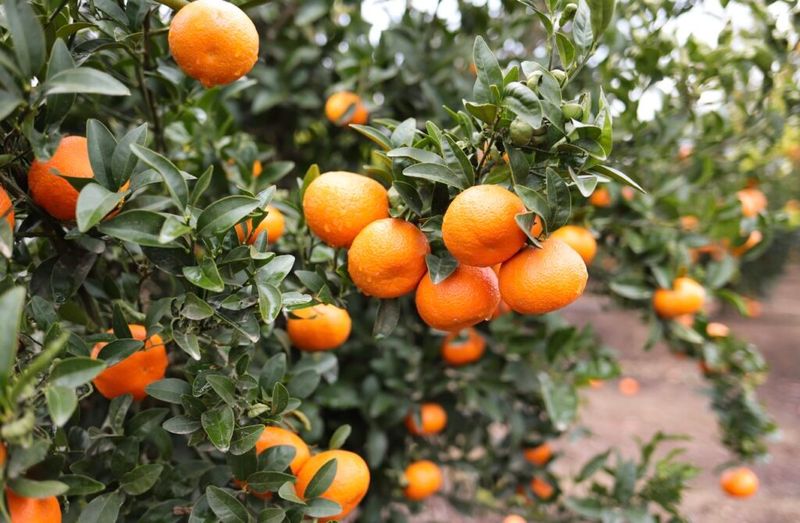
California’s summer heat can leave citrus trees quietly struggling even after temperatures drop in September. The soil beneath the canopy may still be bone dry, and a tree carrying developing fruit has little room to recover on its own.
Knowing what to check and what to do next can make a real difference before the season turns.
September care depends on continuing stress, not an automatic delayed injury
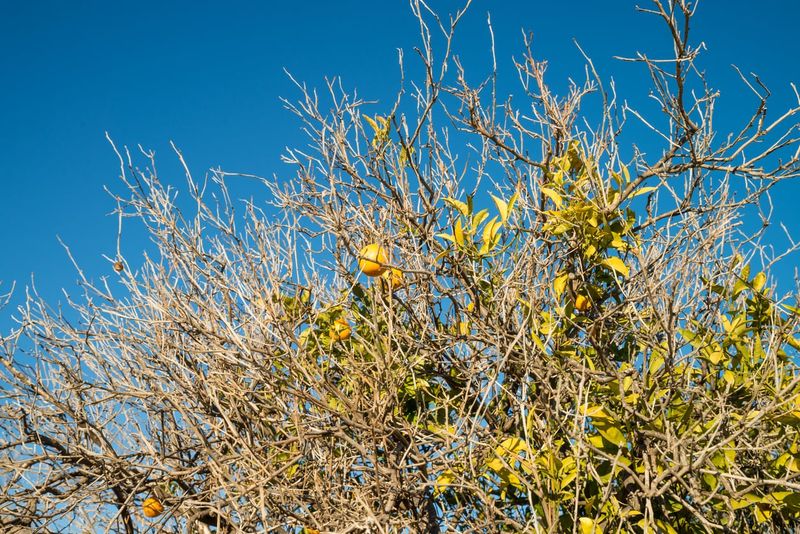
A heatwave does not automatically program a citrus tree to fail weeks later, but the aftermath can leave real problems in place long after the hot days pass. When summer heat is intense and prolonged, it can thin the canopy, scorch or bleach leaves, expose fruit to sunburn, trigger leaf or fruit drop, and reduce the size and quality of the fruit that stays on the tree.
These are genuine consequences, but they are not the same as a delayed-damage syndrome that every California citrus tree will experience by September.
The practical concern in September is more specific: the root zone may still be dry, warm and dry weather may be continuing, and the tree may still be supporting developing fruit that needs water to size up properly. UC guidance on drought-induced orchard problems notes that ongoing water stress, not just the original heat event, drives the worst outcomes for fruit trees.
The heat itself may have passed, but a tree sitting in dry soil during a warm September is still under stress.
Across California’s diverse growing conditions, from the Central Valley floor to coastal foothill neighborhoods, the timing and severity of that stress will vary. UC Cooperative Extension advice for Central Valley heat spikes emphasizes that trees need more water during and after high-heat periods, not less, because the soil dries faster than many homeowners expect.
Rather than applying a statewide September calendar treatment, the right starting point is a moisture check beneath the canopy, followed by targeted action based on what that check reveals. That protocol, not a fixed schedule, is what actually supports a citrus tree through the tail end of a dry California summer.
Check the upper soil before deciding to irrigate
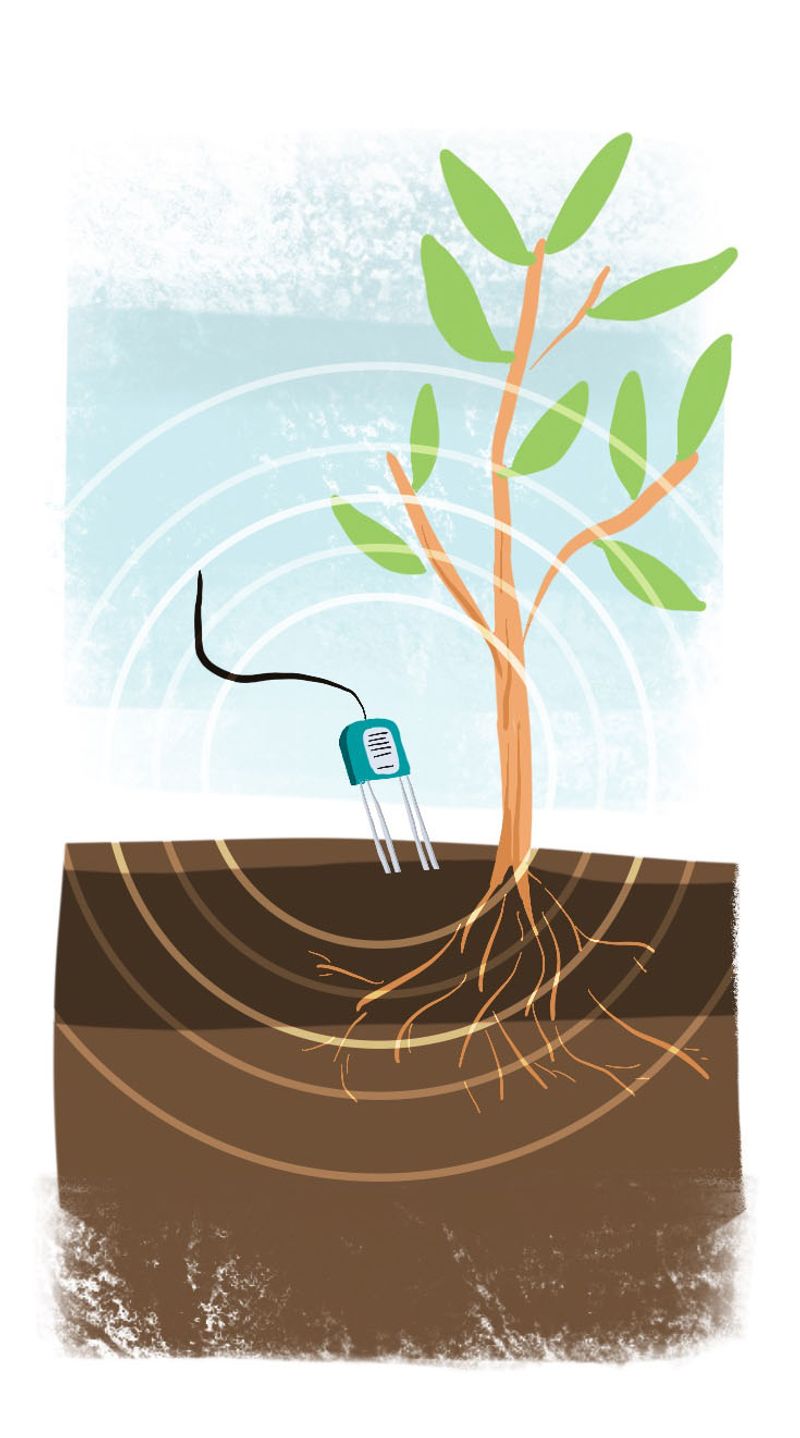
Before reaching for a hose, spend two minutes with a trowel. For established citrus, the most reliable way to know whether the tree needs water is to dig beneath the canopy, away from the trunk, and feel the soil at roughly 3 to 6 inches deep.
Dry, crumbly, or powdery soil at that depth is a signal that moisture is low enough to matter. Soil that still feels cool and slightly damp at that range suggests the root zone has not fully dried yet.
UC citrus home care guidance recommends allowing the upper several inches of soil to dry before irrigating established trees, rather than watering on a fixed calendar. Judging moisture by how the lawn looks, how the leaves hang, or how long it has been since the last rain can all be misleading.
Leaves may droop from heat alone, and the soil surface can dry quickly in sun while the zone several inches down remains adequately moist.
Checking the soil at depth gives a more honest reading, but it is not the whole picture. A dry reading at 3 to 6 inches beneath the canopy indicates that irrigation is likely appropriate, though it does not confirm that the entire root zone has dried.
Before watering, also consider whether your site drains freely or tends to hold water. UC Master Gardener citrus care guidance points out that citrus roots are sensitive to waterlogged conditions, so drainage matters as much as dryness.
If the soil reads dry and the site drains well, that combination is the clearest signal to water. If drainage is poor, proceed carefully and slowly rather than applying a full deep soak all at once.
Restore dry root-zone moisture with a slow irrigation
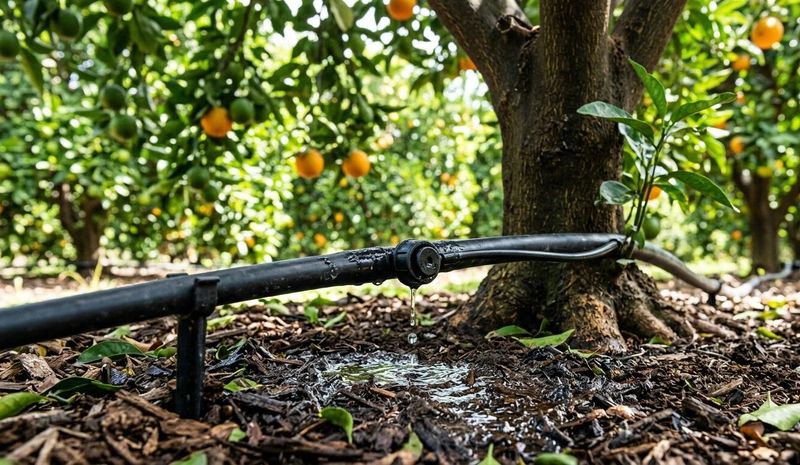
Once the soil check confirms that the upper several inches beneath the canopy are dry and drainage conditions support watering, the recovery move is straightforward: apply water slowly enough for it to penetrate through the active root zone instead of running off the surface or evaporating before it reaches the roots. A brief sprinkle with a handheld hose for a few minutes is not a deep irrigation, even if the surface looks wet afterward.
UC guidance on maximizing landscape tree irrigation explains that slow, steady delivery allows water to move downward through the soil profile rather than sheeting off or pooling at the surface. A soaker hose laid in a loop beneath the canopy, a drip system with emitters positioned across the root area, or microsprayers that cover the appropriate zone can all accomplish this when run long enough to wet the soil at depth.
The method matters less than whether the water actually reaches the roots.
Running water for the right amount of time depends on your soil texture, the size of the root zone, and the output rate of your irrigation equipment, so there is no single number of gallons or minutes that applies to every tree. Sandy soils absorb water quickly but drain fast and may need more frequent attention.
Clay soils absorb slowly and can become waterlogged if the irrigation rate exceeds what the soil can take in. In either case, slow and steady beats fast and heavy.
One important boundary: slow and deep does not mean saturating soil that already drains poorly. UC IPM cultural guidance for home citrus warns that keeping citrus roots constantly wet can impair root function and contribute to root rot, producing symptoms that look a lot like drought stress.
The goal is to restore adequate moisture through the root zone, then let the upper inches dry again before the next irrigation cycle.
Spread water beneath the canopy, not against the trunk
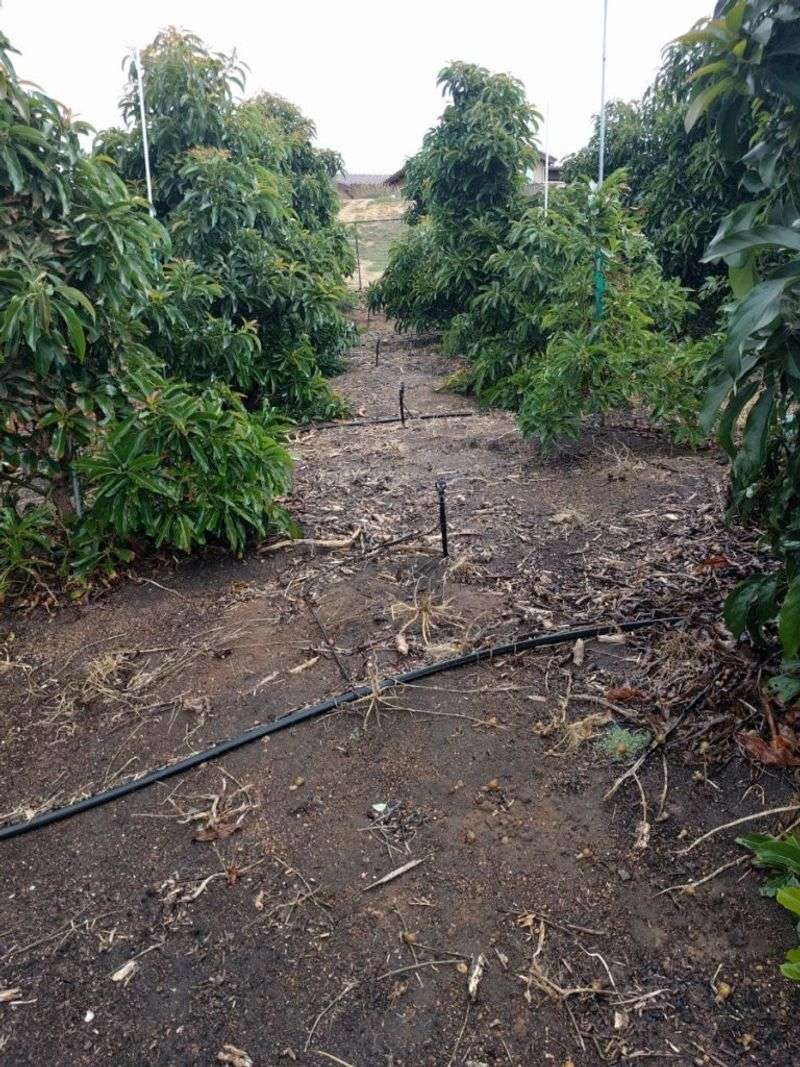
Where the water lands matters almost as much as how slowly it is applied. Citrus feeder roots, the fine roots responsible for taking up water and nutrients, are concentrated beneath the canopy and extend outward toward and sometimes slightly beyond the drip line.
Concentrating irrigation at the base of the trunk misses most of those roots and keeps the trunk and graft union wet, which is a condition that favors disease and bark decay.
UC citrus care guidance specifically directs homeowners to apply water beneath the canopy and outward toward the drip line rather than at the trunk. For a mature navel orange or grapefruit with a broad canopy, that means distributing water across a fairly wide area.
For a young tree with a smaller spread, the watered zone is narrower but should still stay several inches away from the trunk.
Practical placement depends on what equipment you are using. Drip emitters work best when spaced around the canopy perimeter rather than clustered near the base.
A soaker hose can be looped in a ring or spiral starting roughly a foot or two out from the trunk and extending toward the drip line. Microsprayers should be angled to cover the canopy footprint without spraying the trunk directly.
UC Southern California landscape irrigation guidance reinforces that directing water to where feeder roots are actually located, rather than at the visible trunk, is the key to efficient uptake. No specific gallon amount or run time applies universally, but any method that wets the active root zone without soaking the trunk area is moving in the right direction.
Use mulch to hold moisture without creating a wet trunk
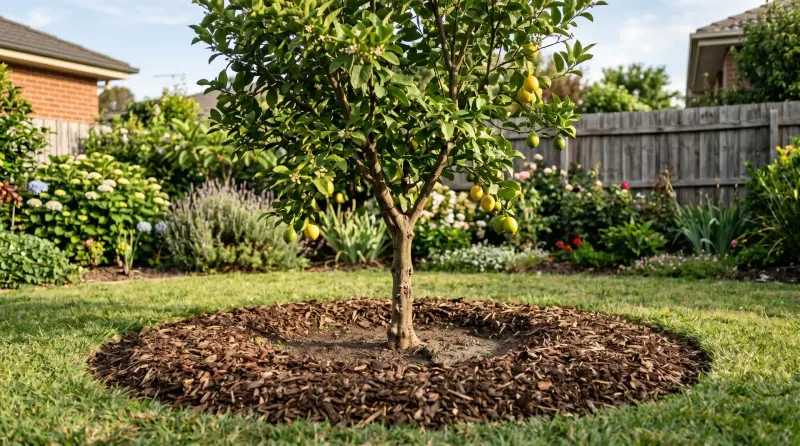
After a slow, well-placed irrigation, the fastest way to lose that moisture is to leave bare soil exposed to sun and heat. Mulch over the root zone slows evaporation, moderates soil temperature, and helps keep moisture available between watering cycles rather than requiring the tree to wait for the next irrigation to recover.
UC citrus home care guidance recommends maintaining roughly 3 to 4 inches of mulch over the root zone. Wood chips, shredded bark, or similar coarse organic material works well.
Fine materials that compact tightly or form a crust can actually restrict water infiltration, so coarser textures are generally preferable. Spread the mulch beneath the canopy and outward toward the drip line, matching the zone where you directed the irrigation water.
The one firm rule is that mulch should not touch the trunk. UC Master Gardener citrus guidance recommends keeping mulch at least 6 inches to about 1 foot away from the trunk, depending on the site and tree.
Mulch piled against the bark traps moisture against the wood and the graft union, creating conditions that favor fungal disease and bark decay. A clear ring around the trunk base, with mulch beginning a comfortable distance out, protects the tree while still doing its job across the root zone.
Mulch supports good irrigation but cannot replace it. UC drought gardening guidance makes clear that mulch reduces water loss but does not add moisture to dry soil.
If the soil beneath the mulch is already dry, the mulch layer preserves that dry state rather than correcting it. Keep checking the soil under the mulch at 3 to 6 inches deep to know whether the root zone is holding moisture or drying out again between irrigations.
Adjust September frequency for the tree, soil, and climate
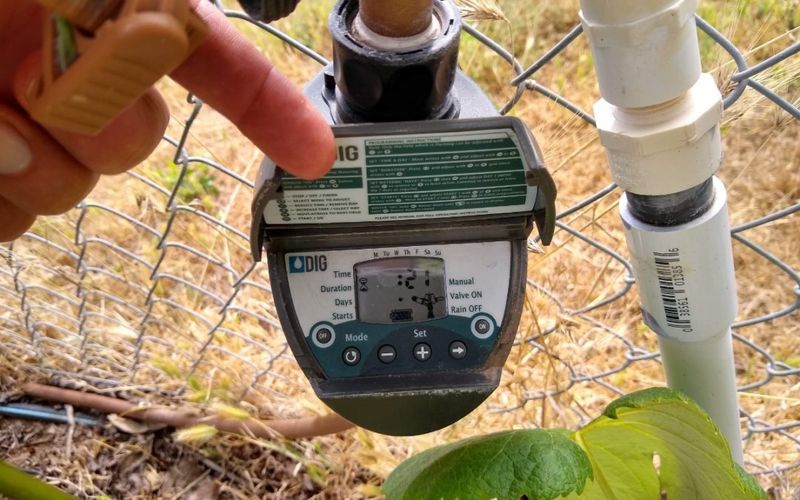
A mature navel orange in a Fresno backyard and a one-year-old Meyer lemon in a Marin County container are both citrus trees, but treating them with the same September watering schedule would be a mistake. Root zone size, soil type, tree age, sun exposure, and local climate all change how quickly moisture is lost and how often the soil check will come back dry.
For established in-ground trees in hot inland areas, UC Cooperative Extension Central Valley guidance notes that regular deep irrigation should continue through summer and into fall because warm, dry conditions persist well past Labor Day. UC IPM agricultural citrus timing guidance and UC Sacramento County Master Gardener monthly orchard tips both support maintaining irrigation through the warm fall period, reducing frequency only as temperatures cool and stopping when meaningful rain returns.
Young or newly planted trees dry out faster because their root systems are still establishing and cannot draw from a deep, wide soil volume. UC Contra Costa Master Gardener guidance on Meyer lemons notes that young trees need more frequent monitoring and irrigation than mature specimens.
Container citrus can dry out within a day or two during hot weather and may need daily checks in September heat. Sandy soils lose moisture faster than clay or loam, requiring more frequent attention regardless of tree age.
Coastal sites with marine influence tend to stay cooler and lose soil moisture more slowly, meaning irrigation frequency naturally drops compared to an exposed inland site under the same calendar date. UC IPM citrus site selection guidance highlights how much climate zone and exposure affect citrus performance and care needs.
Rather than copying a neighbor’s schedule or following a published interval that was written for a different region, build your September routine around what the soil actually shows when you check it, and adjust as the weather shifts.
Treat yellowing and dieback as symptoms to investigate
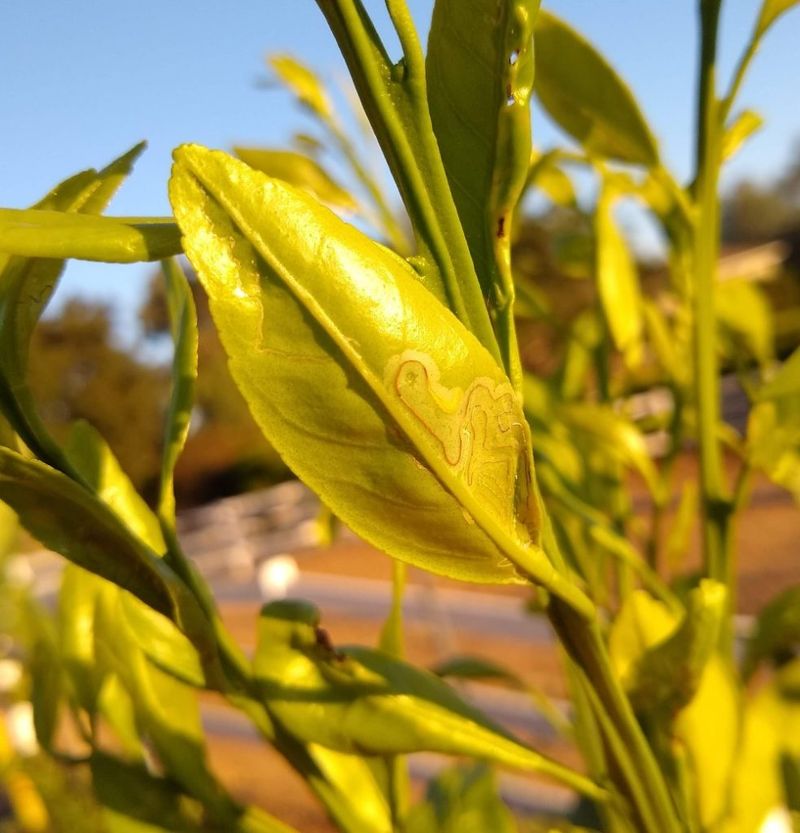
Yellowing leaves, brown patches, tip dieback, and early leaf drop are the signs that most homeowners notice first, and they are often the reason someone starts looking for a September recovery plan. These symptoms can follow heat and water stress, but they are not exclusive to it.
Overwatering, poor drainage, soil salinity, root dysfunction, nutrient imbalances, pest activity, and disease can all produce overlapping visual patterns that are easy to misread.
UC IPM citrus leaf and twig disorder guidance lists heat injury, sunburn, nutrient deficiency, salt damage, and several disease conditions as separate causes of similar-looking leaf symptoms. Acting on the wrong diagnosis, such as applying fertilizer when the real problem is overwatering, or watering more when roots are already damaged from excess moisture, can make the situation worse.
The first step with any yellowing is to assess soil moisture and drainage before reaching for any amendment.
UC citrus nutrition guidance and UC San Luis Obispo Master Gardener guidance on yellow citrus leaves both caution against treating yellowing as automatic proof of iron or nitrogen deficiency. Soil moisture, drainage, and root health need to be ruled out first.
Fertilizer is not an emergency recovery tool for a stressed tree, and applying it when soil moisture is inadequate can intensify salt stress on already-struggling roots.
For pruning, the guidance is similarly restrained. UC IPM cultural tips for home citrus note that citrus generally needs little pruning, and removing large sections of canopy after heat damage can expose remaining fruit and branches to additional sun injury.
Limit immediate cuts to wood that is clearly dead, broken, or poses a safety hazard. UC garden notes on landscape transformation reinforce that structural pruning decisions are better made once the tree has stabilized and a qualified local advisor has weighed in, rather than in the middle of a stress event.
Separate pest warnings from possible disease warnings
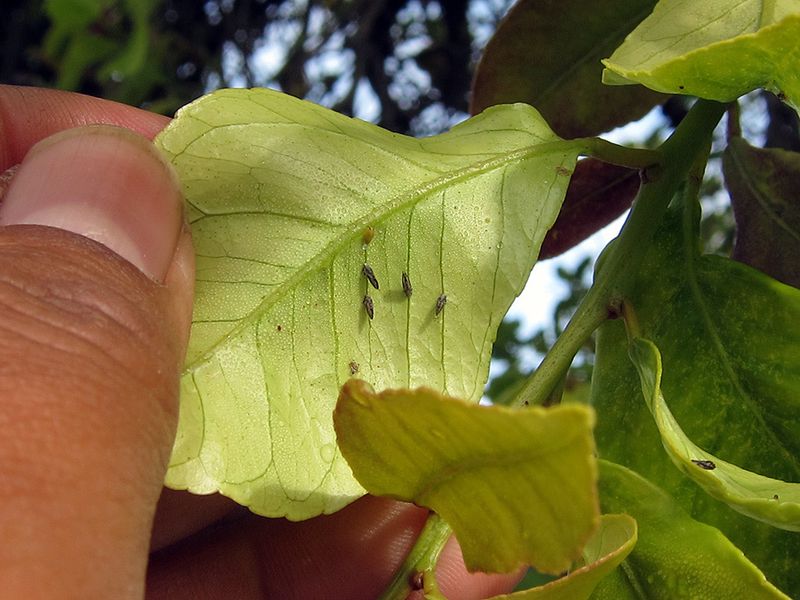
Not every unusual symptom on a September citrus tree is a watering or heat problem. California homeowners need to be aware of two specific threats that can produce leaf and fruit abnormalities overlapping with heat stress and nutrient deficiency: Asian citrus psyllid (ACP) and Huanglongbing (HLB), a serious citrus disease associated with ACP.
Knowing the difference between a possible pest sign and a possible disease warning matters because the appropriate response is not more water or fertilizer.
Possible ACP-related indicators include small waxy white tubular deposits on new growth and curled or cupped young leaves where psyllid nymphs have been feeding. These signs can appear alongside otherwise normal-looking foliage, and they can be confused with other pest activity or even heat-related leaf curl.
CDFA ACP regulation and information outlines the current quarantine status and affected areas across California, which is relevant for homeowners trying to understand their risk level and reporting obligations.
Possible HLB warning signs are different in character. Asymmetric blotchy yellowing that does not follow the typical vein pattern, shoots that yellow unevenly, and fruit that fails to color normally or develops unusual shapes and off-flavors are the patterns most associated with HLB suspicion.
UC IPM citrus disorder guidance notes that these symptoms overlap with nutrient problems and other conditions, so visual observation alone is not a diagnosis.
If you notice either cluster of signs, the appropriate action is to report them rather than to self-treat. CDFA guidance on ACP and HLB advises California residents not to move citrus plants, cuttings, budwood, or fruit with leaves across quarantine boundaries, and to contact CDFA when symptoms are concerning.
Treating a possible HLB situation as a routine irrigation or fertilizer problem delays a response that could matter for neighboring trees.
Use a moisture check, slow soak, mulch, and reassessment
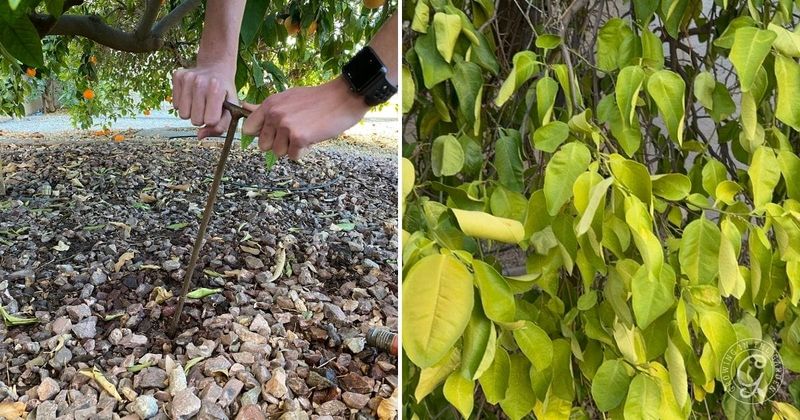
The sequence that actually supports a citrus tree through September is simple enough to repeat every time conditions change. Start beneath the canopy with a trowel, not at the surface but at roughly 3 to 6 inches deep.
Dry, crumbly soil in a well-drained location is the clearest signal to water. Moist soil at that depth means the tree can wait.
When the soil check calls for irrigation, apply water slowly across the active root zone, from several inches out from the trunk to the drip line and slightly beyond. Keep the trunk and graft union dry.
Run the water long enough for it to penetrate deeply rather than just wetting the top layer. UC IPM home citrus guidance and UC citrus care guidance both frame this as the foundation of sound citrus water management, not a one-time emergency fix.
After watering, maintain 3 to 4 inches of coarse mulch over the root zone with a clear ring kept away from the trunk. Then reassess.
UC Southern California irrigation guidance reinforces that soil conditions, not calendar dates, should drive the next decision. As September temperatures shift and fall rains eventually arrive, the interval between irrigations will lengthen on its own.
This protocol addresses continuing water stress and can help a tree in dry soil stabilize and hold its fruit through the end of the season. What it cannot do is reverse scorched bark, sunburned fruit, dead roots, salinity damage, or disease.
The soil check keeps you honest about what the tree actually needs, and that honesty is worth more than any fixed schedule.