
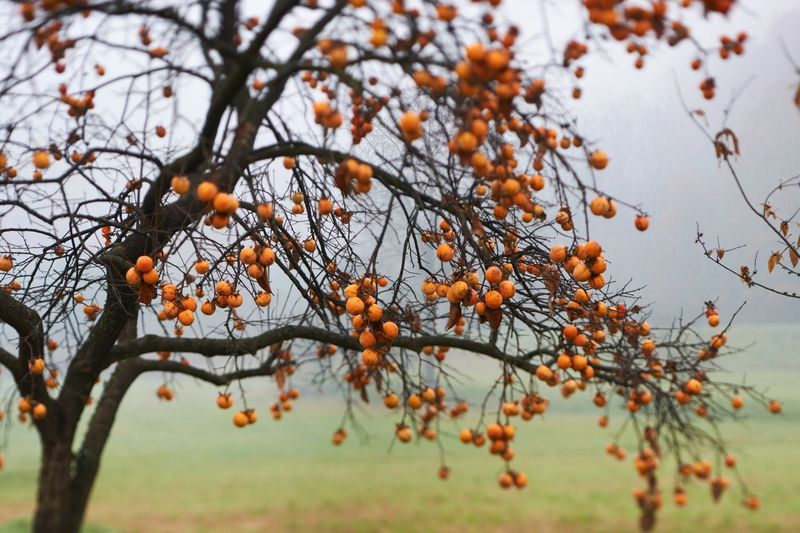
Every fall, California gardeners watch their persimmon trees turn brilliant shades of yellow, orange, and red before the leaves drop away entirely. That bare-branch look can feel alarming, especially when a crop of fruit is still hanging on the tree.
The good news is that leaf drop is almost always a normal part of the persimmon’s seasonal cycle, not a sign that the harvest is doomed. Knowing what the tree actually needs right now, from soil moisture to harvest timing, is what keeps the fruit safe through the end of the season.
Fall leaf drop is usually normal—and separate from fruit trouble
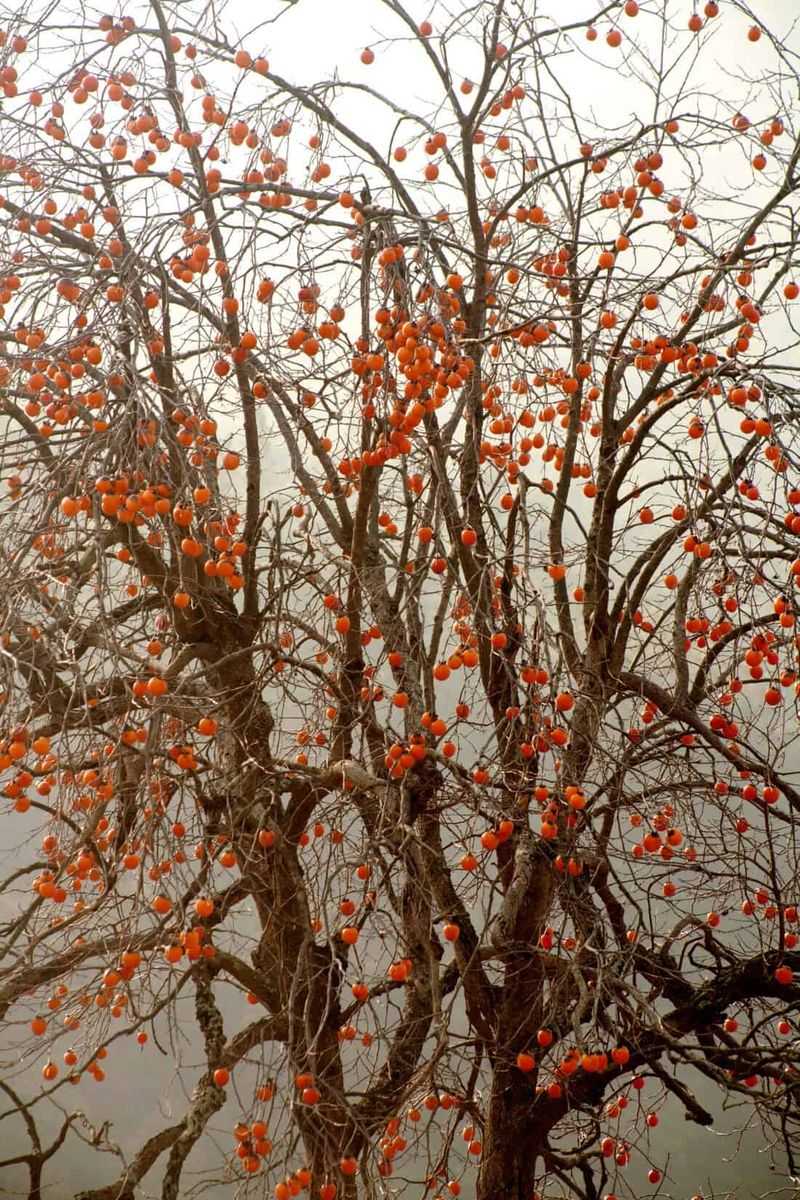
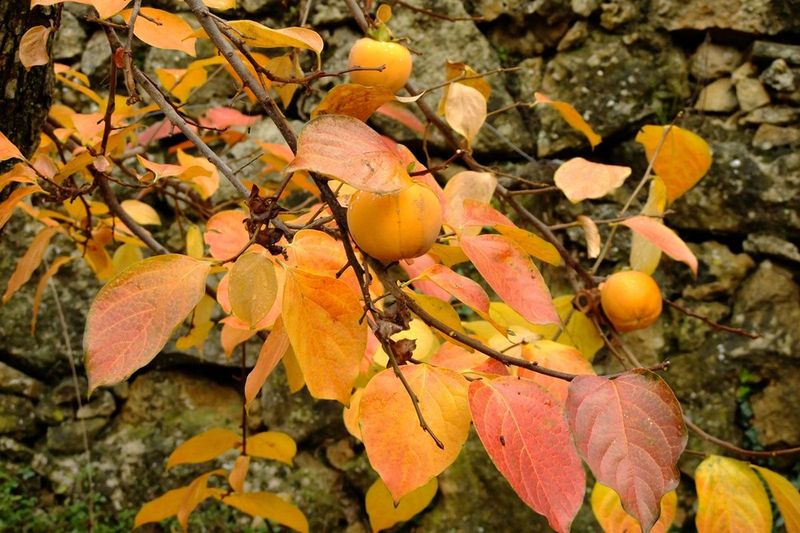
Bare branches covered in bright orange fruit are one of fall’s most striking garden sights, and for persimmon owners in California, that image is completely normal. Japanese and Oriental persimmon varieties are deciduous, meaning they shed their leaves every autumn as part of a healthy seasonal cycle.
Yellow, orange, or red foliage followed by leaf drop is not an emergency signal. It is simply the tree doing what it does every year.
What often surprises gardeners is that the fruit stays put long after the canopy empties. UC IPM’s persimmon resource confirms that orange fruit commonly remains on leafless branches, which is a feature of the variety rather than evidence that something went wrong.
The timing of actual fruit drop is a separate concern: UC ANR’s Ask a Master Gardener guidance on persimmon fruit drop notes that much of the natural fruit drop in persimmons occurs during spring or early summer, not in autumn when the leaves are falling.
So what should you actually look at? Focus on the fruit itself and the tree’s overall condition rather than the canopy.
A tree with a full, well-colored crop and no signs of wilt, weak growth, or rotted fruit is doing fine. Leaf color and leaf drop alone do not tell the whole story.
UC Marin Master Gardeners’ persimmon guide reinforces that normal deciduous leaf loss and good fruit retention can happen at the same time.
Resisting the urge to panic over a bare canopy is the first step toward protecting your actual crop. The sections below focus on what the tree genuinely needs right now, from soil moisture to safe harvesting, so that a normal-looking fall does not turn into a missed or damaged harvest.
Check soil moisture before you water
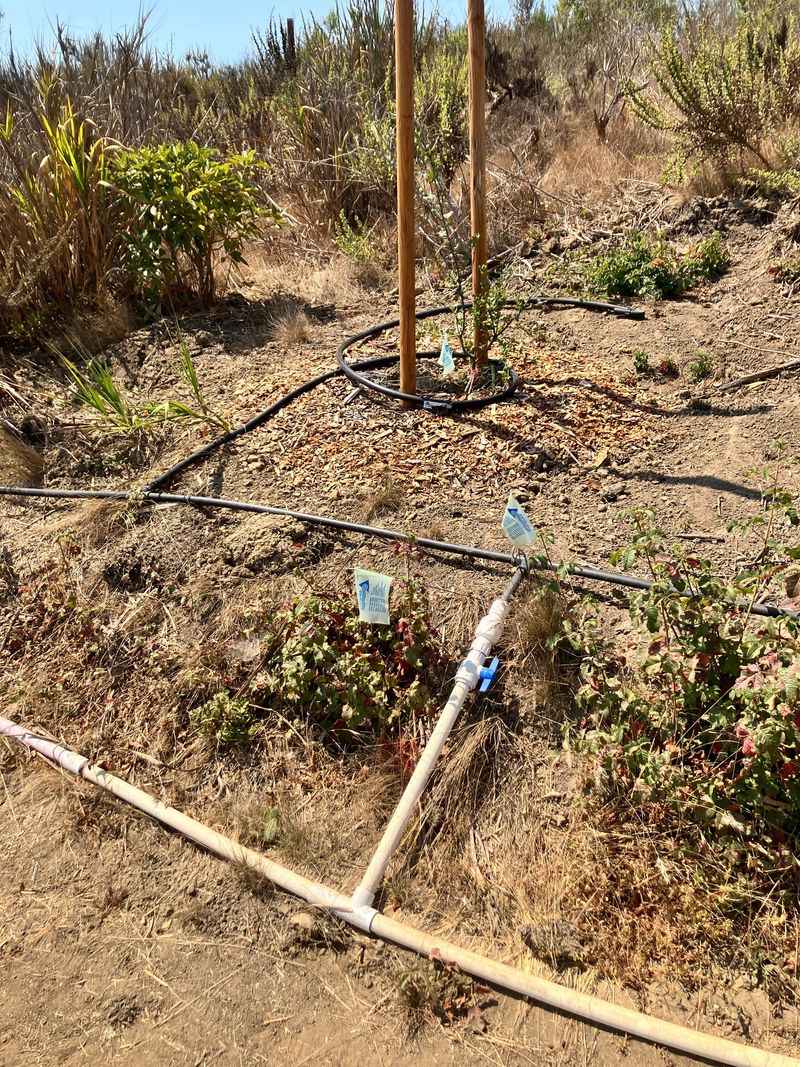
The single most useful thing you can do for your persimmon tree right now costs nothing: stick your finger or a soil probe a few inches into the ground and see what you find. If the soil feels moist below the surface, hold off on irrigation.
If it feels dry several inches down, the tree likely needs water. That simple check matters more than any calendar-based schedule, because no single watering routine fits every California yard.
Persimmons need reliable moisture during active growth and while fruit is still developing. UC IPM’s guidance on water deficit and excess explains that both drought stress and overwatering can harm trees, and that the right irrigation amount depends on soil type, tree age, weather, climate zone, and the irrigation system being used.
A coastal Marin tree in clay soil behaves very differently from a young tree in a hot inland valley or a well-established tree in a Southern California landscape. Treat your situation as the baseline, not someone else’s rule of thumb.
When you do water, the goal is to wet the active root zone deeply, then allow the soil to dry somewhat before watering again. UC Sonoma Master Gardeners’ persimmon resource notes that persimmons may tolerate short dry periods once established, but that consistent irrigation during fruit development supports better production and quality.
Deep, infrequent watering encourages roots to grow downward, while frequent shallow watering keeps roots near the surface where they are more vulnerable to heat and drought.
Position irrigation under the canopy and spread it toward the drip line rather than concentrating it against the trunk. UC IPM’s landscape plant watering guidance recommends drip or low-volume systems as preferable to overhead sprinklers, which routinely wet foliage and can encourage fungal problems.
As fall temperatures cool and seasonal rains begin arriving in your part of California, ease back on supplemental irrigation to match what the tree actually needs rather than running a fixed schedule.
Protect roots from both drought and saturated soil
Correcting dry conditions by adding more water sounds logical, but too much of a correction can create a second problem that is just as damaging. Roots need both water and oxygen to function, and soil that stays saturated for extended periods deprives them of the air they require.
That combination of wet soil and stressed roots is exactly the environment that favors Phytophthora root and crown rot, a serious disease that can kill trees and is notoriously difficult to reverse once established.
UC IPM’s Phytophthora root and crown rot resource identifies poor drainage and excessive irrigation as primary risk factors. Watch for the combination of continuously wet soil alongside wilting, yellowing outside the normal seasonal pattern, or poor overall growth.
Those signs together deserve more attention than leaf color change alone. If the soil around your tree stays soggy for days after watering or rain, the drainage situation itself needs to be addressed, not just the irrigation schedule.
On the drought side, water stress during fruit development can contribute to fruit drop and reduce quality. The answer is not to alternate between bone dry and waterlogged, but to aim for consistent, moderate soil moisture that lets the root zone breathe between waterings.
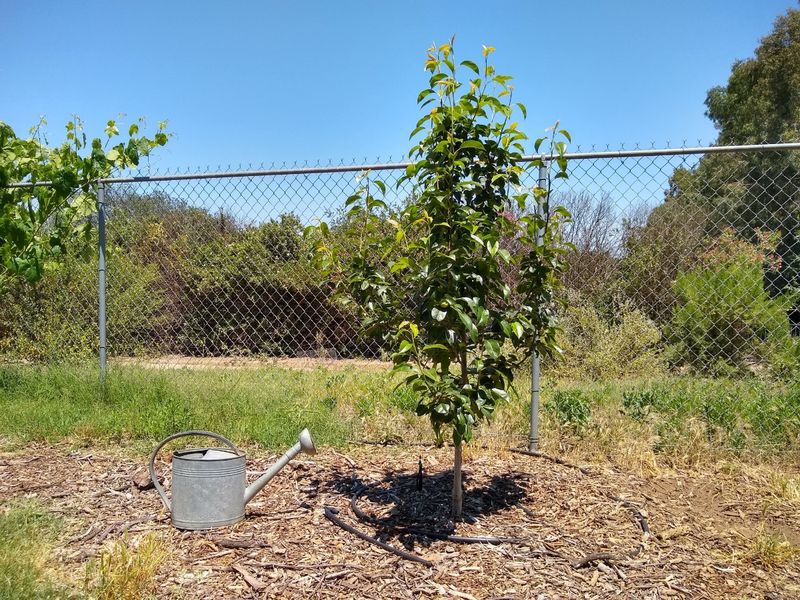
A 3- to 4-inch layer of organic mulch applied under the canopy, kept a few inches away from the trunk, helps regulate soil temperature, slow moisture loss, and reduce the swings between wet and dry that stress both roots and developing fruit.
Skip panic fertilizer and hard pruning
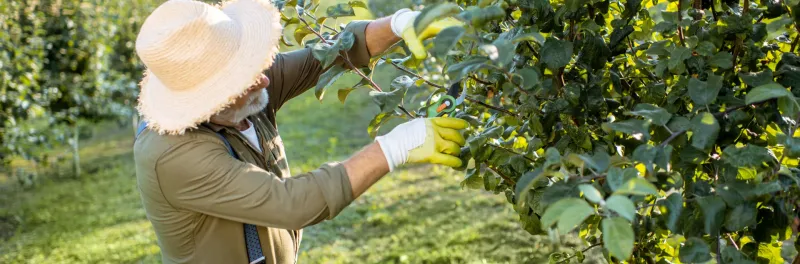
Seeing leaves turn yellow and fall can trigger two instincts that are worth resisting: reaching for fertilizer and reaching for the pruning shears. Both responses are understandable, but both can backfire when applied at the wrong time or for the wrong reason.
Seasonal leaf color is not proof of a nutrient problem. Persimmon leaves naturally shift through yellow, orange, and red as the days shorten and temperatures drop, which is a normal physiological process unrelated to soil fertility.
UC Marin Master Gardeners’ persimmon guide places routine fertilization with spring growth rather than fall color, and recommends only light application when there is genuine evidence of a nutrient shortfall, such as persistently pale foliage, weak shoot growth, or poor performance over multiple seasons. Applying extra nitrogen now can push vegetative growth at the expense of fruit and, according to UC IPM’s persimmon guidance, excess nitrogen is associated with increased fruit drop rather than a better crop.
The pruning situation is similar. Major structural cuts are best saved for full dormancy, when the bare framework of the tree is completely visible and healing conditions are favorable.
UC Marin Master Gardeners’ pruning guide for persimmon explains that persimmons fruit on new shoots and on one-year-old wood, so heading cuts made indiscriminately can remove exactly the branches that would have carried next year’s crop.
That does not mean you cannot touch the tree at all. UC Master Gardeners of San Luis Obispo County’s deciduous fruit tree guidance supports removing clearly broken, dead, or hazardous limbs when necessary, without waiting for any particular season.
Just keep any late-fall cuts limited to what genuinely needs to come off for safety or tree health, and plan the rest for when the tree is fully dormant and the structure is easy to read.
Inspect the fruit and canopy for genuine warning signs
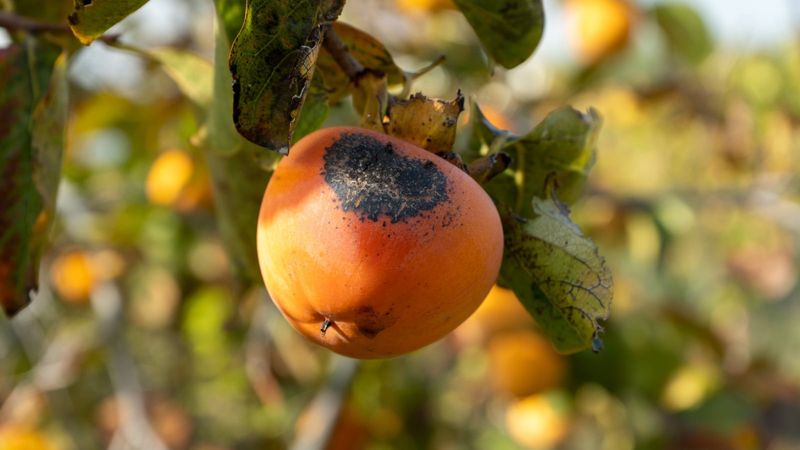
Normal leaf drop looks like a gradual progression through fall color followed by clean branch exposure, with healthy fruit still attached. What you want to watch for is anything that falls outside that pattern.
A few dropped fruit during the season can be perfectly normal, especially in spring and early summer when trees naturally thin their load. Losing most of the crop, or seeing fruit fall after a stretch of drought, extreme heat, or other weather stress, is worth investigating more carefully.
UC ANR’s Master Gardener guidance on persimmon fruit drop identifies poor watering, drainage problems, and environmental stress as more likely explanations for significant crop loss than leaf drop itself. Signs that deserve closer attention include wilting or poor overall growth alongside wet soil, rotted or discolored fruit, major leaf spotting that spreads across most of the canopy, and any combination of symptoms rather than a single isolated observation.
Leaf spots are common in persimmons and are often tolerable. UC IPM’s leaf spot disease resource notes that many home-landscape leaf spot infections do not require treatment beyond sanitation.
If you had conspicuous spotting this season, rake up and dispose of fallen leaves rather than letting them sit under the tree, and shift to drip or morning watering so foliage has time to dry. Routine fungicide application after leaf drop is generally not necessary or recommended for home trees.
For pest concerns, persimmons are relatively low-maintenance but not problem-free. UC Master Gardener of Contra Costa County’s persimmon problem resource lists scales, mites, caterpillars, and borers among documented concerns.
If you notice sticky residue, distorted growth, or bark damage, identify the specific pest before deciding on a response rather than applying a broad treatment. The fruit itself is your best indicator: healthy, well-colored, undamaged fruit on a tree with reasonable vigor is a sign the season is going well regardless of what the canopy looked like a month ago.
Harvest by cultivar, not by frost
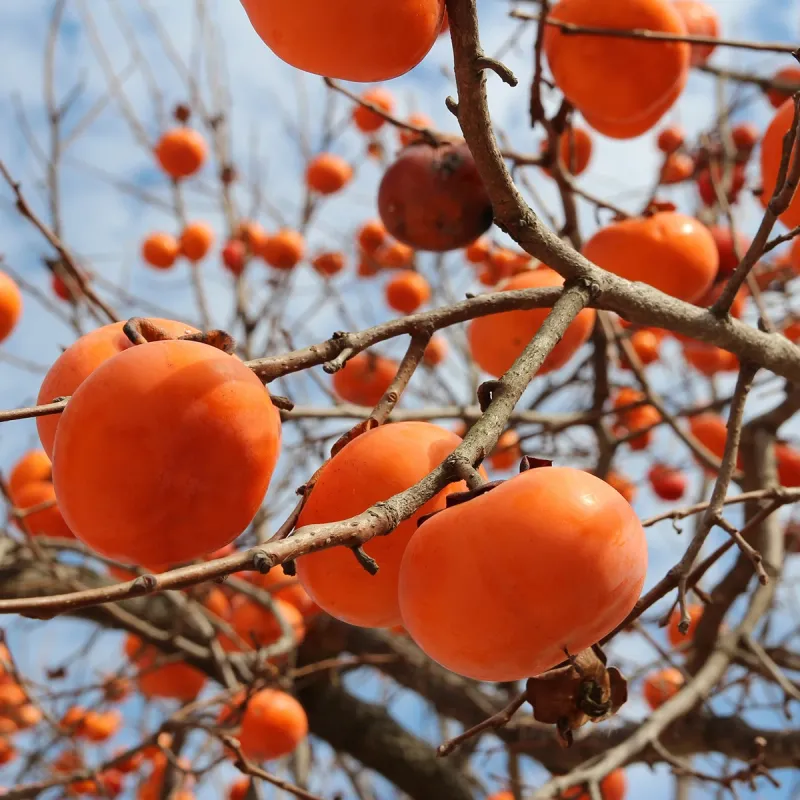
Once leaf drop has exposed the fruit, harvest timing becomes the most important thing you can get right. The biggest mistake California gardeners make here is waiting for frost, or harvesting both Fuyu and Hachiya types the same way.
These two groups need different approaches, and treating them identically can mean eating astringent fruit or leaving a ripe crop on the tree too long.
Fuyu-type persimmons, the round, squat varieties, can be harvested and eaten when they are fully colored and still firm. They are non-astringent at that stage and do not need to soften before eating.
Hachiya-type persimmons, the large acorn-shaped varieties, are intensely astringent until they soften substantially and become almost gel-like inside. Eating a Hachiya while it is firm is an unpleasant experience.
University of Georgia Cooperative Extension’s home garden persimmon guide confirms that frost is not required for either type to become edible, and that frost can actually damage immature fruit. Ripeness and cultivar type, not cold weather, determine when the fruit is ready.
Both types can continue ripening after harvest, so you do not need to leave fruit on the tree until it is perfect. UC Sonoma Master Gardeners note that harvested persimmons ripen well at room temperature.
When you pick, use clean clippers and cut the stem just above the calyx, the leafy cap at the top of the fruit. Leaving the calyx attached reduces damage and slows surface rot during handling and storage.
Pulling fruit from the branch tears the stem and makes the fruit more vulnerable to bruising and spoilage.
Protect ripening fruit from birds safely
Birds discover ripe persimmon fruit quickly, and a tree full of exposed orange fruit after leaf drop is especially visible to them. If wildlife damage has been a problem in previous seasons, this is the time to act, before significant pecking begins rather than after.
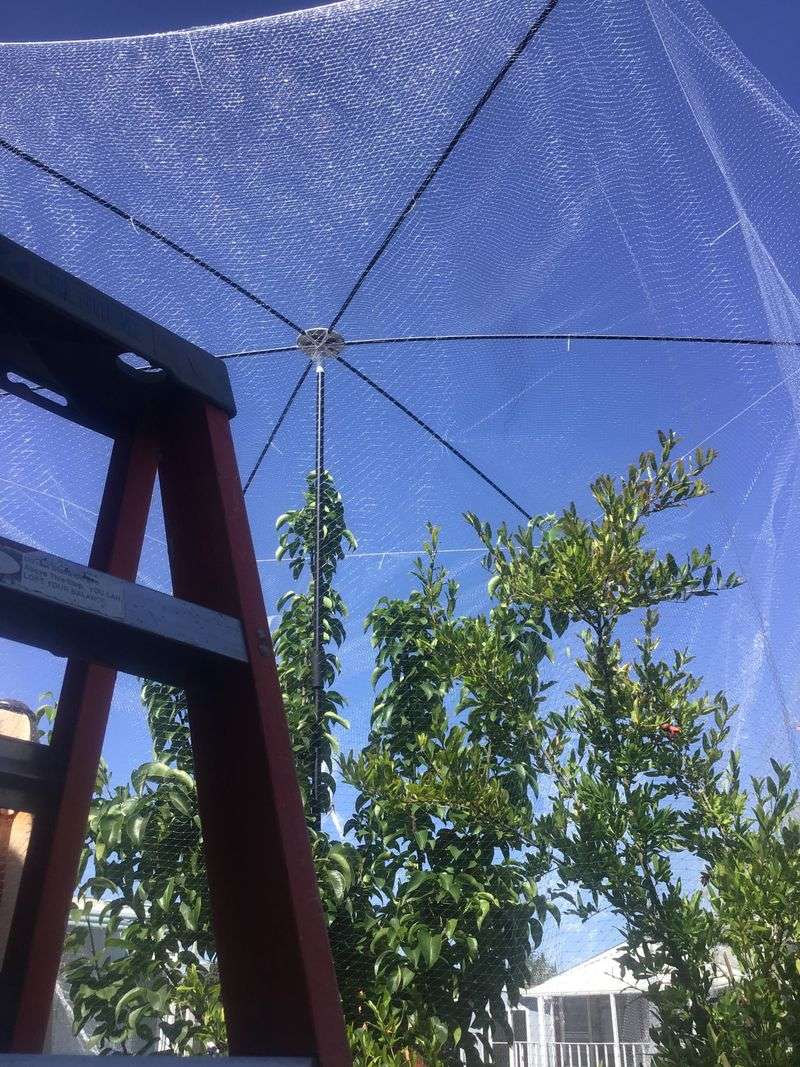
The most effective physical barrier is netting installed correctly. UC IPM’s guidance on birds in tree fruits and vines recommends supporting netting on a frame rather than draping it loosely over the canopy.
A frame, made from PVC pipe, bamboo poles, or similar material, holds the mesh away from the branches so birds cannot reach through it to the fruit. Netting thrown directly over the tree without support sags into the canopy and leaves pockets and gaps where birds can reach fruit or, worse, become entangled.
UC ANR’s November persimmon harvesting tips reinforce the importance of checking the barrier regularly. Gaps open up as branches shift or as wind moves the netting, and any loose pocket becomes a trap for birds, squirrels, or other animals.
Pull the netting taut each time you check it, seal gaps along the base, and inspect after windy days or heavy rain.
Netting is not necessary for every tree or every yard. If birds have not caused significant losses in past seasons, or if the tree produces more fruit than you can use anyway, skipping netting is a reasonable choice.
When you do install it, treat the barrier as a wildlife safety measure, not just a crop protector, and commit to checking it throughout the harvest window.
Use a small late-season checklist
Keeping a persimmon tree on track through the end of the season does not require a complicated plan. A short mental checklist, run through every couple of weeks, covers most of what the tree needs right now.
Start by confirming that leaf drop looks seasonal: gradual color change followed by clean branch exposure, with fruit remaining attached. Then look at the fruit itself and the tree’s overall vigor rather than the canopy.
Check soil moisture a few inches below the surface before watering, and adjust irrigation to maintain consistent moisture without saturating the root zone. UC IPM’s water deficit and excess guidance is a useful reference for reading soil conditions across different California settings.
If leaf spots were conspicuous this season, remove affected fallen debris and switch away from overhead watering. Skip fertilizer unless the tree showed persistent pale foliage or weak growth all season, and hold major pruning until full dormancy when the branch structure is fully visible.
UC Marin Master Gardeners’ persimmon pruning guide is a reliable reference for timing those cuts correctly. Harvest Fuyu fruit when it is fully colored and firm, and wait for Hachiya fruit to soften completely before eating.
The goal through all of this is not to keep leaves on the tree. Bare branches are fine.
The goal is healthy fruit and well-protected roots heading into winter, which is exactly what a well-tended persimmon tree in California is built to deliver.