
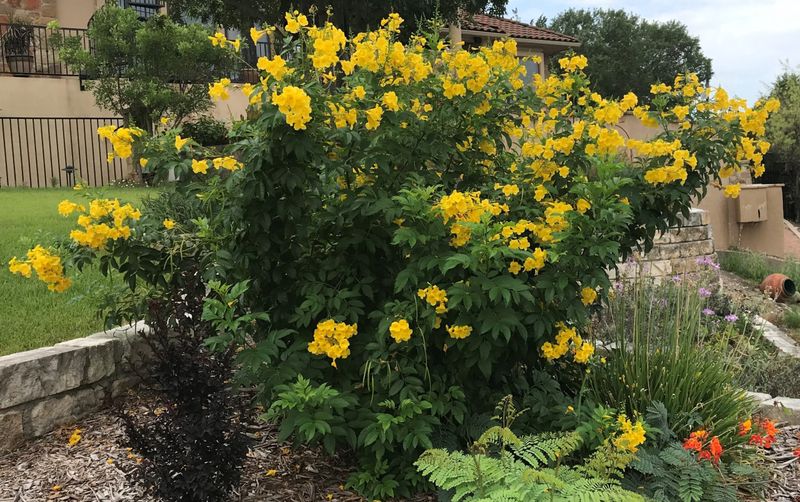
August in Texas is no joke for any plant, and your esperanza is no exception. The good news is that Tecoma stans, especially the popular ‘Gold Star’ selection, is built for heat, and with steady maintenance you can give it a real chance of flowering right up until the first frost. Getting there does not require aggressive intervention, just smart, consistent care during the hottest stretch of the year.
October flowers depend on the esperanza you grow
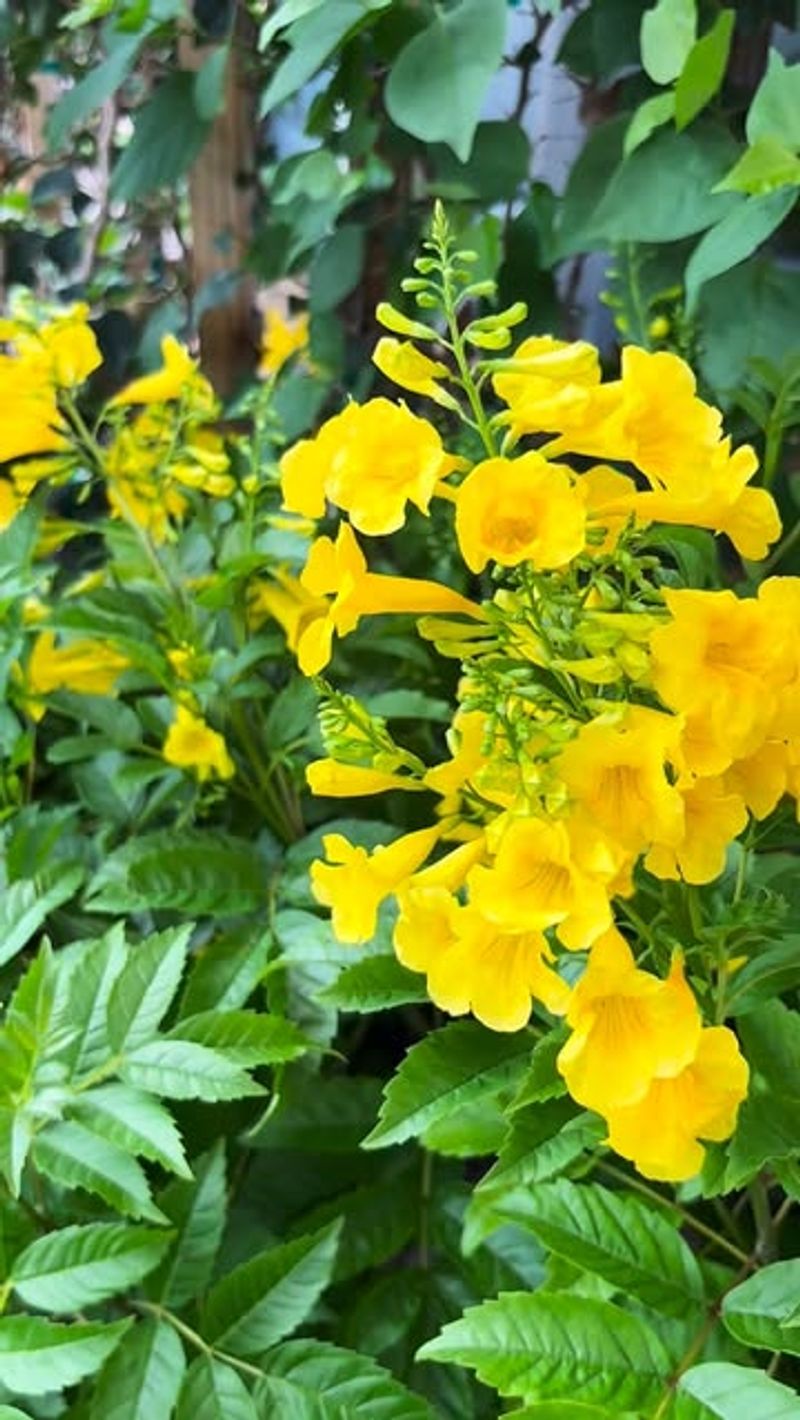
Before any August care routine makes sense, it helps to know exactly what is growing in your yard. “Esperanza” is a common name that gets applied loosely, but the plant most Texas gardeners are working with is Tecoma stans, a subtropical species native to Texas and the Americas. Within that species, selections vary considerably in cold tolerance, mature size, and how reliably they return as perennials. The cultivar that has the most consistent track record in Central Texas is ‘Gold Star,’ a compact selection that Texas A&M AgriLife Extension’s Travis County office describes as a Texas Superstar plant, typically reaching about 4 to 5 feet tall and wide, and reliably perennial in USDA Zone 9.
The flowering window that makes October feel achievable is real: ‘Gold Star’ can bloom from early summer until the first frost under favorable conditions. That endpoint is frost, not a fixed date on the calendar. A warm fall in Austin or San Antonio may keep flowers going well into October or beyond, while an early cold snap can cut the season short regardless of how well you watered in August.
Not every esperanza in Texas carries the same promise. Less cold-tolerant selections, plants growing in colder North Texas locations, or specimens in containers exposed to freezing air from multiple sides may experience dieback or stop flowering earlier than a well-established ‘Gold Star’ in a protected Central Texas bed. Texas A&M’s Bexar County Extension notes that some forms are better treated as annuals or tender perennials outside their suitable zones.
Before following any care guidance, confirm what you have. If you purchased a named ‘Gold Star’ selection and you garden in Zone 8b or 9, the October goal is plausible. If you are working with an unlabeled plant in a colder zone or a container that sees full exposure, calibrate your expectations accordingly. The North Carolina Extension Gardener Plant Toolbox confirms flowering from spring until frost, but that range reflects a plant in suitable conditions, not a universal guarantee for every Texas garden.
Read the root zone before you reach for the hose
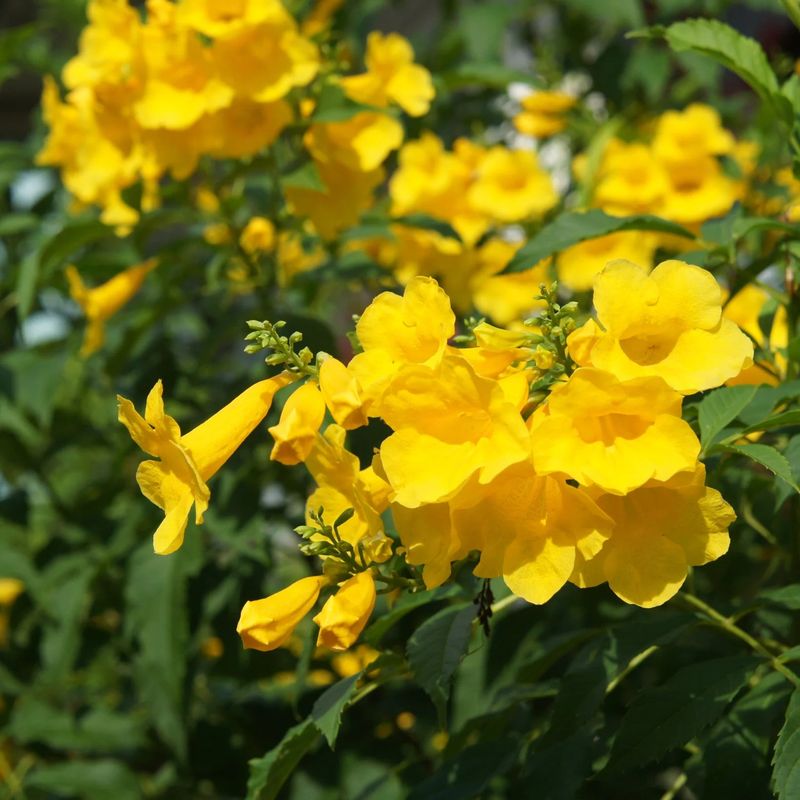
Moisture management is the single most consequential August task for an actively blooming esperanza. The instinct to water more during extreme heat is understandable, but watering too often, especially in shallow, frequent bursts, can be just as problematic as neglect. The goal is to wet the root zone slowly and deeply when it begins to dry, then allow it to dry somewhat before watering again.
A practical way to gauge timing is to push a finger or a thin soil probe 4 to 6 inches into the ground near the drip line of the shrub. If the soil at that depth feels dry or barely damp, it is time to water. If it still feels moist, wait and check again in a day or two. University of Arizona Cooperative Extension guidance on watering trees and shrubs supports this hand-check approach over fixed calendar schedules, noting that shrub roots commonly occupy roughly the upper 12 to 14 inches of soil, though actual depth varies by species and site.
Soil type shapes how quickly that root zone dries. Sandy Texas soils drain fast and may need more frequent attention, while heavy clay can hold moisture longer and even stay wet enough to harm roots during hot weather if drainage is poor. Established shrubs in well-draining beds generally need less frequent monitoring than newly planted or container-grown plants.
Recent transplants and containers deserve closer attention throughout August. Texas A&M AgriLife Extension notes that late-summer transplants require consistent moisture while their restricted root systems establish, but also warns that saturated soil can lead to root rot. Containers generally dry faster than landscape beds, so check them more often.
One common misconception is that “drought-tolerant” means you can skip irrigation entirely during peak heat. University of Arizona’s drought and extreme heat guidance makes clear that even tough, adapted plants benefit from monitored moisture during prolonged heat, particularly when they are actively growing and flowering. Abandoning irrigation in August is not a strategy; steady, responsive watering is.
Use mulch to steady the root environment
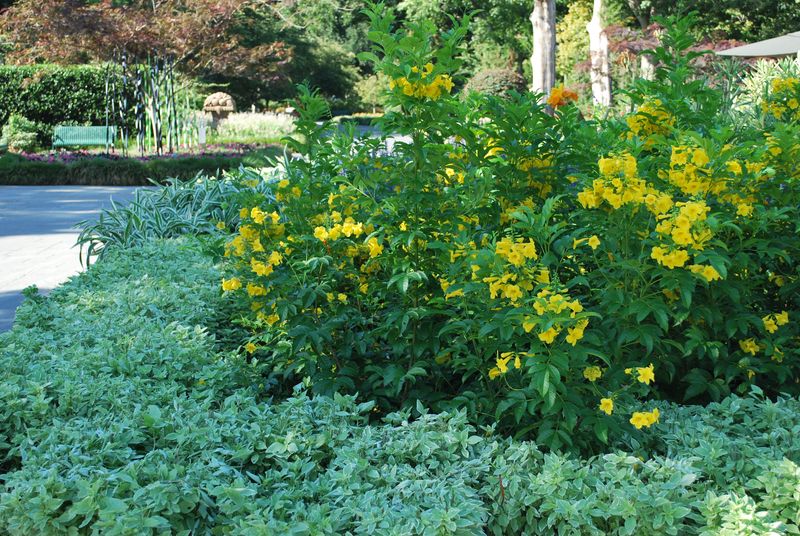
Mulch does one of the most underappreciated jobs in an August Texas garden: it slows the rate at which the soil dries out and buffers the root zone against the temperature swings that come with triple-digit heat and relentless dry wind. For an esperanza trying to stay in flower through the hottest stretch of the year, a well-maintained mulch layer is quiet but meaningful support.
Texas A&M AgriLife Extension’s mulching guidance identifies mulch as especially useful in Texas heat and identifies roughly 3 to 4 inches as a practical depth for shrubs in landscape beds. Keep the mulch from piling against the plant’s base or stem, which can trap moisture against the crown and invite rot or pest problems. Pull it back a few inches from the trunk or main stems and spread it out to the drip line instead.
Organic mulches such as shredded hardwood, pine bark, or wood chips break down over time and improve soil structure, but they also compact and thin out. Check the depth periodically through August and top it off if it has dropped below 2 inches. Maintaining that layer consistently matters more than the exact material you choose.
Two things mulch cannot do: it cannot correct poor drainage, and it does not replace the need to check soil moisture. If your bed drains poorly and water pools after rain or irrigation, mulch will not solve that underlying problem. Think of it as a tool that makes your watering more efficient and your root zone more stable, not as a substitute for either good drainage or attentive moisture management.
Remove spent clusters, not the canopy
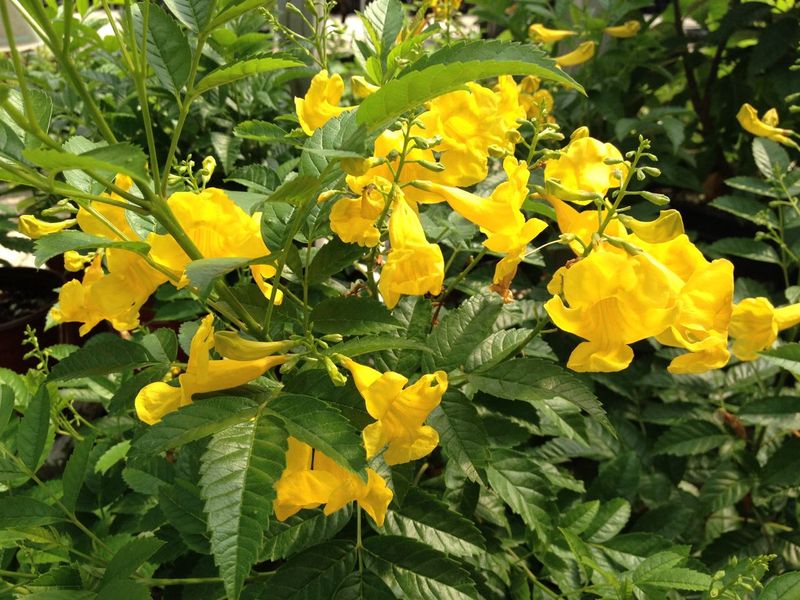
Spent flower clusters and developing seedpods are worth removing when you can reach them easily. North Carolina Extension notes that deadheading may help prolong blooming on Tecoma stans, and Texas A&M’s Bexar County Extension specifically recommends removing seedpods from ‘Gold Star’ to keep flowers producing. That said, “may help” is the honest framing here. Removing old flower clusters redirects the plant’s energy away from seed production, which can encourage additional flowering, but it does not guarantee blooms through October.
Frost, cultivar, plant health, and regional conditions remain the deciding factors.
The practical method is straightforward: pinch or snip off spent flower clusters at their base where they attach to the stem, and remove any elongated seedpods that have formed below the flowers. You do not need to cut back into the green, leafy growth to accomplish this. The goal is targeted removal of spent reproductive material, not reshaping the shrub.
Where gardeners sometimes go wrong in August is confusing deadheading with rejuvenation pruning. Cutting the entire shrub back by a third or more to stimulate a new flush of growth is a different and riskier action during peak summer heat. University of Arizona’s extreme heat guidance explains that removing significant canopy during drought and excessive heat can expose stems to sunscald, reduce the plant’s ability to photosynthesize, and push vulnerable new growth at a time when the plant is already under thermal stress.
During August, limit any cuts beyond deadheading to wood that is clearly dead, diseased, broken, or poses a physical hazard. University of Arizona pruning guidance for shrubs recommends working with the plant’s natural form and reserving routine size and shape control for a cooler, more appropriate period, typically after the main flowering season concludes in fall. Esperanza generally tolerates hard pruning well, but August is not the right window for it.
Do not use August fertilizer as a routine bloom booster
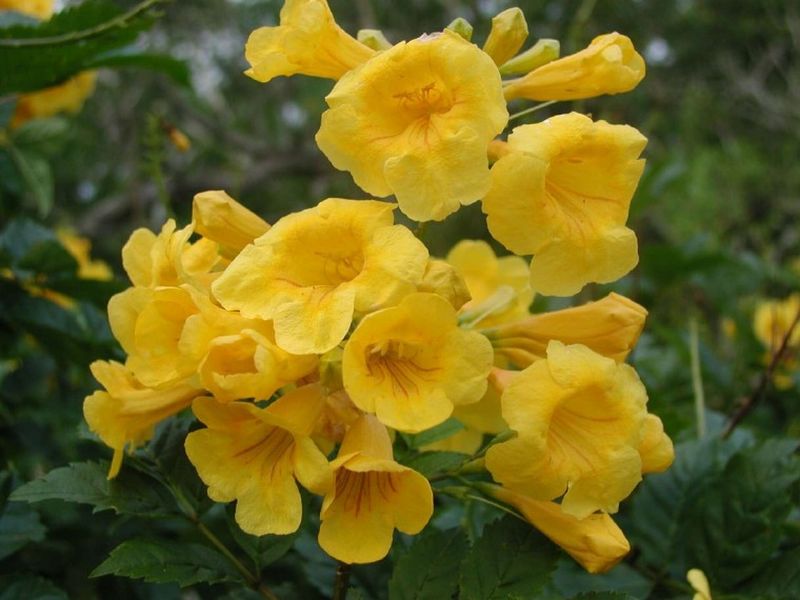
The impulse to push more flowers out of an esperanza with a dose of bloom-booster fertilizer is common, but peak August heat is a poor time to act on it. The core problem is moisture. When Texas soils are hot and dry, fertilizer salts concentrate near roots rather than dissolving evenly into the soil solution. That concentration can pull water out of root tissue rather than delivering nutrients, effectively burning or dehydrating the very roots you are trying to support.
Texas A&M AgriLife Extension’s guidance on fertilizing woody ornamentals warns against fertilizing when soil moisture is limited and cautions that late-summer timing varies by region. What may be appropriate in South Texas, where the growing season is longer and winters are mild, can stimulate tender new growth in Central or North Texas that then becomes vulnerable to early freeze damage. That distinction matters for esperanza growers across different parts of the state.
High-phosphorus “bloom booster” fertilizers are sometimes marketed as a way to force more flowers, but no reviewed extension source supports that approach as a default strategy for established esperanza. Phosphorus applications are most useful when a soil test confirms a deficiency, not as a routine addition during heat stress. Over-fertilizing with phosphorus can also interfere with the uptake of other nutrients.
University of Arizona’s drought and extreme heat landscape guidance recommends minimizing or skipping fertilizer applications during periods of excessive heat and drought. If you believe your plant has a genuine nutrient deficiency based on visible symptoms, consult your local Texas A&M AgriLife Extension office for region-specific timing and product recommendations, and always follow the product label. Feeding a plant that is already stressed by heat rarely produces the flowering response gardeners hope for.
Investigate damaged leaves before treating the plant
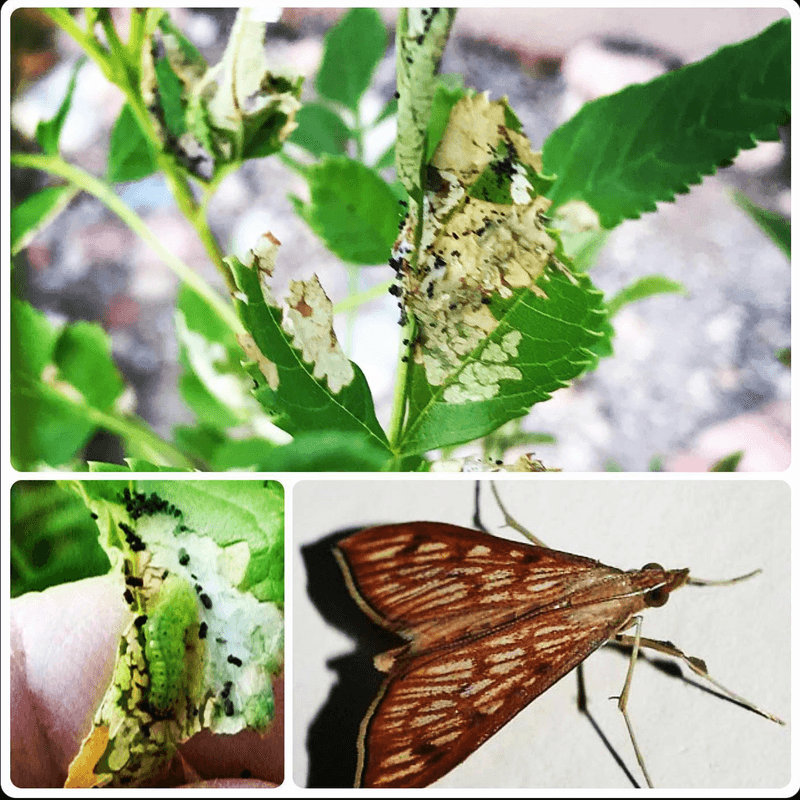
Folded leaves, webbing, pale or tan patches, or skeletonized foliage on your esperanza during August are worth a close look before you reach for any spray. These symptoms can have more than one cause, and treating without identification risks applying the wrong product, harming beneficial insects, or spending money on a problem that does not require chemical intervention at all.
One recurring culprit on Tecoma stans is the Tecoma leaf tier, a caterpillar that folds or rolls leaves together with silk webbing and feeds inside the shelter it creates. A University of Arizona Cooperative Extension garden and landscape newsletter identifies the Tecoma leaf tier as a pest that can cause leaves to appear tan or skeletonized and notes that it can affect a substantial portion of the foliage. The description of symptoms is useful for narrowing down the cause, but it does not automatically justify insecticide use.
Before deciding on any treatment, open a few of the folded or webbed leaves and look for caterpillars or other insects inside. Check whether the damage is spreading or stable. Consider whether the plant is otherwise healthy, still flowering, and showing signs of active growth. A plant that loses some leaf area to leaf-tier activity in August may recover without intervention, particularly if the damage is localized.
If treatment does seem warranted after identification, choose a product labeled for the specific pest and follow the label directions precisely. Blanket insecticide applications without a confirmed cause are not supported by extension guidance and can disrupt the natural predators and parasitoids that help keep pest populations in check. When in doubt, bring a sample to your county extension office for identification before acting.
Let local weather decide how long flowering lasts
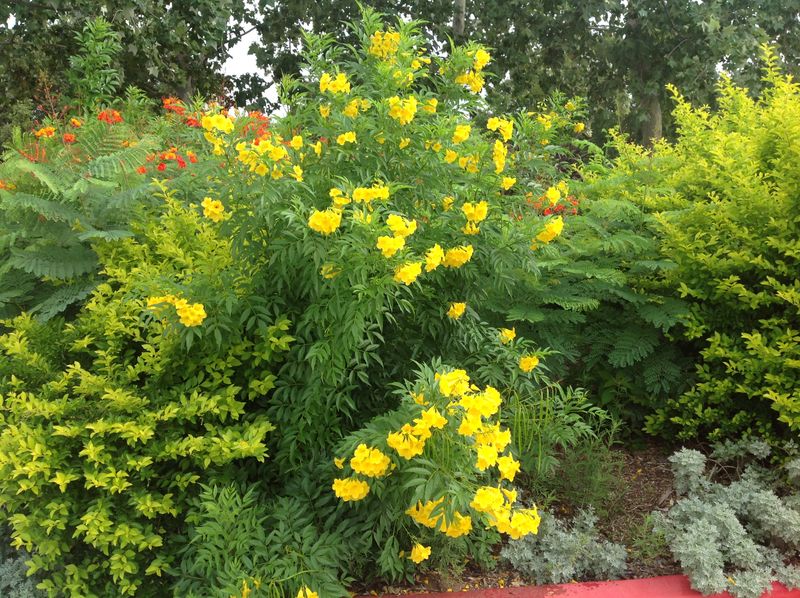
Steady August maintenance, full sun, adequate but not excessive moisture, a protected root zone, and light flower cleanup create favorable conditions for an esperanza that is already actively growing. Those are the levers you can actually control. Together, they give a healthy, well-sited plant its best realistic chance of staying in flower through September and into October.
What August care cannot control is the list of variables that ultimately determine how long flowering lasts. Cultivar and cold tolerance matter: Texas A&M’s Travis County Extension describes ‘Gold Star’ as flowering until the first frost in Zone 9, but that performance does not transfer automatically to colder zones, exposed North Texas sites, or less cold-tolerant Tecoma selections. Container plants face additional risk because roots have less insulation from temperature swings. University of Florida IFAS Extension’s profile of Tecoma stans reinforces that drainage and site conditions shape the plant’s overall health and longevity.
The first freeze, not October 31, is the practical flowering endpoint. A warm fall can push blooms well past mid-October in South and Central Texas; an early cold front can end the season in late September. North Carolina Extension confirms the frost-to-frost flowering window, which means local weather forecasts matter more than any calendar-based care target. Maintain the plant, watch the forecast, and judge the season by what your specific esperanza does in your specific yard.
A plant that flowers into mid-October under a warm Texas sky is a genuine success, even if it does not reach Halloween.