
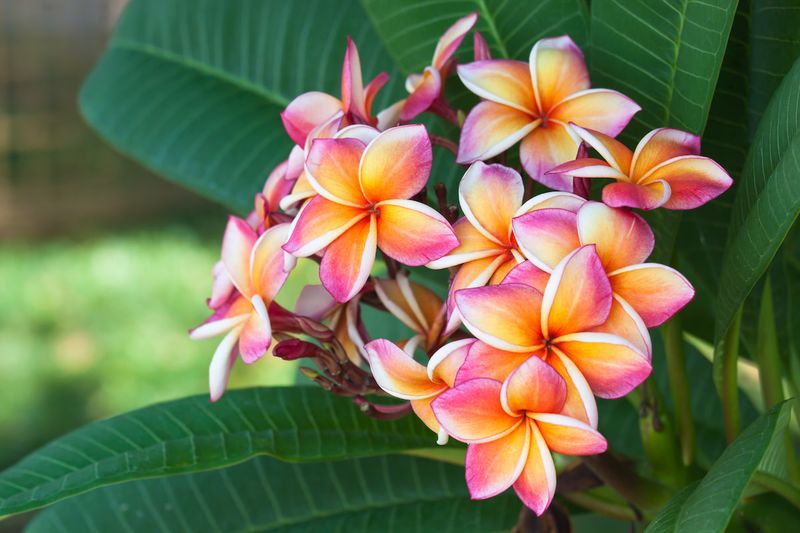
Plumeria thrives on Texas warmth and sunshine, but when brutal heat teams up with dry soil, hot wind, and poor drainage, even a healthy plant can struggle. The good news is that a short preparation window before the worst heat arrives can make a real difference in how well your plant grows and flowers.
Because this guide is written in late September 2026, the advice fits two purposes: use it now to help your plumeria recover and prepare for cooler weather, or bookmark it for next spring when the real pre-heat window opens up.
Extreme heat is a stress risk, not a plumeria deadline
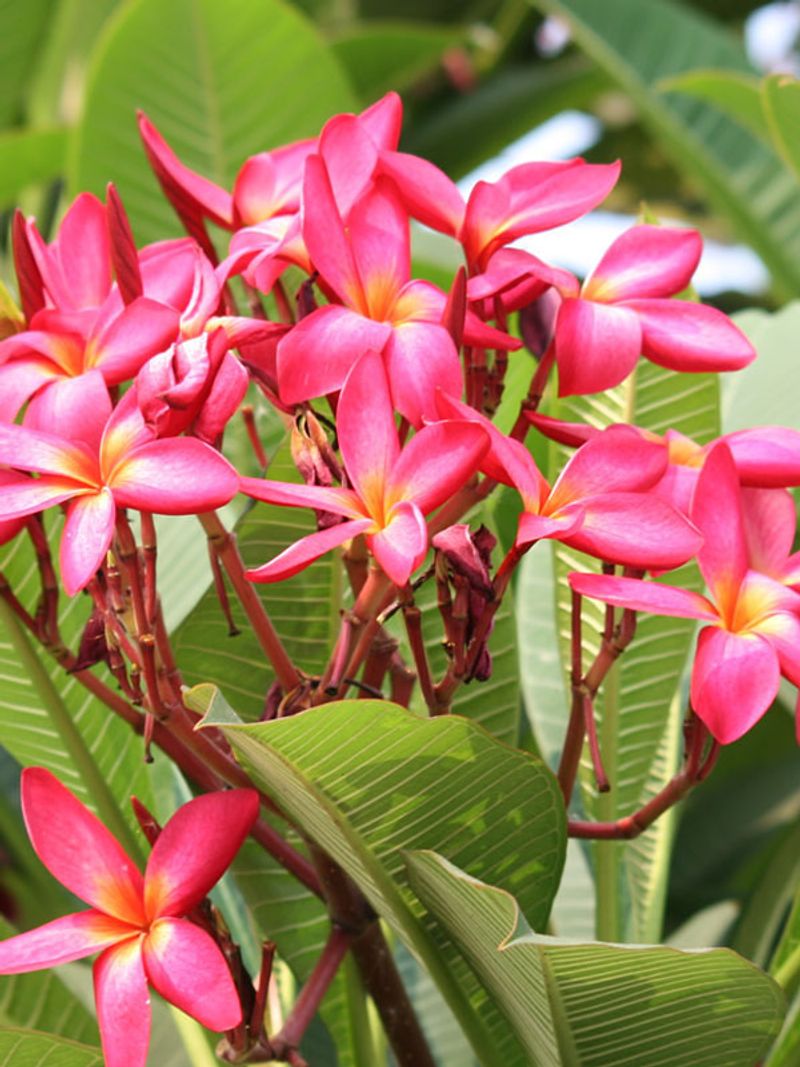
Plumeria earned its reputation as a tough tropical plant for a reason. It comes from warm, sun-drenched climates and generally welcomes heat and bright light.
No supplied evidence establishes a single temperature at which every plumeria in every Texas yard automatically slows down or stops flowering, so the title’s premise is worth reframing before any care decisions are made.
What the evidence does support is that prolonged extreme heat can raise stress when other problems are already present. UC ANR heat-garden guidance notes that extended high temperatures can increase water loss, scorch tissue, and contribute to flower drop in plants generally, particularly when drought, hot wind, or reflected heat from pavement and walls adds to the load.
The combination matters more than the thermometer reading alone.
Bexar County Extension guidance on plumeria points out that light and temperature may matter more for flowering than extra water, which signals that site conditions play a bigger role than any single intervention. An established plumeria in a well-draining spot with adequate moisture can handle serious heat.
One sitting in soggy soil, pressed against a south-facing brick wall, or crowded into a small container on a west-facing concrete patio faces a different situation entirely.
This guide treats pre-heat preparation as a way to stabilize conditions before a prolonged heat spell, not as a method that guarantees continuous blooming. Because the current date is late September 2026, the most immediate use of this advice is late-summer recovery and getting the plant ready for cooler weather.
If you are reading this in spring, the same checklist applies as a forward-looking preparation before summer heat builds.
Confirm light and exposure before the forecast turns severe
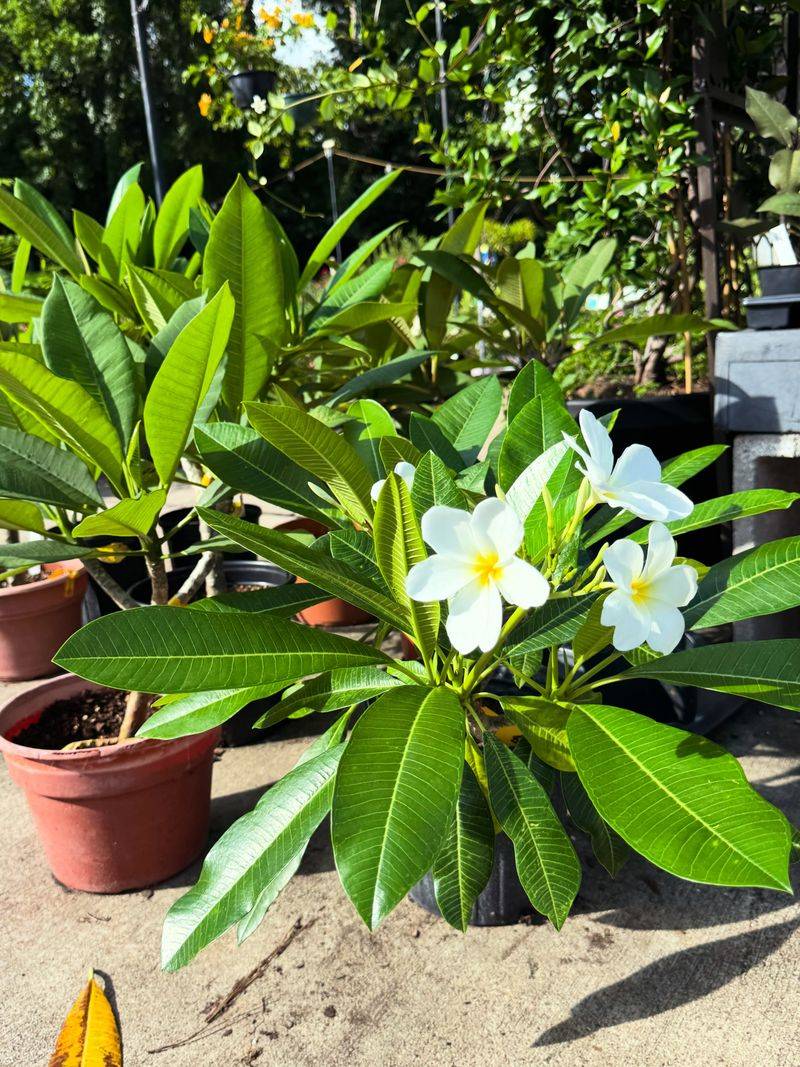
Adequate sunlight is one of the most reliable factors in plumeria flowering, and it is easy to overlook when a plant looks healthy but produces few blooms. UF/IFAS plumeria care guidance recommends full sun and well-drained soil, while Bexar County Extension adds that shaded plants set few flower buds.
Before severe heat arrives, confirm that your plant receives full sun or at least a half-day of unobstructed direct sun.
A plant that was recently purchased or moved to a new spot deserves extra attention. Sudden relocation from a shaded nursery or indoor setting to intense Texas sun can cause leaf scorch, so gradual acclimation over one to two weeks is a safer approach than an abrupt move.
Start with morning sun and filtered afternoon light, then shift the plant progressively into more direct exposure as it adjusts.
Beyond sunlight hours, think about what surrounds the plant. South- and west-facing brick walls, concrete pavement, glass windows, and metal fencing can reflect and radiate heat that raises the temperature around the plant well above the air temperature.
On exposed patios, strong dry wind pulls moisture from leaves faster than roots can replace it, adding to the stress load during a heat event. These site factors often matter as much as the temperature itself.
Make any needed site corrections during mild or moderate weather. Once extreme heat is already underway, moving a container can add transplant stress on top of heat stress, which is a combination worth avoiding.
If a location is clearly wrong but the heat is already intense, wait for a cooler stretch before repositioning the plant. A temporary shade cloth on the most punishing afternoon exposure can buy time without requiring a full move.
Fix drainage before increasing irrigation
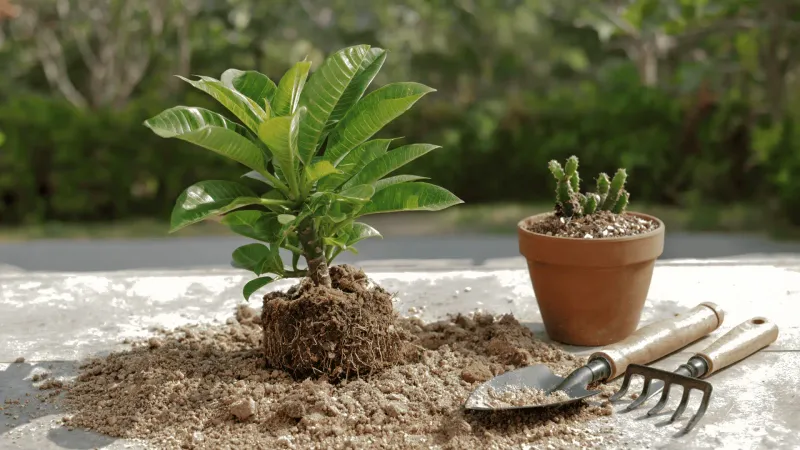
Before adjusting how much water a plumeria receives, confirm that excess water can actually leave the root zone. Roots need both moisture and air, and soil that stays saturated for extended periods can deprive roots of oxygen, leading to root loss or rot.
Missouri Botanical Garden plumeria guidance identifies well-drained soil as a core requirement and warns that overwatering is a common cause of root problems.
For container plants, the growing medium makes a significant difference. A coarse, fast-draining mix, such as a cactus or succulent blend amended with perlite, allows water to move through quickly while still holding enough moisture for the roots.
Check that every container has at least one open drainage hole and that the hole is not blocked by compacted soil or a saucer sitting flush against the bottom. Elevating the pot slightly on pot feet or a small stand allows drainage to flow freely.
In-ground plants need a different check. If water pools around the base after irrigation or rain and takes more than an hour to drain, the soil structure or planting site may be contributing to drainage problems.
Raised planting beds, amended soil, or relocating the plant to a higher spot in the landscape can help, though any major move should happen during moderate weather rather than during a heat event.
Mulch applied around the root zone, but kept a few inches away from the stem, can reduce evaporation and help moderate root-zone temperature swings during hot weather. A two- to three-inch layer of wood chip or bark mulch is a reasonable starting point.
The key distinction is between thorough watering followed by free drainage and flooding the root zone or holding it constantly wet. Avoid both extremes: prolonged severe dehydration stresses the plant, but waterlogging is at least as damaging and harder to reverse quickly.
Water according to soil and exposure, not a fixed calendar
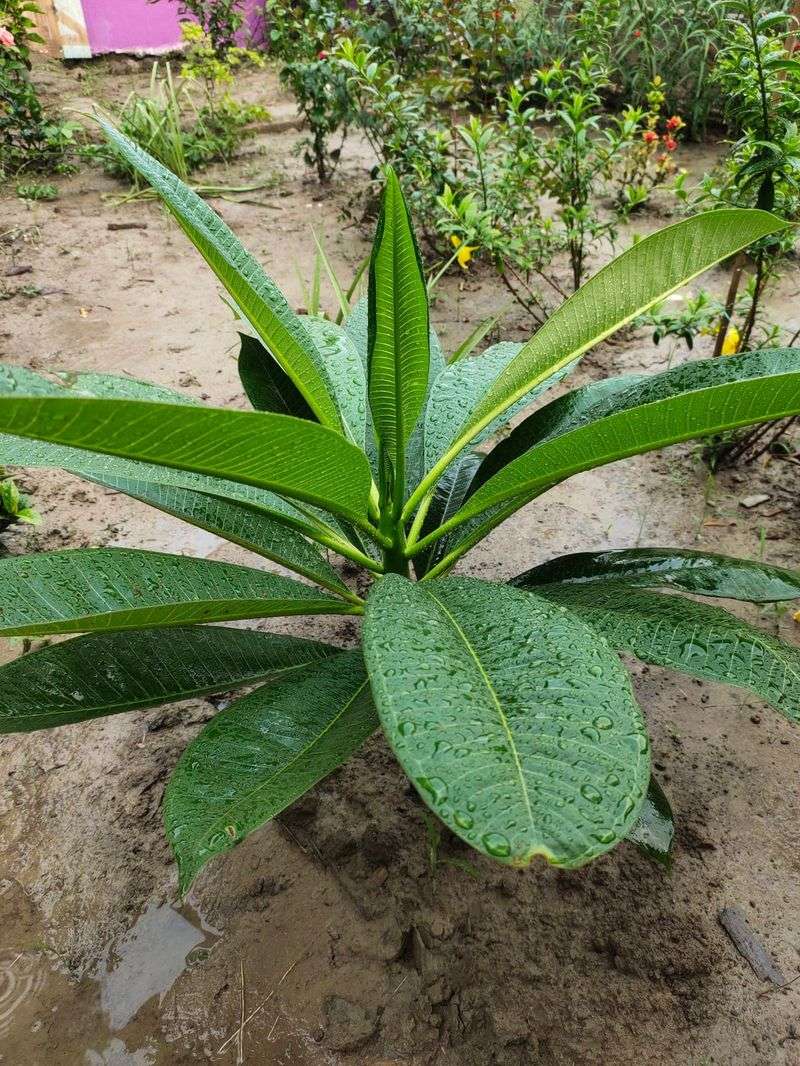
Watering plumeria on a fixed daily schedule during Texas summer sounds responsible, but it can create problems as easily as it solves them. Pot size, growing medium, plant size, sunlight, wind exposure, recent rainfall, and drainage all influence how quickly the root zone dries.
UMN Extension guidance on container plants recommends checking the growing medium rather than following a fixed schedule, because conditions change from day to day.
A practical approach is to press a finger or a wooden dowel two to three inches into the growing medium. If it comes out dry or nearly dry, water thoroughly until the excess drains freely from the bottom of the container.
If it still feels damp, wait and check again the next day. Early morning is a reasonable default time because it gives roots access to moisture before peak heat and allows any water on foliage to dry, but a visibly wilted plant should not be left without water simply because the afternoon is already hot.
Containers in exposed locations, particularly on concrete patios or against reflective walls, can dry faster and experience larger root-zone temperature swings than in-ground plants or containers in more sheltered spots. UC ANR hot-garden advice reinforces that monitoring matters more than any fixed rule in extreme conditions.
This does not mean every container heats faster than every in-ground planting, but exposed containers deserve more frequent checks during hot, dry, or windy stretches.
Standing water beneath a pot is a sign that drainage has failed or that the saucer is holding too much runoff. Empty saucers after watering and avoid leaving pots sitting in pooled water.
Established in-ground plants with healthy root systems may manage longer intervals between irrigation, but they still benefit from a check during extended heat with no rainfall.
Use the preparation window for feeding and inspection
Fertilizing a plumeria at the right time and under the right conditions can support active growth and flowering. Fertilizing at the wrong time, or into dry soil, can injure roots and set the plant back.
Feed only when the plant is actively growing, follow the product label for rate and frequency, and never apply fertilizer to bone-dry soil. Texas A&M AgriLife guidance on soil fertility warns that fertilizer salts can damage roots when soil moisture is limited, which is a real risk during dry Texas summers.
High-phosphorus fertilizers are commonly recommended for plumeria, and some growers credit them with encouraging more blooms. Phosphorus does support root development and flowering in many plants, but applying a bloom-booster formula is not a guaranteed trigger for continuous flowers.
Where soil-test information is available, let it guide nutrient decisions rather than defaulting to heavy phosphorus applications. Missouri Botanical Garden plumeria care recommends feeding during the growing season and stopping during dormancy, which aligns with the general principle of matching inputs to the plant’s active needs.
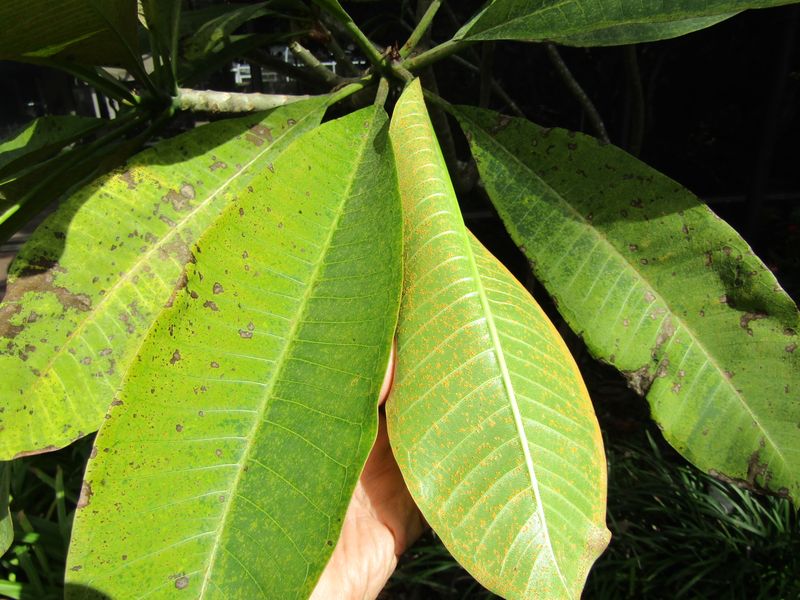
The preparation window is also a good time to inspect the plant closely. UF/IFAS plumeria guidance identifies plumeria rust as a recurring problem: look for orange or yellow-orange pustules on the undersides of leaves.
Remove and dispose of fallen infected leaves rather than leaving them on the ground, where spores can spread. Check stems and the undersides of healthy leaves for spider mites, whiteflies, mealybugs, and aphids, all of which can become more active on stressed plants.
When handling any part of the plant, wear gloves. Plumeria sap contains compounds that can irritate skin, eyes, and mucous membranes, and it should be kept away from children and pets who might chew on stems or leaves.
Wash hands thoroughly after working with the plant, even if gloves were worn. Catching pest and disease problems before the hottest weather arrives gives you more treatment options and a healthier plant going into the most demanding part of the season.
Post major moves and hard pruning until conditions improve
Transplanting, propagating, and major root disturbance are best saved for moderate weather. Iowa State Extension guidance on managing gardens in extreme heat advises postponing these operations during heat events because they add stress at a time when the plant is already losing water quickly and working hard to maintain basic functions.
A cutting taken or a plant moved during a heat event faces a much harder recovery than one handled during mild spring or fall conditions.
Hard pruning is also a poor default response to heat stress or a disappointing bloom season. Green leaves on a stressed plant are still working: they shade stems, support photosynthesis, and help the plant sustain itself through a difficult period.
Removing large portions of the canopy during or after extreme heat strips away that buffer. Oregon State Extension post-heat-wave care guidance recommends avoiding hard pruning immediately after heat damage for this reason.
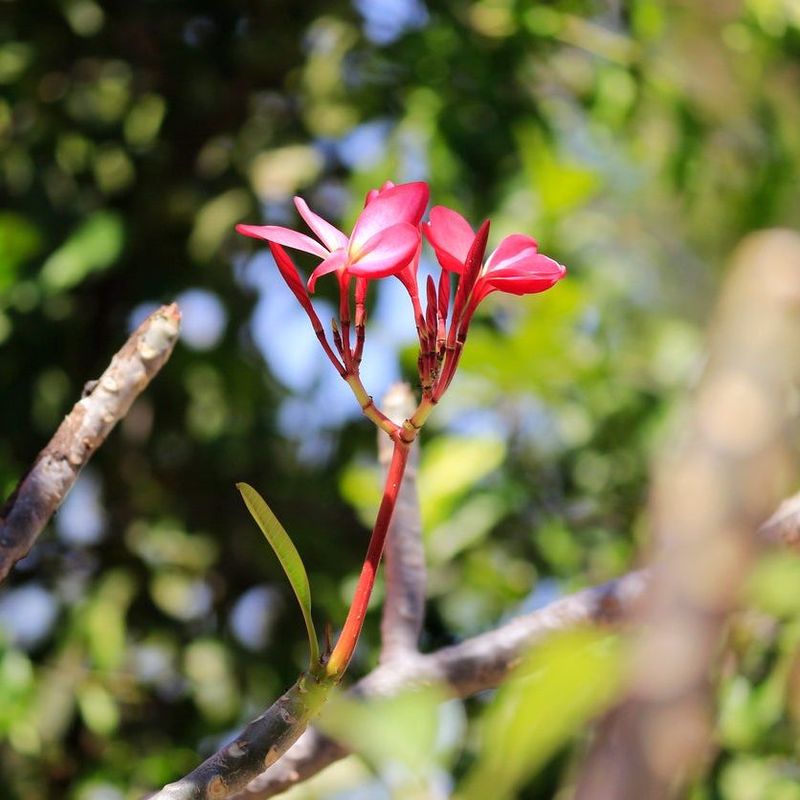
There is also a bloom consideration. University of Hawaii Cooperative Extension plumeria research notes that flowers form at branch tips, and heavy cuts remove the growing points where future flower clusters develop.
This means aggressive pruning, even with good intentions, can reduce the number of bloom sites available for the next flowering cycle. The practical limit for routine pruning is dead, damaged, or clearly diseased wood, unless the specific cultivar’s pruning schedule and growth habit are well understood.
For container-grown plants on exposed patios, stability matters too. Penn State Extension notes on plumeria point out that plumerias can be shallow-rooted and top-heavy, making them vulnerable to tipping and branch damage during storms or strong wind.
A stable, sheltered position reduces that risk without requiring a full site change. If a container must be moved for safety, choose a spot with similar light exposure to avoid compounding heat stress with a sudden environmental shift.
Interpret symptoms within Texas’s seasonal limits
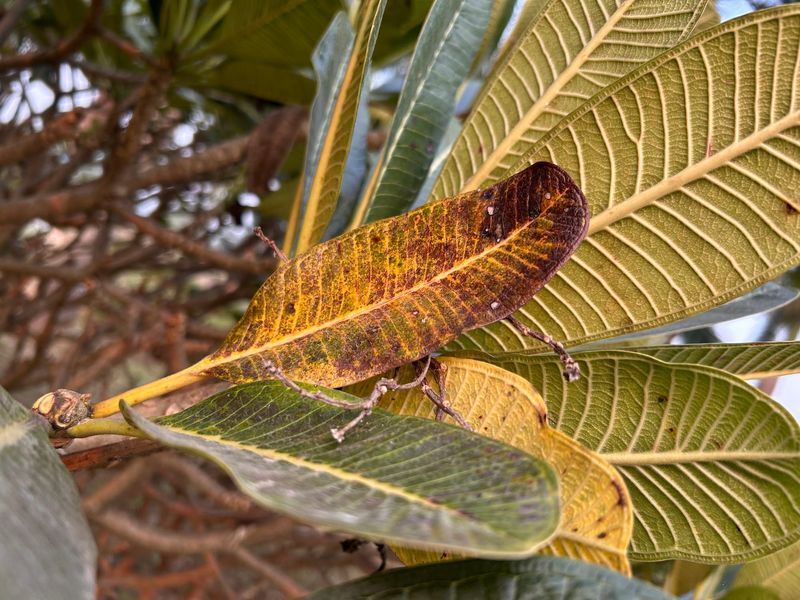
Leaf drop on a plumeria does not automatically signal a crisis. The plant may shed older leaves as part of normal seasonal dormancy, particularly as temperatures begin to shift in late summer and fall.
Context matters: a few yellowing leaves at the base of healthy stems during a dry stretch is a different situation from sudden widespread defoliation paired with soft, mushy stems or roots that smell foul. The second scenario warrants a closer look at drainage, root health, and whether overwatering or rot has become a problem.
Other symptoms worth investigating include severe leaf scorch that covers large portions of the canopy, persistent wilting that does not improve after watering, or stems that feel spongy rather than firm. UF/IFAS plumeria guidance notes that plumeria can regenerate after some damage, but severe injury from cold, rot, or other causes may be harder to reverse.
Catching problems early improves the odds of recovery.
Texas is not a single climate, and care timing shifts depending on where a plant is growing. Local exposure, wind patterns, winter freeze risk, soil type, and the difference between a container on a Gulf Coast patio and an in-ground specimen in Central or North Texas all affect what the plant needs and when.
Bexar County Extension plumeria resources reflect South-Central Texas conditions, but gardeners in other parts of the state should factor in their local frost dates and microclimate before applying any general schedule.
Summer preparation does not replace a winter-protection plan. Plumeria is tropical and cold-sensitive, best suited to the warmest parts of Texas without additional protection.
Gardeners outside those zones need a plan for moving containers indoors or covering in-ground plants before the first freeze. Solid preparation through the warm season supports healthier growth and a better shot at flowering, but the plant’s long-term success depends on getting both the heat and the cold seasons right.
A plant that sails through summer and freezes in November has not been fully served by its gardener.