
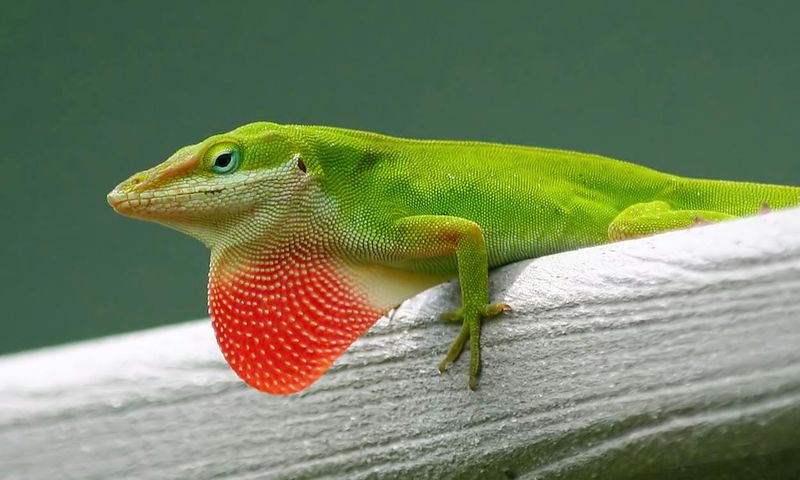
Spotting a green anole on your fence post or clinging to a shrub is one of those small backyard moments that can mean more than it first appears. These quick little lizards are native to the eastern third of Texas and are a familiar sight around Austin, yet many homeowners still wonder what it means when they suddenly seem to be everywhere.
A yard that supports several green anoles may be offering something those lizards genuinely need, though that signal comes with some important limits. Understanding what anoles are telling you, and what they are not, can help you make smarter decisions about your yard.
Identify the green anoles in your yard
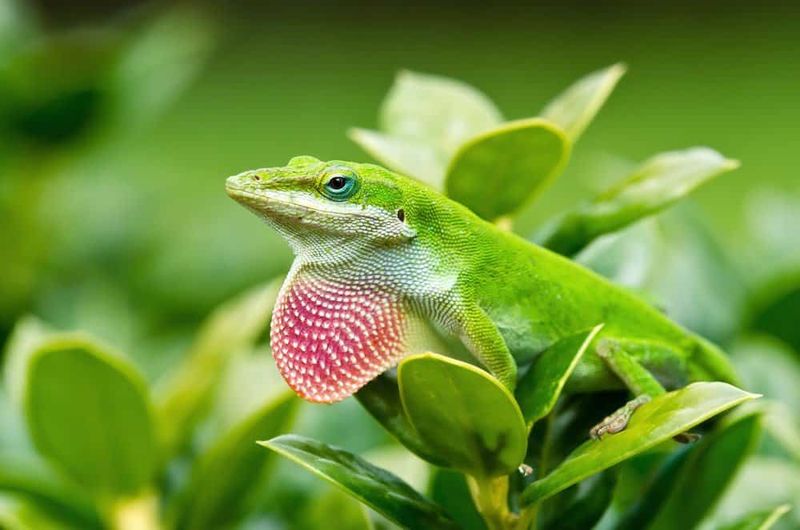
Green anoles are native Texas lizards, not exotic imports, and Texas Parks and Wildlife confirms they range through the eastern third of the state and are well documented in the Austin area. They belong to the same genus as many Caribbean species but are their own distinct animal, and they are not true chameleons despite the nickname many Texans give them.
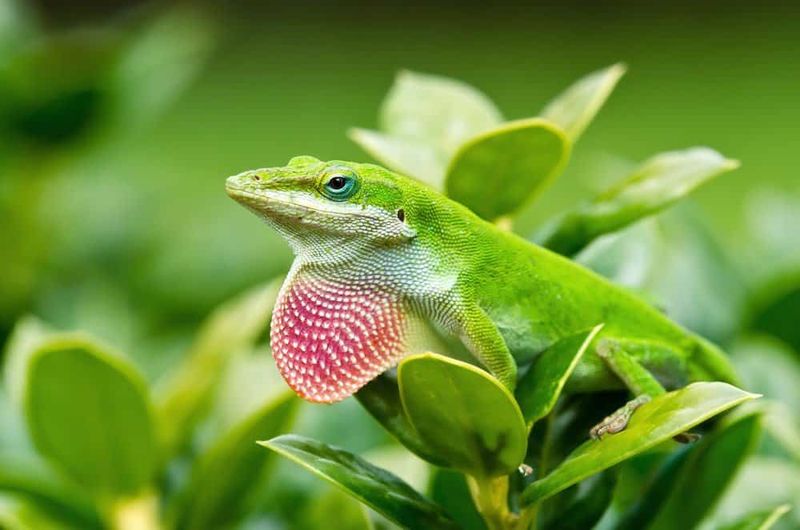
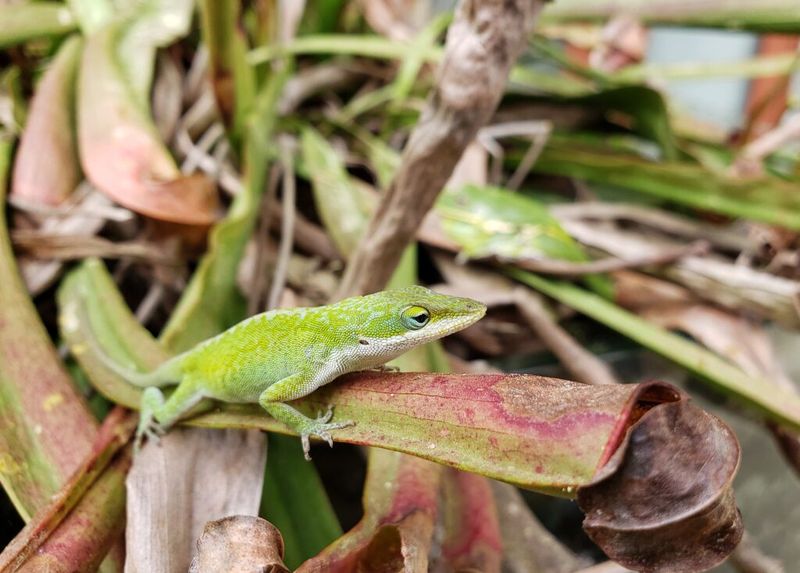
One thing that trips up a lot of gardeners is color. A green anole can shift from bright emerald to a dull gray-brown depending on temperature, stress, or the surface it is resting on.
That color change does not mean you are looking at a different species, and color alone is not a reliable way to tell a green anole from other lizards sharing your yard.
Around the house, these lizards favor elevated spots: shrubs, vines, tree trunks, fences, and walls are all typical perch locations. The Savannah River Ecology Laboratory notes they are active during the day in warm weather and hunt a broad range of insects, spiders, and other small invertebrates.
You are most likely to notice them from late spring through early fall, when activity peaks and territorial males display their pink dewlap throat fans to rivals and potential mates.
The University of Texas Biodiversity Center highlights the green anole as a recognizable part of local backyard wildlife, which means Central Texas gardeners are well positioned to watch them closely. Knowing what you are actually looking at is the first step before drawing any conclusions about what their presence says about your yard.
Treat anole abundance as a habitat clue
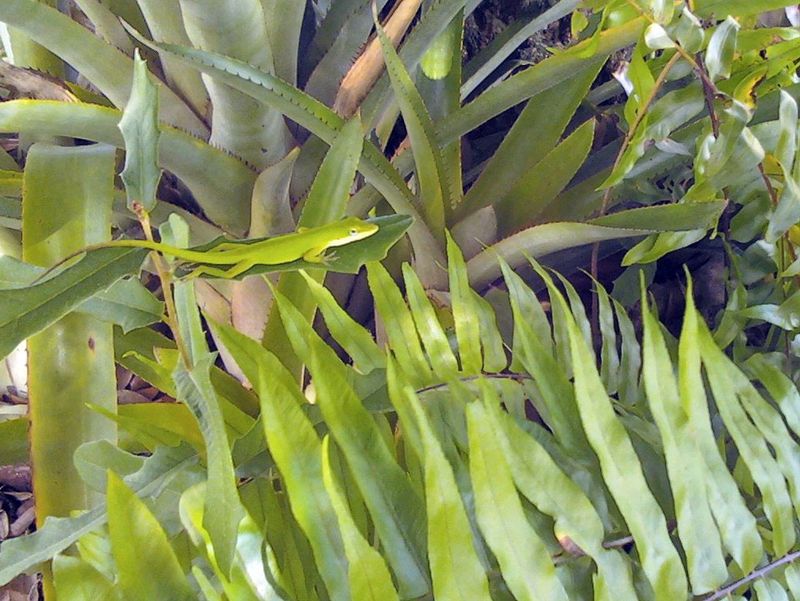
Seeing several green anoles in your yard at once is worth paying attention to, but the right frame for that observation is a habitat clue rather than a confirmed ecological report card. Many anoles may suggest that your yard offers some combination of cover, vertical structure, a suitable microclimate, and enough small invertebrate prey to support them.
That is a useful signal, even if it is a broad one.
The research backing this interpretation comes from Texas, though the geographic details matter. A U.S.
Forest Service habitat study in eastern Texas open pine forests found that green-anole populations were estimated at roughly 16 times higher in a plot with denser shrubs compared to a plot with lower shrub density. That is a striking result, but the setting was a managed pine forest in east Texas, not a Central Texas residential yard.
Applying that finding to your Austin-area garden is a reasonable and plausible inference, not a demonstrated regional rule.
Additional Texas evidence comes from the Austin area and from a study conducted in Gonzales, Texas, where researchers examined green anole prey availability and habitat conditions in a working Texas landscape. These sources support the general idea that habitat quality influences anole presence, but none of them establish a simple formula for Central Texas yards.
Texas Parks and Wildlife describes greenery, occasional shade, and moist conditions as important habitat features for the species. Taken together, the Texas evidence supports treating a visible anole population as a positive but non-diagnostic sign that parts of your yard provide usable structure, not as proof that the entire yard is functioning well ecologically.
Dense shrubs provide the clearest habitat signal
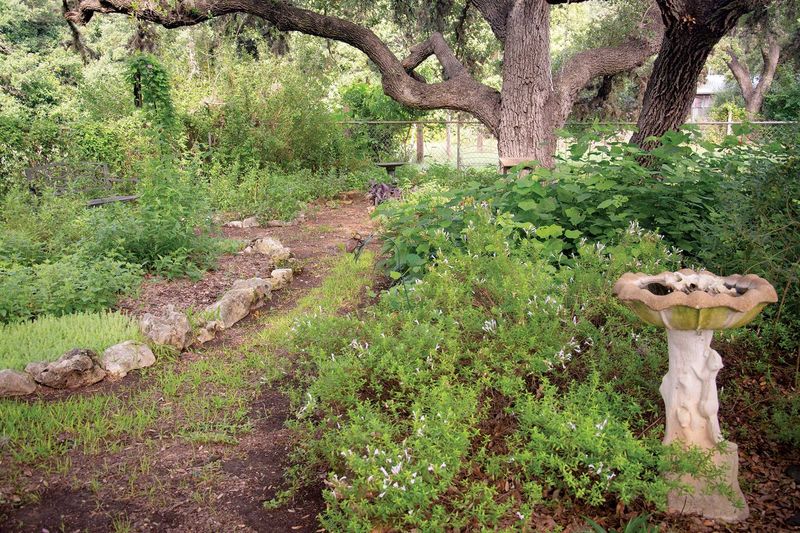
Among all the yard features that might support green anoles, dense shrubs stand out as the most directly supported by research. The eastern Texas Forest Service study did not just find more anoles in shrubby plots; it also found that anoles actively selected shrubs that were substantially larger than the average shrub volume available across the study area.
They were not using whatever happened to be nearby. They were choosing the biggest, densest vegetation on offer.
For a Central Texas gardener, that finding translates into a practical priority: if you want to support green anoles, dense shrubs matter more than a large number of small or sparse plants. A yard with several thick, well-established shrubs is likely to offer more usable habitat structure than one with many thin, widely spaced plantings of similar total area.
That said, the eastern Texas study took place in open pine forest, a habitat that differs in meaningful ways from a residential yard in Austin or the Hill Country edge. The vegetation types, predator communities, and surrounding land use are all different.
The finding supports the idea that shrub density is an important habitat variable for green anoles in Texas, but it does not prove that adding shrubs to a Central Texas yard will produce a proportional increase in anoles, or that every proposed mechanism, such as improved hunting surfaces or cooler resting spots within the shrub canopy, has been directly tested in a residential setting.
What the research does support clearly is this: multiple plant layers anchored by dense shrubs can provide the kind of structural habitat that green anoles are documented to prefer in Texas. That is enough reason to prioritize shrub coverage when making yard decisions, even while holding the Central Texas application as a plausible inference rather than a guaranteed outcome.
Add shade, moisture, perches, and prey
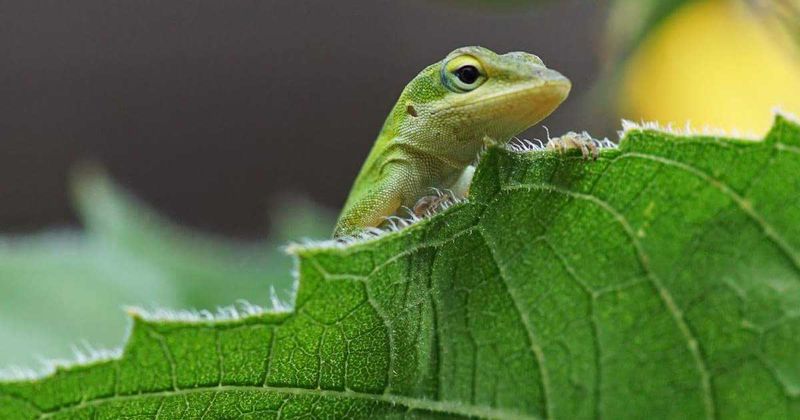
Shrub density gets the strongest research support, but green anoles also respond to a cluster of other yard conditions that work together. Texas Parks and Wildlife specifically lists occasional shade and moist conditions around vegetation as important features for the species, alongside greenery itself.
In a Central Texas summer, those conditions are not automatic, which is part of why thoughtfully planted yards can stand out from bare or heavily paved ones.
Elevated perches are another piece of the picture. Green anoles spend most of their active time off the ground, using branches, shrubs, vines, trellises, fences, and walls as both hunting platforms and territorial display posts.
A yard that offers a variety of heights and surfaces gives anoles more options for thermoregulation, watching for prey, and avoiding ground-level predators. Whether specific perch arrangements create movement corridors or cooler microhabitats is plausible but has not been directly tested in Central Texas residential settings, so those functions are better described as possible benefits than proven ones.
Prey availability matters too. Green anoles eat insects, spiders, and a range of other small invertebrates, and a yard with diverse plantings is more likely to support that kind of food base than a heavily manicured lawn.
However, anole numbers do not function as a direct measure of insect abundance. Research from Gonzales, Texas, examining prey availability in green anole habitat shows that the relationship between prey and lizard presence is influenced by multiple interacting factors.
Standing water is not a requirement for anoles, and adding an open water feature is not a necessary habitat step. Moist soil conditions around established plants, combined with shade that slows evaporation, are more directly relevant than a dedicated water source.
Think of moisture as a background condition to maintain, not a specific feature to install.
Why a crowded yard can still have problems
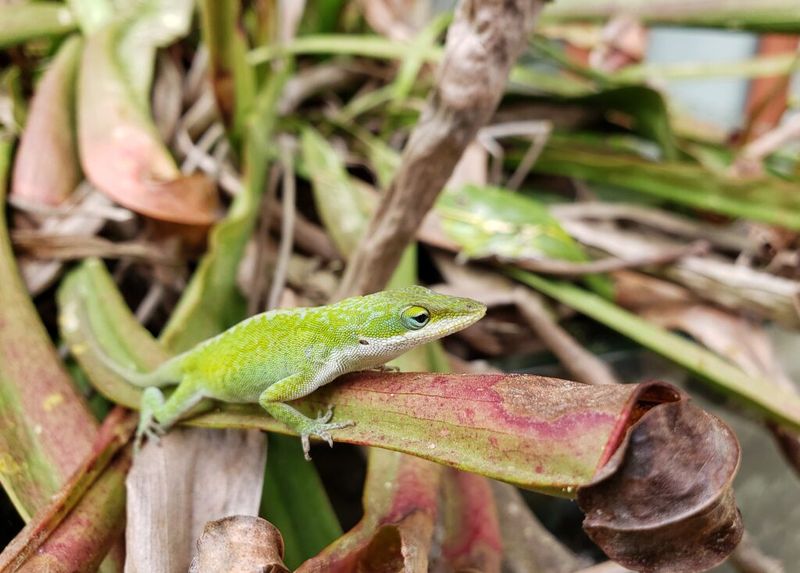
A yard full of green anoles can feel like confirmation that everything is going right, and in some respects it may be a genuinely positive sign. However, anole abundance responds to a wide range of interacting factors, and a high lizard count does not function as a complete ecological health certificate.
Temperature, season, predator pressure, competition, perch availability, cover density, moisture, prey access, and simple visibility all shape how many anoles you see and where. Research on how species interactions affect landscape abundance patterns shows that local lizard numbers can shift substantially in response to factors that have nothing to do with whether a yard is pesticide-free or highly biodiverse.
Texas-specific research reinforces this caution. A study by Battles and colleagues examining green anole body condition across land-use settings in Texas found that lizard body condition differed among plots in ways that were not simply explained by measured arthropod abundance.
In other words, a yard that appeared to have similar prey availability to a reference site still produced anoles in different physical condition. That gap between what you can count and what the lizards are actually experiencing is a reason to hold the habitat signal loosely.
Many anoles also do not prove that a yard is free of pesticide impacts, that soil health is good, that native plant diversity is high, or that pollinators and other wildlife are thriving. The eastern Texas Forest Service study linked shrub density to anole abundance in one specific habitat type, but shrub density alone does not capture every dimension of yard ecology.
Green anoles are one part of a much larger web, and their presence tells you something useful about cover and structure without telling you everything about the rest of that web.
The practical takeaway is to treat a visible anole population as an invitation to look more carefully at your yard rather than as a sign that your work is done.
Improve the habitat without chasing a lizard count
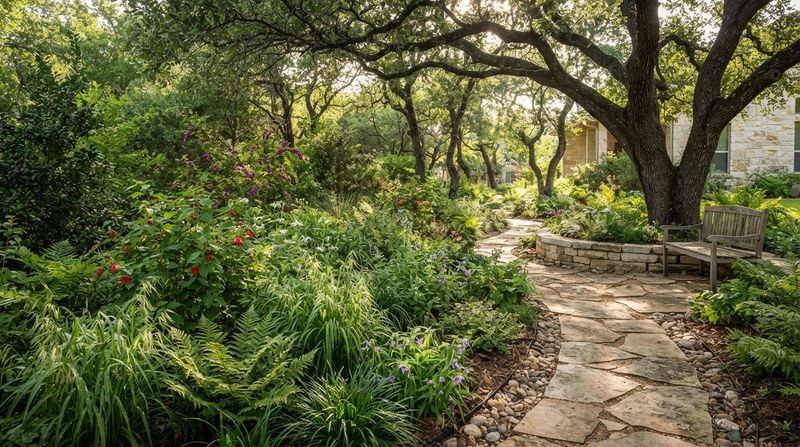
Once you understand what green anoles are actually responding to, the yard improvements that follow become more straightforward. The goal is to build habitat structure that benefits multiple forms of wildlife, not to hit a target number of lizards or treat anole sightings as a scorecard you need to keep improving.
Start with vegetation layers. A yard that moves from groundcover through dense shrubs to vines and small trees offers far more usable structure than a lawn with a few isolated plants.
The eastern Texas research makes clear that shrub density is a meaningful variable, so prioritizing thick, well-established shrubs over sparse ornamental plantings is a concrete step with research backing.
Texas Parks and Wildlife recommends maintaining shaded and moist conditions around vegetation, which in Central Texas often means protecting existing tree canopy, planting shade-tolerant groundcovers beneath it, and mulching around shrubs to hold moisture through the summer. Elevated perches through branches, trellises, fences, or existing structures round out the picture by giving anoles vertical options without requiring new construction.
Regionally appropriate native plants are worth favoring when possible. Diverse native plantings tend to support a broader community of insects and other invertebrates, which in turn supports the food web that anoles are part of.
Wildlife-friendly garden guidance consistently points to plant diversity and structural complexity as the most reliable habitat improvements, rather than any single plant species or feature.
One regional note worth keeping in mind: Florida extension guidance on anoles emphasizes tall shrubs and canopy trees partly because of competition pressure from introduced brown anoles, a dynamic that is Florida-specific. In Central Texas, where that competition is not a dominant concern, the value of taller vegetation still holds, but for slightly different reasons related to shade, humidity, and general habitat complexity rather than competitive displacement.
Compare sightings across seasons and regions carefully
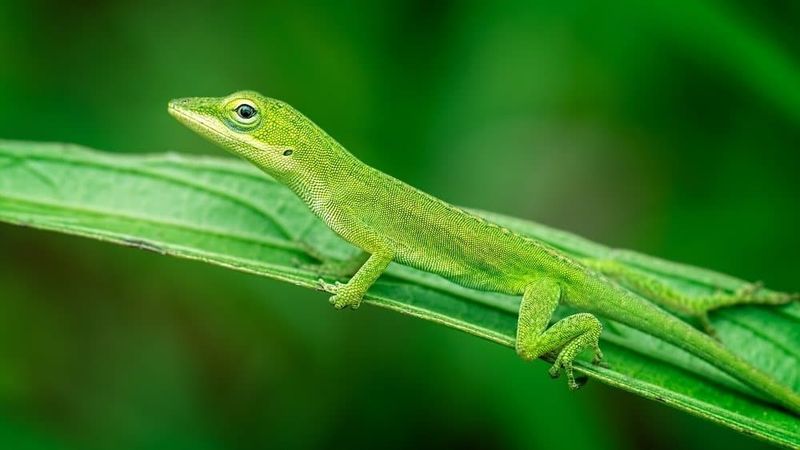
A sudden increase in green anole sightings through late spring and summer does not necessarily mean the population has surged. Warm weather brings anoles out into open, visible spots on fences, shrubs, and walls, while cooler months push them into shelter under bark, wooden shingles, or rotten logs where they are rarely seen.
The Savannah River Ecology Laboratory notes that green anoles are most active during warm weather and retreat to concealed spots when temperatures drop.
Reproduction adds another layer to the seasonal pattern. Females lay eggs through the warm months, and juveniles that hatch later in the season can make a yard seem more populated than it was earlier in the year.
What looks like a population boom may partly reflect new hatchlings becoming visible alongside the adults that were already there.
Visibility itself can be misleading. Texas Parks and Wildlife notes that green anoles use a range of elevated surfaces, and where they choose to perch affects whether you notice them.
A yard where anoles are suddenly using lower fences and shrubs may look more populated than one where they are mostly active higher in the canopy, even if the actual numbers are similar.
Florida’s experience with introduced brown anoles offers a cautionary regional example. In Florida, the presence of invasive Cuban brown anoles has pushed green anoles higher into the canopy in many areas, making them appear to disappear even when they are still present.
UF/IFAS guidance on anoles and Florida extension resources on introduced reptiles address this competition in detail. That framework is specific to Florida, where brown anoles are established and widespread.
Central Texas does not share that same competitive dynamic, so a drop in visible anoles here should not be automatically attributed to brown anole pressure without local evidence.
The broader lesson is that seasonal counts and sightings are hard to compare directly. Changes in temperature, activity level, reproduction timing, and perch choice can all shift what you observe without reflecting a true change in population size.
Let anoles share the food web
Green anoles are genuine predators of small invertebrates, and a yard with active anoles is a yard where those lizards are hunting insects, spiders, and other tiny prey on a daily basis. That is a real ecological function worth acknowledging.
At the same time, describing them as a pest-control service overstates what the research actually shows.
Green anoles have a broad diet that includes many arthropod types, and they consume whatever small invertebrates are accessible in their territory. They do not selectively target garden pests, and their effect on any specific pest population in a Central Texas yard has not been reliably quantified.
Anoles are one predator within a much larger food web that includes birds, spiders, wasps, and other insect-eating animals.
The most frequently cited experimental evidence comes from Caribbean research where excluding Anolis lizards from plots led to increases in some arthropod populations. That result is interesting, but it involved different Anolis species in a different ecosystem and cannot be transferred directly to green anoles in Central Texas residential yards.
The finding suggests that lizards can matter to arthropod communities, not that your anoles will reliably control aphids or caterpillars.
For pest management, the most compatible approach with a yard that supports anoles is one that avoids unnecessary broad-spectrum treatments. EPA guidance on reducing pesticide impacts on wildlife recommends identifying the specific problem first, then using the least disruptive effective method.
Treating only affected areas rather than the whole yard and choosing targeted products over broad-spectrum ones reduces the risk of disrupting the invertebrate community that anoles depend on. Reading the pesticide label carefully and following application instructions is the baseline for any treatment decision.
None of this means pesticides are off-limits; it means using them thoughtfully and only when needed protects both the yard and the wildlife sharing it.
Read the habitat, not just the head count
A yard with many green anoles is worth inspecting closely, but the most useful question is not how many you saw. The better questions are: where are they perching, what kind of vegetation are they using, and which parts of the yard seem to attract them most?
Those observations point toward the habitat features that may be working, whether that is a dense shrub border, a shaded vine-covered fence, or a moist corner near established trees.
Texas research on green anole habitat and Texas Parks and Wildlife guidance both point toward vegetation structure, shade, and moisture as the conditions worth protecting and building on. The right response to a yard full of anoles is to reinforce those conditions rather than declare success and move on.
Texas land-use research is a reminder that what you can count does not always reflect what the animals are actually experiencing. Anole numbers may tell you that some parts of your Central Texas yard are usable for wildlife, but broader habitat quality requires a fuller look at plant diversity, soil health, water management, and pesticide practices.
Many green anoles are a good starting point for that conversation, not the final word on it.