
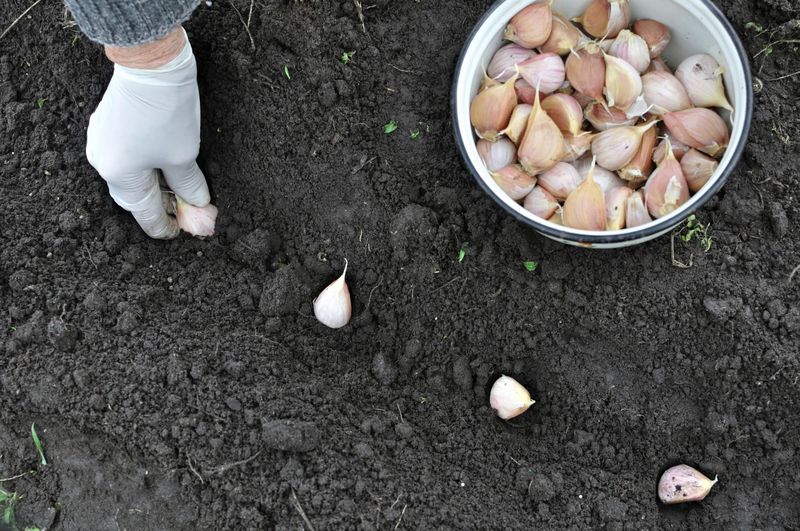
Garlic is one of the few garden crops that spends the cool months growing underground and in the leaves, then pays off months later. Planting at the right time gives it a fair shot at making a good bulb.
In parts of the South, late October can be a fine moment to get cloves in the ground, but it is not the right date everywhere. Here is how to check your own planting window and give your garlic a solid start.
Fall planting gives garlic time to grow before bulbing
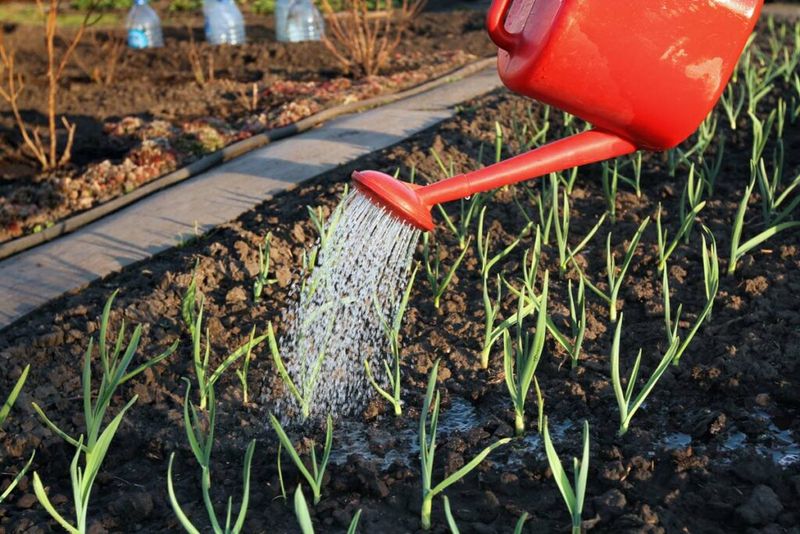
Garlic spends the cool months building leaves, and those leaves matter. University of Georgia Extension explains that fall planting allows enough leafy growth before bulbing begins in spring.
More leafy growth before that switch generally gives the plant more to work with when the bulb starts to swell.
Still, planting date is only one piece of the puzzle. A research review on garlic bulb development describes variety, clove size, temperature, day length, soil, and water as influences that work together.
A great planting date cannot make up for a poor variety or a tiny clove.
So think of late October as a possible starting point, not a promise. Some gardeners will do well planting then, while others should plant earlier or later.
No date can guarantee big bulbs or a harvest by a certain week next summer.
The good news is that you can stack the odds in your favor with good cloves, a well-prepared bed, and steady care through winter and spring.
Choose a planting window for your part of the South
The South covers a lot of different climates, and garlic guidance shows it. Georgia Extension gives a broad window of September through November, so late October fits inside it for many Georgia gardens.
Texas is more complicated. The Texas A&M AgriLife planting guide splits the state into regions and lists dates ranging from July to December.
For Central Texas, a Travis County guide suggests mid-October through early December, so late October lands right in the middle.
Florida needs its own approach. A UF/IFAS Extension article recommends late fall to early winter, which is not the same as an October cutoff.
Mild winters can also make garlic harder to grow there, as UF/IFAS Gardening Solutions notes.
Before you buy cloves, call your county Extension office and ask about the best dates and varieties for your area.
Choose sound bulbs and healthy cloves
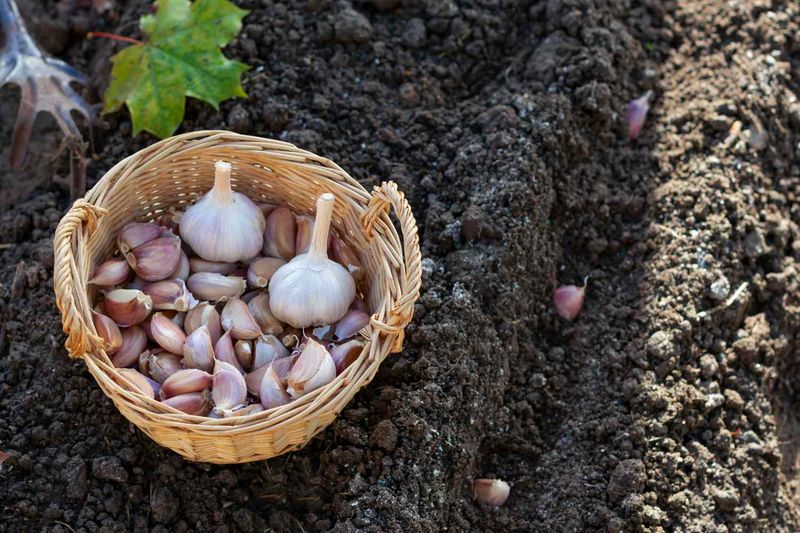
Garlic is not grown from ordinary seed. Each clove you plant becomes a new bulb, so the quality of that clove matters a great deal.
Georgia Extension advises picking large outer cloves from sound bulbs, and larger healthy cloves tend to make larger bulbs.
Wait to break the bulbs apart until close to planting time. Skip any cloves that look shriveled, moldy, or soft, and save the small inner ones for the kitchen.
Look for reputable, disease-free planting stock from a seed company or garden center. Grocery-store garlic is tempting, but sources like Penn State Extension caution that it may be a variety poorly suited to your area or may have been treated for storage.
That does not mean every store bulb is a problem, only that it is a gamble.
Florida gardeners should pay special attention to variety. UF/IFAS names Artichoke and Creole types as suited to the state, and local Extension offices can point you to more options.
Plant cloves in a sunny, well-drained bed
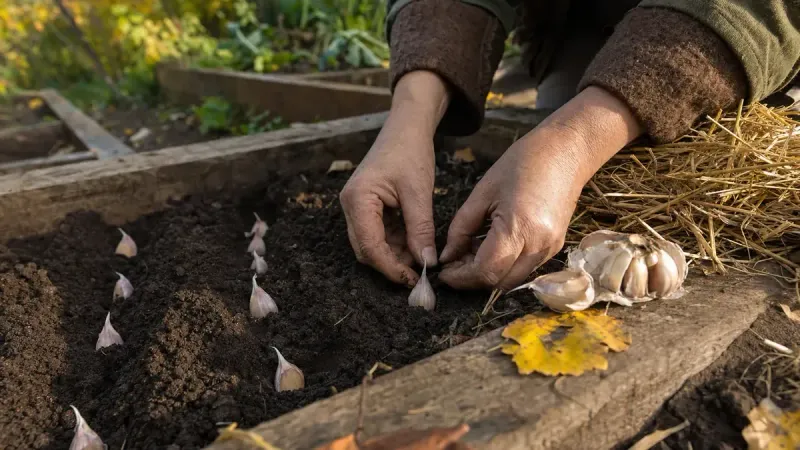
Pick a spot that gets full sun and drains well. Garlic sitting in soggy ground is more likely to rot, so a raised bed or loosened, amended soil can be a smart choice in heavy clay.
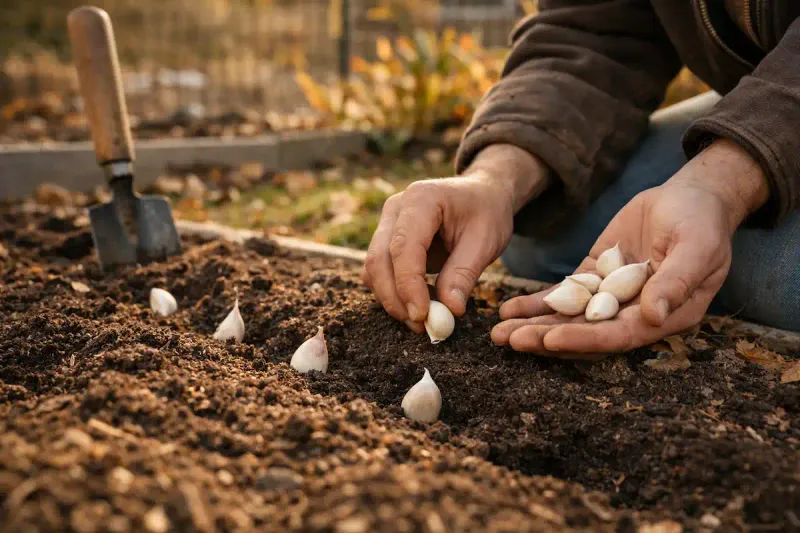
Set each clove with the pointed end up and the flat root end down. A depth of roughly 1 to 2 inches is a common range, then cover with soil and press lightly.
Spacing is where advice differs. Georgia Extension gives 6 inches between cloves, while UF/IFAS suggests 4 to 6 inches.
Neither number is a universal rule, so follow what your county Extension office recommends for your soil and variety.
A thin layer of mulch over the bed can help hold moisture and slow weeds. Keep it light enough that shoots can push through easily in the weeks ahead.
Keep moisture steady without waterlogging the soil
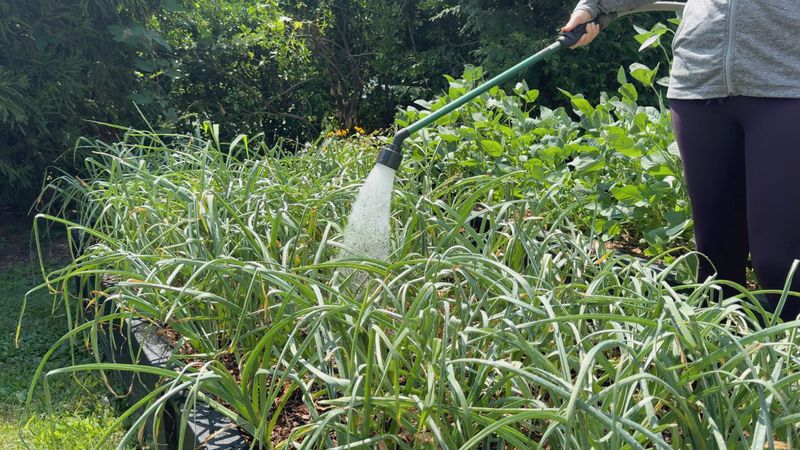
Even moisture helps garlic settle in and keep growing through the cool season. Soil that swings between bone dry and soaked is harder on plants, and waterlogged ground can invite rot.
For a starting point, UGA home-garden guidance suggests about 1 inch of water per week. Treat that as a Georgia reference and adjust for your soil and rainfall.
Sandy soils may need more frequent watering, while clay soils may need less. UF/IFAS puts it simply: evenly moist, not waterlogged.
A quick finger test helps. If the top inch or so feels dry, it is probably time to water, but if it is damp, wait.
As plants approach maturity, cut back or stop watering following local advice. Water is only one factor, and research on bulb development shows it works alongside variety, temperature, day length, and soil.
Perfect watering cannot make up for the rest.
Harvest when the leaves show the crop is ready
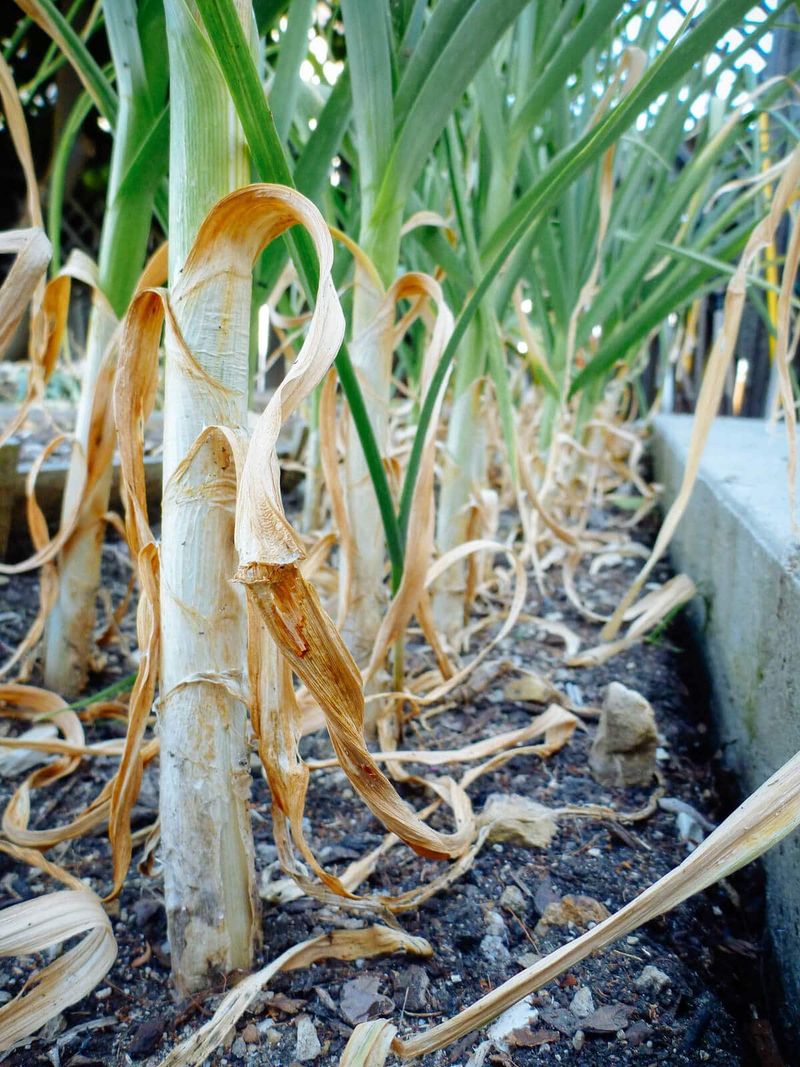
Skip the calendar and watch the plants. Garlic tells you when it is close to ready through its leaves, which yellow and die back as the bulb matures.
UGA recommends harvesting when about one-third to one-half of the leaves have died back. UF/IFAS says about half.
Timing shifts with location and variety, so one gardener may be digging in early summer while another is ready sooner.
Loosen the soil with a garden fork or trowel and lift the bulbs gently instead of pulling by the stalks. Brush off loose dirt, but leave the wrappers and roots in place for now.
Cure the bulbs in a shaded, well-ventilated spot until the skins are papery and the necks are dry before storing them long term. Keep a few of your best bulbs in mind for next fall’s cloves.
Garlic rewards patience more than precision.