
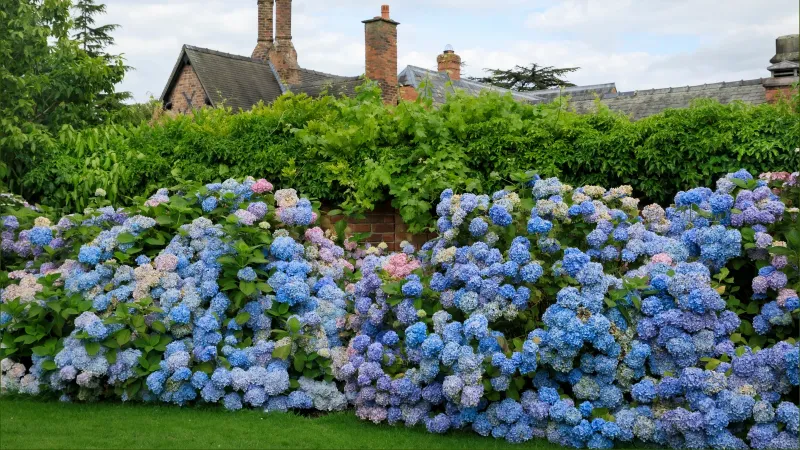
Hydrangeas are one of the most rewarding shrubs you can grow in a Southern yard, but the spot you choose at planting quietly shapes every season that follows. Get the location right and you can expect lush foliage and generous blooms; pick the wrong place and you may spend years wondering why the plant looks stressed or barely flowers.
The good news is that matching a hydrangea to its site is a learnable skill, and a few key factors make most of the difference.
The best spot is not simply the shadiest spot
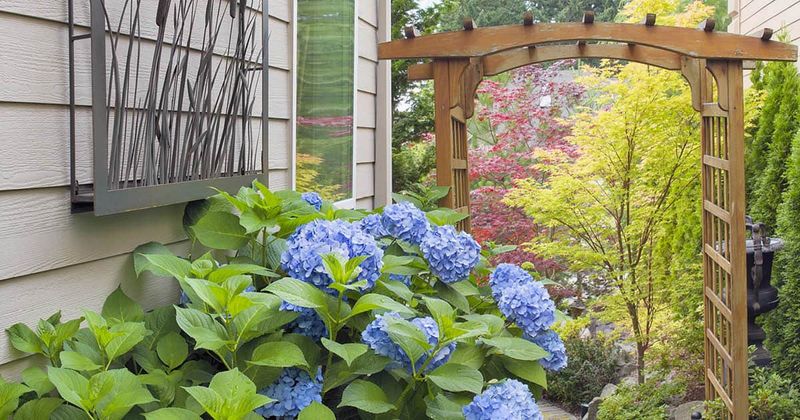
Many gardeners assume that more shade always means a happier hydrangea, but that thinking can lead to disappointing results. Hydrangeas need enough direct or filtered light to form flower buds, and a dark corner under a dense canopy may produce plenty of leafy growth while delivering few or no blooms.
Mississippi State Extension recommends avoiding deep shade and notes that flower production generally improves with roughly five hours of direct sunlight, while UConn Extension confirms that heavy shade can reduce or eliminate flowering altogether.
Southern heat adds a real complication. Afternoon sun in Florida or Texas carries enough intensity to wilt, scorch, and stress heat-sensitive types even when the soil has been watered.
That is why morning sun paired with afternoon protection is a practical starting point for bigleaf and smooth hydrangeas in Southern landscapes, not because shade itself is the goal, but because that combination delivers flowering light without the punishing heat of a western or southern afternoon exposure.
The smarter approach is to identify the hydrangea you have or want, then evaluate the site against what that specific type can handle. Alabama Cooperative Extension is clear that hydrangeas are not one uniform plant, and the light requirements that suit a panicle hydrangea can stress a bigleaf in the same yard.
Knowing which type you are working with is the first step in making a sound placement decision.
Match the hydrangea to the light it can handle
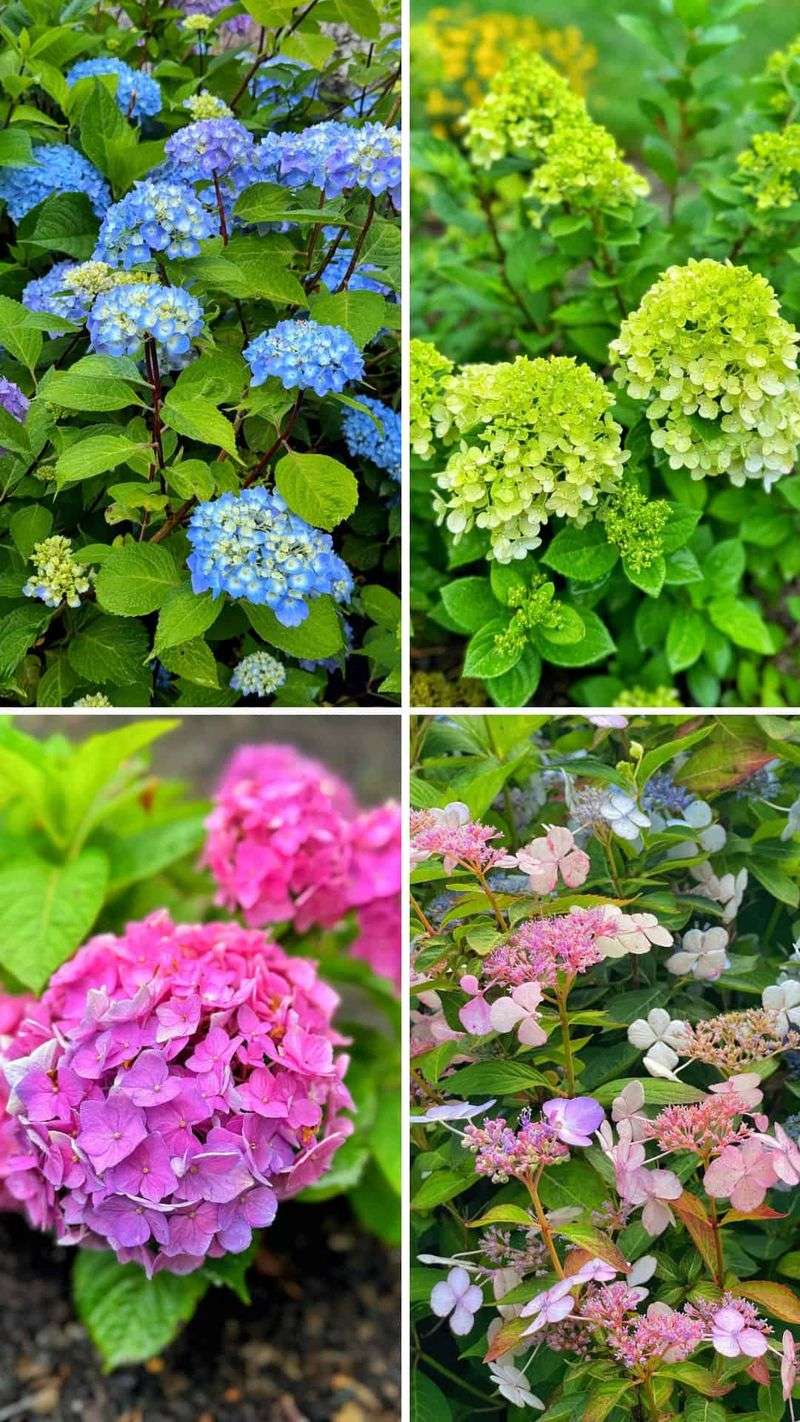
Plant identification is the most practical first step you can take before choosing a site. Bigleaf hydrangea (Hydrangea macrophylla) is the large-leafed, mophead or lacecap type most commonly sold in Southern garden centers.
UGA Extension specifically advises against placing it in hot, dry, or exposed locations, recommending morning sun, afternoon shade, and moist, well-drained soil. Its large, soft leaves lose water quickly, and afternoon heat can trigger wilting even in a plant that has been watered that morning.
Smooth hydrangea (Hydrangea arborescens), which includes the popular cultivar ‘Annabelle,’ generally performs well in partial shade with moist, well-drained soil. NC State Extension notes it can tolerate more sun when moisture is kept consistent, though full-sun placement increases watering demands.
Oakleaf hydrangea (Hydrangea quercifolia) is comparatively adaptable. UF/IFAS lists it as capable of growing in full sun and tolerant of a range of soil types, though fertile, acid, well-drained soil still produces the best landscape performance.
Alabama Extension warns that oakleaf is especially sensitive to saturated soil and root rot.
Panicle hydrangea (Hydrangea paniculata), including cultivars like ‘Limelight,’ is the strongest candidate for a sunnier site. Mississippi State Extension identifies it as the type that grows better in full to part sun, and Alabama Extension describes it as a sun lover that can handle all-day exposure when moisture remains adequate.
Matching the type to the site improves the odds of strong performance across multiple seasons.
Read the yard’s daily light and heat pattern
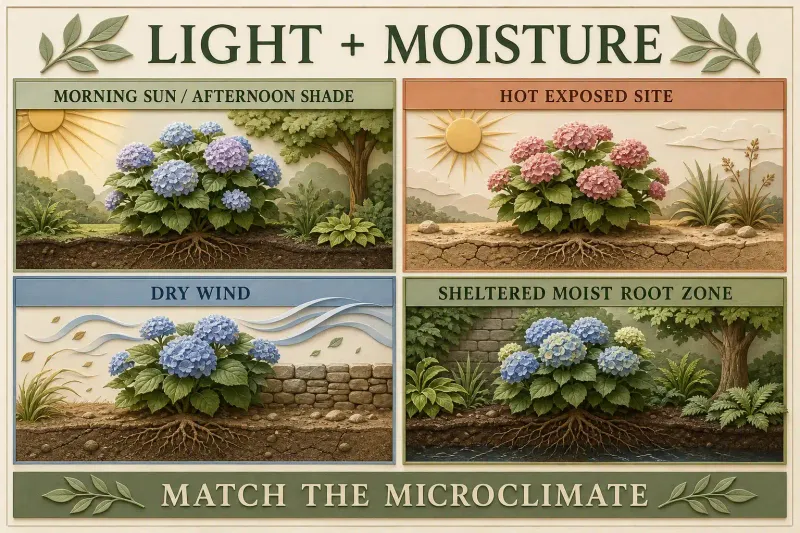
Labeling a spot simply “sunny” or “shady” misses the information that actually matters for hydrangea placement. A more useful approach is to watch how light and heat move across the site throughout the day.
Note when direct sun first reaches the area in the morning, when shade arrives in the afternoon, and whether any structures – walls, fences, or paving – reflect additional heat back onto the planting area. A spot on the west or south side of a light-colored wall can be significantly hotter than its sun exposure alone suggests.
Hot afternoon exposure is the main concern for bigleaf and smooth hydrangeas in Southern yards. UGA Extension guidance on bigleaf hydrangea specifically flags hot, dry, and exposed sites as problematic, while Alabama Extension notes that afternoon shade is essential for these types in Southern landscapes.
Panicle hydrangeas can handle more sun and heat as long as soil moisture stays consistent, so a site that would stress a bigleaf may suit a panicle just fine.
Tree canopy can be misleading. A spot shaded by mature trees may look ideal, but University of Minnesota Extension and Galveston County Master Gardeners both note that tree roots compete aggressively for moisture and nutrients.
A site that looks shady and protected can turn out to be dry shade – cool in terms of light but difficult for a moisture-loving shrub to survive without extra attention.
Give hydrangeas moisture without waterlogging the roots
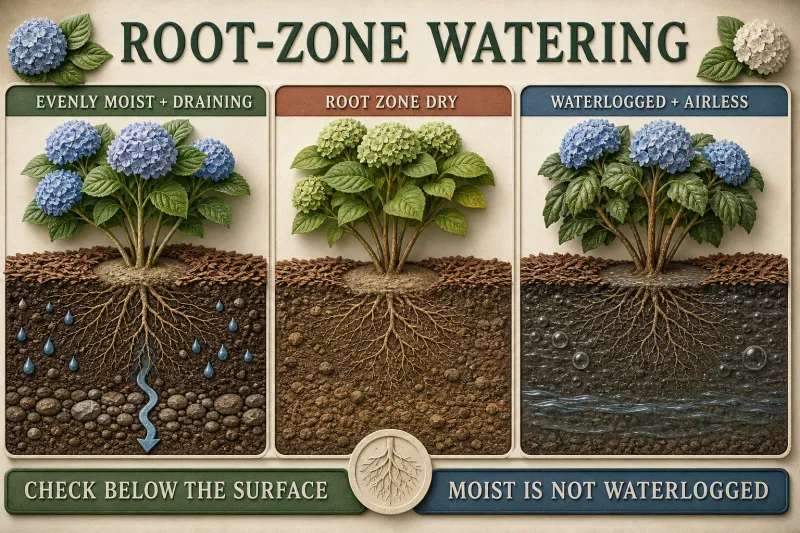
Reliable moisture is the second major test a planting site needs to pass. Hydrangeas perform best in soil that stays evenly moist but never remains saturated.
Mississippi State Extension recommends consistent moisture while cautioning against overwatering, and specifically flags oakleaf hydrangea as particularly vulnerable to poorly drained conditions and root rot. If a low spot in the yard holds standing water after rain, that location is a poor choice for any hydrangea type.
Florida gardeners face a specific challenge. UF/IFAS documentation on oakleaf hydrangea confirms it can handle Florida conditions, but the state’s sandy soils often have low water-holding capacity.
UF/IFAS soil management guidance supports the idea that moisture management in sandy conditions requires more attention than simply choosing a shadier location. Water drains through quickly, so more frequent monitoring and organic matter amendments may be needed to keep the root zone reliably moist.
Rather than following a fixed watering calendar, UGA’s ornamental planting guide recommends using soil moisture as the guide – checking the root zone and responding to what you find rather than watering on a set schedule. Alabama Extension reinforces that heat and sun increase water demand, so a sunnier site does not become acceptable simply by watering more often.
Drainage and moisture retention together determine whether the root environment stays healthy.
Use sound planting and establishment practices
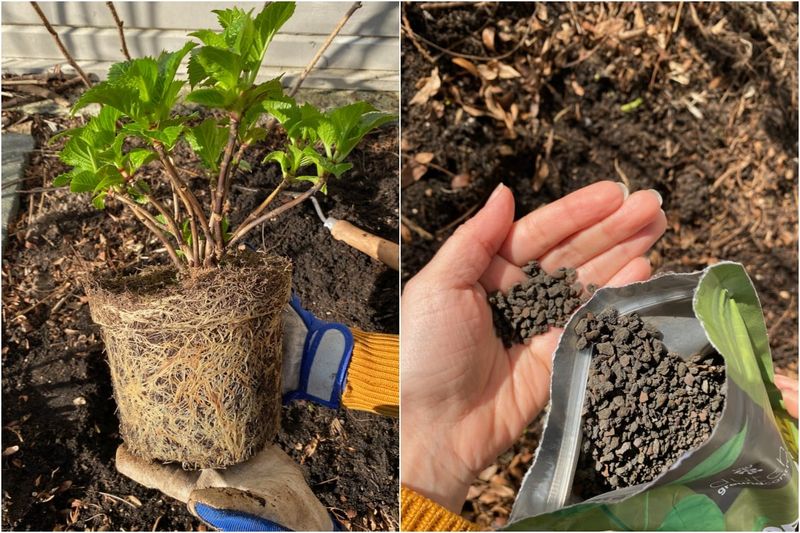
Even a well-chosen site can underperform if the plant goes in the ground incorrectly. One of the most consequential details is planting depth.
UGA Extension’s bigleaf hydrangea guidance and UGA’s broader ornamental planting bulletin both specify that the top of the root ball should sit level with the surrounding soil surface. Planting too deeply can contribute to poor health or plant death over time, a mistake that is easy to make when digging a hole that is too deep rather than too narrow.
The hole itself should be wider than the root ball rather than deeper, giving roots room to spread outward into loosened soil without encouraging downward growth into compacted ground. Water thoroughly at planting and continue monitoring soil moisture through the first growing season.
Mississippi State Extension recommends keeping the root zone consistently moist during establishment, while UGA advises using soil conditions rather than a fixed schedule to guide frequency.
Organic mulch is a practical tool for supporting a new plant through its first season. University of Minnesota Extension guidance on newly planted shrubs supports mulching to conserve moisture and moderate soil temperature.
Mississippi State recommends 2 to 3 inches of mulch specifically for hydrangeas. Keep mulch a few inches away from the stems and crown; piling it against the plant can trap moisture against the base and invite rot or disease over time.
Plan for the shrub’s mature size
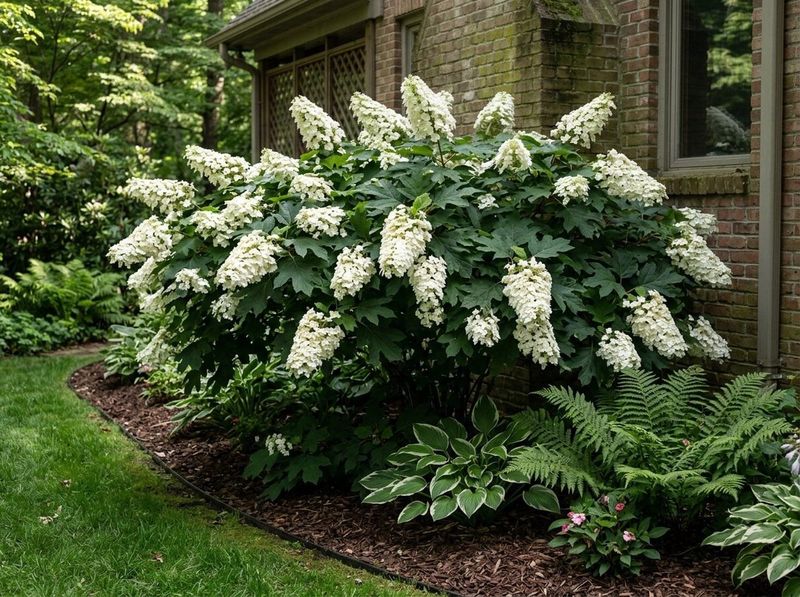
A hydrangea at the nursery rarely hints at what it will become. Some oakleaf, panicle, and smooth hydrangeas can reach 8 to 10 feet tall and nearly as wide at maturity, and a compact-looking container plant gives little warning of that eventual scale.
UConn Extension lists several species capable of reaching those dimensions, making it worth checking the specific cultivar’s expected height and width before committing to a location.
UGA’s Lincoln County Extension cautions against placing a large variety in a small foundation bed, where the mature plant may eventually crowd windows, block walkways, or require constant cutting back to stay in bounds. UF/IFAS documentation on oakleaf hydrangea confirms that this species in particular can become a substantial shrub in Florida landscapes.
Checking the cultivar tag or reliable online extension resources before you plant takes only a few minutes and can save years of frustration. Some newer compact cultivars stay in the 3- to 4-foot range and suit tighter spaces well; others are bred for large borders or naturalized areas where size is an asset.
Matching the expected mature dimensions to the available space is as much a part of site selection as evaluating sun and moisture.
Separate site stress from bloom-care problems
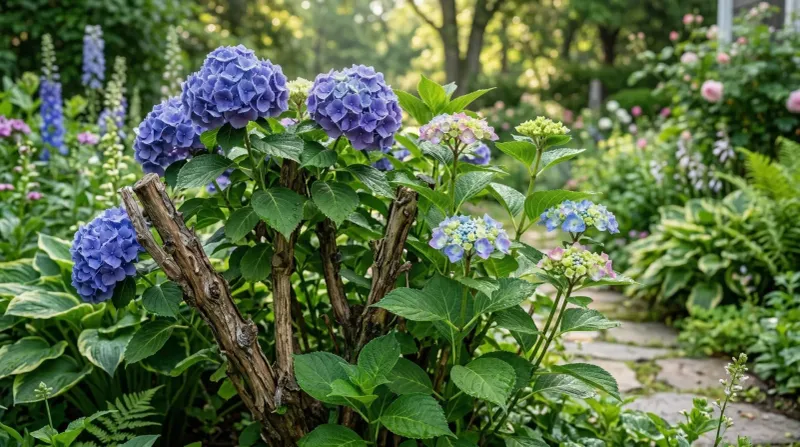
Blaming the planting spot when a hydrangea fails to bloom is a common mistake, and it can lead to unnecessary transplanting when the real cause is something else entirely. Bigleaf and oakleaf hydrangeas flower on old wood, meaning the buds that will open next spring are already forming on this year’s stems by late summer.
Penn State Extension’s pruning guide explains that cutting these types back at the wrong time of year removes the very buds that would have produced blooms, and the plant may look perfectly healthy while producing no flowers at all.
Winter injury causes the same result in colder parts of the South. A hard freeze can kill the old wood on a bigleaf hydrangea down to the ground, taking next season’s flower buds with it even when the roots survive and send up vigorous new growth.
Deer browsing in late fall and winter can strip the same buds. University of Maryland Extension’s hydrangea problem guide and Penn State’s bloom-failure resource both list pruning timing, winter damage, and deer pressure as leading causes of no-bloom situations that have nothing to do with site conditions.
Smooth and panicle hydrangeas flower on new wood grown in the current season, so they are not vulnerable to that specific problem. UConn Extension confirms this distinction.
If a smooth or panicle hydrangea is not blooming, inadequate light or site-related stress is a more likely explanation than pruning timing, while for bigleaf types, the pruning calendar and winter conditions deserve attention before the planting location gets blamed.
Make the final planting decision with a site checklist
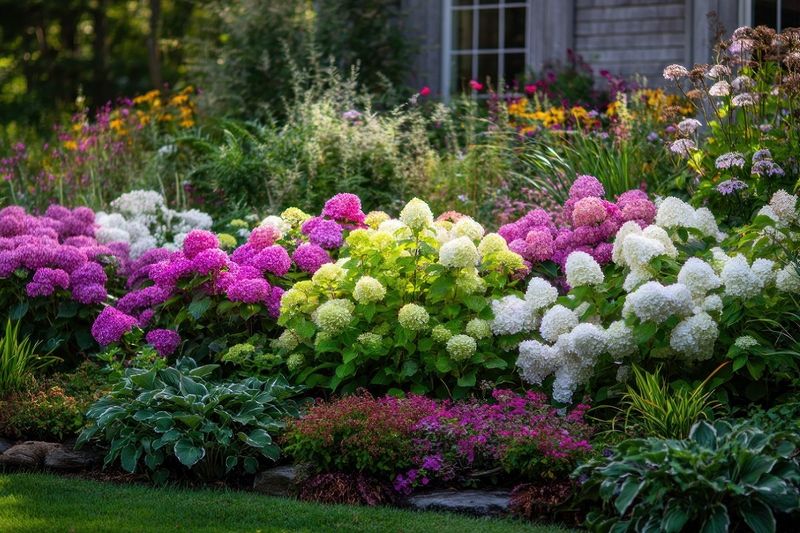
Before settling on a spot, work through a short checklist. Confirm the hydrangea type, since that determines how much sun and heat the plant can reasonably handle.
For bigleaf and smooth hydrangeas, favor a location with morning sun and afternoon protection. Reserve sunnier exposures for panicle hydrangeas or oakleaf cultivars known to tolerate more light.
Alabama Extension’s hydrangea guide and Mississippi State Extension both support this species-first approach to placement.
Reject any site that stays waterlogged after rain, and investigate tree-shaded areas for root competition and dry soil before treating them as ideal. Verify the cultivar’s mature height and width against the available space.
Texas gardeners in particular face highly variable conditions across the state, and the Texas A&M Earth-Kind plant selector can help narrow cultivar choices to those suited to local heat, drought, and soil conditions rather than applying one statewide rule.
The goal is not maximum shade or maximum sun. A site that delivers flowering light, afternoon heat protection for sensitive types, reliable soil moisture, and good drainage improves the odds of strong performance year after year.
Getting those basics right at the start gives any hydrangea a much better foundation than any amount of corrective care can provide later.