
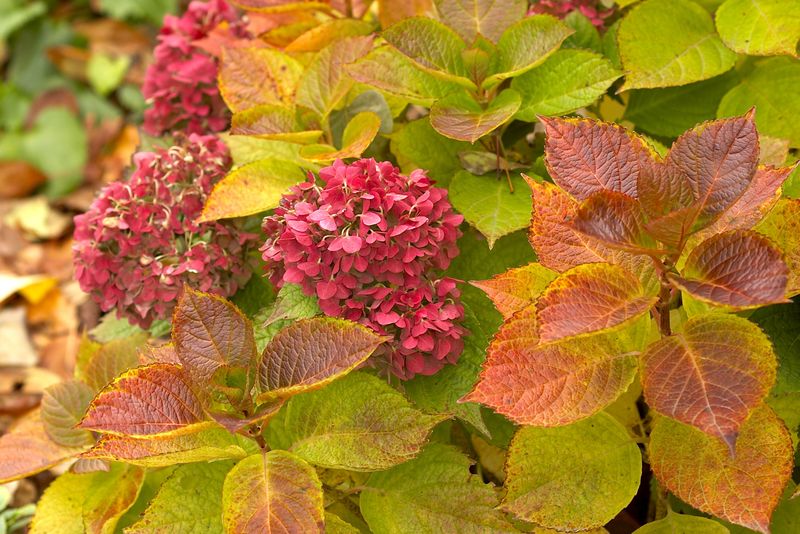
Walk past your hydrangeas this fall and you might see nothing but fading leaves. Yet some types already have next year’s flower buds tucked onto their stems.
A wrong snip with the pruners can erase those blooms before winter even starts. Here is how to tell which kind you have and what to do (or skip) right now.
Some Hydrangeas Form Next Season’s Buds Before Winter
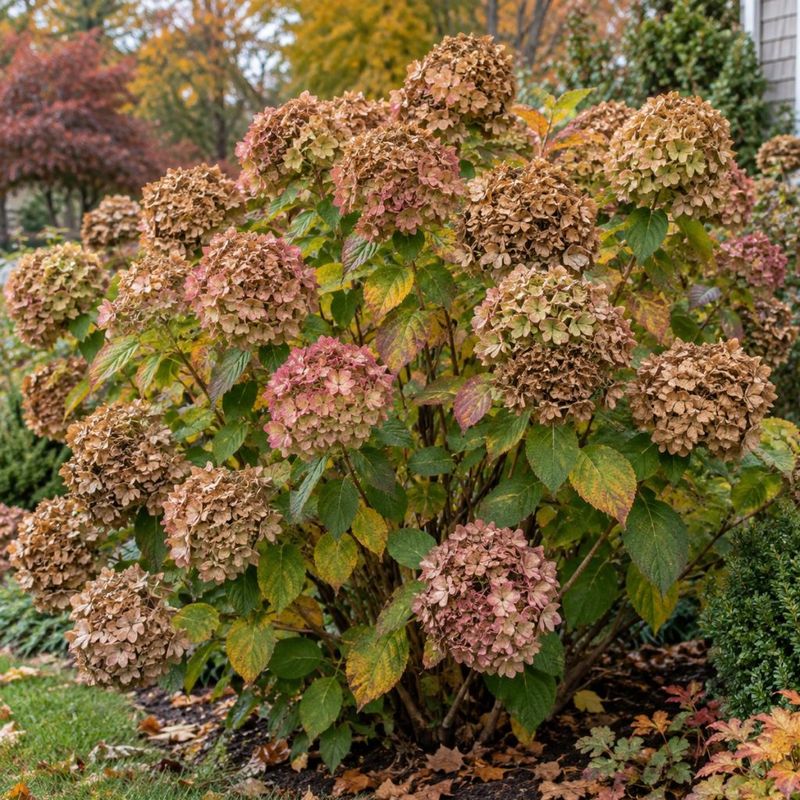
Here is the accurate heart of the claim. Bigleaf and oakleaf hydrangeas generally bloom on old wood, which means the stems grown this year carry the buds for next year.
Mississippi State Extension notes that these buds begin forming in August.
That timing matters because UGA Extension warns that pruning bigleaf hydrangeas in late summer, fall, or winter removes potential flowers. So for these types, the goal this season is protection, not pruning.
It helps to separate two ideas. Keeping buds safe preserves the chance of flowers.
It does not make those flowers bigger. Nothing in the research shows a fall chore that enlarges blooms across all hydrangeas.
Not every hydrangea follows this calendar, either. Other types grow their flowering stems fresh in spring, so they are not carrying next year’s buds right now.
The next section shows how to sort out which plant you have.
Identify the Type Before You Prune
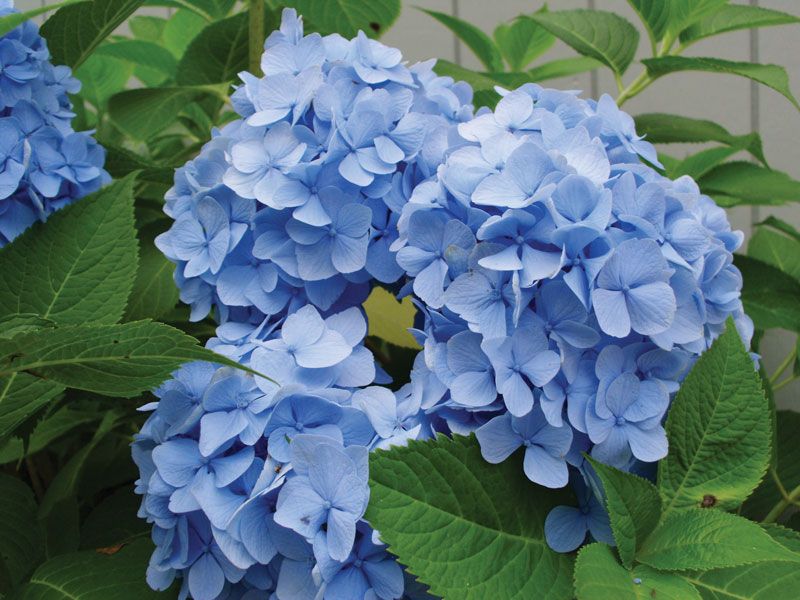
Before any pruning decision, you need to know what you are growing. Bigleaf and oakleaf hydrangeas usually flower on old wood.
Smooth hydrangeas (Hydrangea arborescens) and panicle hydrangeas (Hydrangea paniculata) flower on new wood, according to UGA Extension in Forsyth County.
There is one wrinkle. Some bigleaf cultivars rebloom, meaning they flower on both old and new wood.
Those plants are more forgiving, but the cultivar still matters.
Start with the plant tag or your purchase receipt. If you lost both, look up the cultivar name through a nursery or your county Extension office rather than guessing from the leaves or blooms.
A single rule for all hydrangeas does not work, which is why Mississippi State Extension treats the types separately. If you cannot confirm what you have, the safest move is to hold off on pruning this fall.
Leave Old-Wood Types Unpruned This Fall
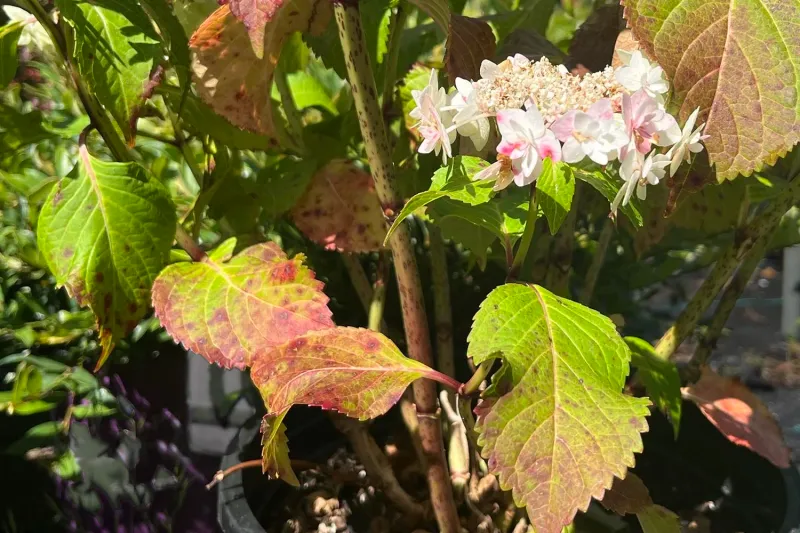
Put the bud timing to work: if you have bigleaf or oakleaf hydrangeas, put the pruners away this fall. Every stem you cut may carry a bud that would have opened next year.
Dead-looking stems can still hold living buds, so resist the urge to tidy up.
Shaping, when it is truly needed, belongs soon after flowering. Mississippi State Extension points out that many of these plants need little pruning at all.
Remove only what is broken, crowded, or in the way.
Smooth and panicle hydrangeas run on a different schedule. They are generally pruned in late winter or early spring, as described by Iowa State Extension.
Fall is not the time to cut them back either.
So the practical fall plan is simple. Skip the big cutback, rake leaves away from the crown if you like, and save any real pruning for the right season for your type.
Protect Old-Wood Buds From Cold Only When Needed
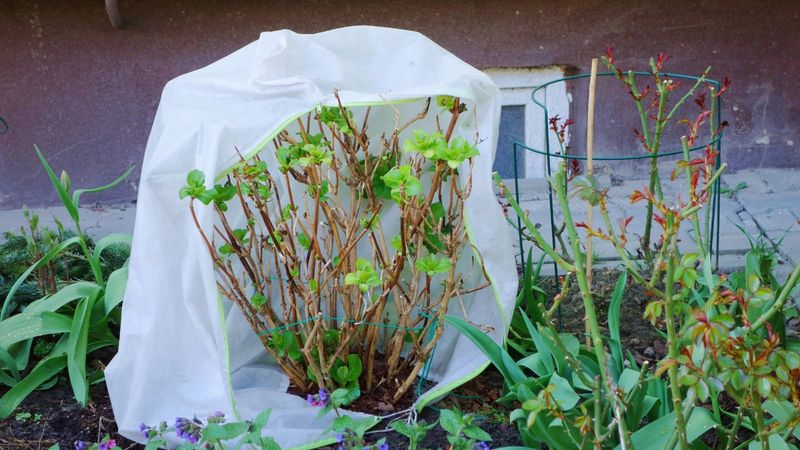
Cold protection is a judgment call, not a chore for every yard. UGA Extension describes two options for old-wood buds: temporarily covering the plant when temperatures drop below freezing, or building a wire cylinder around it and filling it with leaves.
Whether either makes sense depends on your site and your forecast. A plant in an exposed spot that faces a hard freeze may benefit.
A sheltered plant in a mild stretch may not need anything.
Florida gardeners should note the limits of the guidance. UF/IFAS says French or bigleaf hydrangeas are best suited to North and Central Florida, where they need shade, moist fertile soil, and cool winters.
That advice is not meant for all of Florida.
If you do cover a plant, do it for the freeze and remove the covering afterward, since it is a temporary measure.
Larger Smooth Hydrangea Blooms Call for Spring Pruning
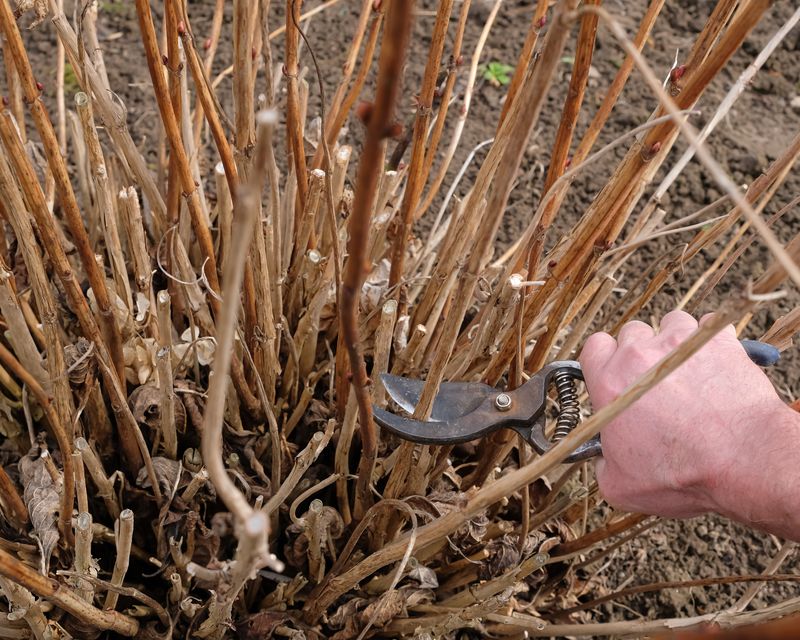
If you want bigger flowers, the credible advice points to spring and to one type. UNH Extension recommends pruning smooth hydrangea stems to the ground in spring for larger, more robust flowers.
That guidance covers smooth hydrangeas only. It does not apply to bigleaf, oakleaf, or every other kind, and it is not a fall job.
Notice how different the goals are. With old-wood types, the aim is keeping buds you already have.
With smooth hydrangeas, which bloom on new wood, a hard spring cut sets up fresh stems that carry the flowers.
Mixing those up is how a well-meaning fall cutback can wipe out a bigleaf’s season. Match the action to the plant, and wait for spring on smooth types.
Preserved Buds Do Not Guarantee Flowers
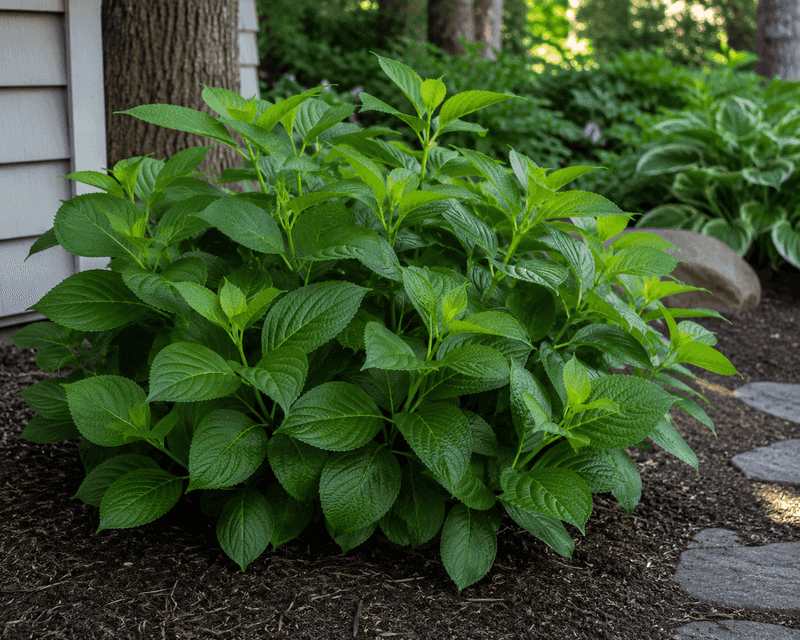
Saving buds is only one piece of the puzzle. UGA Extension lists several reasons a bigleaf hydrangea may fail to bloom: winter bud injury, too much shade, excess nitrogen, and pruning at the wrong time.
That means a plant left unpruned can still come up flowerless. If it sits in heavy shade, or a hard freeze damaged the buds, leaving it alone could not have changed the outcome.
Fertilizer is another trap. Fall feeding is not a bloom-size fix, and Mississippi State Extension advises that excess nitrogen can decrease flower production.
It places fertilizer applications in the growing season.
When a plant skips its blooms, check that list first: cold, shade, nitrogen, and pruning timing. Avoiding unnecessary pruning improves the odds, but it cannot promise flowers.
Identify First, Then Prune Only With a Reason
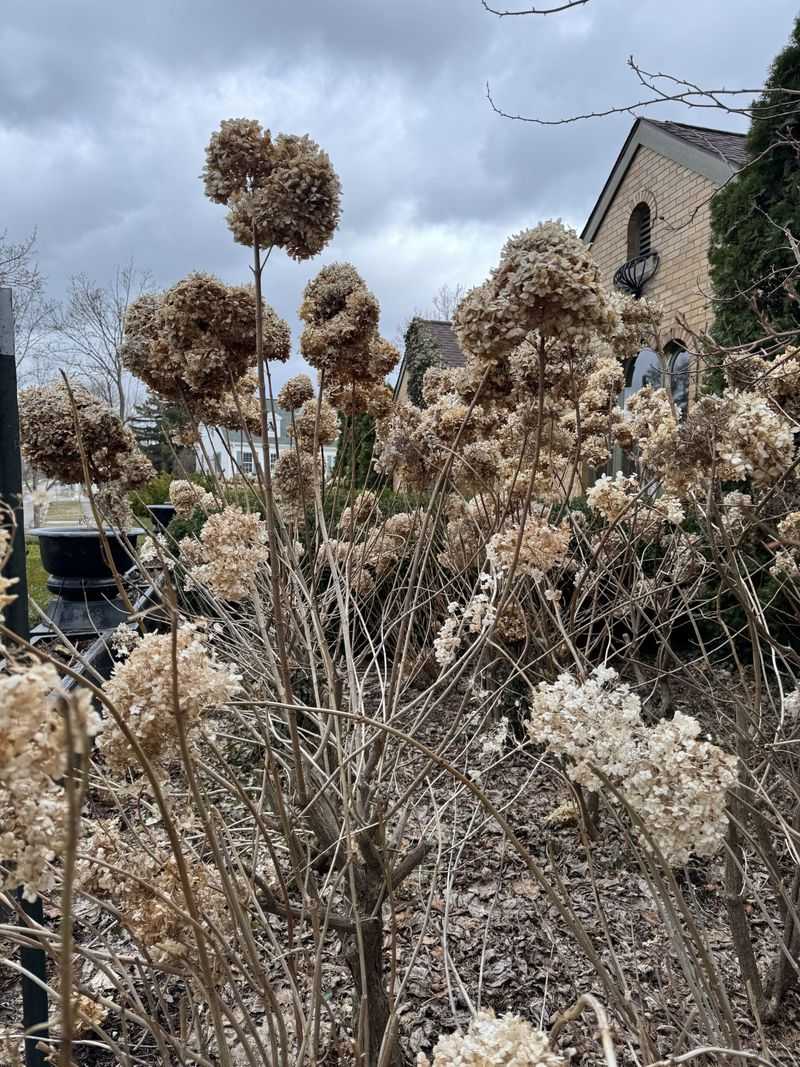
Your fall checklist is short. Find out which hydrangea you have, as UGA Extension suggests, and leave bigleaf and oakleaf types unpruned.
Save any needed cutting for after flowering on old-wood plants, and for late winter or early spring on smooth and panicle types, as covered by Mississippi State Extension.
This protects potential flowers. It will not guarantee blooms or enlarge every hydrangea’s flowers.
Sometimes the best fall garden work is a pair of pruners left hanging in the shed.