
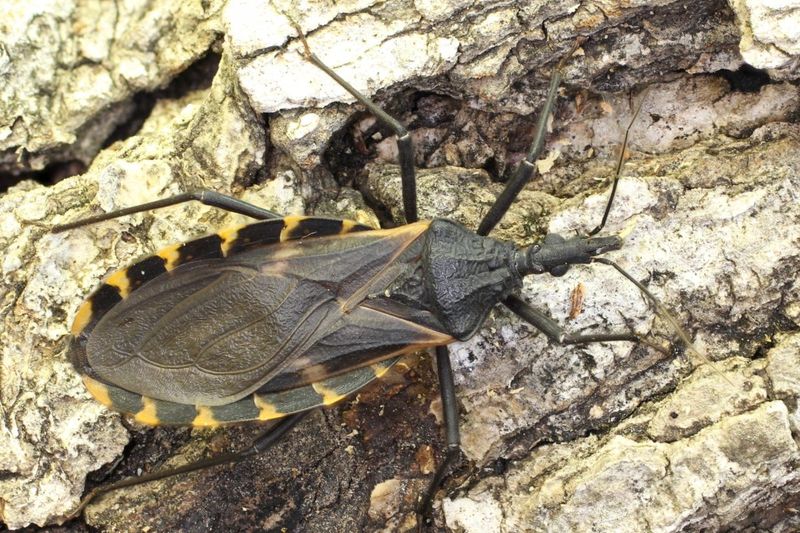
You flip on the porch light on a warm fall evening and spot a dark, odd-looking bug resting nearby. Kissing bugs have a scary reputation, so it is natural to wonder what it means.
These insects have lived in Texas for a very long time, and a porch light can draw an adult toward your door. Here is how to read one sighting, check what you found, and respond safely.
Kissing bugs are long-established in Texas
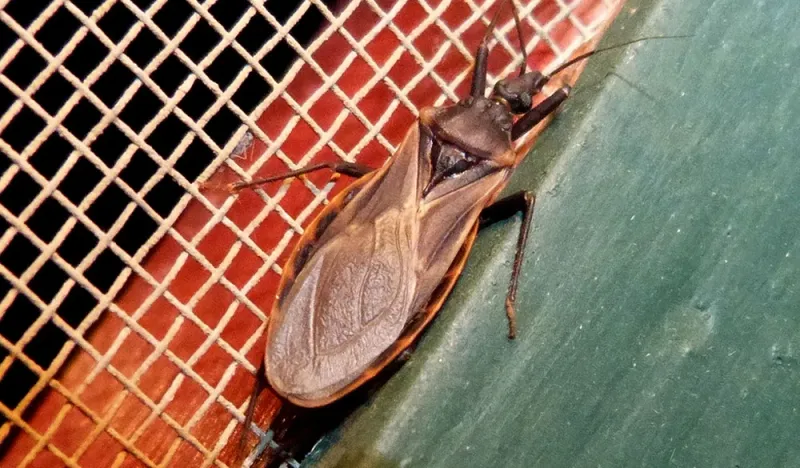
Kissing bugs are not newcomers. They are native insects that have lived in Texas for a very long time, and the Texas Department of State Health Services guide notes they have been documented in the United States since at least the mid-1800s.
Calling them invasive or new gets the history wrong.
That history matters when you find one by your door. A single bug on the porch or in the yard does not mean kissing bugs are taking over, and it does not mean your property is infested.
Several species live across the state, and an occasional one wandering onto a patio is part of life in Texas, especially near woodlots, brush, and rural edges.
What matters more is the pattern. Texas A&M’s urban pest guidance separates an occasional individual from repeated indoor sightings or the presence of nymphs, which are young bugs.
Those signs may point to a nearby breeding population and are worth a closer look.
So if you see one adult outside, note the date and place, take a photo, and keep watching. If you keep finding them inside, or you spot small wingless ones, that is the time to seek further assessment from a qualified professional or your local extension office.
Why a bug might appear near a porch light in fall
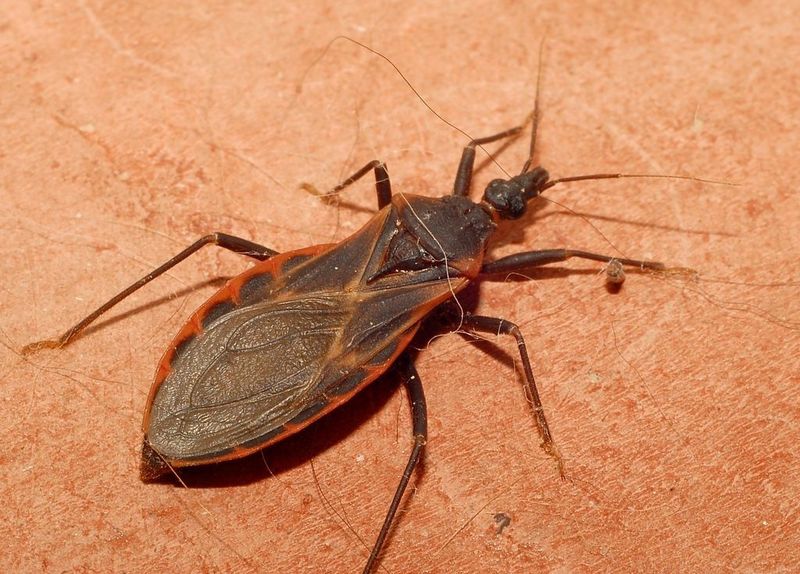
Night is when kissing bugs move around. According to Texas A&M AgriLife Extension, they are nocturnal, and adults can fly and be drawn to lights.
A bright bulb by the front door is a plausible reason one ended up near your porch.
That explains a single sighting. It does not prove a growing local population, and it does not show a statewide jump in numbers this season.
Fall timing deserves some perspective. A 2020 study in east-central Texas followed Triatoma sanguisuga at one site and found dispersal peaked in early August, with activity ending by late October.
So sightings into fall are possible in that area, but one species at one location cannot speak for every Texas county.
The broader picture is warm-season activity. The DSHS guide describes adult activity generally from May through October, so an October bug near a light fits that window without signaling anything unusual.
Check the identification before drawing conclusions
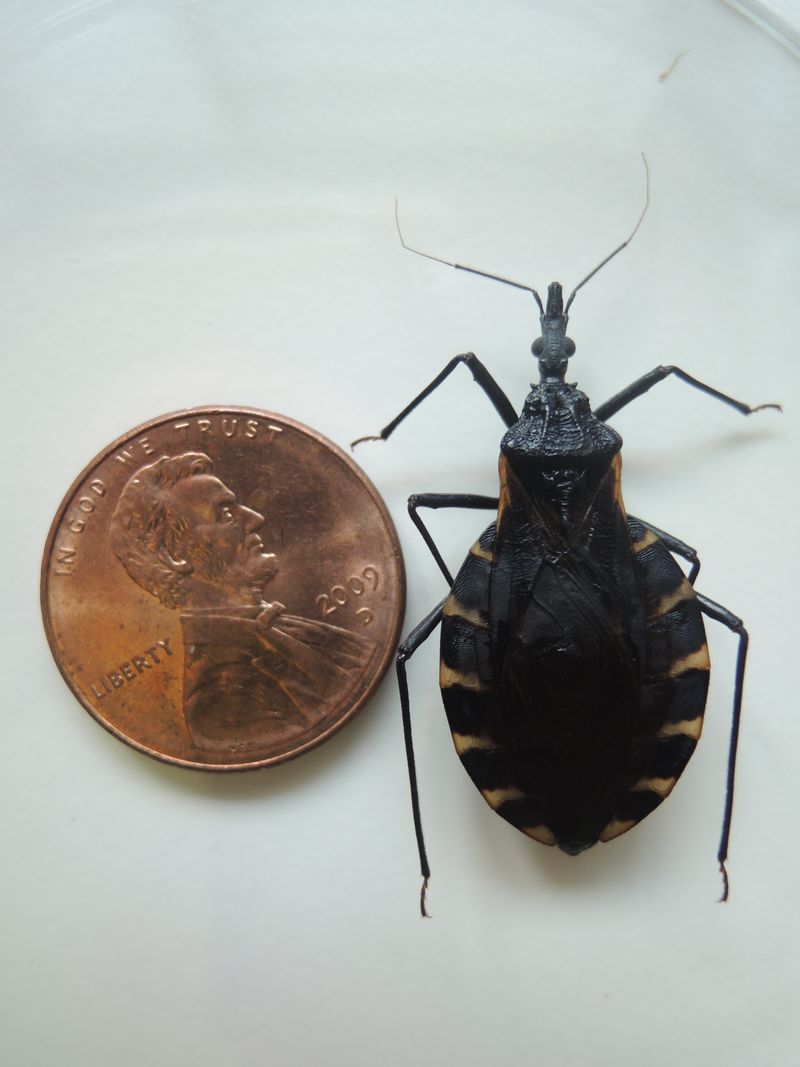
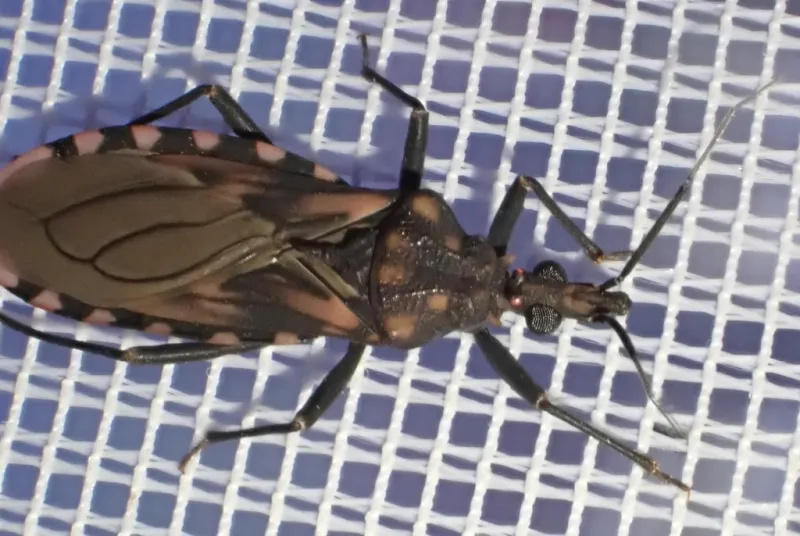
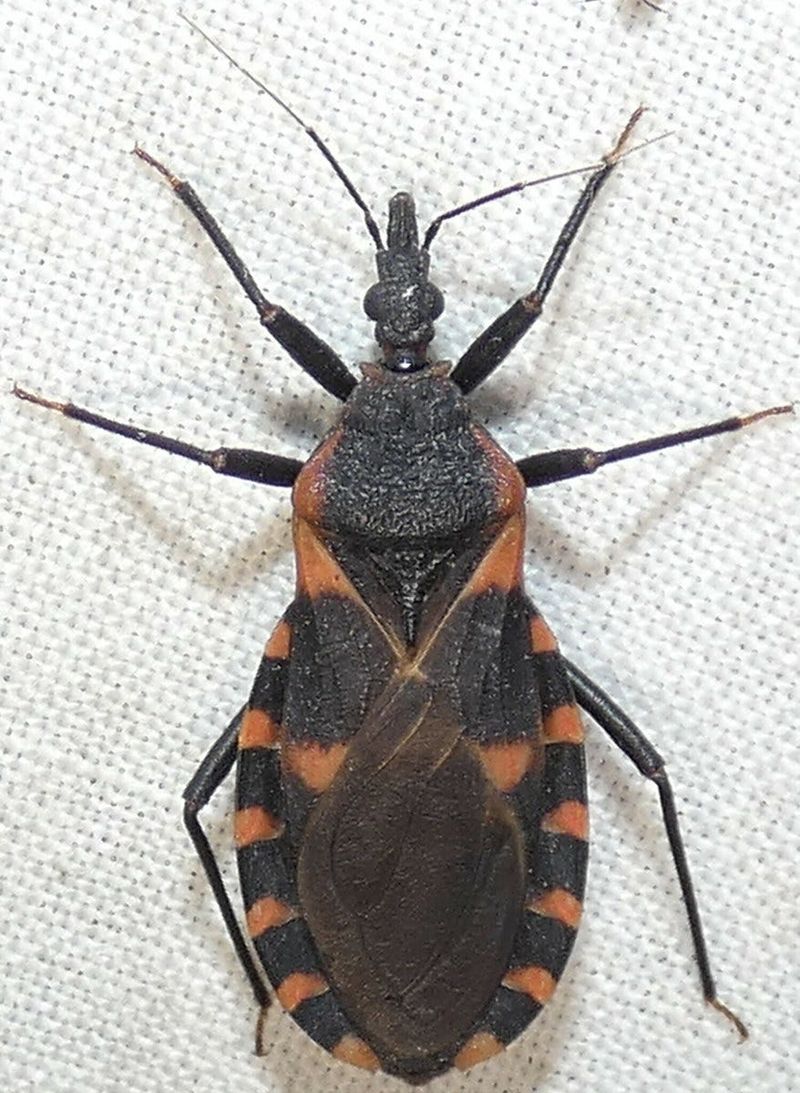
Plenty of insects are dark and about the size of a thumbnail, so start with a calm look from a distance. Features often seen on kissing bugs include a dark body, a long cone-shaped head, thin legs, and orange or red markings along the edge of the abdomen, as described in the DSHS guide.
Those clues are a starting point, not an answer. Other insects can look similar, including some harmless beetles and leaf-footed bugs, so a visual guess can send you in the wrong direction in either way.
A photo is the safest next step. Snap clear pictures from above and from the side, with a coin or ruler beside the insect for scale, and keep your hands away from it while you do.
Then get an expert opinion. The Texas A&M kissing bug program explains what to do after finding a suspected bug, and photos make it much easier for specialists to help you.
Reduce the chances of encounters around the house
Lighting is the easiest place to begin. Texas DSHS recommends turning off outdoor lights at night, and CDC guidance adds that yard lights can be positioned away from the house.
Next, close the doors that bugs might use. Seal gaps around windows, doors, and the foundation, and repair torn screens so a flying adult has fewer ways inside.
Tidy the yard edge too. Wood piles, brush, and rock piles close to the house can shelter bugs and the animals they feed on, so move them farther away when you can.
Pets deserve a look. Keep their resting areas clean, and DSHS suggests bringing pet food and water bowls indoors.
These steps can lower the odds of an encounter, but they will not guarantee that none turn up. Skip spraying around the house on a hunch.
CDC says no insecticides are approved specifically for triatomine bugs in the United States and advises talking to a pest-control professional first.
Handle and submit a suspected bug safely
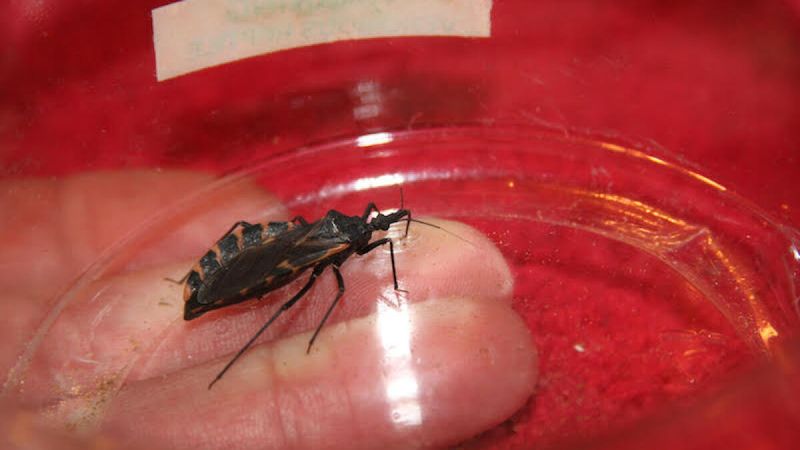
Never pick up or squash a suspected kissing bug with bare hands. Texas A&M recommends using a glove or a small plastic bag to collect it.
Once it is contained, store it in a sealed bag, vial, or other small container. Write down where and when you found it, and whether it was indoors or outdoors.
Where it goes next depends on the situation. Texas DSHS testing instructions cover bugs implicated in human exposure, such as one that bit a person or was found on someone.
DSHS asks residents to send a photo first if possible.
Outdoor bugs that are not tied to any human exposure may instead go to Texas A&M’s research program. Keeping these two paths separate saves time and gets your bug to the right team.
If a person or pet may have been exposed, mention that when you contact the program so it can guide you properly.
Chagas transmission involves more than a bite
The way Chagas disease spreads is often misunderstood. According to the CDC, infected bug feces must enter the body through a bite wound, another break in the skin, or a mucous membrane such as the eyes or mouth.
A bite alone does not transmit the parasite.
Not every kissing bug carries it, either. A bug that looks like a kissing bug is not automatically infected.
Texas DSHS says human cases acquired in Texas do occur but are uncommon. That fact, or a research figure on how many bugs carry the parasite, cannot tell you your own chances.
Even a positive bug test does not mean transmission happened.
If you think you were bitten, or that bug feces touched broken skin or your eyes or mouth, wash the area and talk with a healthcare provider about testing. Bring your photo or the bug’s submission details if you have them.
One bug at the porch light is a reason to look closer, not a reason to panic.