
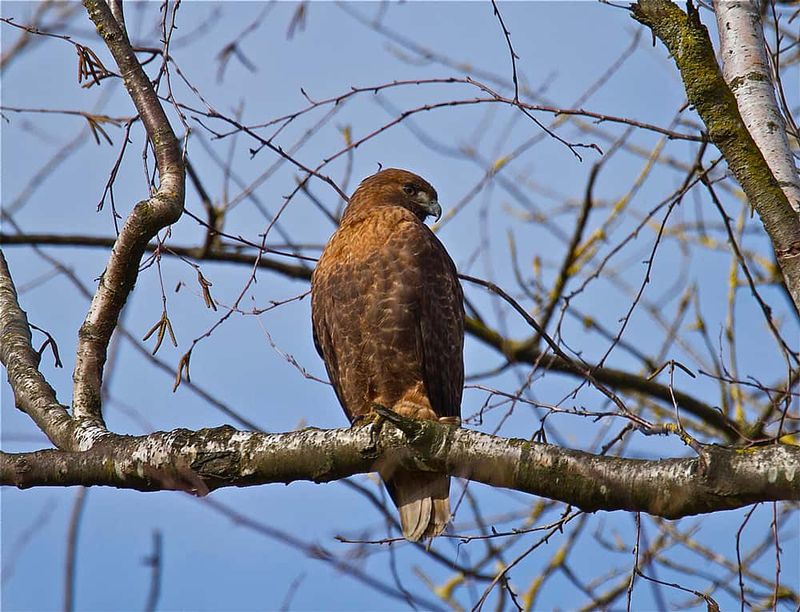
A big brown-and-cream hawk sits on the same pole or branch above your yard again and again. It is easy to wonder what it sees down there, and whether it is a sign of trouble in your garden.
The truth is more interesting, and a little less certain, than most stories you may have heard. Knowing what the perch can and cannot tell you helps you protect both your yard and the bird.
An elevated perch gives a hawk a useful view
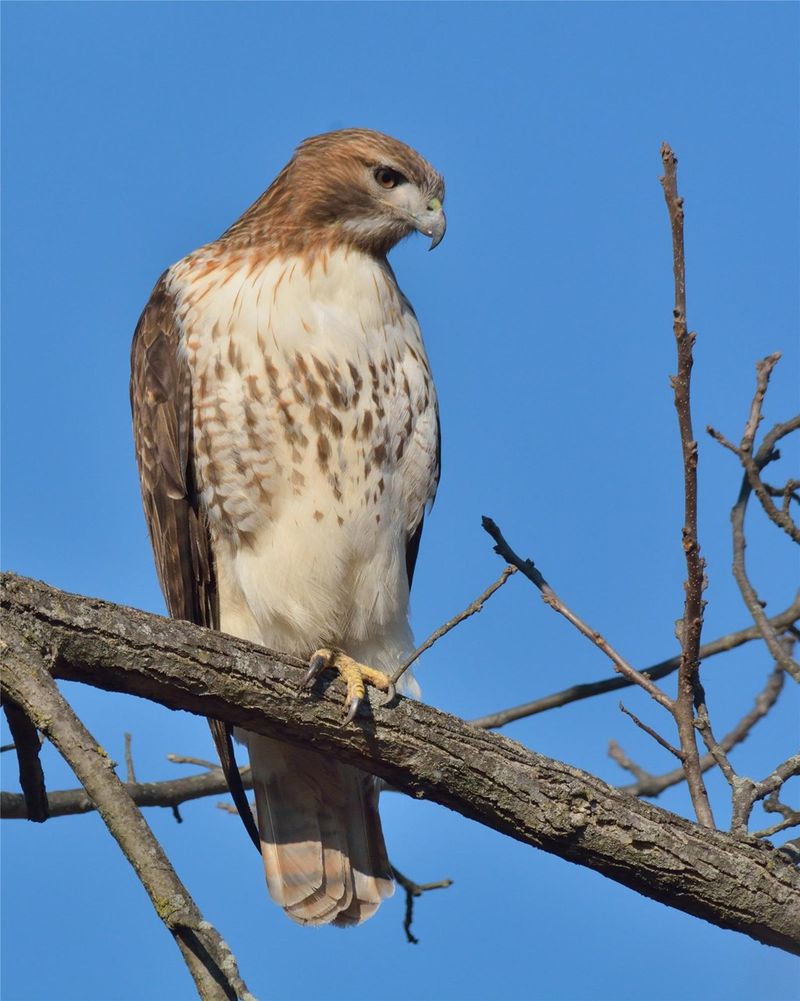
Picture the hawk’s job from its point of view. A high branch, pole, or roofline lifts it above the grass and shrubs, so it can scan a wide patch of ground without spending energy flying.
That wait-and-watch style is often called sit-and-wait hunting.
California’s wildlife habitat account for the species, in a California Department of Fish and Wildlife habitat model, describes hunting from elevated perches as a common method for red-tailed hawks. The same birds also hunt while soaring over open ground, so a perch is one tool among several, not the only way they find a meal.
Research from outside California points the same direction. A Kentucky study of perch sites and hunting behavior found that perches were important parts of hawk hunting ranges and offered relatively unobstructed views.
Because it took place in central Kentucky, it works as general background about why perches matter, not as a study of California yards.
Neither source explains why one particular hawk likes one particular spot above your house. They simply show that a high, open perch is the kind of place a hunting hawk is likely to use.
Think of it as a sensible starting point for your curiosity, not a final answer.
If you want to understand your own perch, notice its features. Is it taller than nearby trees, close to open lawn, and free of branches blocking the view?
Those details fit the general pattern, even though they cannot prove what the bird is doing.
A familiar perch does not reveal the hawk’s purpose
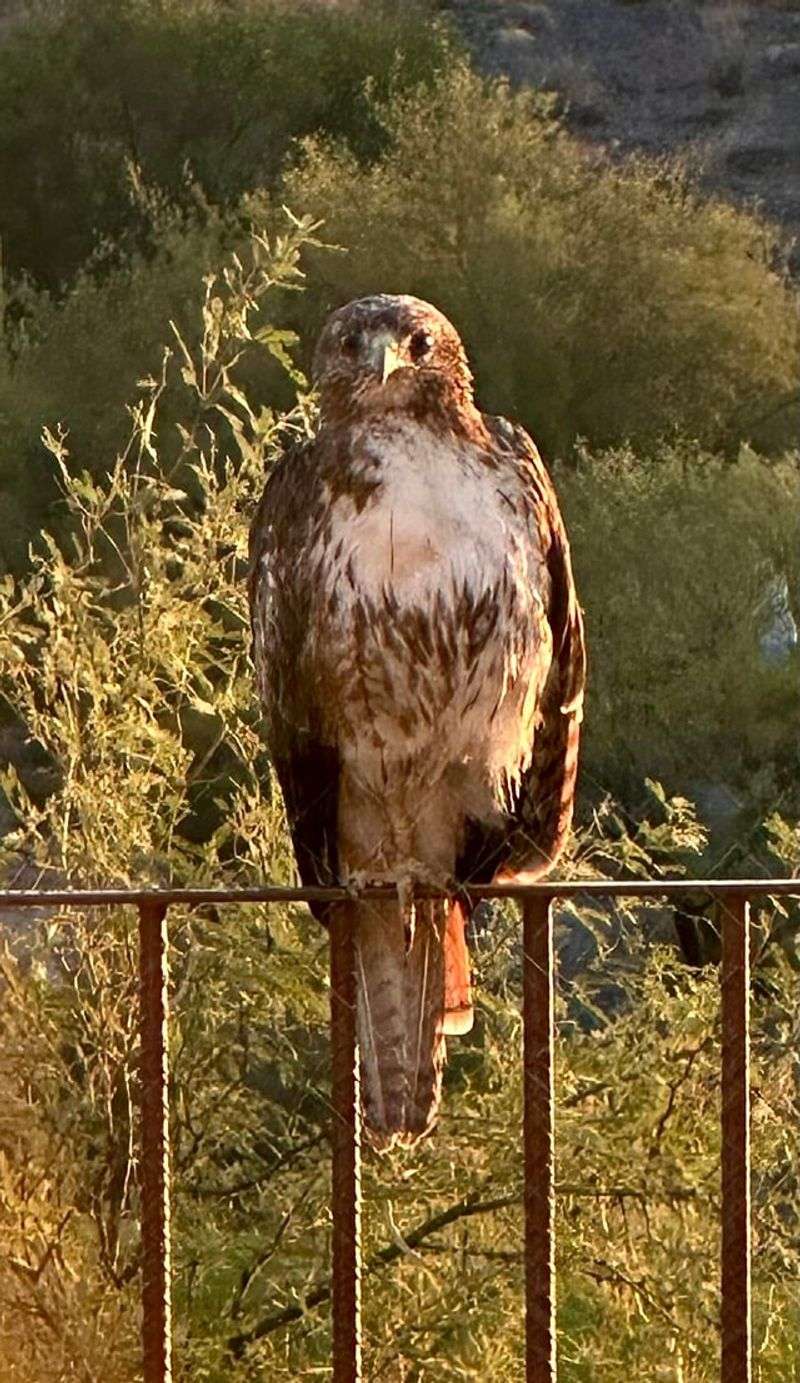
Back to your question: why the same spot? A good view is a plausible reason, and hunting is a plausible use of that view.
Still, a bird sitting on a perch tells you where it is, not why it came.
Some visits may be hunting attempts. Others could be scanning the area, resting between flights, or simply using a handy lookout.
From your window, those moments can look identical, so no one can assign a single motive to every visit.
The same caution applies to success. A hawk can wait a long time and leave without a catch, and a return trip does not mean it caught something the last time.
The California habitat account describes perch hunting as a method the species uses, which is different from saying every perch visit is a hunt.
Try keeping a simple log for a couple of weeks. Jot down the time of day, how long the hawk stays, whether it looks down steadily or preens and dozes, and whether it ever drops to the ground.
Patterns like these give you better clues than the perch alone.
Even then, treat your notes as observations, not proof. They can show you how the bird uses the spot, which is plenty to enjoy.
Gophers are one possibility, not a diagnosis
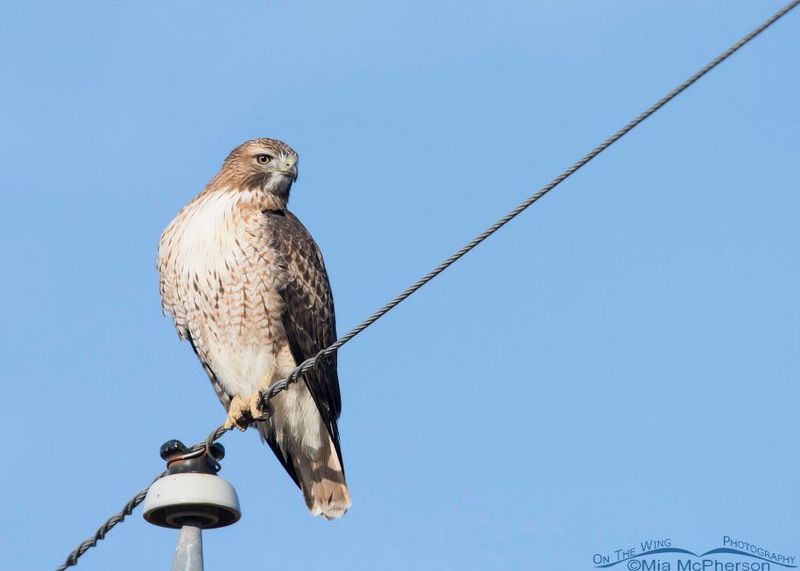
Pocket gophers do show up on the red-tailed hawk menu in California. So do other small mammals, birds, reptiles, and even carrion, according to the state’s habitat account for the species.
These hawks are opportunists, taking what is available.
Cornell’s life history summary adds mice, voles, rabbits, and ground squirrels to the list. With that much variety, a hawk over your yard could be after nearly anything, and you cannot tell what from the perch.
There is also the matter of location. Red-tailed hawks use a wide range of habitats, and a bird on your pole may be watching your lawn, the vacant lot behind it, or the open slope across the street.
Its presence suggests suitable surroundings, not that prey lives on your property.
That is why a hawk is not a reliable signal of gophers, or of unusually high rodent numbers. It is a sign that a wild predator finds your neighborhood useful, which is a nice thing on its own.
If gophers are your worry, the answer lies in the soil, not the sky. The next section shows what to look for.
Look for gopher signs on the ground
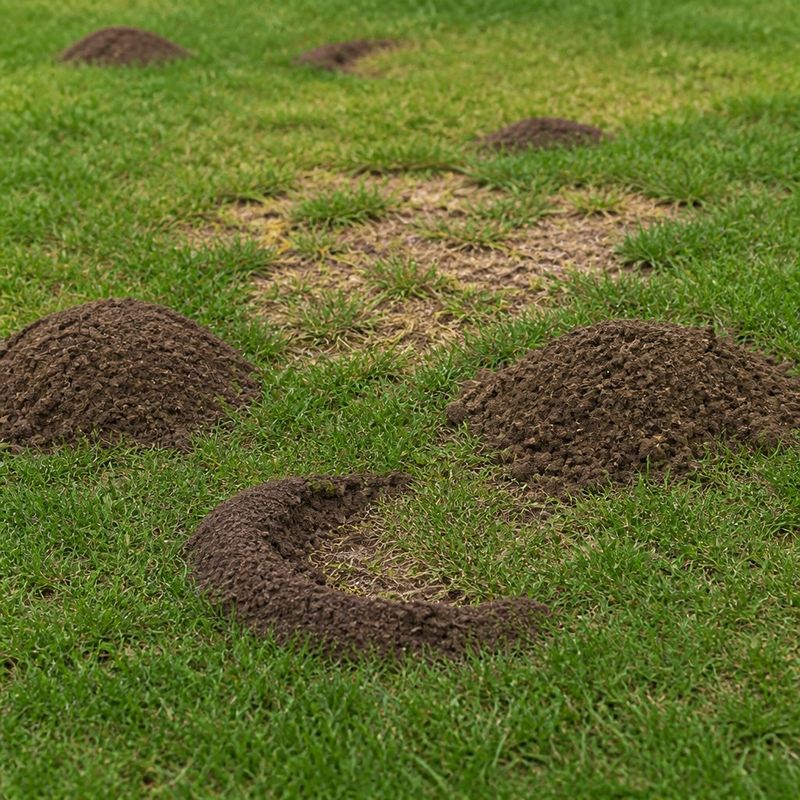
Pocket gophers spend most of their lives underground, which is exactly why a hawk is a poor detector. According to UC ANR’s Got Gophers? guidance, the clues you can check yourself are fresh soil mounds and plant damage.
Walk your yard slowly after irrigation or rain, when soil is soft. Fresh mounds look loose and recently pushed up, often fan-shaped, and new ones may appear over days.
Old, crusted, or weedy mounds may be left over from earlier activity.
Next, check plants. Wilting shrubs, seedlings that vanish, or roots that look chewed can point to gophers, though other problems can cause similar symptoms.
Gently tug a struggling plant, since gnawed or missing roots are a stronger hint than a droopy leaf.
The UC Statewide IPM Program page on pocket gophers recommends monitoring as the foundation of any plan. Take photos of mounds, mark new ones with a flag, and note dates so you can see whether activity is growing or fading.
If you find no fresh mounds and no plant damage, you may not have a gopher problem at all, no matter how often the hawk visits. That is a good result worth knowing before you spend money or effort.
Manage confirmed damage with supported options
Once you have confirmed fresh mounds or plant damage, you have real choices. UC guidance describes monitoring, trapping, and exclusion as management options, and none of them come with a guarantee.
Results depend on your soil, your yard, and how consistently you follow through.
Monitoring comes first, as covered in UC ANR’s gopher guidance. Keep tracking new mounds so you know whether a problem is active and whether anything you try is making a difference.
Trapping targets the animals directly and is a method UC IPM describes for home settings. Placing traps correctly in active tunnels takes some practice, so reading the instructions carefully, or asking a licensed professional, can save frustration.
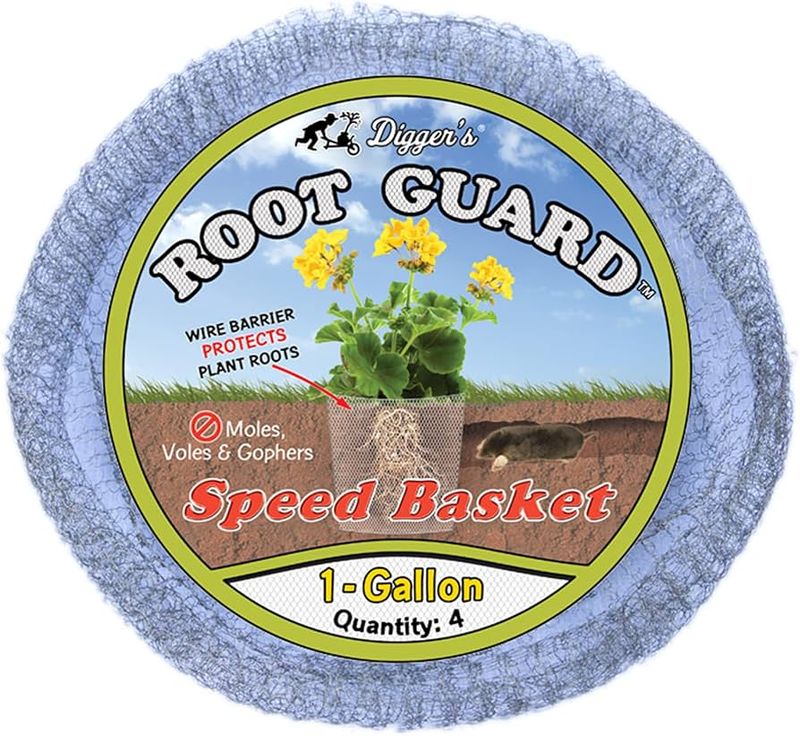
Exclusion protects what you care about most. Wire baskets around the roots of individual trees, shrubs, and vegetables can keep gophers from chewing them, and they are a sensible fit for prized plants.
Skip folklore fixes. According to the UC IPM pocket gopher page, repellent plants, vibrating stakes, and ultrasonic devices have not been substantiated or are ineffective.
Do not count on the hawk to finish the job either. It may take a gopher now and then, but no one can promise it will clear a yard.
Rodenticides can put a hunting hawk at risk
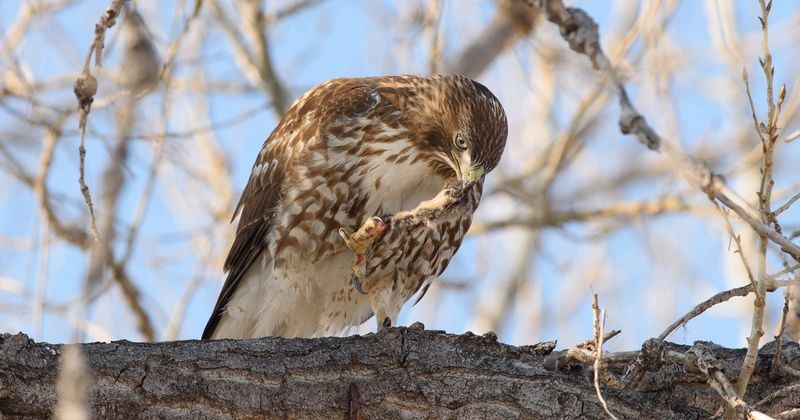
Poison bait does not stay where you put it. A rodent that eats it can wander around for a while, and a hawk that catches that animal can take in the poison too.
The California Department of Fish and Wildlife’s Wildlife Health Lab documents anticoagulant exposure in predators and scavengers, including fatal bleeding.
For that reason, never use poison to attract, control, or drive off a hawk, and never try to lure prey with bait. The state’s Department of Pesticide Regulation notes that hawks should eat rodents that have not consumed poison bait.
It also suggests considering stopping outdoor rodenticide use before installing hawk perches.
Rules here are not one simple ban. California restrictions apply to many rodenticide ingredients, and permitted uses depend on the product and how it is used, as summarized by UC ANR’s rodenticide update.
The DPR guidance on chlorophacinone and warfarin shows how details differ by ingredient.
So read the current label on any product, check state requirements, and consider whether a non-poison approach fits your yard. If you already have bait out, that is a good moment to rethink it.
Let the hawk remain wild
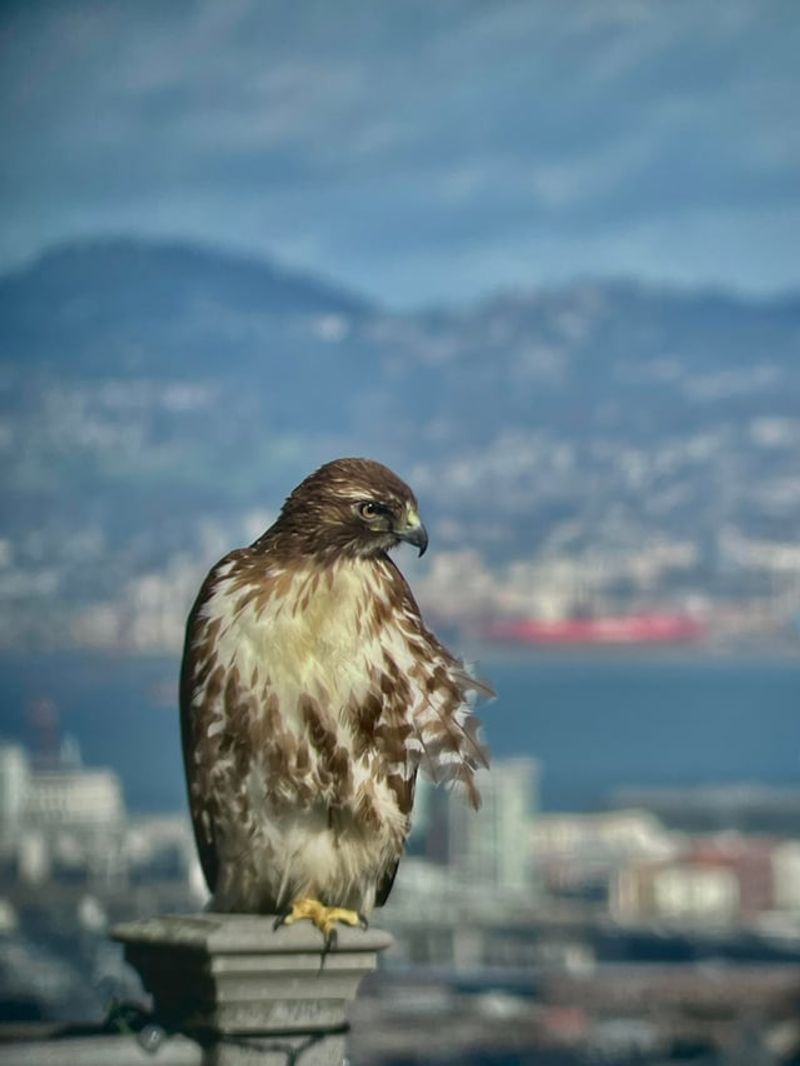
Here is the whole picture in a few lines. A repeated perch may simply be a good hunting vantage, but it does not prove a hunt, a catch, or gophers.
Let the soil, the plants, and your notes guide any pest decisions.
Enjoy the bird from a distance. Binoculars, a window, or a chair on the patio work well, and keeping your distance means the hawk can go about its day.
Do not feed it, bait it, chase it, capture it, or handle it.
There is a legal side too. The Migratory Bird Treaty Act prohibits the unauthorized take of protected migratory bird species.
If you find an injured hawk, contact a licensed wildlife rehabilitator instead of trying to help it yourself.
Some mornings the best yard feature is a quiet silhouette on a pole, keeping its own counsel.