
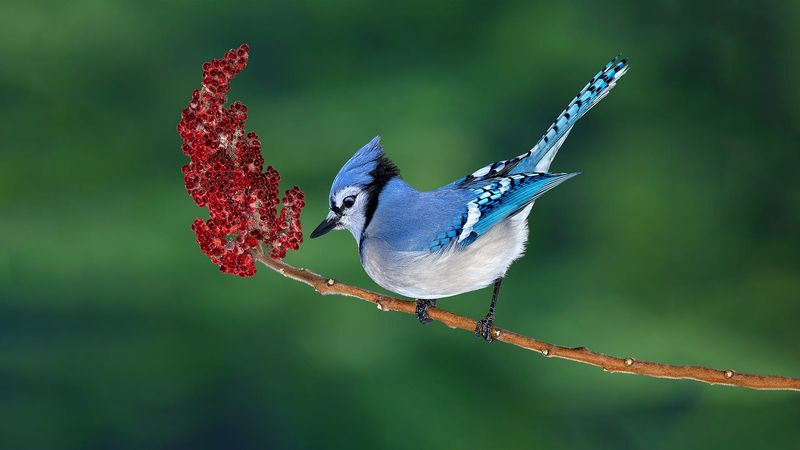
Maybe you have heard a loud, scolding call from the oak tree and looked up to see a flash of blue and white. Blue Jays can seem to be everywhere in fall, and many Central Texas gardeners start wondering what changed.
The answer has a lot to do with how Jays behave this time of year and what your yard offers. Here is how to read the signs without jumping to big conclusions.
Fall gatherings can make Blue Jays easier to notice
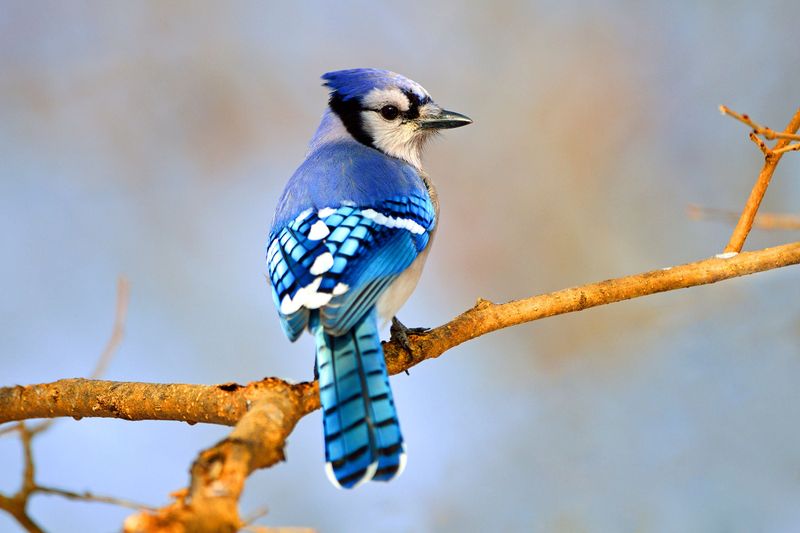
Blue Jays live in the eastern half of Texas, and Texas Parks and Wildlife describes them as generally nonmigratory here. Even so, the same agency notes they often travel in noisy family groups in late summer and fall, and sometimes in larger flocks.
A few birds calling back and forth can sound like a crowd.
That is the key difference between seeing more Jays and having more Jays. A group moving through your oaks together is hard to miss, while a single bird in summer might slip by unnoticed.
Louder, bolder, more visible behavior can change what you notice without changing how many birds live nearby.
Some individuals do move. Cornell’s life history notes describe Blue Jays as partly migratory, with some birds staying year-round and others traveling, and the timing and reasons for those movements are still not well understood.
That does not mean Jays head south together every autumn, and it does not tell us that Central Texas has gained birds this year.
A practical way to test your own sense of things is to jot down dates and group sizes for a few weeks. If the same four or five birds show up each morning around the same tree, you are probably watching one family on a regular route rather than a new wave of arrivals.
Acorns give Jays a reason to search and store food
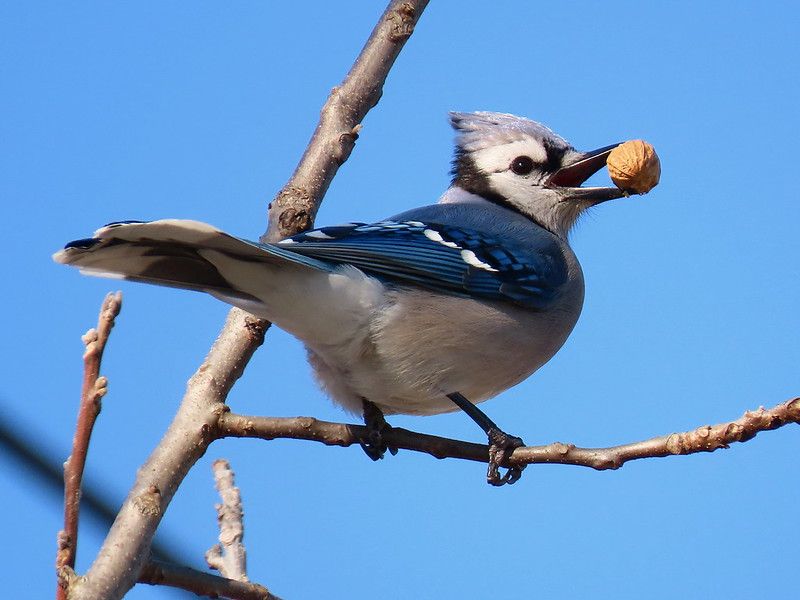
Watch a Jay near an oak long enough and you may see it work an acorn loose, fly off, and return for another. Blue Jays eat acorns, and they also tuck them away for later.
Cornell’s life history page reports that a jay can carry several acorns at once.
Fall is when many oaks drop their crop, so a yard with oaks may give Jays something worth searching for. All that coming and going, with birds flying in, grabbing food, and leaving again, can make activity look busier than it really is.
Cornell also describes a small radio-tracking study in which six birds each cached roughly 3,000 to 5,000 acorns in a single autumn. Treat that as a snapshot of what the behavior can look like, not a number to expect from a Central Texas Jay or your own yard.
Not every Jay you see is collecting acorns, either. A bird may be passing through, calling to its group, or looking for something entirely different.
Acorns are one plausible draw, and they are worth keeping in mind when you look at your trees.
Does one heavy acorn crop mean a mast year?
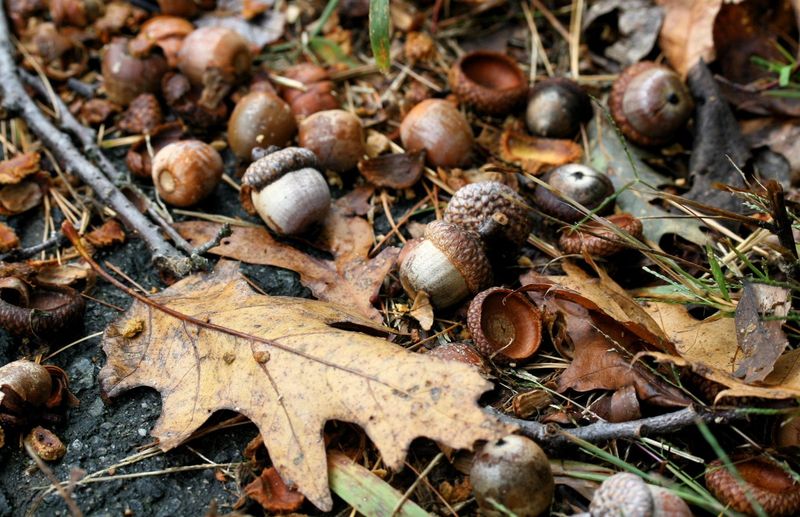
Gardeners use the word mast for the nuts and seeds trees drop, and a mast year means an unusually heavy crop. So if your oak is littering the driveway with acorns, it is tempting to assume the whole region is having a banner year.
One tree cannot tell you that.
According to Texas A&M AgriLife in Williamson County, acorn crops vary from year to year and can even differ between neighboring trees. Many local oaks may have mast events only every two to five years, and trees of the same species do not all follow the same schedule.
Weather plays a part as well. AgriLife points to drought, extreme summer heat, and late spring freezes as conditions that can affect how many acorns a tree produces.
The most useful habit is to treat your oak as a local observation. Walk the block and compare.
If the oak across the street is nearly bare, that tells you as much as your own full canopy does. A heavy crop in your yard is a fact about that tree this year, not a forecast for Central Texas.
Acorn caching can carry seeds beyond the oak
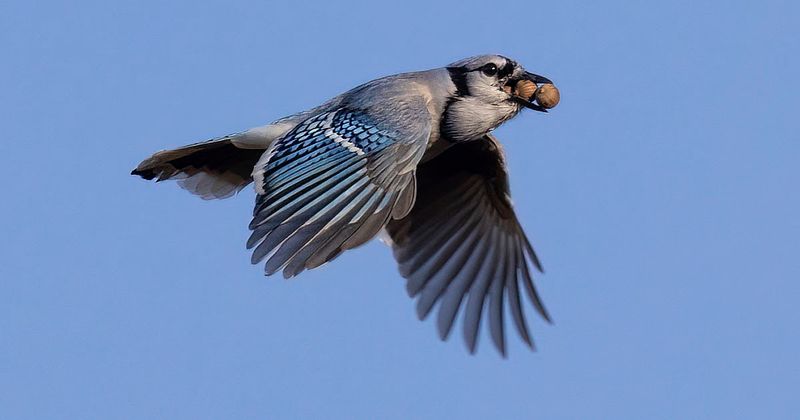
When a Jay hides an acorn, it may be doing more than stocking a pantry. A Virginia study of acorn dispersal by Blue Jays recorded birds carrying and caching acorns away from the parent trees.
That movement gives oaks a way to spread seed beyond their own shade.
The numbers and distances from that work belong to its Virginia study site. They are not estimates for Central Texas, and it would be a stretch to apply them to a suburban yard in Round Rock or Bastrop.
Caching also does not guarantee a new tree. Many cached acorns are eaten later, and others may never sprout.
The Virginia study documented caching and seedling evidence in its own area, which is different from promising that an acorn buried in your flower bed will grow.
If a small oak seedling does pop up somewhere odd, such as the edge of a bed or a gap in the fence line, a Jay is one possible explanation, along with squirrels and gravity. Decide early whether you want it there, since young oaks are easier to move or remove when small.
A Jay’s visit does not identify a single food source
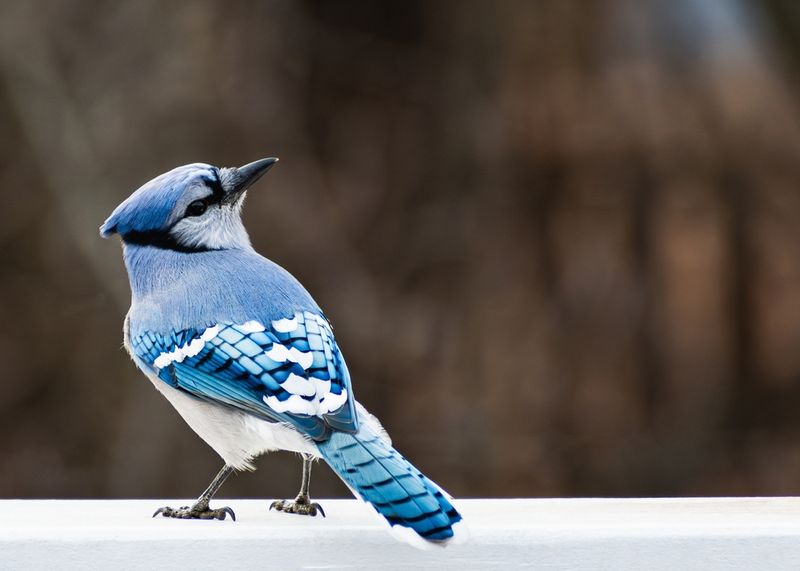
Jays are not picky in the way a hummingbird is. Texas Parks and Wildlife lists insects, other invertebrates, vertebrates, carrion, eggs, fruit, and seeds in their diet, so a visit could be about nearly anything.
Acorns are one item on a long menu.
Several things could be at work at once. Seasonal flocking can make groups louder, feeders can concentrate birds in one spot, and falling leaves can make birds easier to see.
Food availability across your yard and your neighbors’ yards may also matter.
From a single yard, you cannot sort these out. Seeing Jays near an oak does not prove they came for acorns, and it certainly does not prove an acorn-driven influx.
Cornell’s Blue Jay overview mentions that Jays do eat eggs and nestlings, but a feeding-habits study found evidence of eggs or birds in only about 1 percent of stomachs, so that is not a good explanation for fall visits.
A simple diagnostic: note what the bird is actually doing. Is it on the ground, at a feeder, in the canopy, or at a bird bath?
Those clues tell you more than the sheer number of birds.
Make an existing yard useful to wildlife
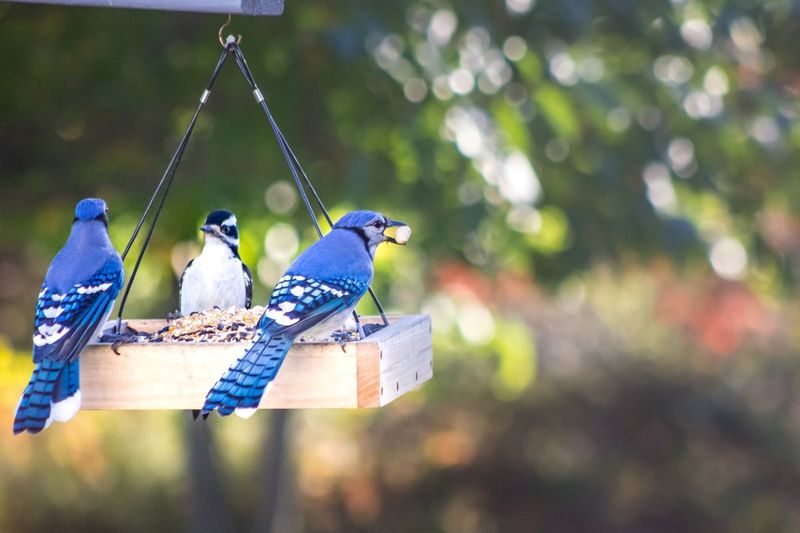
Start with what you already have. Healthy existing oaks are worth keeping where feasible, and Texas wildlife guidance from Texas Parks and Wildlife identifies several oaks as food sources for Jays and other wildlife.
Where it is safe, consider leaving some acorns on the ground in a corner or along a back border instead of raking up every one.
New oaks are a long-term habitat choice. They will take years to produce acorns, so plant them for the future, not as a quick way to bring in Jays.
No change to your yard can promise a particular number of visitors.
If you want to offer extra food, Cornell lists peanuts, sunflower seeds, and suet as foods Blue Jays use. It suggests tray feeders or post-mounted hopper feeders, which give a large bird room to land.
Keep feeders and baths clean. CDC guidance advises wearing disposable gloves when cleaning them and washing your hands afterward.
Think of it as routine yard care, not a reason to worry about ordinary Jay visits.
If you find a sick or dead bird, do not pick it up barehanded. Avoid unprotected contact and, if you are unsure what to do, check with local wildlife authorities.
Read the pattern, not one noisy afternoon
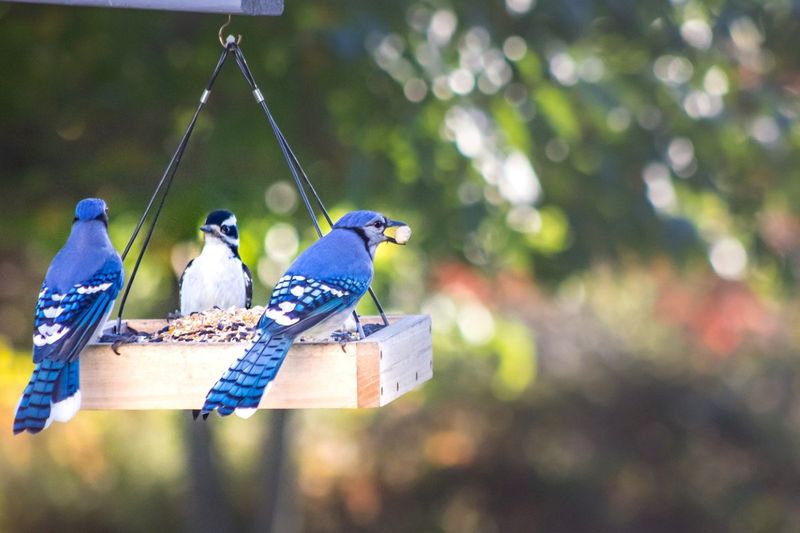
Fall flocking and food-seeking can easily explain why Jays seem louder and bolder, as Texas Parks and Wildlife describes. One yard’s sightings or one tree’s crop, which AgriLife notes can differ from the neighbor’s, cannot prove a population surge or a regional mast year.
What you can do is care for the oaks you have, as state wildlife guidance suggests, and keep any feeding area clean.
Your yard is not sending a forecast. It is just offering a good seat for watching a clever, noisy bird at work.