
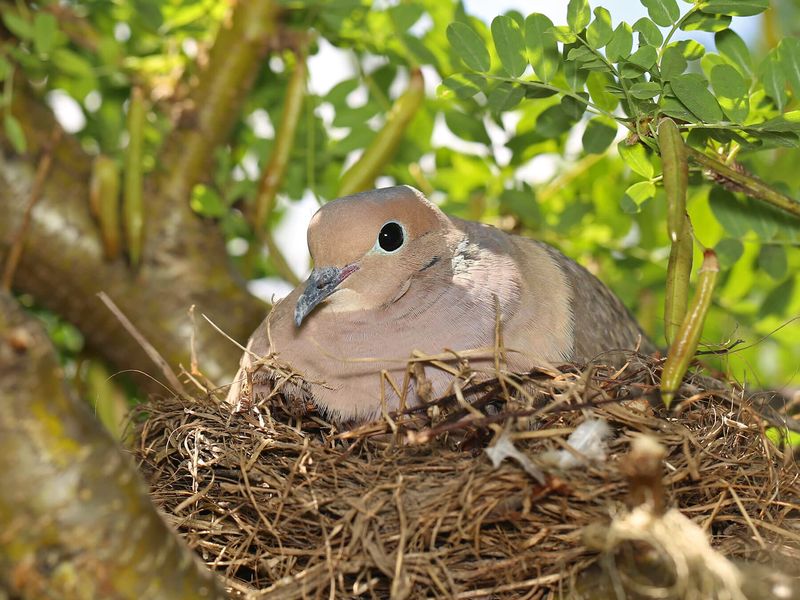
Every spring, a soft cooing from the backyard signals that a mourning dove has settled into a familiar spot in your yard again. Many California homeowners notice this pattern and assume the same bird is returning to the exact same branch, year after year, out of loyalty or habit. The truth is more interesting and more useful than that simple story. Understanding what actually draws a dove back to one corner of your yard can help you protect it, support it, and manage your outdoor space more responsibly.
A recurring site does not prove an identical branch
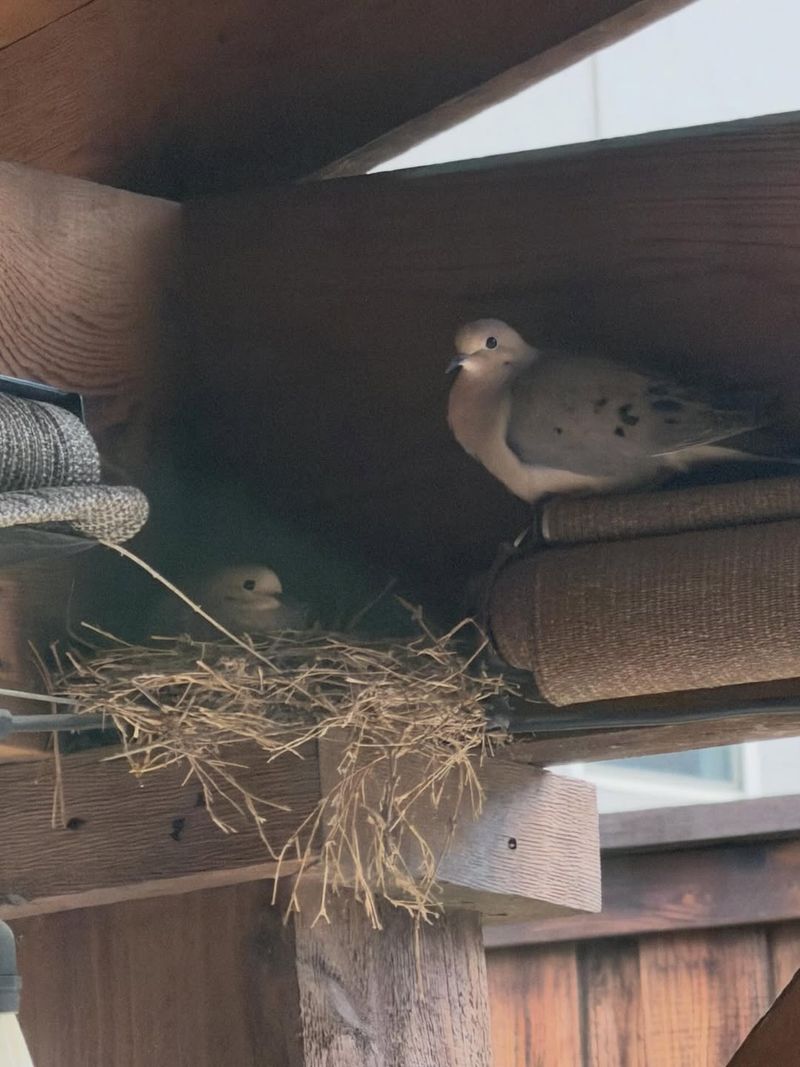
Spotting a mourning dove nesting in roughly the same part of your yard two or three seasons in a row feels like proof that one devoted bird keeps coming back to one favorite branch. That instinct is understandable, but the picture banding research paints is a little different. Banding studies on adult Mourning Doves found strong fidelity to a general breeding area, but the average distance between nest sites used in consecutive years was about 154 feet. That is closer to half a football field than to one precise twig.
What that gap tells us is worth sitting with. A returning dove may rebuild on the same limb, or it may choose a nearby shrub, a different branch in the same tree, or even a planter on the porch. Casual observation from a kitchen window rarely captures that kind of detail, so what looks like identical-branch loyalty could easily be area-level fidelity expressed in a slightly different spot each time.
There is also the question of identity. Adult male and female Mourning Doves look strikingly similar, and a yard with reliable food, water, and shelter may attract more than one pair across multiple seasons. Without leg bands or other individual markers, there is no way to confirm that the dove you see this May is the same individual you watched last April. The bird could be the same adult, a different adult drawn to a proven location, or a younger bird that learned the area from its parents.
None of that diminishes what you are observing. A recurring nest in the same general area of your yard is real evidence that something about that corner remains workable for a nesting bird, season after season. The location continues to offer what the bird needs, and that combination of conditions is worth understanding, protecting, and sustaining.
The nest needs a workable structure
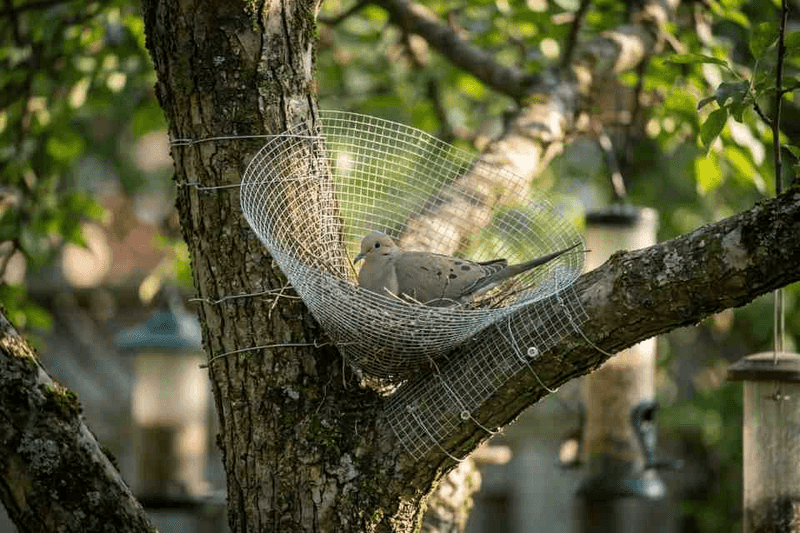
Mourning Dove nests are famously flimsy. California’s wildlife habitat account for the Mourning Dove describes the nest as a loose platform of twigs placed on a horizontal limb or in a tree crotch, typically somewhere between 3 and 20 feet above the ground. If you have ever seen one up close, you may have wondered how the eggs stay put at all. The answer, in part, is that the branch or crotch beneath the nest does most of the work.
Structural stability turns out to matter quite a bit. USGS research on Mourning Dove nest success identified structural stability as an important factor, because a nest that shifts, tilts, or collapses during wind, rain, or parental activity can fail before the eggs ever hatch. A branch that holds its angle through a spring storm, a tree crotch that cradles the platform without flexing, a limb thick enough to resist swaying: these are the physical features that can make one location consistently usable.
Perch availability matters beyond the nest itself. A study of Western Mourning Doves found that nest density in an area correlated strongly with the availability of natural perch sites, and that adding artificial perches increased nest density in experimental plots. The tree or shrub providing the nesting branch is also offering a place to land, survey the surroundings, and move to and from the nest without crossing open ground at low altitude.
None of this means your yard needs a specific tree species or a perfectly shaped limb. The point is that a branch your dove keeps using likely has physical qualities that hold up over time: a reliable angle, adequate thickness, and enough surrounding canopy to offer some shelter. That branch is doing real work, and recognizing it as functional rather than sentimental helps you make smarter decisions about when and whether to prune it.
The surrounding yard supplies the rest of the usable habitat
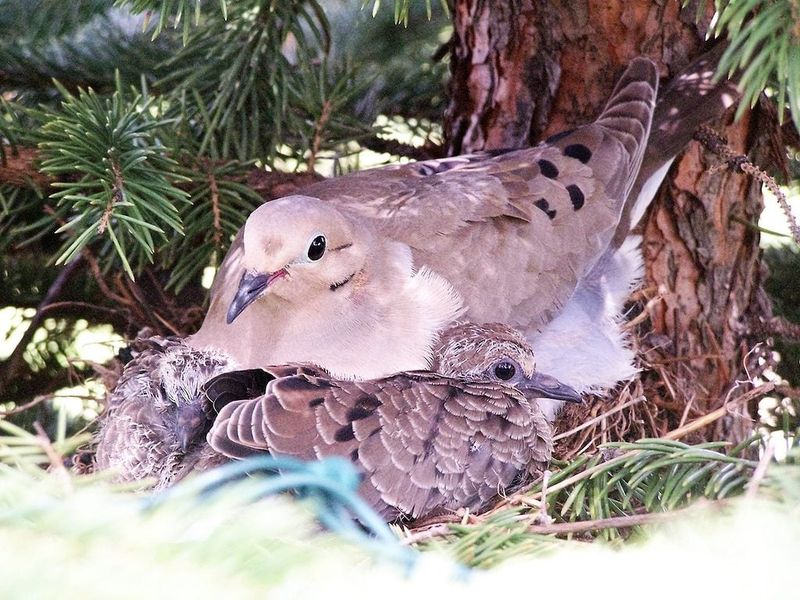
A stable branch gets the nest off the ground, but the bird still has to eat, drink, and feel safe enough to stay. Mourning Doves are primarily seed eaters, and the California wildlife habitat account notes that they forage on open or semi-open ground, which means a patch of bare earth, short grass, or gravel near the nest tree can be just as important as the tree itself. Dense ground cover that hides seeds or makes walking awkward works against them.
Cover matters too. Cornell’s Mourning Dove life history account notes that the species uses trees and shrubs for perching, roosting, and nesting across a wide range of habitats, including suburban yards, orchards, and open woodlands. A yard with at least some mature woody vegetation gives the bird places to move between the nest and foraging areas without being exposed at low height the whole time.
Water also contributes. California’s habitat description for the species includes nearby water as part of its requirements, and a clean, shallow water source within a reasonable distance of the nest tree adds to the site’s overall usability. That said, adding a birdbath does not guarantee that a dove will nest in your yard or come back to the same spot next year. Water is one piece of a larger picture, not a switch you can flip.
UC Cooperative Extension guidance on bird-friendly gardens and UC Master Gardener recommendations on native plants for birds both point toward retaining mature trees, allowing seed-producing plants to mature, and maintaining open foraging areas as practical ways to support birds in California yards. Still, one recurring nest is not a report card on your whole property. It shows that one corner offers a workable combination of conditions. The rest of the yard may still have unaddressed hazards: outdoor cats, reflective windows, pesticide drift, or dense fuel near the house.
The dove found one good spot; it has not certified everything else.
Protect an active nest before you manage the branch
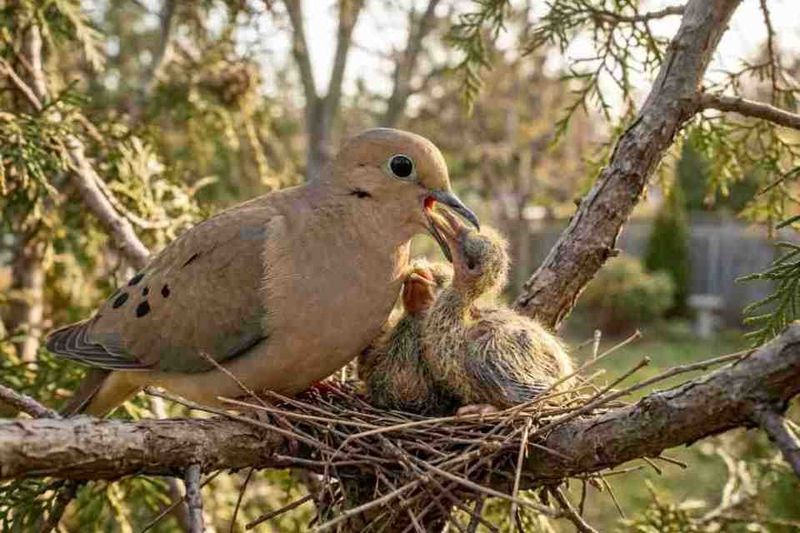
Finding an active nest on a branch you were planning to trim puts you in a position many California homeowners face every spring. The right move is straightforward: stop the project and give the nest space. Cornell’s NestWatch guidance on observing nests without disturbance recommends minimizing foot traffic near an active nest and postponing nearby projects entirely. Approaching too closely, especially during early incubation, bad weather, or the days just before the chicks fledge, raises the risk that the adults will abandon the nest.
Moving the nest is not a practical workaround. Cornell’s guidance on nesting birds near the home warns that birds may abandon a nest that has been relocated, and advises that relocation should be considered only in genuinely exceptional circumstances, very close to the original spot, with professional help if the parents do not return promptly. Relocating the nest yourself as a way to get the pruning done faster is not one of those circumstances.
Federal law is also in play. The U.S. Fish and Wildlife Service explains that most native bird nests, eggs, and chicks are protected under the Migratory Bird Treaty Act. Destroying a nest that contains eggs or chicks, or taking an action that results in the unpermitted take of a bird or egg, can violate federal law.
The MBTA does not resolve every possible nest situation with a single simple rule, and specific circumstances vary, but the general principle is clear: an occupied nest is off limits for routine clearing or maintenance work.
Practically speaking, Mourning Dove incubation takes about two weeks, and chicks fledge within another two to three weeks after hatching. Waiting out that cycle before resuming branch work is almost always the lower-risk path, both for the birds and for the homeowner.
Adjust pesticides and routine yard work around nesting
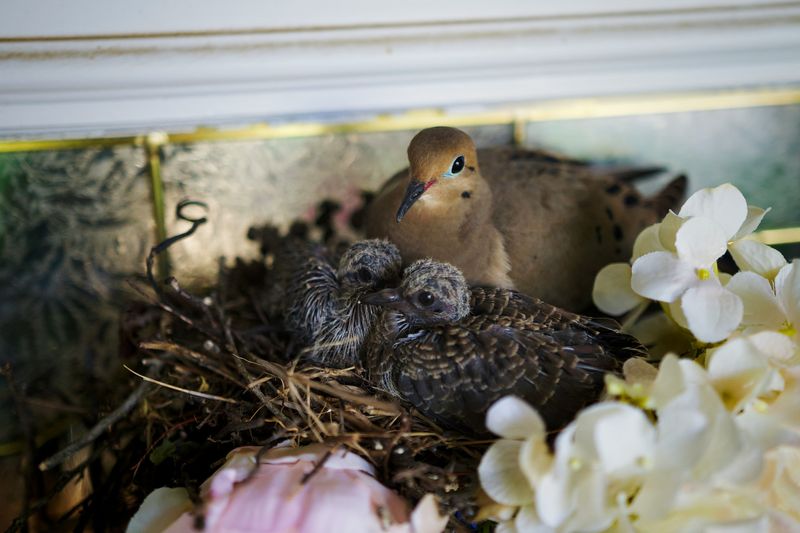
Ordinary yard maintenance can affect a nesting bird in ways that are easy to overlook. Pesticide applications are among the less obvious risks. A USGS comparison of Mourning Dove nesting in conventional and organic orchards found substantial pesticide exposure to nests in treated orchards and higher nest daily-survival rates in organic orchards under the study conditions. That research supports caution around active nests, though it does not prove that every lawn or garden pesticide product will cause nest failure.
Application method, timing, proximity, and the specific product all influence exposure and risk.
The practical recommendation is to postpone nonessential pesticide treatments near an active nest and, when treatment cannot wait, choose the least-toxic effective option. Broad spraying of herbicides, insecticides, or fungicides in the immediate area of a nesting tree is the scenario to avoid most. If a pest problem genuinely cannot be delayed, keeping the application well away from the nest and minimizing drift are reasonable steps, but they do not eliminate risk entirely.
Routine pruning, power washing, mowing near the base of the nest tree, and similar maintenance activities carry their own disturbance risk. NestWatch guidance consistently points toward reduced activity and noise near the nest during the active period. Scheduling loud or disruptive work for after fledging is a simple adjustment that costs little.
Once the chicks leave and the nest goes quiet, resist the impulse to immediately clear it away. Confirm the nest is genuinely inactive before handling it, and remember that federal protections apply to eggs and chicks. An old empty nest is not automatically a problem, and Mourning Doves sometimes reuse or rebuild near a prior site, so removing it without thought may eliminate a feature the bird was counting on next season.
Support habitat while meeting California fire rules
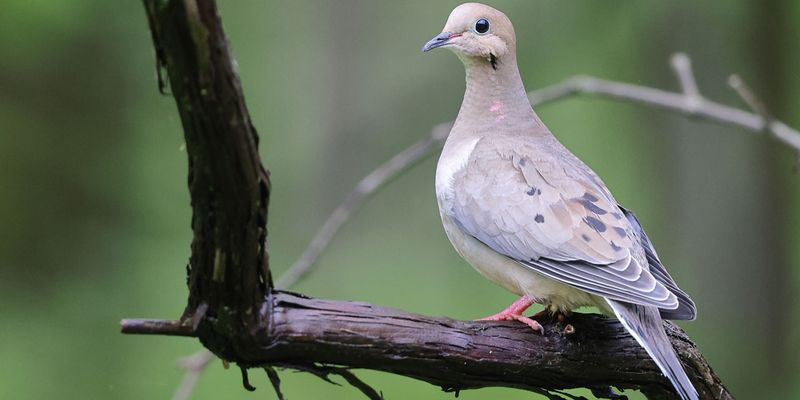
Keeping a yard usable for Mourning Doves and keeping it fire-safe are not opposing goals, but they require deliberate choices. UC Cooperative Extension guidance on bird-friendly gardening recommends retaining mature trees and shrubs, allowing seed-producing plants to mature, maintaining open ground-foraging areas, and providing a clean, shallow water source. For water, the guidance advises changing non-circulating water every one to two days to keep it fresh and reduce mosquito risk, which matters in California’s warm months.
UC Master Gardener recommendations on native plants for birds point toward seed-producing natives that can reduce irrigation needs after establishment. Native plants can support the broader yard ecosystem, but the word “native” does not automatically mean fire-safe. A dense planting of any species, native or not, that goes unmanaged and accumulates dead material near a structure is a fuel load, not a habitat feature.
CAL FIRE’s defensible space guidance and the Board of Forestry’s defensible space zone requirements make clear that dead vegetation, debris, and dense plantings must be removed or managed within required clearance distances from structures. Local rules may be stricter than state minimums. The trees and shrubs that provide nesting cover and foraging habitat need to be spaced, pruned of dead material, and maintained in a way that does not create a continuous fuel path toward your home.
UC Agriculture and Natural Resources guidance on wildfire-resilient landscaping emphasizes plant spacing, removal of dead material, and site-specific planning as the keys to combining fire safety with functional habitat. The goal is a yard where a dove can find a stable perch, open foraging ground, and water, and where none of those features puts your home at greater risk during fire season.
Treat the recurring nest as useful feedback, not a verdict
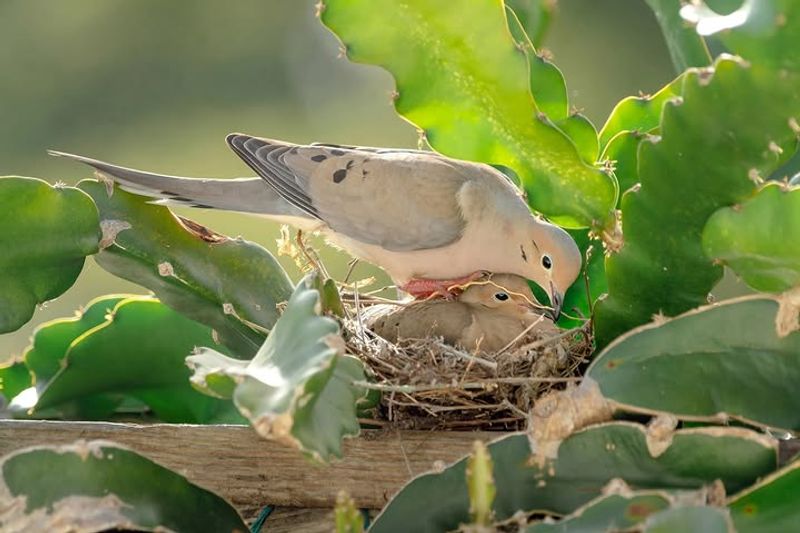
A mourning dove returning to the same general corner of your yard is telling you something specific and limited. Banding research supports the idea that adult doves show fidelity to a general breeding area, and California’s habitat account describes the combination of structure, cover, food, and water that makes a site usable. What the recurring nest does not tell you is which individual bird is using it, whether the previous brood fledged successfully, or whether the rest of your property meets any particular standard for wildlife health.
Use the observation as a prompt, not a conclusion. Protect the active site by reducing foot traffic and postponing maintenance near the nest. Observe from a comfortable distance rather than checking in close. Improve the surrounding habitat thoughtfully: keep mature woody plants, allow seed-producing vegetation to contribute food, maintain open ground nearby, and provide clean shallow water where it fits your yard and your water budget.
Keep every habitat decision within California’s safety requirements. CAL FIRE’s defensible space standards apply regardless of what is nesting in your yard, and dead vegetation left in place for the birds is still a fire hazard. A yard that works for a nesting dove and meets your local clearance rules is a more honest achievement than one that prioritizes wildlife at the expense of fire safety.
The dove found one reliable corner. Your job is to keep it reliable without creating new problems elsewhere in the yard. That balance, maintained season after season, is what a recurring nest is actually pointing toward.