
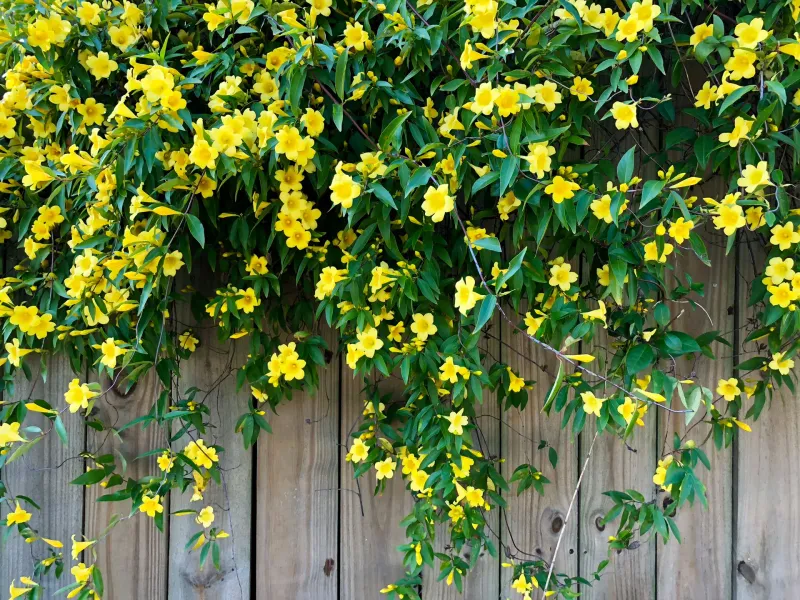
Picture a plain wooden fence draped in glossy green vines and dotted with sunny, sweet-smelling yellow flowers while most of the yard still looks asleep. Carolina jessamine can put on that show in late winter, which makes it a popular pick for Texas fences.
It also asks for some planning, because the timing of its flowers varies and every part of the plant is poisonous. Here is how to decide if it fits your fence and how to get it off to a good start.
When can Carolina jessamine bloom?
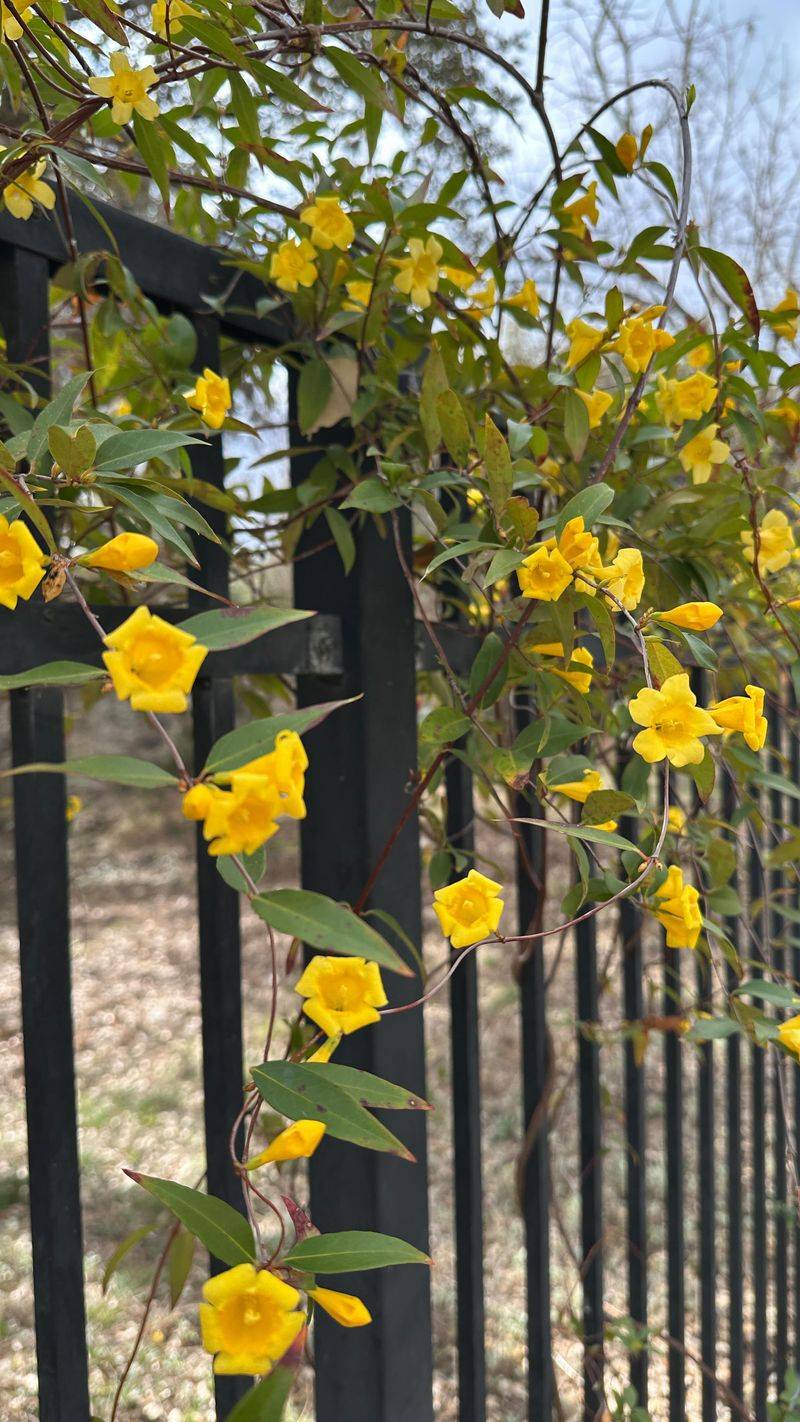
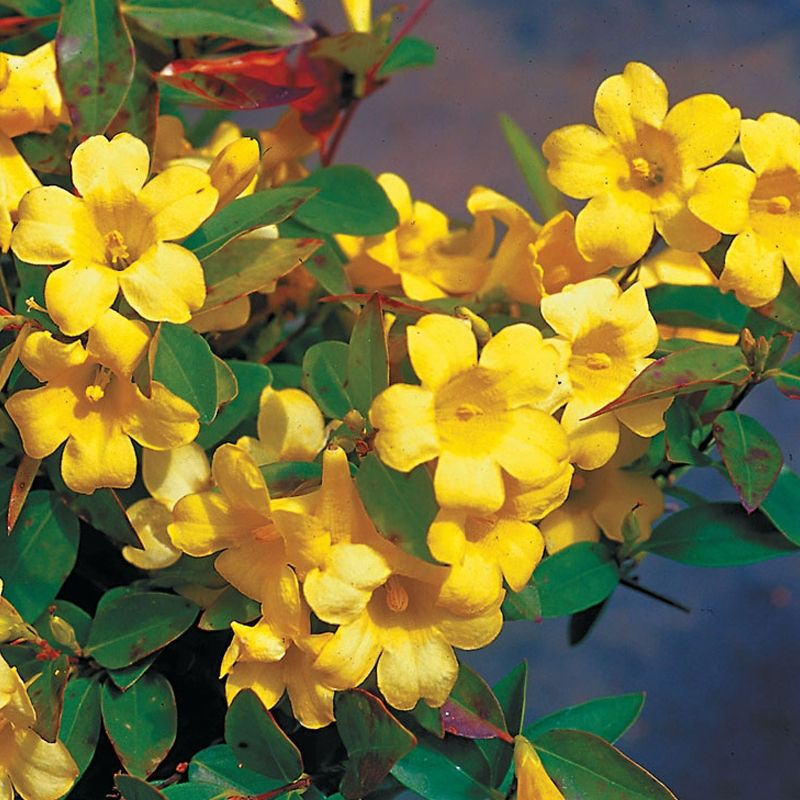
Carolina jessamine is a twining vine with fragrant, bright yellow, trumpet-shaped flowers. When people say it turns gold, they mean the blooms.
Texas A&M AgriLife Extension in Bexar County describes the fragrant flowers as appearing from late winter to early spring.
Another Texas source gives a wider window. Texas Parks and Wildlife lists flowering from January through April.
Put the two together and you get a loose range rather than a fixed date.
Weather and location both shift the timing. A mild winter in one part of Central Texas may bring flowers earlier than a colder stretch a few counties over, and your own fence may run ahead of or behind a neighbor’s.
Think of the bloom period as a window you watch for, not an appointment on the calendar.
The leaves are a separate story. Clemson Extension describes the flowers as yellow, and the foliage stays green or may bronze in winter.
The gold is in the blossoms, and the vine can offer it before many other spring bloomers get going.
A sunny fence gives the twining vine room to climb
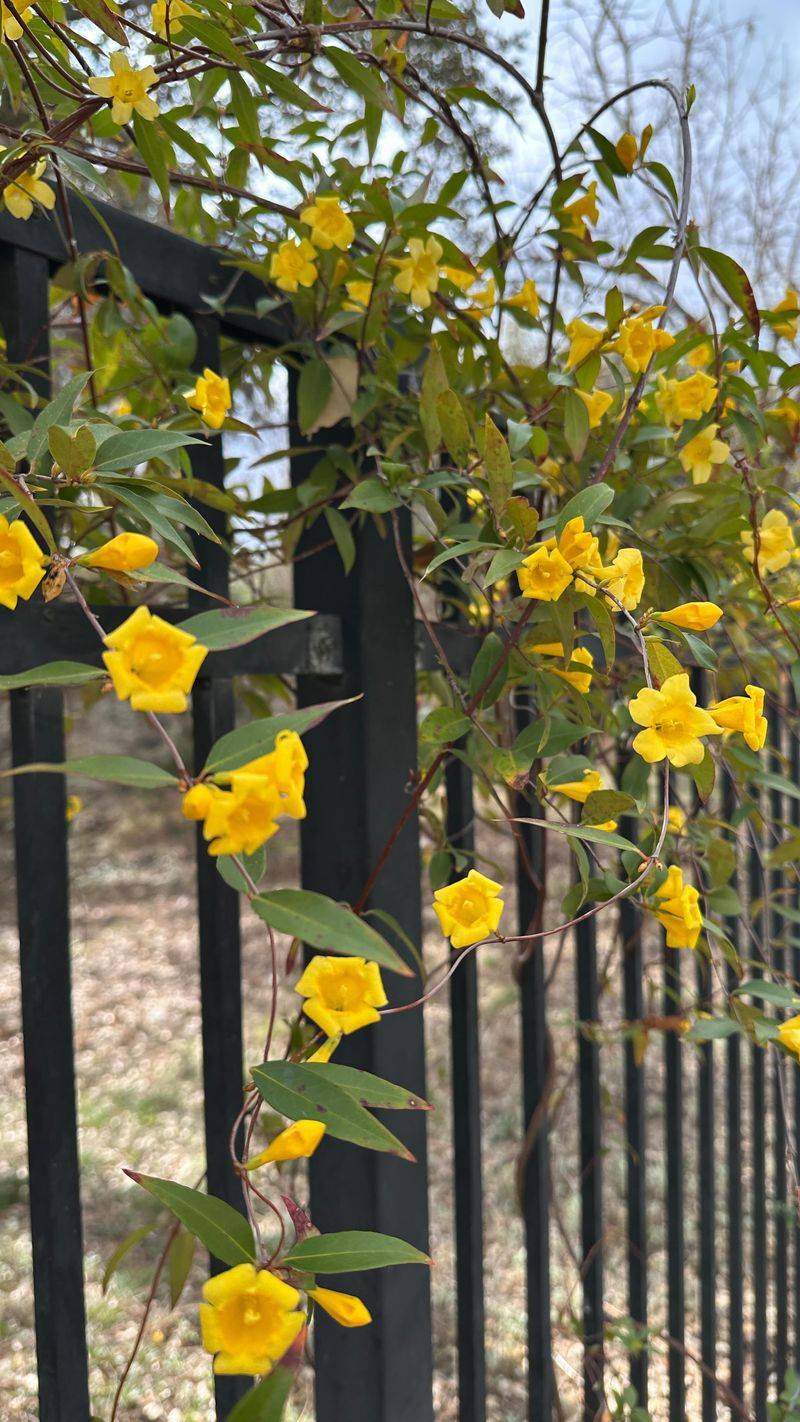
Carolina jessamine climbs by twining its stems around whatever it can reach, such as wires, lattice, or slats. That habit makes a fence or trellis a natural fit.
Texas references give a mature height of roughly 10 to 20 feet, so leave it some vertical room.
Spacing matters when you plant a row. Clemson Extension suggests setting fence or trellis plants 4 to 8 feet apart.
Closer spacing fills in sooner, while wider spacing gives each vine more space.
Light is the next choice. The vine tolerates partial shade, but flowering is more prolific in full sun, so a fence that gets plenty of direct light is your best bet for a strong display.
Finally, think about where this plant truly belongs. Texas Parks and Wildlife notes it prefers East Texas woodlands, and AgriLife places its native Texas habitat in the eastern and southern parts of the state.
It can grow in Central Texas gardens, but it is not native to every Central Texas locality.
Fall planting begins a gradual establishment process
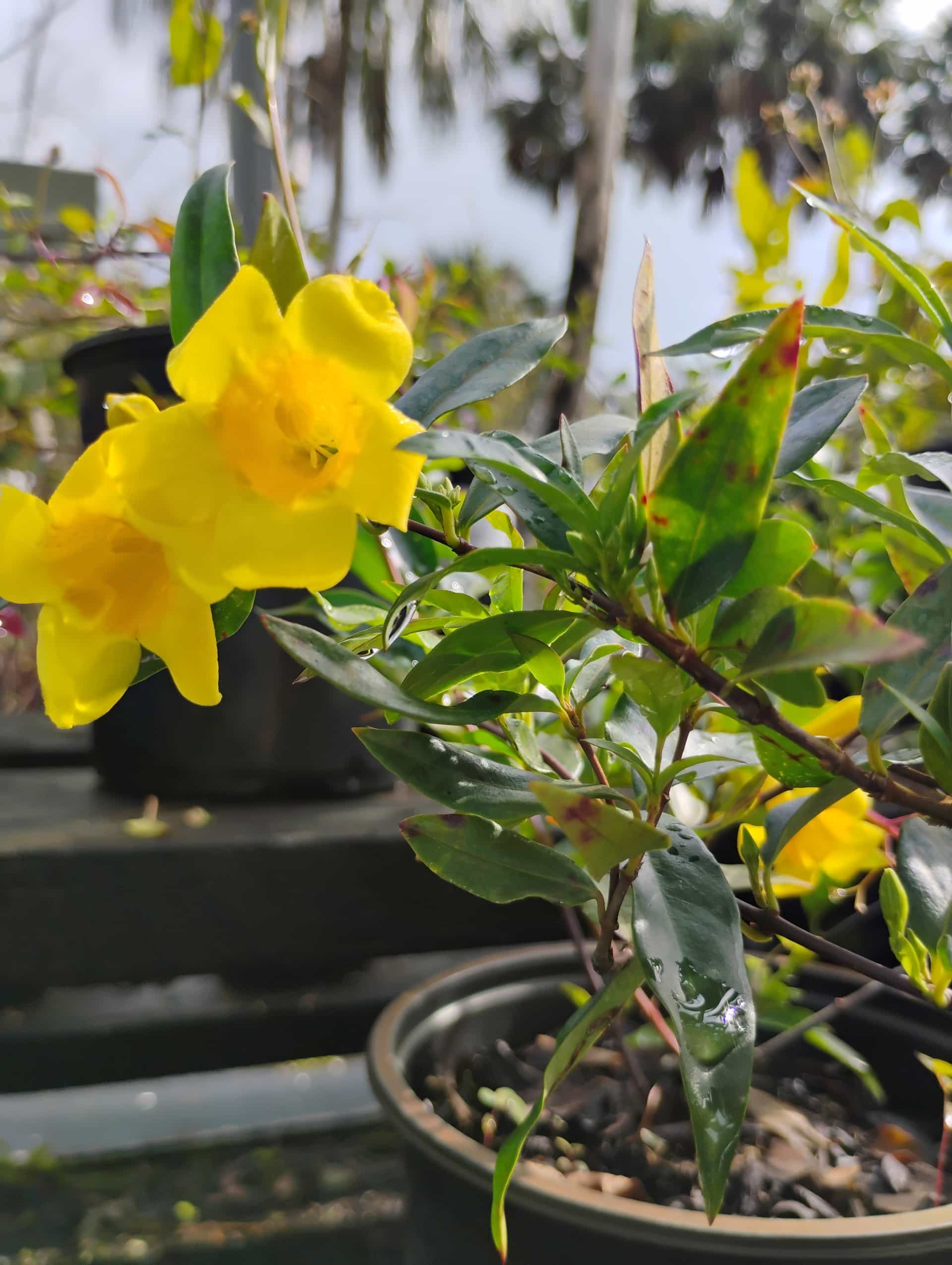
Cool fall weather is a good time to get a vine into the ground. Clemson Extension recommends planting container-grown Carolina jessamine in cool fall weather.
It also favors rich, well-drained soil, with moist soil being ideal.
Dig a hole as deep as the root ball and a bit wider, set the plant at the same level it grew in the pot, and place it close to the fence or trellis. Guide the first stems toward the support so they can start twining.
Go in with patient expectations. Fall planting gives roots a head start, but it does not guarantee flowers the following winter.
The first season is about building roots, not putting on a show.
North Carolina State Extension describes modest growth until the plant is established. It says reaching 12 to 20 feet on a support can take three to four growing seasons.
If your young vine looks small and quiet at first, that is normal.
Water according to establishment and local conditions
A newly planted vine and an established one have different needs. While roots are still settling in, the plant depends on you for steady moisture, so check the soil near the root ball often.
Let the weather and soil, not a fixed calendar, tell you when to water.
Once established, the picture changes. Bexar County AgriLife lists low water needs for established plants and says the vine adapts to heavy clay.
It also notes that supplemental water is needed farther west than the vine’s native habitat.
That caution matters across Texas, where rainfall and soil vary widely. Low water needs do not mean drought-proof.
UF/IFAS says it performs best with regular watering and can drop leaves when it gets too dry.
In practice, watch the vine. Wilting, thinning, or dropping leaves during a dry spell is a sign to water deeply.
Because conditions differ from one Texas yard to the next, trust what your own fence shows you.
Expect changing foliage and gradual coverage
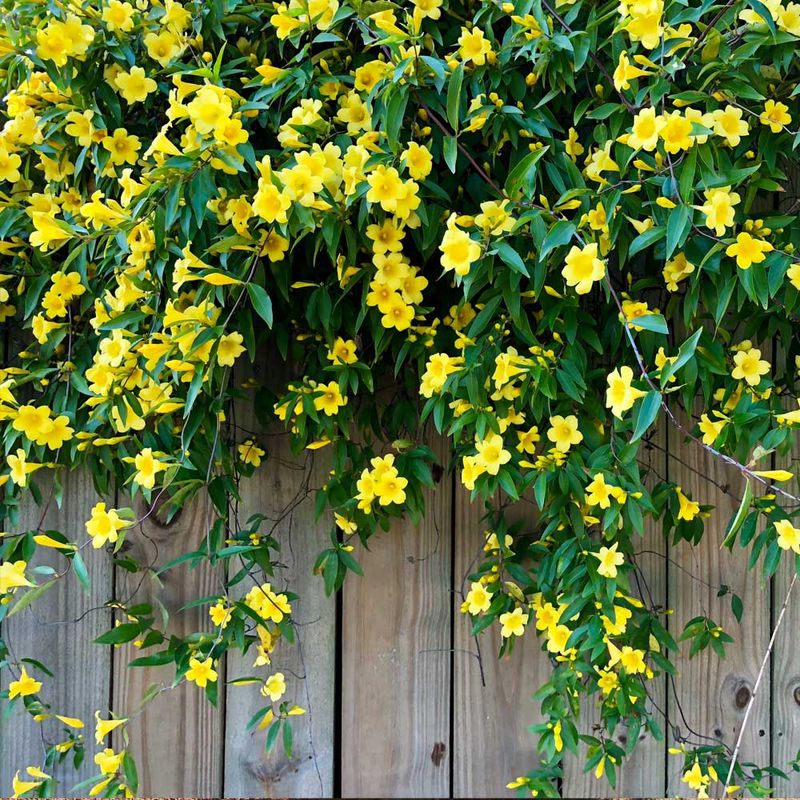
Leaves are not always the same shade year-round. Clemson Extension and UF/IFAS call the plant evergreen, while Bexar County AgriLife calls it semi-evergreen.
Expect evergreen to semi-evergreen foliage, depending on local conditions.
North Carolina State Extension notes that leaves can take on a bronze cast in winter. If your fence vine looks a little coppery in January, it is likely just seasonal change, though a dry spell can also cause leaf drop.
Coverage comes slowly. A young vine may look sparse for a few growing seasons before it fills a fence.
Training stems along the support early helps spread growth evenly.
Keep the colors straight in your mind. Foliage ranges from green to bronze, and the yellow belongs to the flowers.
That is why a fence can look leafy and green for months and then light up when blooms open.
Prune after the flowers fade
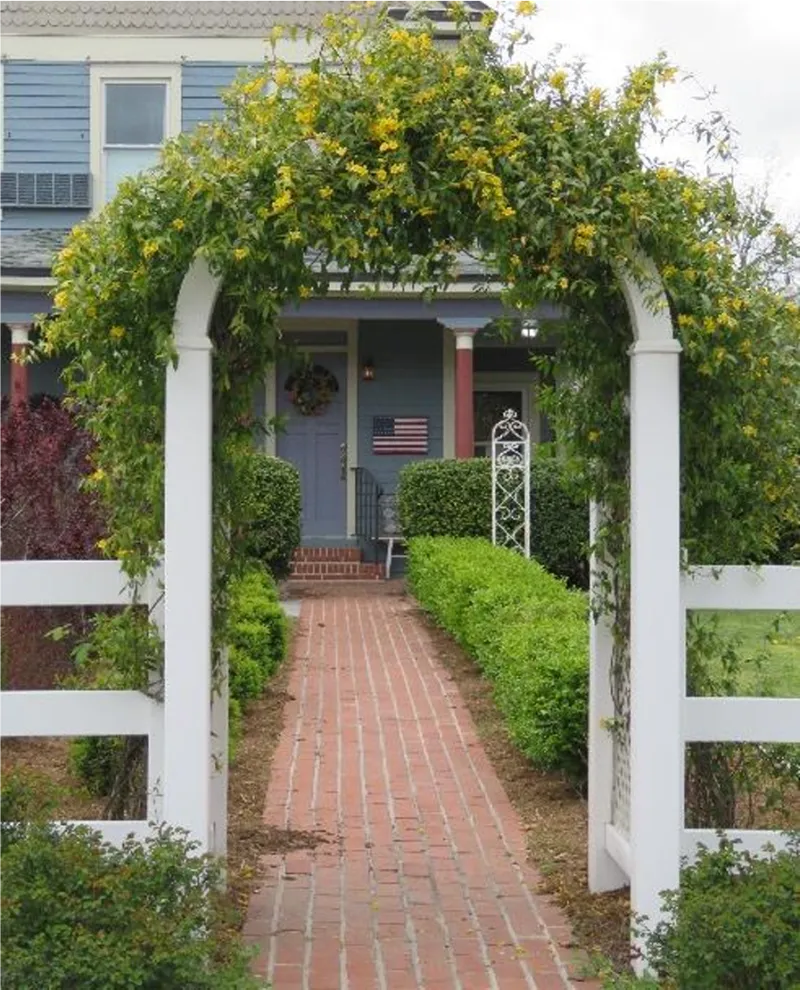
Timing is simple: wait until the flowers fade. Clemson Extension advises pruning after bloom, mainly to shape or train the vine.
North Carolina State Extension gives the same advice. Pruning right after the show means you are not cutting away the blooms you were waiting for.
Use the job as routine shaping. Guide wandering stems back onto the fence, tuck loose growth into the wires or slats, and keep the vine from sprawling where you do not want it.
Wear gloves and wash your hands afterward, since the sap can irritate some people’s skin. Keep clippings away from pets and children too, because every part of the plant is poisonous.
Keep the poisonous vine out of reach
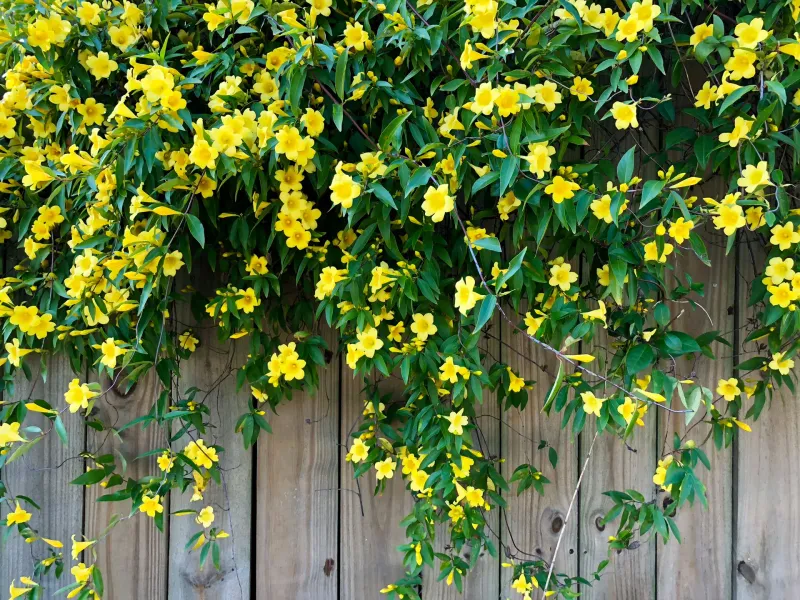
Before you pick a spot, know this: all parts of Carolina jessamine are poisonous if ingested. Texas A&M AgriLife Extension states this plainly, and that includes the flowers, leaves, and stems.
Skin matters too. UF/IFAS notes the sap can irritate some people’s skin, so do not treat handling as risk-free.
Pets are at risk as well. Pet Poison Helpline lists potentially severe effects after ingestion by pets.
Choose a fence that children and animals cannot reach, such as one along a back border or on the outside of a play area. Sweep up fallen flowers and clippings, and teach kids not to taste or pick any part of the vine.
If you suspect someone has eaten it, call poison control or a veterinarian right away.
Plan for a weather-shaped winter flower display
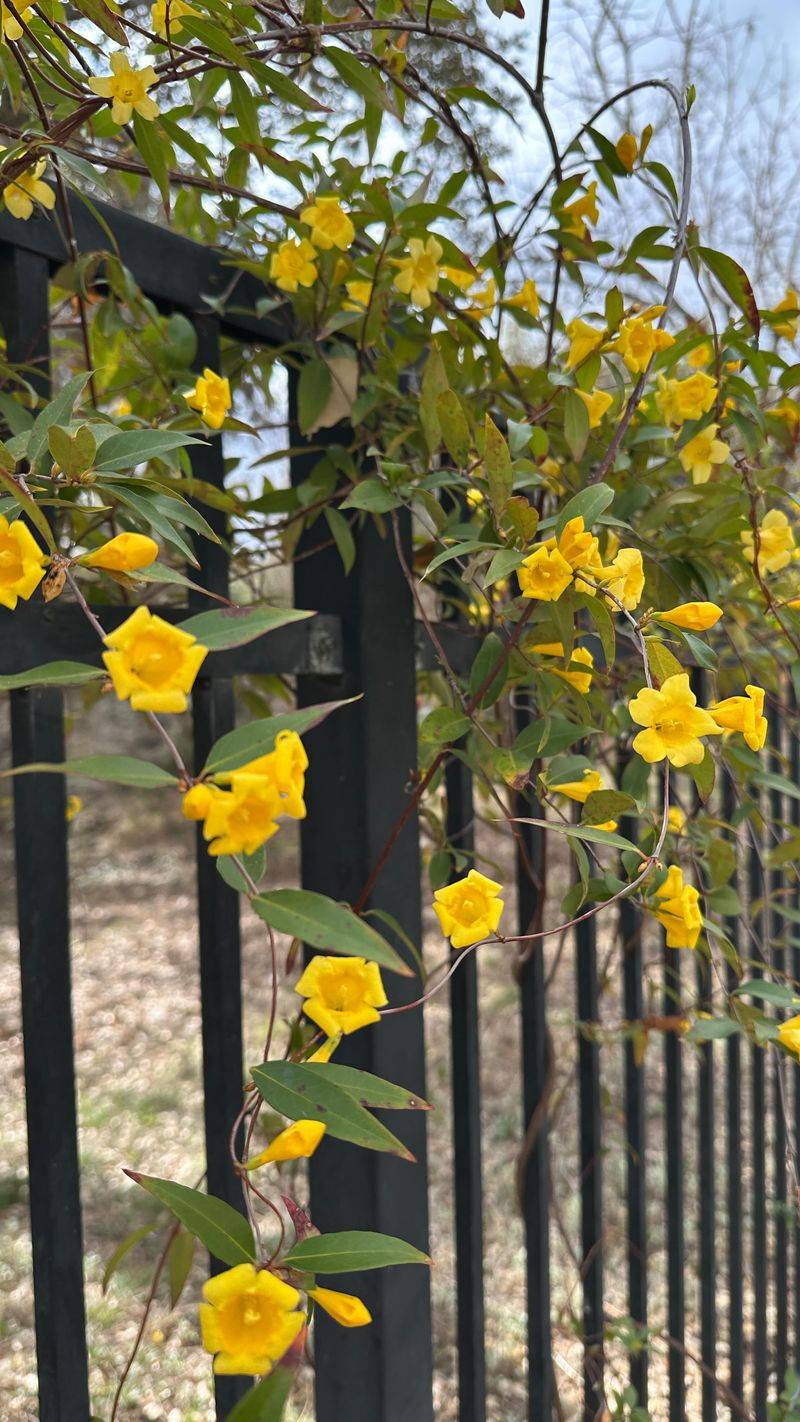
Carolina jessamine can bring fragrant yellow flowers to a sunny, suitable fence, and AgriLife guidance and Clemson Extension support fall planting, patient training, and pruning after bloom.
Bloom timing shifts with weather, and a fall-planted vine may not flower the first winter. Let your local water conditions and the plant’s toxicity weigh in on where it goes, and see Pet Poison Helpline if animals share your yard.
Some winters the gold arrives early, and some years it makes you wait.