
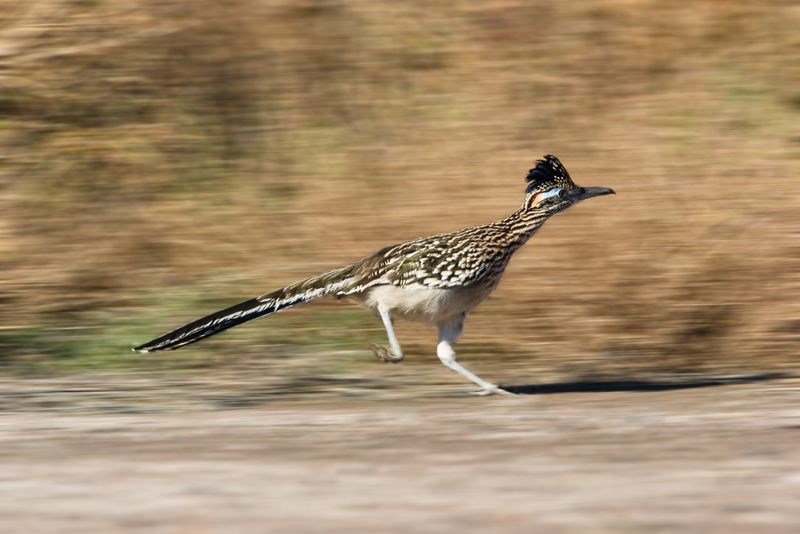
Something catches your eye near the back fence, and before you can blink, a long-tailed bird sprints across the open ground and disappears into the brush. Greater Roadrunners have a way of turning an ordinary afternoon in a Central Texas yard into something worth talking about.
But if you have been seeing the same bird trot through more than once this fall, you probably have questions about what it means, whether it is there for the scorpions, and what you should do about it. The answers are more practical, and a little more complicated, than the bird’s reputation suggests.
Fall sightings show presence, not a new Central Texas invasion
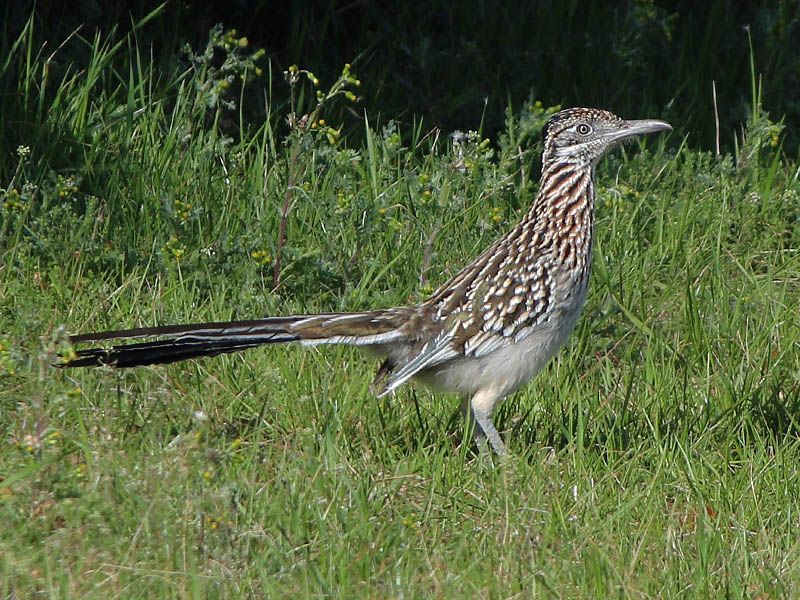
Greater Roadrunners are not newcomers to Central Texas neighborhoods. Texas Parks and Wildlife describes the species as a year-round resident across much of the state, from Hill Country brush and limestone terrain to East Texas woodland edges and the mesquite and prickly pear country farther west.
Spotting one this fall does not mark the start of a seasonal arrival or a documented neighborhood influx. The bird was almost certainly around in summer, too.
The phrase “claiming your yard” makes good conversation, but it is informal shorthand rather than a scientific description. A roadrunner seen crossing your patio or hunting near your fence line is most likely moving through a much larger home range, not planting a flag on your property.
One sighting, or even several over a short stretch of days, cannot confirm that the bird has nested nearby, selected your lot as an exclusive territory, or intends to stay through winter.
The Audubon field guide for the Greater Roadrunner characterizes the species as a permanent resident through most of its range, with some individual wandering. That wandering, combined with the species’ tolerance for sparse suburban development, explains why a bird might appear in a yard that never hosted one before.
It does not mean a migration wave is passing through or that Central Texas is experiencing a fall population surge.
What the sighting does tell you is that your property offers something the bird finds useful, whether that is open ground for running, scattered shrubs for hunting, or simply a convenient path between two larger patches of habitat. That is worth paying attention to, even if it stops well short of yard adoption.
Repeated behavior can reveal regular yard use
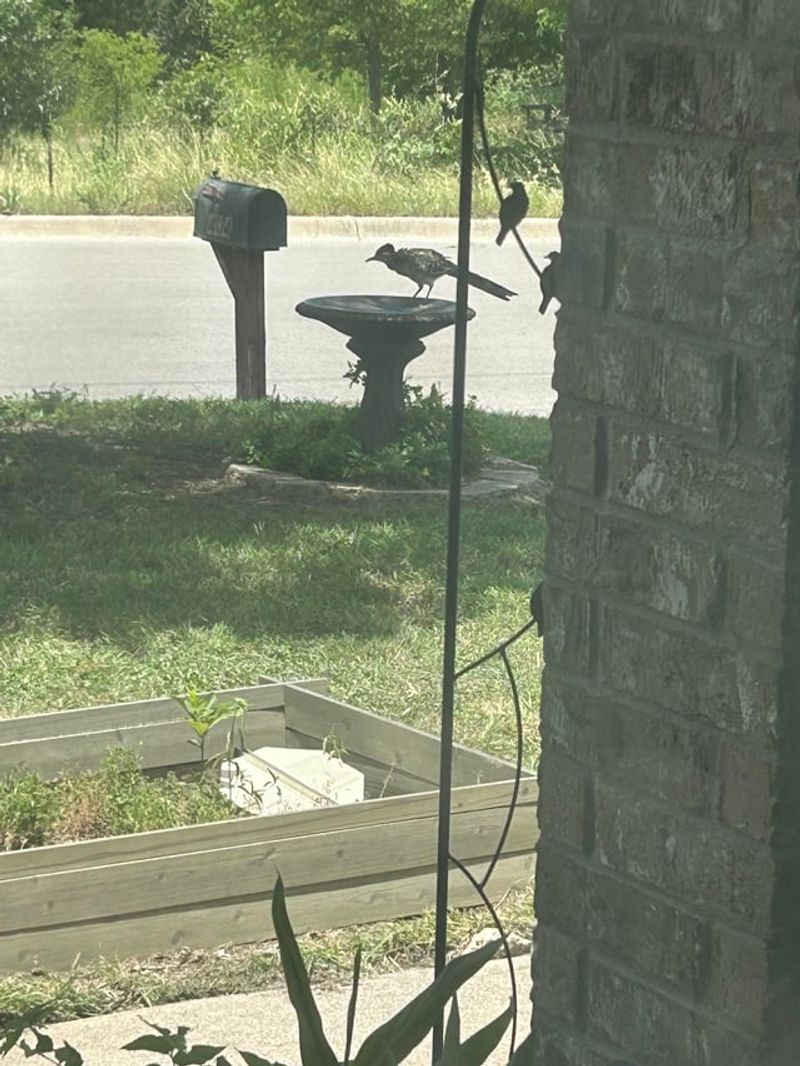
A single roadrunner crossing your yard tells you the bird passed through. Seeing the same bird follow the same open corridor along your fence line three mornings in a row tells you something more specific: your property may be part of a regular foraging route.
Cornell Lab of Ornithology’s All About Birds describes roadrunners as ground foragers that patrol and defend territories that can stretch to roughly a half-mile in diameter. A yard in Central Texas fits comfortably inside that kind of range.
Certain behaviors are worth tracking if you want to understand whether the bird is using your property consistently. Look for repeated appearances at similar times of day, movement along the same open path rather than random wandering, and active hunting near the edges of shrubs or brush piles where prey tends to hide.
A roadrunner perching on a fence post, a low wall, or a rock pile is a common sight; the bird uses elevated spots to scan for movement below. A low, repetitive coo-coo-coo call, often described as a dove-like sound that descends in pitch, can indicate territorial behavior in or near your yard.
None of these signs prove exclusive occupancy. The bird may cover several neighboring properties in a single morning and return to yours only when its circuit brings it back around.
A pair may be sharing the territory, or a juvenile may be ranging on its own after the nesting season. What the repeated pattern does suggest is that your yard provides enough open ground, prey opportunity, or safe passage to make it worth revisiting.
That is a meaningful distinction from a one-time sighting, even if it falls short of a permanent address.
Open ground and varied cover may make a yard useful
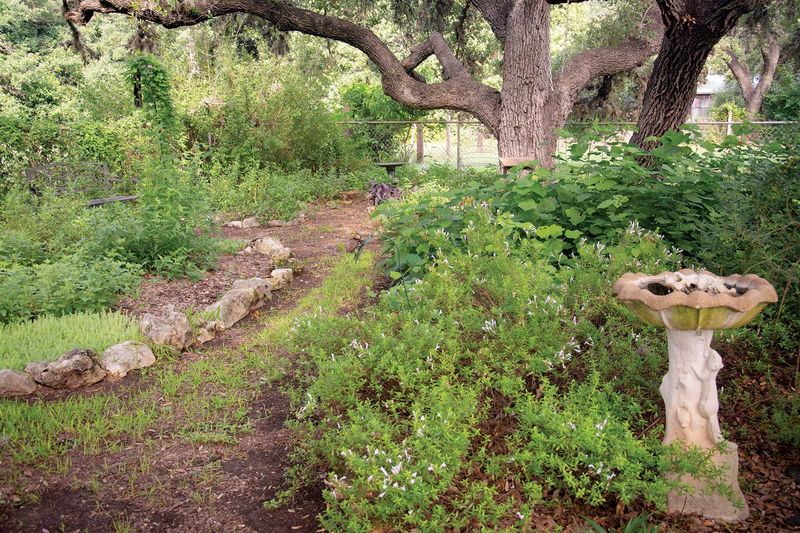
Roadrunners are not drawn to manicured lawns or dense thickets. They need a mix: open ground for running and chasing prey, scattered shrubs or brush for hunting cover, and taller trees or structures for occasional perching.
A Central Texas yard that has never been completely cleared or completely overgrown can offer exactly that combination. Texas Parks and Wildlife notes that the species thrives in habitats ranging from Hill Country brush to semi-open suburban edges, as long as accessible ground and scattered cover are present.
The prey available in a yard matters just as much as the structure. Roadrunners eat a wide range of animals, including large insects, spiders, centipedes, lizards, snakes, rodents, frogs, and even other birds.
Audubon’s field guide lists scorpions as part of that broad diet, but scorpions are one item among many. A yard with good lizard habitat, a healthy insect population, or even a resident rat snake can attract a roadrunner just as readily as one with scorpions under every rock.
If your yard currently supports a roadrunner’s visits, the most wildlife-friendly approach is to maintain its varied structure rather than converting the whole property into either a closely clipped lawn or impenetrable vegetation. Leaving some open bare or gravel ground, keeping a few native shrubs at low-to-medium height, and retaining scattered trees gives the bird usable habitat without sacrificing your yard’s appearance or function.
A shallow, clean water source is a practical addition for any Central Texas wildlife habitat. Texas Parks and Wildlife’s wildlife water guidance recommends keeping water no more than three inches deep and changing it regularly.
A birdbath or low basin placed in a visible, open spot gives the bird access while letting you monitor it for cleanliness. None of these features guarantee a roadrunner will appear or stay; they simply make the yard compatible with what the bird already needs.
Roadrunners eat scorpions, but they do not replace pest control
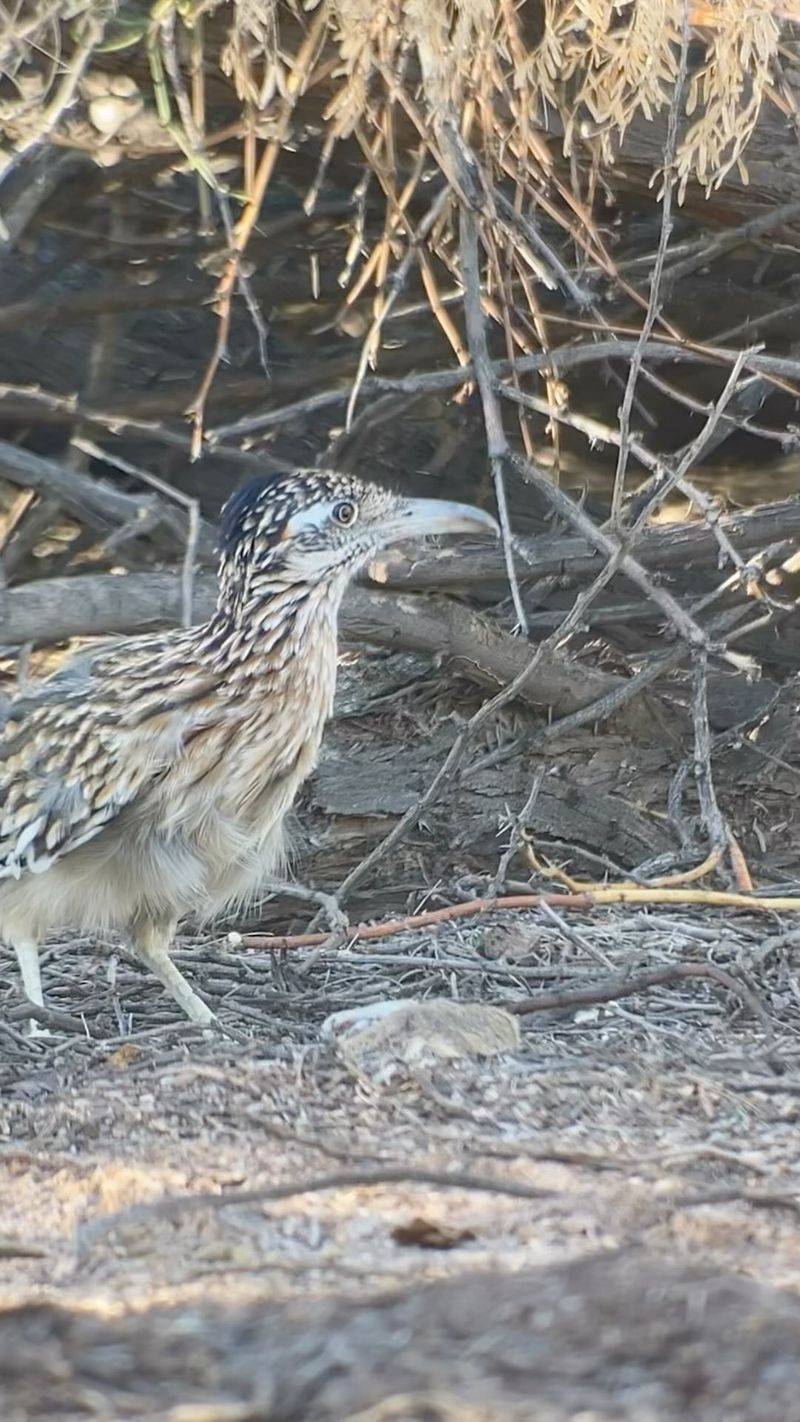
Scorpions do appear in a roadrunner’s diet, and that fact is well-documented. Texas Parks and Wildlife stomach-content research found scorpion remains alongside dozens of other prey categories, including insects from multiple families, spiders, wind scorpions, centipedes, reptiles, amphibians, small mammals, birds, and fruit.
The roadrunner’s appetite is genuinely broad, and scorpions are a real part of it.
The gap between “eats scorpions” and “controls scorpions” is significant. No research establishes that a roadrunner patrolling a Central Texas yard reliably reduces the scorpion count around your house, eliminates an active infestation, or outperforms the exclusion and cleanup steps recommended by pest management professionals.
The bird hunts across a large territory and takes whatever prey it encounters; it is not systematically working through the scorpions under your porch or inside your garage.
A roadrunner’s presence also does not diagnose a scorpion problem. The bird may be visiting your yard primarily for lizards, large beetles, grasshoppers, or rodents.
Assuming that every roadrunner sighting signals a hidden scorpion population is a reasonable-sounding but unsupported conclusion.
Texas A&M AgriLife Extension’s scorpion guidance is clear that insecticides alone can be difficult and often insufficient for controlling scorpions, and that habitat modification and exclusion measures are essential components of any management plan. That guidance is aimed at homeowners, not at people hoping a bird will solve the problem.
The roadrunner is best understood as a possible incidental predator that may take a scorpion when it encounters one, not as a biological extermination service you can count on season to season.
Reduce scorpion shelter and entry points around the house
The most reliable scorpion management does not depend on what is foraging in your yard. It depends on what you remove, seal, and modify around the structure itself.
Scorpions hide in tight, dark spaces during the day and move into homes through gaps that most people never think about. Closing those gaps and eliminating the harborage that keeps scorpions close to the house gives you far more consistent results than any single predator could.
Texas A&M AgriLife Extension recommends starting with the area immediately surrounding the structure. Remove boards, logs, stones, bricks, trash, and other debris that scorpions use as harborage.
Keep grass and ground cover trimmed short near the foundation, where scorpions can hide undetected. Prune tree branches and shrubs so they do not touch or overhang the roof or exterior walls, which gives scorpions a direct path inside.
Sealing the structure is equally important. Caulk or seal cracks around the foundation, siding, and any utility penetrations.
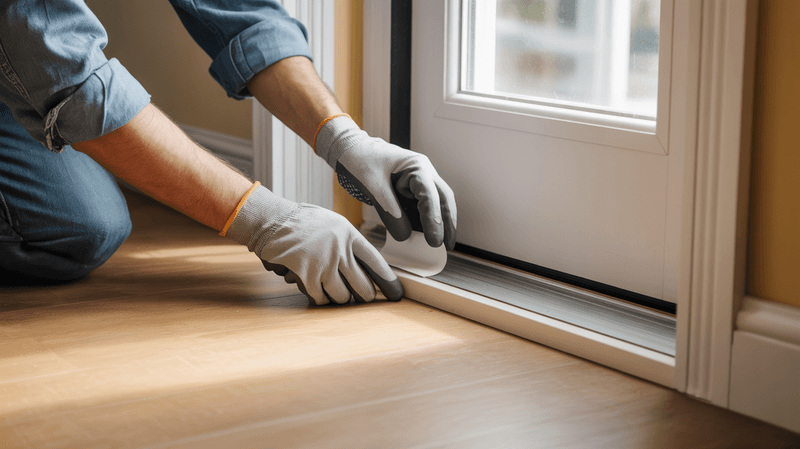
Check that window and door screens fit tightly and are free of holes. Replace worn weather-stripping on exterior doors, paying particular attention to the gap at the bottom.
Scorpions can squeeze through openings surprisingly small, so the goal is a tight building envelope, not just a tidy yard.
Firewood deserves special attention. Stack it away from the house rather than against the exterior wall, and inspect logs before carrying them inside.
Scorpions shelter readily in stacked wood and can enter the home when firewood is brought in without a close look.
If an insecticide treatment becomes necessary after exclusion and cleanup steps are in place, use a product labeled specifically for scorpions, apply it only in the targeted area, and follow the label instructions exactly. Broad spraying across the yard is not recommended: it can reduce the arthropod and lizard prey that roadrunners and other wildlife depend on, and Texas A&M notes it is unlikely to be sufficient on its own anyway.
Exclusion and habitat modification around the home are the foundation of any effective scorpion management plan.
Let the bird forage without feeding or interfering
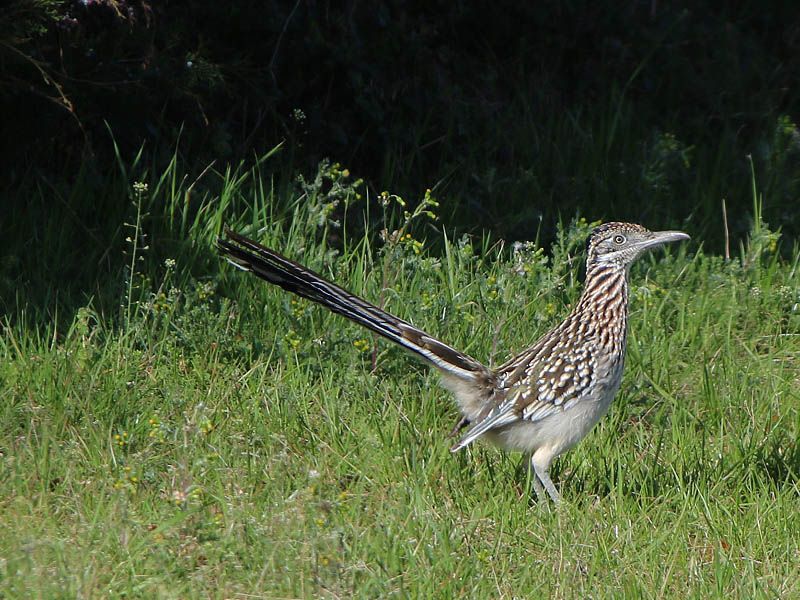
Watching a roadrunner work your yard from a comfortable distance is genuinely rewarding, and that distance is the right place to stay. The bird does not need your help finding food, and offering it creates real problems.
USDA Wildlife Services advises against feeding any wildlife because it can lead to habituation, poor nutrition from inappropriate foods, disease transmission, and conflicts that harm both the animal and the people around it. Leaving out meat scraps, pet food, or other food items to encourage the roadrunner to return is not a helpful gesture; it is a risk to the bird’s long-term health and behavior.
Pets are a more immediate concern. Cornell Lab identifies household pets, feral animals, pedestrians, and vehicle traffic as genuine threats that can displace or kill roadrunners.
Keep dogs and cats from chasing or cornering the bird. Even a brief chase can cause the roadrunner to abandon a foraging area it would otherwise use regularly.
If you maintain bird feeders or a nest box, keep in mind that roadrunners can prey on individual birds, eggs, and nestlings. Their presence does not guarantee harm to every backyard species, but feeder and nest-box owners should not assume the roadrunner benefits all backyard wildlife equally.
Water is one thing you can offer safely, with a few precautions. Keep any birdbath or basin shallow, no more than a few inches deep, and change the water at least weekly or whenever it looks dirty.
CDC guidance on wildlife and healthy pets recommends cleaning feeders and baths regularly, keeping pets away from those areas, and avoiding contact with sick or dead birds. Place the water source away from areas where your pets spend time.
One more point worth knowing: the Greater Roadrunner is a native bird protected under federal law. The Migratory Bird Treaty Act prohibits the unauthorized taking, capturing, or transporting of protected native migratory birds.
Observe the bird without interfering, and discourage anyone from attempting to handle or capture it.
Use the sighting as information, not as a promise
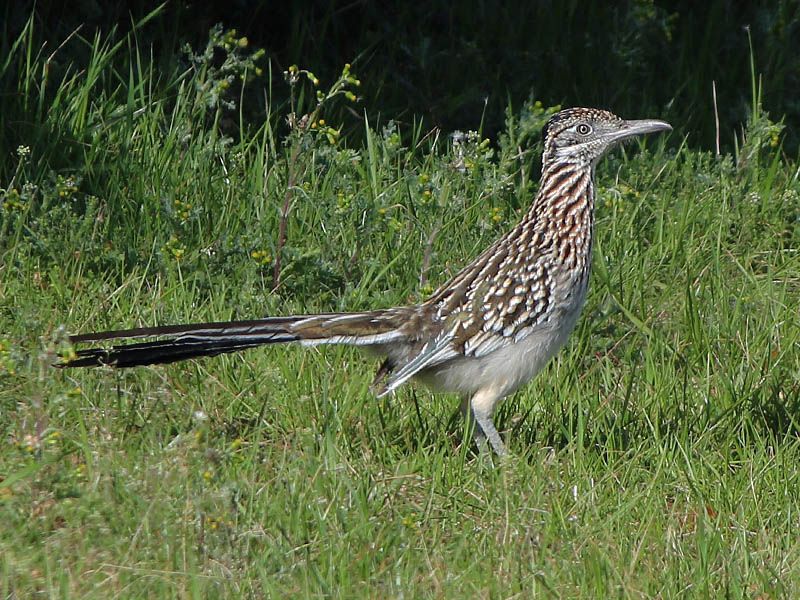
Repeated sightings of a roadrunner in your yard this fall carry real meaning, just not the meaning the bird’s reputation usually promises. If the bird follows the same open path, hunts near the same shrub edges, perches on the same fence post, or calls from the same corner of the property on multiple visits, your yard is probably part of its regular foraging territory.
That is a useful piece of information about your property’s habitat quality.
What the fall timing cannot tell you is that a regional migration is underway, that a new population is moving into Central Texas neighborhoods, or that the bird has permanently adopted your lot. Audubon’s field guide and Cornell Lab’s life history account both describe the species as a permanent resident through most of its Texas range.
The fall calendar is not the driver; the bird’s territory and prey availability are.
On scorpions: the roadrunner may take one when it crosses its path, but that is a far cry from dependable household pest control. The reliable response is still to remove harborage near the structure, seal entry points, and use targeted, label-compliant pesticides only when exclusion steps alone are not enough.
A roadrunner passing through your yard is a sign of healthy habitat, not a substitute for those practical steps.
The bird earns its place in the yard on its own terms, not as a service provider. Treat each sighting as a window into what your property offers, and let the foraging happen without interference or expectation.