
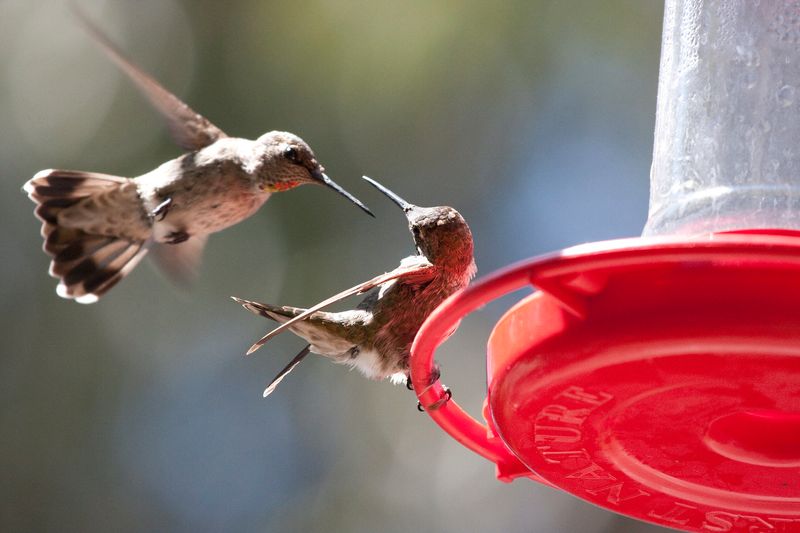
If you have ever watched a tiny hummingbird streak across your backyard and slam into another one hovering at your feeder, you already know these birds are not the peaceful little jewels they appear to be. What you are watching is territorial defense, a hardwired behavior that can become especially easy to spot in fall when more hummingbirds may be moving through Central Texas at the same time.
Those mid-air dogfights are not a signal that every bird in your yard is about to leave, and understanding what is really going on can help you support them better.
The chase is territorial defense, not a migration countdown
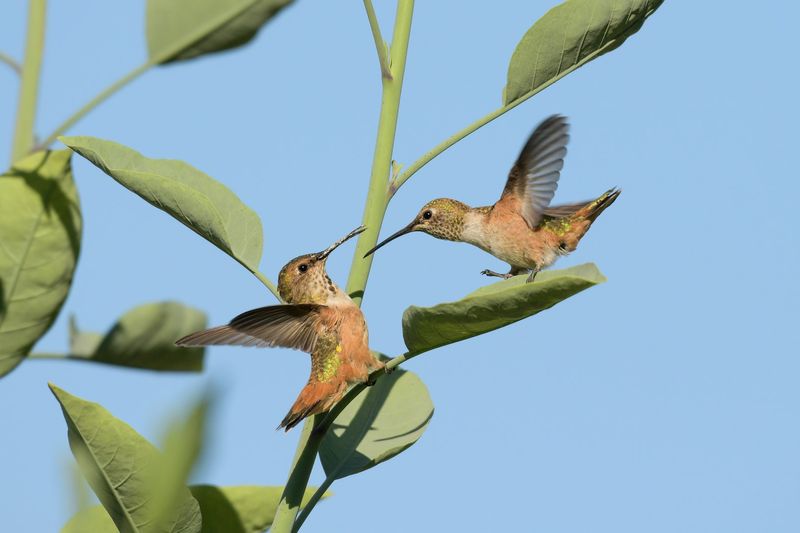
Watch a hummingbird chase another away from your feeder and your first instinct might be to connect the aggression to the season, as if the birds are fighting because they know they are about to leave. That connection feels logical, but the behavior has a simpler explanation: hummingbirds defend concentrated food sources because access to energy-rich nectar directly affects their survival, and a feeder full of sugar water is exactly the kind of resource worth guarding.
Texas Parks and Wildlife describes Ruby-throated Hummingbirds as “extremely territorial,” actively defending feeders and flower patches from other hummingbirds, hawk moths, and even butterflies. That territorial drive does not switch on because migration is approaching.
It is a year-round feature of hummingbird ecology, showing up during breeding season, during stopovers, and in wintering areas alike.
Males are particularly associated with this kind of defense, but females and birds of other hummingbird species can also be aggressive at feeders. Treating every chase as a male Ruby-throat guarding a breeding patch oversimplifies what is actually a flexible, widespread behavior across the family.
The practical takeaway for homeowners is this: a chase tells you that at least one bird considers your feeder worth fighting for, not that a departure is hours away. Fall migration can bring more hummingbirds into the same landscape and make these encounters more frequent and more visible, but the chasing itself is territorial competition, not a countdown.
The rest of this article explains why fall amplifies what you see, which birds might actually be in your yard, and what you can do to help more of them feed without conflict.
Why fall can make feeder battles more noticeable
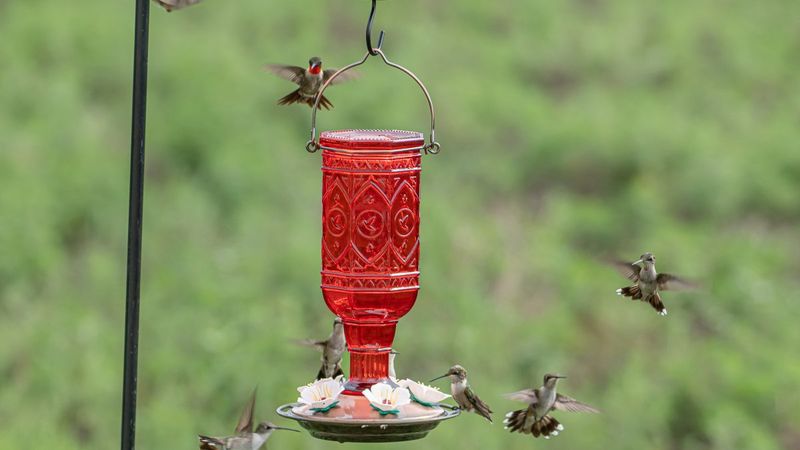
During spring and summer, the hummingbirds visiting a Central Texas yard are mostly residents or breeders holding established territories. The population is relatively stable, and so is the competition.
Fall changes that math.
Ruby-throated Hummingbirds move through Texas in substantial numbers as they head south, and Texas Parks and Wildlife documents that Ruby-throats gather along the Gulf Coast to gain body weight before crossing the Gulf of Mexico. When more birds are moving through the same landscape and stopping at the same backyard feeders, the number of territorial encounters rises.
What changed is not the behavior itself but the density of birds competing for a fixed food source.
Research on Gulf Coast stopover sites adds useful detail. A study of Ruby-throated Hummingbird stopover biology found that leaner birds tended to gain fuel faster and stay longer at coastal refueling sites, which suggests that access to energy-rich food during fall movement is genuinely important for individual birds.
A well-stocked feeder in a yard along or near a migration corridor can function as a meaningful rest stop.
A separate peer-reviewed study found that Ruby-throats from different breeding latitudes arrive at Gulf Coast stopover sites on different schedules, with birds from more southern breeding areas tending to appear earlier. That staggered timing means your yard may be hosting birds from a range of origins at different points through the fall, not a single wave all moving at once.
The key distinction here is that more birds sharing one feeder creates more visible aggression. The fights are still about access to food, not about an internal migration clock ticking down to departure.
Central Texas has no single hummingbird departure schedule
One of the most common assumptions about fall hummingbirds is that they all leave at roughly the same time. For Central Texas, that assumption does not hold up.
Coastal Texas migration data from Texas Parks and Wildlife shows movement beginning as early as mid-July, with multiple surges through September and activity tapering into early November. That is coastal evidence, not a precise forecast for Austin, San Antonio, or the Hill Country, but it illustrates how spread out the season really is.
A Texas Parks and Wildlife fall migration publication documents this extended coastal movement pattern across multiple months, and the Texas Breeding Bird Atlas notes that Ruby-throated Hummingbirds may depart Texas from late July through mid-November, a window wide enough to make any single-date prediction unreliable.
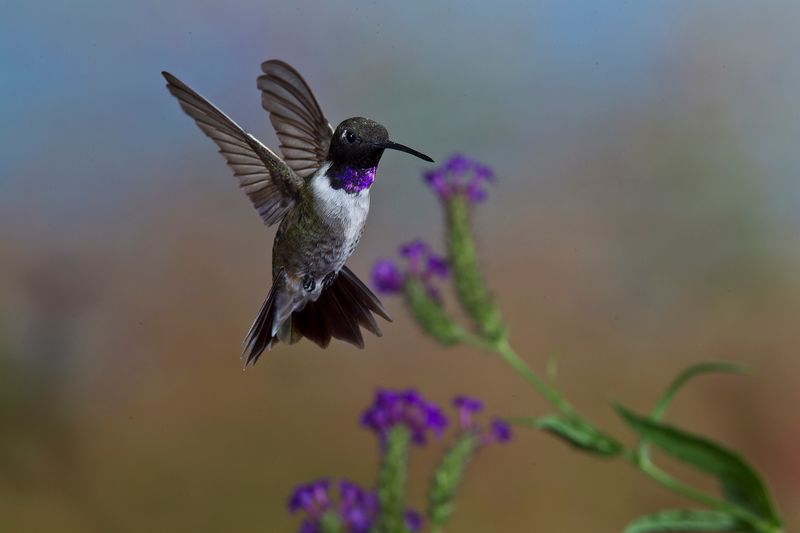
Species identity matters here, too. Central Texas yards can host Ruby-throated Hummingbirds in the eastern portions of the region, but Black-chinned Hummingbirds breed across much of the state and some individuals may remain in Texas well into winter.
Occasional western species, including Rufous and Calliope hummingbirds, also appear during fall. Not every bird at your feeder is a Ruby-throat preparing for a Gulf crossing.
Some Black-chinned and western hummingbirds may winter in Texas rather than continuing south, meaning a bird you assume is passing through might actually be settling in for the cooler months. Paying attention to field marks, body size, and throat color can help you make a more accurate read of who is actually visiting.
That awareness also makes the chase behavior easier to interpret: a bird defending a feeder in November may be a winter resident protecting a local resource, not a migrant staging for departure.
Several feeders can loosen one bird’s grip on the yard
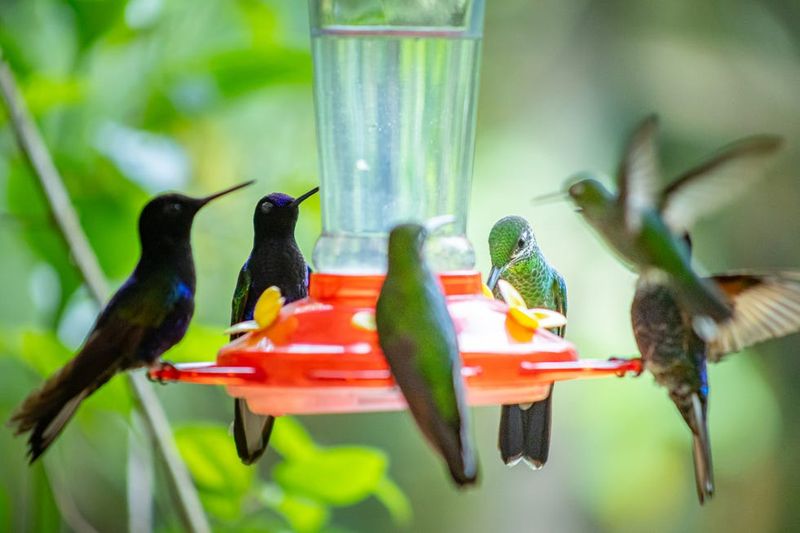
Knowing that feeder chases are territorial makes the solution more obvious. A single feeder in a yard is easy for one determined hummingbird to own.
It can perch on a nearby branch, watch the whole setup, and launch an interception every time a competitor approaches. Spread the food across multiple feeders, and that defense strategy starts to fall apart.
Audubon recommends placing feeders out of one another’s sight so that no single bird can monitor all of them from one perch. Cornell Lab of Ornithology similarly suggests using several small feeders rather than one large one to reduce the ability of a dominant bird to control the entire food supply.
Rounding a corner of the house, tucking one feeder behind a shrub, or placing one on the opposite side of the yard from another can all reduce a single bird’s line of sight.
That said, multiple feeders are not a guaranteed fix. Territorial behavior is a natural part of hummingbird ecology, and factors beyond feeder count shape how much aggression you see.
A yard with few perches and wide-open sightlines gives a dominant bird more advantages. A yard with flowering plants scattered throughout breaks up visibility and gives less aggressive birds more options for approaching food.
Species identity also plays a role. Some individuals are simply more aggressive than others regardless of setup.
The goal of multiple feeders is to reduce monopolization, not to eliminate competition entirely. Even with four feeders spread across your yard, you may still see chases.
What you are likely to see less of is a single bird successfully shutting down every food source for every other hummingbird that passes through.
Clean nectar matters more than controlling migration
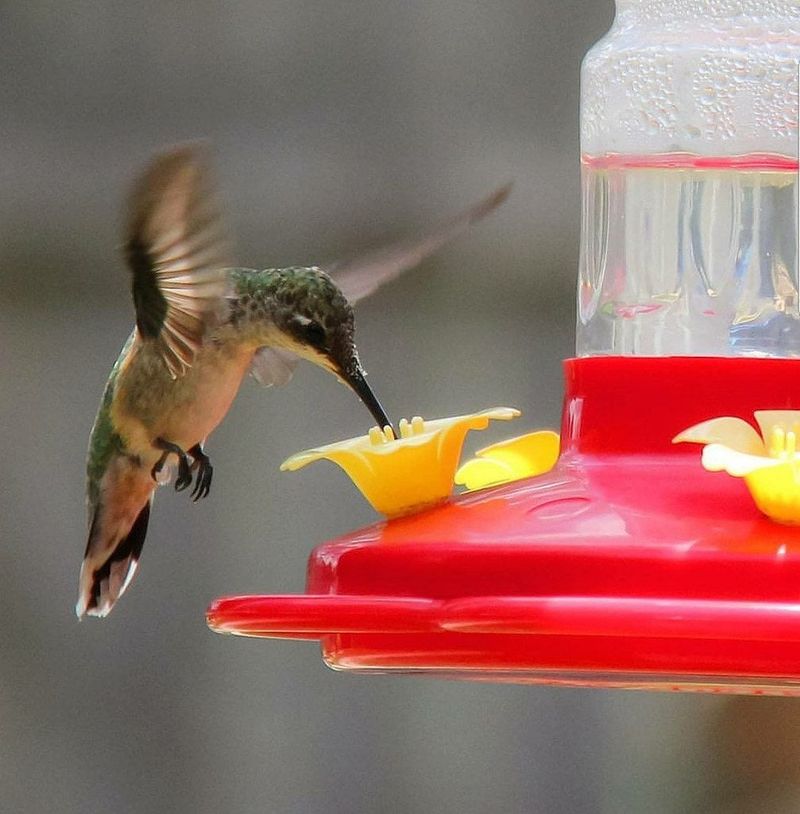
There is a persistent worry among backyard birders that leaving feeders up in fall will confuse hummingbirds and keep them from migrating. That concern is not supported by wildlife guidance.
Texas Parks and Wildlife states that feeders can remain up year-round and will not stall migration, and recommends leaving them available until roughly two weeks after the last hummingbird is seen. Hummingbirds respond to internal cues and environmental signals, not to whether your feeder is full or empty.
What actually creates risk is not the feeder itself but what happens to the nectar inside it. In Central Texas heat, sugar water can ferment, cloud, and grow mold or bacteria within a matter of days.
Audubon recommends cleaning feeders every two to three days and daily during especially hot weather, with cloudy or discolored nectar replaced immediately rather than topped off.
The right nectar formula is four parts water to one part plain white sugar, dissolved thoroughly. Skip honey, which can promote dangerous fungal growth.
Skip artificial sweeteners, which provide no energy. Skip red dye, which is unnecessary since most feeders already include red parts and the dye has no demonstrated benefit for birds.
Audubon’s hummingbird-friendly yard guidance specifically rules out all of these additives and recommends keeping nectar clean and fresh as the primary feeder responsibility.
Making smaller batches more often is smarter than mixing a large quantity and letting it sit. Shading feeders from direct afternoon sun slows spoilage and keeps nectar fresher longer, which matters especially during the warm weeks of a Central Texas September.
The feeder is doing its job when the nectar inside it is clean, correctly mixed, and replaced on schedule, not when it is removed to force a behavior the birds will manage on their own.
Support the birds with a living Texas yard
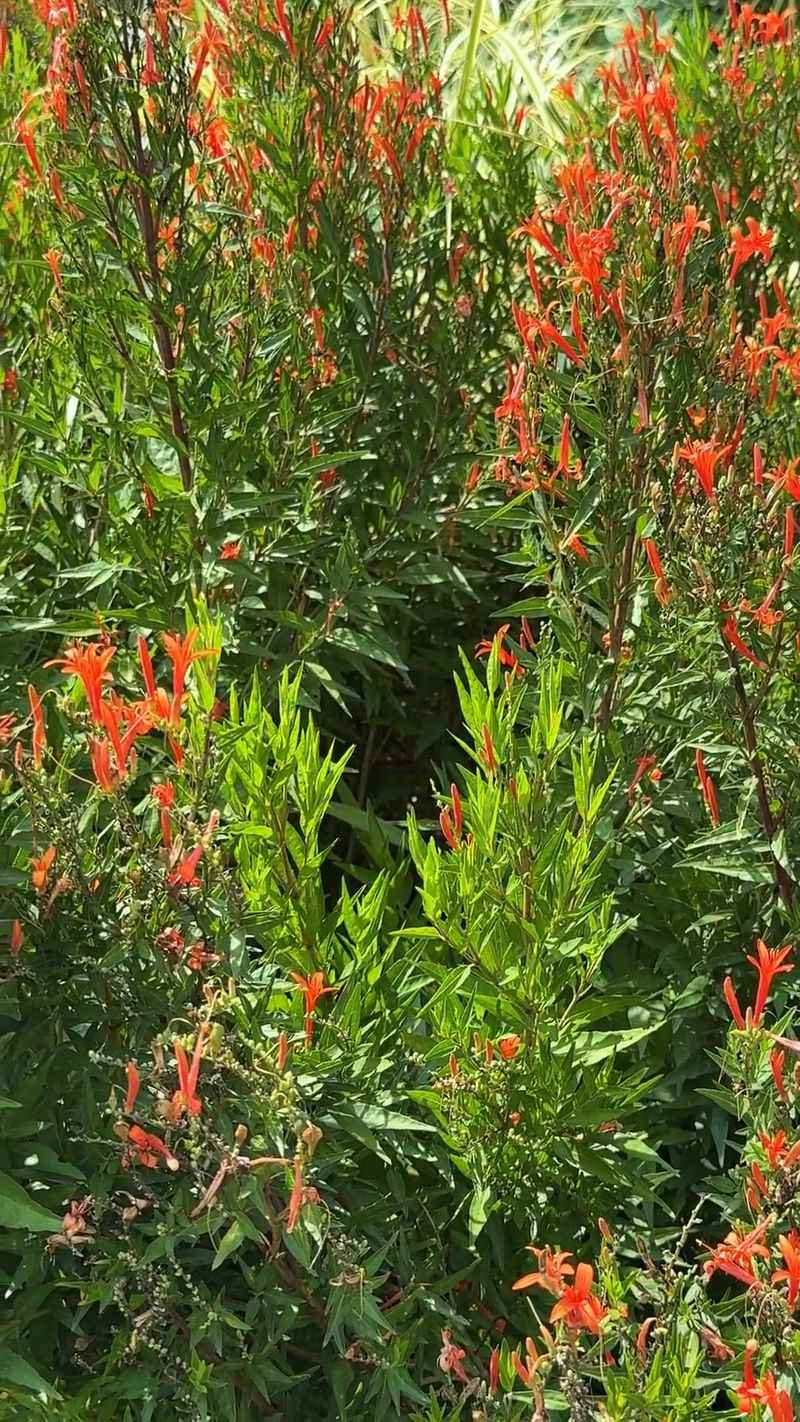
Feeders are useful, but hummingbirds do not run on sugar water alone. Natural nectar from flowering plants delivers nutrients alongside energy, and insects, including gnats, small flies, and spiders, supply the protein and fat that pure sugar cannot.
A yard that offers both food types gives visiting hummingbirds more complete support than a feeder by itself.
Audubon’s guide to attracting hummingbirds emphasizes native flowering plants as the foundation of hummingbird habitat, with feeders presented as a supplement rather than a replacement. In Central Texas, plants such as Turk’s cap, flame acanthus, and native salvias produce tubular red or orange flowers that hummingbirds use naturally, and many of these species are heat-tolerant enough to stay productive well into fall.
Insects matter just as much. Avoiding broad-spectrum insecticide use in the yard helps preserve the small arthropods that hummingbirds actively hunt, especially during migration when protein demands are high.
A yard with leaf litter, native flowering plants, and minimal pesticide exposure tends to support more insect life and, by extension, more complete hummingbird nutrition.
Texas Parks and Wildlife notes that Ruby-throated Hummingbirds feed on flower nectar and small insects, reinforcing that the feeder covers only part of what a bird needs. Planting for hummingbirds also distributes food sources across the yard naturally, which can reduce pressure on any single feeder and give subordinate birds more options when a dominant individual is actively defending the sugar water.
Read the fights as seasonal competition, not a departure signal
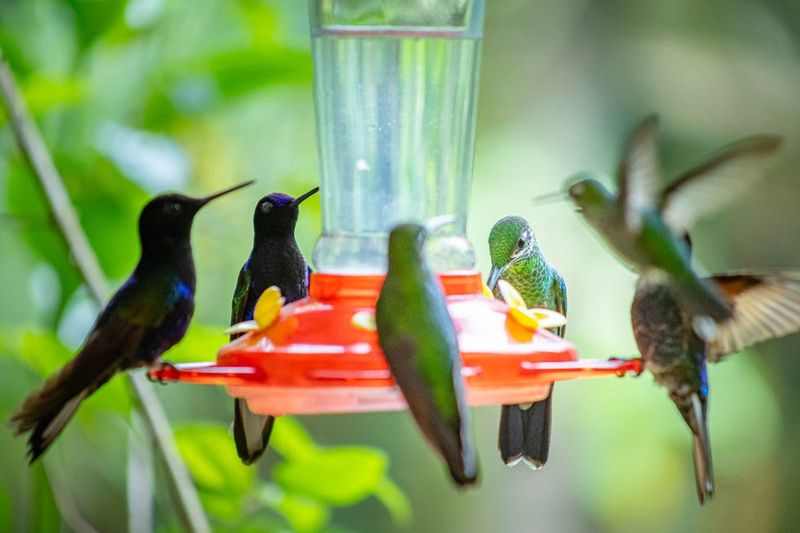
Repeated chases at your feeder this fall most likely reflect normal territorial behavior that becomes more visible when resident hummingbirds and fall migrants are sharing the same concentrated food source at the same time. The fights do not tell you when any individual bird will leave.
Some birds passing through your yard may continue south within days, while others, particularly Black-chinned and western hummingbirds, may settle in for weeks or through the winter.
The practical response is straightforward. Space multiple clean feeders far enough apart that one bird cannot watch all of them from a single perch.
Keep nectar fresh with the four-to-one water-to-sugar ratio, replace it on a regular schedule, and discard anything cloudy without waiting. Preserve or add native flowering plants and limit pesticide use so the yard supports insects alongside nectar.
Leave feeders available through the season rather than removing them, since Texas Parks and Wildlife confirms feeders do not interfere with migration.
Keep notes on what you see. Tracking which birds visit, how their markings differ, and when activity peaks or drops gives you a more accurate picture of what is actually happening in your yard than any general migration calendar can.
The hummingbirds chasing each other off your feeder are doing exactly what hummingbirds do – fighting for food in a landscape where food matters. Your job is to make sure there is enough of it, and that it is clean.