
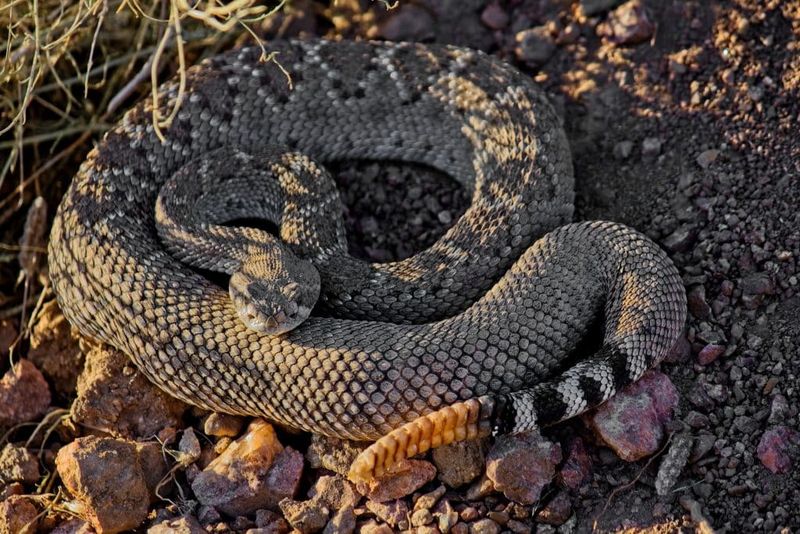
Something feels different about September in a Central Texas yard – a rustling near the woodpile, a shape crossing the patio at dusk, or a neighbor posting a photo on the neighborhood app. Rattlesnakes do become more noticeable in some yards during the late-summer-to-early-fall transition, but the reason is not as simple as snakes fleeing the heat.
Understanding what is actually happening can help you respond calmly and make smarter choices for your family and your yard.
The early-fall pattern is plausible, not proven
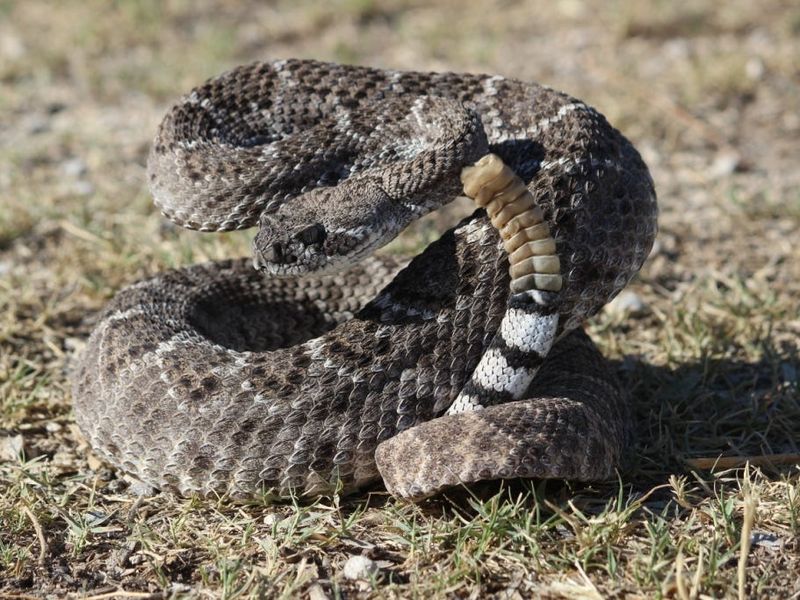
Plenty of Central Texas homeowners report rattlesnake sightings in late summer and early fall, and that pattern has a biological basis worth taking seriously. What the available data do not show, however, is a consistent, region-wide September spike in yard sightings across Austin, the Hill Country, and the Edwards Plateau all at once.
The difference between “plausible seasonal window” and “proven regional surge” matters, because one calls for calm awareness and the other can fuel unnecessary alarm.
Field data from the South Texas Plains, compiled in a Texas Parks and Wildlife study of western diamondback activity patterns, recorded encounters during most months of the year. The same data do show a slight uptick in activity during early fall after lower summer activity, which supports the idea of a secondary active period rather than a dramatic seasonal invasion.
That distinction is easy to miss, but it shapes how you should respond to what you see.
Eastern Texas timber rattlesnakes follow a different and better-documented pattern. A TPWD-funded movement study found that adult males ranged substantially farther during the late-summer mating season than during the preceding foraging period, with movement toward hibernacula typically beginning in late October or November.
Timber rattlesnakes are primarily an eastern-Texas species, though, not the snake most Central Texas homeowners are likely to encounter in their yards.
Central Texas also does not cool down uniformly in September. National Weather Service climate records for the Austin and San Antonio region show that September and October can still include very warm days, and local weather conditions often matter more than the calendar date when predicting snake activity.
What the evidence supports is a window of possible increased movement in some locations under some conditions, not a uniform seasonal event you can mark on a calendar.
Western diamondbacks are the Central Texas species to understand first
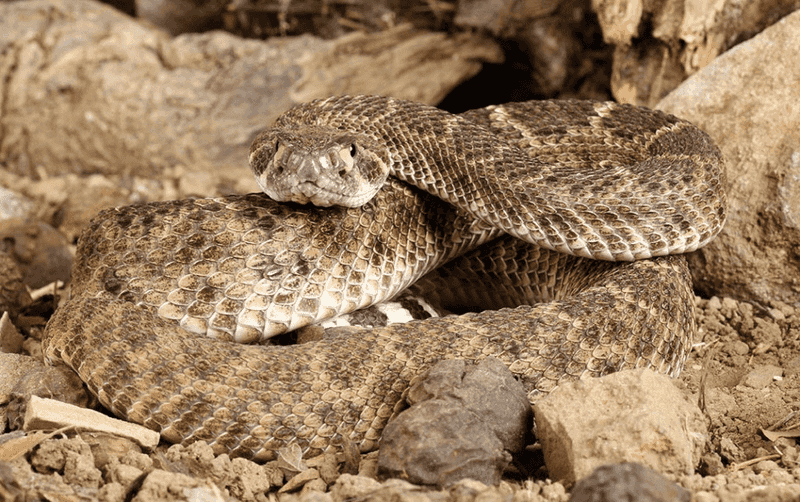
Among the rattlesnake species that live in Texas, the western diamondback is the one most Central Texas homeowners are likely to cross paths with. Texas Parks and Wildlife notes that western diamondbacks are found throughout most of the state and are especially common around farm buildings and other places where rodents gather.
If your yard has a brush pile, a gap under a shed, or a rodent problem, you have already created conditions that could attract one.
Central Texas is not a single habitat. The rocky canyonlands near Austin, the cedar and oak-covered Hill Country, the open grasslands of the Edwards Plateau, and areas transitioning toward East Texas all support different vegetation, moisture levels, prey populations, and shelter types.
A blanket statement about rattlesnake behavior across the entire region misses those differences. Local conditions in your specific neighborhood matter more than a regional generalization.
Texas A&M AgriLife’s guide to venomous terrestrial animals confirms that western diamondbacks occupy a wide range of habitats and are the most widespread venomous snake in the state. That said, a snake crossing your yard is not automatically a rattlesnake.
Texas has many nonvenomous species, and TPWD’s snake resources consistently recommend learning to identify local species rather than killing snakes on sight. Nonvenomous snakes like rat snakes and hognose snakes help control the rodent populations that attract rattlesnakes in the first place, so indiscriminate killing can work against you.
Why warmer and cooler days can change a snake’s schedule
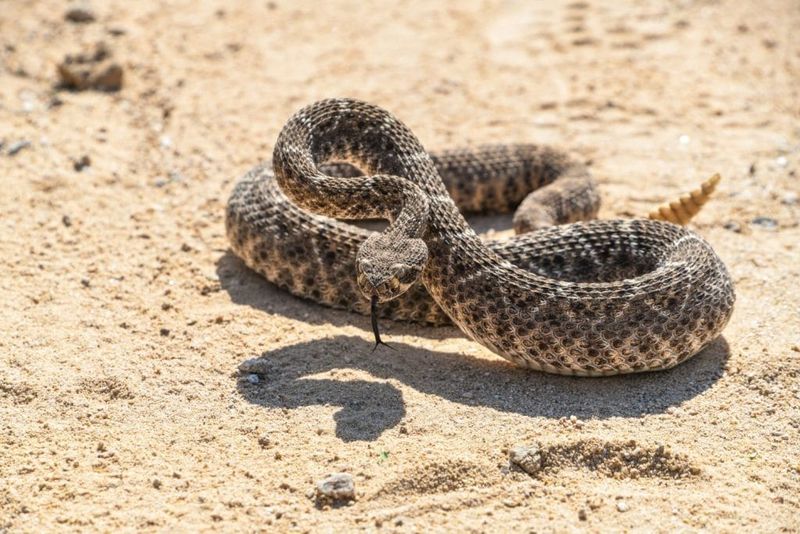
Rattlesnakes are ectotherms, meaning their body temperature and energy levels track the environment around them rather than being regulated internally the way a mammal’s are. During the most brutal stretch of a Central Texas summer, when afternoon temperatures can stay well above 100 degrees for days at a time, open ground becomes dangerous for a snake trying to move.
Many shift toward nighttime or twilight activity to avoid lethal overheating, which is why summer rattlesnake encounters often happen after dark.
As late summer edges toward fall and some afternoons become slightly more tolerable, snakes that were operating mostly at night may begin moving during daylight or late-afternoon hours again. A U.S.
Forest Service species review of timber rattlesnakes documents how thermal conditions shape daily and seasonal movement, and Forest Service research on Louisiana pine snake thermal ecology reinforces the same principle: snakes adjust their schedules around temperature windows that allow safe movement and digestion.
For a broader Central Texas context, a peer-reviewed study of Great Plains ratsnakes in Central Texas found activity peaks in late spring and autumn, with lower activity during the hottest summer weeks. That study covers a nonvenomous species, so it should not be read as direct proof that rattlesnakes follow the identical pattern.
What it does support is the general idea that temperature, not the month printed on a calendar, drives when snakes feel safe moving.
The practical implication is that a cooler September morning or a day when a cold front drops afternoon highs by fifteen degrees can make a rattlesnake more likely to be out and visible. Austin September climate records show meaningful day-to-day temperature swings during the month, which means snake activity can shift quickly with local weather rather than following a neat seasonal schedule.
Breeding and births add possible movement factors
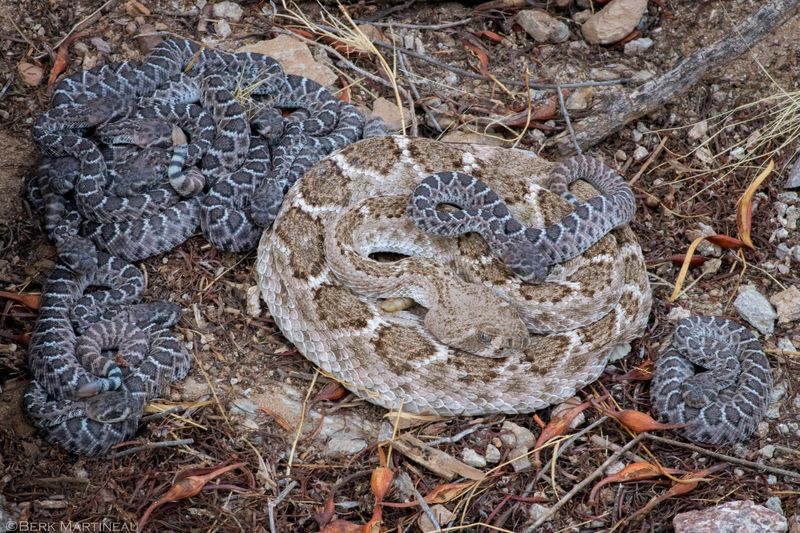
Temperature is only part of the story. Two biological events in late summer and early fall can push rattlesnakes to move for reasons that have nothing to do with air temperature: mating activity and the birth of young.
For eastern Texas timber rattlesnakes, a Texas Parks and Wildlife movement study found that adult males traveled significantly farther during the late-summer mating season than during the preceding foraging period, before eventually moving toward overwintering sites. That research covers a species found primarily in the Piney Woods and eastern parts of the state, so it should not be applied directly to western diamondbacks in Austin or San Antonio.
What it illustrates is a broader principle: reproductive timing can change how far a snake roams, independent of temperature.
For the western diamondback specifically, Texas A&M AgriLife identifies September as the typical birthing period. Newborn rattlesnakes are venomous from birth and must begin finding food before cooler weather limits their activity.
That need to hunt could increase visible movement near suitable cover and prey. What the evidence does not show is that newborn western diamondbacks are responsible for a measurable increase in Central Texas yard sightings specifically.
The connection is plausible but not documented.
Prey availability and shelter are also worth considering. Rodent populations that built up over the summer remain available in early fall, giving snakes a reason to keep moving through yards, outbuildings, and brush edges where prey concentrates.
The South Texas western-diamondback data show continued activity across most months, consistent with snakes following prey rather than responding to a single seasonal trigger. The honest answer is that several factors probably overlap in early fall, and no single mechanism explains every sighting.
A yard sighting does not prove a den is nearby
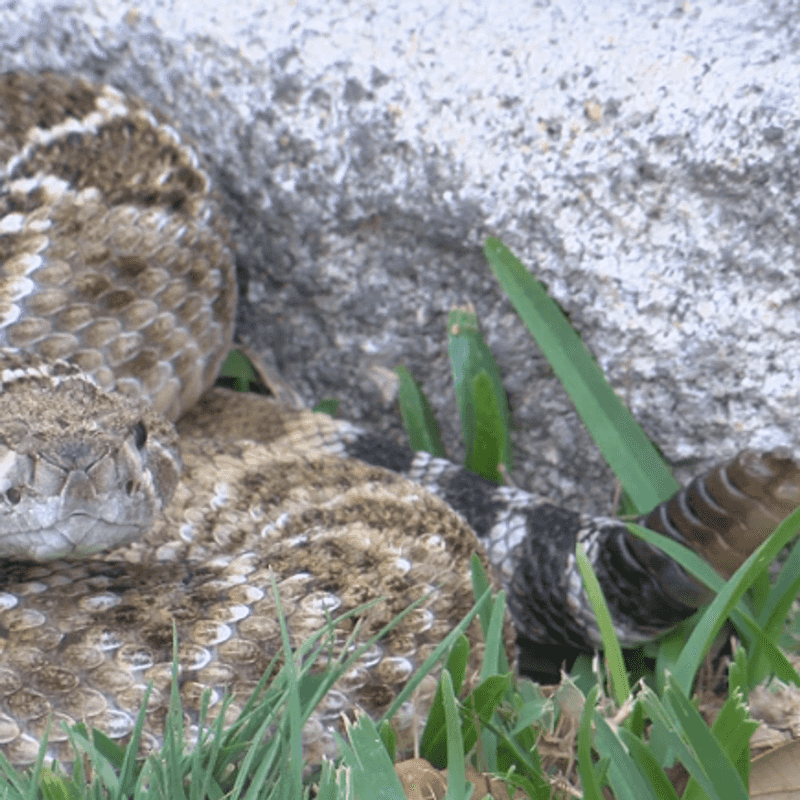
Spotting a rattlesnake in your yard is startling, and the first instinct for many homeowners is to assume a den must be hidden somewhere on the property. That conclusion is usually wrong.
A rattlesnake may be passing through entirely, following a mouse or rat that wandered through your yard, pausing under a board or bush because the temperature there is favorable, or simply moving between two areas of natural habitat that happen to border your neighborhood.
A single observation is evidence of one snake in one place at one time. TPWD guidance on snake encounters notes that snakes generally try to retreat or escape when they sense a person, and that danger usually arises when a snake is surprised, cornered, or provoked.
A snake using your yard temporarily is behaving normally, not establishing a territory or a permanent residence.
September and October in Central Texas can remain warm enough for rattlesnakes to stay active well past the point when northern states have seen snakes disappear for the season. Regional climate data from the National Weather Service confirm that the Austin and San Antonio area regularly sees warm October days that allow continued snake movement.
A sighting in early fall does not signal that a snake has chosen your yard as a winter retreat any more than a summer sighting would.
If you see the same snake repeatedly over several weeks, or find shed skins in multiple spots on your property, that pattern is worth taking more seriously and calling a wildlife professional to assess. One sighting, though, is better treated as a passing encounter than a property-level infestation.
Small yard changes can reduce encounters
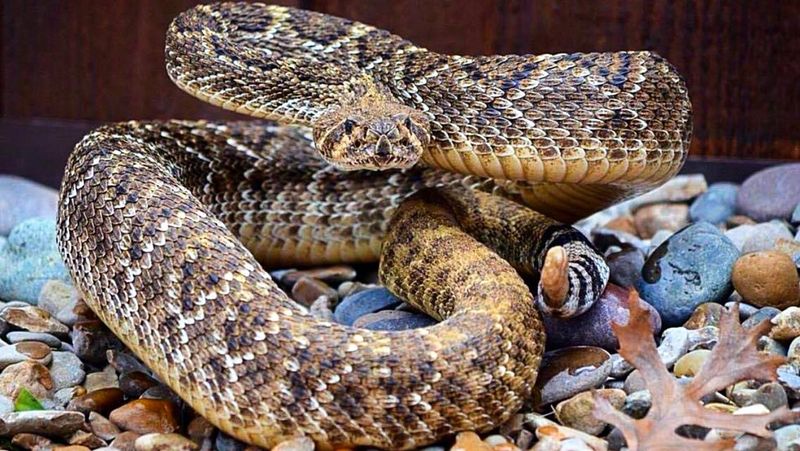
Once you understand why rattlesnakes move through yards, the practical response becomes clearer. Snakes need three things near your home to make it worth visiting: shelter, prey, and a way in.
Reducing any one of those makes your yard less attractive, though no yard modification can guarantee a completely snake-free space, especially when natural habitat borders your property.
Start with shelter. Brush piles, rock piles, scrap lumber, old equipment, and accumulated debris are exactly the kind of cover a rattlesnake will use to rest, regulate temperature, or wait for prey.
TPWD’s snake resources and their urban wildlife guide both recommend moving these materials away from walkways, doors, play areas, and other frequently used spaces. Stacking firewood off the ground on a rack rather than directly on the soil removes one of the most common snake-attracting features in Central Texas yards.
Prey management is equally important. Rodents are the primary food source for western diamondbacks, and anything that draws mice and rats to your yard draws the snakes that follow them.
Secure pet food and birdseed in sealed containers, address any existing rodent problems, and trim tall grass or dense ground cover near patios, doors, and play areas where children or pets spend time.
Access control is the third piece. TPWD’s venomous snake safety guide recommends sealing low gaps around foundations, garage doors, crawl spaces, utility pipes, and outbuildings.
A gap wide enough for a mouse is often wide enough for a young snake following it. You do not need to remove all vegetation or turn your yard into bare gravel.
The goal is to keep the zones where people and pets actually spend time clear, visible, and free of the cover that makes a snake feel safe lingering.
Give a rattlesnake space and treat bites as emergencies
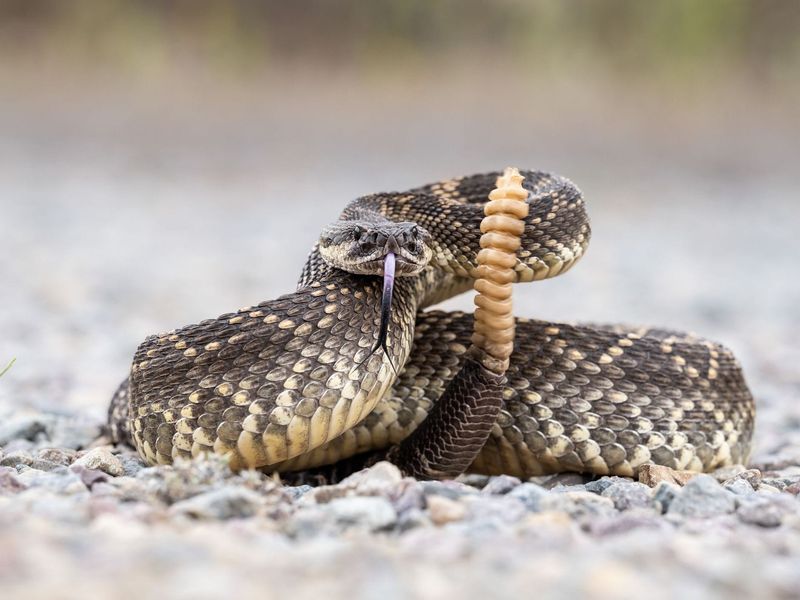
Knowing what to do in the moment matters as much as any yard preparation. If you see a rattlesnake, stop moving, give it several feet of space, and back away slowly without sudden movements.
Rattlesnakes do not chase people. TPWD explains that snakes typically try to escape when they detect humans and that most bites happen when someone surprises, corners, or tries to handle a snake.
The safest response is simply to give it room and let it move on.
Do not attempt to catch, pin, kill, or relocate the snake yourself. If a rattlesnake is near a doorway, play area, or high-traffic space and you cannot wait for it to leave on its own, CDC guidance on wildlife encounters recommends contacting trained wildlife-control or local animal-control personnel rather than attempting removal yourself.
Handling a rattlesnake, even one that appears sluggish or injured, carries real bite risk.
Prevention habits make a difference during the fall active period. Use a flashlight when moving through your yard at night, wear sturdy closed-toe shoes or boots when working in brush, woodpiles, or garden beds, and use a long-handled tool rather than your hand to move debris or check under boards and rocks.
TPWD’s safety guidance emphasizes never putting hands into holes, burrows, or concealed spaces without checking first.
If a bite does occur, treat it as a medical emergency without delay. MedlinePlus snakebite guidance and CDC/NIOSH recommendations are consistent: call 911 or get to an emergency room immediately, keep the person calm and as still as possible, and remove constricting jewelry or tight clothing near the bite.
Do not apply a tourniquet, ice, or cold pack. Do not cut the wound or attempt suction.
Do not use folk remedies or electric shock. Do not delay care to photograph or try to capture the snake.
Antivenom is the only effective treatment, and it is available at hospitals, not in the field.
The useful takeaway is seasonal awareness, not panic
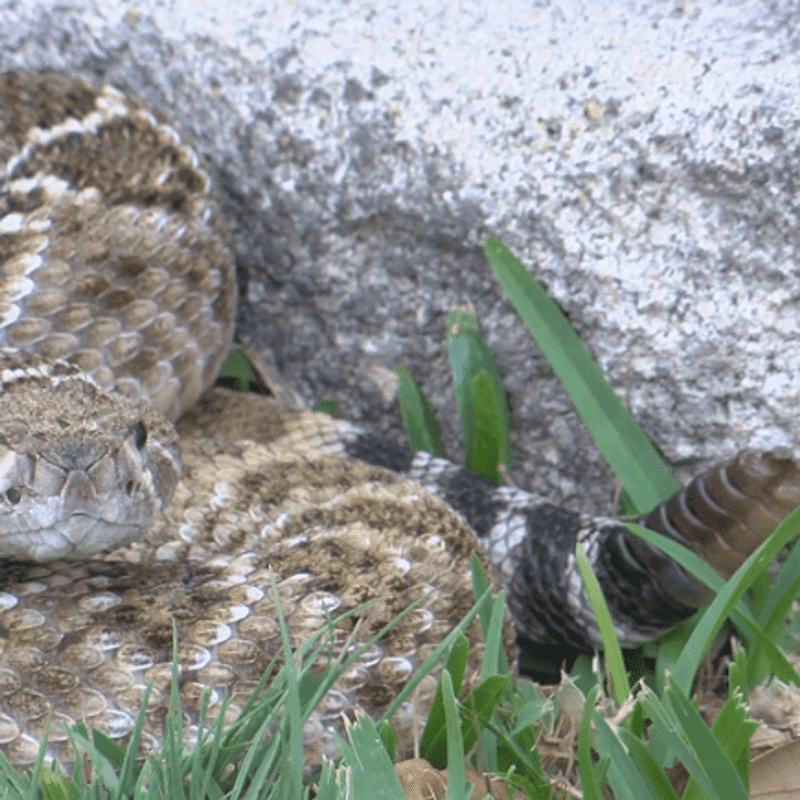
Late-summer and early-fall conditions can make rattlesnakes more noticeable in some Central Texas yards. Moderating temperatures, reproductive timing, prey availability, and the search for suitable cover all play a role, and those factors can overlap in ways that vary by location, habitat, and year.
Western diamondback field data from South Texas support a possible secondary activity period in early fall, but the evidence does not point to a universal September invasion affecting every Central Texas neighborhood the same way.
The practical response is straightforward: keep walkways and high-use areas clear of debris and cover, manage rodents, seal gaps around your home’s foundation and outbuildings, use a flashlight at night, and call a professional if a rattlesnake needs to be moved. TPWD’s snake resources and their encounter guidance consistently point toward awareness and habitat management rather than fear-driven killing or unproven repellents, which field research and extension experts have found to be ineffective.
A rattlesnake in a Central Texas yard is a native animal doing what native animals do. Knowing that does not make the encounter less startling, but it does make your response more effective.
Calm attention to your yard and your habits is a better tool than alarm.