
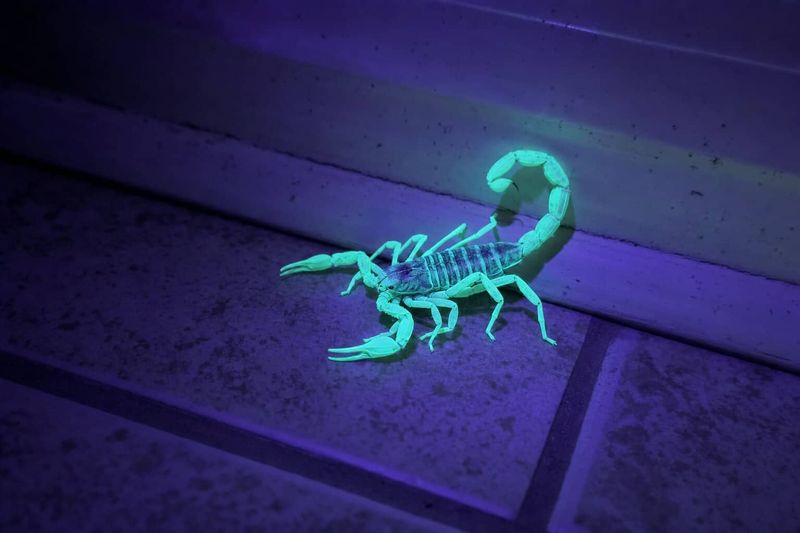
Few things wake you up faster than a scorpion sitting at the bottom of the bathtub. Many Central Texas homeowners have had that moment, and the first question is usually how it got there.
The answer is less dramatic than a drain invasion, and it points to fixes you can do yourself. Here is what is known, what is still unclear, and what actually helps.
Cool nights do not establish a fall bathroom pattern
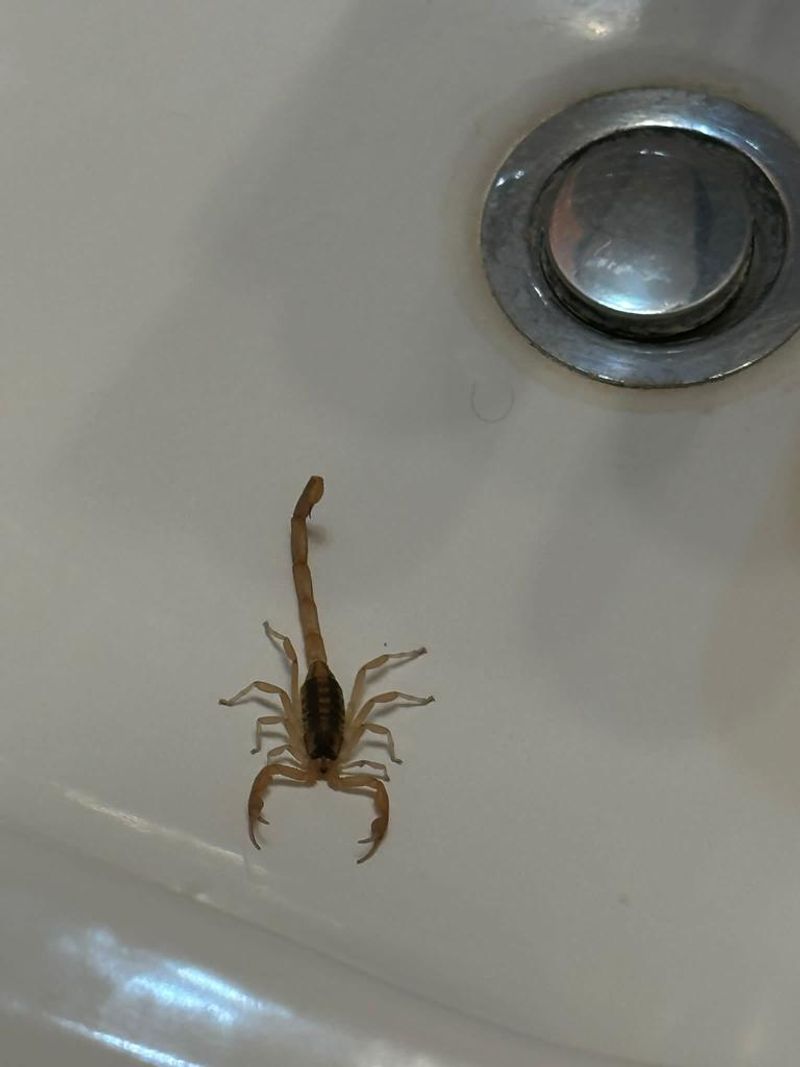
Cooler fall nights get blamed a lot, but the proof for a fall bathroom pattern is thin. Scorpions are sensitive to temperature, yet that does not mean a chilly evening sends them marching into your bathroom.
A field study of striped bark scorpions in Laredo, published in the Journal of Arachnology, found activity in most months. Scorpions were most active on nights above 20 degrees Celsius (68 degrees Fahrenheit) and were rarely seen in December and January.
That is a picture of warm-night activity, not a sudden fall rush indoors.
Texas A&M tells a different story for another season. In a 2018 AgriLife report, sightings indoors rose during a hot, dry summer as scorpions looked for refuge.
So heat, dryness, and cool snaps may all nudge them around, and nobody can promise one trigger.
The takeaway is simple. Treat cool weather as background, not as the cause.
If you see a scorpion in October, it does not prove the cold drove it inside, and it does not mean more are coming.
A word on identity too. According to Texas A&M AgriLife, the striped bark scorpion is the most common scorpion in Central Texas, and Texas has several species.
Odds favor that species, but location alone cannot tell you what is in your tub. If you want a firm ID, ask your county extension office.
Drain entry is not established as the usual route
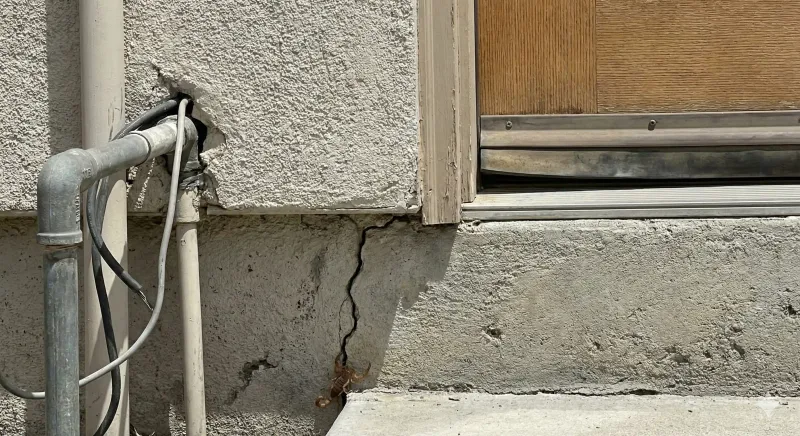
The drain is the first suspect, since that is where water goes and where the scorpion turned up. The evidence points elsewhere, though, and nothing documents routine drain entry by Central Texas scorpions.
Texas A&M’s school pest management plan for bark scorpions names gaps around doors, windows, pipes, and other building penetrations as ways scorpions get inside. Those are the places to look first, and they are all things you can inspect with a flashlight.
Now for a distinction that matters. Iowa State Extension says bathroom pests are much more likely to have come in through gaps or been indoors already than to have come up a drain.
A water-filled plumbing trap is built to block sewer gas, and it tends to block pests too.
That guidance covers bathroom pests in general. It is not a scorpion study, and it does not prove a scorpion could never pass through a damaged, dry, or unusual drain system.
A fixture that rarely gets used, for example, may have a trap that has dried out.
So the fair summary is this: drain entry is possible in odd cases but not shown to be the usual route. Put your effort into the gaps first.
A slippery fixture could trap a wandering scorpion
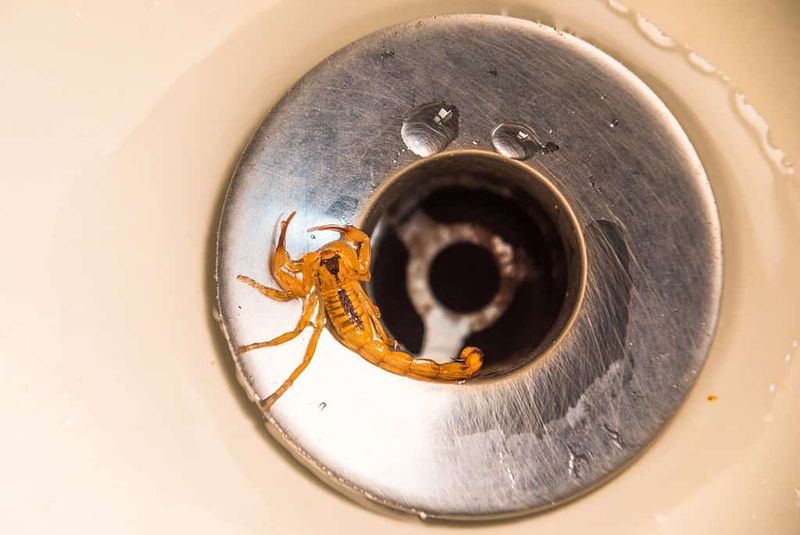
Picture the scene at 2 a.m. A scorpion is out hunting, which fits its nocturnal habits.
It wanders across the bathroom floor, climbs onto the tub edge or sink rim, and slips over.
Texas A&M notes that the striped bark scorpion hides in small spaces and can climb walls, according to AgriLife guidance. Getting up onto a fixture is not hard for a climber like that.
Getting back out of a steep, glossy basin may be.
The trapping idea comes from an Iowa State Extension explanation, which says steep, slippery sinks and tubs can trap pests that wander or fall in. It covers insects and spiders in general.
No controlled study has tested it on scorpions in Central Texas bathrooms, so treat it as a reasonable inference.
One more point is worth holding onto. Finding a scorpion in a tub does not show how it entered the house.
It may have slipped in under a door, crossed the floor, and ended up in the fixture, which is why the inspection steps ahead matter more than the drain.
For now, a quick habit helps. Glance into the tub and sink before you step in barefoot at night, and shake out towels and bath mats that have sat on the floor.
Seal likely entry gaps around the home
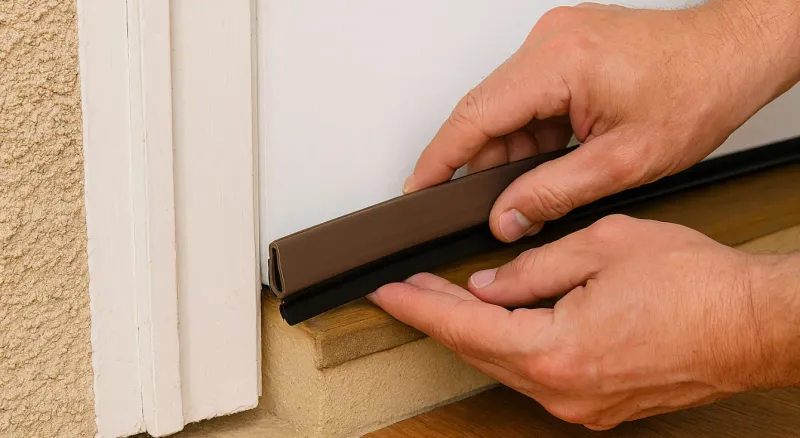
Start at the doors. Texas A&M’s bark scorpion plan recommends checking door sweeps and weather stripping, and a thin strip of daylight under a closed door is a sign something needs replacing.
Next, walk the outside of the house. Look for torn window and door screens, cracks in the foundation or exterior walls, and gaps where pipes, wiring, and cable lines pass through.
Eaves and other penetrations deserve a look too, and caulk or sealant can close most small openings.
Weep holes are a special case. These small openings in brick veneer let moisture out, and the guidance suggests covering them with suitable mesh instead of plugging them.
Do not block any designed drainage or ventilation opening until you have checked that doing so is safe, and ask a contractor if you are unsure.
This work fits Texas conditions. In its AgriLife report on hot, dry weather, Texas A&M linked indoor sightings to scorpions looking for refuge, so tight seals matter in any season, not just fall.
Set realistic expectations. Sealing lowers the number of ways in, but it will not make a home scorpion-free.
Many Central Texas houses sit on limestone and have older gaps, so a yearly walk-around is a good habit. Do it on a weekend when you are already doing yard work.
Reduce outdoor harborage and monitor for activity
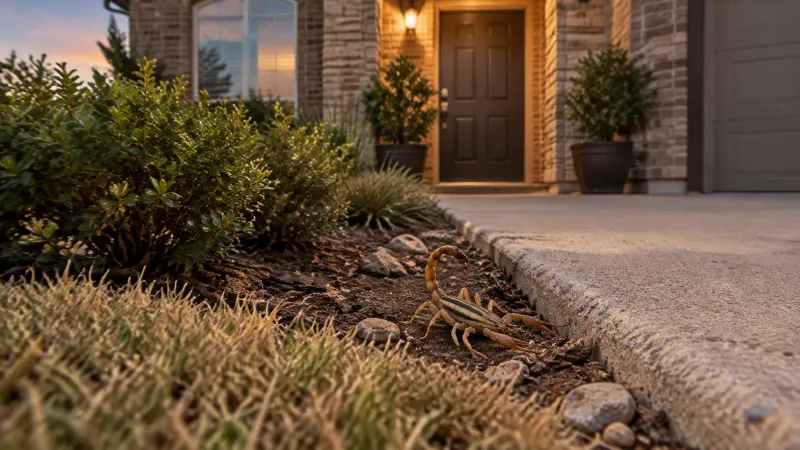
Scorpions need somewhere to hide during the day, and a messy yard offers plenty. Texas A&M says to move firewood, rocks, boards, and debris away from the structure, and to keep vegetation and overhanging branches from touching it, per AgriLife’s scorpion publication.
Those steps cut down hiding places and also remove bridges a scorpion could use to reach a wall or roofline. A firewood stack leaning on the siding is a classic example.
Moving it a few feet away is a small job with a real payoff.
Monitoring helps you learn where trouble starts. The school IPM plan says sticky traps can catch scorpions and help identify entry points.
Place them along baseboards or near doors, and note where you find catches.
A UV flashlight can help you spot scorpions outdoors after dark, since they glow under ultraviolet light. Wear closed-toe shoes for the search and carry long tongs.
Never reach for one with a bare hand.
Remember that traps and flashlights only show you activity. They do not stop anything from coming in, so pair them with the sealing steps from the last section and use what you find to guide repairs.
Use pesticides cautiously and avoid bare-hand handling
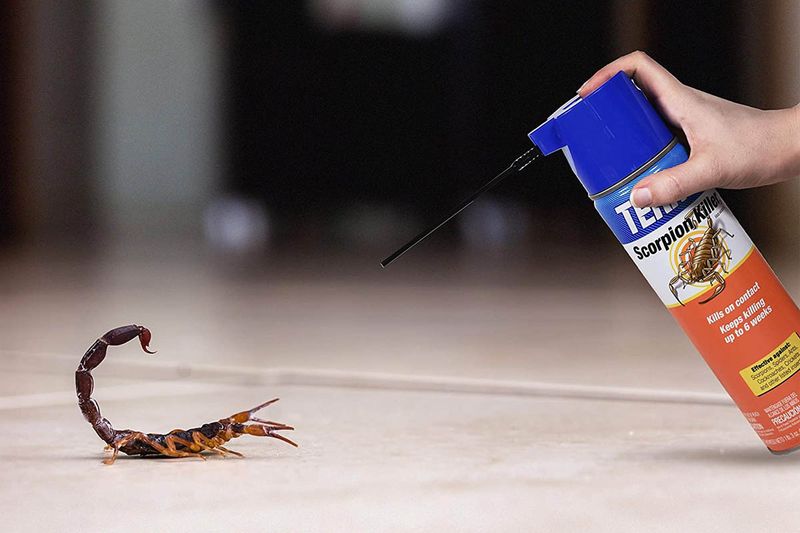
Spraying feels like action, but it is not the main fix. Texas A&M says scorpions can be hard to control with insecticides alone, so its advice puts habitat changes and exclusion first, as laid out in the AgriLife publication.
If you still want to consider a pesticide, use only a product labeled for the pest and the location, and follow every word on the label. The Texas A&M IPM booklet takes the same label-first approach.
Broad or repeated spraying around the house is not a good plan.
Now to the scorpion in your tub. Do not pick it up with bare hands, and do not use a flimsy tool that puts your fingers close.
The school IPM plan points to long tongs or a container-and-cardboard method.
For the container method, set a jar or cup over the scorpion, slide stiff cardboard underneath, then carry it outside and release it away from the house. Wear closed-toe shoes while you do it.
A scorpion can move fast and may climb a surface you did not expect.
No method is risk-free. If you are nervous, a licensed pest professional can remove it and look for entry points with you.
Know when a sting needs medical attention

Most people who live in Texas for a while hear sting stories, and they range widely. Texas A&M entomologists say most Texas scorpion stings cause moderate reactions, but reactions vary from person to person.
A sting is not automatically harmless, and it is not automatically an emergency.
If you are stung, wash the area with soap and water. Then call Poison Control at 1-800-222-1222 for guidance, as Poison Control recommends.
The call is free, and the specialist can tailor advice to the person’s age and symptoms.
Some signs mean you should not wait. Difficulty breathing requires immediate medical attention.
Seek emergency evaluation for body-wide symptoms or for pain that home care does not relieve. Children and others who may react more strongly deserve extra caution.
Prevention comes back to the basics. Check likely entry gaps, such as door bottoms and pipe openings, and reduce nearby hiding places like wood piles and debris.
The school IPM plan and AgriLife guidance frame these as ways to lower risk, not remove it.
A scorpion in the tub is startling, but it is usually a clue about a gap, not a sign of a siege.