
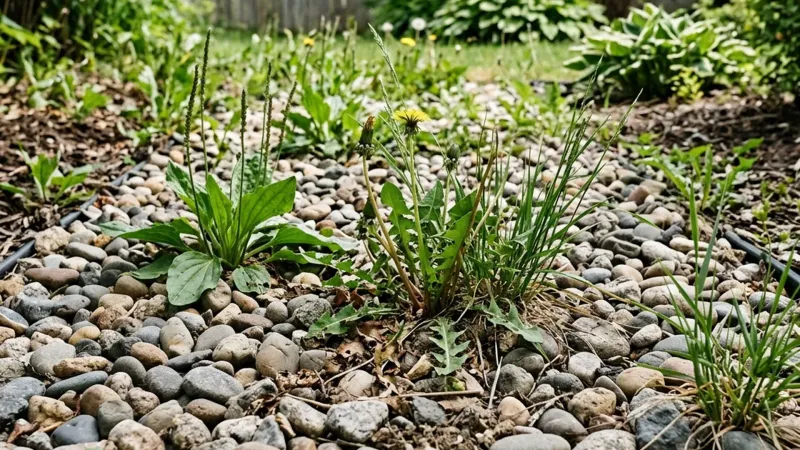
Gravel yards are supposed to mean less work, but many California homeowners end up staring at a fresh crop of weeds poking through the rocks just weeks after laying them down. The weeds are not growing faster because of the gravel itself – they are taking advantage of moisture, windblown soil, and seeds that were already waiting in the ground.
Understanding what is actually feeding those weeds makes the fix much more straightforward than ripping everything out and starting over.
Why weeds can appear so quickly in gravel
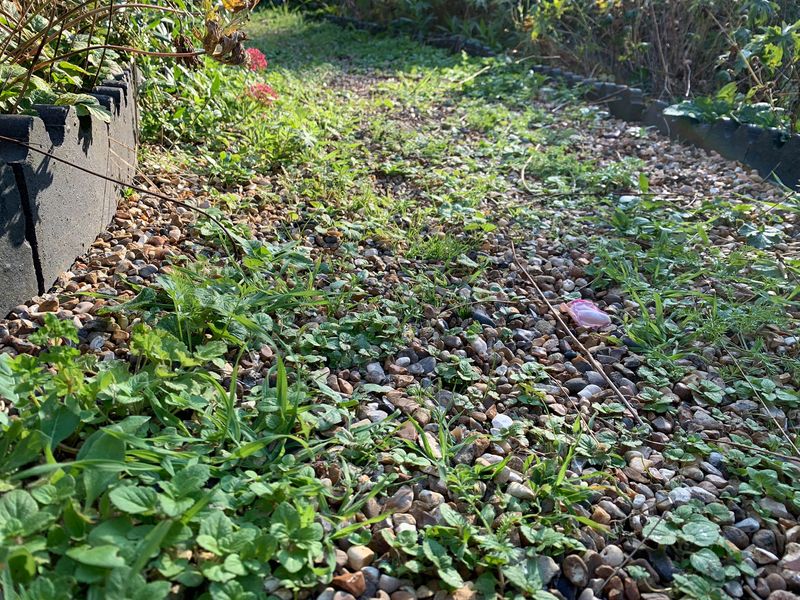
Gravel does a real job in the landscape. It blocks some light, creates a physical layer between seeds and soil, and does not break down the way organic mulch does.
However, UC IPM’s weed management guidance for landscapes describes gravel and pebbles as stable but “difficult to keep weed-free,” and that difficulty comes from what happens above the rocks, not beneath them.
Wind drops dust, fine soil particles, leaf litter, and seeds into the spaces between rocks continuously. Over time, that material accumulates into a thin but workable seedbed sitting right on top of or just inside the gravel layer.
When rain or irrigation arrives, those seeds have everything they need to germinate. Caltrans notes that pore spaces in gravel fill with dirt and debris over time, creating a growing medium for weeds even in areas that started out clean.
California’s seasonal rhythm makes this more visible than in other climates. Fall rains wake up winter annuals that have been waiting as dormant seeds since the previous spring.
Warm, wet winter periods push those plants into rapid growth. Then, as soil temperatures climb in late spring, summer annuals like crabgrass begin germinating in a second wave.
UC IPM’s crabgrass resource notes that germination timing shifts across California’s climate zones, so coastal yards, inland valleys, and the Central Valley each face slightly different windows.
The seed bank in the soil also matters more than most homeowners realize. Disturbed ground – freshly graded areas, spots where old plants were pulled, or beds that were tilled before gravel went down – holds seeds that can stay viable for years.
Add irrigation that keeps soil moist beneath the gravel surface, and what looks like a sudden takeover is actually a predictable response to conditions that were already in place. There is no good evidence that gravel generally speeds up weed growth on its own.
UC IPM’s mulch guidance confirms that inorganic mulches like gravel do not decompose into organic matter but can still become contaminated with soil and debris that supports weed growth. The emergence looks sudden because the triggering conditions – moisture, warmth, and debris – often arrive together.
Reset the site before adding more rock
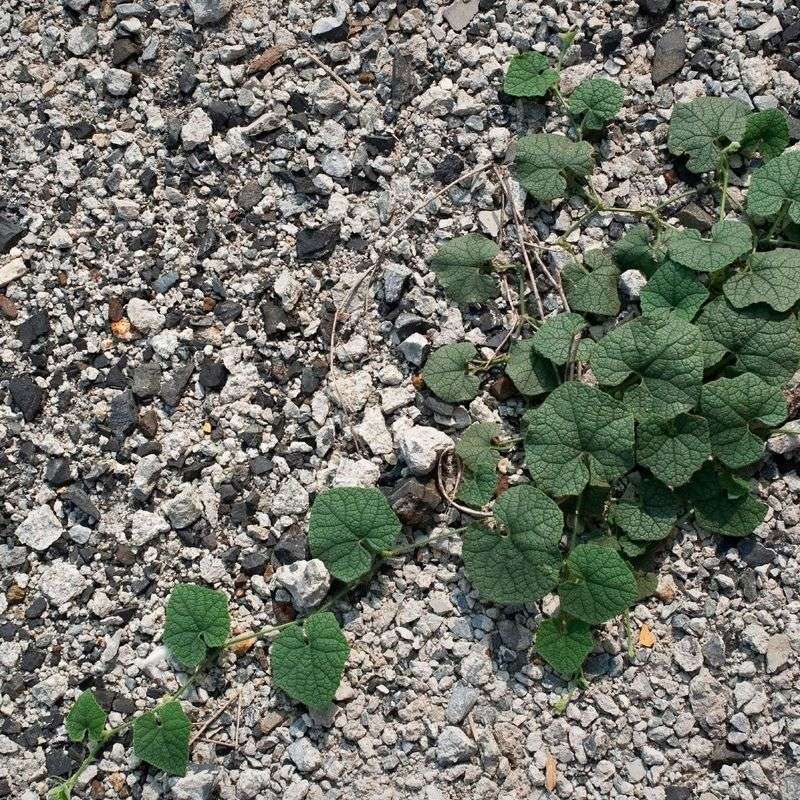
Adding fresh gravel over an existing weed problem does not bury the problem – it covers it. Perennial weeds with established root systems will push right through a new layer of rock, often within a few weeks.
Annual weeds that were already in the process of setting seed will finish the job underground and contribute to the next season’s flush. The most reliable move before any new gravel goes down is a clean reset of the ground beneath it.
Start by identifying what you are dealing with. UC IPM’s landscape weed management guidance recommends controlling perennial weeds before installation and digging out their roots or underground structures where possible.
Perennial grasses, bindweed, and nutsedge can regrow from fragments left in the soil, so pulling the top growth is not enough. Get as much of the root system out as you can, and plan to check for regrowth in the weeks that follow.
Once the visible weeds are cleared, do not rush to install. Water the area or wait for a rain event, then give seedlings one to two weeks to emerge.
UC Cooperative Extension guidance supports this approach: encouraging one more flush of seedlings and removing them before installation depletes a portion of the surface seed bank before gravel goes down. Those small seedlings come out easily with a hoe or a quick hand-pull, and removing them now means they will not be working their way up through your new rock layer later.
The reason this second pass matters is straightforward. Gravel installed over active seedlings traps them in a warm, moist environment with no competition.
Some of those plants will find the light gaps between rocks and emerge anyway. UC IPM’s lawn weed management resource reinforces that removing weeds before they flower and set seed is critical because annual weeds can quickly reseed an area.
A little patience at the preparation stage saves considerably more time over the first year after installation.
Use landscape fabric as an aid, not a guarantee
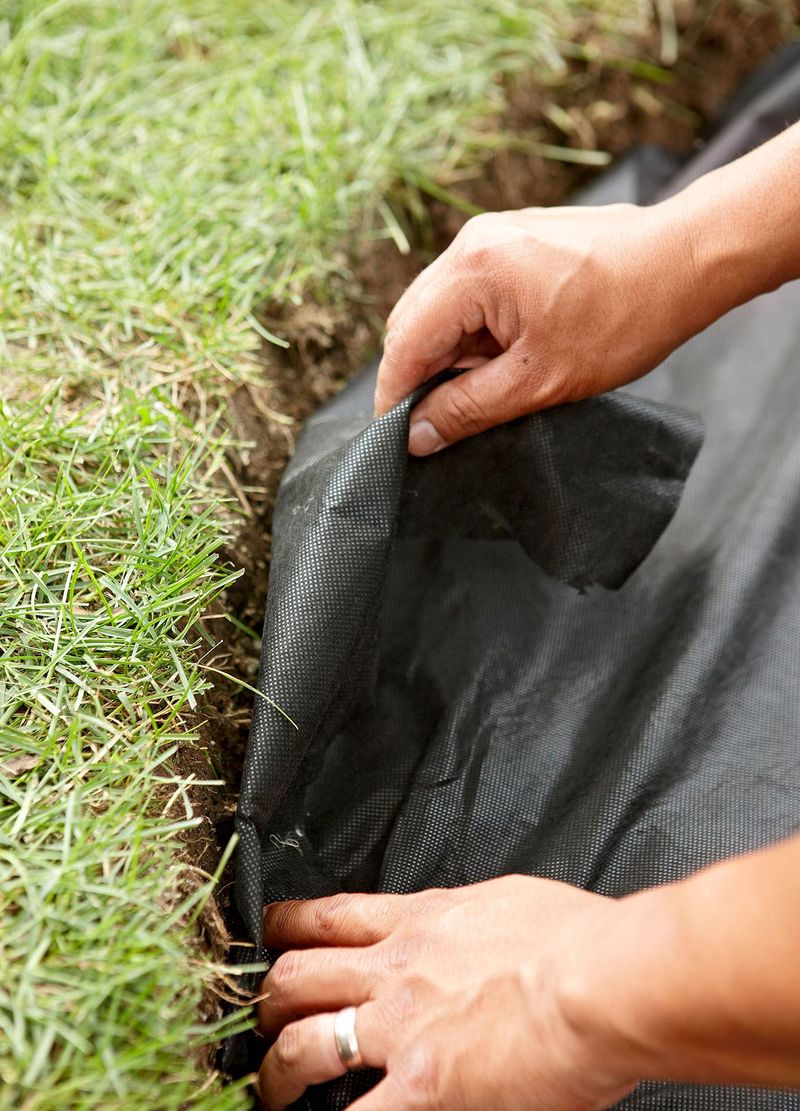
Landscape fabric has two distinct jobs, and mixing them up leads to disappointment. The first job is separating gravel from soil so the two materials do not blend together over time.
The second job is reducing initial weed pressure by blocking light from reaching seeds in the soil below. UC IPM’s mulch guidance describes fabric under rock as useful for both purposes, but notes that it is not a permanent weed barrier.
The reason fabric eventually falls short is that it only controls what is underneath it. Seeds that blow in and land on top of the fabric, in the gravel layer, or in accumulated debris have no barrier between them and the light they need.
UC ANR’s landscape fabric review points out that clogged or deteriorated fabric can also interfere with water and air movement over time, which matters if you have any plants in or near the area. Fabric that has broken down at seams or edges becomes a tripping hazard and a weed anchor rather than a weed barrier.
Installation quality determines how much benefit you actually get in the short term. Overlap seams by at least six inches and pin them flat so weeds cannot thread through the gap.
Secure edges tightly along borders, walls, and edging, since those transitions are where weeds consistently find their way in. UC IPM’s weed management pest note identifies gaps, edges, and deteriorating areas as the primary failure points for fabric systems.
The decision to use fabric also depends on what the area is for. Under a rock path or open hardscape with no plants, fabric makes reasonable sense as a soil separator.
Under a planted bed, the calculus changes: fabric can restrict the air and water movement that plant roots and soil organisms depend on, and it makes future planting or amendment nearly impossible without removing the whole system. UC IPM’s pest myth debunking resource cautions that fabric’s weed-control effect is temporary and should not be treated as a low-maintenance permanent fix.
Think of it as one useful layer in a system, not the system itself.
Build the gravel layer around the site
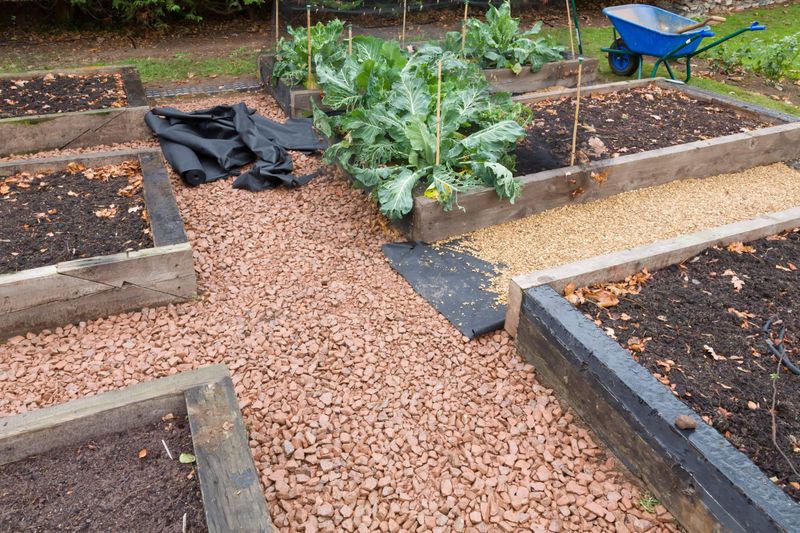
Once the ground is clear and fabric is secured where it suits the site, the gravel layer itself needs some thought before you pour. Depth, rock size, and placement all affect how well the installation holds up over time and how it interacts with nearby plants.
UC Cooperative Extension guidance commonly describes roughly 3 to 5 inches of gravel as a useful starting range for weed suppression, but that range is a reference point, not a rule. Larger rocks leave bigger gaps between pieces, which means more light can reach the surface below.
A 3-inch layer of fine pea gravel behaves differently than 3 inches of larger river rock. Match depth to the particle size you are using, and do not count on any depth to guarantee permanent control.
Keep gravel away from plant stems and trunks. UC IPM’s weed management pest note warns that mulch piled too deeply around plants can keep soil too wet and restrict the oxygen that roots need.
Pull the gravel back several inches from any stems, crowns, or trunks in the area. This also makes it easier to spot early weed growth right at the base of plants, where weeds are most likely to go unnoticed until they are established.
Rock color and size also affect the growing environment in ways that matter for plant selection. Dark-colored rock absorbs heat and radiates it back at night, which can stress some plants and create reflected heat near walls or fences.
UC IPM’s landscape weed guidance notes that gravel selection should account for plant tolerance, reflected heat, slope, and drainage. Lighter-colored decomposed granite or pale river rock tends to stay cooler.
On slopes, larger rock holds better than small pea gravel, which can migrate with water flow. Factor in how the area drains before settling on a material, particularly in spots that receive concentrated runoff during California’s winter rain events.
Keep the maintenance window short
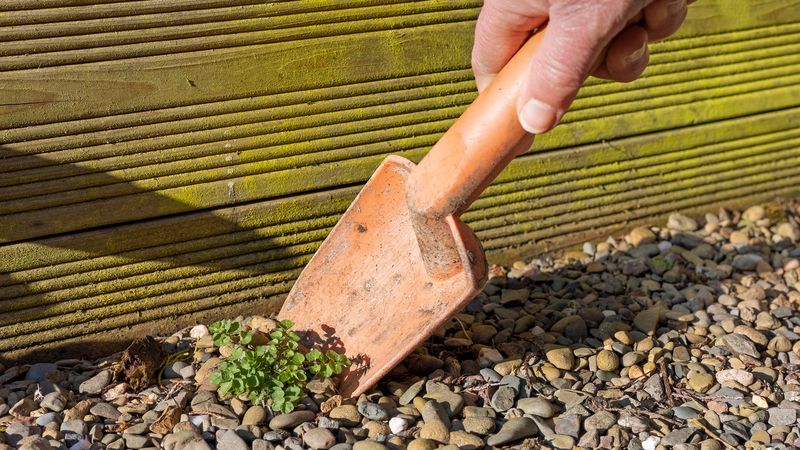
A clean installation is only the starting point. Even gravel that went down over a perfectly prepared site will eventually collect windblown debris, and that debris becomes the seedbed for the next round of weeds.
The difference between a yard that stays manageable and one that gets away from you comes down to how quickly you respond after moisture arrives.
After rain or a significant irrigation cycle, spend a few minutes raking accumulated leaves, soil, and organic material off the gravel surface. Caltrans’ gravel mulch guidance describes how pore spaces fill with debris over time and provide a growing medium for weeds even in otherwise stable installations.
Removing that material before it breaks down into a fine layer of organic matter is faster and easier than dealing with weeds that have already rooted into it.
Pull or hoe seedlings while they are still small, ideally before they develop a secondary root system. UC IPM’s landscape weed management guidance is direct on this point: remove weeds before flowering and seed set.
Annual weeds that complete their cycle drop hundreds of seeds onto the gravel surface, rebuilding the very seedbed you worked to eliminate before installation. A weed that gets pulled at two inches tall takes seconds.
The same plant at flowering stage takes minutes and leaves seeds behind regardless.
Perennial weeds that reappear in the same spot after pulling need a different response. They are regrowing from root fragments or underground structures, and surface removal alone will not stop them.
UC Cooperative Extension guidance supports repeated digging to exhaust the plant’s underground reserves over time. Short, frequent checks after rain – rather than one big annual cleanup – keep the population small enough to manage by hand and prevent the seedbed from rebuilding season after season.
Match the response to the weed
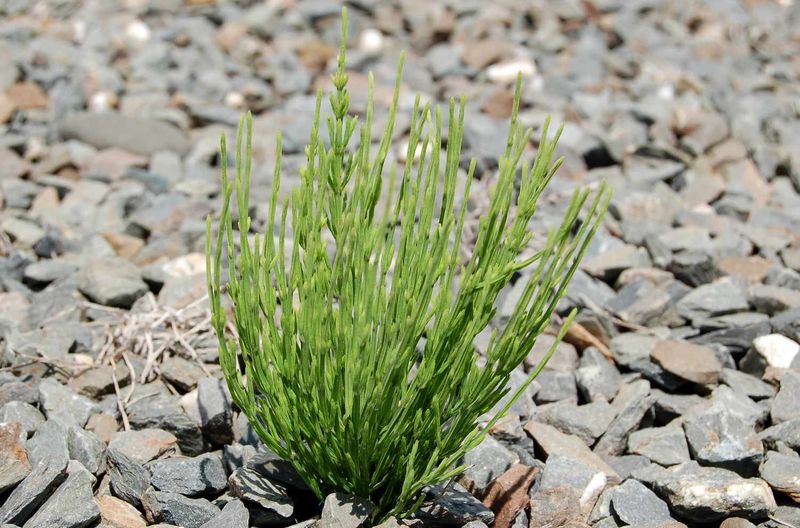
Not every weed in a gravel yard responds to the same treatment, and choosing the wrong approach wastes time while the plant gets stronger. The most useful first step is a quick identification: annual or perennial, grass or broadleaf, seedling or established plant.
That distinction shapes everything that follows.
Young annual seedlings – the thin, shallow-rooted sprouts that appear in flushes after rain – generally come out cleanly with a hoe or a firm hand-pull. UC IPM’s landscape weed management guidance notes that hand-weeding and mulching are often sufficient in home landscapes, with herbicides reserved for difficult or hard-to-control problems.
Catching annuals early is genuinely effective because the plant has not yet invested in a deep root system or set seed.
Perennial weeds are a different challenge. Bindweed regrows from root fragments that can extend several feet into the soil.
Nutsedge produces underground tubers that separate from the parent plant when you pull the top growth, each one capable of starting a new plant. Perennial grasses spread by rhizomes that break apart during digging.
UC IPM’s lawn weed resource reinforces that perennial weeds may require repeated control efforts over multiple seasons rather than a single intervention. Repeated digging to exhaust the root system is slower work, but it is the right approach for most home landscapes.
When hand-weeding is not making progress on a persistent perennial, a targeted herbicide application may be appropriate. If you go that route, read the current product label before purchasing or mixing anything.
The EPA’s pesticide label guidance is clear that the label is legally enforceable and determines where, how, how much, and how often a product may be used. Apply only to the target weed, avoid spraying in wind, and keep product away from desirable plants, pavement drains, and any surface water.
EPA guidance on pesticide drift explains how even light air movement can carry herbicide to off-target plants and surfaces. A blanket spray over the entire gravel area is not a substitute for identification and targeted treatment.
Decide whether gravel fits the site
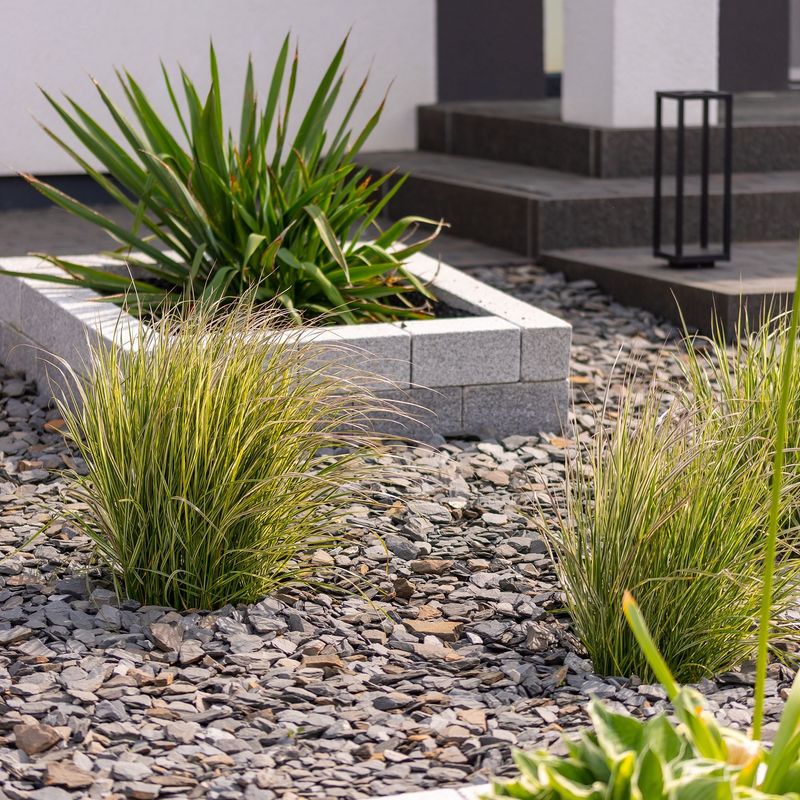
Gravel is not the right answer for every part of a California yard, and choosing it by default can create more work than it saves. Before reinforcing an existing gravel surface or expanding into a new area, run through a quick site check to confirm the material actually fits the location and its goals.
Rock paths, open hardscape areas, and the near-home zone in wildfire-risk communities are places where gravel makes practical sense. CAL FIRE’s defensible space guidance recommends hardscape such as gravel, pavers, or concrete in the first five feet around structures as part of a fire-resistant approach.
That said, CAL FIRE guidance does not automatically satisfy local requirements. California Board of Forestry and Fire Protection information on defensible space zones notes that local fire agencies and jurisdictions may have stricter standards, and regulatory guidance has been evolving.
Check with your local fire authority before assuming any installation meets current requirements.
Organic mulch is not automatically the inferior choice for other parts of the yard. UC IPM’s mulch guidance explains that wood-based mulch can suppress weeds, conserve soil moisture, and improve soil conditions as it decomposes – benefits that gravel cannot offer.
It does require periodic replenishment, and it may be inappropriate close to structures in fire-prone settings. For planted beds away from the house, organic mulch often supports the soil and the plants better than rock does.
One sourcing consideration that applies particularly to larger projects or areas near natural open space: purchased aggregate can carry invasive plant material. The California Invasive Plant Council’s weed-free aggregate resources explain how contaminated gravel can introduce invasive plants to disturbed sites.
Asking your supplier about weed-free aggregate sourcing is a reasonable step before a significant installation, especially near wildland areas or sensitive habitat zones.
Start early and keep the cycle small
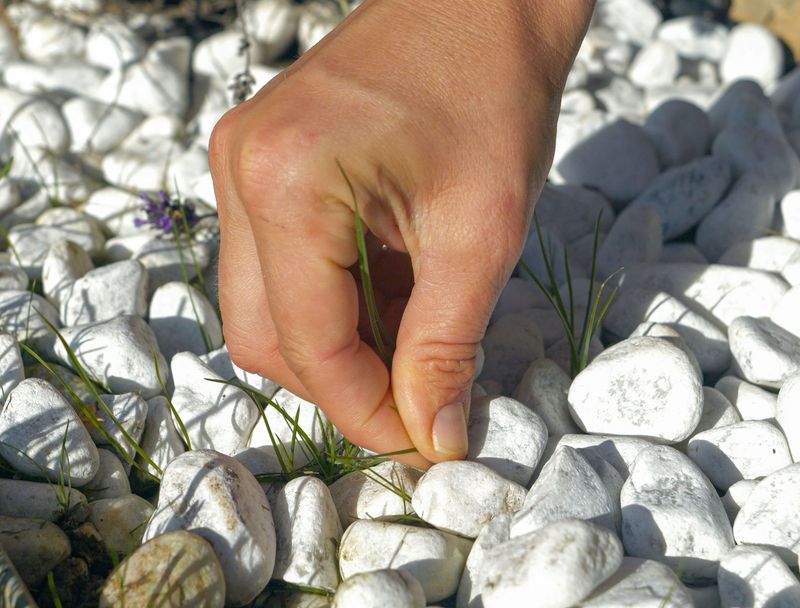
The sequence that keeps gravel yards manageable is not complicated, but it depends on starting clean and staying ahead of the seed cycle. UC IPM’s landscape weed management guidance frames it clearly: identify what you are dealing with, remove existing weeds and perennial roots before installation, encourage and remove one more flush of seedlings, install secured fabric where it suits the site, add gravel at a depth appropriate to the rock size and conditions, and inspect after rain and irrigation so weeds come out while they are still small.
Gravel reduces some weed pressure by limiting light and creating a physical layer, but it does not eliminate the conditions that allow weeds to germinate. UC IPM’s mulch guidance confirms that even inorganic surfaces accumulate debris over time.
The goal is not a maintenance-free yard. The realistic payoff is a yard where weeds appear in smaller numbers, stay smaller longer, and come out with far less effort than they would from bare soil or a neglected surface.
Short, consistent checks after moisture – a quick rake of debris, a few minutes of pulling – keep the cycle from resetting. A handful of seedlings pulled before they flower is a five-minute task.
The same area ignored through a wet winter becomes a project. Gravel done right shifts the work from reactive to routine.