
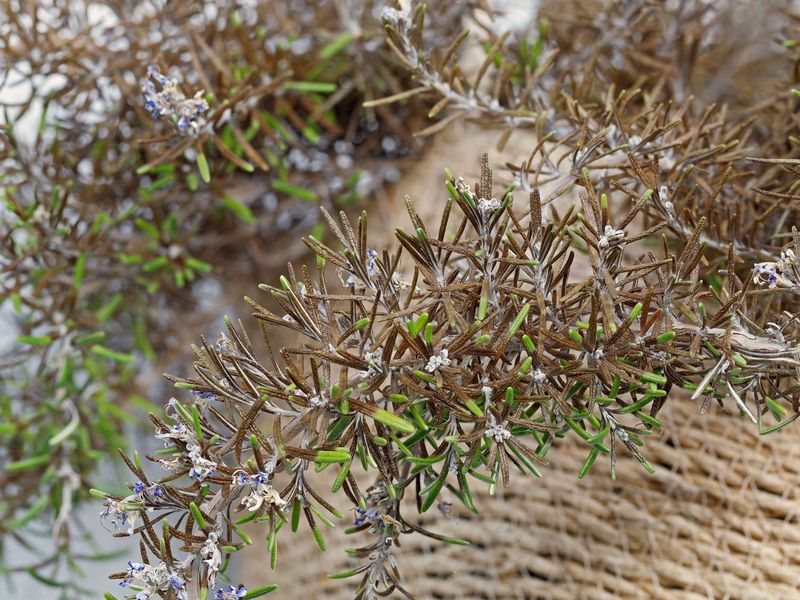
You carried your rosemary inside before the first cold snap, and now the needles are turning brown and brittle. It is tempting to grab the watering can or to stop watering altogether, but the leaves alone will not tell you which is right.
A few quick checks of the pot, the light, and the air can point you toward the real cause. Here is how to investigate before you change a thing.
Do brown, crispy leaves prove rosemary is overwatered?
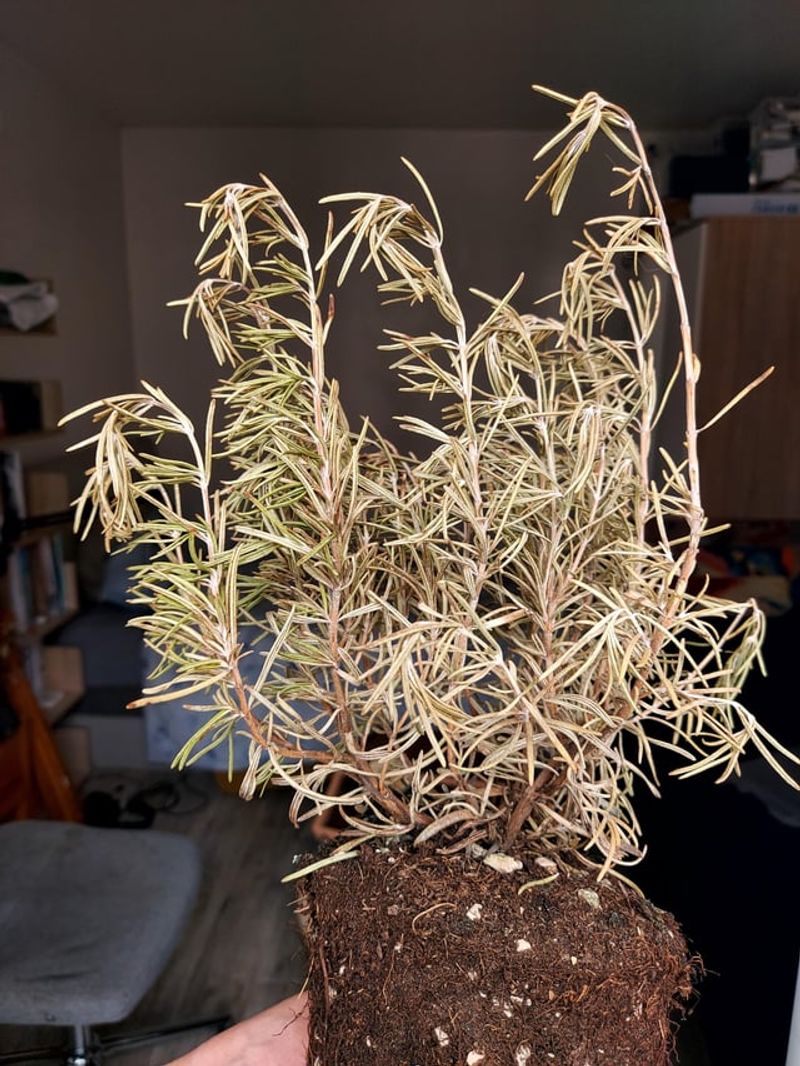
Brown, crispy needles look like a clear message, but they are not. Overwatering and root rot are common reasons rosemary declines indoors in winter, yet the same leaf symptoms can show up for other reasons.
Dry, brittle leaves and brown tips are also common signs of underwatering, as Virginia Cooperative Extension explains. Dry indoor air can brown leaf tips and cause dieback too, and Illinois Extension warns that simply watering more in that situation may lead to root rot.
So please resist the urge to water more just because the foliage looks parched. A pot that is already soggy will only get worse.
Curling, wilting, and leaf drop can come from too much water, too little water, or tired indoor conditions, and Missouri Botanical Garden lists several indoor herb problems that overlap. The smart first move is to inspect the pot itself.
Start with the potting mix and drainage
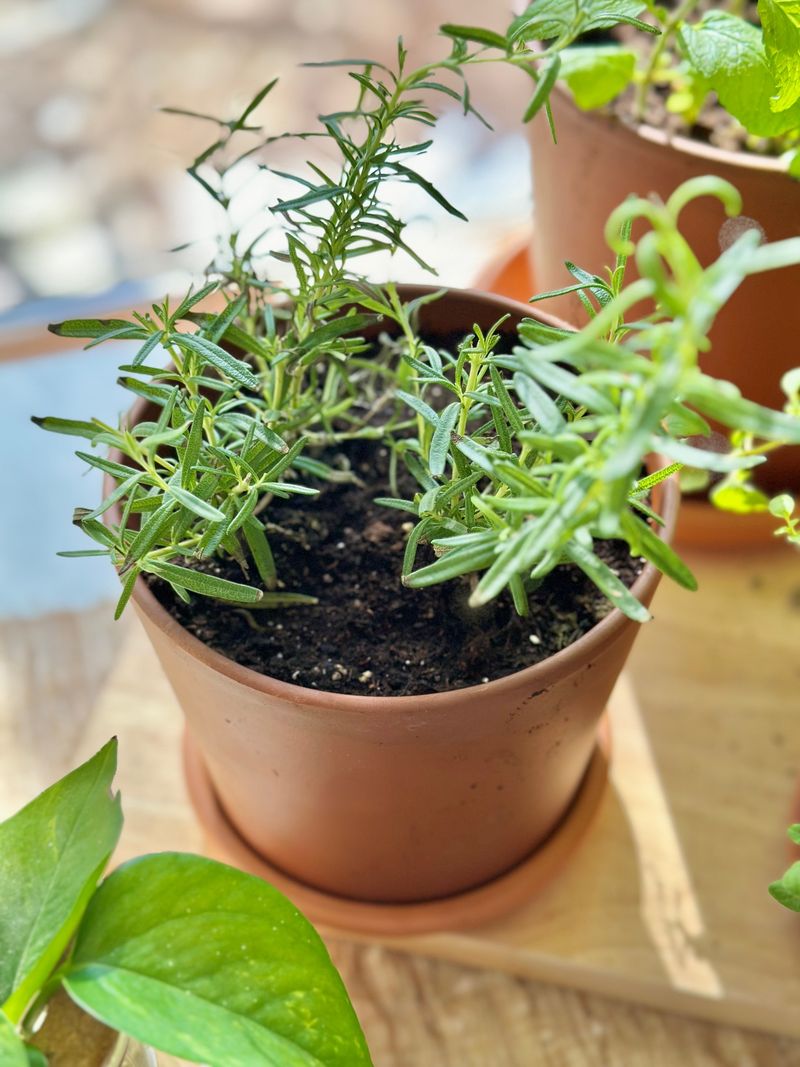
Before you water, push a finger about an inch into the mix. Note whether it feels wet, damp, or becoming fairly dry.
That one check tells you more than any calendar can.
If the mix is still wet days after your last watering, roots may be struggling. Constant wetness pushes air out of the spaces around the roots, and Virginia Cooperative Extension notes that roots without oxygen can die.
Next, lift the pot and look underneath. Make sure the drainage holes are open and not plugged by compacted mix or roots.
Check the saucer too, because a pot sitting in drained water keeps the bottom of the root ball wet. Rosemary guidance from UNH Extension stresses letting the mix dry between waterings.
If the mix stays wet and drains poorly, consider whether it holds too much water for a plant that likes to dry out a bit.
Water thoroughly, then let the pot drain
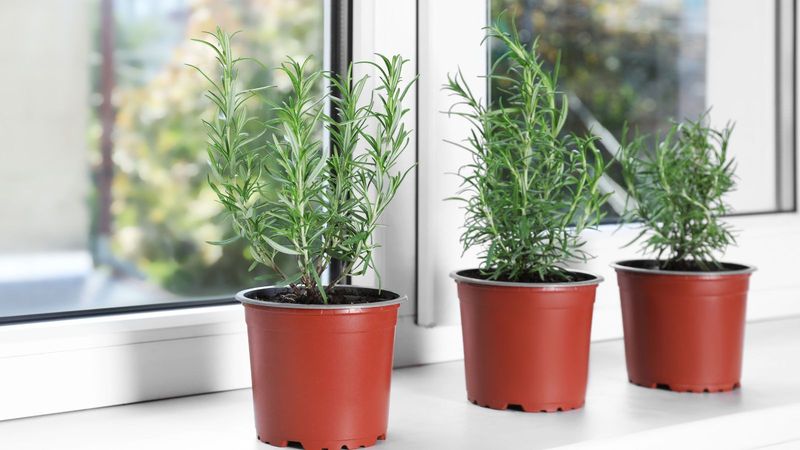
Once your check shows the mix is becoming fairly dry about an inch down, it is time to water. That is rosemary-specific guidance, not a rule for every pot or home, so a small clay pot and a large glazed one may need very different timing.
Skip the calendar. Texas A&M AgriLife gives a rough outdoor interval, but it also says plant size and climate matter, and indoor pots behave differently.
When you do water, wet the whole mix until water runs out of the drainage holes. Let it drip for a few minutes, then empty the saucer so the pot is not left standing in water.
Rosemary can suffer from drought as well as soggy roots, so the goal is neither constantly wet nor bone-dry mix. Winter advice from UNH Extension points the same way: let it dry somewhat, then soak it well.
Give rosemary the brightest light you can
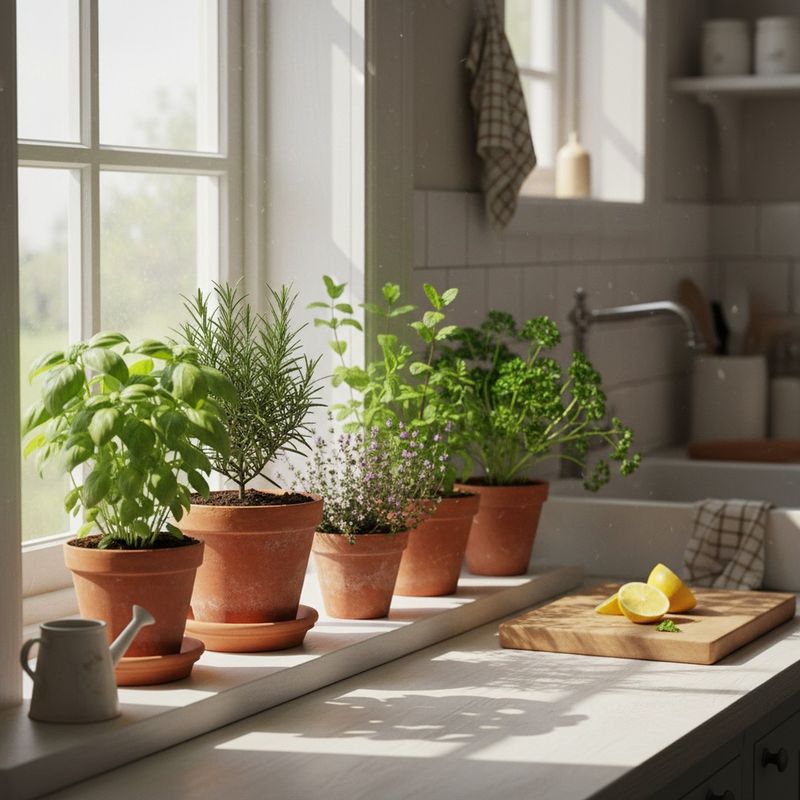
Winter days are short, and even a bright room can be dim compared with a garden bed. Weak light can add to indoor decline, which is one more reason brown needles should not be blamed on water alone.
Aim for the brightest spot you have, ideally a sunny south-facing window. UNH Extension recommends strong light for overwintering rosemary.
You may see a six-hour sun target mentioned for this herb. That number describes outdoor growing, where Texas A&M says rosemary does best in full sun.
Indoors, glass and distance from the window change the picture, so treat it as a reminder that rosemary loves light rather than a promise your window delivers it. As Illinois Extension notes, rosemary is a sun lover.
Better light will not replace root-zone checks. Keep checking the mix, and turn the pot now and then so all sides get a turn.
A cool, bright winter spot may help
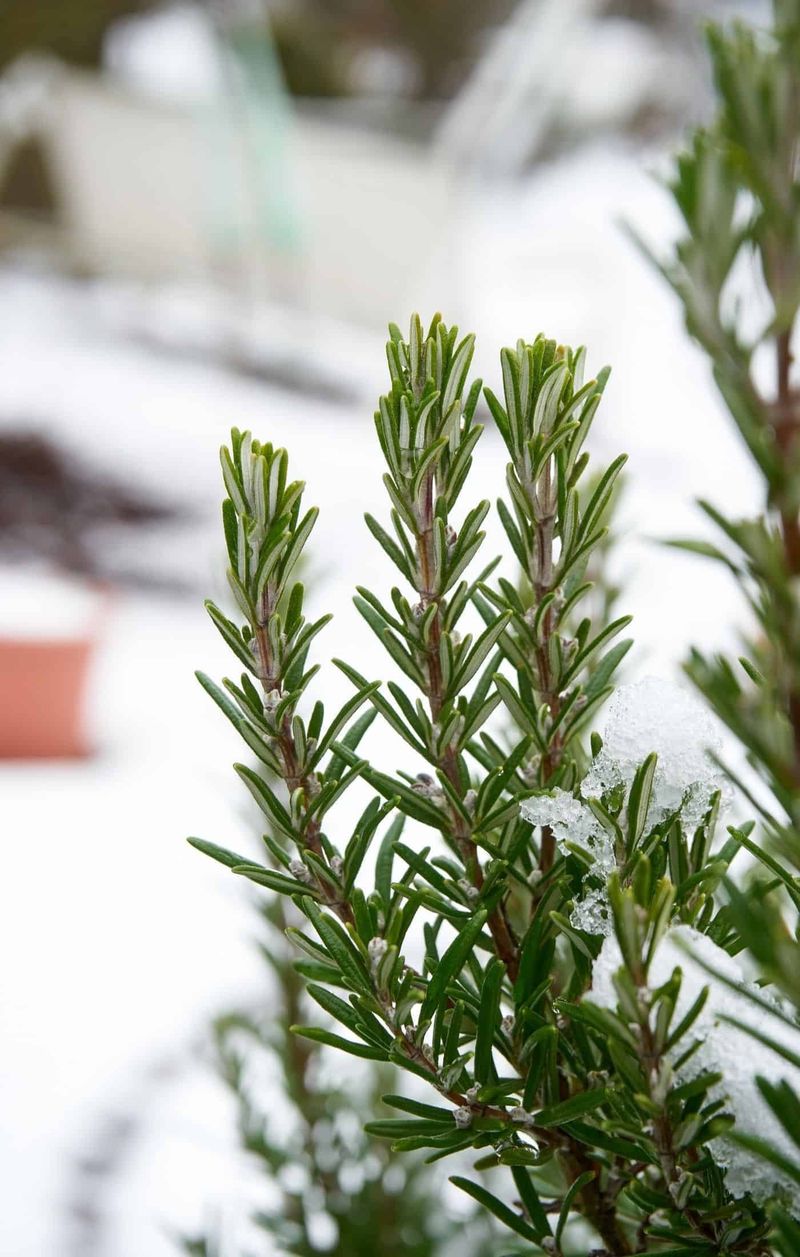
Rosemary tends to cope better in a cool, bright room than in a warm, stuffy one. Guidance varies by source: UNH Extension and its houseplant winter care Q&A suggest roughly 45 to 55 degrees F, while Illinois Extension mentions about 50 to 60 degrees F.
Think of that as a range to work with, not one perfect number. A bright entry, sunroom, or unheated spare room that stays above freezing may suit it.
Keep the pot away from heat vents and hot drafts, which dry the plant quickly.
Not every Southern gardener needs to bring rosemary inside at all. UF/IFAS lists culinary rosemary for hardiness zones 8 to 10, so in much of Florida and Texas it may stay outdoors.
Local freeze risk, the cultivar, and how exposed the container is all matter, and University of Maryland Extension offers colder-climate context.
Dry indoor air calls for a different fix
Heated homes can be as dry as a desert. Low humidity can brown leaf tips even when the roots are perfectly fine, and Illinois Extension links dry indoor air to brown tips and dieback.
That is why adding water to an already wet pot can backfire. The leaves still look dry, but the roots now have even less oxygen, and root problems can get worse.
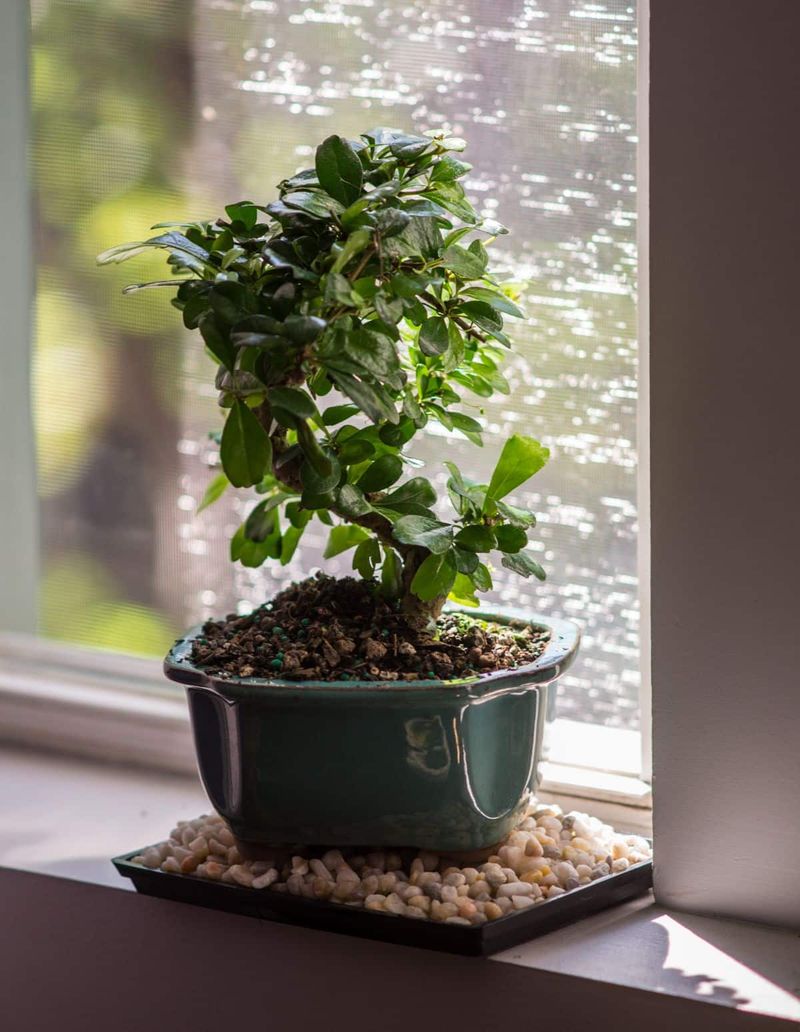
To raise humidity without soaking the roots, try a small humidifier nearby. Another option is a pebble tray: set the pot on pebbles so it sits above the water line, and never let the pot itself stand in the water.
Either step may help, though neither is a guaranteed cure.
Keep looking for other trouble as well. Missouri Botanical Garden covers common indoor herb problems, and pests like spider mites or aphids can also cause browning, so check under needles and along stems.
Check conditions again before expecting recovery
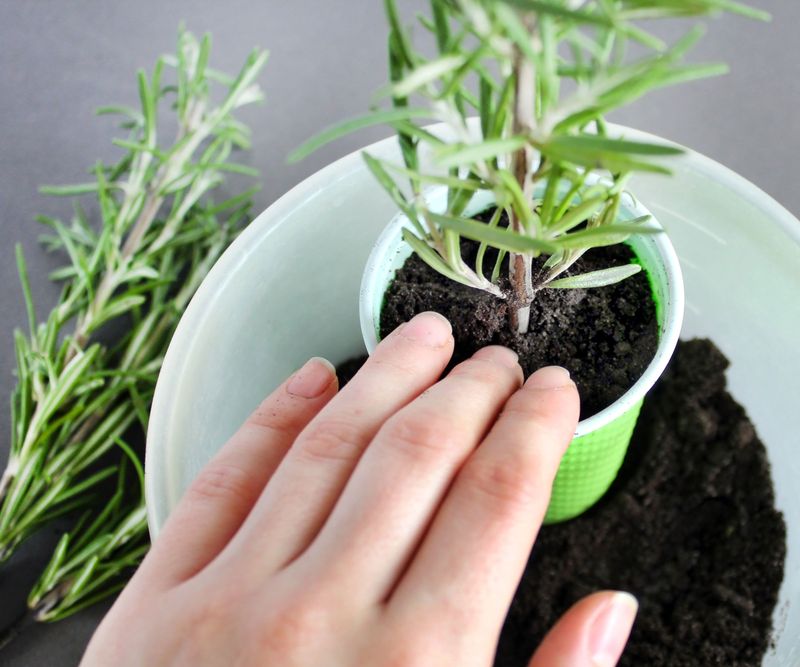
Run the checklist again: feel the mix, confirm the holes are open, water only when it is becoming fairly dry, let the pot drain, and give it bright, cool light while you treat humidity separately.
Changed care may help a stressed plant, but fully brown growth will not turn green again, and severe root damage may prevent recovery, as Ask Extension suggests. Look for fresh green growth at the tips as your sign of progress, and trim only clearly dead stems.
Texas A&M notes healthy rosemary is tough once it is back outdoors.
Brown needles are a clue, not a verdict, and the pot will usually tell you the rest.