
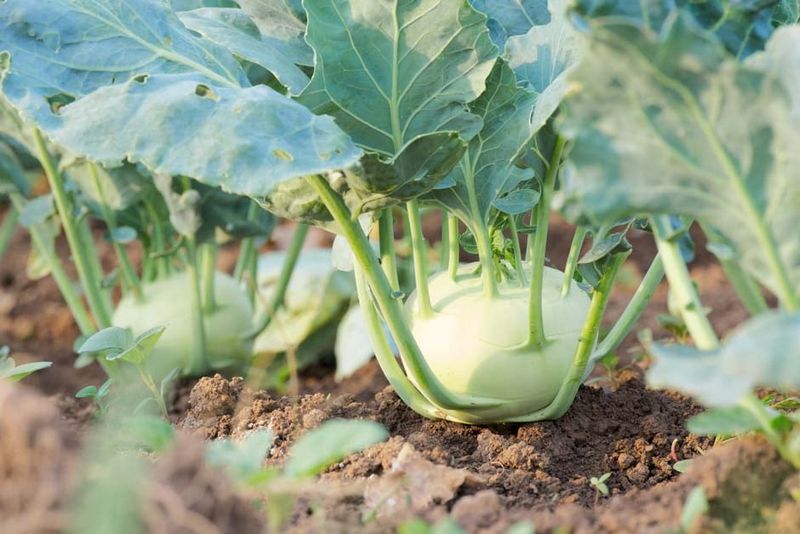
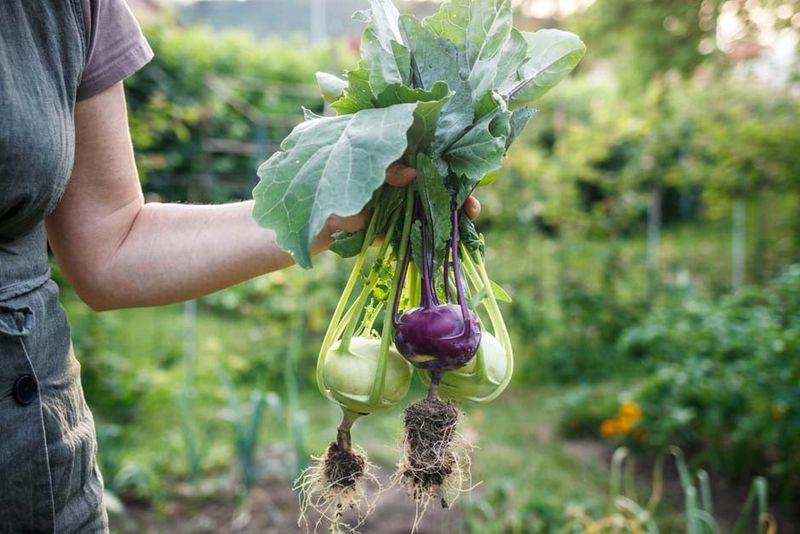
Kohlrabi might be the most underrated vegetable in a North Carolina fall garden. It looks unusual, grows relatively quickly, and produces crisp, mild bulbs that taste great raw or cooked.
For eastern North Carolina gardeners, late August opens a real window to seed this short-season brassica and work toward a mid- to late-October harvest.
Late-August Timing Fits Some North Carolina Gardens
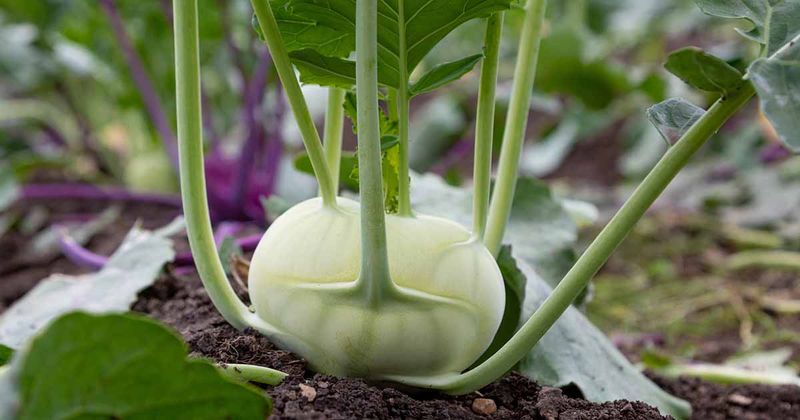
Eastern North Carolina has the clearest case for a late-August kohlrabi sowing. The NC State Southeastern U.S.
Vegetable Crop Handbook gives fall kohlrabi a planting window from August 1 through September 15 for eastern North Carolina, while listing fall planting as not recommended for western North Carolina. That is a meaningful geographic line, and gardeners in the mountains should skip the fall kohlrabi plan altogether based on that guidance.
Central North Carolina sits in a middle zone where the answer depends on local conditions. The NC State Extension Gardener Handbook notes that August is the primary month for establishing fall gardens in the Piedmont, and that coastal-plain dates typically run 7 to 14 days later than Piedmont guidance, while western NC dates often run 10 to 20 days earlier.
Piedmont gardeners should pull up their local average first-frost date, check the seed packet’s days-to-maturity figure, and count backward to see whether a late-August sowing leaves enough time before a killing freeze.
One important detail: seed companies and extension guides sometimes measure days to maturity differently – some count from seeding, others from transplanting or emergence. Before you build a schedule, read the packet carefully and note which starting point it uses.
The NC State Eastern North Carolina Planting Calendar identifies kohlrabi as a fall seed-and-transplant crop, confirming the region’s suitability. If you garden in eastern North Carolina and can provide consistent moisture, late August is a reasonable time to act.
If you garden farther west or inland, verify your frost timing before committing seed to soil.
Fall Conditions Help Preserve Kohlrabi’s Crisp Texture
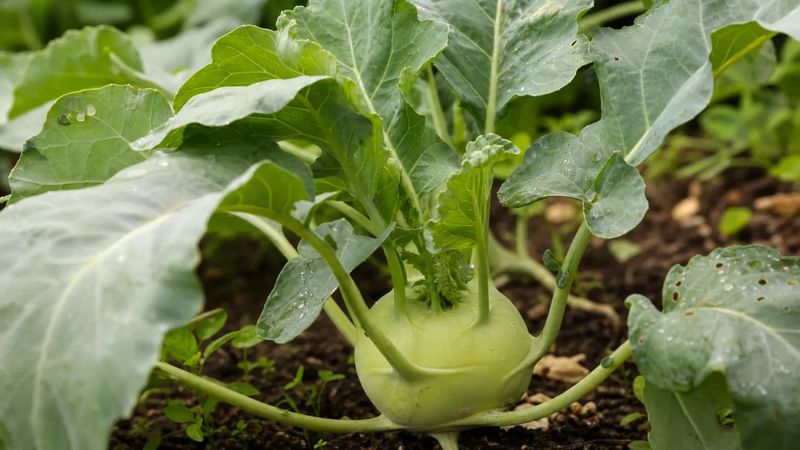
Kohlrabi’s edible part is not a root – it is an enlarged stem that swells just above the soil line. That distinction matters because it shapes how the crop responds to temperature.
When bulbs develop during summer heat, the stem tissue can turn tough, woody, or stringy before it reaches a useful size. Moving that development window into cooler fall weather gives the stem a better chance of staying tender.
Utah State University Extension describes kohlrabi as a crop that performs best in cool conditions, and University of Illinois Extension notes that small bulbs can be crisp, mild, and sweet or turnip-like in flavor. Both sources also make clear that bulbs allowed to grow oversized are more likely to become tough or develop off-flavors.
The quality payoff is real, but it depends on harvesting at the right size – not simply on the season.
Cool fall weather improves the odds of a tender result, but a frost does not automatically sweeten every kohlrabi the way a hard freeze can sweeten some other brassicas. The documented benefit is that lower temperatures reduce the heat stress that degrades texture.
Kohlrabi can tolerate some frost, though young plants may be damaged by hard freezes. Expect fall conditions to work in your favor, but plan to harvest by bulb size rather than waiting for a frost to finish the job for you.
Count Backward From a Late-October Target
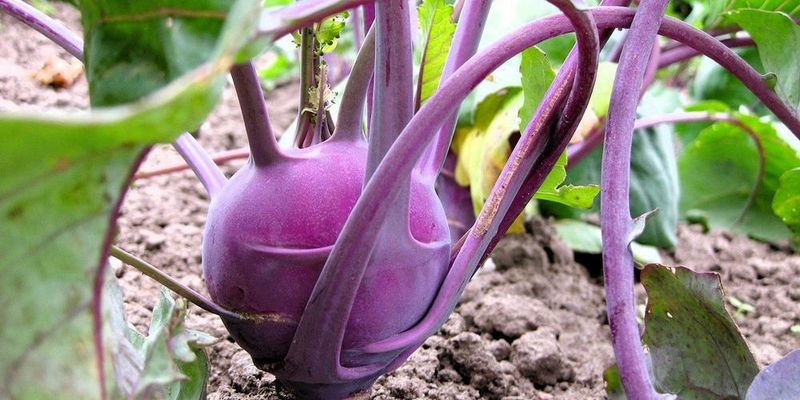
Kohlrabi is a relatively quick fall brassica, with most varieties maturing in roughly 50 to 60 days from seed under favorable growing conditions. The NC State Central North Carolina Planting Calendar and the Eastern NC Planting Calendar both list kohlrabi as a fall crop for their respective regions.
A direct sowing around August 27 therefore points roughly to mid- to late October under good conditions – a reasonable target, not a fixed guarantee.
Utah State Extension recommends selecting early-maturing cultivars for fall plantings, and that advice applies directly here. An early variety rated at 45 to 50 days gives you more buffer before frost than a 60-day type does.
Check the packet’s maturity description and note whether the count starts from seeding, emergence, or transplanting – those differences can shift your projected harvest date by a week or more.
The schedule also needs a frost-date check. NC State’s Extension Gardener Handbook advises adjusting planting dates by local frost timing rather than relying on regional averages alone.
If your area typically sees a first frost in late October, a late-August sowing of an early variety may leave just enough room. If your first frost typically arrives before mid-October, reconsider the timing or choose a faster cultivar.
Late-August heat, inconsistent moisture, poor germination, or unexpected early cold can all shift the result, so treat mid- to late October as a planning goal rather than a calendar certainty.
Sow Shallowly Into a Seedbed You Can Keep Moist
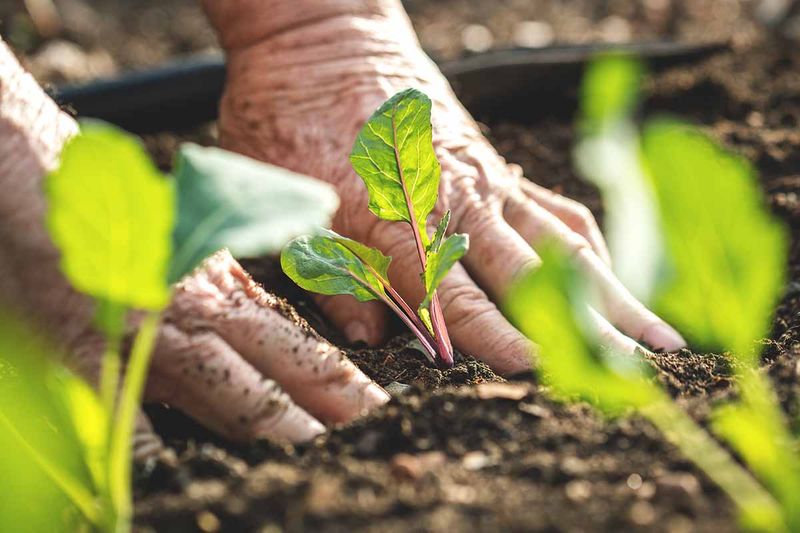
Getting kohlrabi established in late August starts with the basics: shallow seeding and consistent moisture. Utah State University Extension and University of Illinois Extension both recommend planting seeds at approximately one-quarter to one-half inch deep.
Press seeds into a firm, fine seedbed and cover lightly – burying them deeper than half an inch slows germination without any benefit.
Spacing matters more than many gardeners expect with kohlrabi. The NC State Central NC Planting Calendar suggests about 4 inches between plants in the row.
Utah State recommends 6 inches in-row with roughly 12 inches between rows. The right number for your garden depends partly on the cultivar, so check your seed packet and thin promptly once seedlings reach a couple of inches tall.
Crowded kohlrabi competes for light and moisture and often produces smaller, lower-quality bulbs.
Moisture is the variable most likely to determine whether late-August sowing succeeds or fails. Kohlrabi has shallow roots, which means the top inch or two of soil dries out fast under late-summer sun.
NC State’s Extension Gardener Handbook specifically cautions that fall direct seeding can fail when there is not enough moisture to keep seedlings actively growing. Utah State recommends approximately 1 to 2 inches of water per week as a general guide.
If you cannot commit to reliable irrigation or do not expect regular rainfall, transplants – when available – may give you a more dependable start than direct seeding. A thin layer of straw or shredded leaf mulch applied after germination can help moderate soil temperature and slow moisture loss between waterings.
Shield Seedlings From Late-Summer Stress
The two weeks after seeding are when late-August conditions put the most pressure on young kohlrabi. Soil temperatures can stay high enough to slow germination, and newly emerged seedlings have almost no reserves to draw on if they dry out or overheat.
Preparing a cool, moist seedbed before sowing – by watering thoroughly the evening before – gives seeds a better start than sowing into dry, hot soil.
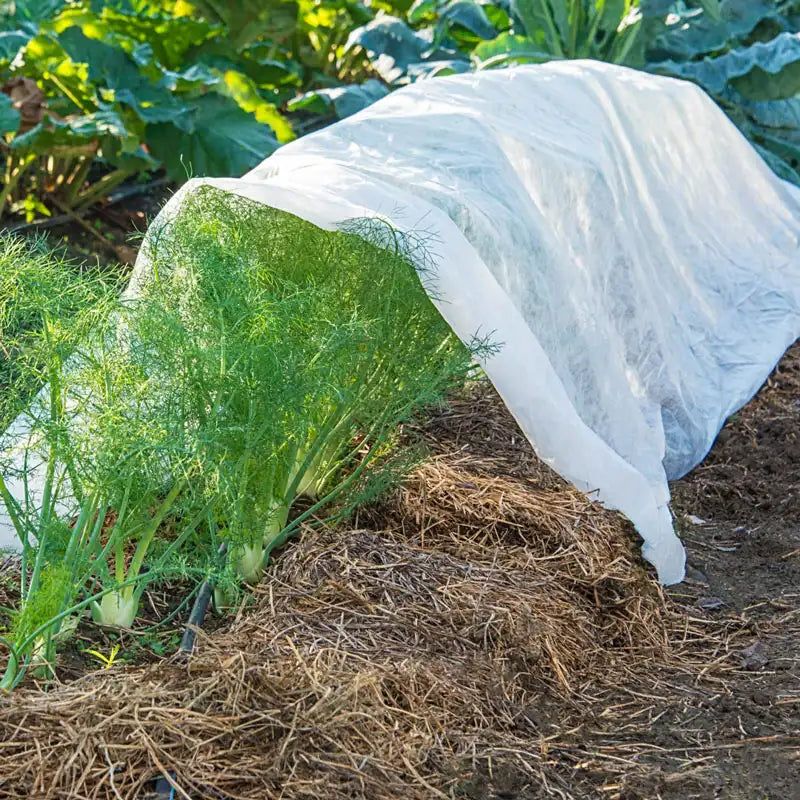
Temporary light shade from a shade cloth rated at 30 to 40 percent can reduce soil surface temperature during the hottest part of the day without blocking enough light to weaken seedlings. University of Illinois Extension and Utah State Extension both note that lightweight floating row cover is a practical tool for protecting young brassica plants.
Row cover can exclude some early-season insect pests, reduce moisture loss from the soil surface, and later provide limited frost protection as nights cool in October.
One firm caution: do not seal seedlings under clear plastic sheeting during warm, sunny weather. The NC State Southeastern U.S.
Vegetable Crop Handbook warns that clear plastic can trap enough heat to injure or kill plants on sunny days. Floating row cover made from spunbonded fabric is a safer choice because it allows air circulation and some moisture exchange.
Whichever cover you use, secure the edges so wind cannot lift it, and check underneath on warm afternoons to make sure temperatures under the fabric are not building to damaging levels. Vent or remove covers on hot, still days and replace them before cold nights in late September and October.
Inspect Plants Before Brassica Pests Take Over
Kohlrabi belongs to the brassica family, and that membership comes with a shared pest list. NC State’s guide to pests of crucifers covers the main culprits: imported cabbageworms, cabbage loopers, diamondback moths, cabbage aphids, flea beetles, and cabbage maggots.
Each one can reduce yield or damage plants badly enough to delay bulb development, so regular scouting from the day seedlings emerge is more effective than waiting for visible damage to accumulate.
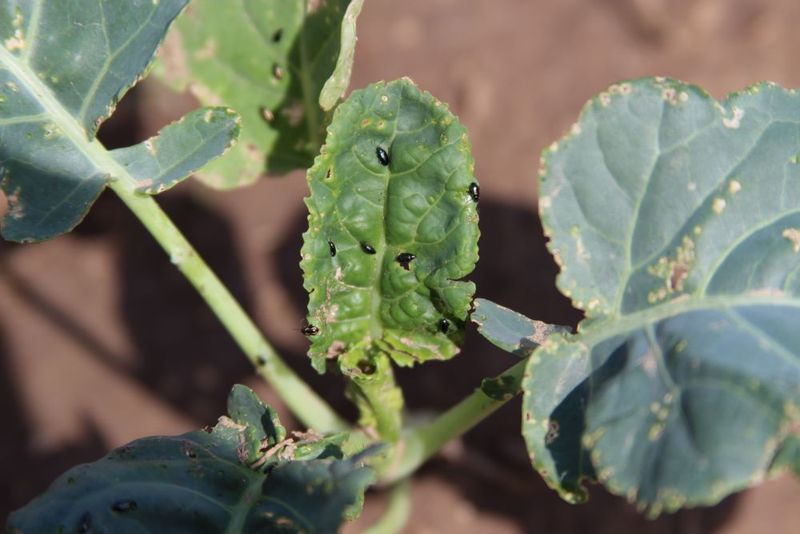
Flea beetles deserve particular attention in late August. Penn State Extension’s guide to flea beetle management in cole crops explains that these small, jumping beetles feed by peppering leaves with tiny holes, and seedlings with only a few true leaves can be set back significantly by heavy feeding.
University of Illinois Extension also flags flea beetles as a common kohlrabi problem. Row cover applied at seeding can help exclude them during the most vulnerable early stage.
For caterpillar pests, flip leaves and check the undersides for eggs and small larvae two or three times a week. Hand-picking works well at low population levels.
If you decide to use a pesticide, identify the pest first, then read the current product label completely before applying – including the preharvest interval, reentry requirements, and any precautions specific to edible crops. EPA pesticide labels are legally enforceable documents that govern permitted uses and application rates.
Crop rotation is the simplest long-term tool for managing shared brassica problems. NC State’s Home Vegetable Gardening Quick Reference Guide recommends rotating crops, and NC State’s clubroot guidance specifically identifies rotation as a key management strategy for brassica diseases.
Avoid planting kohlrabi where cabbage, broccoli, kale, collards, radishes, or turnips grew in the previous one to two seasons.
Harvest by Bulb Size for a Tender Bite
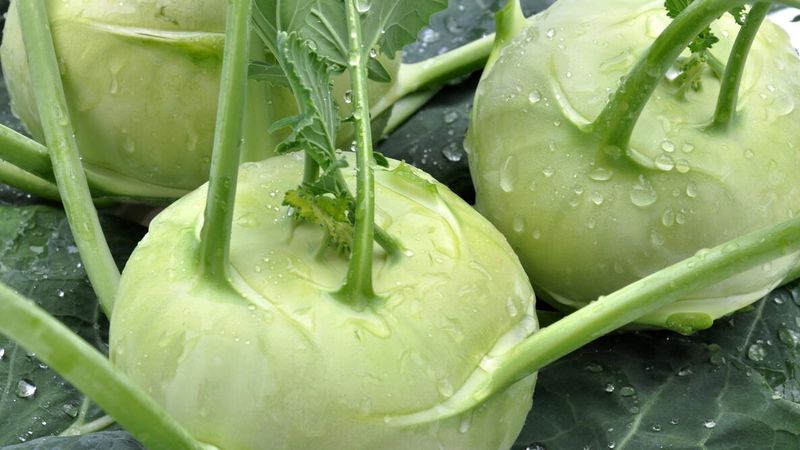
The calendar date gives you a rough target, but bulb size tells you when to actually cut. University of Illinois Extension recommends harvesting kohlrabi when bulbs reach about 1 to 2 inches across for the most tender quality.
Utah State Extension and NC State’s Extension Gardener Handbook both treat 2 to 3 inches as the commonly cited upper range for good eating quality. Beyond that size, the stem tissue is increasingly likely to turn woody or stringy, and flavor can shift in an unpleasant direction.
Start checking your plants around day 45 after seeding rather than waiting for the full maturity window to close. Bulbs do not all develop at the same rate, so harvesting a few early ones at peak size while letting others catch up is a practical approach.
Use a knife to cut the stem just below the swollen portion, leaving the roots in place if you plan to harvest the smaller ones over the following week or two.
Kohlrabi can handle a light frost without serious damage, which gives fall gardeners some flexibility as October nights cool down. Young plants are more vulnerable to hard freezes than mature ones, so keep an eye on the forecast as temperatures drop.
If a hard freeze – generally below 28 degrees Fahrenheit for several hours – is predicted and your bulbs have reached a harvestable size, go ahead and pick them rather than gambling on the weather. A mid- to late-October harvest is a reasonable goal when conditions cooperate, and the crisp payoff is most reliable when you pick by size before the bulbs overgrow or a damaging freeze arrives.
Treat the Sowing as a Conditional Fall Bet
Eastern North Carolina gardeners who can provide reliable moisture, stay on top of pest scouting, and account for their local frost dates have a reasonable case for seeding an early kohlrabi variety in late August. The NC State Southeastern Vegetable Crop Handbook places eastern NC squarely inside the August 1 to September 15 fall kohlrabi window.
Some central NC gardens with longer frost-free periods may also fit, provided the seed packet’s maturity period and the local frost date line up.
Western North Carolina gardeners and anyone without a dependable way to water should reconsider the schedule. NC State’s Gardener Handbook is direct about fall direct seeding failing when moisture is insufficient, and Utah State Extension emphasizes that kohlrabi’s shallow roots make consistent irrigation essential.
Without water, the sowing is unlikely to produce a harvestable crop.
A mid- to late-October harvest is possible for eastern and qualifying central NC gardens, and young bulbs picked at 1 to 3 inches across are most likely to deliver the crisp, mild flavor that makes this crop worth the effort. The crop is not a guaranteed win – it is a short-season brassica that rewards good timing, steady moisture, and attentive harvesting.
Get those three things right, and late October may bring something worth slicing raw over a salad.