
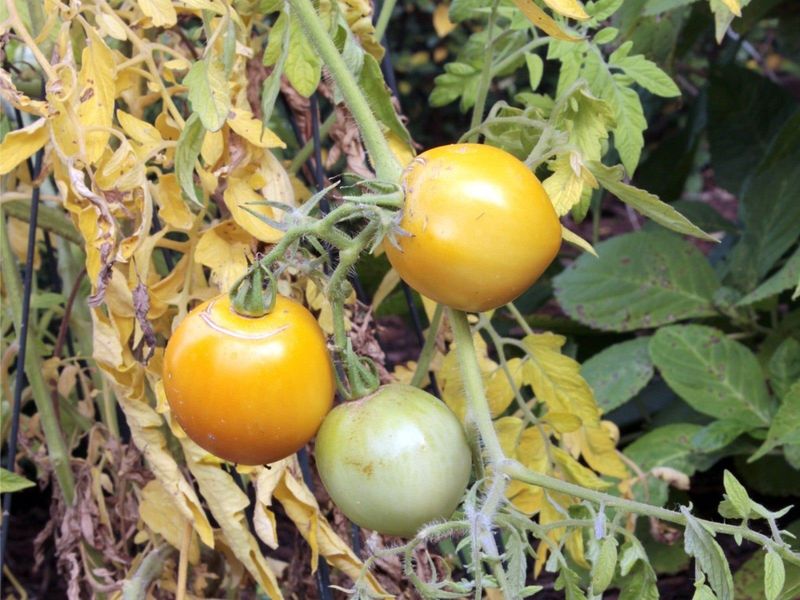
You walk out to your tomato plant and spot yellow leaves low on the stems. It is easy to wonder if the whole plant is failing.
Sometimes those leaves are just getting old, and sometimes they are an early warning. A few quick checks can tell you which one you are looking at before frost arrives.
Yellowing is a symptom, not a weather diagnosis
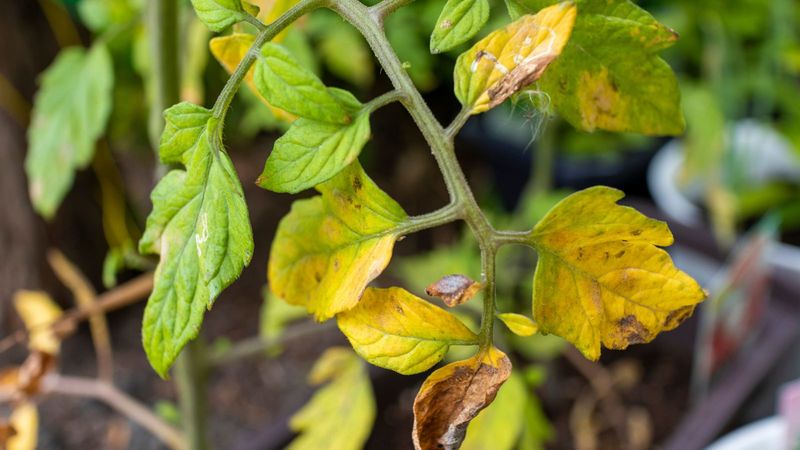
Yellow leaves low on a tomato plant are a symptom, and several different problems can cause them. A cool night does not tell you which one you have.
Utah State Extension notes that nights below 50°F can interfere with fruit set, but that is a fruit issue and does not show that chilly nights turned your leaves yellow.
Start with a quick first check. Compare the lower leaves with the growth at the top, look closely for spots, and watch for wilting or yellowing that spreads fast.
Mississippi State Extension describes ordinary aging, nutrient trouble, and disease as possible explanations, and UGA Extension shows how leaf disease often begins low on the plant.
Keep in mind that what you see can narrow the possibilities but cannot guarantee a diagnosis at home. The next sections walk through each clue so you can match your response to what the plant is showing.
When older lower leaves may be normal
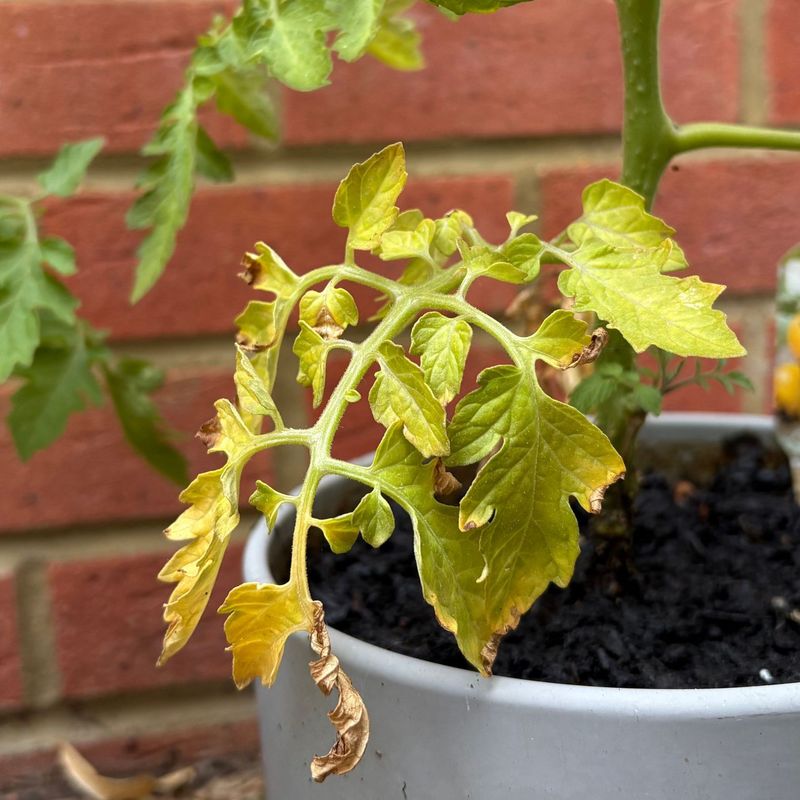
Late in the season, the lowest leaves sit in deep shade under a thick canopy. A few yellow ones there can simply be old age.
The pattern to look for is a vigorous plant, healthy growth above, and no spots or wilting anywhere.
When that is what you see, Mississippi State Extension’s guidance points toward normal decline of older foliage. You can keep an eye on the plant instead of attempting a whole-plant rescue.
If a leaf is fully dead or getting worse, pinch it off.
Do not assume every yellow lower leaf is harmless, though. Dark spots, a drooping stem, or yellowing that climbs quickly all change the picture.
Check again every few days, and let the plant’s overall look guide how much attention it needs.
Use spots as clues to possible leaf disease
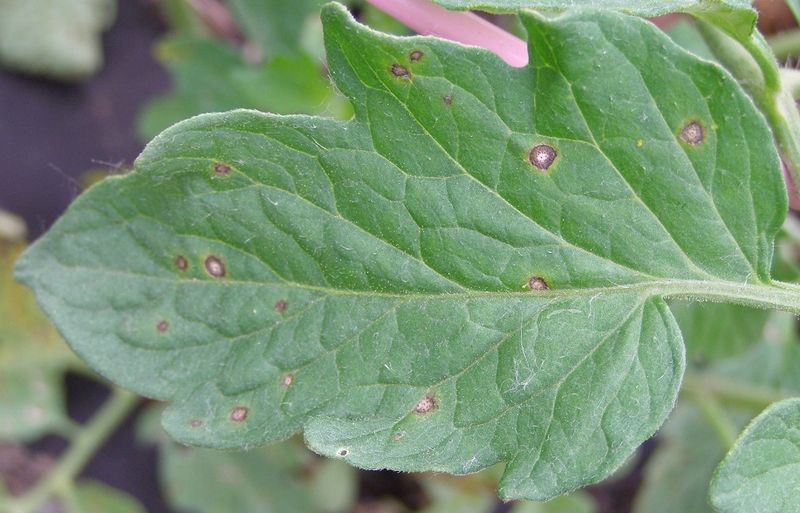
Turn a yellow leaf over and look for spots. Early blight tends to make larger, irregular brown lesions with rings inside them, like a target.
Septoria leaf spot usually leaves smaller, round spots with tan or gray centers and dark edges.
UGA Extension’s tomato disease bulletin explains that both problems often begin on lower leaves and can climb the plant. Rain, heavy dew, and overhead watering can help spread them, which matters during damp Southern falls.
Treat these patterns as clues, not proof. Yellowing without spots can come from other causes, and some spots look alike.
If the spotting is spreading fast, a local Extension office can help confirm what you are seeing.
Wilting or rapid spread calls for closer diagnosis
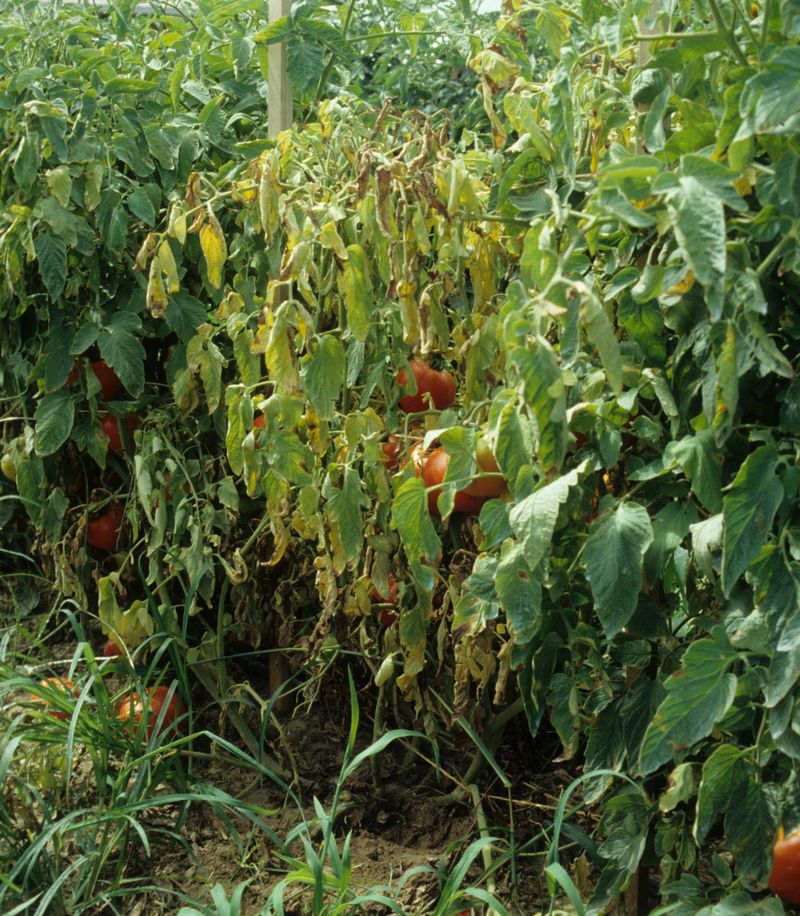
Yellowing that arrives with wilting deserves more attention than routine leaf cleanup. One-sided wilting, or yellowing that races through the plant in days, are the signs to take seriously.
Fusarium wilt is one possible cause. University of Minnesota Extension describes how it can start low on the plant and move upward.
Still, UF/IFAS shows that several wilts can look similar, and telling them apart may require checking stem tissue.
Avoid guessing from a symptom checklist. Contact your local Extension office or ask about submitting a sample to a diagnostic service.
An answer can help you decide whether to harvest what is left and how to handle the garden bed next season.
Clean up damaged leaves without overreacting
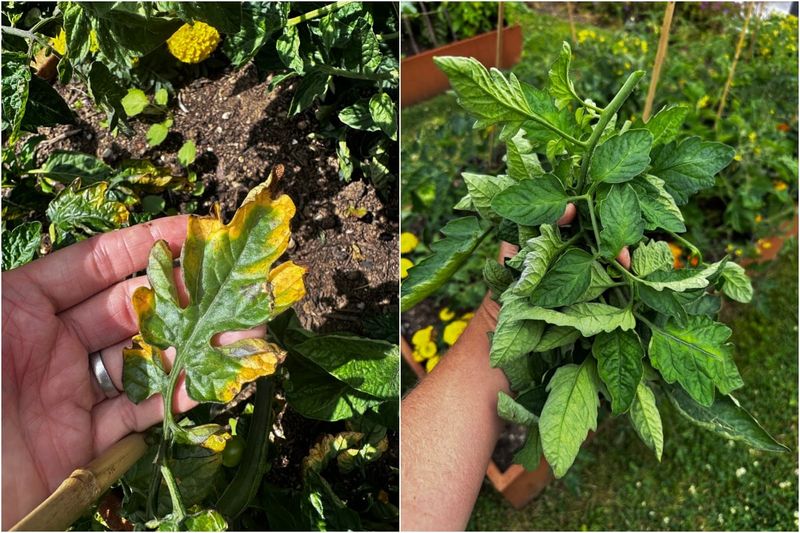
A calm first response is usually enough. Work when the plant is dry, remove spotted or dead leaves, water at the soil level, and add mulch to limit soil splash.
These steps can slow the spread of leaf spots, though they do not guarantee a cure.
Go easy with the pruners. University of Minnesota Extension advises removing no more than one-third of the plant’s leaves at once, so skip any blanket advice to strip the lower third.
The same source notes that most home gardeners do not need fungicide for early blight. If you consider a product, follow its label and harvest interval.
Resist the urge to feed the plant just because it looks yellow. Nitrogen shortage can yellow older leaves, but UGA Extension lists other causes that look similar.
Rely on a soil test, as UGA’s nutrient guide recommends, or ask local Extension before adding fertilizer.
Let the local forecast guide the remaining harvest
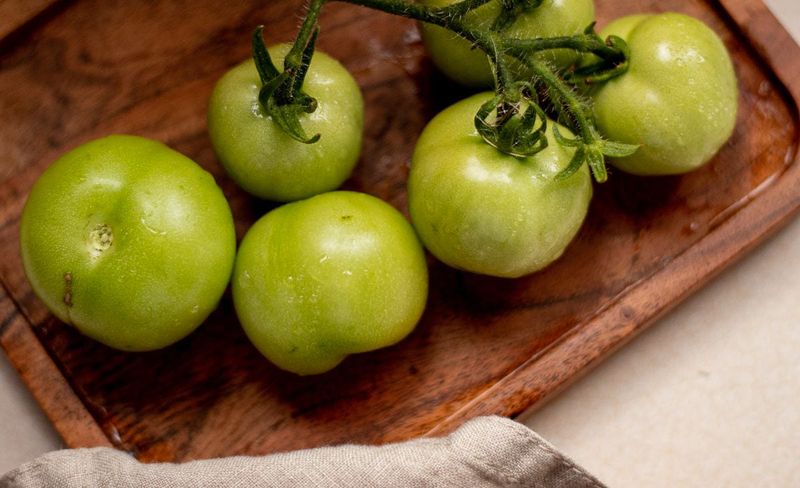
Once you know what the leaves are telling you, shift attention to the fruit. Check your local forecast and ask whether the green tomatoes have enough warm days left to ripen.
If frost is close, picking them before it hits may be the better call.
Fall timing is not the same everywhere. Texas AgriLife lists average fall planting dates that vary by region, and UF/IFAS gives different windows for north, central, and south Florida.
Neither works as a universal calendar for a plant already in your yard, and Utah State Extension reminds growers that cool nights slow fruit set.
Monitor isolated aging leaves, handle spots carefully, and seek help for wilting or fast spread. Not every yellowing plant needs saving, and sometimes the best rescue is a basket of picked fruit.