
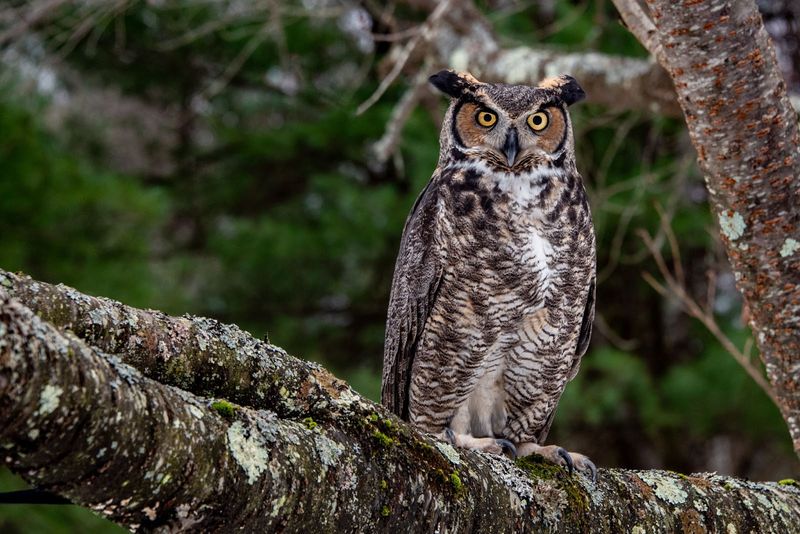
Spotting a Great Horned Owl perched in your backyard live oak is one of those Texas moments that stops you in your tracks. These big, yellow-eyed birds are impressive hunters, and it is natural to wonder whether their presence means something is living in your walls or garage.
The honest answer is more useful than a simple yes or no. Owl activity around your property is a solid reason to take a closer look for rodents, but the bird itself cannot tell you whether mice or rats have actually moved in.
An owl sighting is a reason to inspect, not a diagnosis
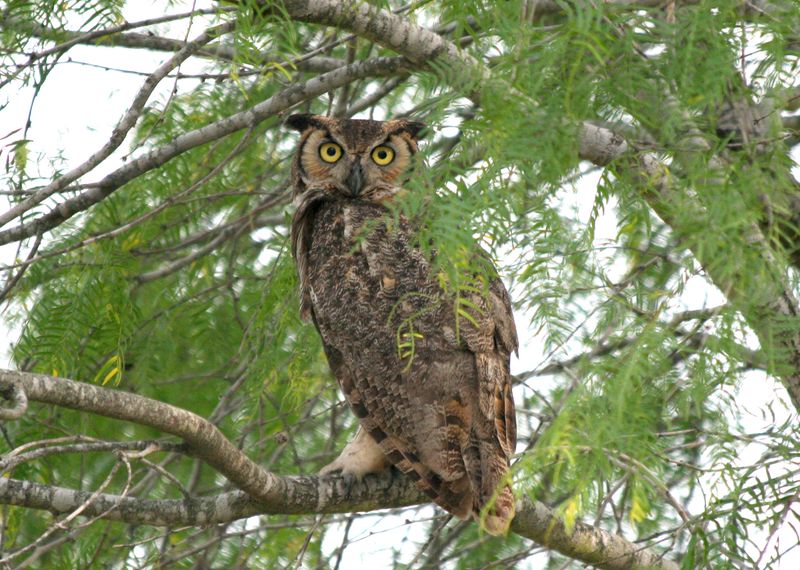
Spotting a Great Horned Owl near your house more than once can feel like a flashing warning light, but the connection between owl activity and a household rodent problem is less direct than most people assume. Texas Parks and Wildlife describes these birds as hunting mostly rodents, so the instinct to check your property makes sense.
The problem is that a sighting alone cannot tell you whether the prey is inside your home, in the greenbelt down the road, or somewhere else entirely within the owl’s wider range.
“More owls” is also a phrase that deserves some unpacking. A territorial Great Horned Owl pair may use the same trees on your block for months, meaning the bird you see on Tuesday night and again on Friday may be the exact same individual.
Cornell Lab of Ornithology’s nest-cam FAQ notes that adults and fledglings often move together after young leave the nest, which can make one family group look like an uptick in owl traffic to a casual observer.
Research on urban and rural Great Horned Owl diets, including a peer-reviewed diet study in the Canadian Field-Naturalist, confirms that prey composition shifts with local availability, but that finding does not give a homeowner a way to read owl presence as a reliable signal of infestation. What it does support is this practical rule: treat repeated sightings as a prompt to inspect, gather direct evidence, and then decide whether action is needed.
The owl is a reason to look, not proof of what you will find.
What the owl may actually be hunting
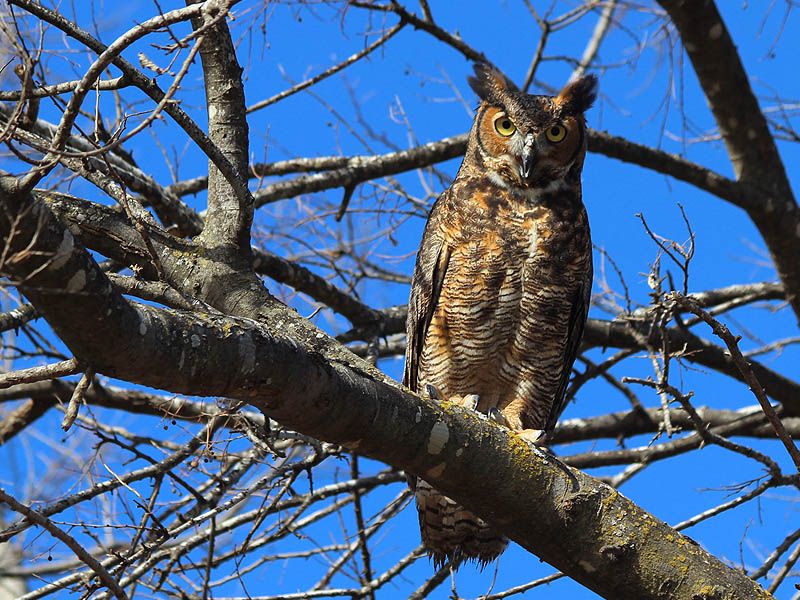
Great Horned Owls are among the most adaptable predators in North America, and their menu reflects that flexibility. All About Birds lists their prey as including rabbits, mice, rats, voles, squirrels, birds, reptiles, amphibians, insects, and even scorpions.
Calling them specialized rodent hunters misses how broadly they feed, and that breadth matters when you are trying to figure out why one keeps showing up near your back porch.
The habitat around your yard matters just as much as what is inside it. Texas suburbs are threaded with drainage corridors, greenbelts, railroad right-of-ways, and vacant lots that can support healthy populations of cottontail rabbits, voles, and other prey.
Texas Parks and Wildlife’s owl guide frames these birds as beneficial predators that use a range of open and semi-open habitats, not animals tethered to a single yard or structure. An owl hunting the drainage ditch two blocks away may still perch on your roofline each night.
Pellets left under a roosting tree can offer better clues than the sighting itself. Dissecting a pellet, or simply noting what bones and fur it contains, can reveal whether the owl has been eating rodents, birds, or something else entirely.
Cornell’s nest-cam resources explain that pellets represent one meal, not a map of where prey was captured. Rodent bones in a pellet confirm the owl ate a rodent somewhere in its range; they do not confirm the rodent came from your property.
Look for direct rodent evidence around the property
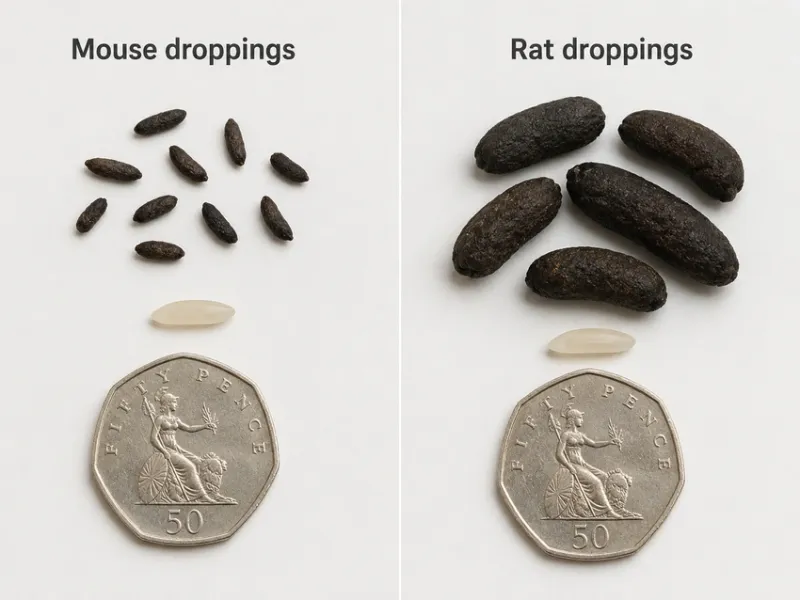
Rather than watching the owl, spend that energy on a methodical walk-through of your property. Texas A&M AgriLife Extension identifies fresh droppings, runways, food crumbs, and nighttime noises as the key signs that rodents are actually present.
Fresh droppings are soft and dark; old ones are dry and gray. Finding fresh droppings in a concentrated area tells you far more than any owl sighting ever could.
Start your inspection in the spaces rodents favor most: garages, sheds, attics, crawl spaces, and the area under sinks and behind large appliances. Check where utility lines, pipes, and cables enter the house, and examine the bottom edges of exterior doors for gaps.
CDC rodent-control guidance recommends looking for gnaw marks on wood, plastic, and food packaging, as well as grease smears along baseboards and walls where mice run repeatedly.
Pay close attention to anywhere food is stored or spilled. Bags of birdseed, livestock feed, or dog food left in a garage are common discovery sites.
Scan for shredded paper, fabric, or insulation that could indicate nesting material. Runways are another reliable sign: these are narrow, greasy-looking paths worn along walls or through grass where rodents travel the same route night after night.
CDC hantavirus guidance notes that mice can squeeze through an opening roughly a quarter-inch wide, about the diameter of a standard pencil. Rats need only half an inch.
Small gaps around conduit, drain pipes, and vents that look insignificant from the outside can be active entry points. Signs found inside a structure, such as droppings in a cabinet, are stronger evidence of an indoor problem than activity spotted in the surrounding yard or garden beds, which may simply reflect wildlife passing through.
Remove attractants and seal the entry points
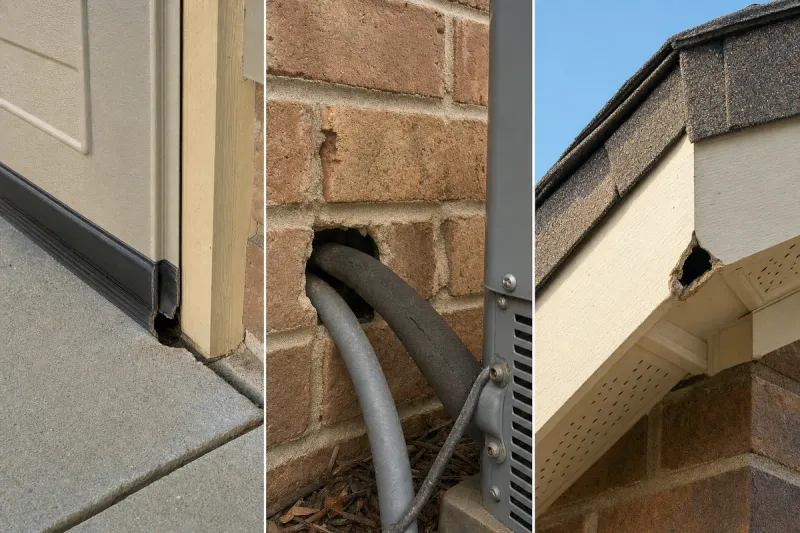
Once you know what you are dealing with, the first practical step is making your property less appealing to rodents before reaching for any traps or bait. Food access drives rodent activity more than almost anything else.
Store birdseed, dog food, chicken feed, and any other grain or pellet product in metal or heavy-duty plastic containers with tight-fitting lids, and keep garbage cans sealed. CDC’s rodent-control seal-up page specifically flags unsecured food and cluttered storage areas as the conditions that draw rodents in and keep them there.
Bird feeders deserve a mention here. Spilled seed under a feeder placed close to the house is a reliable rodent attractant, especially at night when owls are active and small mammals are foraging.
Moving feeders away from the foundation or switching to no-mess seed blends can reduce ground-level spill. Texas Parks and Wildlife’s bird-habitat resources recommend thoughtful feeder placement as part of a yard management plan that supports birds without creating a rodent buffet.
Bring pet food indoors before dark, reduce brush piles and dense ground cover near the house, and keep woodpiles elevated and at least a foot away from exterior walls.
Sanitation alone is not enough if the structure has gaps. Seal openings smaller than a quarter-inch with steel wool backed by caulk for lasting hold.
Use hardware cloth, sheet metal, cement mortar, or other rodent-resistant materials for larger gaps around vents, crawl-space access points, and utility penetrations. CDC rodent-exclusion guidance recommends checking garage door sweeps, attic vents, and the bottom edges of siding for gaps that may look minor but are wide enough for mice.
Exclusion done well removes the invitation entirely, which is more durable than any ongoing control method.
Choose protected traps before considering carefully managed bait
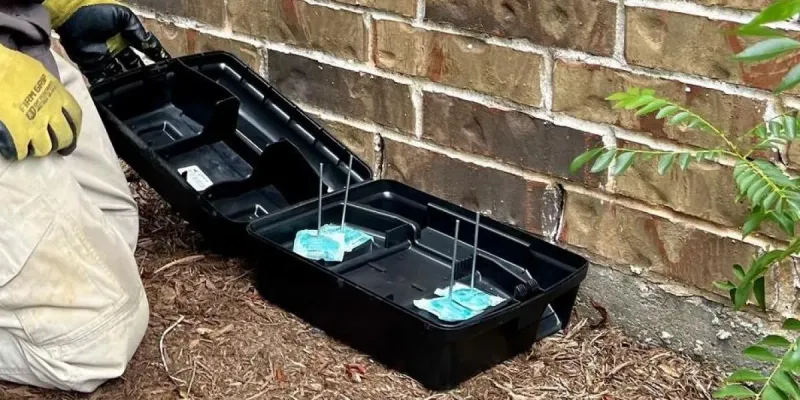
When direct evidence confirms rodents inside or right against a structure, the next decision is how to control them. Spring-loaded snap traps are a sensible starting point for most households.
They work quickly, allow you to confirm a catch, and do not leave poison in the environment. CDC pest-control guidance recommends snap traps as a front-line option, with placement in areas inaccessible to children and pets, such as inside cabinets, behind appliances, or inside a covered bait station box.
Check traps daily and reset or replace them promptly.
Placement matters as much as trap type. Mice rarely venture far from walls, so position traps perpendicular to a baseboard with the trigger end facing the wall surface.
For rats, use larger snap traps and set them along the runways you identified during inspection. Texas A&M AgriLife Extension advises using multiple traps in areas of confirmed activity rather than a single trap placed at random.
Heavy infestations, inaccessible wall voids, or situations where trapping has not reduced activity after two weeks are good reasons to call a licensed pest-management professional.
Rodenticide is an option in some situations, but it carries real risks that homeowners need to weigh carefully. EPA guidance on rodent bait products requires that all bait be placed inside tamper-resistant stations that keep children, pets, and non-target animals away from the bait itself.
Follow the product label exactly, which is a legal requirement, not a suggestion. Remove any rodent carcasses you find promptly and dispose of them in a sealed bag.
USGS research on secondary poisoning documents that owls and other raptors can be exposed to anticoagulant rodenticides by eating poisoned rodents. The Great Horned Owl perched in your yard could be harmed by bait placed carelessly outdoors, which is one more reason to treat rodenticide as a last-resort tool used under careful, label-directed conditions rather than a first response to an owl sighting.
Give Great Horned Owls space instead of trying to remove them
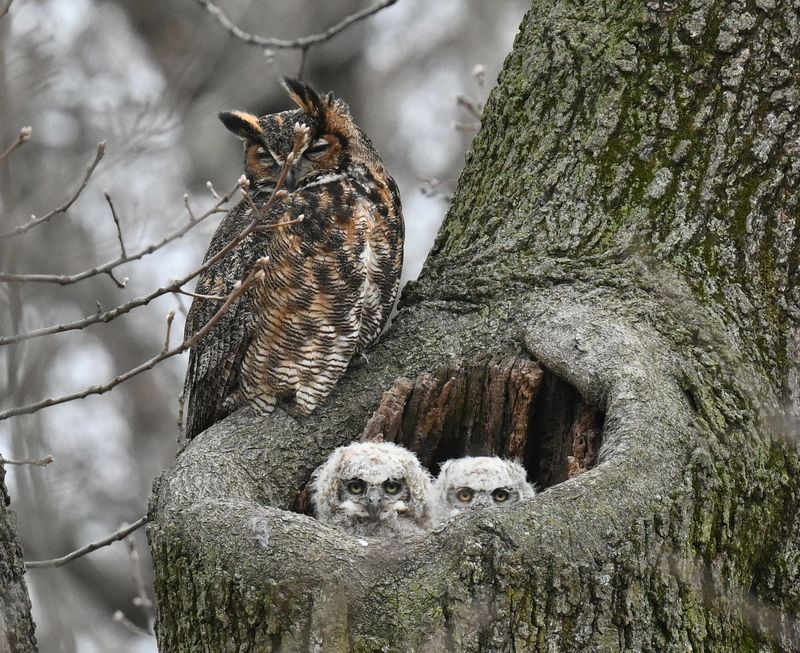
After reading about a possible rodent connection, some homeowners’ first instinct is to shoo the owl away or locate its nest and remove it. That approach creates problems on multiple fronts.
Great Horned Owls are protected under the Migratory Bird Treaty Act, and U.S. Fish and Wildlife Service guidance on bird nests is clear that active nests containing eggs or dependent young cannot be legally disturbed, altered, or removed without a federal permit.
Attempting to do so can result in serious penalties, regardless of where the nest is located.
Adult Great Horned Owls will defend a nest aggressively if they feel their young are threatened. Cornell Lab’s nest-cam FAQ notes that adults may strike intruders who get too close during the brooding period.
The safest and most effective approach is to observe from a comfortable distance, enjoy the wildlife encounter, and direct your rodent-management energy toward the inspection and exclusion steps described in earlier sections.
Cats allowed outdoors at night face a genuine risk from Great Horned Owls, which are powerful enough to take prey larger than a house cat in some circumstances. Keeping cats inside after dark protects them and also reduces predation pressure on songbirds and other backyard wildlife.
If you find an owl that appears injured, sick, or grounded and unable to fly, do not attempt to handle or transport it on your own. Texas Parks and Wildlife’s wildlife rehabilitation page advises observing from a distance and contacting a permitted wildlife rehabilitator or the agency’s wildlife information line before taking any action.
The owl is not the problem to solve; it is a sign of a healthy food web worth protecting.
Use the owl as a prompt, then act on evidence
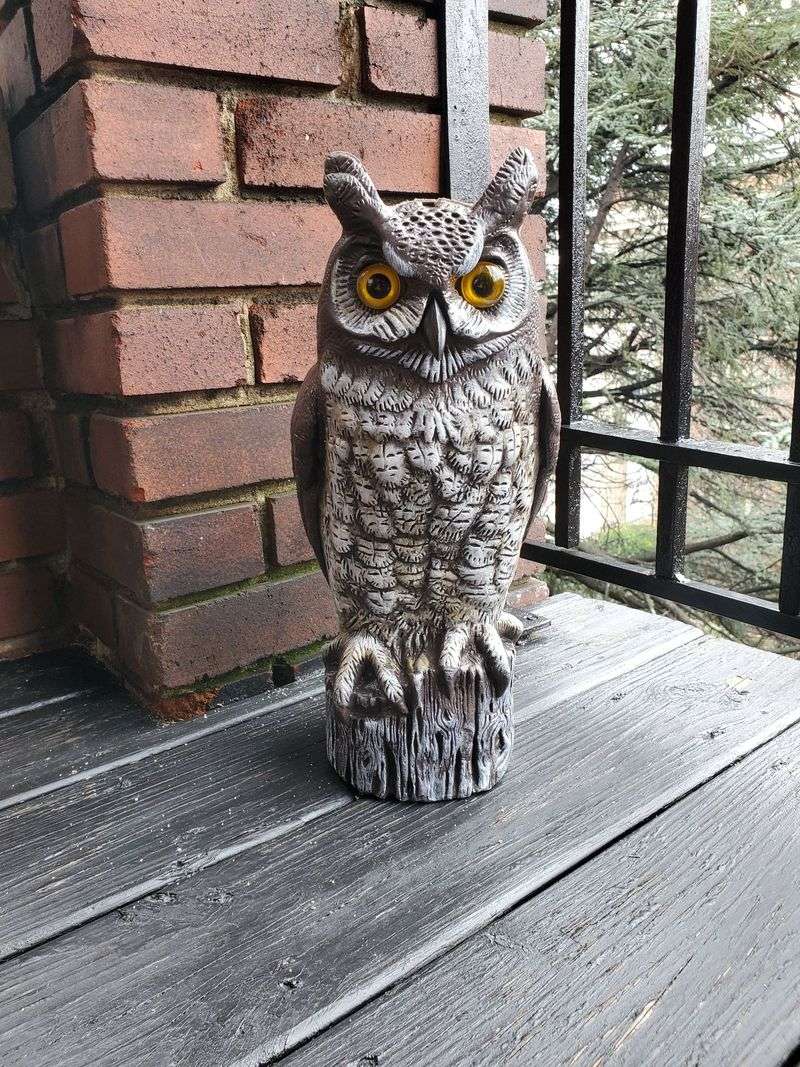
A single owl sighting is a wildlife observation worth appreciating. Repeated sightings from the same roost or hunting area are a reasonable nudge to walk the property and check for the direct signs covered above: fresh droppings, gnaw marks, runways, damaged food storage, or nighttime scratching sounds inside walls.
Texas Parks and Wildlife’s owl resources position these birds as indicators of a functioning local food web, not as household pest monitors.
Repeated sightings combined with fresh physical evidence are the threshold for action. At that point, start with sanitation and exclusion, add snap traps in protected locations if rodents are confirmed inside, and consider a pest professional for heavy or inaccessible infestations.
Texas A&M AgriLife Extension and CDC seal-up guidance both make clear that confirmed access points and food sources are what drive rodent problems, not the presence of predators overhead. The owl did not cause the issue, cannot guarantee it gets resolved, and does not need to be removed.
Think of it as an alert that prompted a useful inspection, and let the evidence you find decide the rest.