
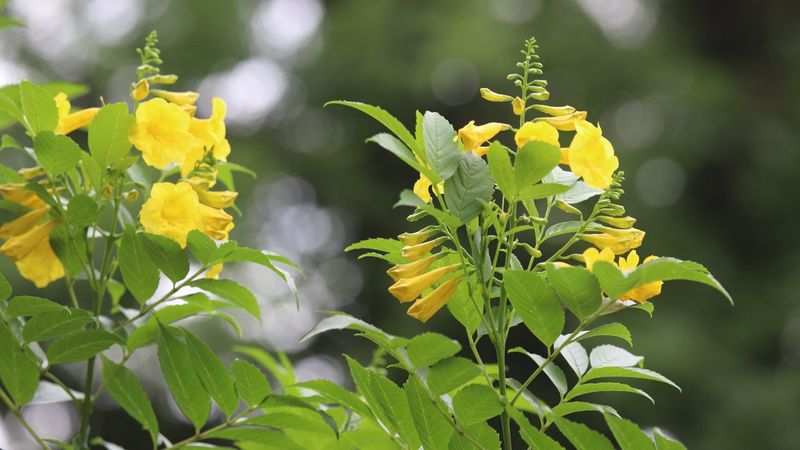
Esperanza (Tecoma stans) turns heads every summer with clusters of bold yellow trumpet flowers that can keep going well into fall in the right Texas location. Gardeners across the state are drawn to it for good reasons: it thrives in full sun, handles heat, and asks for surprisingly little water once it settles in. Whether your front door faces a scorching south exposure or a wide-open west side, understanding what this plant actually needs, and what it cannot guarantee, helps you decide if it belongs in your entry bed.
Esperanza earns attention through performance, not a proven statewide trend
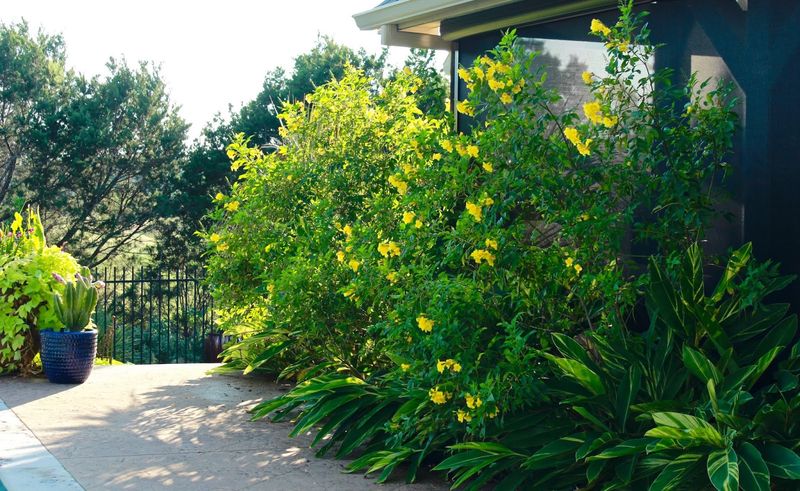
Walk through any Texas nursery between May and August and you will find Esperanza on the bench, tagged with phrases like “heat-tough” and “low water.” That visibility is real, but the idea that more Texans are specifically planting it by their front doors right now is not backed by statewide nursery sales data, consumer surveys, or planting counts. What the research does document clearly is the plant’s horticultural track record, and that record is genuinely strong.
Tecoma stans is described in Texas A&M AgriLife Extension’s native and adapted landscape plant guide as a low-water shrub suited for Texas conditions, with spring-to-fall bloom potential. A Bell County Master Gardener native plants guide similarly lists the ‘Gold Star’ cultivar for full-sun landscapes, pointing to its seasonal color and reduced irrigation needs. Those are performance credentials, not trend data, and that distinction matters when you are trying to make a sound planting decision rather than follow a headline.
Treating the front-entry choice as an evidence-based response to color, sun tolerance, and water efficiency is more honest than calling it a statewide movement. Esperanza has earned its place in Texas landscapes because it delivers consistent visual impact in conditions that punish many other flowering shrubs. North Carolina Extension’s yellow trumpetbush profile reinforces that the plant blooms best in full sun and tolerates heat and drought, which aligns with what Texas gardeners have observed for years. The case for planting it near your front door rests on those documented traits, not on an unverified consumer wave.
What makes ‘Gold Star’ a compelling front-entry accent?
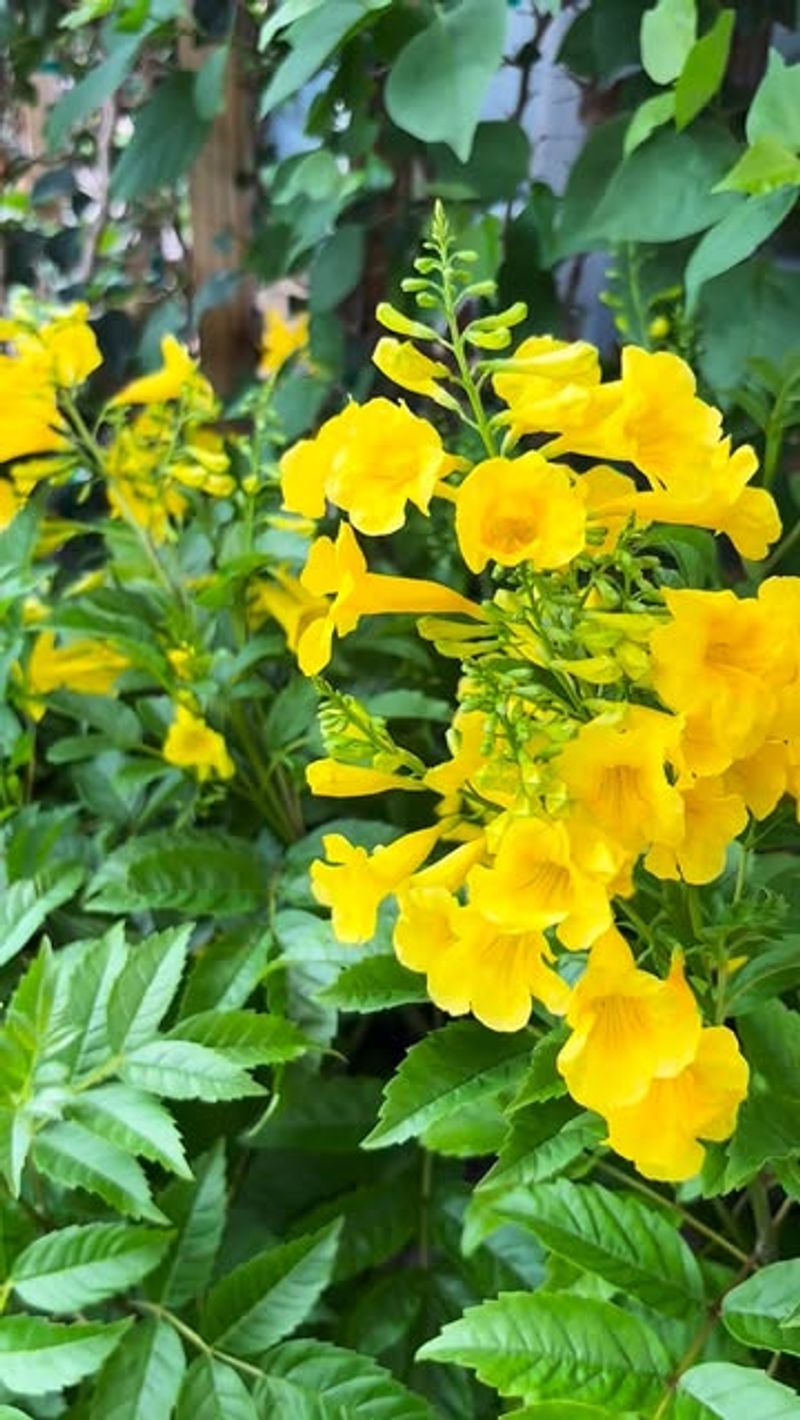
The ‘Gold Star’ cultivar of Tecoma stans has a specific combination of traits that makes it genuinely useful near a front entry. The flowers are large, tubular, and a saturated golden yellow that reads clearly from the street, the driveway, or a car window. They appear in clusters rather than scattered singles, so the visual payoff is immediate and concentrated. Full sun is the key condition: the North Carolina Extension profile for yellow trumpetbush specifies that the plant blooms best in full sun, and Texas gardeners consistently report that shaded specimens produce far fewer flowers.
Heat performance is another practical strength. Most Texas front entries collect reflected heat from concrete driveways, brick facades, and sidewalks, and that reflected load can stress plants that prefer cooler conditions. Esperanza handles those conditions better than many flowering alternatives. Its drought tolerance, once established, also fits well with Texas summers when watering windows may be limited by city or utility restrictions.
The pollinator dimension adds a layer of seasonal interest that a purely decorative plant cannot match. The Bell County Master Gardener native plants guide notes Esperanza’s value to wildlife, and Texas Parks and Wildlife’s hummingbird roundup report records Tecoma stans among plants used by hummingbirds for nectar. Bees and butterflies also visit the flowers regularly. Calling it anyone’s favorite would overstate what the evidence shows, but “actively used” is a fair and accurate description.
For a front-entry planting where you want movement and life, not just static color, that ecological activity is a genuine asset worth factoring into your choice.
Fall flowers depend on which Texas climate you garden in
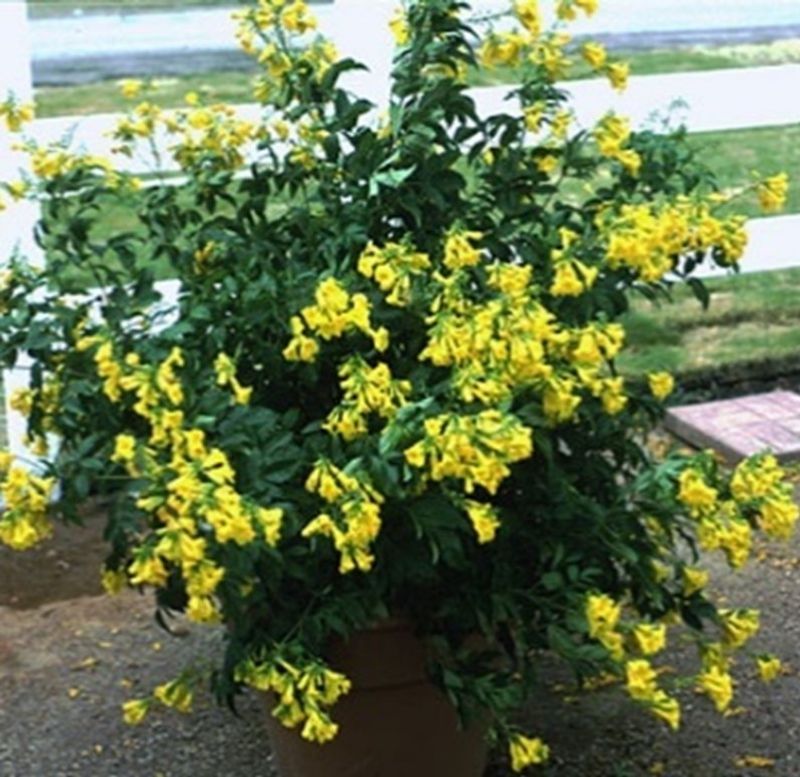
October blooms are possible with Esperanza, but possible is not the same as guaranteed, and the gap between those two words is filled by geography. Texas spans multiple USDA hardiness zones and at least four major climate regions, and what happens to an Esperanza plant in Brownsville in October looks very different from what happens to one in Fort Worth or even San Antonio during a cold snap.
In South Texas and along the Gulf Coast, where hard freezes are rare and winters stay mild, Esperanza may flower from late spring continuously through fall and sometimes well beyond. Missouri Botanical Garden’s plant finder entry for Tecoma stans describes the bloom period as spring through fall, with the plant rated most reliably for USDA Zones 9 through 11. Those zones cover South Texas and parts of the Gulf Coast but not the bulk of Central or North Texas, where winters are colder and more variable.
Farther north, the story shifts. The North Carolina Extension profile notes that Esperanza may die back to the ground in colder climates and return from the roots in spring. That means a plant in Dallas or Waco might freeze to the ground in a hard winter, regrow from the roots by June, and have only a few months to build size before the next cold season, which compresses the window for fall flowering considerably.
A Henderson County Master Gardener article on Esperanza confirms that the plant can regrow after winter dieback in East Texas, which is encouraging for gardeners in that region but also illustrates why a single statewide bloom calendar does not work. Cultivar, sunlight, the severity of the previous winter, and local frost timing all shape whether your specific plant reaches October still flowering or has already slowed down.
Match the plant’s footprint to the doorway
One of the most common front-entry planting mistakes is choosing a plant based on how it looks in a one-gallon nursery pot, then discovering two seasons later that it has blocked the door, overgrown the walk, or crowded neighboring plants. Esperanza requires a size check before you buy.
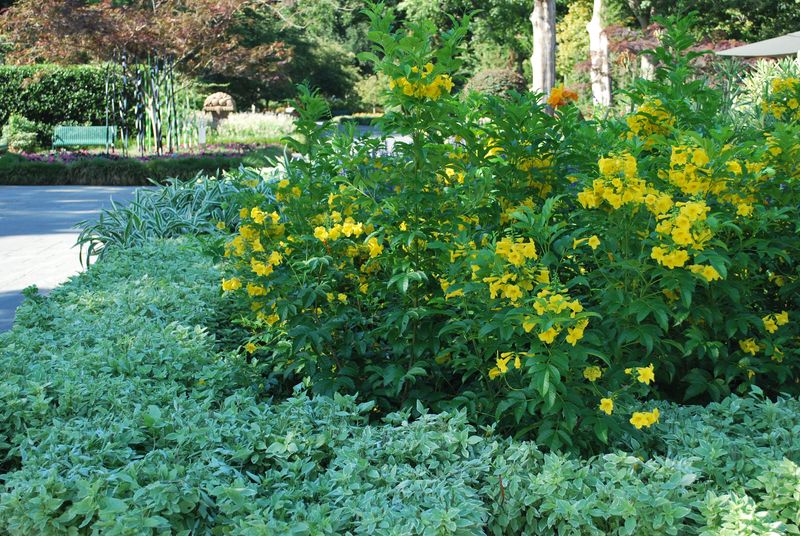
The Bell County Master Gardener native plants guide describes ‘Gold Star’ as reaching approximately 4 feet tall and 3 feet wide, which is a manageable footprint for most entry beds. That compact profile is part of why ‘Gold Star’ became a popular landscape cultivar. However, the species itself, Tecoma stans, can grow into a large shrub or small tree in frost-free conditions, and not every plant sold under the Esperanza name is the same cultivar. Read the tag carefully and ask the nursery staff which cultivar you are buying before assuming the compact dimensions apply.
North Carolina Extension and Missouri Botanical Garden both note that size can vary substantially depending on climate and whether the plant freezes back each winter. In frost-free South Texas, an unmanaged specimen can exceed the compact dimensions significantly. Plan for the cultivar’s actual mature size, not the smallest possible outcome.
Sun exposure is non-negotiable for flowering. A shaded or partially shaded entry will produce a green plant with disappointing flower output. Full sun, meaning at least six hours of direct sunlight daily, is the baseline requirement. Soil drainage matters just as much: Texas A&M AgriLife Extension’s soil preparation guidance highlights how widely Texas soils vary, from sandy loam to heavy clay, and drainage must be evaluated at your specific site rather than assumed.
Roots sitting in waterlogged soil will struggle regardless of how well the plant performs in ideal conditions. Amend heavy clay beds or raise the planting area before setting the plant in the ground.
Drought tolerance still requires a local watering plan
Drought-tolerant is one of the most misread labels in Texas gardening. For Esperanza, it means the plant can handle reduced irrigation once its root system has established, not that you can skip watering entirely or ignore the conditions the plant is growing in. The establishment phase, typically the first one to two growing seasons, requires consistent moisture to help roots spread deep enough to access soil water on their own.
Texas A&M AgriLife Extension’s native and adapted plant guide lists Esperanza as a low-water plant suited to Texas, but low-water is a description of mature performance, not a license to ignore the plant during a record-heat July or an extended dry stretch. Even established plants can show stress during extreme drought, especially in heavy clay soils that compact and shed water rather than absorbing it.
The Texas Water Development Board’s landscape water guide recommends watering thoroughly but infrequently, adjusting frequency based on soil type, recent rainfall, temperature, and the plant’s visible condition. Deep, infrequent watering encourages roots to grow downward rather than staying near the surface, which improves long-term drought performance. Shallow, frequent watering does the opposite.
Texas has no single statewide watering schedule. Texas Water Development Board drought FAQs clarify that restrictions are set locally by cities and utilities, and they change based on current drought conditions. Before you set up any irrigation routine, check your municipality’s current rules. Some cities limit outdoor watering to specific days or hours, and violating those rules can result in fines regardless of how drought-tolerant your plants are.
Municipal best management practice guidance from TWDB also underscores that outdoor watering schedules should be tailored to local conditions, not applied as a blanket statewide formula. Build your watering plan around your soil, your rainfall, your plant’s visible needs, and your city’s current restrictions, in that order.
Use restrained maintenance to support the flower display
Keeping Esperanza flowering through the season takes less effort than most shrubs demand, but the maintenance choices you make do influence how long the display lasts. Deadheading spent flowers, removing the faded blooms before they set seed, is the most consistently recommended practice for encouraging continued flowering. North Carolina Extension’s yellow trumpetbush profile supports deadheading as a way to extend the bloom period, and some Texas Master Gardener resources go a step further by recommending the removal of developing seed pods for the same reason.
Neither practice is a guarantee of October flowers. They remove the plant’s reproductive signal, which can redirect energy toward producing more blooms, but the actual outcome depends on the plant’s overall health, sun exposure, soil conditions, and regional temperatures at the time. Treat deadheading and seed pod removal as practices that improve your odds, not as switches you can flip to force a specific calendar result.
Pruning decisions deserve more caution. Missouri Botanical Garden’s plant finder and Bell County Master Gardener guidance both suggest pruning for size and shape after flowering or during the dormant period. Cutting back an actively flowering plant in midsummer to manage its size will remove the very growth that is producing your display. If the plant has grown beyond its intended space, address that after the flowering season winds down or after winter dieback, not during peak bloom.
Light, targeted removal of crossing or damaged branches mid-season is less disruptive than a full cutback, and it preserves the flowering wood you have been waiting all spring to see.
Account for pollinators when choosing a front-door location
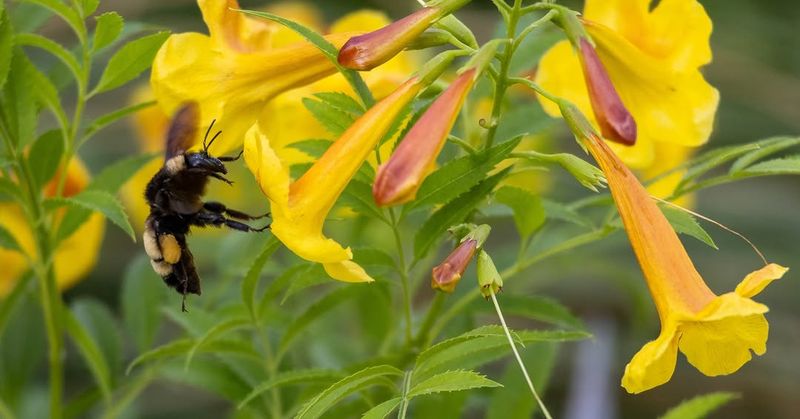
Planting Esperanza near a front entry brings pollinators into a high-traffic zone, and that tradeoff deserves an honest look before you finalize the location. The flowers provide nectar and are actively used by hummingbirds, bees, and butterflies. North Carolina Extension documents the plant’s appeal to multiple pollinator groups, and Texas Parks and Wildlife’s hummingbird roundup report records Tecoma stans among the plants hummingbirds visit for nectar. For many gardeners, that level of wildlife activity is a feature, not a problem.
Watching a ruby-throated hummingbird work the flowers from your front porch is a genuinely rewarding experience.
The consideration is not whether Esperanza is dangerous, because it is not. Bees foraging on flowers are focused on nectar and pollen, not on people walking past. The practical question is whether your specific entry layout gives visitors and household members enough clearance to move past the plant comfortably without brushing against it during peak pollinator activity.
A few factors are worth thinking through before you plant. How wide is the walkway between the bed and the front door? Does foot traffic pass within arm’s reach of the plant? Does anyone in your household or among your regular visitors have a documented sting allergy?
If the answer to the last question is yes, placing a heavy-pollinator plant directly beside the entry path deserves more thought, possibly a different location in the yard where the plant can still be enjoyed without creating a frequent close encounter. Giving the plant a foot or two of additional clearance from the main walking path is often enough to let both people and pollinators coexist comfortably at the entry.
Choose Esperanza for documented fit, not an October guarantee
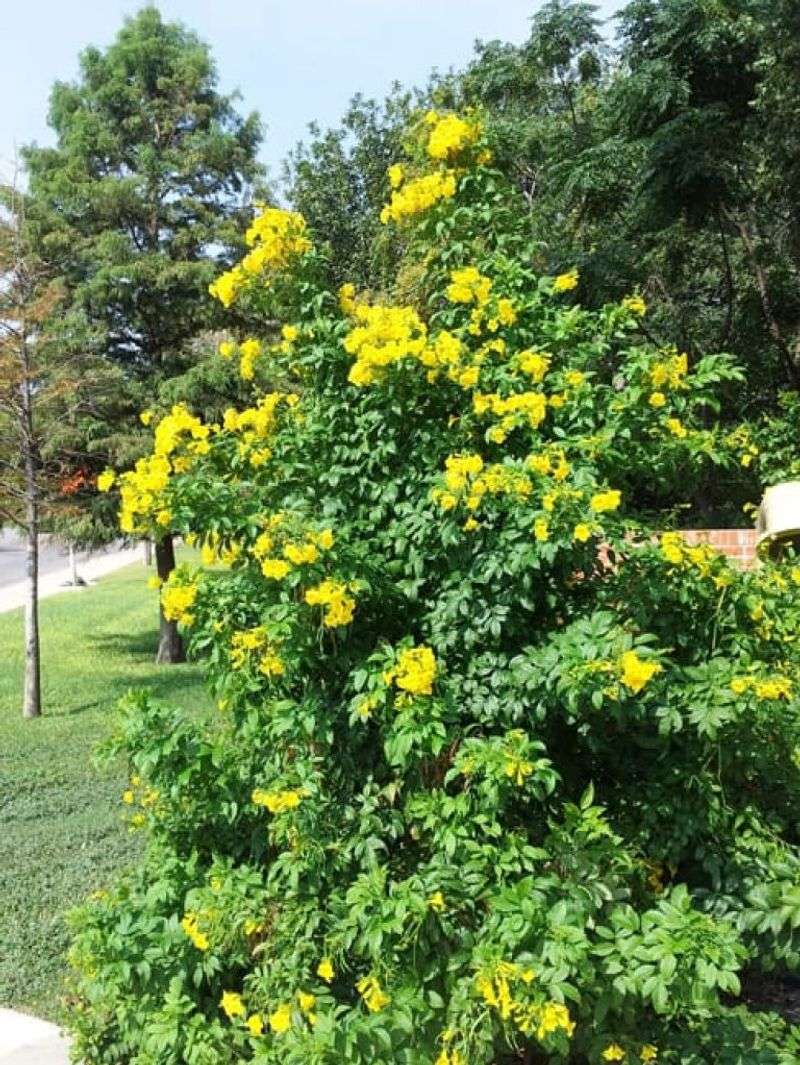
The decision to plant Esperanza at your front entry should rest on a clear-eyed site assessment, not on a statewide trend or a promise of flowers through a specific month. North Carolina Extension, Bell County Master Gardener guidance, and Missouri Botanical Garden all document consistent performance when conditions are right: full sun, well-drained soil, appropriate establishment watering, and a climate warm enough to support a long season.
Run through the practical checklist before buying. Does the spot receive at least six hours of direct sun daily? Does the soil drain well, or will you need to amend it? Does the selected cultivar’s mature size fit the space without blocking the door or walkway?
Can you meet the plant’s watering needs during establishment within your city’s current restrictions? Are household members or frequent visitors comfortable with pollinator activity near the entry? And does your region’s winter pattern allow for a long enough growing season to make the investment worthwhile?
If the answers are mostly yes, Esperanza is a well-supported choice. Henderson County Master Gardener reporting confirms it can recover and rebloom even after winter dieback in East Texas, which speaks to the plant’s resilience. In favorable Texas locations, yellow flowers into fall are a realistic possibility, and that seasonal staying power is exactly what makes the front-entry spot worth claiming.