
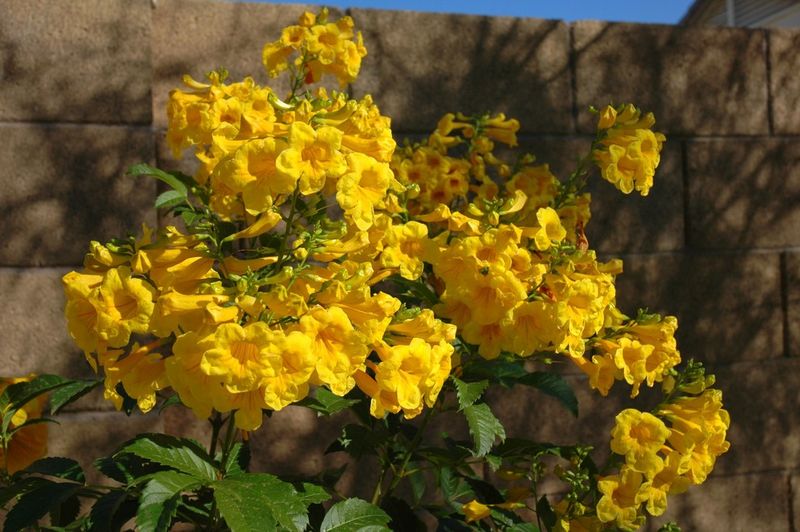
Gold Star esperanza is a shrub that packs brilliant yellow flowers into a long Texas summer, making it a natural candidate for the most visible spot on any property. Choosing the right plant for a sunny, prominent entry area is harder than it looks, especially when the summer heat can cook weaker selections before July is over.
Understanding what this particular cultivar actually offers, and where it genuinely performs, helps homeowners make a confident decision rather than a hopeful guess.
Why a sunny entry makes a logical showcase
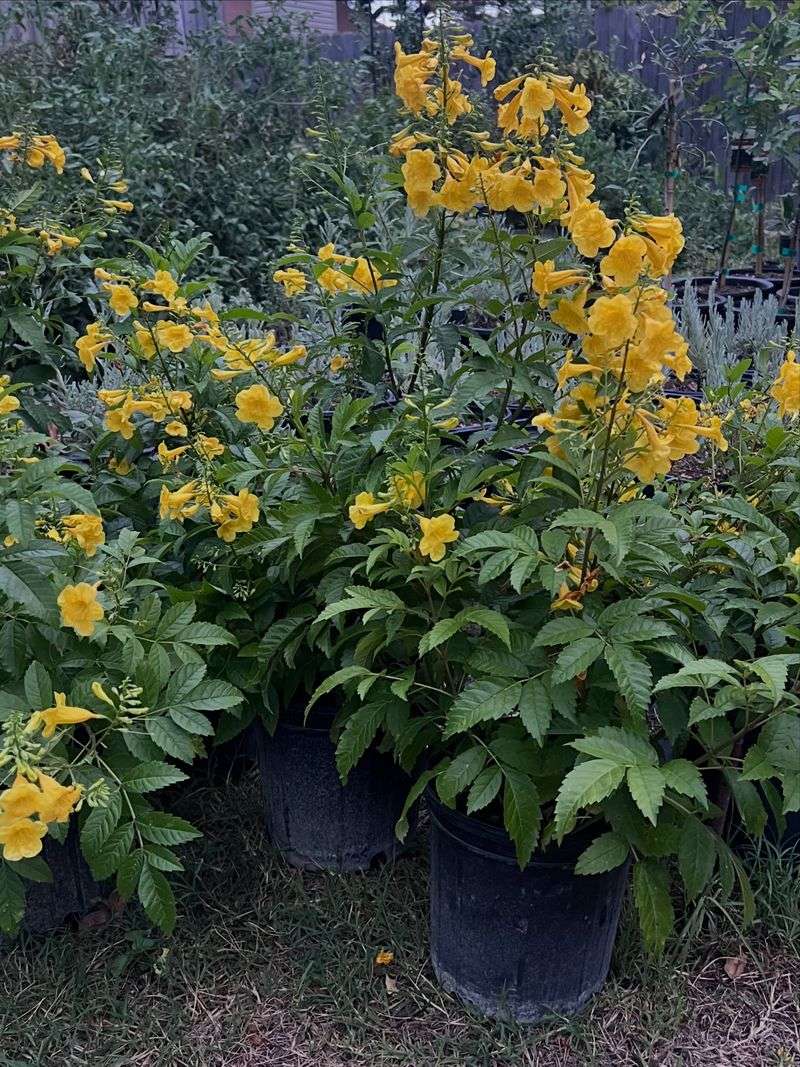
Front entries take a beating in the Texas sun, and most ornamental shrubs respond by looking stressed, faded, or simply defeated by August. A plant used as a specimen or accent needs to do the opposite: hold its visual presence precisely when foot traffic and curb attention are highest.
That is the practical design logic behind placing a heat-tolerant bloomer in a highly visible entry area, and it is logic supported by the documented performance of Gold Star esperanza rather than by any verified statewide planting trend.
North Carolina Extension’s plant profile for Tecoma stans lists specimen and accent uses explicitly, noting that the plant’s prolonged blooming and brilliant floral display make it well suited to high-visibility applications. Those same qualities transfer directly to a front entry setting where a homeowner wants color that lasts through the warm season rather than a brief flush that disappears before summer peaks.
The location does matter, though. Placing a shrub in the entry area means different things depending on the bed width, walkway clearance, and how much sun actually reaches the ground near the house.
A sunny, open spot with good drainage and enough room for the plant to reach its mature size is the right target. Squeezing any large-maturing shrub into a narrow strip right against the door frame creates maintenance problems, not a showcase.
The evidence supports this as a practical application, not a guaranteed outcome for every Texas yard. When the site conditions align, the combination of a highly visible location and a plant that flowers from early summer through frost creates exactly the kind of lasting curb-appeal moment that makes a front entry memorable.
What Gold Star esperanza actually offers
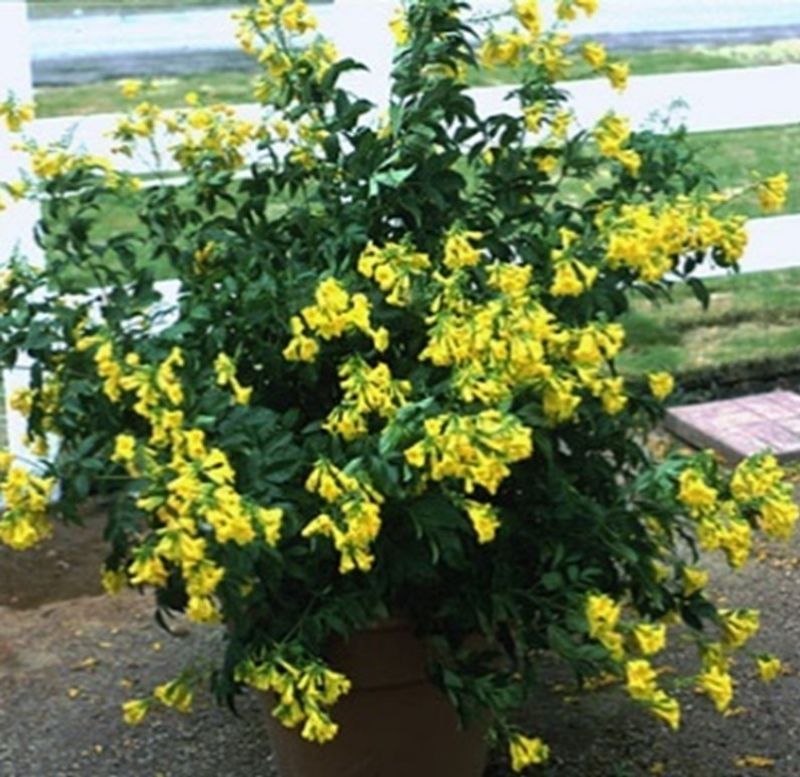
Tecoma stans ‘Gold Star’ is the cultivar that Texas A&M AgriLife Extension emphasizes when discussing esperanza for Texas landscapes, and the distinction matters more than most nursery labels suggest. Walk into a Texas garden center and you may see tags reading “yellow bells,” “yellow trumpetbush,” or “yellow elder,” all of which can refer to Tecoma stans or its relatives, but those names do not guarantee you are getting the same plant. ‘Gold Star’ is a specific Texas selection recognized as a Texas Superstar by Texas A&M AgriLife Extension, meaning it has been evaluated for reliable performance under Texas conditions.
In a Texas garden, ‘Gold Star’ typically reaches about 4 to 6 feet tall and wide, a size that fits a well-planned entry bed without overwhelming the space. That figure is specific to this cultivar and to Texas growing conditions.
The broader species, Tecoma stans, tells a very different story in warmer climates. UF/IFAS Extension’s profile for Tecoma stans reports the species reaching 10 to 30 feet tall and 8 to 30 feet wide under South Florida conditions, which underscores why cultivar identification is not a small detail.
The traits that make ‘Gold Star’ useful in a Texas entry setting are concrete and consistent across extension sources. It produces large clusters of bright yellow, trumpet-shaped flowers.
It performs in full sun. It tolerates the alkaline soils common across much of Texas.
It handles high heat and, once established, tolerates drought. Those are real advantages in a climate that regularly pushes plants past their limits.
Heat tolerance, though, does not mean the plant is indestructible. Newly planted shrubs still need regular watering while roots establish, and even mature plants may need supplemental water during the most intense summer periods to keep flowering at its best.
Knowing what ‘Gold Star’ genuinely offers, rather than what the name implies, is the starting point for a placement decision that actually works.
A long warm-season bloom earns attention
Most flowering shrubs offer a few weeks of color and then settle into a long stretch of green. Gold Star esperanza works differently.
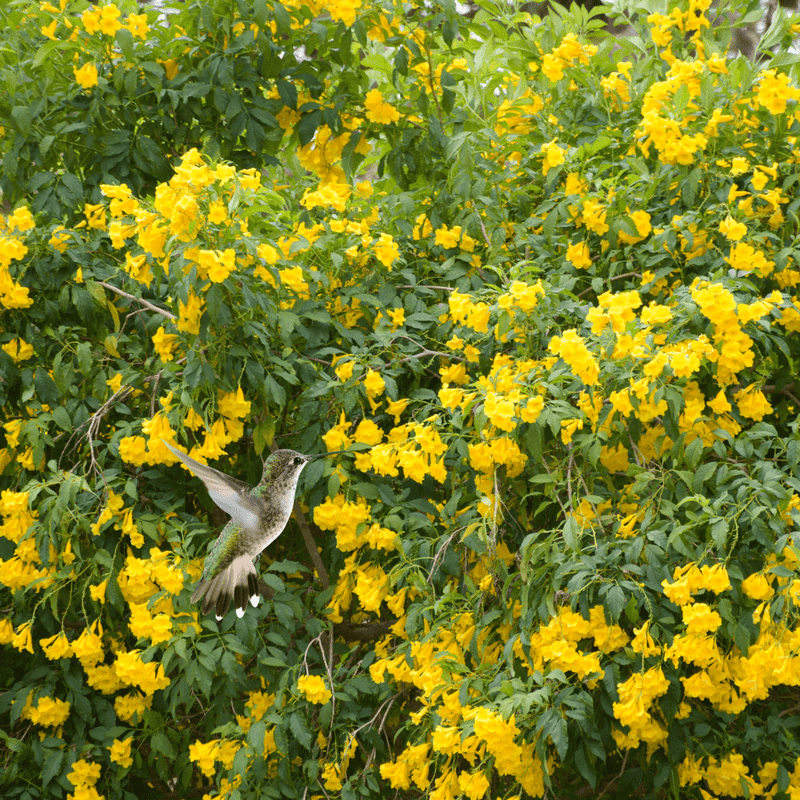
Texas A&M AgriLife Extension reports that the plant produces large yellow flower clusters from early summer until the first frost under Texas conditions, a bloom window that can span four to five months in the warmest parts of the state. For a front entry that needs to look good from June through October, that kind of staying power is genuinely useful.
The connection between full sun and flowering quality is direct and worth stating plainly. Texas A&M’s guidance on Gold Star esperanza is clear that the plant requires full sun for the best display.
Some afternoon shade may be tolerated, but reduced light typically means fewer flowers and less vigorous growth overall. An entry area that sits in partial shade for most of the afternoon is not the right site, regardless of how attractive the planting concept sounds.
The North Carolina Extension plant profile for Tecoma stans notes that the broader species can flower from spring through frost, with year-round flowering possible only in frost-free climates. For Texas gardeners, the practical expectation should be early summer through frost, not a spring-to-spring continuous display.
That is still a long, prominent bloom season by any reasonable standard.
Performance also depends on factors beyond light. Drainage, winter damage, establishment watering, and local climate all influence whether a given plant delivers on its bloom potential.
Promising identical results in every yard would be misleading. What the evidence does support is that under suitable Texas conditions, a well-sited Gold Star esperanza can hold its flower display through the longest and hottest stretch of the gardening year, which is exactly the window when a front entry gets the most attention.
The flowers may support visiting wildlife
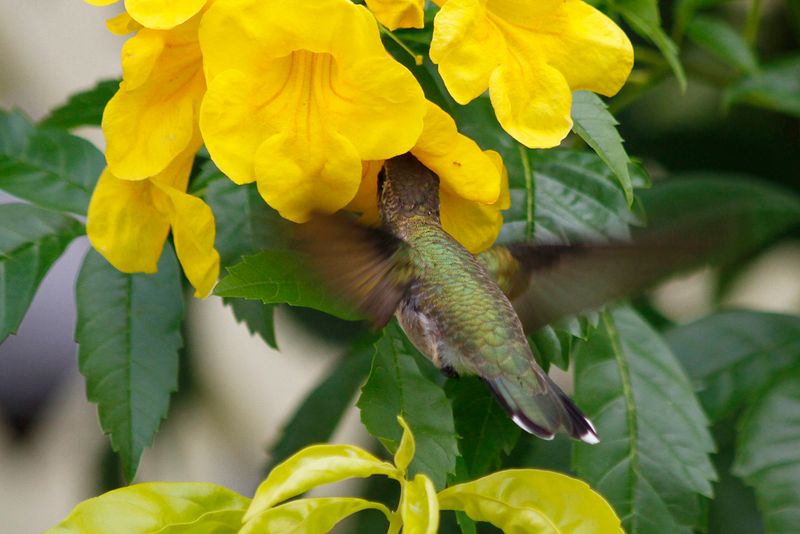
Yellow trumpet-shaped flowers are a strong visual draw for pollinators, and Gold Star esperanza produces them in quantity through the hottest months of the year, which is when many other nectar sources have faded. North Carolina Extension documents nectar use by hummingbirds, butterflies, bees, and other pollinators for Tecoma stans, making the plant a documented contributor to a pollinator-friendly yard rather than just an ornamental choice.
Texas Parks and Wildlife Department data adds useful regional context. Esperanza appears among the 20 native plants most commonly reported by volunteers in the Texas Hummingbird Roundup program as being visited by hummingbirds.
TPWD is explicit, however, that those volunteer observations document presence rather than preference. The data cannot establish that esperanza attracts hummingbirds more reliably than other plants, or that hummingbirds prefer it over competing nectar sources in the same yard.
Wildlife visits at any given home depend on a cluster of variables that no plant selection can control. Local hummingbird populations, the presence of competing flowers nearby, seasonal migration timing, pesticide use in the surrounding area, and regional habitat all influence who shows up and how often.
A yard with strong pesticide pressure, limited cover, or few other flowering plants may not see the same visitor activity as a yard with a more complete habitat setup.
The honest takeaway is that Gold Star esperanza can contribute meaningfully to a pollinator-friendly entry planting, particularly during the long Texas warm season when its flowers are open and accessible. Treating that contribution as a bonus feature rather than a guaranteed attraction keeps expectations realistic and the decision grounded in what the evidence actually shows.
Choose the site before you choose the spot
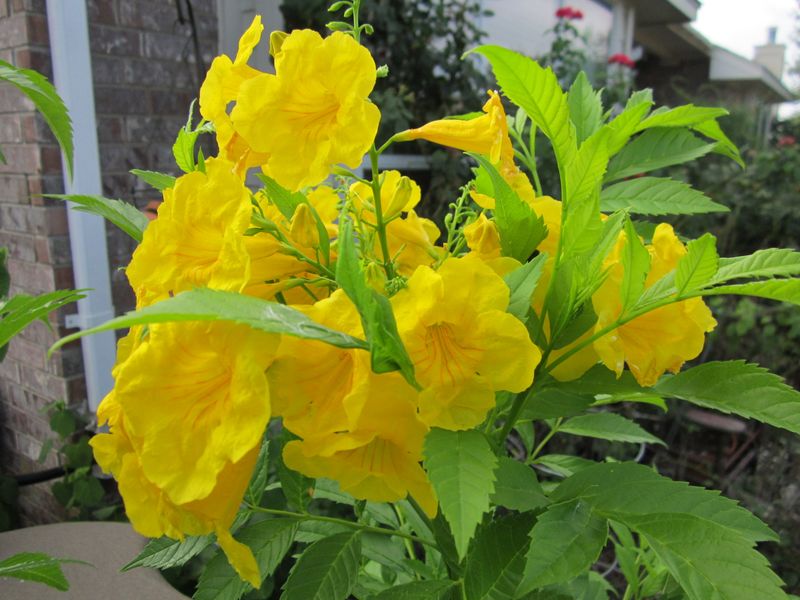
Picking the right location for a Gold Star esperanza involves more than pointing at the sunniest corner of the front bed. Full sun is the starting requirement, and that means six or more hours of direct light daily, not a spot that catches morning sun and spends the afternoon in house shadow.
Without adequate light, flowering drops off and the plant’s visual contribution to the entry fades along with it.
Drainage is equally non-negotiable. Texas A&M AgriLife Extension describes poor drainage as a significant problem for esperanza, and UF/IFAS Extension’s Tecoma stans profile reinforces that the plant does not tolerate saturated root zones.
Spots that collect irrigation runoff, sit below a downspout, or stay damp after rain are poor candidates regardless of how much sun they receive. Drought tolerance after establishment is a real trait, but it does not offset the damage caused by consistently wet roots.
Mature size shapes every other placement decision. ‘Gold Star’ typically reaches 4 to 6 feet tall and wide in Texas, and that footprint needs to fit the bed without crowding the walkway, hiding house numbers, or interfering with the door swing. Seedpods form after flowering and hang on long, narrow stems that extend beyond the main canopy, so the effective clearance needed is slightly larger than the foliage alone suggests.
Planting too close to a narrow passage creates a maintenance problem that only gets harder to manage as the shrub fills in.
These are practical entryway considerations drawn from the documented mature size and branching habit, not a formal published spacing rule specific to esperanza. The logic applies to any large-maturing shrub placed near a primary entrance.
Measure the available bed width, account for the walkway on one side and the house wall on the other, and confirm the spot receives genuine full sun before committing to the location.
Drought tolerance still requires deliberate care
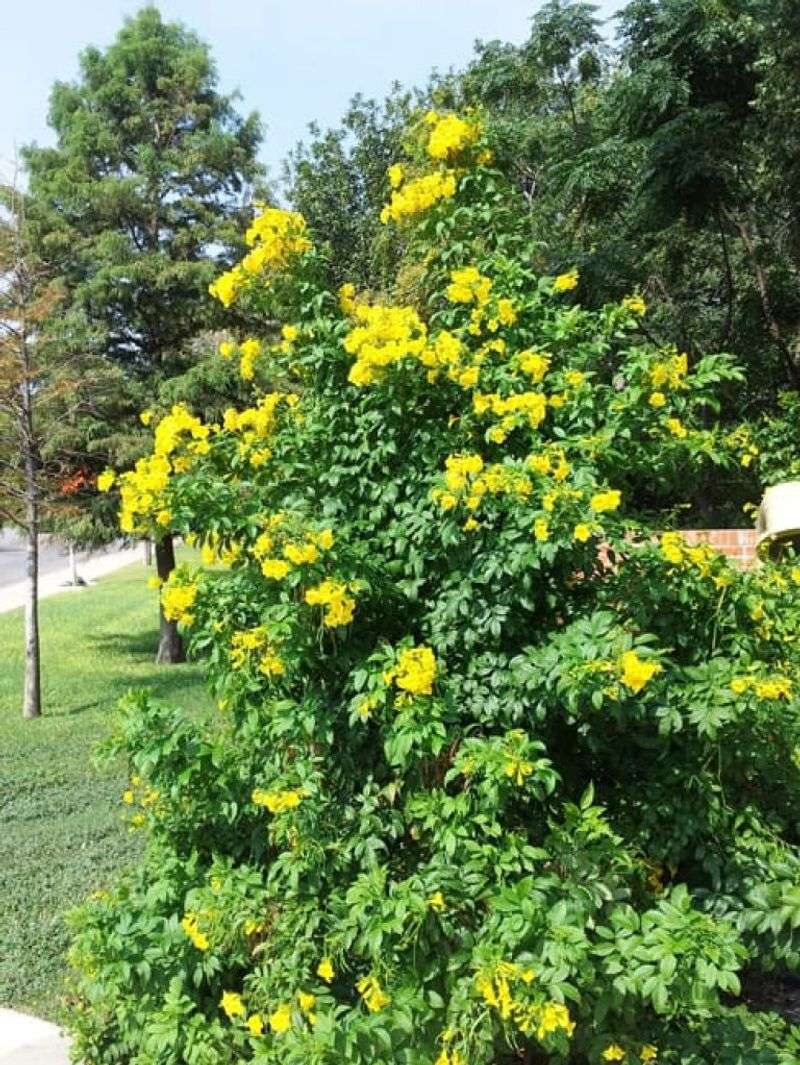
Spring planting is the right starting point for Gold Star esperanza in Texas. Texas A&M AgriLife Extension recommends waiting until the threat of a freeze has passed before putting new plants in the ground.
Getting a shrub established before summer’s most intense heat arrives gives the root system time to develop before it faces its first real stress test.
New plants need consistent moisture while roots are establishing. Drought tolerance is a trait that develops over time as roots extend into the surrounding soil, not a condition that applies to a shrub that went into the ground last week.
During the hottest periods, even established plants may need supplemental watering, including weekly irrigation, to maintain strong flowering. Skipping water during a stretch of triple-digit temperatures does not kill a mature plant, but it can slow or stop bloom production at exactly the time of year when the entry planting should look its best.
Pruning has two distinct jobs with this plant. After flowering, trimming for shape and size control keeps the shrub from overrunning its bed.
After a cold winter, dead-wood removal is the priority. Texas A&M recommends cutting dead wood back to approximately 6 to 8 inches from the ground when needed.
In areas where winter damage is possible, holding off on major pruning until the extent of freeze injury is clear prevents accidentally removing healthy growth that was simply slow to break dormancy.
Seedpod management is an optional but worthwhile task. Long, narrow pods form after flowers drop, and leaving them on the plant can redirect energy away from continued bloom production.
Removing pods regularly encourages the plant to keep flowering and also reduces the number of volunteer seedlings that can appear in nearby beds. North Carolina Extension notes no serious disease or insect problems for Tecoma stans, though scale insects and occasional chewing damage can occur.
A seasonal check of stems and foliage is enough to catch most issues before they become significant.
Winter severity and region change the recommendation
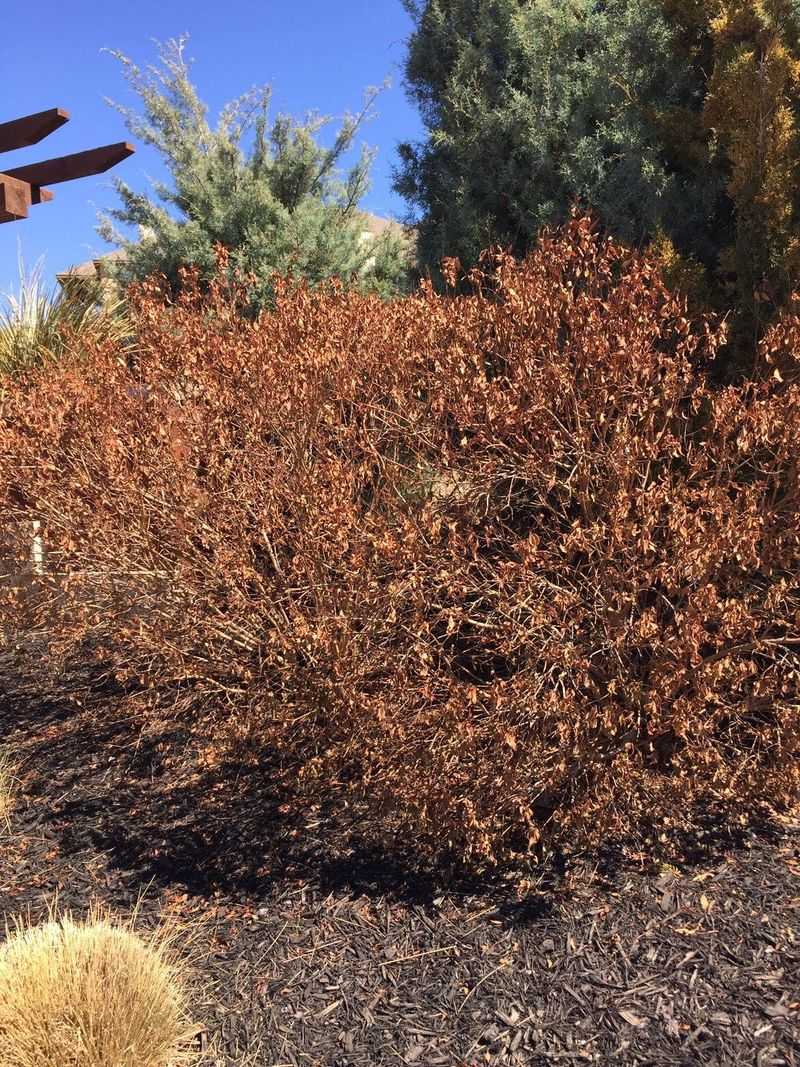
Gold Star esperanza does not perform identically across Texas, and the difference between a thriving perennial shrub and a plant that dies to the ground each winter comes down largely to where the thermometer bottoms out. Central and South Texas, along with areas that fall within USDA Zone 9, represent the strongest fit for this cultivar based on the available extension guidance.
Texas A&M AgriLife Extension describes ‘Gold Star’ as a reliable perennial in Zone 9 and “Austin-area tough,” which gives gardeners in those regions a reasonable basis for expecting the plant to return after winter.
Colder parts of the state tell a different story. North Texas and other locations that experience hard freezes may see significant dieback or lose the plant entirely after severe winters.
Texas A&M frames it as a summer perennial or woody shrub depending on winter severity, which is an honest acknowledgment that the plant’s long-term persistence varies by location. Gardeners in colder Texas zones can still grow esperanza, but they should plan for the possibility of replanting rather than counting on a permanent shrub.
The species itself, Tecoma stans, adds another layer of complexity. North Carolina Extension notes that Tecoma stans is native to parts of the United States including Texas, Arizona, New Mexico, and Florida, but native status does not mean every cultivar performs the same way everywhere.
The wild or generic species can reach 10 to 30 feet in frost-free climates, while the Texas ‘Gold Star’ selection is a compact 4-to-6-foot shrub under Texas conditions. Those are not interchangeable plants.
Florida gardeners face a separate and significant caution. UF/IFAS classifies Tecoma stans as high invasion risk across Central, North, and South Florida, recommending against planting it except in specific, limited-use situations approved by the UF/IFAS Invasive Plant Working Group.
Texas-native status does not transfer to Florida as regional approval, and any Southern-gardening guidance that includes Florida should carry that qualification clearly.
The best entry planting is visible but not cramped
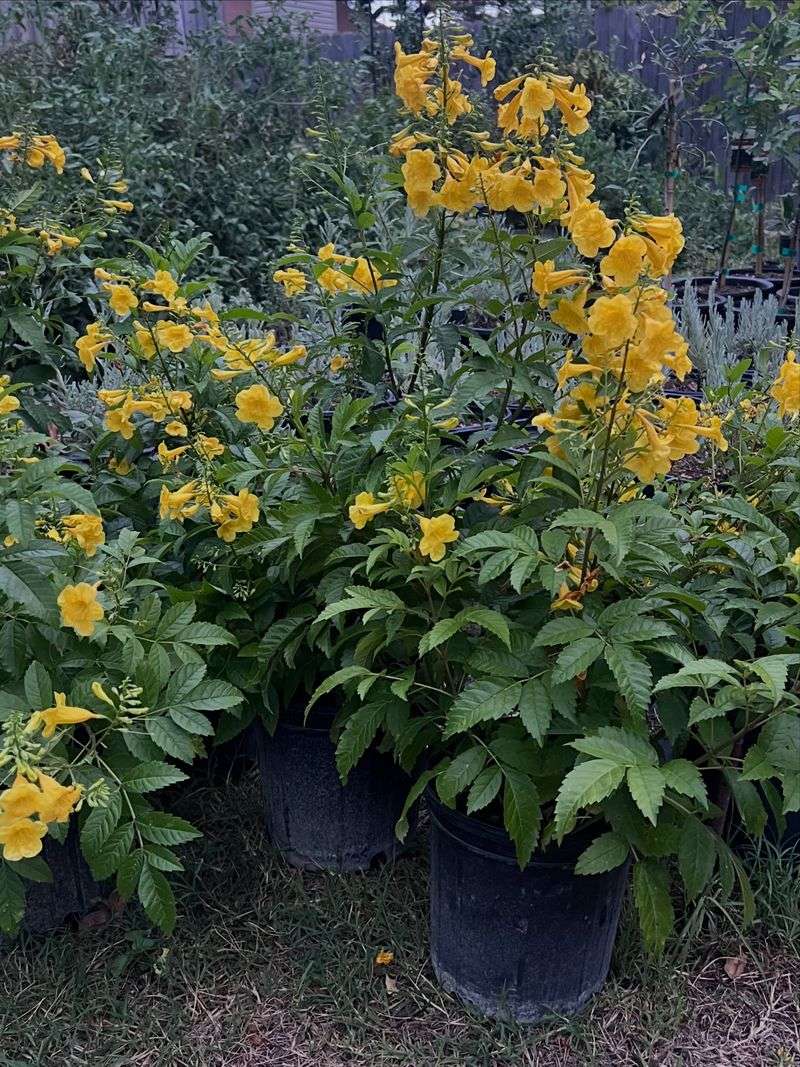
Gold Star esperanza earns a place in a sunny, visible entry area when the conditions support it: full sun, well-drained soil, enough bed space for a 4-to-6-foot mature shrub, consistent establishment watering, and a winter climate mild enough for the plant to return reliably. Those requirements are specific, and they matter more than any general enthusiasm for the plant’s flower color or drought reputation.
The defensible advantages are the ones the evidence actually supports. Texas A&M AgriLife Extension and North Carolina Extension both document conspicuous yellow flowers, an extended warm-season bloom period, heat and drought tolerance after establishment, and potential value for pollinators and hummingbirds.
None of those sources describe the plant as maintenance-free, universally suitable across Texas, or guaranteed to attract wildlife at every home.
A well-chosen and well-placed Gold Star esperanza does not just survive a Texas summer. It holds its color through the stretch of weeks when most other shrubs go quiet, turning a front entry into something worth noticing.
That is a practical payoff, not a trend, and it is enough of a reason to give this plant a serious look.