
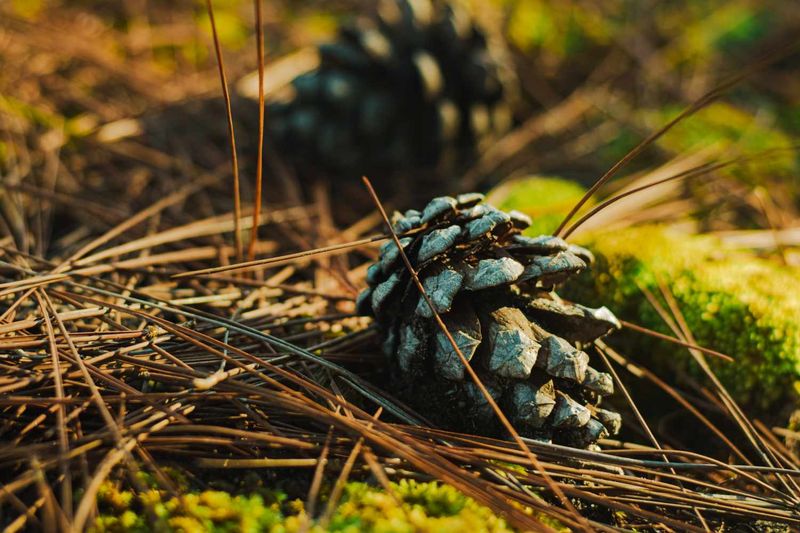
A recent lifestyle article made the rounds claiming that North Carolina gardeners have a habit of burying pine cones in their garden beds for a quiet underground payoff. The idea is appealing, especially if you have a yard full of fallen cones and a bed that needs help.
Before you start digging, though, it is worth separating what pine cones can actually do from what the buzz around them suggests.
What the North Carolina pine-cone claim actually establishes
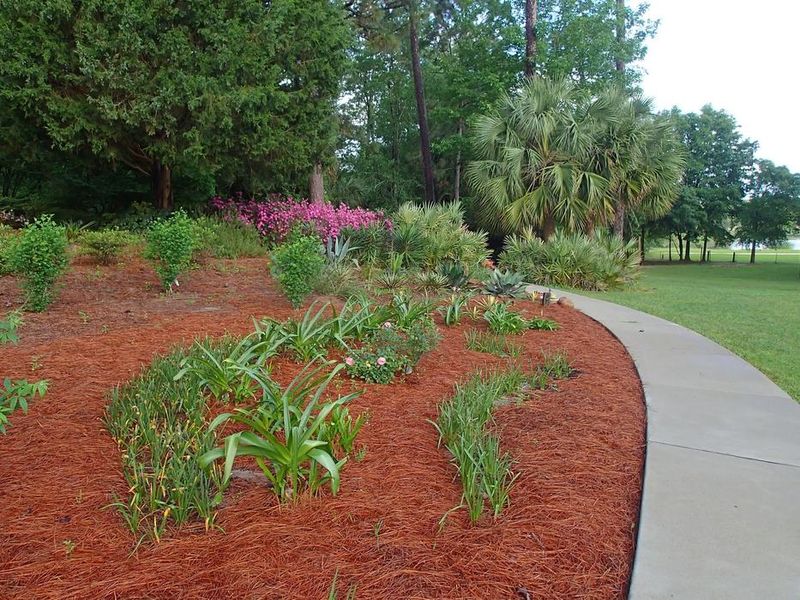
A recent lifestyle article describes North Carolina gardeners burying whole pine cones in their beds as a soil-improvement trick. The headline spread quickly, and for good reason: the idea sounds free, resourceful, and a little mysterious.
However, the claim that this is a widespread or traditional North Carolina gardening practice is not backed up by NC State Extension guidance, regional horticultural research, or any documented field study.
No authoritative source confirms that large numbers of North Carolina gardeners routinely bury whole cones, or that doing so delivers reliable soil benefits. The practice appears in a single lifestyle article, not in Extension recommendations or peer-reviewed research on home garden beds.
Treating a viral story as regional horticultural wisdom is a stretch the facts do not support.
That said, the underlying question is genuinely worth asking. Pine cones are abundant across the Piedmont, Coastal Plain, and mountains of North Carolina, and gardeners reasonably want to know whether burying them does anything useful.
NC State’s organic gardening guidance focuses on compost, mulch, and finished organic amendments rather than buried whole cones, which gives a useful starting point for realistic expectations.
The honest answer is that buried whole cones are an inexpensive experiment with slow, limited soil effects, not a proven technique. The rest of this article walks through what intact cones can and cannot do, and what North Carolina gardeners can try instead when a bed genuinely needs improvement.
Whole cones decompose slowly and contribute little at first
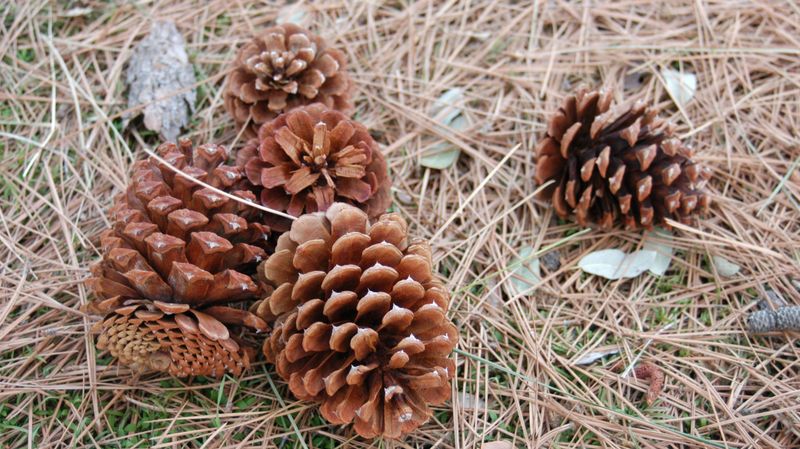
Pick up a pine cone and squeeze it. The woody, overlapping scales feel almost like compressed wood, and for good reason: pine cones are built to protect seeds through harsh conditions.
That same toughness is exactly what makes them slow to break down in garden soil.
Intact cones are carbon-rich, resinous, and dense. Resins in pine material slow microbial activity, and a whole cone presents very little surface area for soil bacteria and fungi to work on.
Colorado State University Extension’s composting guidance notes that particle size matters enormously in decomposition: smaller pieces expose more surface area, which means faster breakdown. A whole cone sitting intact underground is the opposite of that ideal.
Crushing or shredding cones before adding them to a compost pile is a meaningful improvement. More surface area means microbes can colonize the material faster, and the resins become less of a barrier as the woody structure breaks apart.
Even then, pine material is considered a “brown” or high-carbon input, so it needs to be balanced with nitrogen-rich greens to decompose at a reasonable rate.
Over a long period, buried cones will eventually contribute some organic matter to the soil. That is not nothing, but it is also not fast, and the amount added is modest compared with a finished compost application.
NC State’s compost production guidance makes clear that the quality and maturity of organic material determines how much benefit it delivers to soil. A cone that is still largely intact years after burial is not actively improving your bed in any meaningful way during that waiting period.
Gardeners who expect a quick fertility boost from buried cones will be disappointed. The timeline for any measurable change is measured in years, not seasons, and the payoff at the end is a small increment of organic matter rather than a transformed bed.
Buried cones do not create a proven drainage system
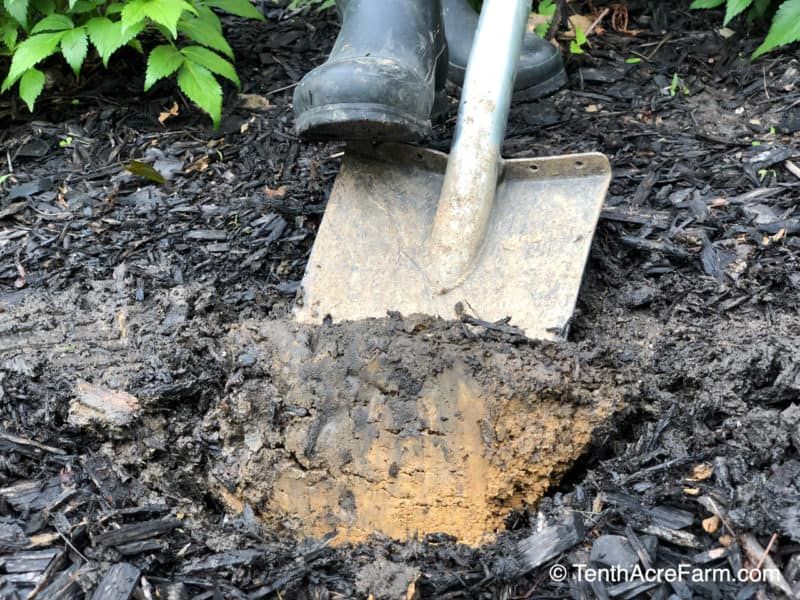
One of the more popular versions of the pine-cone claim is that burying cones underground creates air pockets or drainage channels, essentially acting like a natural French drain. The appeal is obvious: if you have a soggy bed in a Piedmont clay yard, the idea of a free, easy fix is hard to resist.
However, the mechanics do not hold up.
Soil pores and drainage channels are not the same as gaps between irregularly shaped woody objects. Real drainage improvement requires either changing the soil texture, adjusting the grade, installing a physical drainage system, or building raised beds that lift plants above the wet zone.
Placing cones in the ground creates temporary voids, but those voids are not stable, engineered, or sized to move water the way a gravel layer or drain tile would. As cones slowly compress and decompose, any initial gaps close.
NC State’s guidance on modifying soil for plant growth addresses drainage problems directly and does not mention buried cones as a remedy. For genuinely compacted or poorly drained soil, the recommended approaches include assessing the site, improving grading, selecting plants suited to wet conditions, or building raised beds.
None of those involve burying whole cones.
Surface mulch does provide real, documented benefits: it slows evaporation, moderates soil temperature, limits erosion, and suppresses weeds. NC State’s organic gardening handbook describes these surface benefits clearly.
Those results are worth knowing about, but they come from material sitting on top of the soil, not from material buried several inches below. Transferring surface-mulch logic underground to claim that buried cones improve drainage is a leap the evidence does not support.
If your bed drains poorly, diagnose the actual problem first. A drainage fix that matches the real cause, whether that is slope, compaction, soil texture, or planting-hole design, will outperform any amount of buried cones.
Whole cones are not finished compost or a dependable fertilizer
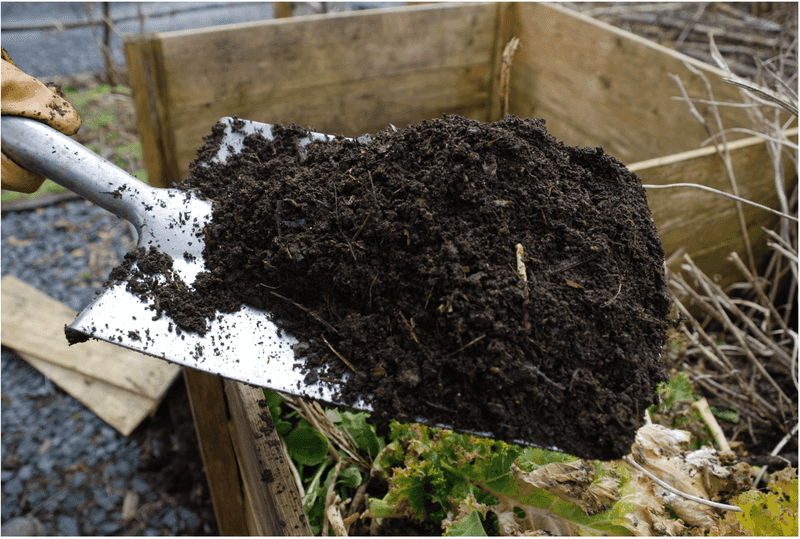
Finished compost looks nothing like a pile of pine cones, and that difference matters more than it might seem. Compost is organic material that has already been broken down by heat, moisture, and microbial activity into a stable, crumbly product.
Whole pine cones are raw, unprocessed woody material at the very beginning of that journey.
Oregon State University Extension’s guide on using compost explains that finished compost improves water-holding capacity, adds a modest and relatively predictable supply of nutrients, and supports healthy soil biology. Those benefits come from material that has already been transformed.
A raw cone buried in a bed has not been transformed yet, and depending on conditions, it may not be for years.
Treating cones as a fertilizer is an even bigger stretch. Whole cones contain organic carbon and trace amounts of other elements, but they are not a dependable nutrient source in any practical gardening sense.
Colorado State University Extension’s composting resource notes that raw high-carbon materials need to be composted before they reliably release nutrients plants can use. Skipping that step and burying the raw material does not shortcut the process; it just moves the slow decomposition underground and out of sight.
NC State’s composting guidance reinforces that compost quality and maturity are what drive soil improvement. A gardener who needs to increase organic matter, improve water retention, or give plants a modest nutrient boost will get more consistent results from a 2-inch layer of finished compost worked into the bed than from a layer of buried cones that may still be largely intact three seasons later.
Soil testing is the right starting point for any fertility question. Knowing your bed’s actual pH, organic matter level, and nutrient status tells you what it needs.
Whole cones cannot substitute for that information or for the targeted amendments a test might recommend.
Do not confuse cones with pine straw, bark, or biochar
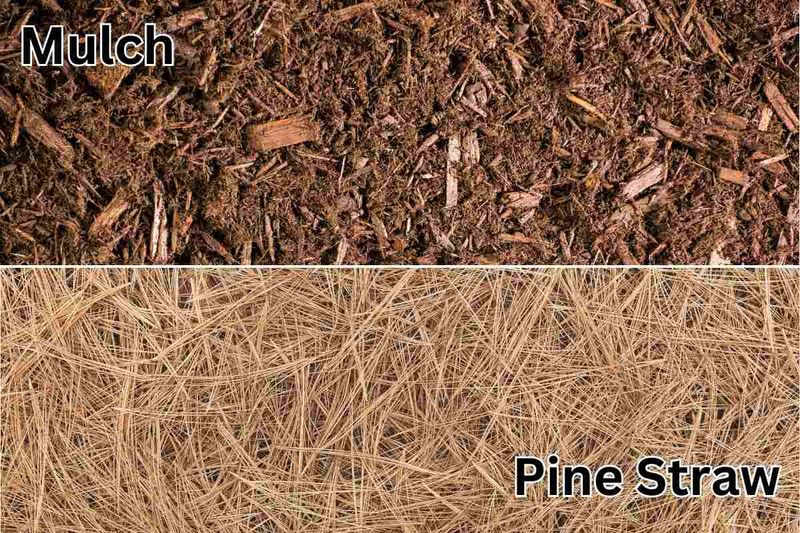
Pine straw, pine bark mulch, and whole pine cones all come from the same family of trees, but they behave very differently in a garden bed. Lumping them together leads to borrowed credibility: a benefit shown for one material gets quietly applied to another, even when the physical properties are nothing alike.
NC State’s organic gardening handbook recommends pine straw and pine bark as surface mulch materials for landscape beds. Both are widely used across North Carolina, and both have a track record supported by Extension guidance.
Pine straw is lightweight, breaks down over time, and stays in place on slopes. Pine bark chips are coarser, longer-lasting, and widely available.
Neither recommendation extends automatically to whole cones buried underground.
The pH question deserves careful handling too. Fresh pine needles are slightly acidic, and some gardeners assume that any pine material will acidify soil.
Oregon State University Extension addresses pine needle mulch and notes that the effect on soil pH is generally minor because soils are naturally buffered and the material changes as it decomposes. That finding is strongest for pine needles on the surface, not for whole cones buried in the ground.
Relying on cones to acidify your bed is not a dependable strategy, and adding lime or sulfur without a soil test is guesswork regardless of what you bury.
Pine-cone biochar is a separate category entirely. Research on pine-cone biochar involves heating pine material at controlled temperatures through a process called pyrolysis, then grinding the result and applying it at measured rates.
The resulting product has different chemistry, structure, and soil interactions than a raw cone. Biochar research cannot be used to claim that burying an intact cone in your garden bed produces the same results.
Whole cones are not finished compost, a dependable fertilizer, pine straw, or pine-cone biochar. Each of those materials has its own properties, its own body of evidence, and its own appropriate use.
NC State notes that nearly all North Carolina soils are naturally acidic, so adding pine material to lower pH further is rarely the right call without a test confirming the need.
North Carolina soil conditions determine the real remedy
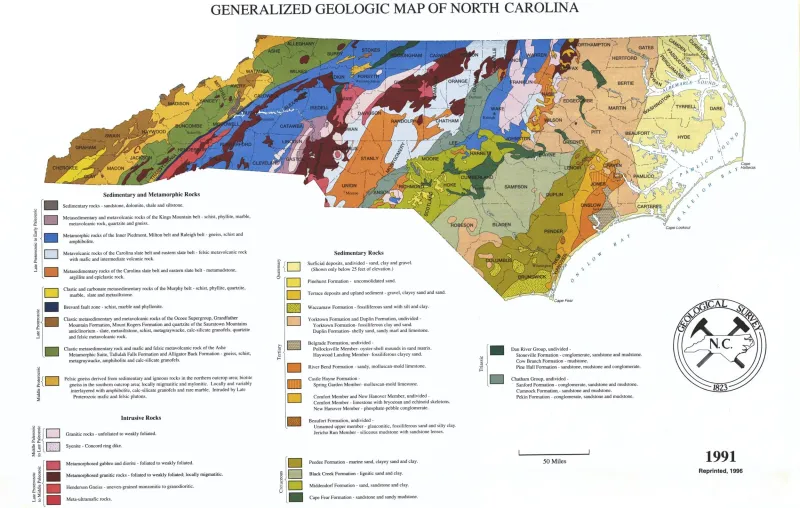
North Carolina is not one soil environment. The state stretches from the Outer Banks to the Appalachians, and the soils across that range are genuinely different in texture, drainage behavior, organic matter content, and natural pH.
A single gardening tip, whether it involves pine cones or anything else, cannot address all of those conditions equally.
Sandy and sandy-loam soils in the Coastal Plain and Sandhills drain quickly, sometimes too quickly, and tend to have lower organic matter. NC State’s forage and soil overview describes the broad differences across the state’s regions.
Piedmont soils are commonly clayey or clay-loam, prone to compaction, and slow to drain when disturbed. Mountain soils vary but often include fine loams and sandy clay loams that behave differently from either Coastal Plain or Piedmont conditions.
What fixes a sandy Coastal Plain bed, such as adding organic matter to improve water retention, is not the same prescription as what helps a compacted Piedmont clay bed, where drainage and aeration are the real problem. NC State’s soil modification guide walks through how to assess compaction, drainage, organic matter, and pH before choosing an amendment.
That diagnostic step matters more than any single material.
Soil testing is the most direct way to know what your specific bed actually needs. NC State explains how to test your garden soil through the state’s soil testing lab, which provides results and amendment recommendations tailored to your sample.
The cost is low, and the information is specific to your site rather than generic.
If drainage is the real issue, the fix depends on cause. Grading problems need grading solutions.
Compacted subsoil may need physical remediation or raised beds. NC State’s liming guidance makes clear that pH adjustments should follow test results, not assumptions about what pine material might do.
Matching the remedy to the actual problem is more reliable than any buried material that works slowly and unpredictably.
Safer ways to reuse cones you already have
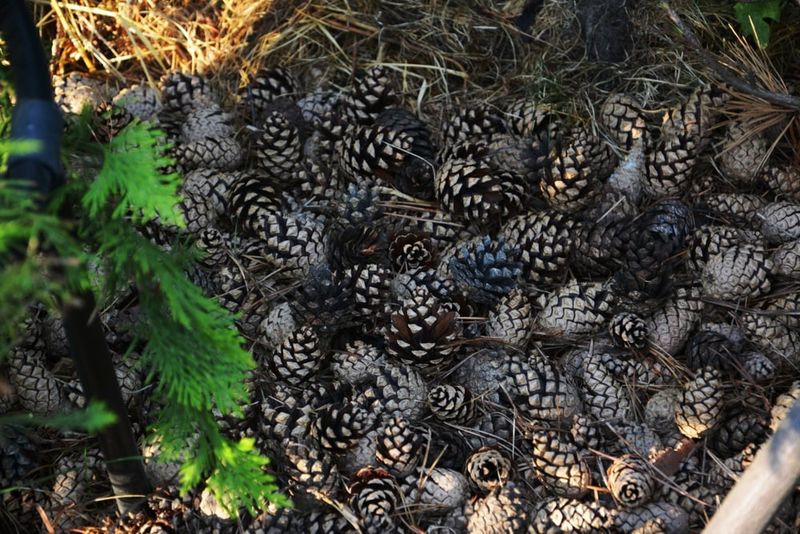
If your yard produces pine cones by the bushel, throwing them away feels wasteful. There are lower-risk ways to put them to use without burying large quantities in planting beds or relying on unproven claims about underground benefits.
Scattering a modest layer of whole cones on the soil surface as coarse decorative mulch is the most straightforward option. An Extension response on pine cones as mulch specifically recommends surface use over mixing whole cones into soil, and flags that woody cones break down slowly and may temporarily compete with plants for nitrogen when incorporated into the root zone.
Surface placement sidesteps the nitrogen-competition concern while still adding some texture and coverage to a bed.
For the compost pile, crushing or shredding cones before adding them is a meaningful upgrade. Colorado State University Extension’s composting guide explains that smaller particle size speeds decomposition by exposing more surface area to microbial activity.
Shredded cone material still qualifies as a high-carbon brown, so balance it with nitrogen-rich greens like grass clippings, kitchen scraps, or fresh plant trimmings to keep the pile active.
Pine cones can also be used in noncritical areas where slow decomposition is fine: pathways, erosion-prone slopes where you want something to hold the ground temporarily, or decorative borders where appearance matters more than soil chemistry.
One minor caveat worth knowing: pine cones can contain viable seeds. A cone is not a reliable way to grow a pine tree, but Colorado State’s pine seed planting guide confirms that seeds in cones can germinate under the right conditions.
Gardeners who scatter cones in beds may occasionally see volunteer pine seedlings appear and should be ready to pull them.
Finally, keep dry cone stockpiles away from homes, decks, fences, and other combustible structures. Oregon State University’s fire-resistant landscape guide notes that dry woody mulch near buildings increases ignition risk.
Store or use cones away from structures and follow local fire-safety guidance, especially during dry summer stretches.
Use compost and mulch for more predictable results
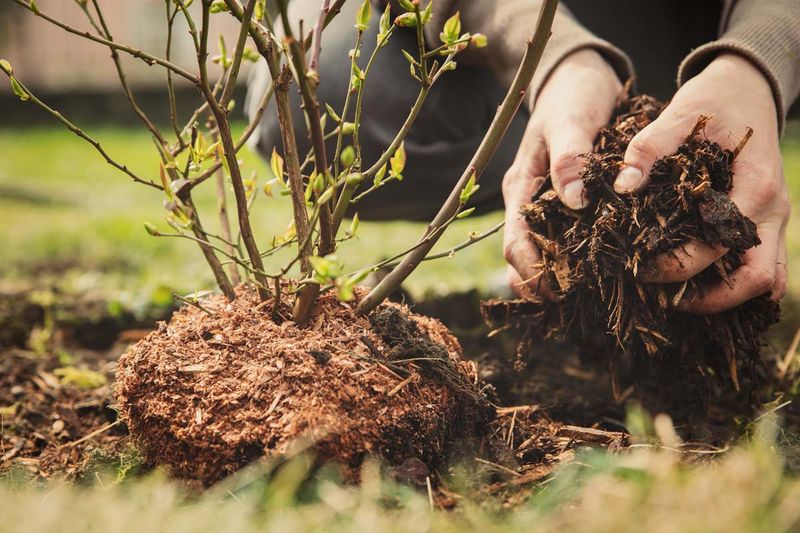
Finished compost and correctly applied surface mulch are not glamorous, but they have something the pine-cone burial idea does not: a consistent track record backed by Extension research and practical experience across many soil types.
Compost improves soil in ways that matter to plants. Oregon State University Extension’s compost guide explains that finished compost increases water-holding capacity in sandy soils, improves structure in clay soils, supports beneficial soil organisms, and provides a modest, relatively stable supply of nutrients.
Those outcomes are not guaranteed by any single application, but they are repeatable and measurable in a way that buried whole cones are not.
Surface mulch does its own set of jobs. NC State’s organic gardening handbook documents that organic mulch conserves soil moisture, moderates temperature extremes, suppresses weeds, and reduces erosion.
For woody or perennial beds, NC State recommends roughly 3 to 4 inches of organic mulch. Applications around annuals should be thinner, and no bed should receive more than about 4 inches total, because excessive mulch can reduce oxygen and water movement to roots and encourage shallow rooting.
Placement matters as much as depth. NC State’s woody ornamentals handbook advises keeping mulch approximately 6 inches away from tree trunks, plant crowns, and stems.
Mulch piled against woody stems traps moisture, promotes decay, and can attract voles and other rodents that gnaw bark at the soil line.
Choosing compost and mulch over a buried-cone experiment is not about being cautious for its own sake. Compost and mulch work with the soil biology that is already present, address real bed problems in measurable ways, and do not require waiting years to find out whether anything happened.
For most North Carolina garden beds, that combination of organic matter added to the soil and mulch on the surface is the most direct path to healthier plants and easier upkeep.
The likely soil effect is small, slow, and uncertain
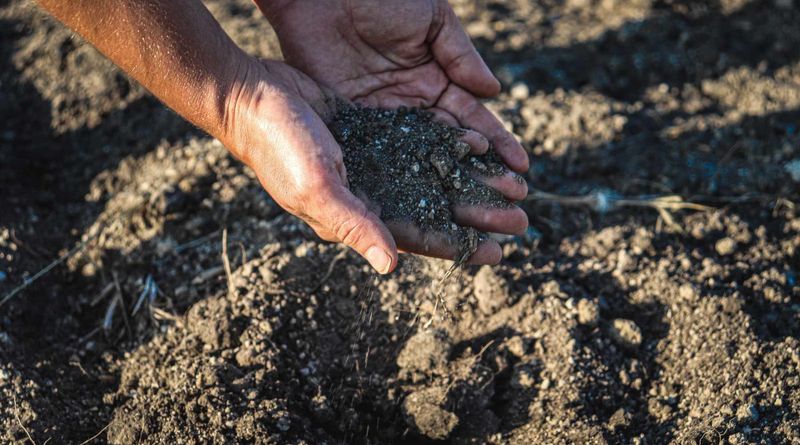
Buried whole pine cones will, given enough time and the right conditions, contribute a small amount of organic matter to garden soil. That much is plausible.
What they will not do is quickly improve drainage, reliably loosen compacted Piedmont clay, fertilize plants, or replicate the effects of finished compost, pine straw, or pine-cone biochar.
Extension composting research consistently shows that particle size, carbon-to-nitrogen ratio, moisture, and microbial activity all shape how fast and how completely organic material breaks down. Whole cones score poorly on most of those factors when buried intact.
The result is a slow, uncertain process whose outcome depends heavily on your specific soil, climate, and cone species.
NC State’s soil modification guidance points toward soil testing, site assessment, and targeted amendments as the reliable path to a better bed. Those steps are less shareable than a viral pine-cone tip, but they address what is actually limiting your plants rather than what sounds satisfying to try.
If your bed needs help, start with a soil test, identify the real constraint, and match the remedy to the diagnosis.
Pine cones are worth keeping out of the landfill, and scattering a few on the surface or shredding them for the compost pile are reasonable uses. The most durable garden improvements still come from compost, appropriate mulch, and soil management that fits your region.
A buried cone is an experiment, not a secret, and the soil beneath your feet will tell you more than any trending garden tip.