
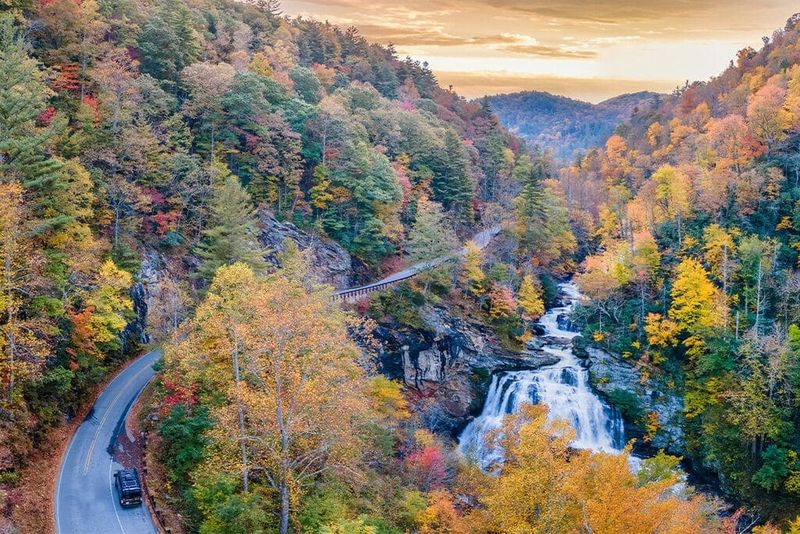
North Carolina’s fall foliage season is one of the most anticipated times of year for mountain travelers and backyard tree-watchers alike. But in 2026, the color may not unfold the way many visitors expect, with bright patches appearing in some spots while nearby areas look muted, brown or bare too soon.
Understanding why that happens, and how to find the best color wherever it shows up, can make the difference between a frustrating drive and a genuinely rewarding trip.
North Carolina has never followed one statewide fall-color schedule
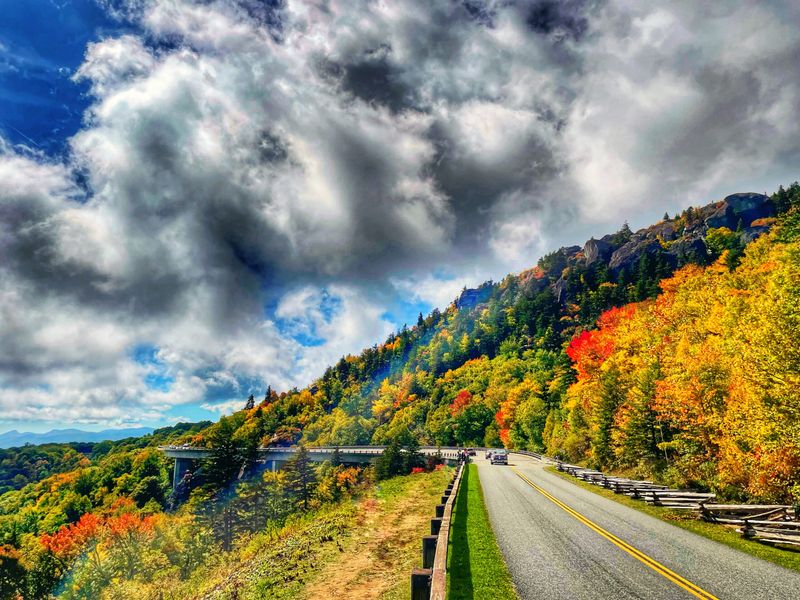
Fall color across North Carolina has always moved in stages rather than arriving all at once. The state spans a remarkable range of elevations and latitudes, from peaks above 6,000 feet in the western mountains to sea-level marshes along the Outer Banks, and that geography alone guarantees that different parts of the state change at different times.
The general pattern flows from high to low. Great Smoky Mountains National Park describes the season as beginning at the highest elevations and gradually descending toward valley floors and lower terrain as October progresses.
The Blue Ridge Parkway follows a similar rhythm, with color on the highest ridges often preceding the show at mid-elevation overlooks by a week or more.
Latitude adds another layer of complexity. Northern mountain counties in North Carolina tend to see color develop somewhat earlier than southern mountain counties at comparable elevations, and the Piedmont generally follows the mountains by several weeks.
The Coastal Plain, meanwhile, can hold onto green well into October before shifting, with some coastal species producing color that extends into early or mid-November.
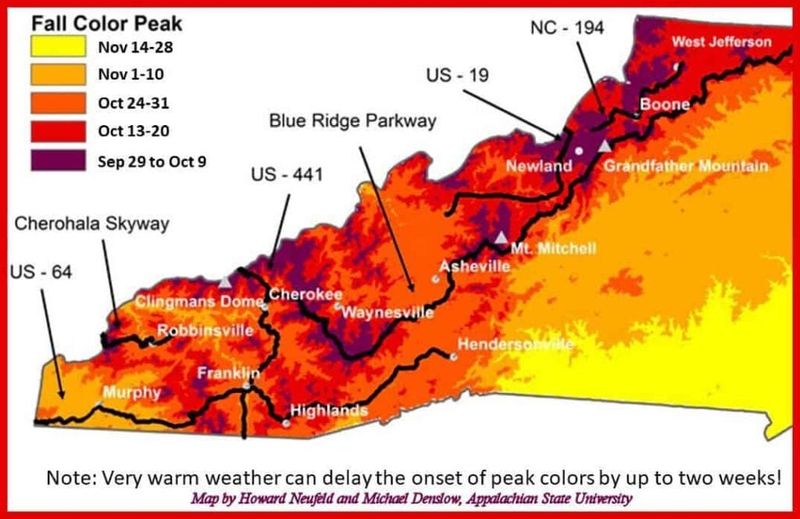
Appalachian State University’s fall color map for North Carolina combines both elevation and latitude rather than treating elevation alone as the deciding factor, reflecting the reality that these forces interact. A drive from the Piedmont into the mountains can pass through several foliage stages in a single afternoon, not because anything unusual is happening, but because the state’s geography naturally produces overlapping viewing windows.
Expecting one universal peak weekend across a state this geographically diverse has never matched how the season actually works.
Visit North Carolina’s fall foliage guide reinforces this by encouraging travelers to check conditions by region rather than planning around a single statewide date, a practical acknowledgment that the season here has always been a moving target spread across weeks, not days.
The 2026 forecast points to uneven pockets, not a failed fall-color route
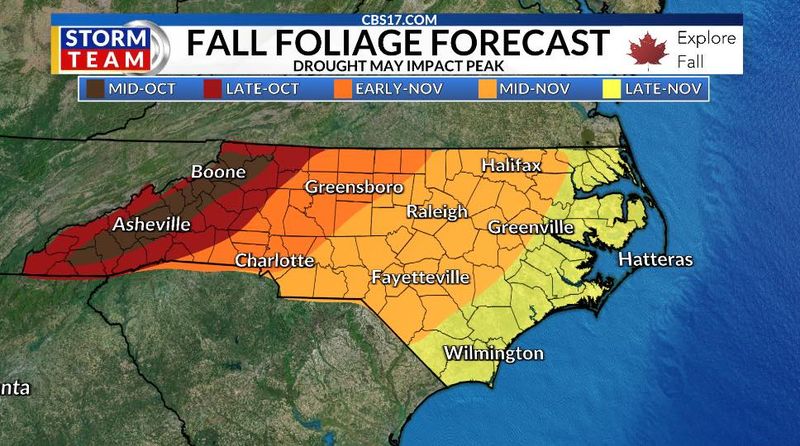
What makes 2026 different from a typical year is not that the mountain-to-lowland progression has stopped working. The underlying pattern still applies.
What may change is how clean and predictable that progression looks from one ridge or road to the next.
NC State forestry professor Robert Bardon has forecast that some parts of North Carolina could see a patchy, muted or shorter-lived display this season, driven by a combination of summer heat, drought stress and uneven rainfall across the state. NC State’s fall foliage forecast describes a “patchwork” outcome rather than a uniform statewide result, with some areas more affected than others depending on local conditions.
Drought is part of that picture, though the distribution is not uniform across the state. The North Carolina Drought Management Advisory Council’s assessments from September 2026 placed multiple counties in moderate, severe or extreme drought categories, while others were classified as abnormally dry or outside of drought conditions entirely.
That uneven moisture pattern helps explain why the foliage response may look localized rather than statewide. Checking the NC Drought Management Advisory Council for current county-level conditions can help travelers and homeowners understand which areas faced the most stress heading into the season.
At the same time, the forecast is not uniformly pessimistic. Observers in the Asheville area and parts of the western mountains have noted that color could arrive close to its normal schedule in many mountain locations, even if some sites show stress-related browning or early drop.
WataugaOnline’s fall color reports, updated regularly by botanist Howard Neufeld, track current conditions in the High Country and offer ground-level context that statewide forecasts cannot provide on their own.
The key framing is this: pockets of vivid color may still appear, especially at higher elevations and in locations that received more consistent rainfall. The forecast suggests that those pockets may be harder to predict from a single route or a statewide peak-date calendar, not that fall color has vanished from North Carolina’s mountains.
Elevation is one useful way to read the season
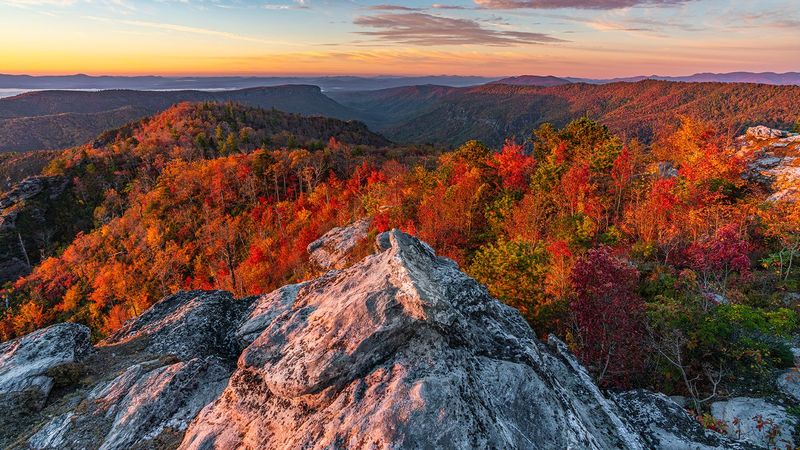
Elevation remains one of the most practical tools for understanding where color is likely to appear first in western North Carolina. Higher ridges generally begin changing before middle elevations, and middle elevations typically shift before valley floors.
That staggered sequence means that moving up or down in altitude can effectively move you forward or backward in the season.
The Blue Ridge Parkway describes color as typically progressing from the highest peaks toward lower elevations during October, a pattern that holds across most years and makes the Parkway’s highest overlooks useful early-season destinations. In the Smokies, the same descent applies: high-elevation spruce-fir zones and exposed ridgelines tend to show color well before the coves and hollows below them.
Elevation is most reliable as a guide in the western mountain region, where the altitude differences are large enough to create genuinely distinct viewing windows within a short drive. A traveler who visits a high ridge overlook in early October and finds color already developing can reasonably expect that lower elevations along the same road will follow within a week or two, assuming weather cooperates.
That last qualifier matters. Latitude, species composition and local exposure all interact with elevation to shape the actual timing at any specific spot.
Appalachian State’s fall color map reflects this by incorporating both elevation and latitude into its regional guidance rather than treating altitude as a single universal rule. A north-facing cove at 3,500 feet may hold color differently than a south-facing exposed ridge at the same elevation, because aspect and microclimate affect how much heat and light the trees receive.
Using elevation as a rough guide while staying flexible about local conditions gives travelers a more realistic framework than following a fixed peak-date calendar that cannot account for weather shifts, drought pockets or species variation from one stretch of road to the next.
Tree species can make neighboring routes look like different seasons
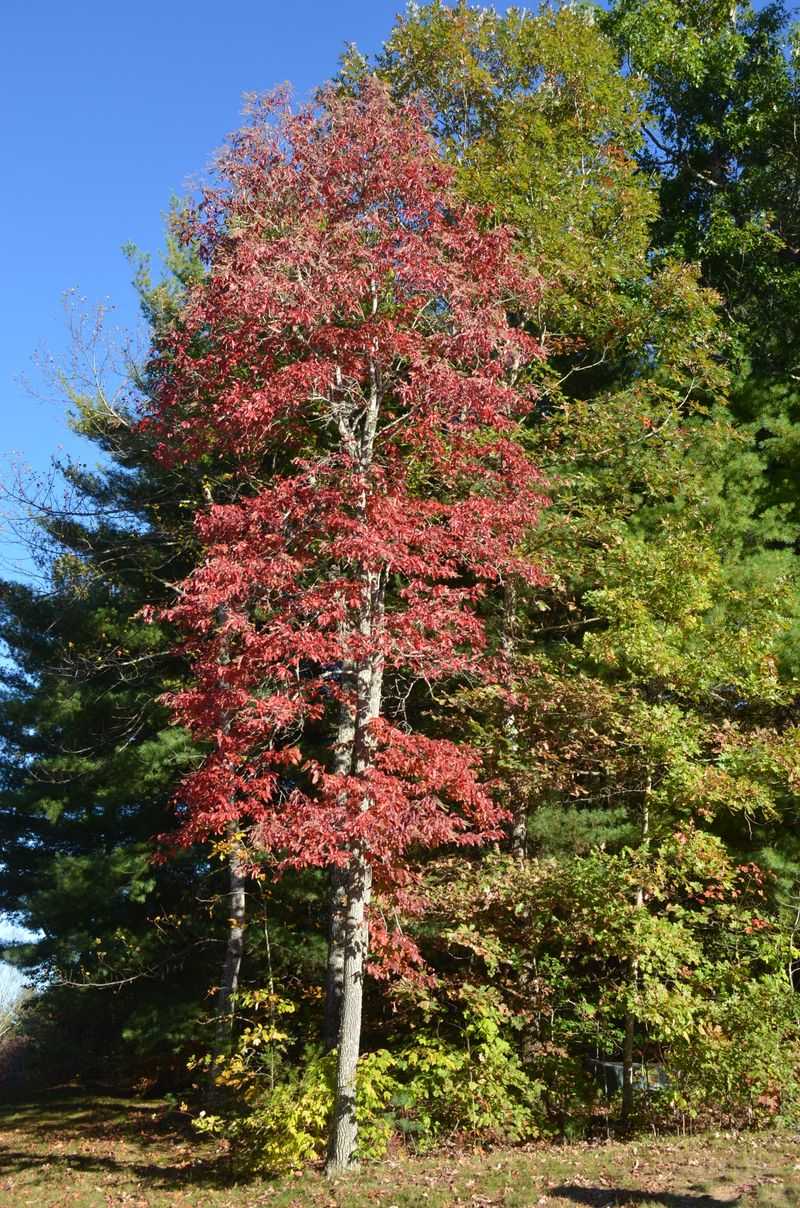
One of the most overlooked reasons that two nearby routes can look completely different in autumn is the tree species growing along each one. North Carolina’s forests are not uniform, and the mix of species on any given slope or roadside has a major effect on what travelers see and when they see it.
NC State Extension’s guide to fall color chemistry highlights several of the key contributors: maples and sourwood tend to produce vivid reds and oranges early in the season, while oaks and hickories often hold their color later and lean toward russet browns and golds. Blackgum and sweetgum can turn deep red to purple.
Sassafras offers orange and red, dogwood produces burgundy, and yellow-poplar contributes clear yellow before its leaves fall relatively quickly.
A route dominated by a single species community can look strikingly unlike a nearby road running through a more diverse hardwood mix, even when both experience the same regional weather. A stretch of highway lined mostly with oaks may appear largely green while a nearby cove full of maples and sourwood is already at peak color.
That contrast is not evidence of unusual stress or a failed forecast; it reflects the ordinary species-level differences in timing that have always shaped North Carolina’s fall landscape.
Species composition also interacts with elevation and aspect. Certain communities, such as the northern hardwood forests found at higher elevations, include species like American beech and yellow birch that contribute golden tones distinct from the lower-elevation mix.
Appalachian State’s color map notes these community differences as part of why the mountain region can look so varied across a relatively small geographic area.
Travelers who want to maximize color variety are often better served by seeking out routes through diverse hardwood communities than by chasing a single statewide peak date, since the overlapping timing of different species can extend the viewing window considerably.
Weather shapes timing, brilliance and how long leaves remain
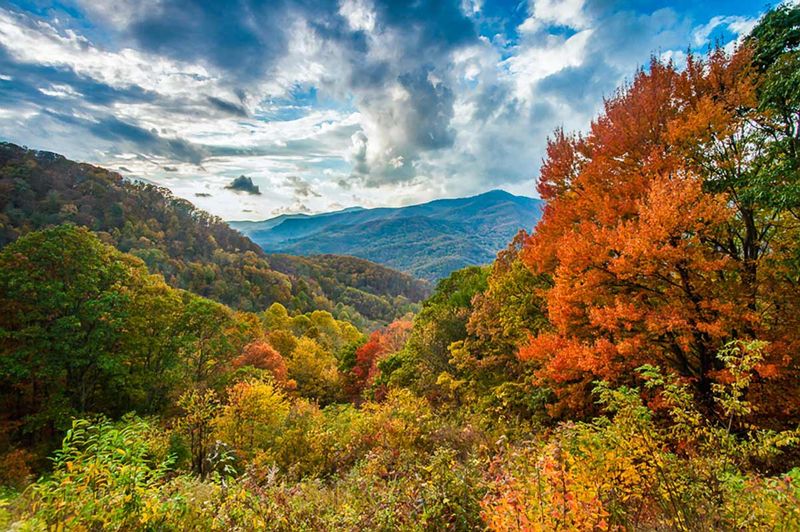
Shortening day length is what starts the whole process. As days grow shorter in late summer and early fall, trees begin breaking down chlorophyll, the green pigment that masks the yellow and orange carotenoids present in leaves all along.
Those underlying colors become visible as chlorophyll fades, which is why yellow and orange tones appear reliably across many species even in years with difficult weather.
Red and purple colors are a different story. Anthocyanins, the pigments responsible for vivid reds and burgundy tones, are produced during the senescence process rather than simply revealed.
USDA Forest Service research on why leaves change color explains that anthocyanin production is favored by bright sunlight and cool nights, particularly when daytime temperatures remain mild. When nights turn cold but days stay sunny, conditions are good for intense red color in species capable of producing it.
Warm, cloudy or rainy weather during the peak window tends to suppress red anthocyanin development, which is why some years produce more muted reds and oranges than others. Rainfall also affects how long leaves stay attached; strong storms and wind events can strip foliage before it reaches its best color or before viewers have a chance to see it.
Two common misconceptions are worth addressing directly. A hard frost does not trigger fall color – the seasonal process begins with day length changes well before frost arrives, and freezing temperatures can damage or rapidly remove leaves rather than improve the display.
Similarly, more rain does not automatically produce a better color season. Adequate moisture during the growing season supports tree health, but excessive water or late-season storms can shorten the display rather than enhance it.
NC State’s fall color science explainer and WataugaOnline’s seasonal reports both reflect that timing and brilliance are shaped by different variables, and that no single weather condition guarantees or ruins the season on its own. The interaction between day length, temperature patterns, moisture and tree condition produces an outcome that is more nuanced than simple rules suggest.
A bright patch does not always signal healthy trees
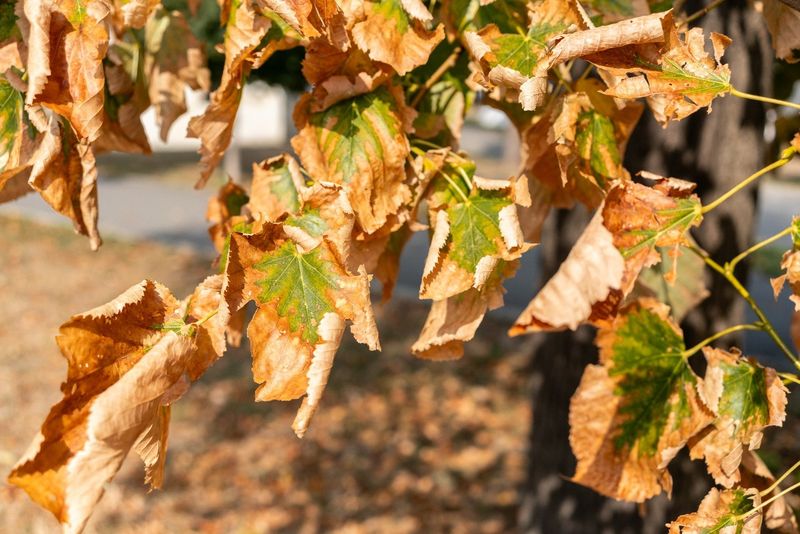
Seeing red or orange leaves in your yard or along a mountain road earlier than expected is not automatically good news. Early color change can reflect normal variation in species or individual tree timing, but it can also be a symptom of stress that has nothing to do with the season being especially vivid.
NC State’s 2026 foliage forecast specifically notes that drought and heat stress can cause some trees to change color early or drop leaves before a full display develops, while causing browning or scorch in others. The same stress that triggers early color in one location may produce delayed or weaker color in another, depending on species, soil, root condition and how long the stress has persisted.
The visual clues that separate stress-related change from normal seasonal color are worth knowing. Leaves with brown or scorched margins, a sparse or thinning canopy, sudden leaf drop across most of the crown, or foliage that looks bleached rather than vivid are more likely signs of drought, heat, root damage, disease or insect injury than of an early peak.
NC State Extension’s woody ornamentals handbook identifies drought stress as one cause of premature leaf color change and drop, alongside flooding, mechanical root damage, construction disturbance, and pest or disease problems.
A single photograph or a quick drive-by is rarely enough to distinguish stress symptoms from normal seasonal color. Trees showing early change in August or very early September, for example, deserve closer inspection rather than celebration.
University of Minnesota Extension’s guidance on early red maple color cautions that summer redness in maples often reflects stress rather than an early fall preview, a distinction that applies broadly to other species showing unexpected early color in North Carolina as well.
For travelers, this means that a colorful roadside patch is worth appreciating but not necessarily worth treating as a forecast for the rest of the region. For homeowners, it means that early color is a prompt to check the tree more carefully before assuming the season is simply arriving ahead of schedule.
Plan by elevation and current local reports
The most practical approach to fall travel in North Carolina this season is to treat your plans as adjustable rather than fixed. A statewide peak-date calendar has never been a reliable guide in a state with this much geographic variety, and in a year when drought and heat may have affected different areas unevenly, current local reports matter more than usual.
For western North Carolina, the general strategy of moving higher for earlier color and lower for later color still holds as a starting point. Higher elevations along the Blue Ridge Parkway and in the Smokies may show peak color in early to mid-October, while mid-elevation areas and valley towns often follow later in the month.
Blue Ridge Parkway’s fall color guidance encourages visitors to check current conditions rather than planning strictly by date, since weather can shift the window in either direction.
Appalachian State University’s fall color reports, updated regularly during the season, give specific observations from the High Country that help travelers calibrate their timing. WataugaOnline’s fall color reports with Howard Neufeld offer similar ground-level detail for Watauga County and surrounding areas, making them useful for anyone planning a trip to the northwestern mountains.
For the Piedmont and Coastal Plain, later dates are generally more productive, with color often developing through late October and into November depending on species and local conditions. Visit North Carolina’s fall foliage page compiles regional information and links to current conditions across the state, which is a useful starting point before committing to a specific destination or weekend.
Aspect, slope, species and recent local weather can make one stretch of a drive look entirely different from another just a few miles away. Framing your trip around “following the pockets” rather than chasing a single peak-date forecast gives you the flexibility to adjust based on what conditions actually look like when you arrive, rather than what a calendar predicted weeks earlier.
Protect stressed landscape trees without chasing brighter color
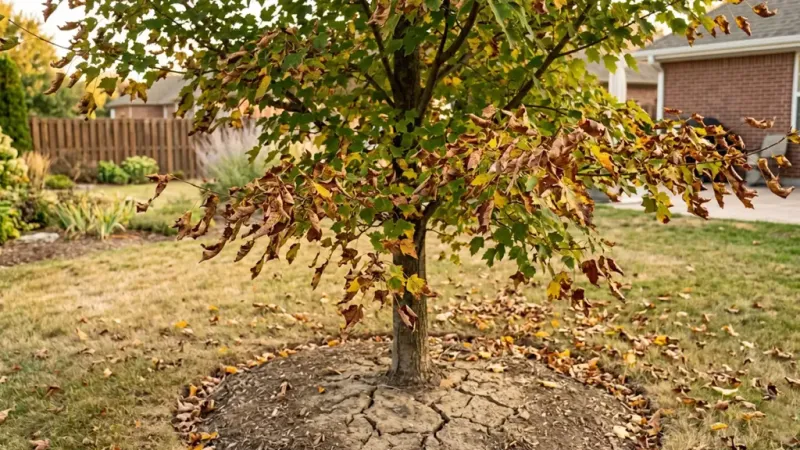
For homeowners, a year with uneven drought and heat is a good time to check on landscape trees rather than simply watching them for fall color. Trees that went into late summer under stress may show early color change, leaf drop or browning, and those symptoms deserve attention beyond seasonal appreciation.
Start with a physical inspection. Check soil moisture around the root zone by pressing a finger or a screwdriver a few inches into the ground; dry, hard soil well into the profile suggests the tree has been water-deprived.
Look at the canopy for thinning, sparse patches or sections where leaves look bleached, scorched along the margins, or have already dropped. Examine the trunk and major limbs for cracks, wounds, insect entry holes or signs of fungal growth.
NC State Extension’s woody ornamentals guidance identifies all of these as indicators worth investigating before assuming a tree is simply having an early fall.
If soil is dry, water deeply and infrequently, focusing on the root zone rather than lightly wetting the soil surface or foliage. Established trees benefit from slow, thorough watering that reaches deeper into the soil profile rather than frequent shallow applications.
Avoid overwatering, since saturated soil can deprive roots of oxygen and compound existing stress. Follow any local drought restrictions in effect for your county.
Mulch applied correctly can help conserve soil moisture and moderate soil temperature. Keep it to about 2 to 3 inches deep and leave clear space around the trunk rather than piling it against the bark.
Mulch against trunks traps moisture and can promote rot or pest problems over time.
Resist the urge to apply fertilizer as a quick fix for a stressed tree. NC State Extension’s fertilizing guide advises against fertilizing during drought or active plant stress, since pushing new growth when a tree is already struggling can make the situation worse.
Watering can reduce ongoing drought stress, but it cannot restore leaves that have already been damaged or reverse the natural senescence process once it has begun.
Expect a more local forecast, not a vanished fall
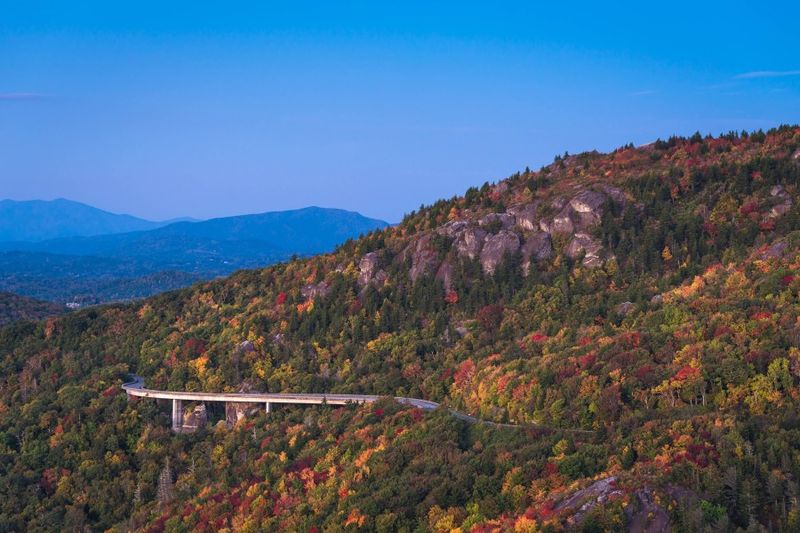
North Carolina’s fall season has not disappeared, and the mountain-to-lowland progression that has always defined it is still the right framework for understanding what to expect. What may look different in 2026 is how cleanly that progression unfolds from one ridge or road to the next, given the uneven drought, heat and rainfall that affected parts of the state through the summer.
NC State’s forecast describes a potentially patchwork result rather than a uniformly muted one, meaning that some locations may still offer attractive color while others nearby look stressed or faded. Treating that variability as something to navigate rather than a reason to stay home is the more useful response.
Match travel decisions to dated local reports and current elevation-based guidance rather than a fixed statewide calendar. Interpret early-turning or sparse-looking foliage cautiously, since it may reflect drought stress rather than a vivid peak.
Blue Ridge Parkway and Visit North Carolina both update their foliage information during the season, making them worth checking in the days before a planned trip. The pockets are real this year; finding the good ones just takes a little more attention to current conditions than a typical fall.