
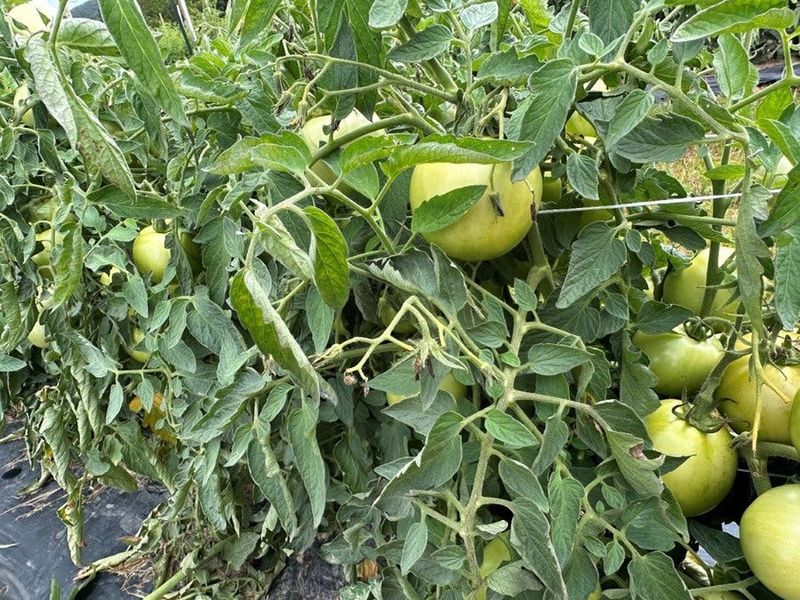
Your tomato vines are full of leaves, growing fast, and putting out flowers – yet the fruit just isn’t coming. For many North Carolina gardeners, late summer brings exactly this frustrating pattern: a plant that looks perfectly healthy but quietly stops producing.
Heat is often the reason, and understanding what’s happening underground and inside each flower can help you protect your harvest and set yourself up for a better fall crop.
A Green Vine Can Still Have Failed Flowers
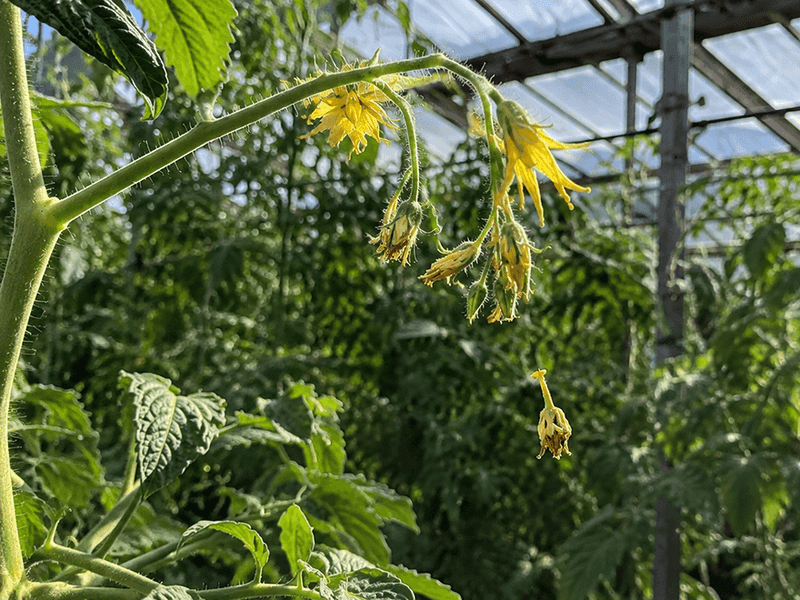
Plenty of North Carolina gardeners have stood in their garden in late July or August, staring at a tomato plant that is clearly alive and growing, only to notice that every flower is dropping before a single fruit forms. The vines keep climbing, the leaves stay green, and new growth appears at the tips – but the harvest isn’t coming.
That gap between vegetative health and reproductive failure is exactly what heat-related blossom drop looks like in practice.
Tomato plants can keep producing foliage and extending their vines even when the conditions needed for fruit set have broken down. Controlled research on tomato heat stress confirms that reproduction is more sensitive to high temperatures than vegetative growth, which is why a plant can look lush while its flowers quietly fail.
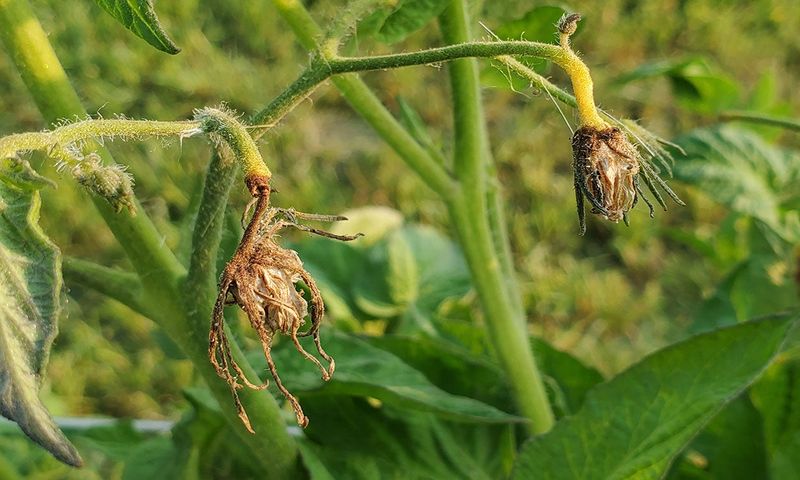
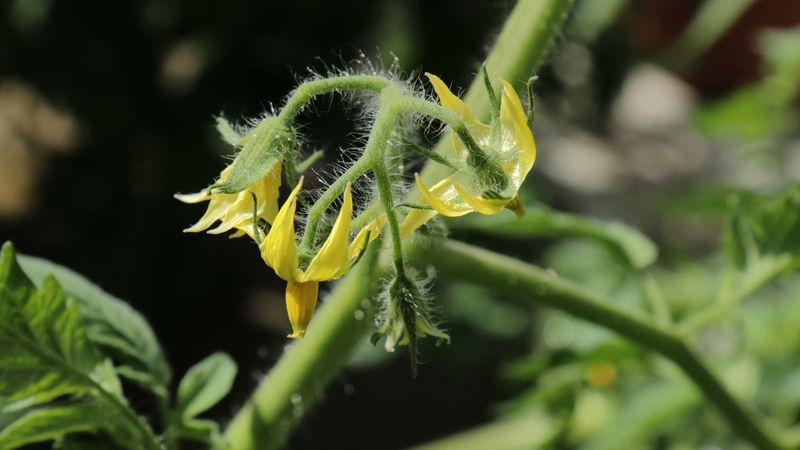
Flowers may yellow at the stem, dry out, and fall without leaving behind even a tiny green swelling where fruit would develop.
Heat-related blossom drop is a reasonable first suspect when flowers fall during a prolonged heat wave, but it is not the only possibility. Tomato viruses, foliar diseases, poor root health, drought, excess nitrogen, and herbicide injury can all reduce flowering or fruiting.
If young leaves are curling, yellowing, or the plant looks stunted or unusually bushy, NC State’s guidance on tomato yellow leaf curl virus and other disease resources are worth consulting before settling on a heat explanation.
The practical response starts with a careful look at the plant rather than an immediate intervention. Inspect the flowers, check the soil, and look for patterns that point toward heat or toward something else.
Protecting the plant from added stress and supporting new flower development is the right goal – trying to revive flowers that already aborted will not work.
Heat Interrupts Pollination Before Fruit Forms
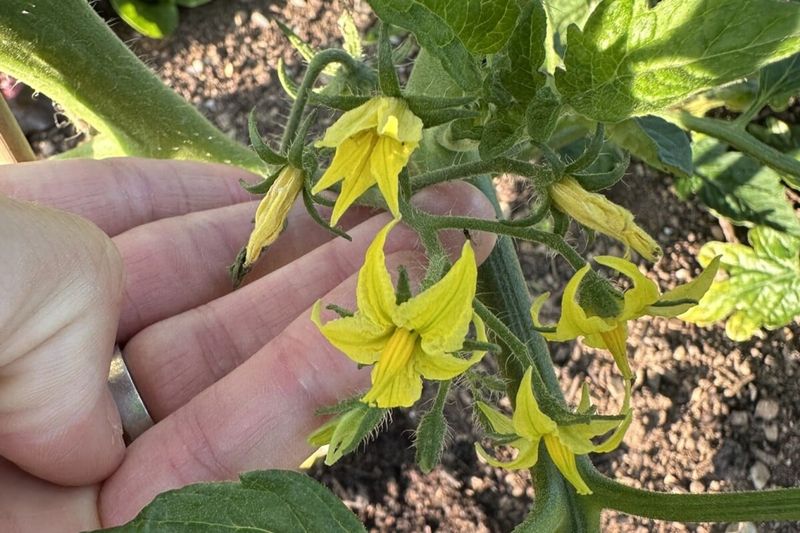
Tomatoes are self-pollinating, which means each flower carries both the pollen-producing anthers and the pollen-receiving stigma. That sounds simple, but the process still has several steps that all need to work.
Pollen has to develop properly inside the anther, get released, remain viable long enough to land on the stigma, and then grow a pollen tube down to fertilize the ovule. Any disruption along that chain can end with a dropped flower instead of a developing tomato.
High temperatures put pressure on almost every one of those steps. Heat can reduce how much pollen a flower produces, make it harder for the anther to open and release pollen, lower pollen viability so that grains that do reach the stigma cannot fertilize, and slow or stop pollen-tube growth.
A published study on tomato heat physiology found that plants held at approximately 90 degrees Fahrenheit during the day and 79 degrees at night experienced sharply reduced fruit set compared with cooler controls, and that a recovery period at lower temperatures restored fruit set across all tested cultivars to some degree.
That experiment is useful evidence, but it does not set a single hard threshold for every garden in North Carolina. University of Maryland Extension’s research on vegetable pollination describes temperature ranges as risk zones rather than on/off switches, and notes that cultivar, duration of exposure, humidity, radiant heat, and soil moisture all shift the outcome.
A single hot afternoon is far less damaging than five consecutive days of heat with little overnight relief.
Nighttime temperatures carry particular weight. When nights stay near or above 70 degrees Fahrenheit, pollen that developed during the day may already be compromised before the flower even opens.
Penn State Extension’s overview of heat stress in tomatoes reinforces that warm nights extend the period of reproductive stress beyond what daytime readings alone would suggest. Flowers that were forming during a multi-day heat event may drop even after a single cooler afternoon arrives, because the damage happened earlier in their development.
Inspect Flowers Before Blaming the Weather
Before deciding that heat is the culprit, spend a few minutes looking closely at what the plant is actually doing. The symptoms of heat-related blossom drop follow a recognizable pattern: the flower stem, called the pedicel, yellows and weakens, then the whole blossom dries out and falls without leaving a swelling behind.
University of Maryland Extension’s field guidance on poor fruit set describes this as the key visual signal – no tiny green tomato forming at the base of the flower means pollination did not succeed.
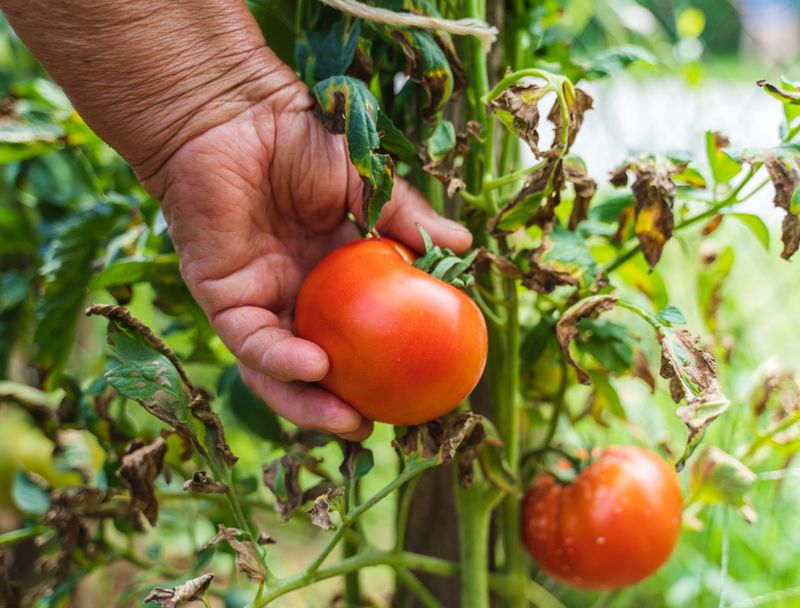
Compare that to what you see with blossom-end rot, which is a different problem entirely. Blossom-end rot shows up as a dark, sunken, leathery patch on the bottom of a tomato that already formed and is actively growing.
Penn State Extension’s resource on blossom-end rot explains that the disorder is linked to uneven moisture and calcium movement in the plant, not to failed pollination. If you have fruit on the vine with dark spots on the bottom, that is a separate issue from flowers that fall before any fruit develops.
Delayed or uneven ripening is another thing to separate out. A green tomato sitting on the vine is not proof that pollination failed – it may simply be a fruit that set successfully but is ripening slowly in the heat.
University of Minnesota Extension’s summary of heat effects on vegetables notes that high temperatures can disrupt color development and slow ripening even in fruit that formed normally.
When the pattern does not match heat-related blossom drop, look further. Young leaves that curl inward, turn yellow, or cause the plant to look stunted and unusually compact point toward possible viral infection.
NC State Extension’s profile of tomato yellow leaf curl virus lists those exact symptoms along with flower drop, and a plant showing that combination needs a proper diagnosis rather than a heat-only explanation. Penn State’s guide to tomato diseases and disorders covers additional patterns tied to root problems, foliar disease, and nutrition that can mimic or compound heat-related symptoms.
Warm Nights and Humidity Extend the Fruit-Set Slump
Most gardeners track the afternoon high and assume that is where the heat damage happens. Afternoon temperatures in the upper 80s to low 90s Fahrenheit do raise the risk of poor fruit set, and hotter days push that risk higher.
But the night reading matters just as much, sometimes more. When temperatures stay near or above 70 degrees Fahrenheit after dark, the plant gets no meaningful cool period, and reproductive tissues that were already stressed during the day have no chance to recover.
University of Maryland Extension’s pollination and climate resource describes warm nights as especially consequential for fruit set, while also noting that high daytime heat, radiant heat from soil and structures, water stress, and humidity all contribute. These factors interact rather than act in isolation, which is why a stretch of 88-degree days with 74-degree nights in the humid Piedmont can be more damaging than a single hotter afternoon with cool overnight relief.
Duration is another variable that gardeners often underestimate. The same tomato heat physiology research shows that pollen and reproductive tissue can be injured several days before a flower opens.
That means blossoms may drop after the most visibly extreme afternoon has passed, because the damage was already done during an earlier phase of flower development. A gardener who sees a cooler day followed by fresh blossom drop is not imagining things – the timeline just runs ahead of what is visible.
North Carolina’s late-summer humidity adds another layer. Extension guidance on poor fruit set timing notes that high humidity can prevent pollen from shedding properly from the anther, even when temperatures are not at their peak.
NC State’s fresh-market tomato production guide acknowledges the state’s humid summer conditions as a factor shaping both disease pressure and reproductive performance. The combination of warm nights and sticky air that settles over the Coastal Plain and Piedmont in August creates conditions where fruit set can stall even on days that do not feel like the hottest of the summer.
Keep Moisture Even and Reduce Extreme Heat
When heat is already stressing your tomato plants, the last thing you want is drought adding to the problem. Keeping soil moisture steady in the active root zone is one of the most useful things a gardener can do during a heat slump.
NC State Extension’s tomato production guide for the Piedmont and Coastal Plain specifically highlights managing irrigation to maintain consistent moisture while avoiding prolonged saturation – a balance that matters especially in sandy eastern soils that drain quickly and dry out fast between waterings.
Drip irrigation or soaker hoses deliver water directly to the root zone without wetting foliage, which reduces disease pressure and avoids the runoff that comes with overhead watering. Frequent shallow watering is less effective than deeper, less frequent applications that encourage roots to grow down rather than stay near the surface.
A two-to-three-inch layer of straw, shredded leaves, or wood-chip mulch around the base of each plant slows evaporation, moderates soil temperature, and reduces the soil-moisture swings that contribute to blossom-end rot.
Steady water will not make heat-sterile pollen fertile again. University of Maryland Extension’s pollination guidance is clear on this point: irrigation protects the plant from additional drought stress and reduces the risk of heat-associated disorders, but it cannot restore pollen viability that heat has already damaged.
The goal is even moisture, not saturated soil, and good drainage remains important.
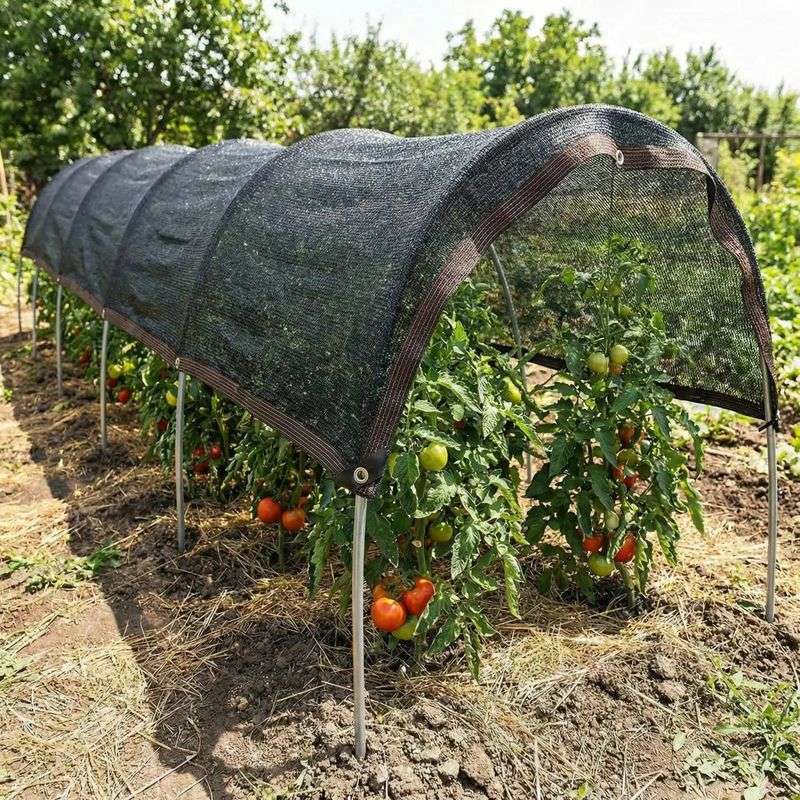
Temporary shade is an optional tool worth considering when afternoon sun is intense. University of Maryland’s resource on beating heat in vegetable production and their vegetable garden weather protection guide both point to 30% shade cloth as a practical option that blocks roughly 30% of incoming sunlight while allowing 70% through.
The cloth should be elevated above the canopy on stakes or a frame so air can circulate freely underneath. Afternoon shade from a fence, taller plant, or structure can serve a similar purpose.
Tomatoes still need substantial direct sun to grow productively, so permanent heavy shade is not a solution – keep any shade temporary and ventilated, and remove it once temperatures moderate.
Skip Fixes That Cannot Repair Heat Damage
When tomato plants stop fruiting, the instinct to do something is understandable. Unfortunately, several common interventions cannot repair heat-damaged pollen or aborted flowers, and a few can actively make things worse.
Knowing what to skip is just as useful as knowing what to do.
Adding large amounts of nitrogen fertilizer is one of the most common mistakes during a fruit-set slump. Extra nitrogen encourages lush, fast vegetative growth, but it does not correct nonviable pollen or restart aborted flowers.
Penn State Extension’s tomato growing guide and the University of Georgia’s commercial tomato handbook both note that excess nitrogen can produce impressive foliage while delaying the transition to flowering and fruiting. Fertilizer decisions during a heat event should be based on a soil test or a clear sign of nutrient deficiency, not on a wish to push the plant into producing.
Gently vibrating flower clusters can help in specific situations – mainly inside high tunnels and greenhouses where still air prevents viable pollen from releasing on its own. University of Maryland Extension’s resource on high-tunnel tomato pollination explains that this technique addresses a physical release problem, not a pollen-quality problem.
Outdoors, wind and normal plant movement typically handle pollen dispersal. Shaking flowers that contain heat-damaged or nonviable pollen will not produce fruit – the pollen simply cannot do its job regardless of how well it is distributed.
Row covers and plastic sheeting should not go over flowering tomato plants during hot weather. University of Maryland Extension’s row cover guidance notes that enclosed covers can trap heat and raise internal temperatures well above ambient air, which would worsen the stress rather than reduce it.
Finally, calcium sprays, gypsum, and lime are not appropriate responses to heat-related blossom drop. Penn State Extension’s blossom-end rot resource explains that these amendments address soil chemistry and calcium-movement issues – not sterile pollen – and unnecessary applications can disrupt soil balance or cause foliar injury.
Wait for Cooler Nights and Watch New Blooms
Once you have done what you can to protect the plant from added stress, the most productive thing left is patience. The flowers that already dropped will not restart – those ovules are gone.
What matters now is whether new flowers that open under cooler conditions can complete pollination and develop into fruit.
University of Maryland Extension’s fruit-set guidance confirms that plants commonly resume fruit set when temperatures moderate, provided they remain adequately watered, free from significant disease, and vigorous enough to support new flower development. The recovery seen in controlled heat-stress research supports this – all tested cultivars showed some return of fruit set after a cooler period, though the degree of recovery varied.
Shade cloth may help the plant endure the worst afternoon heat, but it cannot guarantee fruit set while nights remain persistently warm. Texas Extension guidance on tomatoes and summer heat notes specifically that shade may help a plant survive but is unlikely to produce fruit when nighttime temperatures stay in the upper 70s or 80s.
That is a useful limit to keep in mind: shade reduces daytime radiant stress, but the night reading is often what determines whether new flowers succeed.
Watch the base of each new flower rather than counting open blossoms. A tiny green swelling that grows larger day by day is the sign you are looking for – that means a flower set successfully and fruit is on the way.
NC State’s tomato production guidance reinforces that eastern North Carolina can support continued production into fall with appropriate care, giving Coastal Plain and Piedmont gardeners a real window to recover lost fruit if the plant stays healthy through the heat.
Choose the Next Crop for Your Region
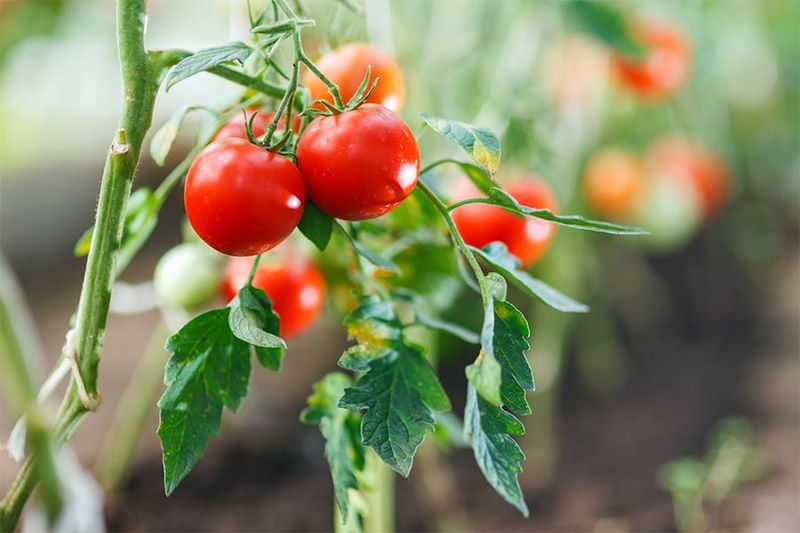
A late-summer fruit-set slump is a good prompt to think about what to plant next time. Cultivar choice is one of the few factors a gardener controls completely before the season starts, and selecting varieties explicitly bred for heat tolerance can reduce the severity of future slumps – though no cultivar is fully immune to sustained heat and warm nights.
NC State Extension’s fresh-market tomato guide lists BHN 602 as a cultivar with documented heat-set tolerance suited to eastern North Carolina conditions, including the disease pressures that come with the state’s humid summers. The Southeastern U.S.
Vegetable Crop Handbook treats “heat set” as a specific cultivar trait worth looking for on seed descriptions and plant tags, but frames it as a useful characteristic rather than a guarantee that fruit will appear under every heat wave. Matching heat tolerance to local disease resistance is especially important in the Coastal Plain, where bacterial speck, early blight, and nematode pressure are common.
Some heirloom varieties are less forgiving of sustained heat than modern heat-set cultivars, though responses vary widely by variety and growing conditions. Avoiding the assumption that all heirlooms fail in heat – or that all heat-set cultivars will sail through August unaffected – keeps expectations realistic.
Timing matters as much as cultivar selection. NC State’s community food gardening handbook notes that planting windows vary significantly across the state.
Eastern gardeners can often support a fall tomato crop by transplanting in late summer so that flowering coincides with September’s cooler nights. Mountain and foothill gardeners face a shorter season with earlier frost risk, making spring timing more critical and fall windows narrower.
Planning around the regional calendar, rather than a single statewide date, gives any cultivar its best shot at setting fruit before or after the worst heat arrives.
The Plant May Recover, but the Flowers Will Not
Sustained late-summer heat can pause tomato reproduction without making the whole plant look unhealthy, and warm nights often stretch that pause longer than a single hot afternoon would. University of Maryland Extension’s fruit-set guidance and controlled heat-stress research agree on the core point: flowers and pollen that were damaged by heat cannot recover, but a plant that stays healthy may set new fruit once conditions cool.
The response that makes the most sense is also the most straightforward. Check symptoms carefully before assuming heat is the only explanation.
Keep soil moisture even, use mulch, and consider temporary elevated shade cloth during the worst afternoon heat. Skip heavy fertilizer applications and any amendments that are not supported by a clear diagnosis.
Then give the plant time and watch the new flowers.
When symptoms do not fit – curling young leaves, unusual stunting, or patterns that suggest tomato yellow leaf curl virus or another disease – pursue a proper diagnosis rather than waiting out the weather. A green vine in August is not a failed garden; it is a plant that may simply be waiting for a cooler night to get back to work.