
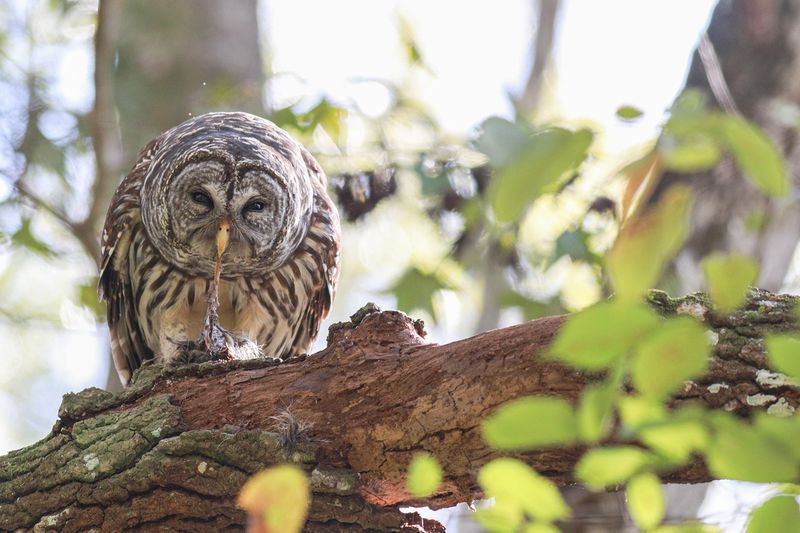
Spotting an owl in a backyard tree can stop you in your tracks. It is natural to wonder why that bird picked your yard and whether it might help with rats.
The answers depend on cover, resting spots, and food, not on one magic tree or one time of year. Here is what Florida experts say about what owls look for and what their visit does and does not mean.
A fall sighting does not prove fall brought the owl
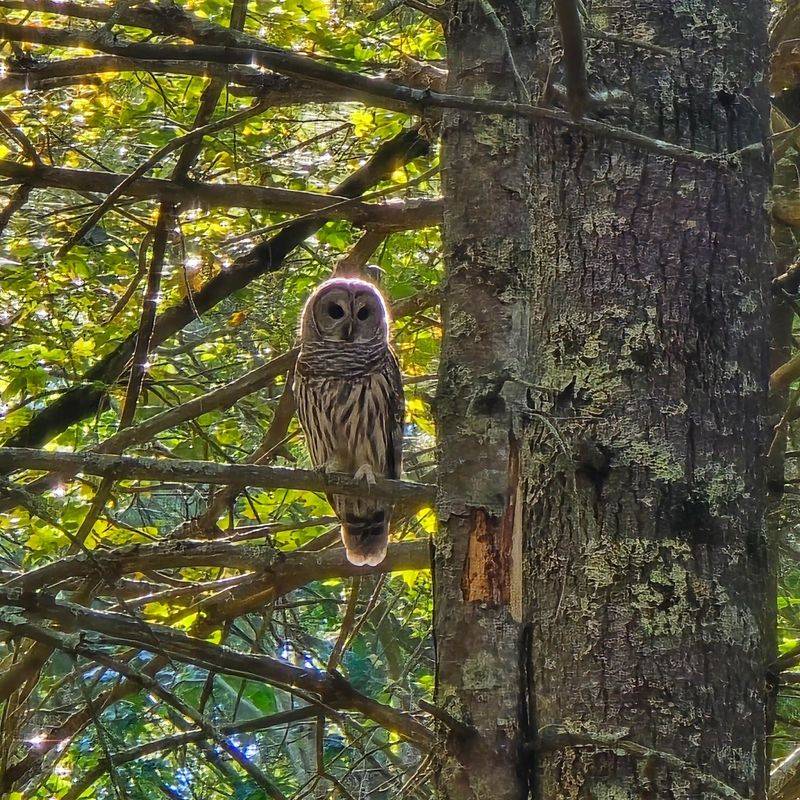
Seeing an owl in October is exciting, but the season may be a coincidence. Florida Fish and Wildlife describes barred owls as birds of wooded areas, including suburbs, that often sleep on branches during the day.
Eastern screech-owls also live here, and both species can stay in Florida all year.
That means the owl may have been in your neighborhood for months. Owls are quiet and well camouflaged, so a bird that has used your trees all summer can go unnoticed until you happen to look up.
An owl noticed now could also be using a spot that simply suits it. UF/IFAS Extension in Polk County notes how often common Florida owls are confused, which is another reason sightings can be hard to read.
It also helps to separate roosting from nesting. Roosting just means resting, usually by day, on a branch or in a cavity.
Nesting means raising young, and a single sighting does not show that an owl has nested or will stay.
Cavities can complicate things. UF/IFAS Extension Sarasota County explains that screech-owls use cavities, and a hole may serve as a roost or a nest depending on the season.
One owl on one day is a clue, not a forecast. Check the yard over several days before drawing conclusions, and do it from a distance.
Tree structure matters more than a magic species
Gardeners often ask which tree to plant for owls. The better question is what a tree offers.
Large, mature trees with sturdy branches and leafy cover give a big bird a safe place to rest out of sight. UF/IFAS says large trees matter when barred owls choose territory, and Florida barred owls often use dense foliage and oak hammocks.
Barred owls are the roomy-branch birds. They commonly sleep on a limb by day, and the state wildlife agency lists dense foliage, large trees, and nearby water as parts of good habitat.
Think of a thick canopy with a strong limb partly hidden by leaves.
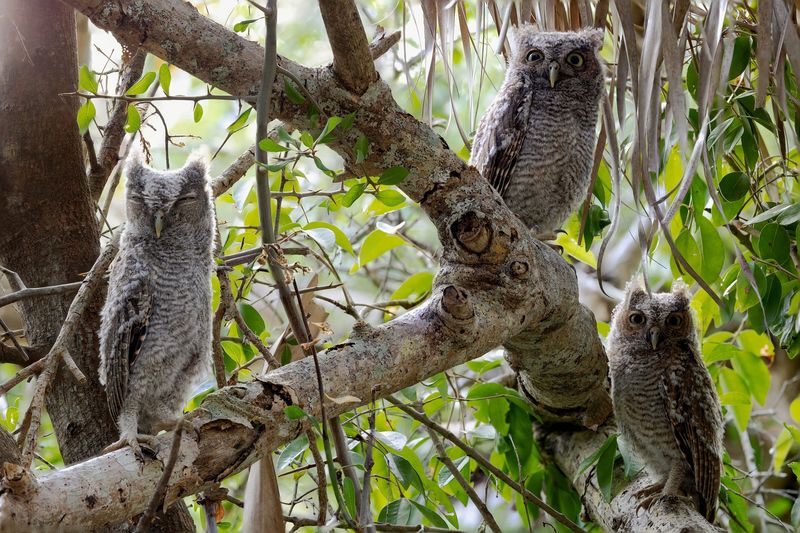
Eastern screech-owls are smaller and play by different rules. UF/IFAS Extension in Sarasota County says they commonly roost in cavities or dense cover, and they can live in residential areas with trees.
A natural hole in an older trunk may matter more to them than the tree’s species.
These are tendencies, not a recipe that works for every owl. No source points to one tree that pulls owls in.
If you want to read your own yard, look for age, size, branch strength, thick leaves, and holes, then keep what is safe and healthy.
Nearby prey can make a yard useful for hunting
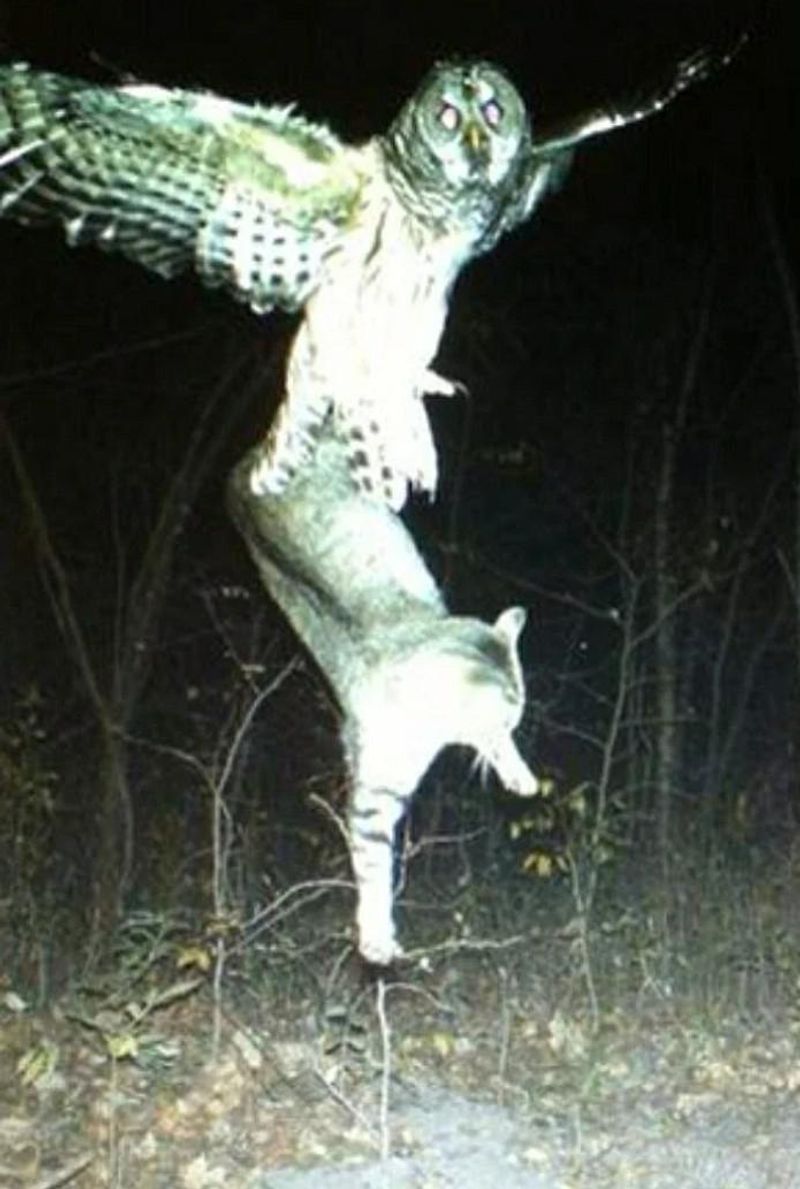
Shelter is only half the picture. An owl also needs food close to its resting spot, and a yard with trees, lawn edges, and some water can offer both.
Still, owls eat what their species eats and what happens to be available.
Barred owls show how varied a diet can be. UF/IFAS lists small mammals, including rats, along with rabbits, frogs, reptiles, birds, and aquatic prey.
A rat may be on the menu, but it is one item among many.
Eastern screech-owls have their own mix. UF/IFAS Extension in Sarasota County notes they eat insects and other small animals.
That is a very different diet from a barn owl, which UF/IFAS describes as having different habitat needs.
So it would be a stretch to say an owl picked your yard because it sensed a rat problem. It may be passing through prey-rich ground that happens to include frogs, lizards, or beetles.
Nor should you expect it to go after the pests that annoy you most, such as mosquitoes or roaches.
Rat control is a possibility, not a promise
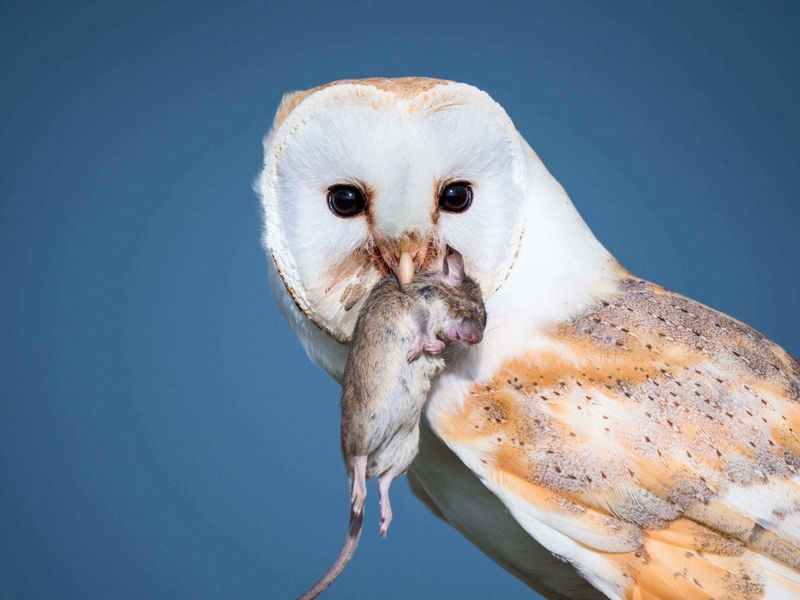
Some owls do eat rodents, and that is where the hope for rat control comes from. Barred owls take small mammals, and UF/IFAS lists rats among their prey.
But eating a rat now and then is not the same as lowering rat numbers at your house.
The clearest rat connection is with barn owls. UF/IFAS reports that in southern Florida they eat roof rats, cotton rats, and rice rats.
That applies to barn owls in that region, not to every owl or every yard.
Research adds some promise and some caution. A 2026 vineyard study found lower rodent abundance under barn owl hunting pressure.
Farms differ from backyards, though, so that result does not predict what happens at one home. A research review also found limits in the evidence for long-term rodent suppression by birds of prey.
Treat the owl as a nice bonus and nothing more. Rats can keep nesting in attics and sheds while an owl sits in the oak.
If you hear scratching or find droppings, deal with the rodents directly.
Care for habitat and prevent rodent problems directly
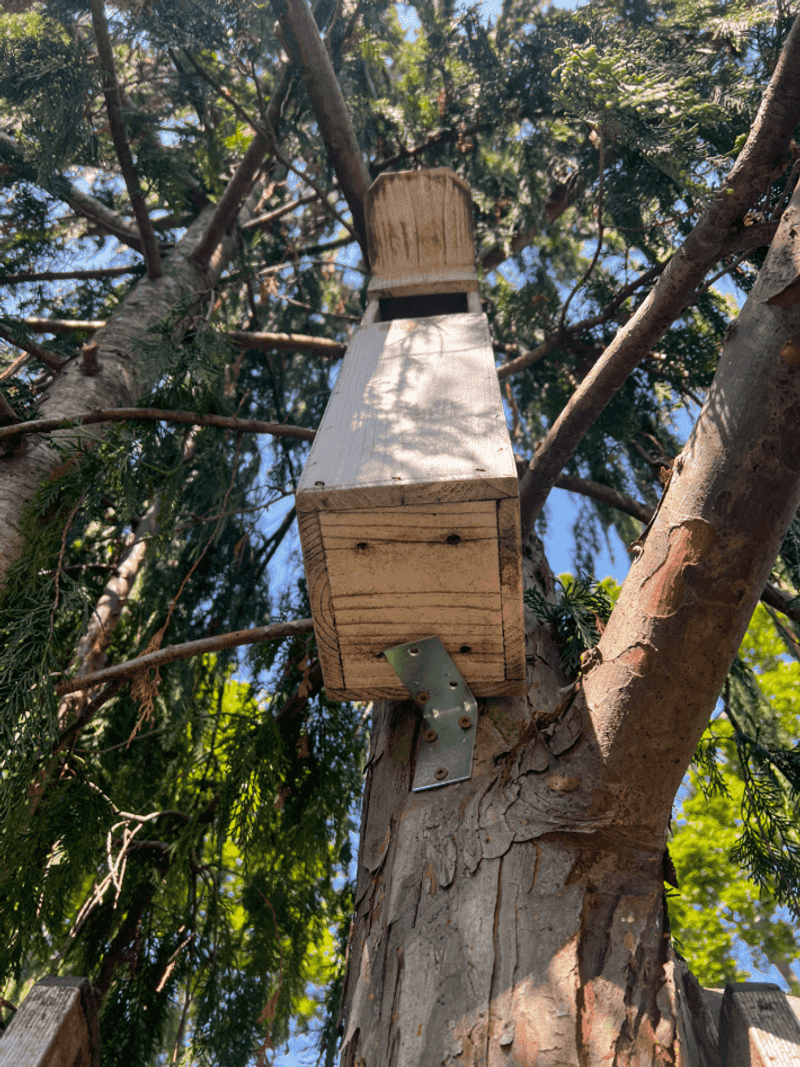
Good yard habits can help wildlife and keep your home protected at the same time. UF/IFAS Extension in Sarasota County recommends native trees, keeping a dead standing tree only where it is safe, and using fewer pesticides and rodenticides.
Dead trees can fall, so skip that step near the house or fence lines.
A correctly built screech-owl box is another option. Follow a proper design, and expect no guarantees, because occupancy is not assured.
Treat it as a project, not a plan for pest removal.
Rodenticides deserve extra care. The EPA notes that birds and other non-target animals can be exposed through poisoned prey, and UF/IFAS also warns that rodenticides may harm owls.
Meanwhile, prevent rats at the source. UF/IFAS recommends sealing gaps where rodents could enter, keeping food in sealed containers, and removing branches that touch the roof or exterior walls.
Include pet food in that routine, and bring bowls in at night.
None of these steps promises an owl visit or a rat-free house. They simply make your yard safer for wildlife and less inviting to rodents.
Observe from a distance and get help for an injured owl
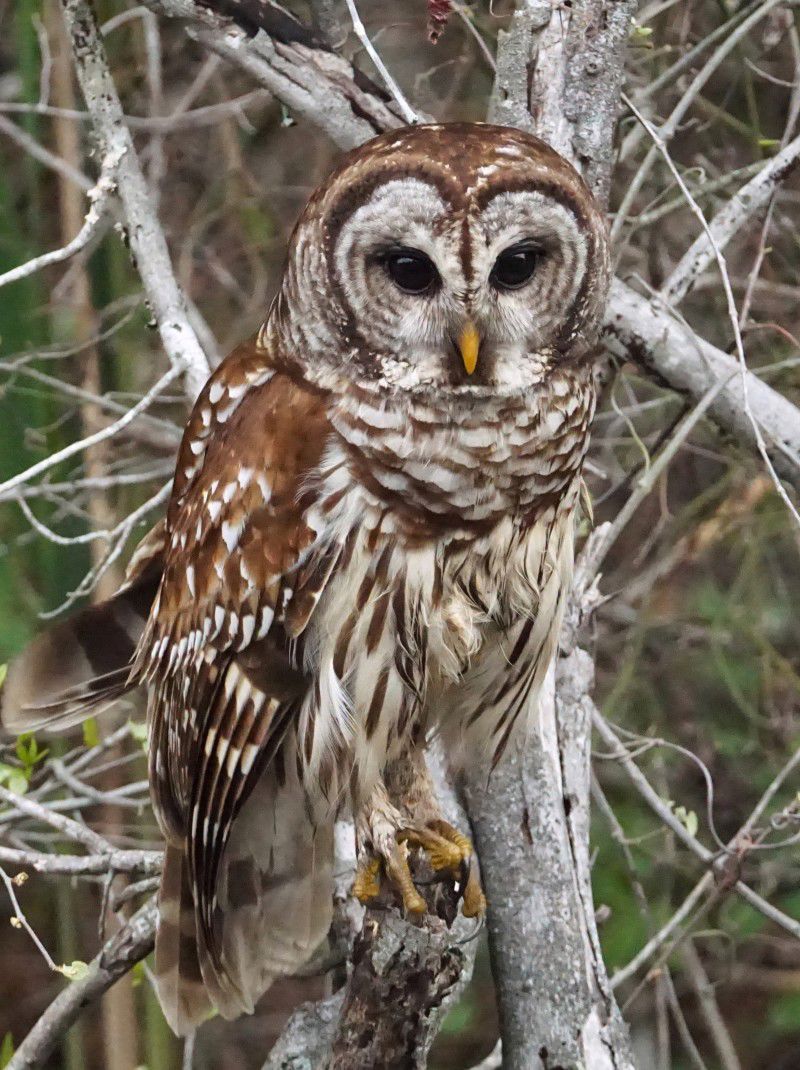
Enjoy the owl with your eyes, not your hands. Do not approach, handle, or relocate an owl or its young.
Florida Fish and Wildlife notes that owls, their young, and active nests are protected under federal law.
A young owl on the ground can look alarming, yet it may be fine. FWC advises giving young owls space if they appear able to move normally.
Keep pets and children back and watch from afar.
If an owl seems injured, call a licensed wildlife rehabilitator rather than trying to help it yourself.
An owl in your tree most likely means your yard offers cover, a resting place, or food. It does not prove the season brought it, and it does not promise fewer rats.
Sometimes a good yard is simply one a wild neighbor finds worth the stay.