
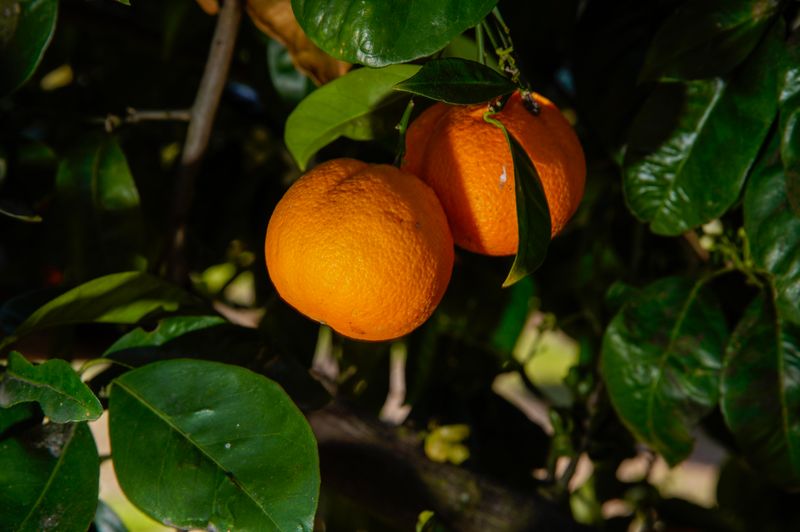
Lemon and orange trees have been a backyard staple in California for generations, but lately some homeowners are pulling them out on purpose. A bacterial disease called huanglongbing, or citrus greening, is spreading through residential neighborhoods carried by a tiny insect called the Asian citrus psyllid, and it has no cure.
Understanding what the disease actually requires of homeowners, and what trees can take a citrus tree’s place, can help you make a smart decision for your yard without acting on incomplete information.
The citrus-removal decision is not a statewide ban
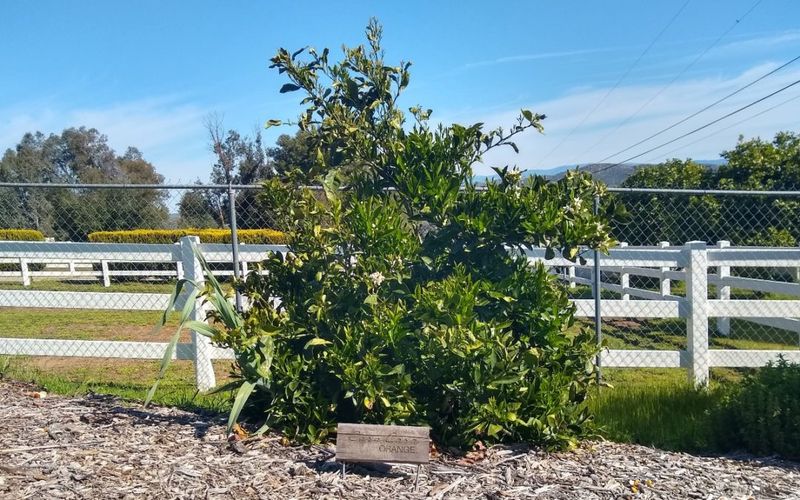
A lot of homeowners have heard that California is telling people to pull out their citrus, and the story is more specific than that. CDFA’s current HLB quarantine and regulation page makes clear that mandatory removal applies to trees that have been confirmed infected with huanglongbing through official testing and response procedures.
A healthy-looking or untested citrus tree is not automatically subject to a removal order statewide.
That distinction matters because many California homeowners are making decisions based on rumors rather than actual program requirements. If your tree has not been tested and no official has flagged it, you are not currently required by state law to remove it simply because citrus greening exists somewhere in California.
Voluntary removal is a different conversation. UC IPM guidance on HLB and the Asian citrus psyllid describes proactive replacement as a risk-reduction option, particularly for homeowners in neighborhoods where HLB has been detected nearby or where a confirmed infected tree has already been found on a neighboring property.
If you no longer want to manage and monitor a citrus tree in that kind of high-risk setting, removing it eliminates a potential host for the psyllid and reduces one possible source of spread.
Owners outside those high-risk contexts are not generally being advised to remove healthy, unconfirmed citrus. UC ANR’s backyard fruit tree guidance frames non-citrus replacement as a practical choice for certain Southern California situations rather than a universal instruction for every yard in the state.
Because quarantine boundaries and confirmed detection areas can shift, the right starting point is checking the current CDFA quarantine map and contacting your county agricultural commissioner for local requirements. Disease activity changes, and a county list from a year ago may not reflect what is in effect today.
HLB can turn a healthy-looking tree into a disease source
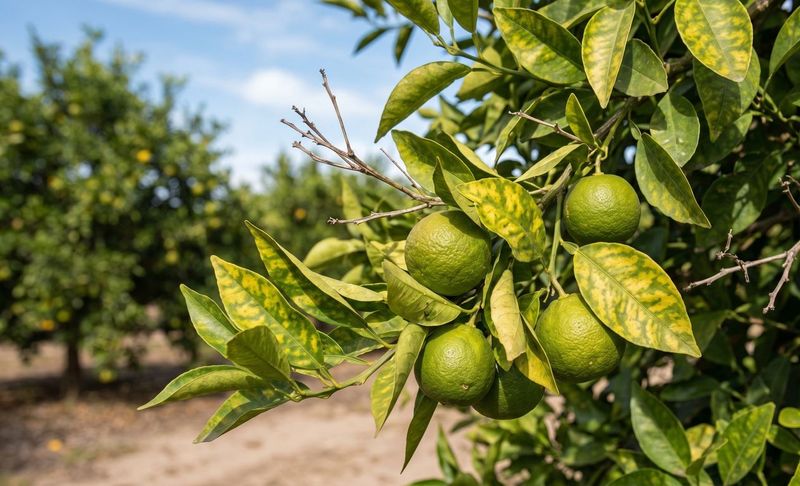
Citrus greening looks deceptively manageable until you understand how it moves. HLB is a bacterial disease caused by a pathogen that lives inside the tree’s vascular system, blocking the flow of nutrients and sugars.
The tree gradually weakens, fruit becomes bitter and misshapen, and eventually the tree dies. USDA APHIS confirms that there is no cure and no treatment that restores an infected tree to health, which is what makes this disease so serious for both commercial growers and home gardeners.
The insect responsible for spreading it is the Asian citrus psyllid, a small pest that feeds on the new growth of citrus trees. When a psyllid that has previously fed on an infected tree feeds on a healthy one, it can introduce the pathogen into the new host.
The psyllid itself is not the disease, and finding one in your yard does not mean your tree has HLB. But psyllid presence in a neighborhood with confirmed infections significantly raises the risk of transmission.
The part that catches most homeowners off guard is the delay between infection and visible symptoms. UC ANR’s guidance on detecting HLB-infected trees notes that symptoms may not appear for two years or more after a tree becomes infected, and early laboratory testing can miss the pathogen because it is not evenly distributed throughout the tree’s tissues.
That means a citrus tree can look perfectly fine, produce normal-looking fruit, and still be carrying the disease and potentially hosting psyllids that spread it further. Visual inspection alone is not a reliable way to confirm that a tree is safe.
This is why official testing through the state or county program matters, and why a symptom-free appearance should not be treated as a clean bill of health in a high-risk area.
Before removing a suspect tree, report it and check the rules
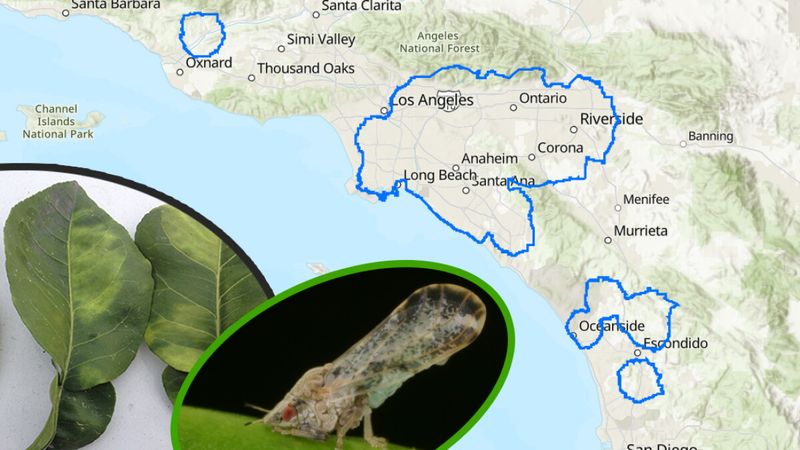
Spotting something wrong with your citrus tree, or finding a small insect clustered on new growth, can feel alarming. The right first move is not to grab a chainsaw.
UC ANR’s reporting guidance is straightforward: contact the CDFA Exotic Pest Hotline at 1-800-491-1899 or reach out to your county agricultural commissioner. These agencies can arrange official inspection and testing, which is the only way to confirm whether HLB is actually present.
An Asian citrus psyllid sighting is not the same as a confirmed HLB infection. The psyllid is the vector that can carry the pathogen, but its presence does not prove your tree is infected.
Making a visual diagnosis and removing a tree solely on your own judgment risks discarding a tree that might be healthy, and it does not trigger the official response that helps track and contain the disease in your neighborhood.
Quarantine rules add another layer of responsibility. CDFA’s HLB regulation page explains that quarantine areas restrict the movement of citrus nursery stock, plants, leaves, clippings, and sometimes residential fruit out of designated zones.
Moving citrus material out of a quarantine area without following the rules can spread the psyllid or the disease to areas that are currently free of it.
Before transporting anything, whether that means taking a clipping to a friend, moving a potted citrus to a new address, or hauling branches to a disposal site outside the zone, check the current CDFA quarantine map and confirm local requirements with your county. Quarantine boundaries can be established quickly after a new detection, and what was allowed last season may no longer be permitted today.
Reporting first, then waiting for official guidance, protects both your yard and your neighbors.
Confirmed removal requires controlled handling, not ordinary green waste
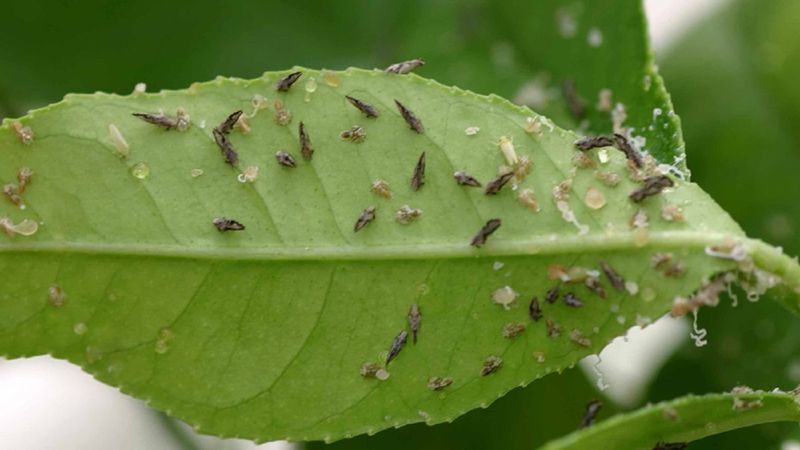
When CDFA confirms HLB in a residential tree and issues a removal order, the process is more involved than cutting down the tree and rolling it to the curb. CDFA’s guide on what to expect after a confirmed HLB detection outlines a procedure designed to prevent the disease and the psyllid from spreading through plant material that gets moved or improperly discarded.
The general approach involves cutting the tree down completely and removing or grinding the stump so it cannot resprout. Cut material is typically chipped on-site or double-bagged in heavy plastic before disposal.
Chipped or bagged material is then taken to an approved landfill rather than placed in a standard green-waste bin, which could allow the pathogen or psyllids to move through the waste stream.
The specific steps that apply to your situation will be determined by the CDFA inspector or county official handling your case, not by a generic checklist. Procedures can vary depending on local program requirements, the size of the affected area, and what resources are available in your county.
Following the directions you receive from officials is the right approach, rather than improvising based on what seems reasonable.
Burning, casually hauling to a neighbor’s property, or leaving cut branches in a pile are not acceptable alternatives in a confirmed-removal situation. The goal of controlled disposal is to make sure that infected wood, leaves, and root material do not become a new source of psyllid infestation or pathogen spread after the tree comes down.
If you have questions about what is required in your specific case, ask the official overseeing the removal before you begin any work.
Replacement starts with the yard, not a generic plant list
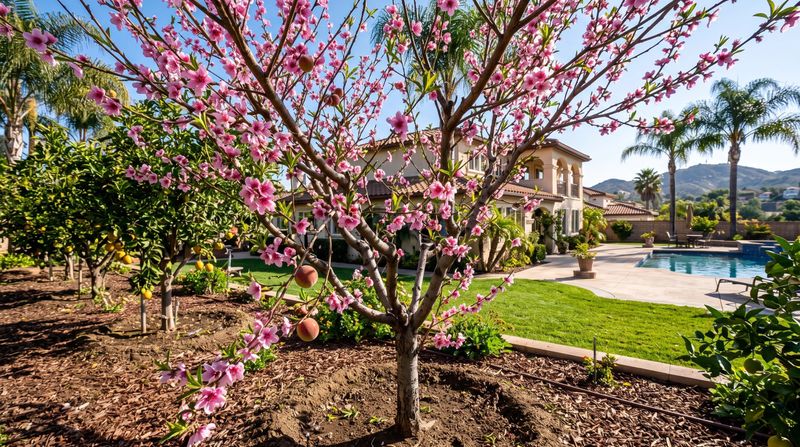
Choosing a replacement tree is a site-specific decision, not a one-size answer. The reason non-citrus planting gets recommended in the first place is practical: fewer citrus hosts in a high-risk residential area means fewer places for the Asian citrus psyllid to feed and reproduce.
UC IPM’s HLB and ACP guidance frames voluntary removal of unwanted citrus near confirmed detections as a risk-reduction strategy, not a guarantee that a yard becomes disease-free.
UC materials have recommended considering non-citrus replacement within roughly two miles of a confirmed HLB detection in certain Southern California contexts. That figure is guidance developed for specific residential situations, not a statewide legal boundary that applies uniformly across every California county.
Owners should treat it as useful context rather than a hard statutory rule.
Before settling on any replacement tree, work through the physical reality of your yard. Winter chill hours matter because many fruit trees need a minimum number of cold nights to produce well, and coastal Southern California yards may not deliver enough chill for standard varieties.
Summer heat, frost exposure, available soil depth, drainage, and how much irrigation you can reliably provide all narrow the list further. Mature tree size is easy to underestimate: a tree that fits a five-gallon nursery pot can eventually crowd a fence, shade a neighbor’s roof, or overwhelm a root barrier.
UC ANR’s guide to planting alternative backyard fruit trees in Southern California walks through these variables in detail and is a good starting point for anyone in Southern California working through the decision.
For cultivar-level guidance, a local UC Master Gardener program or a reputable independent nursery familiar with your specific zip code is the most reliable resource. UC ANR’s broader fruit tree selection guide can help you frame the right questions before you visit.
Matching the tree to the site, rather than picking a name from a list, is the single most useful step you can take before buying anything.
California yards can trade citrus for fruit trees suited to their conditions
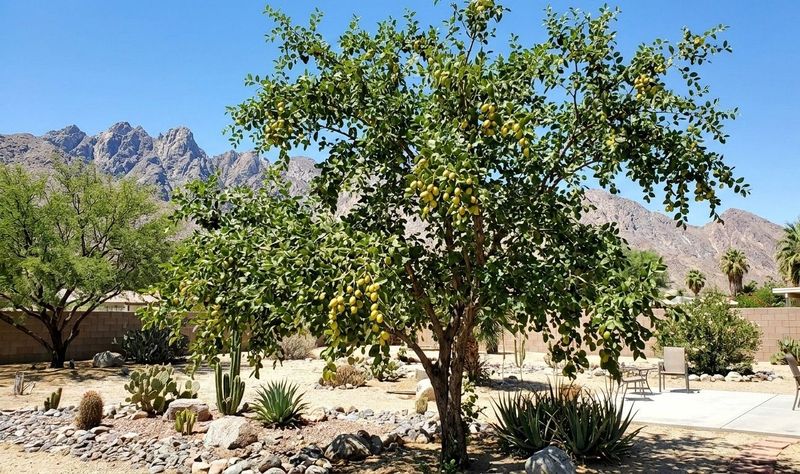
Once you know your yard’s chill hours, heat load, available water, and space, the replacement options become much clearer. UC ANR’s guide to alternative backyard fruit trees for Southern California identifies figs, jujubes, persimmons, pomegranates, peaches, avocados, and certain low-chill apple varieties as candidates, each suited to different yard conditions rather than interchangeable across all of them.
Jujube stands out for hot inland valleys. The tree handles high summer heat well, tolerates a wide range of soils, and UC describes it as more drought tolerant than many other fruit trees.
That said, drought tolerance does not mean zero irrigation: a jujube grown without adequate water during the growing season will produce a lighter crop, and young trees need regular watering to establish. Jujube is not a fire-and-forget plant, but it is genuinely well-suited to the conditions that stress other fruit trees in the inland heat.
Figs are productive and relatively low-maintenance, but they can become large trees that eventually require significant pruning to stay manageable. Plan for the mature footprint before planting near a fence or structure.
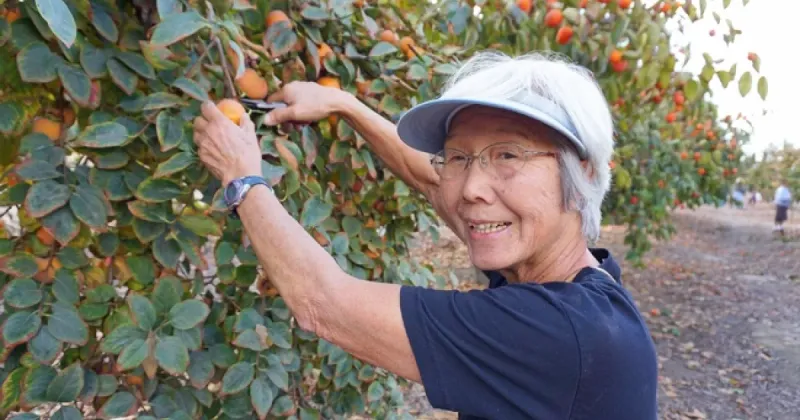
Persimmons, both the astringent Hachiya type and the non-astringent Fuyu, do well across a range of California climates and need moderate water once established. Pomegranates are heat-lovers that handle dry conditions better than most fruit trees and are a strong fit for low-water inland yards.
Avocados and peaches both have more specific requirements. Avocados need protection from frost and do best in coastal or mild inland areas with deep, well-drained soil and consistent moisture.
Peaches need more chill hours than the coast usually provides, making them a better fit for inland or foothill yards. UC ANR’s broader fruit tree selection guide can help you match variety to microclimate before you commit to a purchase.
No single tree on this list works everywhere in California, which is exactly why starting with your site conditions produces better results than starting with a species name.
Keeping remaining citrus still requires active management
Removal is not the only reasonable response for every California homeowner with a citrus tree. In areas without a confirmed HLB detection, many owners are continuing to grow citrus responsibly by staying engaged with monitoring, reporting, and management practices recommended by UC and CDFA.
Choosing to keep a tree does not mean ignoring the problem; it means taking on the ongoing work of watching it carefully.
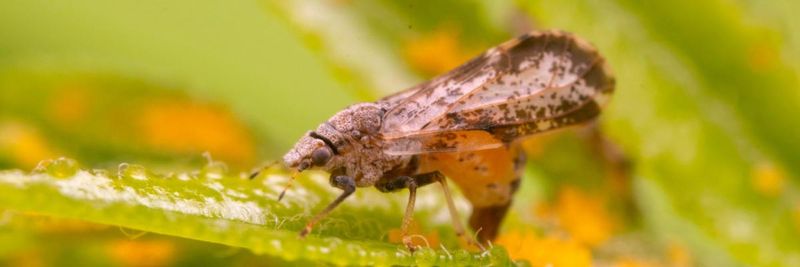
Monitoring starts with learning to identify the Asian citrus psyllid. Adults are small, mottled brown insects that hold their bodies at a distinctive angle when feeding.
The nymphs leave behind a waxy white tubular secretion on new growth that is easier to spot than the insects themselves. Regular inspection of new flushes, especially in spring and fall when growth is most active, gives you the earliest possible warning that psyllids are present.
UC IPM’s guidance on ACP and HLB management describes biological control as a component of the response program. Parasitic wasps that target ACP have been released in California as part of the state’s effort to establish natural population suppression.
Avoiding broad-spectrum insecticides that kill beneficial insects supports those biological controls.
When insecticide treatment is appropriate, the key limitations apply firmly. Pesticides can reduce psyllid populations and slow the spread of disease, but they cannot cure HLB or recover an already-infected tree.
UC IPM’s psyllid pest management guidance advises following product labels carefully, timing applications to avoid bloom periods when bees are actively foraging, and accounting for effects on beneficial insects. Systemic products applied during bloom can reach nectar and pollen, putting pollinators at risk even when the spray itself is not directly applied to flowers.
Organic-approved options such as spinosad also carry bee-safety considerations and should be applied according to label directions rather than assumed to be harmless.
The responsible replacement is the tree your yard can support
Every yard in California is working with a different combination of climate, water access, soil, and space, and the right response to HLB reflects that variation. CDFA’s quarantine and regulation information changes as new detections are confirmed, so checking the current map and talking to your county agricultural commissioner before making any decision is still the most reliable starting point.
A symptom-free citrus tree is not automatically condemned. Owners in areas without confirmed activity are not generally being asked to remove healthy, unconfirmed trees, and continuing to manage citrus through careful monitoring and reporting is a legitimate path.
Voluntary replacement makes the most sense near confirmed detections, in high-risk neighborhoods, or when a homeowner simply no longer wants to take on the monitoring that responsible citrus ownership now requires in certain parts of the state.
When replacement does make sense, matching the tree to the property’s climate and care capacity produces better outcomes than picking a species by name. The best replacement tree is the one that fits your actual yard and that you can realistically tend over the long term.
A well-chosen fig, jujube, or persimmon that thrives in your specific conditions will serve your yard far better than a fashionable choice that struggles in your soil or outgrows your space within a decade.