
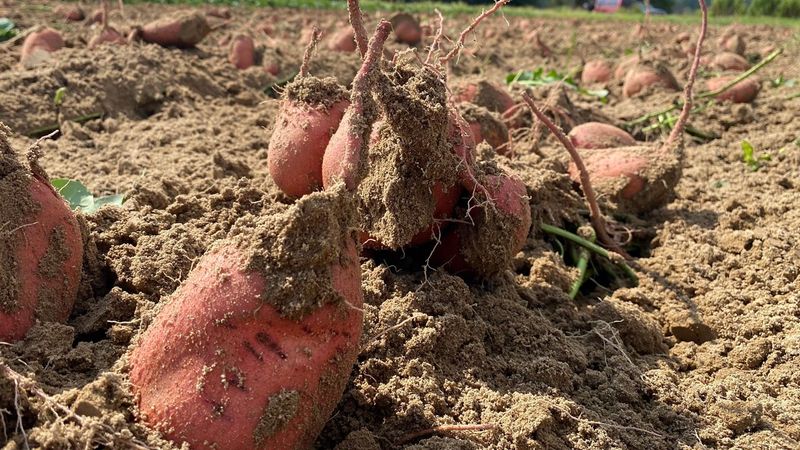
North Carolina grows more sweet potatoes than almost any other state, and a big part of that success comes down to a natural match between what the crop needs and what many parts of the state already offer. Warm summers, a long frost-free window, and loose, well-drained soil in the Coastal Plain create conditions where sweet potatoes can thrive with relatively modest attention after they get established.
That said, the match is not perfect everywhere, and the crop still needs the right timing, healthy planting material, and some early care to deliver a good harvest. Understanding why the fit works, and where it has limits, puts any North Carolina home gardener in a much stronger position.
Why suitable North Carolina sites favor sweet potatoes
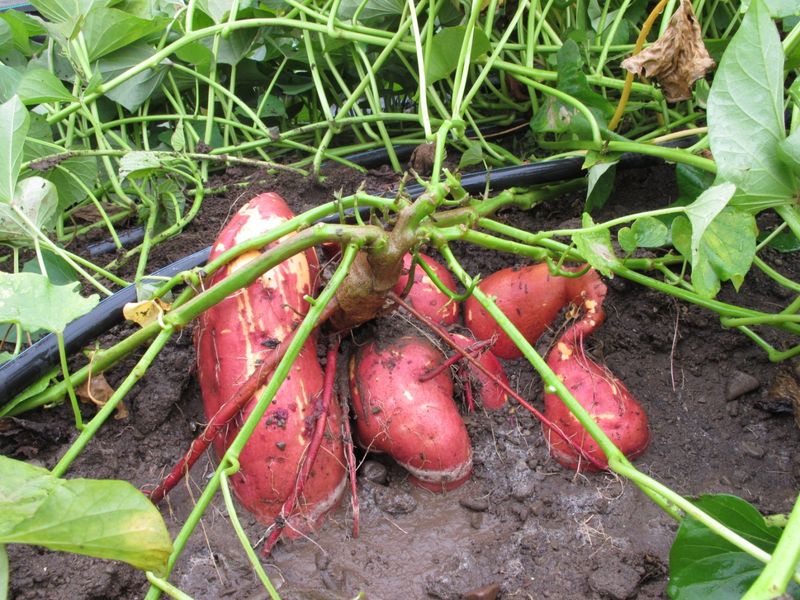
Sweet potatoes are warm-weather plants with fairly specific preferences, and North Carolina’s climate and soils happen to check most of those boxes in the right parts of the state. The crop performs best between roughly 70 and 88 degrees Fahrenheit and needs a frost-free growing window of approximately 90 to 150 days depending on variety.
USDA sweet potato research confirms that root development is strongly tied to sustained soil warmth, which is exactly what the Coastal Plain delivers through most of the summer.
Loose, permeable soil matters just as much as heat. Storage roots expand as they push outward through the ground, and they do that far more easily in sandy or sandy-loam soil than in compacted clay.
NC State Extension’s vegetable gardening handbook notes that sweet potatoes produce better-shaped, more uniform roots when the soil allows free drainage and good aeration, both of which are natural features of well-structured sandy ground.
The advantage is most reliable on well-drained Coastal Plain sites, but it is not automatic statewide. Some Coastal Plain areas sit in low, wet landscapes where drainage is poor.
Piedmont soils often run toward clay and compaction. Mountain gardens face a later spring, an earlier fall frost, and a shorter overall season that can challenge timely maturity.
The crop is relatively forgiving once the vines get growing, but that forgiving quality depends on starting with the right site conditions, not just warm weather and sandy soil somewhere in the state.
Evaluate drainage before you blame the soil
Before planting a single slip, take a close look at how your garden handles water after a heavy rain. Dig a hole about 12 inches deep, fill it with water, and come back an hour later.
If water is still pooled at the bottom, drainage is too slow for sweet potatoes without intervention. NC State’s soils and plant nutrients guide explains that poor drainage restricts oxygen movement in the root zone, which directly limits how well storage roots can form and expand.
Sandy soil’s reputation as ideal for sweet potatoes comes from its drainage and aeration, not from any inherent fertility. In fact, the flip side of fast drainage is that sandy beds also lose water and mobile nutrients more quickly after rain or irrigation.
NC State’s guide on modifying soil for plant growth points out that sandy fill brought in for grading or construction can be especially low in organic matter and nutrients, and it may need testing and amendment before it reliably supports vegetables.
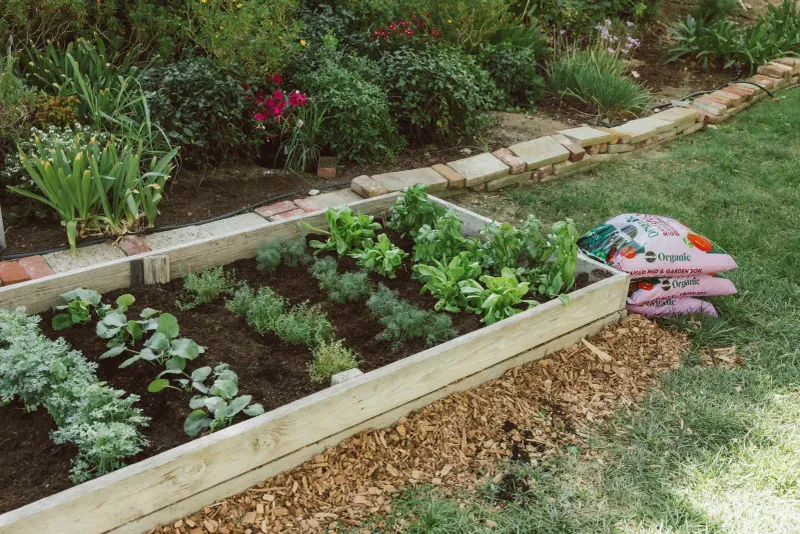
Compacted ground, whether it is sandy or clay-based, creates the same problem as wet soil: roots cannot push through it easily, and the results are often small, misshapen, or stunted storage roots. Raised beds or ridged rows are practical fixes where native soil is compacted or drainage is marginal.
Coastal Plain water management guidance from NC State supports building up beds as a way to improve both drainage and root-zone conditions on problematic sites. A soil test from the NC Department of Agriculture and Consumer Services costs very little and removes the guesswork around pH and fertility before you invest in slips and labor.
Match planting time to warm soil and local frost risk
Getting the timing right is one of the most important decisions a sweet potato grower makes, and it is also one of the easiest to get wrong. Sweet potatoes are cold-sensitive at every stage, and planting into cool soil does not speed things up.
It stalls establishment, stresses the slips, and can invite rot before the roots even begin to develop. Commercial North Carolina planting is concentrated mainly from late May through June, a window that reflects the crop’s need for reliably warm conditions rather than simply the absence of frost.
NC State’s organic commodities production guide for sweet potatoes identifies soil temperature as a critical threshold, and University of Georgia home garden guidance cites approximately 70 degrees Fahrenheit as a practical minimum for planting. Coastal Plain gardeners typically reach that threshold by mid to late May.
Piedmont gardeners may need to wait a week or two longer depending on elevation and spring weather patterns. Mountain gardeners often push planting into June, and on higher-elevation sites, the shorter frost-free season means variety selection and timing both need extra attention.
Local frost patterns matter on both ends of the season, not just in spring. NC State’s Climate Office freeze explorer allows gardeners to look up historical last-spring and first-fall freeze dates by location, which is far more reliable than a statewide average.
Use that information to count backward from the likely first fall freeze and confirm that your chosen variety has enough time to mature before cold arrives. An early planting into cold soil does not produce an earlier crop; it just creates a longer window for problems before growth even begins.
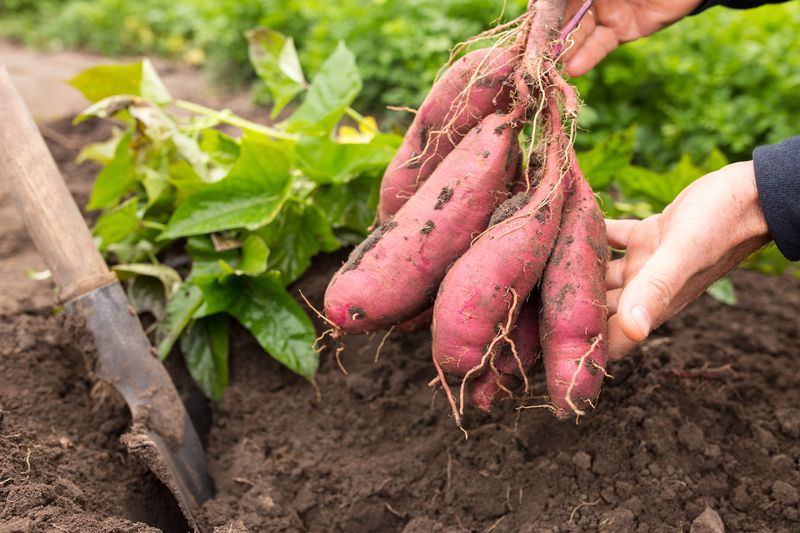
Slips are the correct planting material for sweet potatoes. They are rooted or unrooted stem cuttings taken from sprouting sweet potato roots, and they are distinctly different from the seed pieces used to plant regular potatoes.
Buy disease-free or certified slips when available, because infected planting material can introduce viruses, nematodes, and other problems that persist in the soil long after the season ends.
Reduce the workload while slips establish
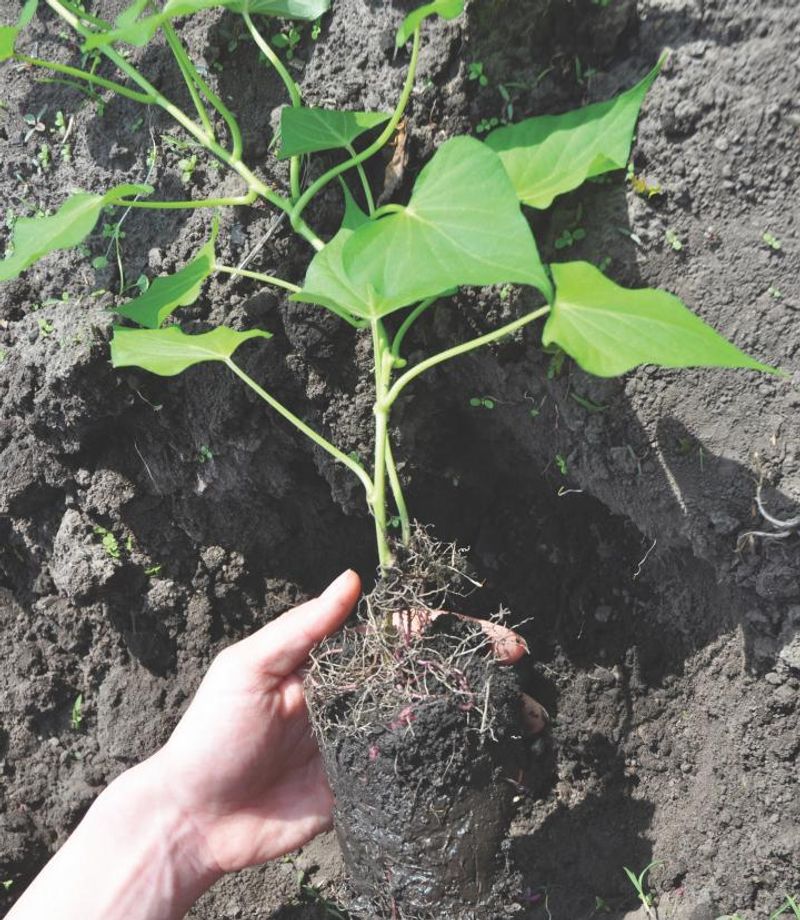
The first few weeks after transplanting are when sweet potatoes are most vulnerable and when the gardener’s attention matters most. Once the vines take off and shade the ground, the crop becomes genuinely easier to manage, but that payoff depends on giving slips the right support early on.
Space them about 10 to 12 inches apart in loose, prepared soil and give the rows enough room for vines to spread, which can be 3 to 4 feet or more in a productive planting.
Water is the most critical input during establishment. Young slips have limited root systems and cannot draw moisture from deep in the soil profile the way mature vines can.
University of Georgia’s growing guide for sweet potatoes recommends consistent moisture until slips are visibly growing and standing upright, a sign that rooting has progressed. After establishment, the vines tolerate dry conditions better than many garden vegetables, but Georgia’s sweet potato pest management publication notes that drought during root development can reduce both the number and the size of harvested roots.
Irrigation during dry stretches in midsummer is worth the effort.
Weeds are the other early challenge. NC State’s sweet potato production guide identifies the first three to four weeks after transplanting as an especially critical window for weed control, with active management needed until the canopy closes at roughly six weeks.
Once the vines spread and shade the soil, they do suppress many later weeds naturally. However, that vine canopy is not a substitute for early cultivation or mulching, and it does not eliminate all weed, pest, or disease management for the rest of the season.
NC State’s warm-season vegetable production guidance also recommends against lifting or moving vines repeatedly, since disturbing them can break off developing roots near the soil surface and reduce the final harvest. Lay them back gently if you need to cultivate, and otherwise let them run.
Balance fertility and watch for root-threatening pests
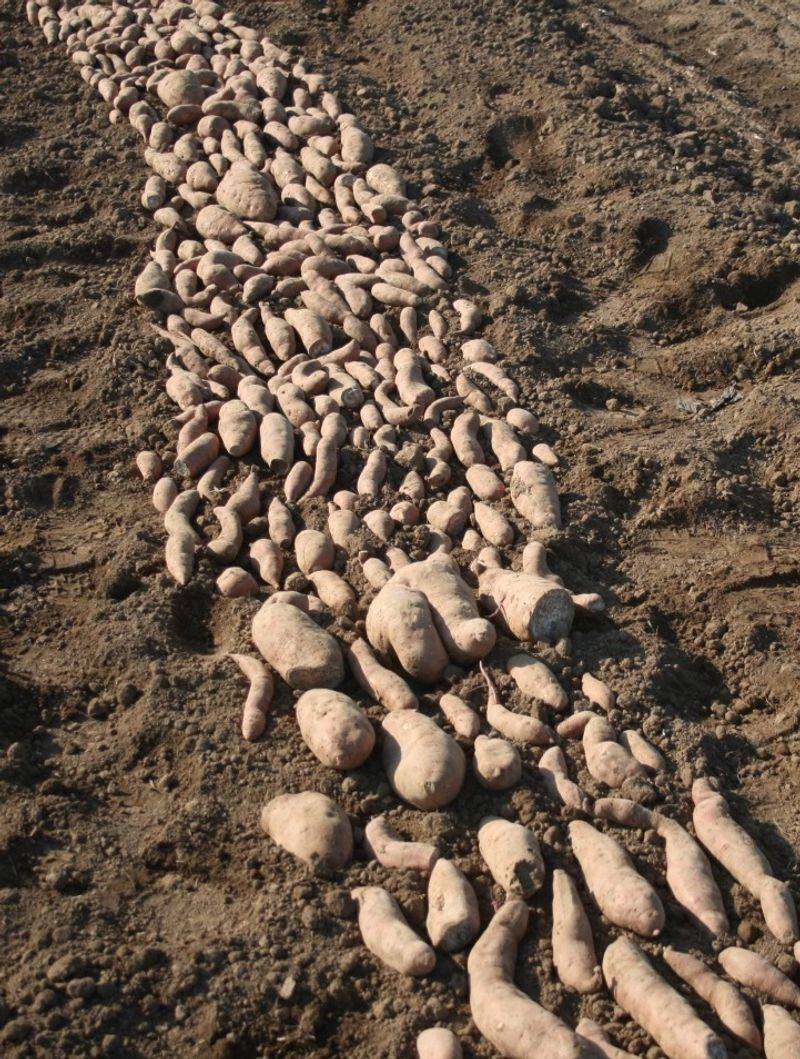
Lush, spreading vines are encouraging to see, but they can be misleading. A plant pouring energy into foliage is not necessarily building large storage roots underground, and too much nitrogen is one of the most common reasons for that imbalance.
The Southeastern U.S. Vegetable Crop Handbook specifically warns that excess nitrogen promotes vine growth at the expense of storage root development, which means a well-fertilized-looking plant can produce a disappointing harvest.
Use a soil test before adding any fertilizer or amendment. NC State’s plant nutrients handbook explains that test results tell you what the soil actually needs, which is often less than gardeners assume.
Sandy soils lose mobile nutrients like nitrogen more readily after heavy rain, so split applications timed to the crop’s growth stages are more efficient than a single heavy feeding at planting. Oklahoma State University’s sweet potato production guide reinforces the recommendation to apply phosphorus and potassium based on test results rather than routine practice, and to use nitrogen conservatively.
Pest and disease problems can undercut even a well-managed crop. NC State’s sweet potato pest guide identifies flea beetles, wireworms, whiteflies, and sweet potato weevils as insects that can damage foliage or roots.
Weevils in particular can ruin roots without any visible surface warning. Root-knot nematodes are a serious soil-borne concern in the Coastal Plain, causing galls and malformed roots that can devastate yield.
Rotating planting locations year to year, starting with clean slips, and avoiding fields with known nematode history all reduce risk. Monitoring plants regularly through the season, rather than assuming the vines signal the roots are fine, gives you the best chance to catch problems early.
Harvest before a hard freeze or damaging cold
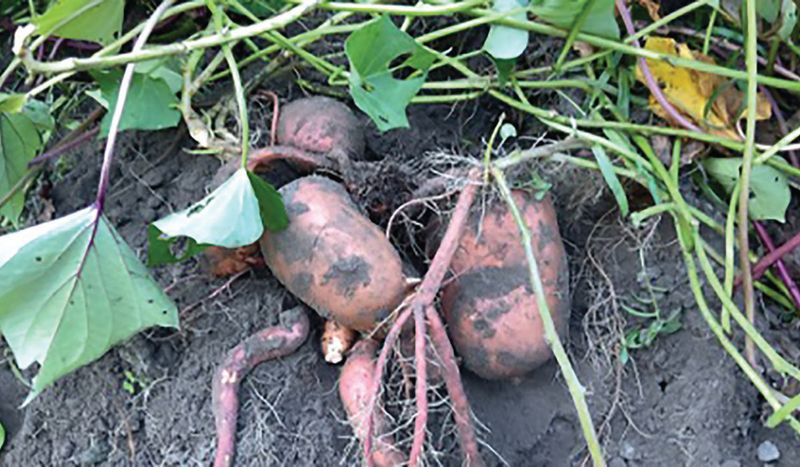
Timing the harvest well is just as important as timing the planting. Most sweet potato varieties are ready somewhere between 90 and 150 days after transplanting, but that range reflects real variation across cultivars, not a loose estimate.
A short-season variety like Beauregard may be harvestable closer to 90 to 100 days, while longer-season types need the full window. The Southeastern U.S.
Vegetable Crop Handbook recommends checking root size by carefully digging near one plant before committing to a full harvest, which avoids pulling immature roots prematurely.
The main cold-weather concern is a hard freeze, not ordinary cool autumn temperatures. Vines will yellow and die back after a frost, but that does not automatically destroy the roots if they are still in the ground and the soil has not frozen.
What does cause serious damage is a hard freeze that penetrates the soil or extended chilling of harvested roots before they are properly stored. NC State’s vegetable gardening handbook advises harvesting before a hard freeze is forecast rather than waiting until the last possible moment.
Use the NC State Climate Office freeze explorer to check historical fall freeze dates for your county and plan accordingly.
Handle roots as carefully as you would eggs. Sweet potato skin is thin and delicate right out of the ground, and every cut, scrape, or bruise creates an entry point for decay organisms.
NC State’s postharvest handling guide warns against tossing roots into buckets or stacking them roughly. Move them in a single layer if possible, keep them shaded, and get them into curing conditions the same day they are dug.
Cure roots in shade, warmth, and good ventilation
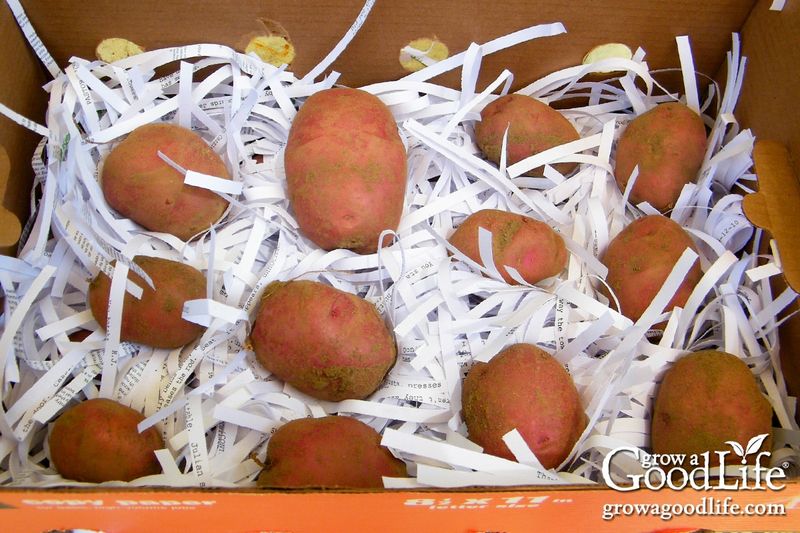
Curing is one of the most underappreciated steps in sweet potato growing, and skipping it has real consequences for flavor and storage life. Fresh-dug roots have thin, easily damaged skin and a starchy flavor that has not yet converted to the sweetness most people associate with the crop.
A proper curing period allows the skin to set, minor wounds to heal over with a corky layer, and starches to begin converting to sugars. NC State’s postharvest handling guide for sweet potatoes describes commercial curing conditions as approximately 85 degrees Fahrenheit and 85 to 90 percent relative humidity held for three to five days, followed by long-term storage near 55 degrees Fahrenheit at similarly high humidity.
Most home gardeners cannot reproduce those conditions exactly, and that is fine. The practical goal is warmth, shade, and gentle air movement rather than precise instrumentation.
A spare bedroom, a warm garage corner, or a covered porch that stays above 75 degrees for several days works reasonably well. What to avoid is clear: prolonged direct sun causes sunscald that damages the outer tissue; temperatures below 55 degrees during curing can cause chilling injury that shortens storage life and leads to off flavors.
NC State’s organic production guide reinforces that chilling injury can occur even during North Carolina’s fall nights, so roots should never be left outdoors overnight after harvest.
Arrange cured roots in a single layer or shallow box lined with newspaper, keep them away from apples and other ethylene-producing fruit, and check them every week or so for soft spots. Home curing will not deliver commercial-grade uniformity, but it will meaningfully improve how long the roots keep and how good they taste.
The practical reason sweet potatoes can feel easy here
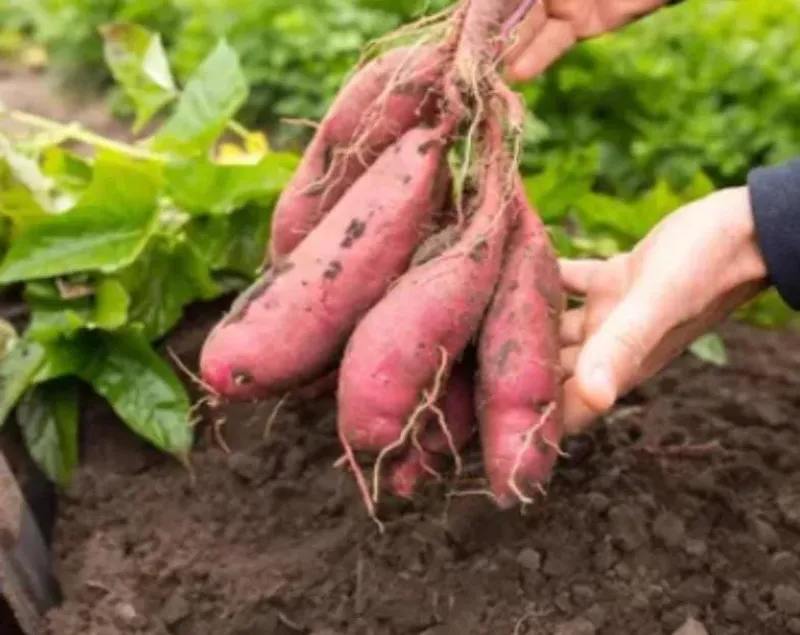
The real reason sweet potatoes feel relatively low-effort in suitable North Carolina gardens is that the crop’s core requirements align with what many sites already provide. Sustained warmth supports vine growth and root development.
A long enough frost-free season gives most varieties time to mature. Loose, well-drained soil lets roots expand without fighting compaction or waterlogging.
When those three conditions are in place, the plants do carry a lot of their own momentum after establishment.
That momentum is not the same as neglect. NC State’s production guide and the Southeastern U.S.
Vegetable Crop Handbook both make clear that healthy slips, timely planting, early water and weed management, restrained fertility, and a harvest protected from hard freezes are what separate a good crop from a disappointing one. NC State’s vegetable gardening handbook also notes that yield varies with variety, moisture, soil quality, pests, and timing, so no site or season guarantees a large harvest.
The winning formula is a well-drained site, a well-timed start, and consistent attention through the first six weeks. After that, the vines do a lot of the work for you, and that is what makes sweet potatoes one of the more rewarding crops a North Carolina home gardener can try.