
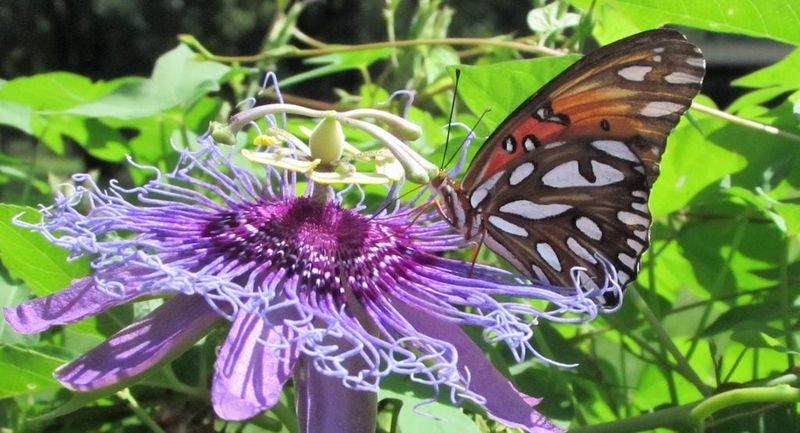
A plain wood or chain-link fence in eastern Texas can become something genuinely worth stopping to look at once maypop takes hold. Passiflora incarnata, the native purple passionflower, produces some of the most unusual flowers in the southern garden and doubles as a breeding ground for Gulf fritillary butterflies.
Getting the most from this vine means choosing the right part of Texas, learning what the plant actually needs, and understanding that a few chewed leaves are a sign the habitat is working.
Choose Maypop for Suitable Eastern Texas Fences
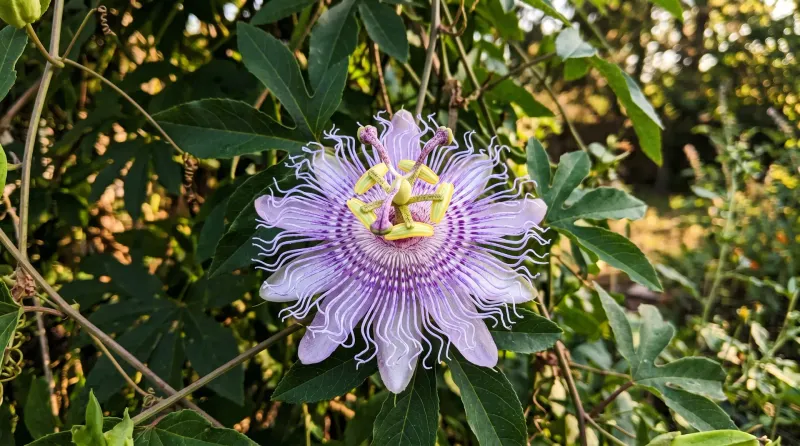
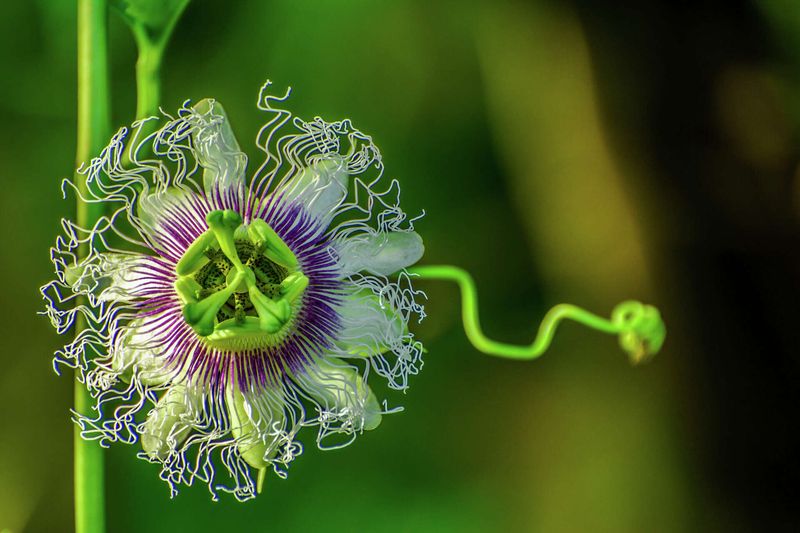
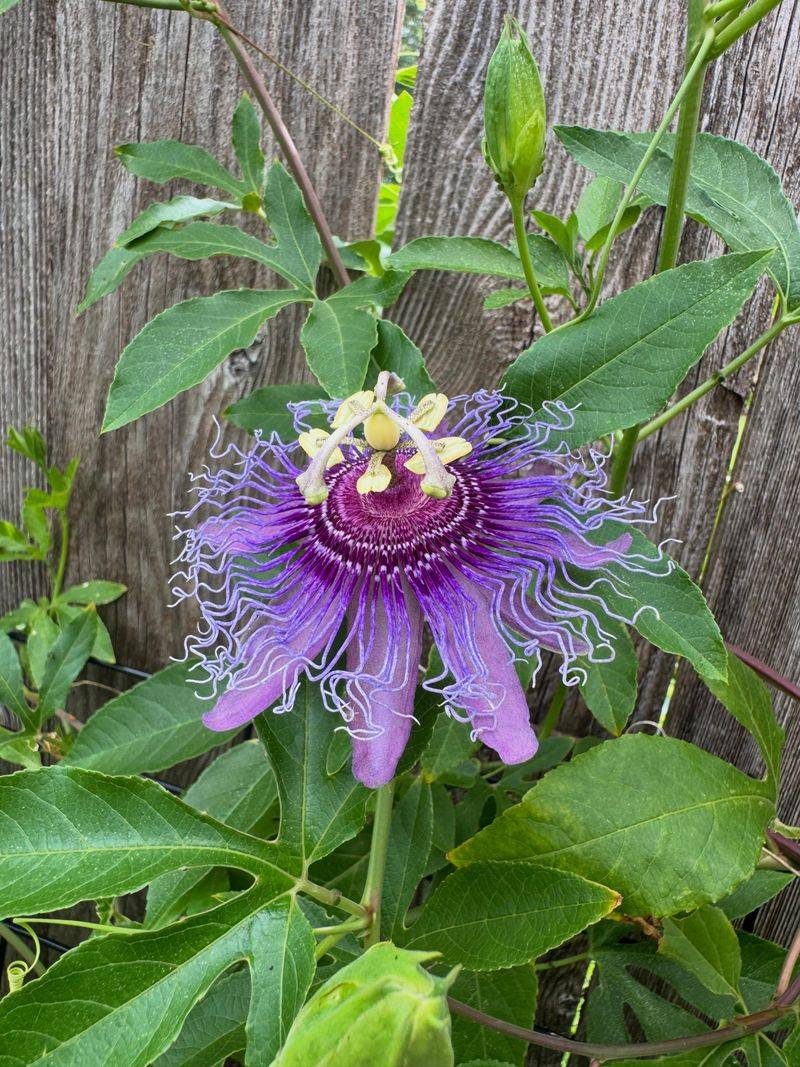
Purple passionflower has one of the most recognizable faces in any southern garden: layered petals, a fringe-like corona in purple and white, and a structure that looks almost engineered. The plant behind that flower is Passiflora incarnata, commonly called maypop, and it is the species East Texas gardeners should seek out specifically rather than picking up any vine labeled “passionflower” at a nursery.
Texas Parks and Wildlife Wildscapes plant documentation places Passiflora incarnata in the eastern third of Texas, suited to full sun or part shade and a range of well-drained soils. Gardeners in the Panhandle, far West Texas, or the high desert should verify whether local conditions match before planting, because this vine’s track record in Texas is strongest in its documented native range.
The group name “passionflower” covers dozens of PassifloraP. biflora species with very different native ranges, cold tolerance, and growth habits. UF/IFAS plant directory records for Passiflora incarnata distinguish it from nonnative species such as , some of which carry invasive-plant concerns in parts of the South.
Always check the botanical name on the tag before buying.
The central tradeoff with maypop is straightforward. The vine rewards suitable eastern Texas sites with dramatic recurring flowers and documented Gulf fritillary host habitat, but it climbs with tendrils that need a support, spreads underground through root suckers, and will lose foliage to caterpillar feeding during the butterfly season.
Gardeners who go in expecting both the flowers and the wildlife activity, and who are ready to manage the plant’s reach, tend to get the most satisfaction from it.
Give the Vine a Fence, Sun, and Drainage
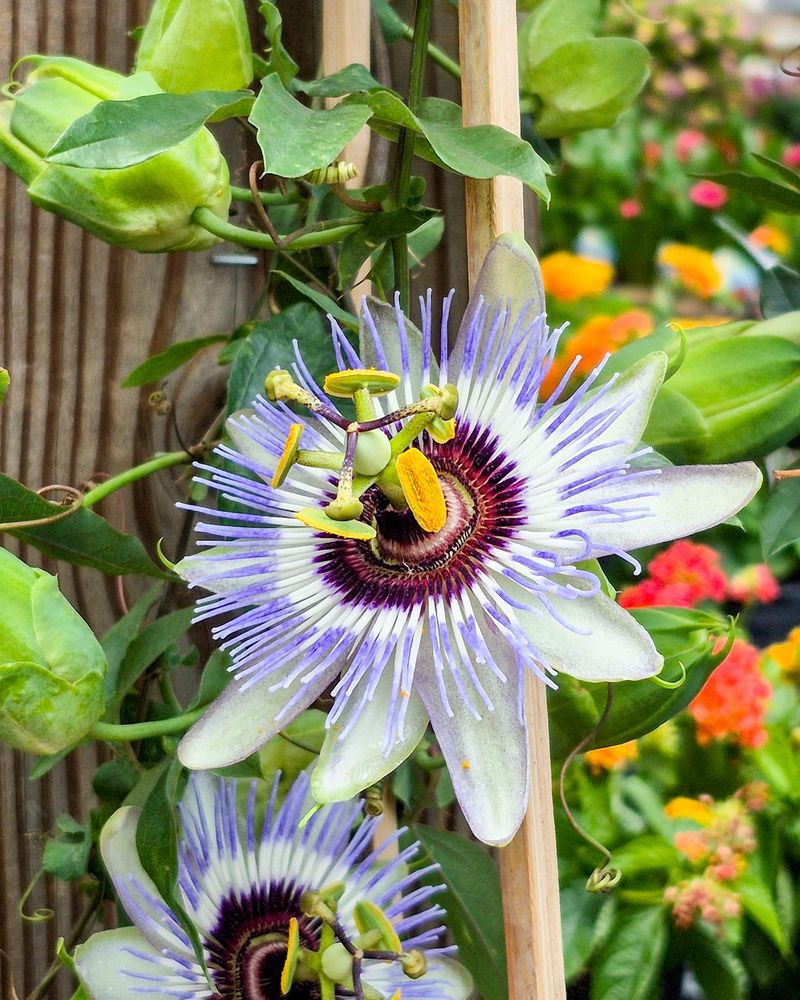
Maypop climbs by wrapping its slender tendrils around whatever support it can reach, which makes a chain-link fence, a wooden trellis, or a wire arbor a natural fit. Without a vertical structure, the vine trails along the ground instead of covering a fence, so giving it something to grip from the start saves time spent redirecting growth later.
Weaving a few young stems through the fence early in the season encourages the plant to move upward on its own.
UF/IFAS documentation on wild passion flower supports full sun as the best exposure for stronger flowering, and the USDA NRCS purple passionflower fact sheet recommends direct sunlight for at least half the day. Part shade is tolerated, but expect fewer flowers in shadier spots.
Soil drainage matters more than soil texture. Passiflora incarnata can handle sandy, loamy, or clay-based soils, but standing water around the roots increases the risk of problems.
The North Carolina Extension plant profile for Passiflora incarnata notes that the species grows in a range of soil types, while the Texas Parks and Wildlife Wildscapes list similarly describes tolerance for sands, loams, and clays.
Raised beds, sloped sites, or any spot where rainwater moves away quickly will serve this plant better than a low area that stays soggy after a storm. If your fence runs along a compacted or poorly drained strip, amending the planting area with coarse material before putting the vine in the ground is worth the effort.
A well-chosen fence site with good drainage and strong light gives maypop the foundation it needs to flower reliably through the warm season.
Expect Recurring Flowers, Not Literal Nonstop Bloom
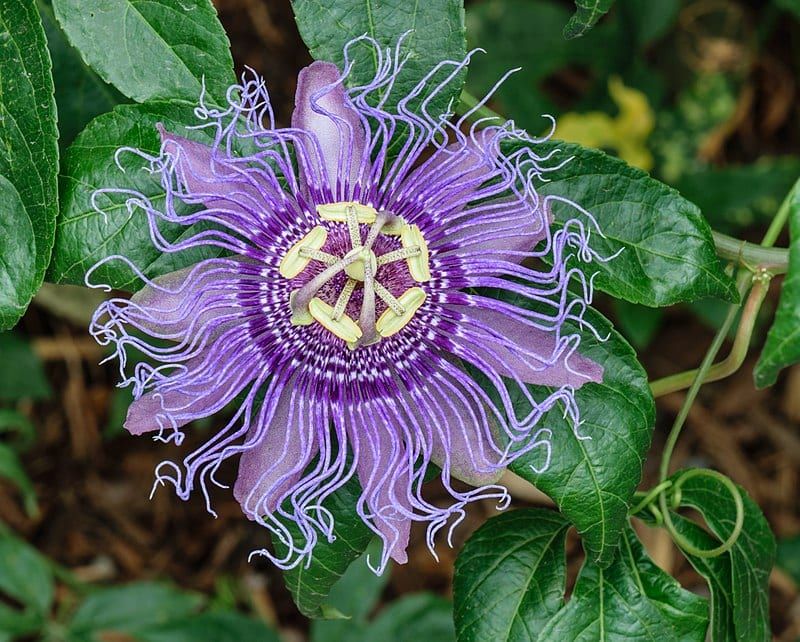
The visual payoff along a fence covered in maypop is real, but it helps to know exactly what you are seeing. Each individual Passiflora incarnata flower opens for roughly one day before closing.
The long summer display comes from the plant continuously producing new buds, so fresh blooms replace spent ones across an extended warm-season window rather than one flower staying open for weeks.
UF/IFAS wild passion flower records describe a bloom period that varies by location, and the USDA NRCS fact sheet lists June through September as the flowering window. The USDA pollinator plant guide and Texas Parks and Wildlife both extend that estimate to April through September for the southern end of the range.
A safe working expectation for eastern Texas is spring through late summer or early fall, depending on local temperatures, rainfall, and how established the plant is.
Calling this flowering pattern “nonstop” is shorthand that overpromises a little. What maypop actually delivers is a succession of distinctive flowers appearing over a long warm-season stretch, which is genuinely impressive for a native vine.
On a good fence run in a favorable summer, the plant can look like it is always in bloom because new flowers are always opening somewhere along the stems.
Flowering tends to slow or stop as heat peaks in the worst of a Texas summer or when the plant is water-stressed. A healthy, established vine in good soil with adequate moisture during dry spells will generally produce more flowers across a longer window than one left entirely to its own devices in baked ground.
Maypop Feeds Gulf Fritillaries at the Caterpillar Stage
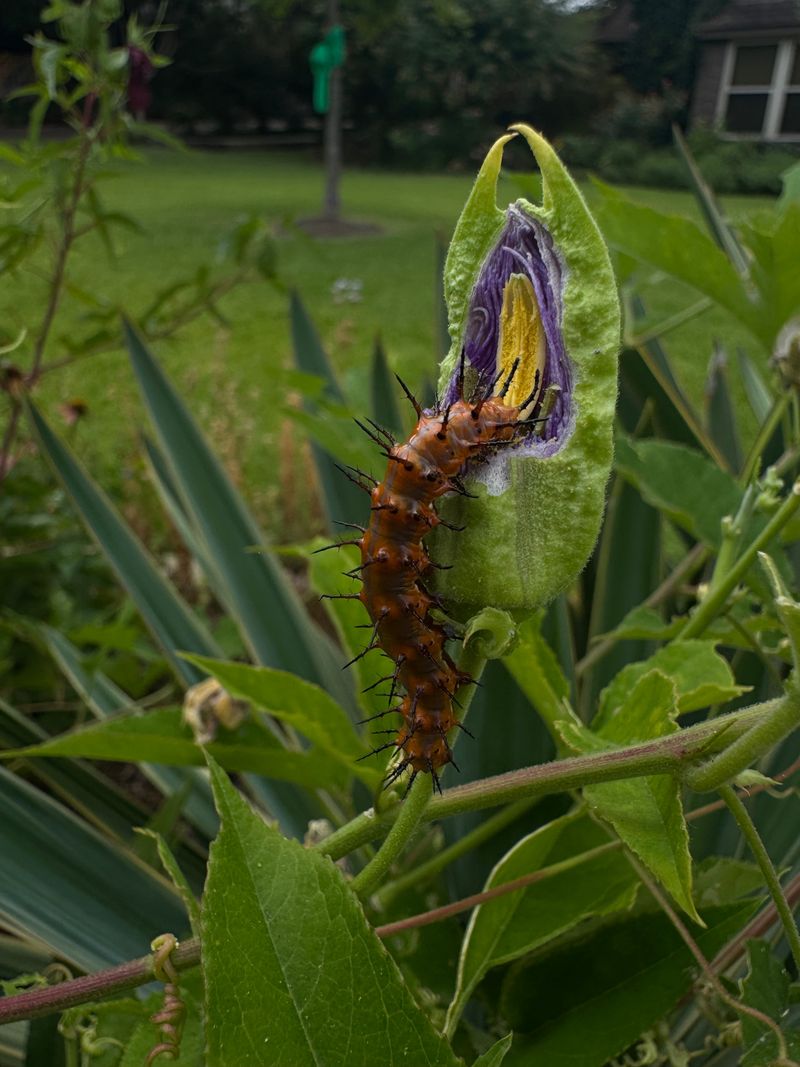
Gulf fritillary butterflies and passion vines are connected at a very specific point in the butterfly’s life cycle: the caterpillar stage. Texas A&M AgriLife Extension’s Gulf fritillary profile identifies passionflower leaves as the food source for the larvae and describes adult Gulf fritillaries as nectar feeders that visit many different flowering plants.
Understanding that split helps gardeners set realistic expectations for what the vine will and will not do on its own.
Female Gulf fritillaries lay eggs on or very near passion vine foliage. When the eggs hatch, the caterpillars, which are orange with black spines, begin feeding on the leaves.
UF/IFAS Gulf fritillary biology documentation confirms that passionflower foliage is the larval food source and that feeding can be heavy enough to defoliate the plant temporarily. That relationship is the core ecological value of planting maypop along a fence.
Adult Gulf fritillaries will visit the area if larvae are developing there, but they also need nectar from other flowers to survive and reproduce. Planting maypop alongside coneflowers, lantana, zinnias, or other nectar-rich species gives adult butterflies a reason to stay in the yard after emerging.
UF/IFAS butterfly gardening guidance and Florida Museum butterfly gardening recommendations both emphasize that a complete butterfly habitat requires host plants for larvae and separate nectar plants for adults.
Gulf fritillary activity around your fence will depend on local butterfly populations, surrounding habitat, weather during the season, and how many nectar plants are nearby. The vine can attract and support the species, but no planting guarantees a constant crowd of butterflies.
Think of maypop as opening the door; the butterflies decide whether to walk through it.
Accept Caterpillar Damage as Part of the Habitat
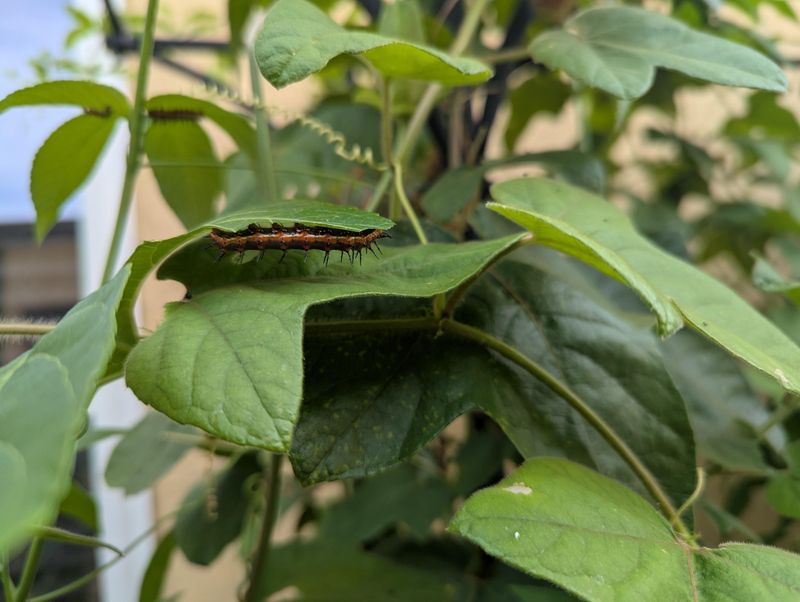
A maypop fence that is doing its job as Gulf fritillary habitat will not always look pristine. Orange caterpillars with black spines can strip a vine of most of its leaves in a surprisingly short time, leaving stems that look bare and rough.
That is not a sign of failure; it is a sign the host plant is working exactly as intended.
UF/IFAS documentation on Gulf fritillary larvae describes feeding that can be heavy enough to rapidly defoliate passion vines. The same source makes clear that this feeding is part of the species’ biology, not a pest problem to eliminate.
A healthy, established maypop vine typically rebounds with new growth after a feeding cycle ends, especially when it has adequate moisture and strong roots.
Wildlife-minded gardeners should resist the urge to spray or hand-remove caterpillars just to protect the vine’s appearance. Doing so defeats the purpose of planting a butterfly host species in the first place.
Bite marks and bare patches during the summer are honest evidence that Gulf fritillary larvae found the plant and used it.
Gardeners who find the chewed look genuinely difficult to tolerate may want to plant maypop along a back or side fence rather than a front entry. If a vine appears severely stressed, not just temporarily sparse but showing signs of root or stem problems, local Texas A&M AgriLife Extension offices can help diagnose the issue and suggest nonchemical management steps.
Defaulting to insecticides as a first response risks harming the very larvae that give the planting its ecological value.
Water New Plants and Control Underground Spread
Getting maypop through its first growing season in eastern Texas requires consistent attention to water. New plantings need regular irrigation while roots are developing; the drought tolerance the plant is known for applies to established vines, not freshly transplanted ones.
How often to water depends on your soil type, how much rain falls, how intense the heat is, and any local watering restrictions in your area. There is no single schedule that fits every Texas site.
Once roots are established, UF/IFAS wild passion flower records support drought tolerance as a characteristic of mature plants. Even so, extended stretches of triple-digit heat without any supplemental water can stress the vine and reduce flowering.
Checking the soil a few inches down and watering when it is dry rather than following a fixed calendar tends to produce better results than rigid scheduling.
Underground spread is the management challenge most gardeners underestimate. Passiflora incarnata sends out underground stems and root suckers that can emerge several feet from the original planting.
North Carolina Extension’s Passiflora incarnata profile notes the plant’s tendency to spread aggressively under favorable conditions, and Oklahoma State Extension guidance on maypop spreading and University of Maryland Extension records on maypop root suckers both confirm that unwanted shoots are easier to remove when they are young and small.
Train the top growth by weaving new stems through the fence regularly and redirecting any tendrils that grab onto neighboring plants or structures you want to keep clear. Give the planting enough room from the start so that some spread is acceptable, and plan to walk the fence line periodically to pull emerging suckers before they become established stems.
This is an active relationship with a vigorous plant, not a set-and-forget installation.
Plan for Dieback, Fruit, and Fire-Safe Placement
After the warm-season flowering peak winds down, maypop behaves as a deciduous or herbaceous perennial across much of its range. Texas Parks and Wildlife Wildscapes documentation describes the plant as dormant in winter, and in colder parts of eastern Texas the above-ground stems may die back entirely before new growth emerges from the roots in spring.
Gardeners who see bare stems in January have not necessarily lost the plant; they may simply be waiting on the vine’s natural dormancy cycle to end.
The fruit that follows flowering is worth knowing about, especially for curious gardeners tempted to compare it to grocery-store passion fruit. Maypop produces a greenish-yellow egg-shaped fruit that is edible, but UF/IFAS passion fruit in Florida documentation and UF/IFAS wild passion flower records both describe it as milder and generally less flavorful than commercial passion fruit, which comes from Passiflora edulis.
The two species are not interchangeable. Regarding the plant’s leaves, stems, or any preparations made from them, NCCIH passionflower safety guidance flags concerns including drowsiness, medication interactions, and risks during pregnancy and surgery, so this article does not recommend consuming any part of the plant beyond the fruit.
Homeowners in wildfire-prone areas of Texas should consider fence placement carefully. North Carolina Extension rates Passiflora incarnata as highly flammable and advises keeping it out of the defensible space nearest a structure.
That rating comes from North Carolina research rather than Texas-specific fire studies, but it is a relevant caution for anyone gardening near fire-prone land. Placing the vine on a fence farther from the house rather than directly against the foundation is a reasonable precaution in those settings.
Grow Maypop for a Living Fence, Not a Perfect Screen
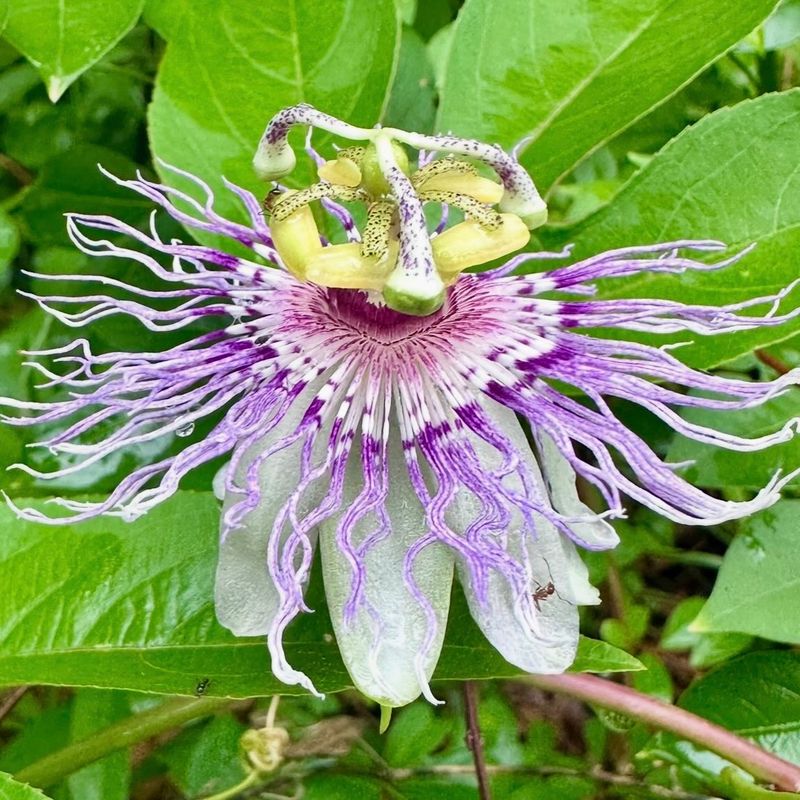
Passiflora incarnata is a strong fence plant for suitable eastern Texas sites when the gardener’s goal is recurring dramatic flowers and Gulf fritillary host habitat rather than an immaculate, untouched wall of green. Texas Parks and Wildlife’s native plant documentation places it squarely in the eastern third of the state, and that geographic fit matters more than any other single factor in deciding whether to plant it.
Success with maypop looks like this: the correct species on a well-drained, sunny fence with support for climbing, regular water during establishment, nearby nectar plants for adult Gulf fritillaries, and a gardener who monitors underground spread and accepts a chewed canopy as evidence of a healthy habitat. North Carolina Extension’s plant profile reinforces that this vine rewards active management rather than neglect.
A fence covered in maypop during a good Texas summer is genuinely striking. The flowers are unlike anything else in a southern garden, and watching a Gulf fritillary complete its life cycle on a plant you chose and placed is a different kind of satisfaction than a tidy green screen could ever offer.