
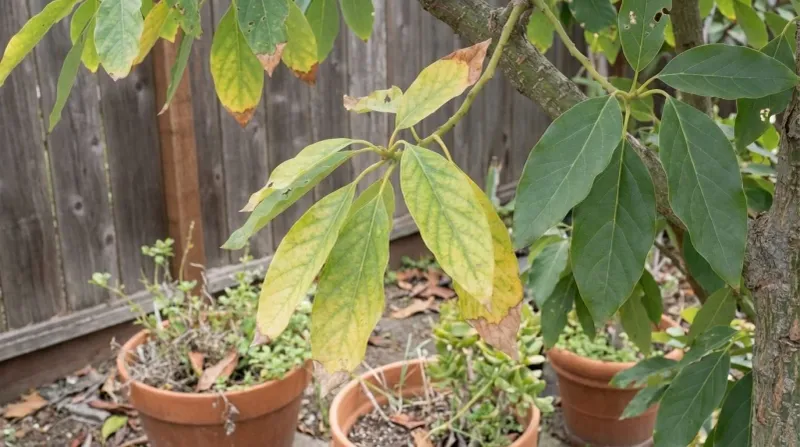
Walking out to your backyard after a brutal California heat wave and finding a carpet of fallen avocado leaves is genuinely alarming. Your first instinct is probably to grab the hose and start watering heavily, but that reaction can actually make things worse.
Before you change anything about your irrigation routine, there are a few simple checks that will tell you far more than the leaf pile alone ever could.
Leaf drop after extreme heat is a clue, not a diagnosis
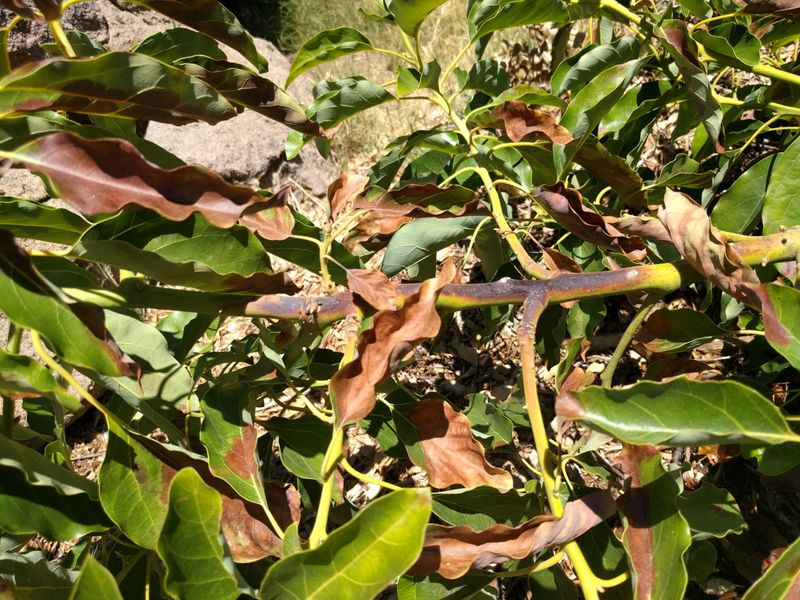
Picking up a handful of fallen avocado leaves and assuming extreme heat caused every one of them to drop is an understandable reaction, but it skips the diagnostic step that actually matters. Heat can absolutely damage avocado trees – scorching leaves, burning fruit, injuring branches, and damaging bark that was once shaded by a full canopy.
UC IPM’s avocado sunburn guidance notes that injury is typically worst on south and southwest exposures, especially after foliage thins and previously protected wood becomes exposed to direct sun.
The problem is that several other stresses can produce nearly identical symptoms. Drought stress, wet-root stress from poor drainage, high salinity in irrigation water, Phytophthora root rot, and persea mite infestations can all trigger or worsen leaf loss around the same time a heat wave rolls through.
UC IPM’s avocado disease monitoring resource makes clear that heat may be a contributing factor rather than the sole explanation, and that relying on timing alone can send you in the wrong direction.
Wet-root stress deserves special attention because it mimics drought so convincingly. When soil stays waterlogged, roots lose access to oxygen and may become unable to move water up into the canopy, causing wilting, browning, and leaf drop even when the ground is visibly moist.
UC IPM’s aeration deficit page explains how oxygen-starved roots behave just like drought-stressed roots from the tree’s perspective.
The corrected starting point for any California homeowner facing substantial canopy loss after a heat event is this: treat leaf drop as a clue that something stressed the tree, then inspect the tree and its root zone before changing anything about irrigation. The pattern, location, and appearance of damage will tell you more than the calendar will.
Why extra water can backfire after major canopy loss
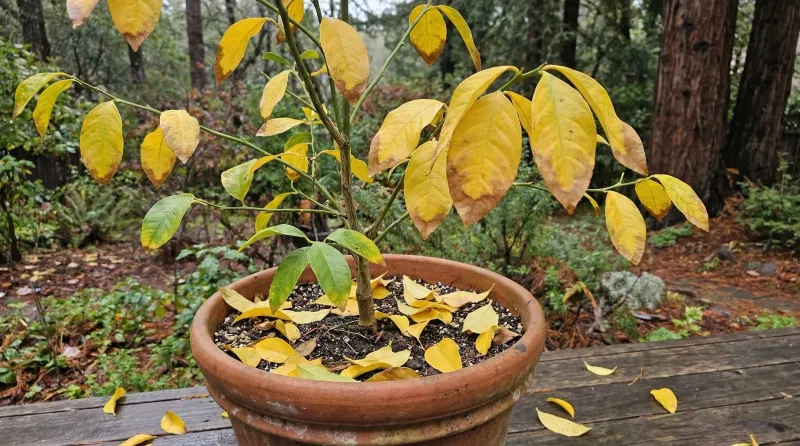
Most people’s instinct after watching an avocado tree shed a large portion of its canopy is to water more, and that instinct makes sense on the surface. A stressed tree needs support, and water is the most obvious form of support available.
The trouble is that after substantial defoliation, the tree’s water demand drops considerably because there are far fewer leaves pulling moisture up from the roots and releasing it into the air through transpiration.
UC Cooperative Extension’s heat and avocado guidance addresses this directly: when a tree loses much of its canopy, the soil may stay wet far longer than it would under a full-leafed tree, and continuing to irrigate on the old schedule can push the root zone into conditions that cause secondary damage. Roots sitting in chronically saturated soil lose access to oxygen and become vulnerable to crown and root problems that compound the original heat injury.
This is not a blanket instruction to stop watering. UC IPM’s sunburn guidance is clear that a genuinely dry root zone still needs irrigation, and that the goal is to avoid keeping soil continuously wet rather than to avoid water altogether.
Young trees and newly planted root balls are especially vulnerable to going dry, and they should not be left without water based on a misapplied general rule.
Avocado roots are famously shallow, and UC IPM’s cultural tips for growing avocado warn that both underwatering and overwatering carry real costs. Underwatering increases sunburn risk and can cause small fruit and water stress, while overwatering promotes Phytophthora root rot and other root or crown problems.
After major canopy loss, the right approach is to recalibrate irrigation to actual soil moisture and actual tree condition, not to swing from one extreme to the other.
Check the root zone before you irrigate
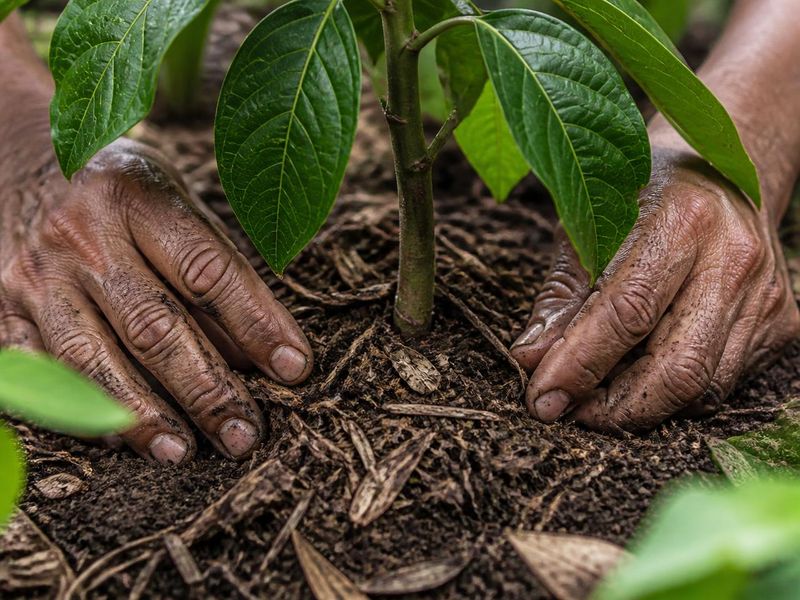
The most practical thing you can do before reaching for the irrigation controller is to physically check what is happening in the root zone. Push a finger four to six inches into the soil at several points within the drip line of the tree – roughly beneath the outer edges of the canopy, where the feeder roots are most active.
If the soil feels moist at that depth, hold off on watering. If it feels dry, the tree needs water regardless of how many leaves it has lost.
A soil probe or screwdriver pushed into the ground gives you an even clearer picture, especially in compacted or clay-heavy soils where surface conditions can mislead you. UC IPM specifically advises checking root-zone moisture before each irrigation after defoliation, because the reduced canopy uses less water and the soil may remain adequately moist well past the point when you would normally irrigate.
Avocado roots are shallow – most of the feeder roots sit in the top few inches of soil – and UC IPM’s cultural growing tips note that irrigation should move progressively farther from the trunk as the tree establishes, keeping the trunk itself as dry as possible. Watering close to the base of a mature tree is less effective and can contribute to crown problems.
For established trees in California, UC IPM’s watering guide for avocados and citrus offers roughly two inches of water per week during summer as a broad reference point, but this figure changes substantially with soil texture, drainage quality, local weather, irrigation method, rainfall, and the size of the remaining canopy. After major leaf loss, that number is almost certainly too high until new growth begins to fill back in.
Ventura County Cooperative Extension’s avocado FAQ points out that young summer-planted trees may need water several times per week in small applications of five to twenty gallons, while older established trees can sometimes go a week or more between irrigations depending on soil, weather, and rainfall. Tree age, soil type, and drainage all change the math.
Let the root zone tell you when to water, not the calendar.
Shield exposed bark and postpone major pruning
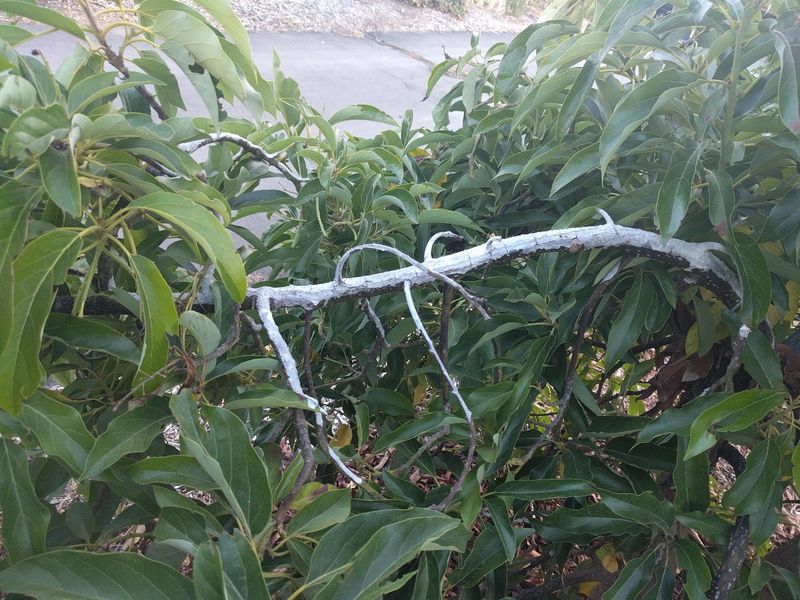
When a significant portion of an avocado’s canopy drops, bark that spent years in the shade of its own leaves is suddenly exposed to direct California summer sun. South-, southwest-, and west-facing trunks and main limbs are the most vulnerable because they receive the most intense afternoon radiation.
Without the canopy acting as a filter, that exposed wood can develop secondary sunburn on top of whatever damage the heat wave already caused.
UC IPM’s avocado sunburn guidance recommends protecting newly exposed trunks and major limbs with whitewash – specifically, white interior latex paint diluted fifty percent with water. This is a homeowner-compatible mixture that reflects heat and reduces bark temperature without sealing the wood in a way that causes problems.
Apply it to the south and west faces of any trunk or branch that was previously hidden under the canopy and is now in full sun.
Whitewash protects bark from secondary sunburn. It does not repair leaf damage, correct root problems, reduce soil salinity, or address mite activity.
Think of it as a shield for newly vulnerable wood while the tree works through recovery, not as a treatment for the underlying stress.
Pruning is the other temptation to resist right now. After a heat event, the full extent of injury can take weeks or months to become visible, and removing living wood too early can cost the tree branches that would have recovered on their own.
UC Cooperative Extension’s heat and avocado guidance recommends waiting for new growth to emerge and for the picture of living versus dead wood to clarify before making pruning decisions, generally allowing several months to pass. Damaged or hanging leaves that are still attached may also be providing some shade to branches below them, so leave them in place until the tree makes its own decision about dropping them.
Support recovery without forcing new leaves
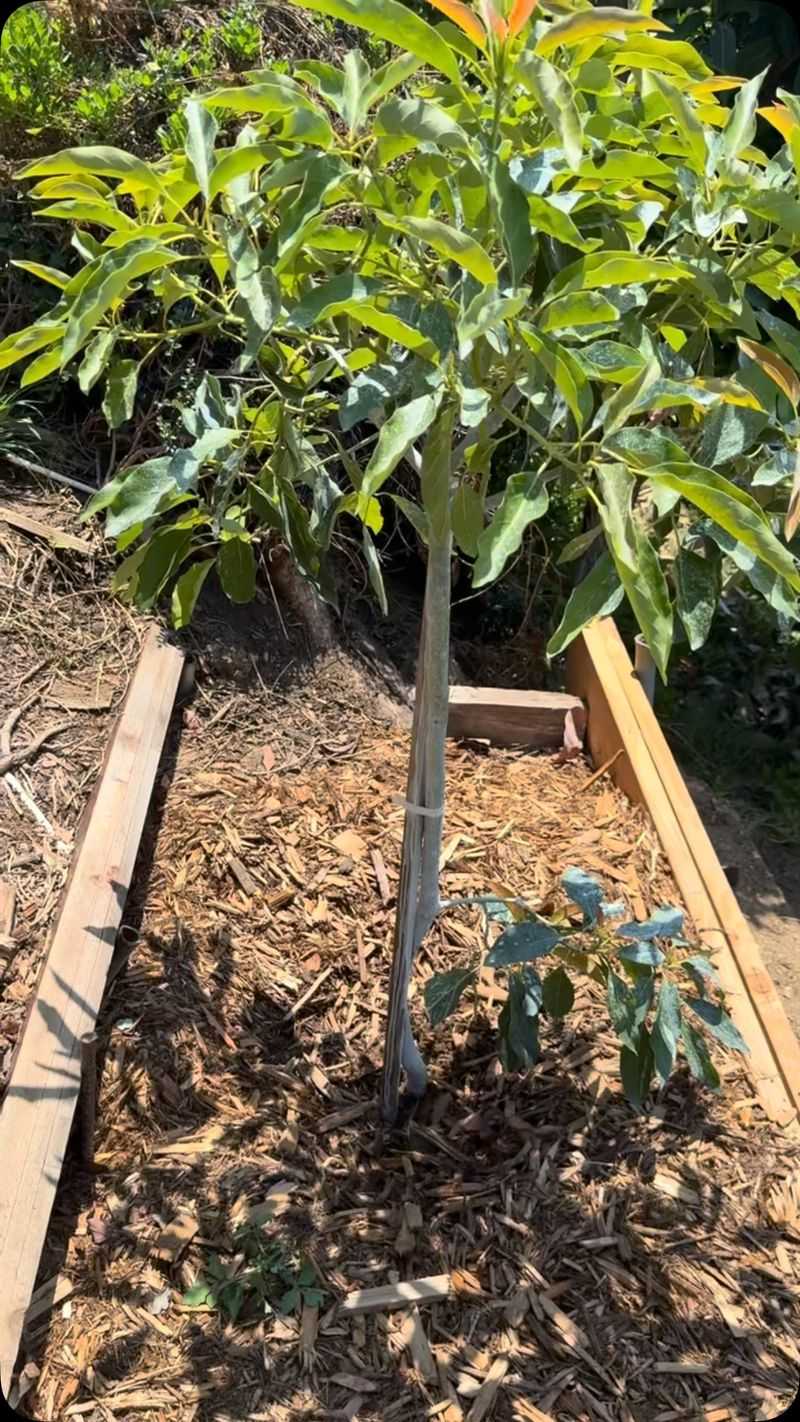
After you have checked the root zone, protected exposed bark, and adjusted irrigation to actual soil conditions, the most productive thing you can do is give the tree space to recover at its own pace. That means resisting the urge to push new growth with fertilizer.
UC Cooperative Extension’s heat and avocado guidance recommends reducing or pausing routine fertilization after major heat damage until healthy growth resumes, and warns against using fertilizer as a forcing agent. A stressed root system is less able to process fertilizer salts, and adding them can worsen existing salt stress or create new problems.
If you suspect a specific nutrient deficiency – yellowing in a pattern consistent with iron or zinc shortage, for example – that warrants a separate diagnosis rather than a general fertilizer application. Treat confirmed deficiencies specifically rather than applying broad fertilizer in hopes that something helps.
Fallen avocado leaves can do quiet useful work while the tree recovers. UC IPM’s integrated weed management guidance for avocado notes that leaf mulch beneath the tree can conserve soil moisture, improve soil conditions, and help suppress Phytophthora.
Leave healthy fallen leaves in place where practical, and if you add supplemental mulch, keep it several inches away from direct contact with the trunk to avoid creating crown-rot conditions.
Misting or spraying the remaining leaves is sometimes suggested as a cooling measure during heat waves, but it does not correct root-zone drought, waterlogging, salinity, or sunburn damage. For persea mite management on small trees, UC IPM’s persea mite guidance notes that a strong stream of water directed at leaf undersides can reduce mite populations, but this is a targeted pest-management step rather than a general heat recovery treatment.
Do not apply foliar wetting as a routine response to canopy loss.
Recognize signs that point beyond heat injury
At some point, adjusting irrigation and protecting bark stops being enough if the tree is not responding. When symptoms persist, worsen, or do not match the pattern of straightforward heat injury, the investigation needs to go deeper.
Two stresses that look nearly identical from a distance are dry-soil stress and wet-root stress, and treating one as though it were the other will make things worse. A tree with waterlogged, oxygen-depleted roots may wilt, drop leaves, and brown at the tips just as convincingly as a drought-stressed tree – even when the soil is visibly wet.
UC IPM’s aeration deficit page describes how roots deprived of oxygen behave like drought-stressed roots, which is why soil moisture inspection matters more than visual observation of the canopy alone.
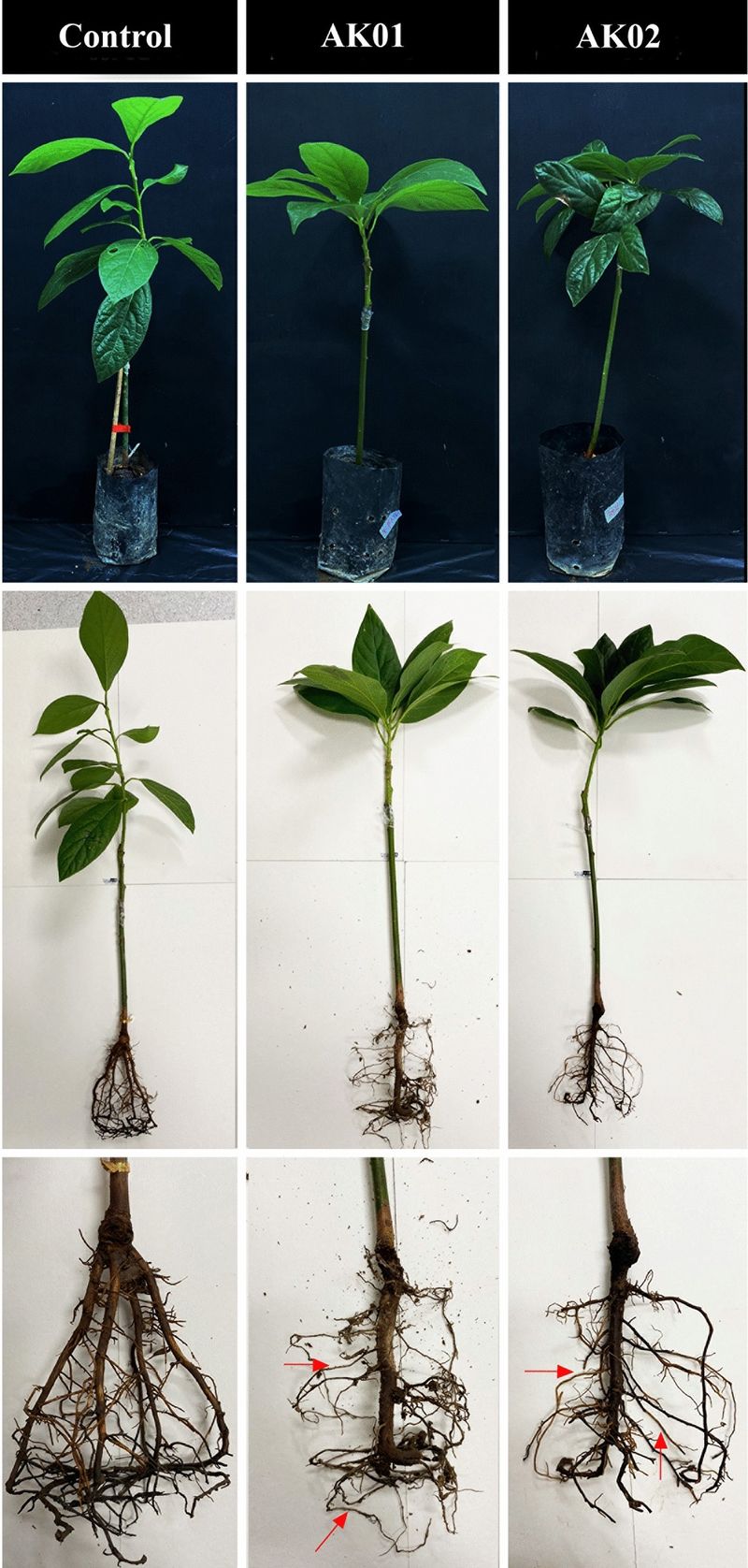
Phytophthora root rot produces a recognizable chronic pattern: a canopy that stays persistently sparse, leaves that are smaller and paler than normal, brown tips, limited new growth, and progressive branch dieback. The tree may continue dropping leaves even when the soil is adequately irrigated.
UC IPM’s Phytophthora root rot page explains that these symptoms call for a root and drainage investigation, not simply another adjustment to the watering schedule.
Salt injury follows its own distinctive path. Browning typically starts at leaf tips and margins, sometimes progressing inward, and may affect a large number of leaves at once.
UC ANR’s leaf burn of avocado publication identifies high sodium, chloride, boron, and total salinity as common contributors, along with shallow watering practices and certain fertilizers or manures. A heat wave can make pre-existing salt stress suddenly more visible, but changing the irrigation volume will not fix a water-quality or soil-chemistry problem.
Persea mites deserve a look at any point when leaves show discrete circular spots, bronzing, or a silvery cast on the undersides. UC IPM’s persea mite guidance and the UC IPM avocado pest management PDF both note that heavy infestations can cause premature leaf drop and defoliation that is easily confused with heat or drought injury.
Always check the undersides of leaves before concluding that mites are or are not involved.
Let soil moisture and new growth guide the next decision
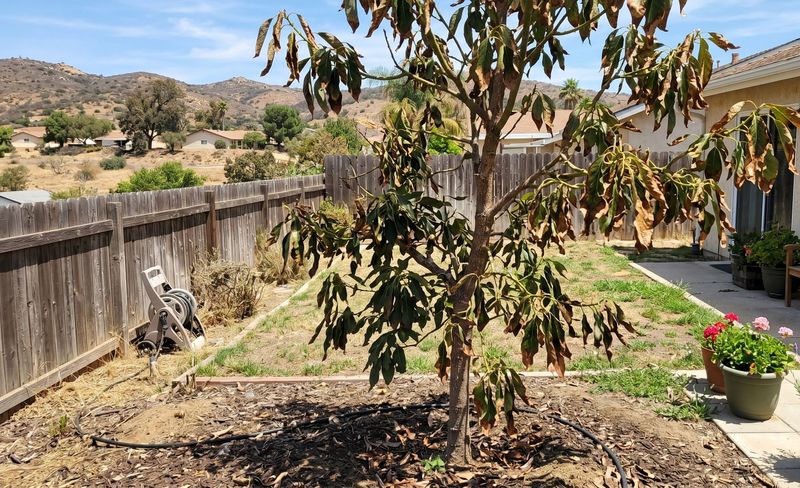
After substantial canopy loss, the decision sequence is simpler than the panic makes it feel. Check the root zone before irrigating.
Protect newly exposed bark on south- and west-facing surfaces with diluted white latex paint. Hold off on pruning until new growth appears and the line between living and dead wood becomes clear.
Reduce or pause routine fertilizer until the tree is visibly recovering. Then watch the tree rather than the calendar.
New growth is the most reliable signal that the tree is moving in the right direction. Once you see it, you can begin reassessing irrigation frequency, start planning any pruning of confirmed dead wood, and resume a normal – though still soil-moisture-guided – fertilization schedule.
If the tree shows no new growth after several months and the symptom pattern does not fit heat injury, that is when to investigate drainage, root condition, water quality, and pest activity more seriously. UC Cooperative Extension’s heat and avocado guidance and UC IPM’s sunburn resource both reinforce this patient, observation-based approach.
One important note for growers outside California or in unusual site conditions: the guidance here is grounded in California’s Mediterranean climate, dry summers, and the irrigation logic that comes with it. Ventura County Cooperative Extension’s avocado FAQ reflects that local soil, drainage, and tree age change every irrigation decision.
Florida receives summer rainfall that California does not, and UF/IFAS guidance for Florida avocado growers operates on different scheduling logic as a result. Young trees, container-grown trees, and trees on heavy clay also require locally appropriate adjustments that no single schedule can capture.
The principle that travels across all of them is the same: let actual soil moisture and visible tree response drive each decision, not assumption or anxiety.